
So, you’ve finally met your baby but now your entire core feels disconnected and you arent sure what’s even going on with your pelvic floor now. We may think that we need to wait til our six-week postpartum appointment to be cleared by our provider to move our bodies with intention, but there is a lot we can do before we get officially “cleared” to support our initial healing.
Waiting 6 weeks is a long time to delay a reconnection to our core and pelvic floor, and support basic movement mechanics to stay comfortable, and support our rehabilitation postpartum.
We don’t necessarily want to head to the gym a few days postpartum, but let’s break down six postpartum rehab exercises you can do at home after you give birth.
Start Your Postpartum Rehab
As we navigate early postpartum we can focus on three main areas to support our initial postpartum rehab:
- Reconnection with our core and pelvic floor
- Mobility to support comfort
- Core stabilization
Focusing on these three areas can help us determine what type of exercises may be helpful during the first few weeks postpartum.
1) Diaphragmatic Breathing: Reconnect with Your Core & Pelvic Floor
The very first core exercise that you can do almost immediately after giving birth, whether you had a vaginal or cesarean birth, is diaphragmatic breathing! We may not think of breathing as a core exercise, but breath is how we integrate our core and pelvic floor muscles with the rest of our body.
When we diaphragmatically breathe, we are focusing on the expansion of the thoracic cavity (aka your rib cage). This expansion pushes the diaphragm down, increasing pressure in the abdominal cavity. This means that the belly, back, and pelvic floor all eccentrically lengthen and stretch.
In the early postpartum, we want to really emphasize the thoracic expansion and not forcing too much pressure onto our healing core and pelvic floor. There will be expansion of the core/pelvic floor, but we don’t want to force as much pressure as possible there.
You can choose a variety of positions to practice breathing, and you may find certain positions feel better for you than others.
Watch the video below for a supported bridge breathing drill, where we break down HOW to incorporate diaphragmatic breathing to support your postpartum rehab.
2) Thoracic Mobility: Upper Back Expansion
Next, we can focus on the mobility of the thoracic cavity. If we have restrictions in the thoracic spine, we tend to have more upper back or neck pain and we may have a harder time breathing for optimal function.
The thoracic spine moves in three ways:
- Flexion/Extension
- Laterally
- Rotationally
Typically, postpartum, we have a harder time expanding into the backside of our rib cage. This lack of expansion can make it more difficult to take deeper breaths, and affect our function and core healing.
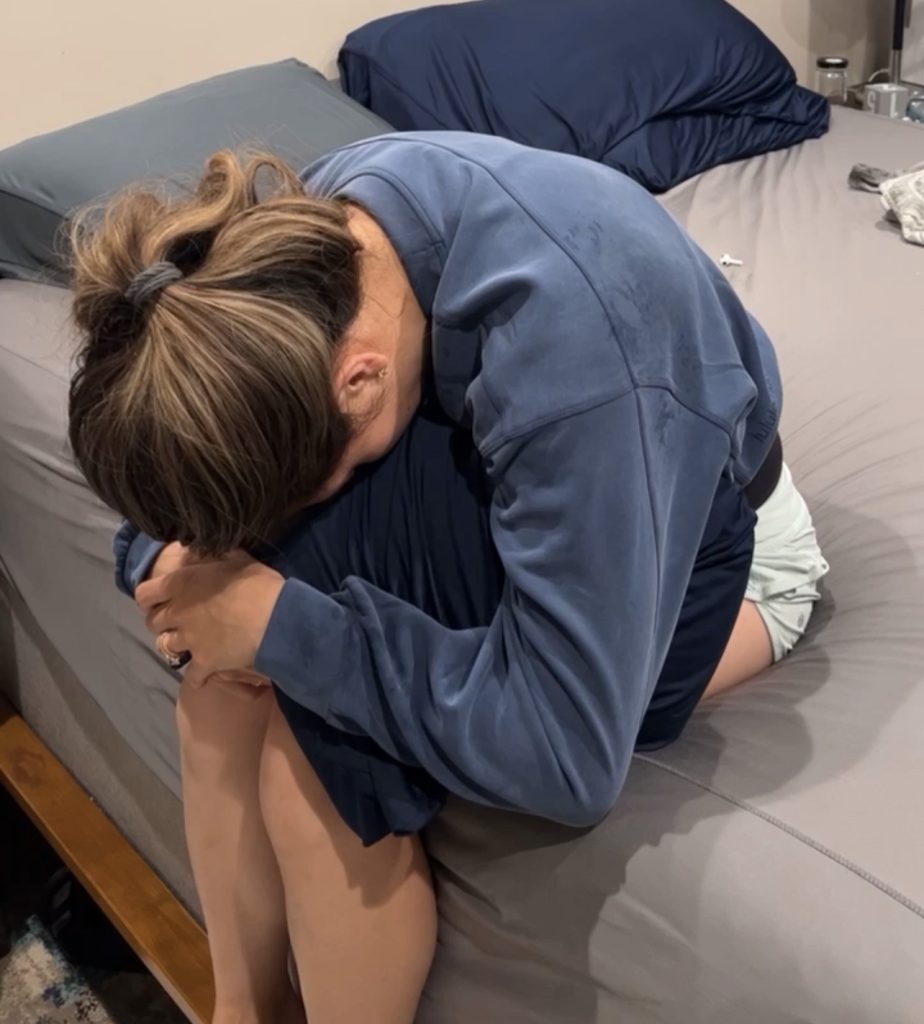
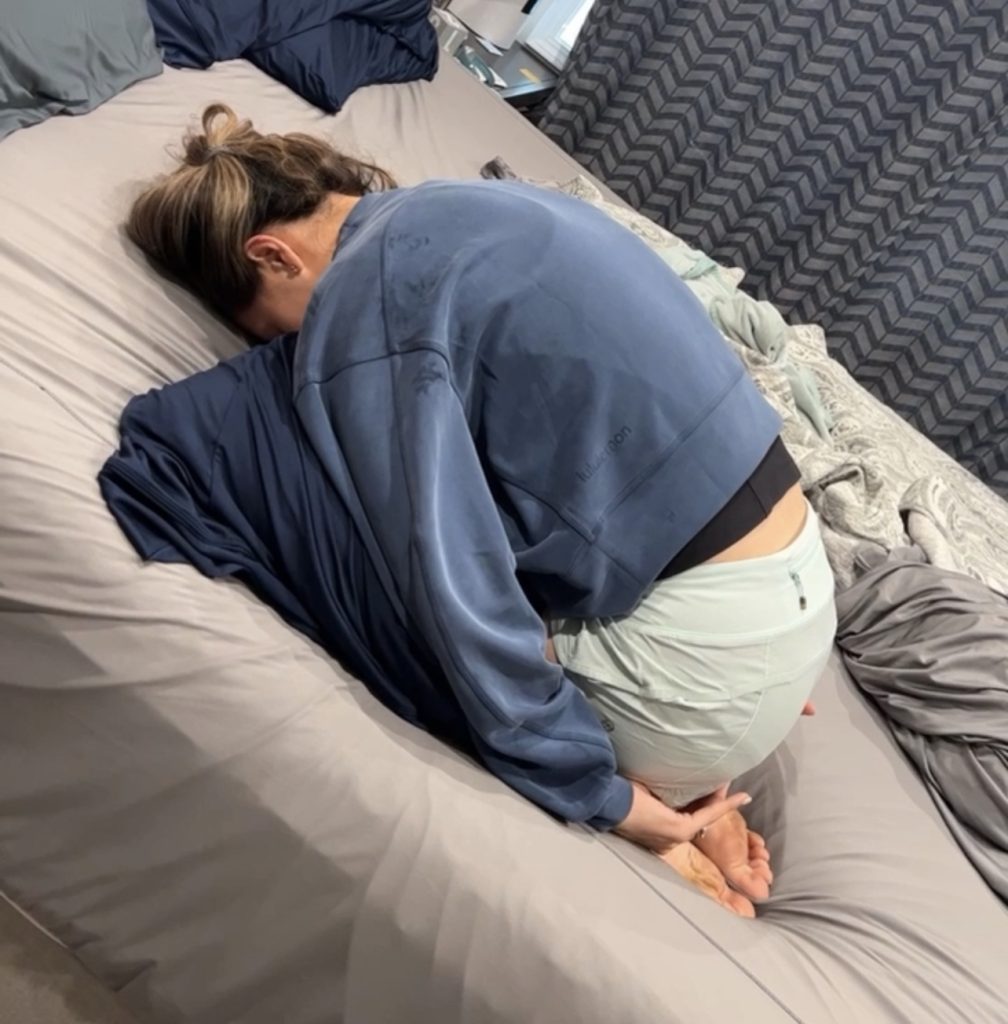
Try breathing in these rounded back positions. Grab a pillow and squeeze it into your chest.
Then focus on inhaling deeply into the upper back. Exhale to release.
3) Thoracic Mobility: Side Bending Breathing Drill
Next, we can focus on the laterally opening of the thoracic spine. Side bending movements can help a ton with opening the side body.
Come into a side lying position, propped up on your elbow. Let the side body fall to the floor, feeling a stretch as it lengthens.
Then reach forward with the top arm, think to drive the chest AWAY from the arm as opposed to reaching forward with the arm. This subtle cue makes a big difference in where you feel the expansion.
Breathe here for a few breaths then switch sides.

4) Thoracic Mobility: Supine Rotations
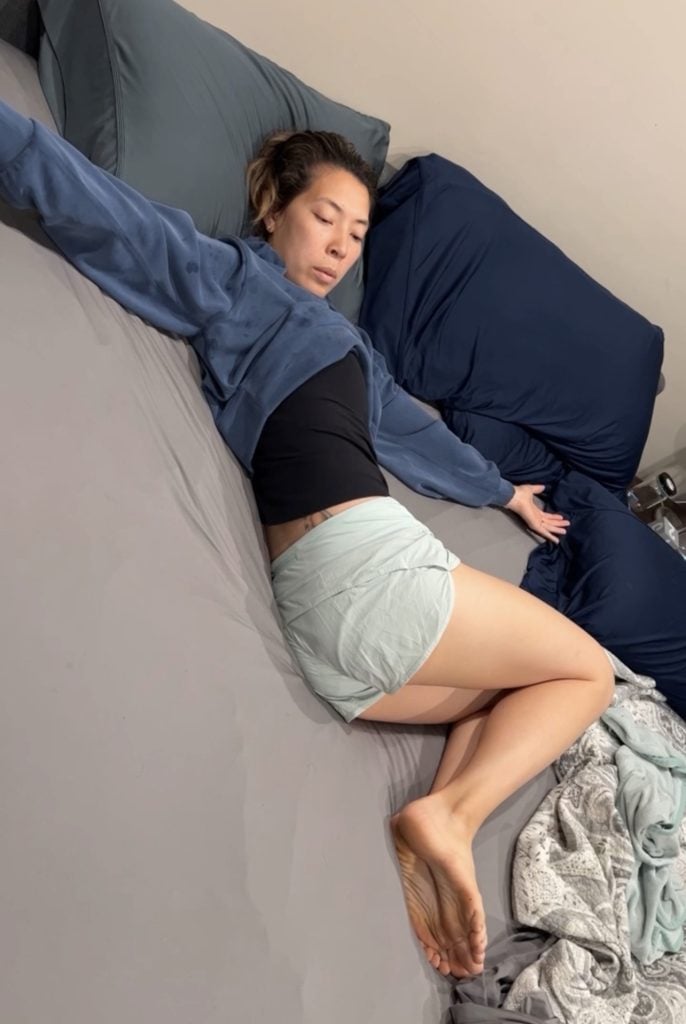
Finally, we can do some thoracic rotational work! In a side-lying position, stack the knees and shoulders with one another.
Then keeping the knees stacked, open up the arms to reach behind you.
You should feel a big stretch in the upper back rotationally!
You can either hold the opening or open and close it several times in each direction.
If you would like to enhance this movement, think to drive the top knee away as you open up.
5) Hip Opener: Supine Figure Four
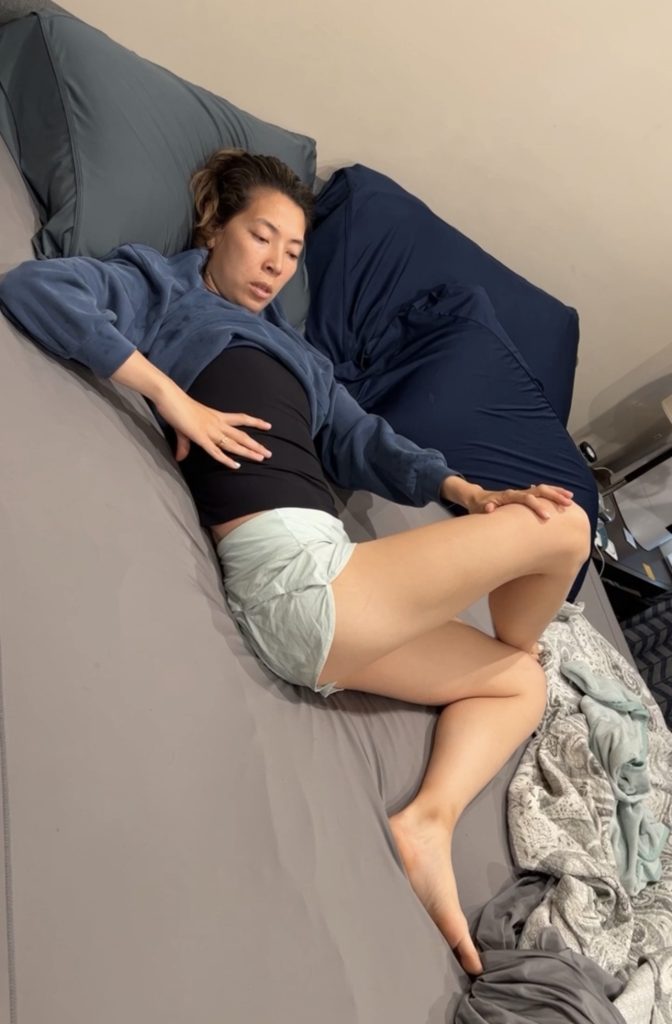
The final mobility-focused exercise is our hip opener supine figure four.
Place the ankle on top of the knee, then drop the foot to the floor. You can stay here, or push the lifted knee away to intensify the sensation in the hip.
Hold for 1-3 minutes, then switch sides.
6) Core Stabilization Exercises: Coordinate Breath to Movement
After we have connected with our core and pelvic floor with breathing drills and found some more mobility with our thoracic and hip opening exercises, we can move on to our core stabilization exercises.
Core stabilization exercises are floor based and are our first opportunity to coordinate our breath to movement. Coordinating breath to movement is the foundation of functional movement and supporting our healing.

In core stabilization exercises, we are focusing on maintaining our core position as our arms and legs move.
You can see how this may be important for when we are more upright and lifting weights or picking up our kids.
We want to be able to anchor from our core, without compromising our spine, to do functional movements throughout our day.
Three core stabilization exercises you can do include:
- Deadbug
- Side-Lying Hip Abduction
- Bird Dog
Watch the video below to learn how to coordinate our breath to movement with each of these movements, plus modifications that would be appropriate for the first month postpartum.
Start Your Postpartum Rehab NOW! Don't Wait Until Your 6-Week Clearance!
There is so much we can do the first six weeks postpartum, that waiting for the all-clear at our six-week postpartum appointment is wasting precious time!
We don’t necessarily need to be in the gym lifting weights or working in person with a pelvic floor physical therapist yet.
But we can begin to reconnect with our core, introduce movement to our bodies, and begin some foundational exercises to support core stabilization and optimal our postpartum rehab.