
Table of Contents
When most people think about exercises to strengthen pelvic floor muscles, they immediately picture Kegels. While isolated pelvic floor contractions certainly have a place, they’re only one small piece of the puzzle.
Your pelvic floor doesn’t work in isolation—it functions as part of an integrated system that includes your diaphragm, deep core, hips, glutes, inner thighs, and even your posture. If one piece of that system isn’t functioning well, your pelvic floor has to compensate.
That’s why this 25-minute pelvic floor workout focuses on movement instead of simply squeezing. Throughout this routine, you’ll strengthen the muscles surrounding your pelvis, improve hip mobility, challenge balance, and teach your body how to coordinate pressure and movement naturally.
Whether you’re pregnant, postpartum, or simply looking to build a healthier, stronger core, this workout offers an effective way to improve pelvic floor function through full-body training.
Subscribe to our YouTube Channel for more weekly workouts and educational videos! We publish one new workout video and 2-3 educational videos a week on our channel.
Why Exercises to Strengthen Your Pelvic Floor Go Beyond Kegels
The pelvic floor acts as the foundation of your core. It works continuously with your:
- Diaphragm
- Deep abdominal muscles
- Multifidus muscles in your spine
- Glutes
- Hip rotators
- Inner thighs
Together, these muscles create what is often called the deep core canister, helping you:
- Manage intra-abdominal pressure
- Support your spine
- Stabilize your pelvis
- Control bladder and bowel function
- Improve balance
- Generate force during lifting, running, and daily activities

If one muscle group becomes overactive or underactive, the pelvic floor often compensates. Instead of repeatedly strengthening the pelvic floor itself, improving the entire system frequently produces better long-term results.
This workout emphasizes movement quality, breathing, and muscular coordination rather than isolated contractions.
Who Can Benefit from This Workout?
This routine is ideal for:
- Individuals during pregnancy (with appropriate modifications)
- Postpartum recovery after medical clearance
- Runners
- Lifters
- Anyone experiencing feelings of pelvic instability
- Individuals looking to improve overall movement quality
- Those wanting to complement pelvic floor physical therapy
If you’re currently experiencing significant pelvic pain, prolapse symptoms, urinary leakage, or persistent discomfort, working with a pelvic floor physical therapist alongside your exercise routine can provide individualized guidance.
Equipment You'll Need
Before starting, gather:
- Medium to heavy dumbbells or kettlebells
- Mini resistance band
- Yoga block, Pilates ball, or soft pillow
- Long resistance band anchored around knee height (optional)
- Foam roller (optional)
Many exercises can easily be modified if you don’t have all the equipment.
Part 1: Building Pelvic Support with Bilateral Strength
The workout begins with two foundational movement patterns:
- Squats
- Romanian Deadlifts (Hip Hinges)
These movements may not seem “pelvic floor specific,” but they’re incredibly effective because they train the muscles that directly influence pelvic positioning.
Mini Band Squats
Place a mini band around your knees and maintain gentle outward tension throughout every repetition.
The goal isn’t simply pushing your knees apart.
Instead, the band encourages activation of the outer hips and glute muscles, particularly the glute medius, which plays an important role in stabilizing the pelvis.
When the glutes are functioning well, they help create a more balanced pelvic position, allowing the pelvic floor to work more efficiently.
Breathing Focus
Pair each squat with intentional breathing:
- Inhale as you lower into the squat.
- Feel your breath expand into your ribs and back.
- Exhale as you stand.
- Gently draw the lower abdomen inward while naturally lifting through the pelvic floor.
This breathing strategy encourages pressure management without excessive bracing.

Block Squeeze Romanian Deadlifts
Next, place a yoga block or Pilates ball between your knees during Romanian deadlifts.
While hinging:
- Keep a slight bend in the knees.
- Push your hips backward.
- Maintain gentle pressure on the block.
The block activates the adductors (inner thighs), which share important fascial and muscular connections with the pelvic floor.
Rather than stretching the hamstrings endlessly, strengthening them through loaded hinges often restores better balance throughout the backside of the body.
Many people believe their hamstrings are “tight” when they’re actually lengthened and underloaded. Controlled deadlifts help build strength where flexibility alone cannot.

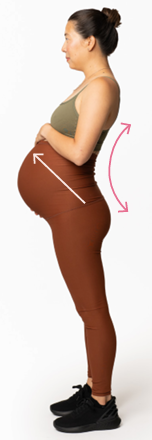
Why Pelvic Position Matters
Most people naturally spend much of the day in an extended posture:
- Rib cage flared
- Pelvis tipped forward
- Lower back arched
This posture often creates:
- Longer front pelvic floor muscles
- Shorter, tighter back pelvic floor muscles
- Reduced ability to move efficiently between positions
Using breathing, glute activation, and inner thigh engagement helps restore a more neutral pelvic position without forcing it.
Part 2: Single-Leg Training for Pelvic Balance
Once bilateral movements are complete, the workout shifts to unilateral exercises.
This is where the routine becomes especially unique.
Our bodies aren’t perfectly symmetrical. Most people naturally favor different movement patterns on each side.
Instead of forcing perfect symmetry, this workout gently trains each side according to its typical tendencies.

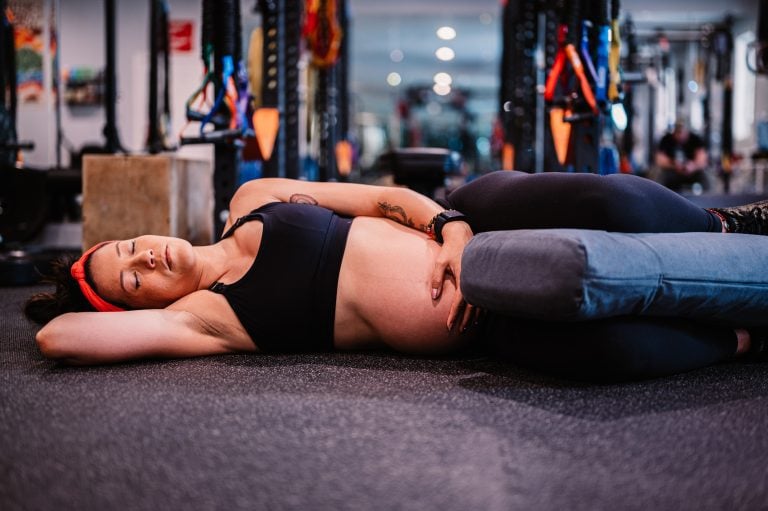 On-demand video · 30 workoutsCore, Pelvic Floor & Pelvic StabilityThirty follow-along workouts across beginner, novice, and advanced levels, ten per level — core and pelvic floor strength for pain relief in pregnancy or postpartum.Learn more
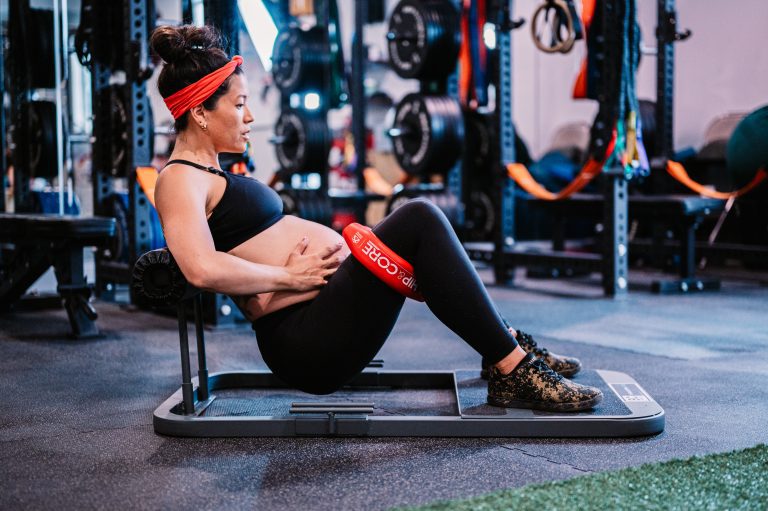 Bundle · lifetime accessMamasteFit BundlesCombine courses and programs for lifetime access and save up to 15% — grouped for birth preparation, the third trimester, or the whole pre and postnatal journey.Learn more
 App program · 64 daysPostpartum Return to RunningSixty-four training days, four sessions a week, with plyometrics and running programming beginning at week seven — a structured way back to your first run.Learn more
Training the Left Hip
For the left side:
- Place the resistance band around the inside of the left knee.
- Hold the weight in your right hand.
This setup encourages:
- Internal rotation
- Adductor activation
- Improved pelvic control
Exercises include:
- B-stance squats
- Staggered Romanian deadlifts
- Single-leg deadlifts (optional advancement)
Holding the weight in the opposite hand naturally creates a slight rotational demand that encourages the left hip to move into positions many people struggle to access.


Training the Right Hip
The setup changes for the right side.
Now:
- The band moves around the outside of the right knee.
- The weight stays in the right hand.
This promotes:
- External rotation
- Outer glute activation
- Improved lateral hip stability
These subtle changes recognize that many people naturally rely on one hip differently than the other during walking, standing, and lifting.
Instead of performing identical exercises on both sides, these small adjustments help restore balance while still training the same movement patterns.


Why Single-Leg Work Benefits the Pelvic Floor
Single-leg exercises challenge much more than balance.
They improve:
- Hip stability
- Core control
- Load transfer between the trunk and legs
- Pelvic coordination
- Walking mechanics
- Running efficiency
Because the pelvis constantly shifts from one leg to the other during daily life, unilateral exercises closely mimic real-world movement demands.
This makes them incredibly valuable for pregnancy, postpartum recovery, and long-term pelvic health.
Progressing from Staggered to Single-Leg Deadlifts
If balance feels challenging, begin with staggered stance Romanian deadlifts.
As stability improves, progress toward full single-leg deadlifts.
Remember:
Balance isn’t the primary goal.
Control is.
If needed:
- Hold onto a wall.
- Reduce the weight.
- Shorten your range of motion.
Quality movement always beats perfect-looking movement.

Part 3: Hip Airplanes for Mobility and Pelvic Awareness
The workout finishes with one of the most valuable mobility exercises available:
Hip airplanes.
Using a foam roller against the wall (or performing them without one), you’ll rotate the pelvis over a stable femur while exploring both internal and external rotation.
As you move:
- Opening the hip often creates a stretch through the groin and inner thigh.
- Closing the hip often creates a stretch through the deep glutes and posterior pelvic floor.
This exercise develops mobility where many people unknowingly hold tension.
Rather than forcing a stretch, hip airplanes teach your body to actively control movement through available range.


Exploring Your Own Asymmetries
One of the biggest takeaways from this workout is learning to notice how your body feels.
Ask yourself:
- Does one hip rotate more easily?
- Does one side feel tighter?
- Is one leg more stable?
- Where do you feel the stretch?
- Which movements feel more natural?
None of these differences automatically indicate a problem.
Normal asymmetry exists in every body.
The goal isn’t perfection—it’s awareness and improved movement options.
Integrating the Pelvic Floor Into the Whole Body
One of the most empowering aspects of this workout is its philosophy.
Instead of viewing the pelvic floor as a muscle that simply needs strengthening, it recognizes that pelvic health depends on the entire body working together.
By combining:
- Breath
- Strength
- Rotation
- Balance
- Mobility
- Core coordination
you create an environment where the pelvic floor can function naturally instead of constantly compensating.
Final Thoughts
Pelvic floor health isn’t about doing hundreds of Kegels.
It’s about helping your entire body move, breathe, and stabilize more effectively.
This 25-minute workout combines strength training, breathing, unilateral exercises, and mobility to improve pelvic balance in a way that translates directly into everyday life.
By strengthening your glutes, engaging your inner thighs, improving hip mobility, and coordinating your breath with movement, you’re giving your pelvic floor exactly what it needs: a supportive team of muscles working together.
Whether you’re preparing for birth, recovering postpartum, returning to lifting, or simply wanting to move better, incorporating these movement strategies into your regular training can help you build a stronger, more resilient foundation from the inside out.
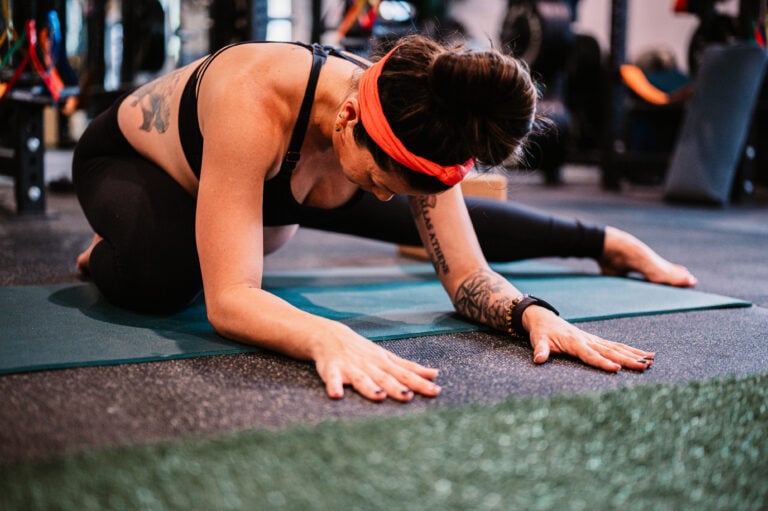 Video course · 7 modulesPrepare Your Pelvic Floor For BirthSeven modules on releasing the pelvic floor rather than only strengthening it — breathing drills, thoracic and pelvic mobility, and how to relax it during labor.Learn more
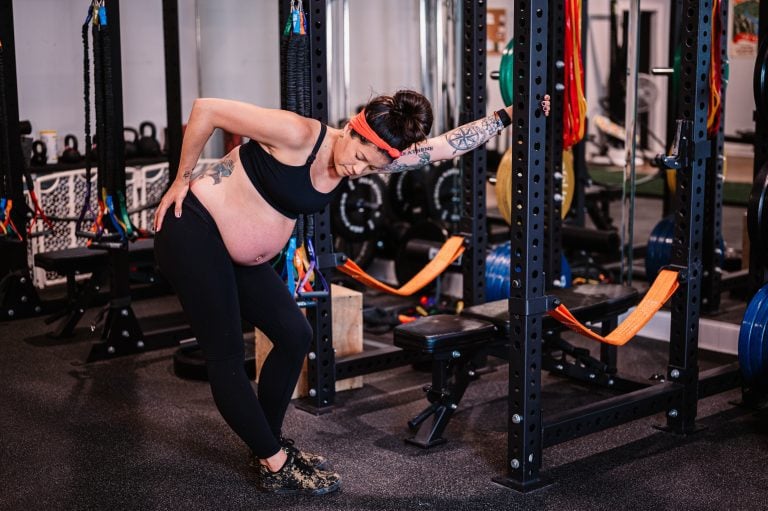 On-demand video · 128 workoutsPrenatal Workout On-DemandFollow-along workouts from week 5 to week 41, four or five a week with guided warm-ups and cool-downs — over 128 sessions coached in real time alongside the video.Learn more
 App program · 16 weeksPostpartum Return to FitnessSixteen weeks of rebuilding, four strength sessions a week, with a vaginal or cesarean recovery track and follow-along videos for the first six weeks.Learn more