



If baby is breech at 28 weeks, it can be worth being more deliberate in encouraging a head down position! Babies who are breech at 28 weeks are more likely to still be breech at term. If your provider does not support breech vaginal delivery (which is less common in the United States), it can be worth making the effort to encourage baby to turn head down than just wait and see if baby will flip head down on their own! Let’s explore four ways we can help baby rotate head down!
Breech to Head Down Position: Find the Balance in the Uterus
Baby’s positions are not random; they are based on the space that is available for them! If there is restricted space or tension impeding their ability to turn, then they are more likely to remain in a less optimal position, or less likely to flip head down.
How can we approach creating the opportunity for baby to turn head down? We can clear their path!
The uterus is baby’s home, and the uterine shape can influence what position baby can find themselves in. If we can clear their path of obstacles, such as by balancing the uterine ligaments and releasing tension, they can turn and rotate more easily!
These tips will not necessarily flip your baby, but rather, will present the opportunity for them to flip on their own!
Uterine Ligaments
The uterus has several ligaments that attach it to the surrounding structures. The tension in these ligaments can influence the space available for baby.
On the bottom of the uterus, we have four uterosacral ligaments that attach from the bottom of the uterus to the sacrum (back of the pelvis). These ligaments can twist or pull, decreasing the space in the bottom of the uterus.
If there isn’t enough space in the bottom of the uterus, then baby may not be able to turn head down!
Another set of ligaments we will discuss in this blog are the round ligaments! The round ligaments run vertical from the uterine main body to the labia.
Usually, tension or an imbalance in the round ligaments can create a vertical speed bump for baby’s path.
Sudden hip extension may cause a sudden sharp pain in the lower abdomen, more towards one side, and you may have a sensation of lightening crotch, or a sudden sharp pain in the vagina.
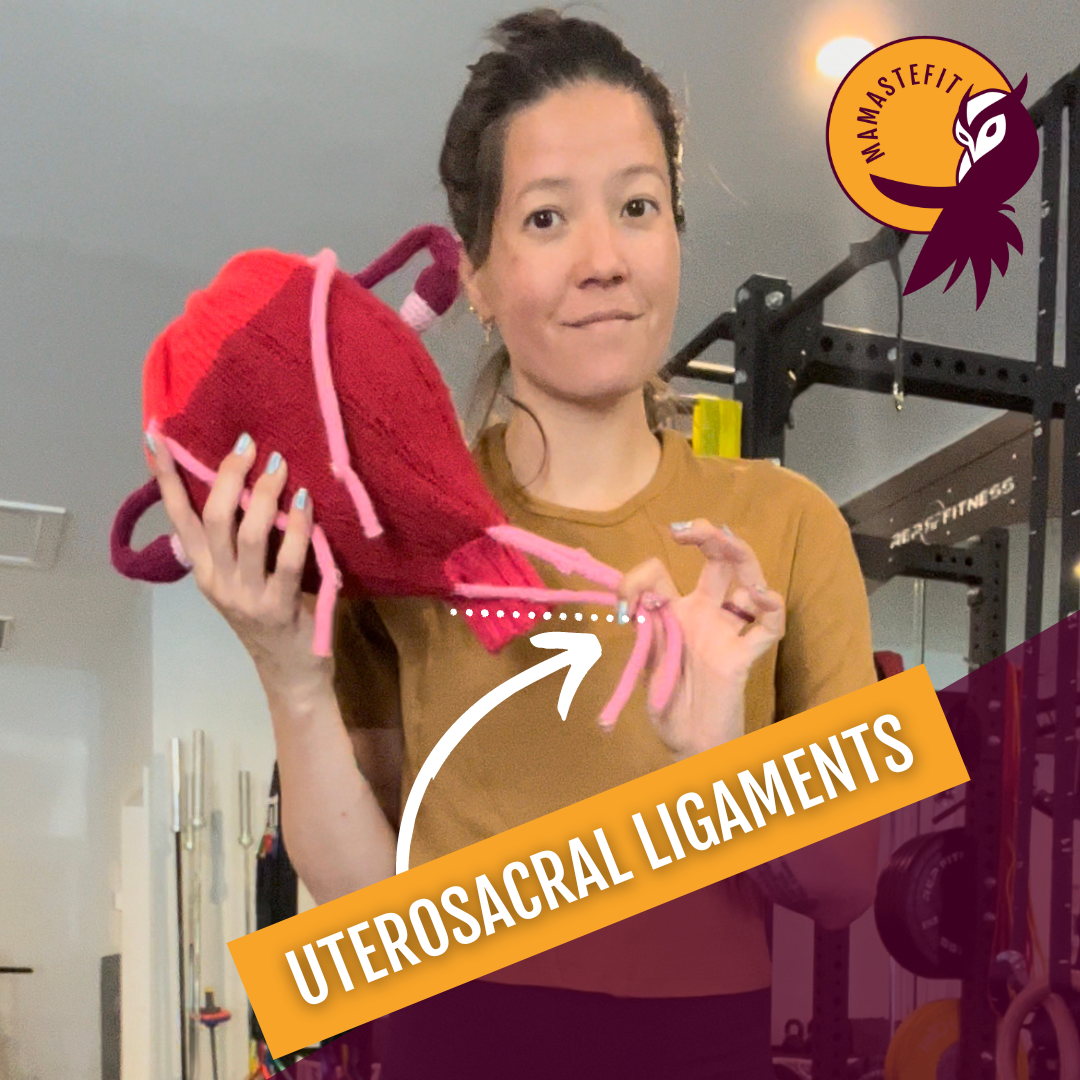

Release the Uterosacral Ligaments
1. Inversions: Hips Above Head
First, we can bring the hips higher than the head to help stretch out the uterosacral ligaments. There are several variations we can try depending on your comfort and strength!
The forward leaning inversion, with the legs on an elevated surface, will be the most intense and physically challenging. Then we can bring the feet closer to the floor, and decrease the inverted angle by come to dolphin or puppy pose.
Hold each position for 3 full breaths, although the less inverted positions you may be able to hold longer comfortably.


You can start doing inversions daily starting at 20 weeks to specifically address uterine balance, but if baby is breech focus on 7-14 inversions per day. Once baby has flipped head down, avoid inversions for one week.
If you have high blood pressure, inversions may be contraindicated for you.
2. Inverted Hip Shifting
The next thing we can do is shift around in the hips to change the pelvic position. The uterosacral ligaments attach to the sacrum, and the sacrum’s position can be affected slightly by the overall pelvic position.
When we shift our weight into one leg, it tends to internally rotate at the hip (pelvis on femur moves into a closed hip position, see left leg in image). This shifts the tailbone and sacrum away, more towards the right side.
So, this shifting could stretch the uterosacral ligaments as you shift your weight form side to side!

Hold a puppy position so that you can maintain this for a short period of time. Shift your weigh towards one leg, take a big inhale and exhale to relax. Then shift to the other leg. You can also do 3-5 breaths on one side, then shift to the other side.
Release the Round Ligaments
3. Hip Flexor Releases
Next, we can focus on the round ligaments! The round ligaments run from the labia to the upper uterus, and tend to follow the path of the hip flexor muscles.
We can focus on hip flexor stretches to help release the round ligaments, as well!
Start in a half kneeling position with the outside knee down, and tuck the butt underneath. Then drive the hips forward to feel a stretch in the front of the pelvis on the down knee side.
Then you can reach overhead towards the opposite side to feel a stretch in the side body.

As you do this, you can self-massage the round ligament area (usually can feel a band running vertical between the belly button and hip bone) in small, gentle circles. You can do this on both side for about 30-60 seconds.
Seek a Professional!
4. See a Webster Certified Chiropractor
Then, we can work with a professional to address the uterine ligaments and pelvic positioning! A webster certified chiropractor specializes in prenatal chiropractic care and has helped me tremendously with my own round ligament and pelvic girdle pain to stay comfortable throughout all three of my pregnancies.
You can also work with a pelvic floor physical therapist throughout your pregnancy to support the balance of the uterus and pelvis, as well! We have two pelvic floor PTs that work out of gym, and offer both in person and virtual support.
Baby’s positions are not random. Our babies will find a position based on the space that is available for them in the uterus. This space can be influenced by the tension and balance of the uterine ligaments, and surrounding structures! We can focus on releasing tension in the uterosacral and round ligaments to help baby turn head down and find a more optimal position for a vaginal birth!