



Table of Contents
If you have ever noticed your abdomen changing shape during pregnancy, postpartum exercise, or core training, you may have heard the terms abdominal coning and doming used to describe what you are seeing.
Although these two terms are sometimes used interchangeably, they actually describe different things happening within the abdominal wall.
Coning is primarily a pressure management issue, while doming is more related to muscular activation.
Understanding the difference can help you make better adjustments during core exercises and develop strategies that allow you to train your core effectively while improving how you manage pressure through your abdomen.
Subscribe to our YouTube Channel for more weekly workouts and educational videos! We publish one new workout video and 2-3 educational videos a week on our channel.
What Is Abdominal Coning?
Coning occurs when the center line of the abdomen pushes outward farther than the surrounding abdominal wall. It can create a ridge or peak along the midline of the abdomen, particularly during movements that increase pressure within the abdominal cavity.

The center of the abdomen contains the linea alba, a connective tissue structure that runs between the two sides of the rectus abdominis. During pregnancy, this tissue naturally stretches as the abdominal wall accommodates the growing uterus.
When pressure inside the abdominal cavity increases, that pressure can be directed toward the linea alba. If the body is not managing that pressure effectively, the center of the abdomen may push outward, creating the characteristic appearance of coning.
Coning can become particularly noticeable during exercises that require significant core stabilization, such as:
- Core exercises
- Hanging exercises
- Overhead pressing movements
- Leg-lifting exercises
- Other movements that increase abdominal pressure

The goal is not necessarily to eliminate every instance of abdominal movement. Instead, it is useful to develop strategies that help you manage pressure more effectively during exercise.
Understanding Pressure Management
To understand coning, it helps to understand how the body’s deep core system works together.
Pressure management involves several important structures that work as a coordinated system. At the top of the abdominal cavity is the diaphragm, while the pelvic floor forms the bottom. Additional support comes from muscles including the:
- Transverse abdominis
- Internal obliques
- Multifidi
- Other muscles of the abdominal wall and trunk

The diaphragm and pelvic floor work together as part of the body’s pressure-management system, while the deep abdominal and spinal muscles provide additional support and stability.
This system is important not only for core exercises but also for everyday movement.
When your arms and legs move, you want your torso to provide a stable foundation. Ideally, your core helps maintain the position of your trunk while allowing your extremities to move freely.
When pressure is not being managed efficiently, coning can be one visible sign that the strategy could be improved.
Why Can Excessive Coning Be a Concern?
Seeing some coning occasionally does not mean that you have damaged your core or ruined your abdominal recovery.
However, consistently experiencing significant coning during exercise may indicate that pressure is being directed toward the linea alba rather than being distributed effectively throughout the abdominal wall.
During pregnancy and postpartum recovery, the linea alba is already undergoing changes. Pregnancy naturally places additional stretching demands on this connective tissue.
The way a person’s tissues heal and recover can depend on several factors, including genetics and tissue laxity. Movement and pressure-management strategies may also play a role.
If excessive coning occurs repeatedly throughout pregnancy and during exercise, the repeated pressure placed against the connective tissue may contribute to additional strain.
That does not mean you need to avoid every exercise that produces even a small amount of coning. Instead, learning how to adjust your breathing, alignment, and muscular engagement can help you improve your pressure-management strategy.
What Is Doming?
Doming can look similar to coning at first glance, but the underlying strategy is different.
With doming, the abdominal wall may appear to sink inward or create a rounded, bread-loaf-like shape rather than having the center line pushed outward by pressure.

In this situation, the rectus abdominis (your six pack abs) may be doing more of the work while the transverse abdominis and deeper abdominal muscles are not contributing as effectively.
In other words, doming is more closely associated with a muscular activation strategy, whereas coning is associated with pressure management.
This distinction is important because the visual appearance of the abdomen alone does not necessarily tell you exactly what is happening.
Coning vs. Doming: What Is the Difference?
The easiest way to think about the difference is:
Coning
- The center line of the abdomen pushes outward.
- Pressure is directed into the connective tissue along the midline.
- It can indicate a less-effective pressure-management strategy.
- The goal is to improve how pressure is distributed through the abdominal wall.
Doming
- The abdominal wall may sink inward or create a rounded, loaf-like appearance.
- The rectus abdominis may be doing more of the work.
- The deeper abdominal muscles may not be contributing as effectively.
- The focus is on improving muscular activation and coordination.
These two patterns can look different, but the strategies used to address them can overlap.
The Importance of Exhalation
One of the first strategies to try when you notice coning is to focus on your exhalation.
Rather than simply thinking about “pulling your stomach in,” think about creating a coordinated connection throughout your trunk.
During your exhale, imagine:
- Drawing your hip bones toward one another
- Bringing the rib cage toward the opposite hip
- Creating a diagonal connection across the abdominal wall
- Activating the abdominal wall from side to side

This creates a more coordinated engagement of the deep core rather than relying exclusively on the rectus abdominis.
The goal is to create tension and support throughout the abdominal wall while managing the pressure generated during the movement.
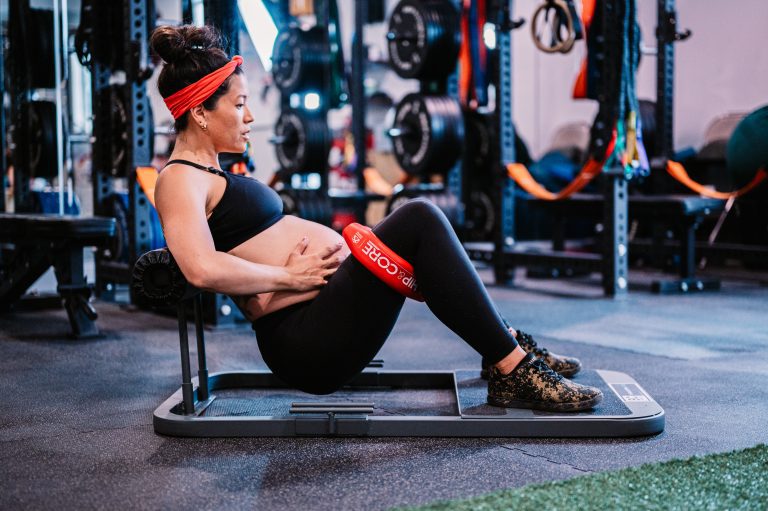 Bundle · lifetime access
MamasteFit Bundles
Combine courses and programs for lifetime access and save up to 15% — grouped for birth preparation, the third trimester, or the whole pre and postnatal journey.
Learn more
Bundle · lifetime access
MamasteFit Bundles
Combine courses and programs for lifetime access and save up to 15% — grouped for birth preparation, the third trimester, or the whole pre and postnatal journey.
Learn more
 On-demand video · 30 workouts
Core, Pelvic Floor & Pelvic Stability
Thirty follow-along workouts across beginner, novice, and advanced levels, ten per level — core and pelvic floor strength for pain relief in pregnancy or postpartum.
Learn more
On-demand video · 30 workouts
Core, Pelvic Floor & Pelvic Stability
Thirty follow-along workouts across beginner, novice, and advanced levels, ten per level — core and pelvic floor strength for pain relief in pregnancy or postpartum.
Learn more
 App program · 16 weeks
Postpartum Return to Fitness
Sixteen weeks of rebuilding, four strength sessions a week, with a vaginal or cesarean recovery track and follow-along videos for the first six weeks.
Learn more
App program · 16 weeks
Postpartum Return to Fitness
Sixteen weeks of rebuilding, four strength sessions a week, with a vaginal or cesarean recovery track and follow-along videos for the first six weeks.
Learn more
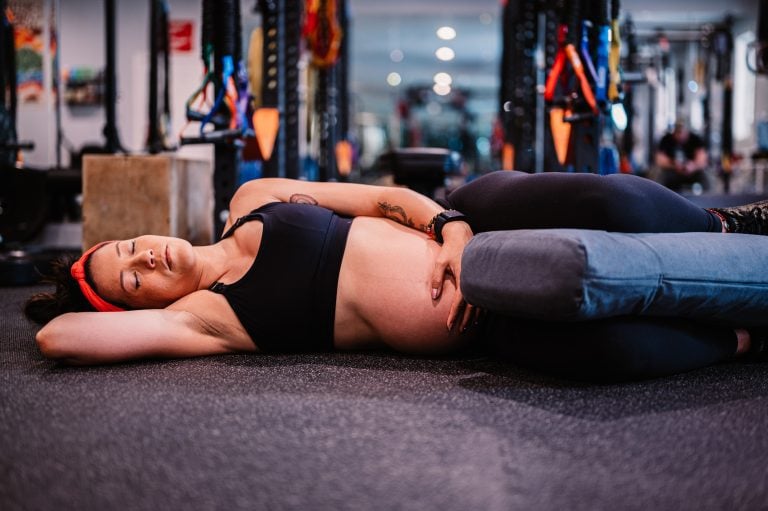
Start in a Supported Position
If you are having difficulty finding this connection, a supported position can be a helpful place to begin.
A supine position can allow you to focus on your breathing and abdominal activation without having to simultaneously manage as many demands from the rest of your body.
A bolster or similar support can be placed underneath the hips to create a slightly more rounded position. Additional support underneath the head can help create a little more cervical flexion.
This setup may make it easier to find a deeper core connection.
Once you are comfortable, focus on the following sequence:
- Inhale and allow your body to relax.
- Begin a controlled exhalation.
- Think about drawing the hip bones toward each other.
- Keep the rib cage connected toward the pelvis.
- Create a diagonal connection from the rib cage toward the opposite hip.
- Maintain this connection as you breathe and move.
The goal is not to aggressively brace or hold your breath. Instead, focus on creating coordinated tension throughout the abdominal wall.

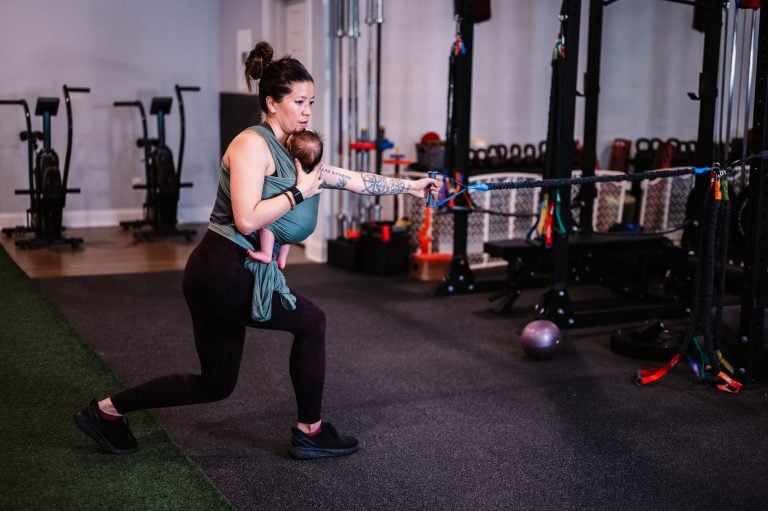
Try a Cross-Body Pull
Another useful strategy is adding a cross-body pulling movement.
This can help encourage diagonal activation through the abdominal wall.
Using a resistance band, position yourself so that you can pull against the band’s resistance while maintaining your rib cage and pelvis in a connected position.

As you exhale, pull the band while thinking about keeping the rib cage down. You can return to the starting position on an inhale and repeat on the same side or alternate sides.
As you perform the movement, pay attention to the shape and tension of your abdominal wall.
The goal is to maintain a strong, connected core rather than allowing the center of the abdomen to push outward.

Progress the Challenge Gradually
Once you can maintain your abdominal-wall connection with a simple movement, you can gradually increase the challenge.
For example, you may add leg movement to a supported core exercise.

The important part is not simply whether you can perform the movement. Instead, pay attention to whether you can maintain your pressure-management strategy as the exercise becomes more demanding.
Ask yourself:
Can I continue breathing?
Can I maintain the connection between my rib cage and pelvis?
Can I maintain tension through the abdominal wall without excessive coning?
If the answer changes as an exercise becomes more difficult, that may be useful information. Rather than pushing through the movement, you can reduce the difficulty and rebuild your coordination before progressing again.
Having Diastasis Does Not Mean You Cannot Train Your Core
One important point is that having a diastasis does not automatically mean you need to avoid core exercises.
Roxanne is an example of someone that still has a diastasis postpartum, but using proper pressure management strategies, she is able to perform core exercises without coning.
This distinction is important because the presence of abdominal separation does not tell you everything about how your core functions.
Instead of thinking, “I have diastasis, so I can’t exercise my core,” consider how you are managing pressure and whether you can perform a movement while maintaining an effective abdominal-wall strategy.
Your exercises can then be modified or progressed according to how your body responds.
The Same Strategies Can Help With Doming
The same principles used to address coning can also be useful when doming is present.
Because doming may reflect a muscular activation strategy in which the rectus abdominis is doing more of the work, the goal is to encourage greater contribution from the deeper abdominal muscles.
Again, focus on:
- Controlled exhalation
- Keeping the rib cage connected toward the pelvis
- Drawing the lower abdomen inward and upward
- Creating a connection between the pelvis and rib cage
- Activating the abdominal wall rather than simply bracing the outermost muscles
The goal is not to force the abdomen into a particular shape. Instead, you are developing better coordination between the different muscles that contribute to core stability.
 App program · 64 days
Postpartum Return to Running
Sixty-four training days, four sessions a week, with plyometrics and running programming beginning at week seven — a structured way back to your first run.
Learn more
App program · 64 days
Postpartum Return to Running
Sixty-four training days, four sessions a week, with plyometrics and running programming beginning at week seven — a structured way back to your first run.
Learn more
 On-demand video · 128 workouts
Prenatal Workout On-Demand
Follow-along workouts from week 5 to week 41, four or five a week with guided warm-ups and cool-downs — over 128 sessions coached in real time alongside the video.
Learn more
On-demand video · 128 workouts
Prenatal Workout On-Demand
Follow-along workouts from week 5 to week 41, four or five a week with guided warm-ups and cool-downs — over 128 sessions coached in real time alongside the video.
Learn more
 App program · 40 weeks
Prenatal Strength Training
A gym-based program that syncs to your current week of pregnancy — four strength sessions plus one pelvic stability workout a week, with demo videos for every exercise.
Learn more
App program · 40 weeks
Prenatal Strength Training
A gym-based program that syncs to your current week of pregnancy — four strength sessions plus one pelvic stability workout a week, with demo videos for every exercise.
Learn more
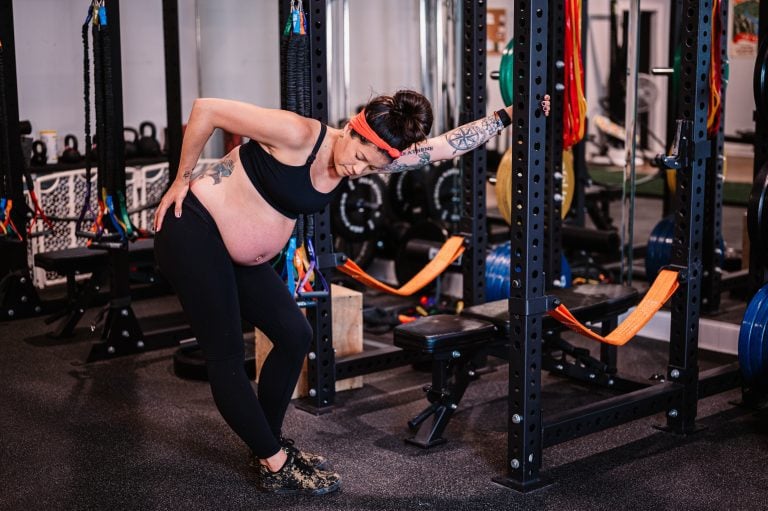
Applying Core Strategies to Upright Exercises
Core training does not have to happen exclusively on the floor.
The same principles can be applied to standing exercises and more functional movements.
If you notice coning during movements such as:
- Standing core exercises
- Hanging exercises
- Overhead presses
- Loaded movements
- Other exercises that challenge your trunk
Think about creating the same connections you practiced in a supported position.
Ask yourself:
Can I draw my hip bones toward one another?
Can I maintain a connection between my rib cage and pelvis?
Can I create diagonal activation across my abdominal wall?
These cues can help you maintain a more coordinated abdominal-wall strategy while performing more challenging movements.
Building a Stronger Abdominal Wall
The goal of pressure management is not simply to prevent your abdomen from moving.
Your abdominal wall needs to be able to change shape and respond to pressure. Breathing, movement, pregnancy, lifting, and exercise all create different demands on the trunk.
Rather than trying to keep your abdomen completely rigid, think about developing the ability to respond to these changes in pressure.
Coordinated activation throughout the abdominal wall can help increase its ability to withstand changes in pressure while allowing you to move.
This is especially useful as exercises become progressively more challenging.
What Should You Do If You Notice Coning?
If you notice coning during an exercise, you do not necessarily need to stop exercising altogether.
Instead, try adjusting one variable at a time.
You might:
- Reduce the intensity of the exercise.
- Slow down the movement.
- Focus on your exhalation.
- Reestablish the connection between your ribs and pelvis.
- Think about drawing the hip bones toward one another.
- Add more support.
- Reduce the range of motion.
- Choose an easier variation of the movement.
- Gradually rebuild the exercise as your pressure management improves.
The objective is to find a version of the movement where you can maintain a coordinated core strategy.

Core Training During Pregnancy and Postpartum
Pregnancy and postpartum both involve significant changes to the abdominal wall.
As the abdomen expands during pregnancy, the connective tissue between the abdominal muscles stretches. After birth, your body then begins the process of recovering and adapting to a new set of physical demands.
Core training can remain an important part of this process.
Rather than eliminating core exercises because you notice changes in your abdominal shape, use those changes as feedback.
Your body’s response can help you determine whether an exercise needs to be modified, whether you need additional support, or whether you are ready to progress.
The goal is to build a core that can manage pressure, coordinate movement, and support your body through everyday activities and exercise.
Final Thoughts
Coning and doming may look similar, but they represent different strategies occurring within the abdominal wall.
Coning is primarily associated with pressure management, while doming is more closely related to muscular activation.
Understanding this distinction can make core training feel much less confusing.
If you notice coning, focus on improving pressure management through breathing, abdominal-wall coordination, and the connection between your rib cage and pelvis. If you notice doming, think about improving deep-core activation and reducing your reliance on the more superficial abdominal muscles.
Most importantly, occasional coning does not mean that you have ruined your core. Instead, use what you see as information that can help you adjust your movement strategy.
With practice, you can develop a stronger connection between your breathing, abdominal wall, pelvis, and rib cage and gradually progress toward more challenging movements while maintaining that connection.
If you’d like a guided approach to prenatal and postpartum fitness, be sure to check out all of our online fitness programs and use code YOUTUBE10 for 10% off!
Bundle · lifetime access
MamasteFit Bundles
Combine courses and programs for lifetime access and save up to 15% — grouped for birth preparation, the third trimester, or the whole pre and postnatal journey.
Learn more
On-demand video · 30 workouts
Core, Pelvic Floor & Pelvic Stability
Thirty follow-along workouts across beginner, novice, and advanced levels, ten per level — core and pelvic floor strength for pain relief in pregnancy or postpartum.
Learn more
App program · 16 weeks
Postpartum Return to Fitness
Sixteen weeks of rebuilding, four strength sessions a week, with a vaginal or cesarean recovery track and follow-along videos for the first six weeks.
Learn more