It can be difficult to navigate all of the information available about what we should and shouldn’t do during pregnancy. Not to mention, advice from family and friends and the occasional unsolicited advice from complete strangers. Nutrition advice can be convoluted as well, especially considering nausea, food aversions, and cravings throughout pregnancy. Nutrition doesn’t have to be confusing or intimidating though. Finding balance in your day and including a quality prenatal vitamin can make all the difference! The main thing to keep in mind is that eating well is one of the best things you can do for yourself and your baby.
According to most nutrition experts, pregnant women should focus on meeting their daily requirements of folate, iron, calcium, vitamins A, C, and D, choline, omega-3 fatty acids, and B vitamins. Let’s break these essential nutrients down a bit further.

1. Folate (Folic Acid)
- Importance: Folate is crucial for preventing serious birth defects in the developing brain and spinal cord (neural tube defects). It also reduces the risk of premature birth and low birth weight.
- Recommended Intake: The correct form of folate is important, as many individuals have difficulty utilizing synthetic folic acid. Bioavailable forms of folate are available in food sources or high-quality prenatal vitamins. Keep in mind, folate requires the support of Vitamins B6 and B12, as well as Choline, in order to perform optimally in the body.
- Before Conception: 400 micrograms (mcg) of folate daily.
- Throughout Pregnancy: 600 to 1,000 mcg of folate daily.
- Sources:
- Fortified cereals (look for 50% to 100% fortification)
- Dark green, leafy vegetables (naturally occurring folate)
- Citrus fruits, dried beans, peas, and lentils
- Avocados, eggs, nuts, and seeds
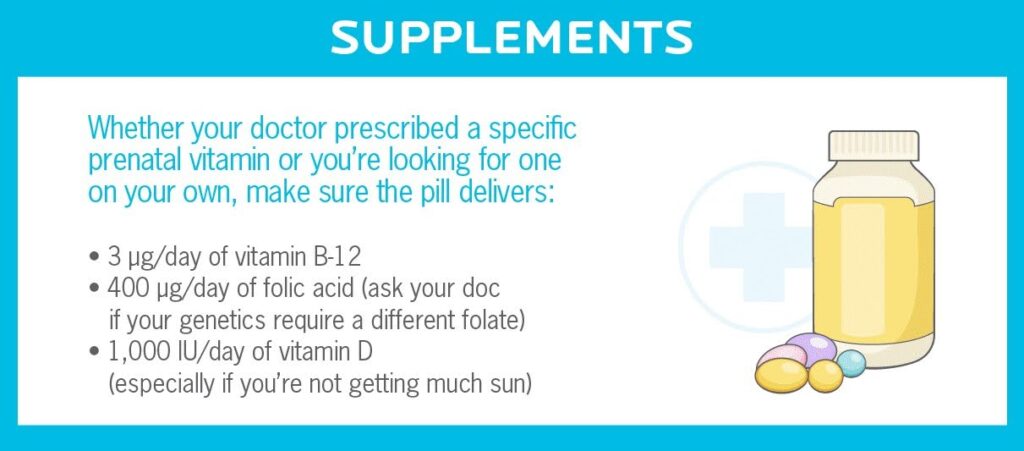
- Consider taking a daily prenatal vitamin containing at least 400 micrograms of folic acid
2. Calcium
- Importance: Calcium supports strong bones and teeth for both the mother and the baby. It also plays a role in circulatory, muscular, and nervous system health.
- Recommended Intake: 1,000 milligrams (mg) per day.
- Sources:
- Dairy products (best absorbed sources)
- Non dairy sources like broccoli and kale
- Sardines
- Many fruit juices and breakfast cereals are fortified with calcium (be mindful of sugar content!)
3. Iron
- Importance: Iron is essential for fetal growth, development, and overall health. Helps red blood cells deliver oxygen to your fetus.
- Recommended Intake: During pregnancy, iron needs are 1.5x higher than usual. 27 milligrams is the recommended daily intake during pregnancy. Consult your healthcare provider to check your iron status.
- Sources:
- Lean meats, poultry, and fish
- Chicken liver, beef liver, beef heart
- Legumes (beans, lentils)
- Iron fortified cereals
- Spinach and other leafy greens
- Prune juice
4. Vitamin D
- Importance: Vitamin D supports bone health and immune function.
- Recommended Intake: Traditional sources recommend 600 IU of vitamin D, but research suggests this level is incredibly low for pregnant women. 4,000 IU is optimal, especially for those individuals already deficient in vitamin D. Consider having your vitamin D levels checked by your provider.
- Sources:
- Sunlight
- Fatty fish (salmon, mackerel)
- Fortified foods (milk, orange juice)
5. Vitamin C
- Importance: Promotes healthy gums, teeth, and bones.
- Recommended Intake: 85 milligrams during pregnancy; 120 mg while breastfeeding.
- Sources:
- Citrus fruit
- Broccoli, brussels sprouts
- Tomatoes, yellow peppers, kale
- Strawberries, cantaloupe, kiwi
6. Vitamin A
- Importance: Helps regulate gene expression and support the development of the heart, eyes, ears, limbs, and immune system.
- Recommended Intake: 770 micrograms.
- Sources:
- Beef or chicken liver, cod liver oil, eggs, mackerel, salmon, salmon roe, and butter
- Green leafy vegetables, red peppers, and broccoli
- Sweet potatoes, carrots, and pumpkin
7. DHA (Docosahexaenoic Acid)
- Importance: DHA is an omega-3 fatty acid critical for brain and eye development.
- Recommended Intake: At least 300 milligrams. Consider prenatal supplementation if diet alone is not enough.
- Sources:
- Fatty fish (salmon, trout, sardines, fish eggs)
- Algae-based supplements
- Eggs from pasture-raised chickens
8. Iodine
- Importance: Iodine is essential for thyroid function and brain development.
- Recommended Intake: 220 – 290 micrograms.
- Sources:
- Iodized salt
- Seafood
- Dairy products
- Eggs
9. Choline
- Importance: Important for development of your fetus’s brain and spinal cord. Choline works synergistically with Omega-3 DHA in the body.
- Recommended Intake: At least 450 milligrams for pregnant women; 550 milligrams for breastfeeding mothers
- Sources:
- Beef liver
- Eggs
- Peanuts
- Soy products
- High-quality prenatal vitamin
10. B Vitamins
- Importance: Vitamins B1, B2, B6, B9, and B12 help give you energy, supply energy for your fetus’s development, promote good vision, and help build the placenta.
- Recommended Intake: Consult your healthcare provider
- Sources:
- Liver, pork, chicken
- Bananas
- Beans
- Whole-grain cereals and breads
- Prenatal vitamin