



It can be a scary procedure for many because of the thought of “a needle in the spine.” This is a valid fear!! In this blog, I will cover what exactly to expect once you ask for your epidural to help take some of the fear away from this procedure if you choose to get one!
Step 1: You ask for one and consent to the procedure
This is a vital step to getting an epidural placed because we do not want to be forcing an epidural on anyone! Your nurse also cannot read minds (shocking! I know! I wish we could), so you must verbalize that you want it for the process to begin.
You will sign a consent form, and the next steps will occur.
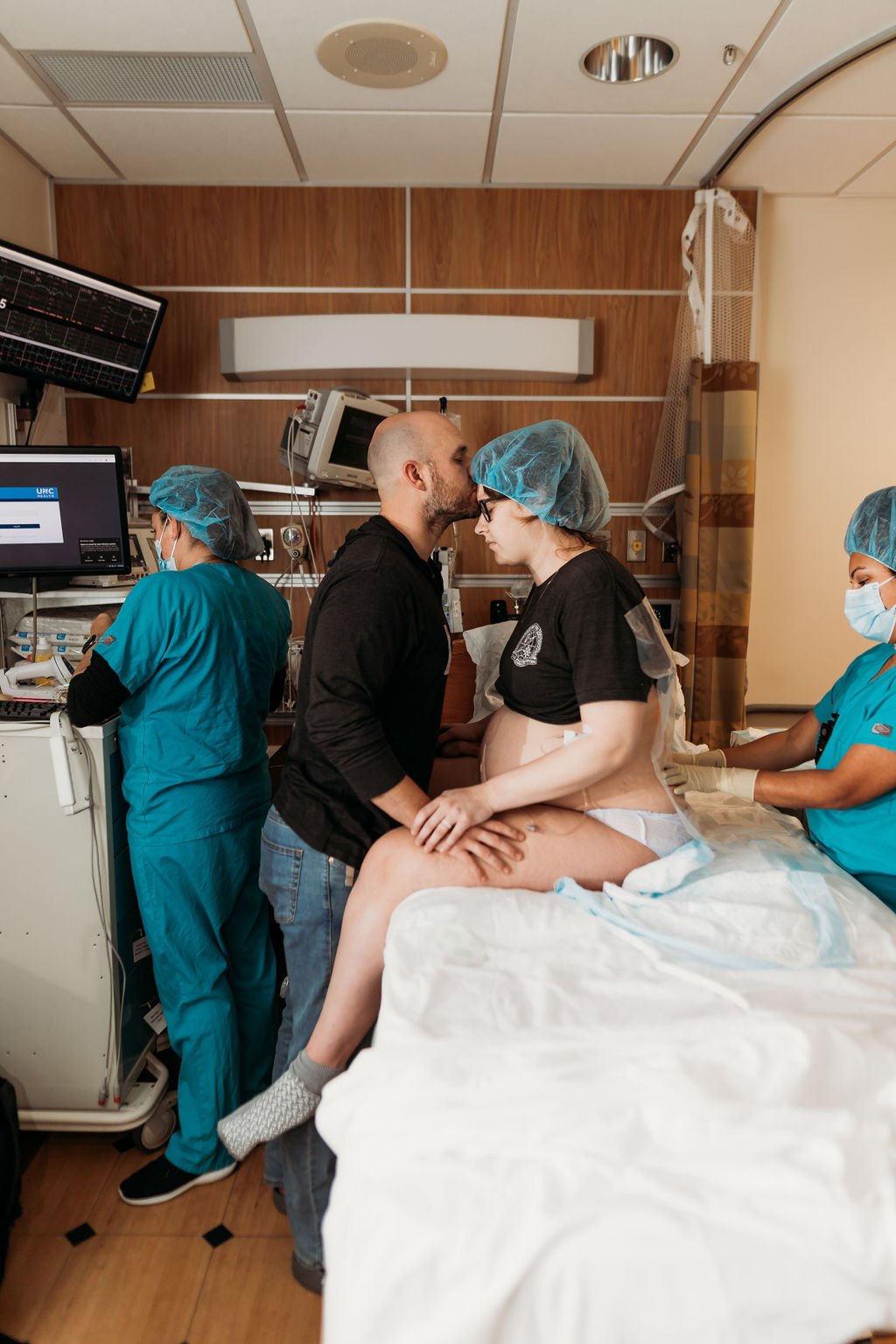
Step 2: Pre-epidural checklist
The next steps are things that need to be done for anesthesia to begin the procedure. Some of these may have already been done, depending on where you are in the admission process.
-
-
-
-
-
- Admission to the Labor and Delivery Unit
- IV placement
- Complete Blood Count (CBC) for Platelet levels
- IV Fluid Bolus (1L bag of IV fluids given through your IV in a short amount of time)
- Anesthesia notified and available
-
-
-
-
Step 3: Procedure
- Position for placement
- Sit on the side of the bed in a rounded back position to create space in the lower back to make placement easier for anesthesia. Thinking of bringing hip bones to the rib cage or tucking butt underneath you to create space in the lower to mid back versus the upper back. It is helpful for many to use a pillow or your partner to help you curl around the bell to find this position.
- Once you are in this position, the goal is to not move from it till the procedure is done; if you need to move, just tell the anesthesiologist before you start so they can be prepared.
- Anesthesia getting their sterile area set up
- Opening their kit
- Wash your back with a cleanser to sterilize the area. Once they do this, DO NOT REACH BEHIND YOU AND TOUCH YOUR BACK! They will need to start over if you do this!
- While your back dries, this will be when anesthesia sets up their sterile area
- Once your back is dried, they will place a sterile drape on your back
- They will administer the numbing agent for your back so you do not feel pain. This is the most uncomfortable portion of the procedure. They are injecting lidocaine, so it’s similar to at the dentist when they give you a numbing agent. It stings and then burns as they administer it, but it will feel better after 5-10 seconds.
- Once the lidocaine has numbed the area, they will use a larger needle to find the epidural space in your spine. This is a space in front of the spinal cord where nerve ends are located. They are NOT injecting medication into the spinal fluid for an epidural
- Once they have found the spot, they will thread a catheter into the location. The catheter is the width of a fishing wire and is moveable and bendable. This is what will be staying in your back. During this threading, you may feel “zings” or “twinges” as it is placed from begin near the surrounding nerve ending. If you feel something, just let your anesthesia know where you felt it so they can adjust the catheter.
- After placing the catheter, they will do a “test dose.” This is when they inject lidocaine with epinephrine into the catheter to see if we elicit certain symptoms. If we get any symptoms, this is a sign the epidural catheter is NOT placed correctly. The symptoms we are looking for are:
- Increase in heart rate
- A metallic taste in your mouth
- Ringing in your ears
- Numbness in your butt
- Lightnessed, dizzy, or drowsiness
- If any of the above are noted, please let your anesthesia provider or nurse know!
- After the test dose, if it’s passed, they will tape up your back with ALOT of tape. They do not want this catheter moving in any way! If it moves, then it will not work as well, which is not a good thing for anyone involved
- After you are taped up, they will reposition you into either laying back reclined with a tilt to one side of the other or they will lay you on one side. I have found this hospital dependent on the policy of post-epidural position.
- Once your epidural is done, the nurse will monitor your blood pressure, heart rate, oxygen status, AND baby’s heart rate for any changes for the next 20-30 minutes.
- When your legs are good and numb, they will place a Foley catheter into your bladder to keep that empty for labor. Some hospitals will not keep it there the whole time but will do an intermittent catheterization every few hours to drain it.
View this post on Instagram
Once the foley catheter is placed you are usually set to enjoy the benefits of getting an epidural by taking a nap or relaxing for a bit!
I hope this helps take away some of the fear associated with the placement of the epidural.
Learn more about pain relief in our childbirth education course