



Welcome to the MamasteFit Podcast! In this episode, Gina (perinatal fitness trainer/birth doula) and Roxanne (certified nurse midwife) interview Kendra, an ICU nurse and mom of three, as she shares two epidural births and her third hospital birth—unmedicated—with doula support. She reflects on initially skipping childbirth prep, feeling disconnected while pushing with a strong epidural, and later attempting an unmedicated induction during COVID that ended in an epidural after she yelled the safe word (only to be fully dilated right after). Between babies, Kendra describes an early pregnancy loss with little support, then fertility testing and Clomid before conceiving baby #3. Kendra switched to a midwife-friendly hospital, used pelvic floor prep, a TENS unit, music “DJ” duties for her partner, minimal cervical checks, and achieved her goal of delivering without an epidural, followed by solid postpartum care and breastfeeding.
Read Episode Transcript
Roxanne: Welcome to the MamasteFit Podcast. On this episode, we’re gonna have Kendra who’s gonna be sharing her birth stories. Her first two, which were epidural births, and then her subsequent third baby where she had some fertility issues getting pregnant and also had a miscarriage in between, and then had an unmedicated birth in the hospital with the support of a doula.
Roxanne: Welcome to the MamasteFit Podcast. On this episode, we have Kendra here, who is gonna be sharing her birth story. Thank you so much for being here, Kendra.
Kendra: Thank you so much for having me. It’s truly an honor to be here. I’m a big fan of your podcast, your, all your education you and Gina put out there. So thank you for having me.
Roxanne: Of course. We’re so excited to have supported you and to have you here on the podcast. So let’s dive right into your birth story. What did you do preconception to prepare for pregnancy and birth? Or what did you do throughout pregnancy to support you during birth?
Kendra: Yeah, I have two sons, and I just gave birth in April to my daughter, Sophia.
I am a registered nurse, but I work in the adult ICU world. I did go through a maternity OB rotation. So like a true nurse sometimes, I was like, “oh,” when we started, you know, talking about having kids and when we first got pregnant with our first son, I was, you know, kind of naive, and I was like, “I don’t really need to do any childbirth classes or really prepare.” I feel like I, I felt like I had a good handle, but boy, was I wrong.
So the first birth, I, I just really just, the only thing I did was I think I watched, this is horrible, but I think I watched like a YouTube online, recording of a childbirth class just for refreshers. So I really didn’t do, anything, any classes. I did take an online breastfeeding course. I definitely knew I wanted to breastfeed. My sister-in-law had just had a baby and just seeing her breastfeed and how magical it was for her, that was definitely something that was important to me. So I did take the time to do, I think it was a free online, I don’t even know what it was or what it was called, but it was some sort of breastfeeding course.
And I forgot to introduce my husband, too. My husband’s name is Corey. We’ve been together for, 15 years now. We’ve been married for almost eight years. And he’s nothing medical, so you know, he was totally fine with not taking any childbirth classes or… I did read the What to Expect-
Roxanne: Yeah
Kendra: When You’re Expecting book, so that is the one thing I did. And I definitely knew, for my first birth, I definitely knew my pain tolerance was very low. So I was like, “Yep, give me the epidural.” In the ICU, obviously, we do see some epidural insertions, not a ton, but I, you know, I knew what the risks were, and I was very comfortable with getting one. So that was, like, my biggest thing for my first was get me the epidural ASAP, as soon as possible. I want it. Give me the papers. I’ll sign. So that was really the only– And I knew, I also knew going through the maternity rotation that, I could have some preference, birth preferences, but, you know, everyone’s birth is different, and I knew that I didn’t have– I tried not to have, a specific birth plan ’cause I knew it could go-
Roxanne: Yeah
Kendra: you know, any, in any direction.
So yeah. So that was kind of with my first. And I had kind of a classic, like start of my… I, had started labor on my own. I had woke up that, it was a summer day in August. He was born in August. And, I seem to-
Roxanne: Oh, gosh.
Kendra: I know. That was terrible. I had two summer babies, and I don’t recommend-
Roxanne: It’s so hot! It’s SO hot.
Kendra: And yeah. Obviously, and where– We live in Pennsylvania, or PA. That’s what we call it, PA. But, we just have the most humid summers, they’re just awful anymore. So I was definitely very miserable. I don’t recommend being pregnant over the summer. Not that, not that you can help that a lot of times, but so anyways.
Yeah, so I, It seemed like I was going into labor on my own. I had woke up and I had started having contractions. And then I worked that day, so I was already at the hospital, and I went over, and I was like, you know, I was maybe two centimeters or so. I got the epidural, everything.
My labor seemed to have stalled, they told me, and I was on that time clock because, I think my water… I had some leakage, basically, and they tested it positive for amniotic fluid. So anyways, I’m trying to summarize, sorry- there’s so much to talk about!
But long story short, with his birth, I had the pretty typical, my labor stalled, I got the epidural. They just kind of did intervention after intervention. He ended up getting, is it the internal monitor that sticks to the little baby’s head? I forget what…
Roxanne: Yeah.
Kendra: So- Yeah … that was inserted. That was awful.
Roxanne: Fetal spiral electrode.
Kendra: Yep, so that was, inserted. And all was well. He, I only pushed for about an hour with him, which I didn’t think was that bad. But the biggest thing that bothered me about that birth was I could not feel… The epidural worked, so when it came time to push, I could not feel anything. I– The nurses had to tell me, “Look at the monitor,” of my contractions, and they had to tell me when I was having a contraction and when I could push. And I just remember afterwards, it, it really bothered me. I was like, “I didn’t feel anything.” It would’ve been nice to… I m- I mean, I got what I wanted, right? The epidural worked, and I was pain-free, but it just, when I was reflecting, I was like, “That bothered me.” I didn’t get to experience any of the sensations, any of the pain, which obviously I was happy, but at the same time, it, just didn’t sit right with me.
So that was the biggest thing from his birth. And I also, while I was reflecting, I wish I would’ve asked, “Okay, what are my other options?” I wish I would’ve asked, “Can I go home and labor a little bit?” but obviously I was so set on the epidural that, and, even though I am medical and I do know about informed consent, I was still like, “Okay, whatever they say,” “They’re admitting me. We’re gonna get the ball rolling.” So-
Roxanne: Yeah …
Kendra: I was… Yeah, so if I could do it over again, I definitely would’ve asked, you know, “Okay, well, what else, what can I… You know, is there more time? Do we have to start that time clock from my water breaking right now?” So that was the biggest thing.
Coming into our next birth, another boy, same thing, pregnant in the middle of the summer. This time what was different was, I again just thought about the first birth– our first son’s birth and, how I wanted– I did a whole 360– or a 180. I did a whole 180, and I said I wanna do this unmedicated. this was something like, you know, that this– that’s like the epitome of being a strong woman to me was that, you know, if I could get through labor and birth unmedicated, I would feel so strong, and I f- would feel like I could do anything from that point on.
and you know, just the idea that women do it all the time. We’ve been doing it for, you know, thousands, millions of times and so many years. So why couldn’t I do it?
What I did to prep for that labor is, again, I didn’t really have very concrete sources. I just kinda YouTubed a bunch of stuff. And I know better than that- but, but it was COVID at the time. It was t– I was pregnant with my second between 2020 and 2021, so there wasn’t really anything in person anyways being offered. So I found some influencers. I, you know, just Googled you know, ways to cope with pain during labor and all that, and I really thought I prepped good.
But I think where I failed was I didn’t practice anything. I didn’t practice those breathing techniques. I didn’t practice like those, those low guttural noises. I didn’t– I just researched everything, and then I did make a list of ways that Corey, my husband, could help me, and he was really sweet. He, was very supportive, and he was, you know, “Whatever you wanna do.” He was a little, nervous about that aspect of me doing it without anything. But he even bought a shirt or made himself a shirt that said, “Labor Coach 2021,” so that was really sweet, too.
So anyways, with that birth, I had it in my mind… and I know Gina, has mentioned this on other birth stories, that she was convinced herself, and I also did this, I convinced myself that I was gonna go early ’cause it was baby number two, and my body has done this before, and I didn’t go late with my first, so of course, naturally, oh, I’m gonna go super early. So I think I really got it in my mindset that I’m not gonna stall this time. My body’s gonna know what to do.
That was further from the truth. I went overdue. There were no signs of labor. It was hot. It was end of the, end of July. It was awful. I was… I got to the point where I was like, “Just get this baby out of me.”
Oh, and I did forget to mention, too, the hospital that I chose the first time, we don’t have a lot of options in the town I’m from. I’m from a s- we’re from a small northeastern town in, like I said, Pennsylvania, and there’s only a couple options for OB care and, hospitals to go to. There’s one right in my backyard, and then, there’s maybe, another 30, 30 miles, there’s another one and then another 40. So it made sense just to go with the hospital that I worked at. They had a NICU there, it was all, it was high-risk labor and delivery. It was all one floor. So that, that was why I chose the unit and the, clinic and the practice that I did. But anyways, it’s a lot of, it’s, you know, mostly OBs. There’s really no midwife care there. You don’t hear about anybody doing home births here, or there’s no birth centers. So there’s just not a lot of resources in our area. So anyways, that was, If I would’ve known, too, the kind of birth that I wanted, it was really, I should’ve been w- looking for a midwife, a heavy midwife practice.
But anyways, so I scheduled my induction, went over that, too, because they did not have any beds for me or the staff, whatever the reason was. So at that point, I was just miserable. I had a pretty, what’s the word? standard induction. it was just, like I said, one intervention after the other. I still, you know, I still had the goal of doing it unmedicated, or at least without an epidural. I did say at one point I, I might be open to IV medication, but I definitely didn’t want the epidural.
So we had come up with a safe word, the nurses and my husband and I, and, it was labored all night or Pitocin all night, everything. They did break my water, and I tapped out. It was probably I think they started inducing me at, 7:00 or 8:00 at night, and by 4:00 AM, after my water broke, that’s when I tapped out. They warned me it was gonna get intense, and I just, was not prepared. I was tensing. I was holding my breath. I wasn’t breathing. So immediately I was screaming the safe word, and everybody… It was very, very quick. The nurse took that seriously, and she got the, you know, the, I got the epidural. And I’m not sure what happened, if I was… I might have been in transition at that moment. It sounds like I was because I was saying, “I can’t do this,” “Get me the epidural.” So either I was super close at that point, they never checked me, or, the epidural helped me relax enough that I, I, I dilated, I might have dilated very fast because right after the epidural, they went to go put the Foley in, and I was complete and ready to push. I just, when I looked back on it, I just always wondered, if I had someone, somebody just to kind of, grab my face and be like, “Look, you’re almost there,” or maybe gave me another option, “let’s change positions,” or, “Let’s do this.” And maybe somebody did, and I just don’t remember. But I don’t remember. Maybe it was just the safe word that everybody was like, “Okay, it’s the safe word, we’re not gonna mess around.” I didn’t have a doula or anything. again, there’s just no options in our area, and the options that, there’s maybe, one or two, like, when you do a Google search, and it’s just very expensive, so that really wasn’t an option.
But yeah, again, I just looked back and I was like, it may… If I had a doula or somebody that knew a little more about it than my husband did, because he was, that was out of his element. there was no way he could’ve-
Roxanne: Yeah.
Kendra: … He, you know, he saw his wife in pain, so he agreed with what I was telling him, “Get me the epidural.”
So, but of course I felt like a failure after that, and I know I wasn’t a failure, but it, just to me felt like I was almost there. I almost did it.
Coming then to the, our third baby, I did have a early, trigger warning, I did have an early pregnancy loss. And I did just want to take a second to just talk about that because my experience with it was, just the care I received was not good. It’s– it almost feels like, at least my experience, like they just– they don’t really care about you once there’s no heartbeat. That’s just how I felt. And it just– it was just one of those things truly that you don’t think is gonna happen to you. We had gotten pregnant kind of by accident. We were talking about a third and, weren’t sure, and then of course it happened. And I just wanted to highlight, you know, it’s– it– there’s just truly not enough awareness about it. I, I– they didn’t tell me kinda what to expect. It was just a very, bad experience. I had a lot of like really horrible questions like what do I do if, you know… I was supposed to be about eight weeks when it happened, and I think I was– I think, the baby was only measuring six weeks or something. so you know, I had questions like what am I gonna see when I’m bleeding? If I see baby tissue, what do I do with it? And they’re just– there just wasn’t any– they didn’t give me any education on it. They didn’t tell me when I could start trying again. They actually had me, I was passing everything naturally, and when I went in to get seen like at the, the next day appointment, like just to kind of follow up, they did another ultrasound and said, “Oh, you’re passing the tissue nicely,” which that, that– the way she phrased it, I was like, that, that’s not really a nice way to say that.
Roxanne: Yeah. Probably not the best wording.
Kendra: Yeah. So even though she said, “Oh, looks like you’re passing everything nicely,” they still, said that I should do, was it Cytotec maybe?
Roxanne: Mm-hmm. Yes. Probably.
Kendra: Yeah. So they still– they offered that, and I was in tears. I was like, “Just get me out of here.” That was like my third vaginal ultrasound in like two or three days, ’cause I had gone into the ER when I had started bleeding and everything. So I was like, “Sure, just give me the pills.” I assumed they were oral even though… ’cause like I said, I’m an ICU adult nurse and, I’m not an OB nurse, so I had no idea they were supposed to be inserted vaginally. So that, finding that out when I got home on the pill bottle, I was like, “What? I have to insert these into myself when I’m so raw and just bleeding everywhere, clots everywhere.” So that was a little traumatic. they didn’t educate me on that.
Yeah, so actually my PCP a few months later was really the only one to be like, “I, you know, I’m so sorry you went through that. Did they recheck your HCG levels afterwards and trend them downward? Did they educate you on how long to wait?” And I said, “No, they didn’t do any of that.” I just hope it’s not like that everywhere. I hope there’s more compassion. And it– I, I was very, what’s the word? I was very open about talking about it because I just felt so alone in that moment. There really wasn’t anyone I could ask that I knew had one. But the more I talked about it, the more women came out and said, “Oh, me too,” and, “This was my experience.” So it was very empowering to listen to other people’s stories and very helpful. So if you ever go through any sort of loss, like I said, I, there’s just, I feel like there needs to be more awareness about it and more people sharing their stories.
So that was really hard. And I’m mentioning it because it just really affected me mentally.
And, and then we ended up having some fertility issues. So we knew we wanted, a third because like I said, we were on the fence, and then once we were pregnant and imagined our lives with a third, we knew we had wanted one. So we started trying again. It was taking a little longer. it only took a couple months, which I’m so thankful and so lucky with our first two kiddos. It had only taken me a couple cycles, but my, my cycles started getting shorter in the length of days, which I didn’t think anything of it. But, I then hear that this was a sign of diminished ovarian reserve.
So I was seen by a fertility specialist, and we had all the tests, all the workup, and I really thought, the practice I went to, I really just assumed they would blow me off ’cause it wasn’t even a year that we had been trying again. but they, didn’t. he– the, the doctor actually came in and was like, “So you wanna get pregnant? You can get pregnant. We’re gonna get you pregnant.” And That was like, that was his first, you know, that was my first interaction with him, and I was like, “Great.” I came in here, expecting a fight, that I would have to prove that, you know, I need some workup. so that was really great. So anyways,
Roxanne: That’s amazing.
Kendra: Yeah, that was wonderful. It’s actually really sad because that provider was so nice, so great, and he actually, while I was seeing him, he passed away. So that was, yeah, that was horrible.
Roxanne: Oh my God.
Kendra: That was horrible. Yeah, and it was just kind of this freak thing. I was in the clinic, and he had gone away on a trip, and so I was, I started seeing one of the, one of the PAs or providers in place of him. And when I came back and I was still seeing her, they were talking, I overheard them at the at the desk calling patients and telling them, “Dr. So-and-So has passed away.” And I was like, “Oh my gosh.” It shocked me. So yeah, that was… I was like, “Is this a sign that like-”
Gina: Oh my gosh.
Kendra: Not to make, it about me, but I was like, I’m very like, you know, into, “This is a sign,” or, “This is a sign.”
But yeah, so that was really sad. But, he had suggested IVF right away, but my only problem was the low AMH, the Anti-Mullerian Hormone. So when I had, when I was seeing this other provider, and I was allowed to see her because we were still just talking about options, she had suggested I started, start medication, which I had asked as well the other doctor. So she suggested, like the, the medication to stimulate ovulation. I went on Clomid for a few cycles, and that sounds easy, but even the medication just to do that, it’s, you know, appointments and more tests and more ultrasounds. So that, even that was really hard, and we knew that was our sign that we don’t, we wouldn’t want to pursue with IUI or IVF or any other means for that. We already had two children. We thought, you know, we’ll give it our best go with the Clomid and, if it happens, it happens, if it doesn’t, I, you know, I won’t go back on birth control. And, I was only 30 at the time, and we’re like, “Well, we’ll just see what happens.”
So I only did two cycles. I was getting a little stressed just doing that. So the last cycle on it, we didn’t exactly, do it when, like we were supposed to. So the, the fact that I got pregnant with her on that last Clomid cycle is a miracle. It just goes to show, like even though, like I went to the clinic and they said, “Okay, you’re ovulating,” I still, my body was still so wonky, I guess, with whatever I was diagnosed with that, yeah, it… like I said, it was just a miracle we even got pregnant with her. But that was kind of the, that was the cycle where I was like, “You know what? Mentally I’m not okay, and this needs… We- I need to focus on our family and other aspects.” And of course, that’s when we got pregnant.
Roxanne: Mm-hmm. Yeah.
Kendra: Yeah, so at this point, you know, miscarriage, fertility stuff, it took over a year, which again, I know that’s not very long compared to some women and some couples- so very grateful, very thankful.
Okay, so her birth story. Yeah, so I found out I was pregnant and, again, I wasn’t expecting it. I was just like a day late for my period. It was a morning I was supposed to go into work. This is just like my own mind, but I was like, “Well, I’m definitely probably not pregnant, but I am a day late.” And I was training for a marathon at that point, so I was going for runs and stuff before work. So I said, “Okay, well, I, if I am pregnant then I won’t go for a run, but if I… Or if I am pregnant I won’t go for a run, but if I’m not then I’ll go for my run.” So it was just like a weird little like bargaining thing I had in my own mind.
But, sure enough, I was pregnant. Immediately the fear set in. Pregnancy after, any kind of loss, it’s, it’s just extremely hard. There’s so much fear and so much doubt, and you question everything you do. So immediately, like I was excited, and then a minute later I was like, “Oh gosh, what if it ends in another loss? I can’t do this again.” Every time I would go to the bathroom, it’s just, you hold your breath. You hope there’s no blood.
So that, the whole pregnancy was hard. I was very, sick with her. So of course everybody was like, “It’s a girl this time because you’re really sick.” And, so I was very nauseous and vomiting most mornings. We did not find out the gender, so that was really fun this time, ’cause we did find out the gender with our first two, so that was different this time. And my whole thought was, you know, everyone had told me what a great surprise it is, just not knowing and that moment when, you know, and in that moment how special it is. And then also everything we went through, we just didn’t care what we were having. We were like, “If it’s another boy, bring it on, three boys. If it’s a girl, great. That’s great too.” So we did not care what the gender was. And other people around me had more problems with that than I did. They were like, “Isn’t that hard?” I was like, “No, it’s, you’re really the, you guys are really the one that is, or, you know, you’re being tortured.”
So anyways, again, that pregn- the pregnancy was just hard. I was very sick, and of course with two toddlers, that wasn’t easy.
Roxanne: Yeah …
Kendra: and I also, like after my loss and like during like the whole healing process, I was getting more and more into fitness. I was sharing more about myself and about body image and positivity, and just sharing, you know, about what I was doing to keep moving and stuff like that. I had done some pelvic floor classes with my one good friend. She brought me along to, like the one class that we had at the time in our little town, and I was like, “Why is there not more awareness about this?” It’s really important. It’s even important for men and women that have not had children. So it just baffled me that there’s just, there’s not a lot of resources out there or a lot of awareness about pelvic floor health and recovery after childbirth and everything.
So that led me to, her name is, Farrah Mock, and she’s okay with me saying her name.
Roxanne: Yeah!
Kendra: She, is, she lives in Danville, and, I had followed her because somebody said, “Oh, if you’re wanting to know more about that, she’s really into the postpartum pelvic floor recovery.” So I started following her on social media, and here, I guess I would’ve been about 20 weeks or so, she had shared on her Facebook that she was completing her doula training and, she needed some more moms that were due, to, to… she needed more moms to provide doula services for, that were due around spring, and I was due in April of this year.
So knowing, and I had known pretty early on that I wanted to try again- I wanted to try to go even unmedicated, no epidural this time. I was… You know, it was something that was really important to me once again. I wanted to feel more empowered and more in control of my birth because with my first, like I said, I felt like I had no, I had no say, or I just was like, “Okay, whatever you think,” and then with my second, I was, you know, I almost made it. So yeah, right away, I was like, “Yes,” “Doula.” And she was offering it for free, too, so that was even, that was so nice of her, and even better because, like I said, financially, it just might have not have been an option for us. So I immediately reached out to her. and we had… Our kiddos, too, were, I had seen her around town and stuff. It’s a small town, and our kiddos were around, are around the same age. I was like, “I would love to take you up on that if we could meet and chat.”
So we did, and it was a great fit. And I quickly convinced Corey about it. He was like, “What is a doula?” He had no idea. he actually thought I was saying abdulla at first, and he’s like, I don’t know what abdulla is.” So he had no idea, and I actually had a family member when I mentioned, “Oh, I’m gonna be having a doula for my birth this time,” I had a family member say, “Oh, does that mean you’re gonna be giving birth in your home and in a tub, too?”
And he didn’t mean it mean or anything. That was just what he associated with doula. And I was like, “No, this is what a doula is.” so that was just funny. But, so yeah. So we made plans. she was gonna be my doula. So that was, like, a- another game changer for me. s- and she was the one to introduce me to you guys.
she is a certified pre and postnatal fitness instructor. and now she’s certified in teaching your childbirth course.
Roxanne: Yes, she is. So that’s… Yeah. Yes. That’s- Our first one.
Kendra: That’s so fun. I know she, she ment- I had actually bought your course. I had bought the, prep course bundle. what she had, had that idea of, I- she really wanted to bring something to the community, a childbirth in-person course.
and she also loved you guys so much and all the education you put out there and, and- And just your style of it, and the emphasis on the pelvic floor and everything. so she had mentioned it to me, and I was like, “That’s so exciting. Go for it. I love the course.” I was doing the childbirth course, and the prep your pelvic floor for labor.
it was a course, and it was a fitness on-demand program, so- Yes … very, you know, highly re- v- highly recommend. so yeah, so that was exciting when she mentioned that to me, and I wish I could’ve went to her in-person one, but, her first one was actually… the first one she was planning on doing was, a week before my due date.
Oh. So, I was like, “Well, I’m gonna finish the online one while you- Yeah … go do that.” and just everything I learned too, even though, like I s- even though going through my first two births, and everything I was already exposed to, there was still so much that I was learning. and one of my favorite things in your course that you, had taught, you and Gina had taught, was, just how intuitive our bodies are, and how, you know, giving our bodies a chance to do what they are made to do.
and just the different, how different positions during the different stages of labor, how you can tell just by looking at a laboring mom what stage she might be in, just the different positions that feels good. So all that was just so fascinating to me. It was… And all the birth stories. I listened to a lot of birth stories, probably over 100 between your podcast and other podcasts.
so yeah, so everything, your courses, your podcast, your birth stories, everything was so helpful and so amazing. and I’m trying to think what else I did. I just, I did e- anything and everything I could get my hands on. Fara was, of course, so helpful with everything, and, all the coping mechanisms, and, just, I tried to gather as much information as I could.
I, I pretty much, And I made myself a list again. I made myself a birth plan. I pretty much explored every option and every, you know, birthing tool, pain tools that you could have, except for Hypno Babies. That was something I, I kind of asked Farrah about it towards the end, when I was 36, 37 weeks.
and she told me, that’s kind of something you need to really be doing, for a long-” Yeah, the whole time … like a… Yeah, the whole time, yep. So she was really sweet about it. She was like, “Well, here’s a book for it, but, eh, I don’t really know,”
Roxanne: You could have started it then, but it may not have been as effective at 36 weeks versus if you did it six weeks.
Kendra: Yeah, when I had just kind of… When I looked into it a little more, I was like, “Oh, yeah,” I, probably not a good option at this point. But, so yeah, I, so I did, like I said, anything and everything. I think the biggest things for me was practicing the breathing, practicing p- the pelvic floor, Just techniques and exercises and, just that relaxation and relaxing your jaw and just kinda that whole giving into your body and giving into the pain really, spoke out to me.
I would even practice, like, when I was pooping and stuff. I would practice, that, that just felt like a good place to practice. okay, I was, I w- I was pooping. Yeah, that was really helpful actually. and then I knew I wanted, to labor in a tub. I knew I wanted to try that. oh, and then the other thing, too, that was pivotal was I switched practices.
I… The one hospital, it’s a small community hospital about 30 minutes from us, and it’s very midwife-friendly. most of the midwi- it’s mostly the midwives on the labor and delivery floor and in the practice. And, they will call in an OB obviously. There’s always a backup. so I had, at 30 weeks, I was like, “You know what?
The more I’m researching, the more I’m looking into all this stuff, the more I think I, I’m going to need to at least check out a midwife practice.” immediately I was, yes, it checked all the boxes. I was like, you know, n- nothing against the hospital or the floors or the nurses that I previously had given birth on, but it just definitely, it was much better for my birthing preferences and what the goal I was trying to accomplish.
they luckily… I wasn’t high risk or anything. The only thing with this pregnancy, I had hypothyroid with all of my pregnancies actually, not really, you know. As, as long as it’s managed, it’s not a big deal. and then the only other thing was I had a cervical polyp this time. so I didn’t know if I could, deliver over there.
I didn’t know if that was classifying me as high risk. it was, ’cause this, this one appointment, they thought maybe I was dilating because I was having a lot of Braxton Hicks. and it was Christmas Eve, and it was, I was 20 weeks or so, and it was this big, whole ordeal where they went– they wanted me to get checked.
I got checked. I was a centimeter dilated. and long story short, they consulted MFM, and they made this whole production of it, and they wanted me to go on s- progesterone inserts. And I… They were like, “Well,” ’cause they said I was at risk for preterm labor, I guess, with this polyp. But then they also said it was no big deal.
So I was just very confused. and then at 30 weeks when I switched over to the other practice, they were like, well, MFM, at that point, had said Just, you know, do pelvic rest, and if any signs of preterm labor, obviously, come in and get checked. But they signed off on me, so I was like, “Am I high risk or not?”
so luckily they were like, “No, you’re not high risk. You can, get, you can switch over to that practice.” they accepted me over there, and immediately the midwives were just so s- so friendly, so sweet, and, you know, checking all the boxes. They, without me even asking, they were like, “You know, we do delayed cord clamping, the one-hour skin-to-skin, the golden hour.”
I had even asked at one point, I would like limited cervical checks. That was something that I was like, you know what? Looking back, If I don’t get checked a lot, or if I tell the– if I don’t need to get checked a lot, I would prefer not to. That way I don’t get in my head about what number am I, and I just felt like that would really mess me up and I would get in my own head.
Roxanne: Yeah.
Kendra: So that was important on my birth plan. and then I, you know, I got a TENS unit. I, I, I just gathered everything I could. I made some playlists. I told Corey, “Your job is the DJ. You will– you, you, I will give you my labor, playlist, and you will, be in charge of the music.” and then I really wanted, like a calming, dark, relaxing environment.
So everyone was on board. Everybody knew what my preferences were. so now the day I went into labor, that whole week I was, I was feeling good overall in the pregnancy after the nausea and vomiting after the first trimester. And then I– other than getting sick a lot, I had three GI bugs that whole- Ohh
like winter and pregnancy. Oh my
Roxanne: gosh.
Kendra: Yes. Yes, it was awful. One of them was when we were on our way back from Florida, and it was the same week that in October of last year when the hurricane was down there. So our vacat- That was the vacation from hell, I swear. You’ve had
Roxanne: a very whirlwind pregnancy. So many things have happened.
Kendra: Yes, it was… Corey, my husband, at one point said “You are getting destroyed this pregnancy.” And of course I was like, never again.”
Roxanne: Maybe, though.
Kendra: I know. it’s funny these hormones, what they do to us. yeah, so it was a very tough pregnancy. But then, like on the other side, I was like, physically I felt okay then as far as like I didn’t have any back pain, I didn’t have any like aches and pains, and again, I really attribute that to all of the prep I was doing, all of the pelvic floor exercises, again, going back to your fitness program and courses.
So I, really feel, felt like that was empowering and that really helped, it really prevented any pain, associated with pregnancy. although it was a really hard pregnancy, I still, I was like, “I still feel good, I think.” so that week, it– my due date was on Easter Sunday. my husband likes to, or he liked to call it four twenty ’cause he’s immature.
So- I swear … Easter Sunday was my due date. my sister’s birthday, is the eighteenth, so of course she was hoping for a, a girl birthday twin. so that day came and went, and that whole week I was a little, I was starting to get like up– GI upset. I was like starting to get a little nauseous again, and I had to pop a couple Zofran that week, and I was like, “Ugh, I just feel crummy again this week.”
but I had it– my mindset this time was different. I was like, “You know what?” This baby’s gonna come when this baby comes. I’m gonna enjoy these last weeks with my family of four. And my whole mindset was just so different, rather than “Okay, this baby– w- I want this baby to come early,” or “I wanna be…”
yeah, so I think that was very helpful, and maybe it did or didn’t, help me go into labor than just my mindset. But so I was again supposed to work. I, like with my first, I went into labor on the, a morning I was supposed to work. so I got up. It was a Saturday, the Saturday bef- before Easter, and it was maybe like 2:00 AM or something, and I started having period cramps, which I was like, okay, I know that these are a little bit different than the Braxton Hicks.
The Braxton Hicks for me felt more full belly just tightening. so these were like the period cramps. And even in my first labor, and then this one too, my contractions were from the, very start were so close together. they were only three minutes apart when I started timing them.
And everyone, my mother-in-law, my mom, Corey, everyone was like, “Oh my gosh, they’re three, three minutes apart. don’t you think you should go to the hospital?” I was like, “Nah,” like it’s, they’re not intense. I can still think. It’s fine. it’s not time to go yet. so I did text Farrah that morning, and I text her a screenshot of, they were maybe about 30 seconds to 45 seconds in length and still the three minutes apart.
But, and she was like, “Okay,” “I think something’s happening, so just keep me posted. Let me know when you want me to c- when you want me to come.” It was just a very nice, relaxing morning. we– once the, once our boys were taken care of, my mother-in-law had come and picked them up, and we made plans for my mom then for them to kinda share them all day.
so we had already made plans. so once that was taken care of, I could really focus on relaxing. I did end up doing the mile circuit, just because I had practiced that earlier on in the week when I thought, I had like a, that Monday, I had like a, maybe I’m starting labor. I had some cramps, so I had already practiced the mile circuit, so that was helpful to just doing that in advance.
and I felt really good on the side lying position with that exaggerated side lying. I put my TENS on. I was like, let’s see how this TENS feels, and that felt really good, with the different settings. So that felt good. I put my music on. I was just… It was just this nice little bubble. And Farrah had told us, you know, “Just en- you and Corey enjoy this time together, and, just try to be in the moment because, you’re gonna look back and you’re gonna, you’re gonna, you know, be happy that you spent a little time together, and it’s gonna…”
so I really took that, at, her advice on that. And, we just kind of were in the same room together. he ended up taking a little nap, J- and that made me happy. I was like, “Okay, he’s gonna take a nap.” ’cause he’s definitely one of those dads that once I’m done, once I birth our babies, he takes a nap, and he’s like, “Oh, that was exhausting.”
so I was like, “Okay, good.” Yeah, so tiring, oh, in that hospital bed. so I was like, “Okay, good, he’s taking a nap.” once he was taken care of too, I just kind of did my own thing then for a little. I got in our tub, and that felt amazing, so I knew that once we got there, immediately I wanted to try the tub at, the hospital.
I, I remembered I ordered DoorDash. I was like, I think I’m gonna eat a little bit,” ’cause I remembered what you guys always suggested, don’t forget to eat, and you know, very small- Yeah … little snacks, and keep yourself nourished and hydrated. So I remembered that, and I just kept telling Corey, ’cause Corey would, wake up a little and, come see how I was doing, and he was like, “Isn’t it time to go yet?
Isn’t it time to go yet?” Because his experience was, you know, my- with our first, I went into labor, we were at the hospital, it’s go time. It started immediately, and then with the induction, of course. So he didn’t quite understand that, no, I’m like, when I can’t think anymore, and when I’m, like Get out of here.
that’s when it’s time to go to the hospital. I was like, “Trust me, it’s not time.” So that– He was kind of stressed out, ’cause it was a twenty-five-minute drive to the hospital, whereas the, the first two times it was, like, in our backyard. So he was a little stressed out about the car ride. and then things got a little more intense.
I stopped timing them, ’cause Farrah was, Farrah had suggested that. She said, “Maybe just don’t, m- just relax and just, you know, do your thing, but maybe stop timing them.” So I stopped doing that. But they did get… they were still three minutes apart. They got a little more intense, where I had to kind of change positions a lot.
and I really had to focus on my breathing and relaxing, exhaling, and, using, you know, those low guttural moans. so I remember I was in our bedroom, and I was just kind of like leaning over the bed and kind of swaying a little bit, and Corey was like, “Well, what do you wanna do? Do you wanna go yet?
I’m worried about the car ride.” And I said, “Well, why don’t you call Farrah, and we’ll see what she thinks?” So we explained, how my contractions were, and I still was like, I still feel like it’s still too early.” but she came over. we wanted her to come over. and she kind of just said, “You know, I think it could go either way.
I think you still have time to stay here and labor a little bit, but I also think, w- if we get there, then th- they’re not gonna turn you away, and I think you’re further, fur- far enough along to be admitted.” and like I said, I had told her I was okay with them checking me when I first got there, but I did not wanna know how s- how dilated I was, how effaced I was.
I had trusted her to give me cues and, coach me, rather than tell me, “Okay, you’re this number.” “Let’s do this.” So that was really helpful. and I remember too, I tried to sit on the toilet. it was really hard for me to sit straight up on anything, on the toilet, on a seat in the car. So I s- stayed on the toilet for maybe thirty minutes, just leaned back, and that felt the best.
so she thought maybe I was really tight in some areas. S- the, I guess given the fact that I couldn’t sit straight on, like my … Straight up, it was just so uncomfortable. So I, we d- we did end up g- we did end up going at that time. It was around 3:00 in the afternoon. I just remember I was sitting on like a butt cheek the whole way, and it was…
And it wasn’t too bad. I was, honestly dreading the car ride there as well, just because I had heard from other stories how, like dreadful it is. And sometimes it’s too late- Yeah … and you’re already in transition in the car, but it wasn’t bad. So we got there, and by the time we wa- we were walking into the hospital I had to s- I, w- I had to stop and lean on walls to breathe through the contractions.
Mm-hmm. So getting more intense. and the lady that was, at the very, at the front desk of the hospital, she was so annoying in the moment because she was helping other people, and then she helped somebody behind us, and sh- like I was obviously in labor, and she wouldn’t just let us go. she had to get us signed in, which I, understood, but she kept asking me if I wanted a wheelchair.
And I was like- Yeah … “No, I don’t need a wheelchair.” And she asked me maybe three times. I was like, “No, I wanna walk.” “No, it’s uncomfortable. I don’t want a wheelchair, I wanna walk.”
Gina: Yeah.
Kendra: So I just remember I could tell I was getting- … like disconnected and just annoyed with everything. So that was just funny, ’cause I gave Bear a look like, “What is with this lady?”
And she gave me a look back like, “Yeah,” “We just need to get up there.” get up to the nurse’s station, and they could tell I had a contraction while, as soon as I got up there. And they’re like, “Yeah, you look like the real deal, so we’re gonna admit you”, or we’re gon- sorry. They said, “You look like the real deal.
We’re gonna just skip triage and take you to a room.” We get into the birthing room, and like I said, I did allow them to check me. and the, the midwife was a little perplexed, the one that was on. She was like, “Okay, so we’ll check you, but you don’t wanna know how dilated you are?” And I was like, “Yes, that’s correct.”
And she was like, “Okay.” So I could tell she was struggling, in that moment, like how to approach me. ’cause I… She’s like, “I just don’t get that a lot.” so and it was beautiful the way she worded it. She checked me, and, I, I learned later I was five centimeters and maybe 70 or 80% effaced. So the way she worded it was, “Okay, we’re going to a- admit you, but you’re not in transition yet.”
So that was helpful. I was like, “Okay, I can work with that. I’m not gonna get in my head. I don’t know numbers, and I’m just gonna focus on the task at hand.” so that was really helpful. immediately Farah got into action, Corey got into action. they filled up the tub for me. baby was doing well.
They did intermittent, fetal monitoring.
Roxanne: Mm-hmm.
Kendra: And I, they did ask to place an IV. and again, Farah and I had talked about it, just of course risk ver- versus benefit. but I really felt like if baby was doing okay and, you know, I wasn’t g- at that point, everything was going pretty smoothly, pretty textbook.
I had told them, “You know, I think I’m okay not having an IV right now, because you’re letting me drink.” they even let, mothers eat, too, as, as long as nothing’s, you know, going on. so yeah, that was, the, the midwife goes, “I don’t like starving people or starving women who are laboring.” So- Yeah
she was like, “You’re allowed to eat. You’re allowed to drink.” I did not have any interest in eating, but I did stay hydrated. Farrah kept, my drink mixes with my electrolytes. She kept them coming, so that was really helpful. so yeah, so everybody sprang into action. They did get blood work from me, so that was fine.
I was like, “That’s fine.” you know, obviously I understand why that needs to be done. so I got in the tub. I, I love the water extremely hot, so- Mm-hmm … Farrah made it really hot, or some- the nurse made it hot, whoever it was. they made my calm, dark, relaxing environment. It was dark in there. They had my little, my little mood light on, and- Yeah
my music was playing. so Corey was DJing and just kinda… Again, it was just another beautiful moment, just him sitting next to me in the tub. they, the contractions started getting a little bit stronger in the tub, and then the one hour that they checked baby, I think, she was a little tachycardic, I think it was.
So I don’t know how high her heart rate was, but, they were like, “Okay, why don’t you get out of the tub? Maybe the water’s too hot.” So I wasn’t quite ready, but I was like, “Okay,” “Yes, I, get why.” So I went over to the, back to the, bed, and nothing felt good on the bed. ev- every position everyone was suggesting, everything felt awful.
so once, once they check, rechecked baby and, they knew everything was okay, ’cause I think at… Somebody made the comment, “If the baby was still tachycardic, we might have to, do continuous monitoring then, and you might have to stay in the bed and, er, a little bit.” so baby was okay. the heart rate was normal, so they let me go back into the bathroom because everything, like I said, everything just felt…
And then I think at that point too, I started getting, doom and gloom. I was starting to be like, “Why am I doing this? This is stupid. I can’t do this.” And, I kept looking at Farrah, and she, like I said, she knew that I had told her, she knew obviously everything that I went through with my other two births.
so she was like, “I will be that person to be your… to give you that pep talk that you need.” So she definitely was just the, an angel through the whole thing, and just, you know, she was like, “No, you’re doing it.” She’s like, “Remember, these comments are because you’re in, you’re probably in transition, so just keep going.”
and then I… Someone suggested, “Well, why don’t you go into the bathroom and go pee?” So I was like, “Okay.” yeah, I, at the rational part of my brain was like, “Yeah,” you know, full bladder, I need to pee. so I had sat on the toilet again, just it felt better to sit all the way back, and I was trying so hard to pee ’cause someone told me, “Go pee.”
So I was trying really hard, and I just couldn’t. I was like… I remember being so upset that I couldn’t pee. I was like- Yeah … and, Farrah had come in. She was giving us space and then, checking on us ’cause Corey was in with me, sitting again with me in the bathroom while I was on the toilet.
And, she came in, and I was like, “I just can’t pee. I’m sorry.” She’s like, “It’s fine.” Yeah. “You don’t have to pee. It’s fine.” Yeah. “It was just a suggestion.” So that for some reason, it just stuck out. I just remember, and I also remember being really worried that my water hadn’t broken either, ’cause I just remember thinking like, it’s- I, I know it’s gonna, I know it’s the real deal when…
I just fe- I just, for some reason, convinced myself that, okay, once my water breaks, then, it’s gonna happen really fast. So the fact that my water didn’t break up until the very end, I was like, “Oh my gosh, why isn’t my water breaking?” these contractions are getting so intense, what is going on?
and when they broke my water with my second, son, they, it was really hard for them, and they made the comment, “Oh, this is a, a bag of steel,” or, “It was a bag of steel.” So in my head, I was like, “Oh, great, I have another bag of steel in there that it’s not, my water isn’t breaking.” So for some reason, that also, got in my head a little bit.
But looking back, I was like, oh, it was actually kind of a blessing that it didn’t break the whole time, because then I’m sure it would’ve felt all the more intense that whole time. Yeah. So that, that was a blessing. But I just remember, those, that was on my mind. But, yeah, the things I did, towards the end there, just I really focused on, just letting go, like some women, had suggested, just giving into the pain, and this pain is normal, and just that, that whole, the mental game of it was, is just so important and so important to prep for.
I had some mantras that I would say during a contraction, as I would breathe and relax, I would say, I was a big fan of, give in, so I was, like, saying that to myself, or let go. give in and let go to the pain. So th- that was helpful. and of course, Farrah was reminding me, when she would, see that I would be tensing or something, she was reminding me to relax my jaw and to really make those low noises.
and at some point, I was making noises enough to alert the staff that, okay, baby is about to come. so they at one point wheeled in, the cart and everything to get ready, and she, Farrah, was like, “Look, they’re wheeling in the cart. they know you’re close. you, y- you’re almost there.
You’re almost at the finish line.” and that, oh my gosh, the last, I don’t know, 30 minutes or so, just the most intense… So yeah, the last 30 minutes or so, I don’t even know how long it was, she was born around 9:00 at night. you know, between, that was only what, like-
I can’t do mental math. That’s six hours, right? yeah, just the very last part, just the most intense thing I’ve ever felt, and it just was so helpful, too, to, know that, okay, that was the peak of the contraction. Even, the peak and, the, decline of it, it just was like, okay, I get, a little bit of a break.
here’s my time to regroup and relax. at one point, I was on my hands and knees. that felt the best, and then I felt like I was in that position for the longest time. They did bring in either a ball or, a blow-up birth stool, like a inflatable one. Ooh,
Roxanne: okay.
Kendra: so I don’t really know ’cause everything, of course, got really…
everything became a blur at that point. Yeah. but I, do remember being, like, hunched over a ball or something on my hands and knees for a very, long time, and that felt the best. So yeah, that was all well, and then I… and everybody was wonderful. They, nobody coached me. I mean, they, people– Farrah was giving me, like, some options.
“Well, do you wanna try this or this?” but like, when the midwives came in towards the end, when they, kinda knew I was almost ready to push, they didn’t say “Oh,” you know, obviously, like I said, no one checked me again. They didn’t say, “Okay, time to push.” they just let me do my thing, and it was just, it was the best experience.
so I had felt then that urge to push, and I had known from all your education about the fetal ejection reflex. So of course, in my mind, I was like, “Oh, this is it.” and I just remember screaming, “I’m pushing!” and everyone was like, it’s okay, just go with it,” if that’s what you, if that’s what your body wants to do.
So it was just great not to be coached, “Okay,” “Contraction, you gotta push.” I only remember pushing, a good, five or six times. It could’ve been more than that. But I remember once, I just pushed with all of my might and just made, the most intense sound, and everybody around me, the nurses, the, you know, everybody, the midwives, There was also a student midwife too, and then I think at one point it was change of shift, obviously, ’cause it was around nine o’clock. But, everyone was like, “Good, that was a really good push.” they were just, they were cheering me on. and then I felt the ring of fire, so of course I knew it was almost, you know, she was almost here.
and they said that was, that, really good push, they said, “Okay,” “We can see her head. She’s got…” Or they didn’t know she was a she. they just said, “We can see baby’s head. She’s got…” Or, “They got a, they have a lot of hair.” so that was very motivating too. and then I really thought I was having a boy the whole pregnancy.
and, my husband and I listen to a lot of country music, in between the one contraction and the one pushes, I had, Like, just heard what song was on, and it was a Toby Keith song. and we actually, Toby would’ve been the boy’s name, so I was like, “Oh my gosh, it’s a sign. It’s gonna be a boy”
so pushed her out. they said she came out with, her little hand by her face, which is, it’s so sweet because she’s al- she always has a hand by her face now. so it’s really… I love telling people, “Yeah, she came out with her hand by her face.” and they had told me, they had warned me, “Okay”, right before she came out they had told me, “Okay, we’re gonna send her up through, your legs so that you can grab her.”
So she came out, she started crying. they said to Corey, “Okay Dad, do you wanna look and see what sh- what this baby is?” And of course, you know, he screamed, “It’s a girl!” And everybody was like, “Aw.” And, I had what… Yeah. when they, they were still holding her back behind me and getting her- Yay
you know, situated and everything- Yay … making sure she was okay. But, I was reaching back and reaching back, and I was just like, where is this baby? Like, where… Like, why aren’t you handing this baby to me?” And, then Corey announced it, “It’s a girl” and I just flopped over and like just, ah, like relief.
oh my gosh, I did it. It’s a girl. And I just remember like flopping down and, our doula, Farrah does have like pictures of it, and like you can see me just like flopping down afterwards as like this baby’s behind me. So they got her situated and they said, “Okay, here she comes.” and then my TENS unit was still on, that I had no idea it was still on but then the TENS cords, got tangled, and, I just remember somebody, like– Yeah.
I, it got tangled, in my hand as I was reaching for her. So I was like, “Get this thing off me.” So she got it off of me. And, so I grabbed her, and it was beautiful, and we did our skin-to-skin. I sat there for a long time in the bathroom with her. the, y- I was so happy they let me just stay in the bathroom.
And I can say, “Oh my gosh, I gave birth on, my hands and knees pretty much in a bathroom at the hospital.” Yeah. So it’s just really, it’s really cool to say that to people ’cause they’re like, “What?” Like- Yeah … “You did what?” so that was great. I, I remember the midwife saying at one point, “Okay, I guess we’re doing this here.”
‘Cause I think they tried to get me back to the bed at one point, but they were like– And I was like, “Nope, I’m not moving.” I can’t move. There’s no way I’m getting over to that bed. so that was– I was just so thankful that they let me do my thing, and they trusted my body, I trusted my body.
It was beautiful. funny thing, she pooped on me, when we were doing the f- the golden hour. She pooped on me in the bathroom, so I was covered in, meconium. and right before she came out, that’s when my water broke. So they did say, “Okay,” I did hear them say, “Meconium-stained.” So she pooped in there.
She pooped on me. eventually they got me over to the bed, and she pooped on me some more. She pooped on me, I think, three times. So it’s just funny. Yeah. I was covered. I was– But I didn’t care. I was
Roxanne: like- Oh
Kendra: my gosh … I was– It was just bliss. I did not care. I was like, “Nope.” You don’t care. I was like, “You can poop on me all you want.
I love you. I prayed for you. This is great.” it is the highest high. It is so true. It is the best high Immediately I was like, “I could do that again.” when the whole time at the end I was, I, was saying to Corey and Farrah, I was like, “Never again. Never again.” It’s just, it’s so funny.
Roxanne: Famous last words.
Kendra: Yes, absolutely. And I had heard that from so many women, so many stories, and it’s just so true. It’s so worth it. I was just in awe of what I did. I was like, “I freaking did it.” I felt like Superwoman. it was just the best birth. It was the best experience. it was pr- it was textbook.
It was beautiful. I’m so thankful that my body allowed me to do it and did everything I was, you know, it was meant to do, and I’m so thankful to have all of the, all the support I did. and yeah, it was just, it was a great, it was a, it was midnight at that point, I think. They did move me to a postpartum room, and I, ended up bleeding more than they would’ve liked, so they did keep an extra eye on me.
but then everything was fine. Baby was fine. I was fine. they– We got some rest that night. well, a little bit, you know. She, breastfed really well from the get-go. She, had like the, she did like the cluster feedings that, second night. and I was, luckily I was able to breastfeed all my babies.
I did have some issues with under supply with my first and then over supply with my second, mastitis, clogged ducts, all, all the things. But I’m very fortunate to say that I breastfed all my ba- or, I have breastfed and am breastfeeding Sophia still. so that was wonderful. She had no issues there.
it was Easter Sunday the next day, and, our boys came in and met her. And, my oldest, he had called her Fuzzball the entire time I was pregnant with her because we didn’t know, of course, the gender.
Gina: Oh, that’s
Kendra: so
Gina: cute.
Kendra: and we actually still call her that. We call her Fuzzy and Fuzzball. And, I’m like, I have to remind myself, she has a name now.
She
but it’s ju- But it’s so sweet. And, our oldest was like, “I knew she was a girl,” and it was just so sweet, and they’re obsessed with her. They love her. our four-year, almost four-year-old, he loves her a little too much sometimes, where he’ll just, suffocate her. But it’s so sweet. They really, they’re obsessed with her.
and then, yeah, we just had, that Easter Sunday, Corey felt okay to leave that day, after the boys met her, so they all went and had Easter dinner. and her and I just got, you know, just some one-on-one quiet time, so it was great. my… I want to say, too, a shout out to the hospital I gave birth at.
The care the whole time was wonderful, and the postpartum care was even better. they, I felt a little ignored after my first two babies at the other hospital. after the baby came out, I just felt like they didn’t really care about me anymore. But, they were very attentive here. I ate really good.
it was just great.
Yeah. yeah, that’s the story of Sophia. I’m sorry it was so long.
Roxanne: I think when you share other births within your birth story, even if, the other ones went exactly as you intended and wanted them to, and made decisions during them, they still influence how your subsequent birth stories come out and how they unfold.
So I think that it’s still really important to share those previous birth stories, especially when you’ve had them, even if they’re really quick, and they make these episodes a little bit longer.
Kendra: Yeah, It, like I said, it just, it, went even better than I could have imagined. I tried not to, be like, “Okay, I hope it goes like this, and this,” ’cause, a- again, that mental aspect of it.
but I really truly felt like I did everything in my power, and I worked, so hard to get the birth that I wanted, and I was just so lucky. And ’cause I know it doesn’t always go like that. I know there’s so many times where, you know, this, and this happens. So I just, I’m very grateful and thankful for all the support, and I’m pretty proud of myself.
I… Pretty proud of all the work I put into it.
Roxanne: Yeah. Yeah, you should be proud. Own that.
Kendra: Yes.
Roxanne: Are there any, last words of advice that you wanna leave with our listeners who are maybe in a similar situation as you or are, like, y- pr- or they’re preparing for their first birth, or, and you wanna leave them with, a little nugget of advice?
Kendra: I think if I had to do it over again, too, or give my s- my past self advice, definitely do a childbirth education class. just get your hands on as many resources as you can. Obviously, MamasteFit. If you’re listening to this, you’re already fans of them. Or maybe, you know, this is your first episode.
But, just really dive into all the research that you can because the more information, the better. Infor- education, information is power. Yeah, just if you’re considering, not w- you know, if you’re considering a unmedicated birth, definitely get a doula if you can. I know that not everybody can.
Or just have a friend there that, you know, an extra person if your partner agrees on it. Just have that extra person, that way your partner can tap in and tap out. and like I said, I think the game changer here was g- having a doula, having that resource, that support person. and then also, I think all the pelvic floor prep that I did, I really…
It not only helped my pregnancy, but it helped my recovery. And of course, third baby, I think recovery in general, as long as everything goes smoothly, is easier. But I really truly felt like all the work I did with pelvic floor and the class that I did, I really truly felt like that made 100% a difference, and my recovery was much faster.
I don’t… I was, you know, sore in the beginning the first two weeks, but this time around, I was up and moving pretty quickly. And I did do your return, or the early, postpartum, I can’t exactly remember the name, but the free four weeks, return to fitness, you know, it’s a lot of breathing the first couple weeks, and reconnecting with your core, and just some mobility.
So I did, go ahead and I signed up for that. but I was just– I was, I felt so good. I was, you know, ready to move, and I was like, “Wait, you don’t have to wait the six weeks to get back into it?” So that was very helpful and empowering, and it just, it felt good to move, and I just had a really good recovery.
and I also did the Return to Fitness, the, six-week on-demand program as well. I did go ahead and I did purchase that. and I loved that. That was very geared towards, mom life and getting back into it, and I just never… the first two pregnancies, I just kind of jumped right back into it, at the six-week mark.
and I didn’t really have any knowledge of, okay, you, you really do need, that core and that recovery, that pelvic floor recovery. Yeah, which is why I love you and Gina, because you just opened my eyes to, like I said, there was so much I learned this time around that I was telling people everywhere, “I’m learning so much, even with this third baby.”
So I definitely, I always recommend you to anyone I know who is pregnant, whether it’s their first, their third, you know. So I always recommend you guys.
Roxanne: Thank you for coming onto the podcast and sharing your beautiful story with us, all three of them, and for trusting us to support you in your pregnancy and now postpartum.
Kendra: Thank you for having me. it’s always been a dream of mine to share my stories, even before my third, so this was great, and this was a lot of fun. Thank you.
Testimonial: My name is Danielle and I’m grateful for the MamasteFit postnatal programming because it helped me heal my body and mind after both of my pregnancies.
I was able to come back stronger than ever before, and I really love how they build up from, the basic building blocks all the way up to, personal records.
Roxanne: Thank you so much for listening to Kendra’s three birth stories, as well as her little nugget of advice, and I hope that this encourages you to have the birth that you want in whatever way that unfolds, whether that’s with an epidural or without an epidural. And if you’re pregnant and looking for support and you wanna check out some of our resources, you can check out our online childbirth education course or our prenatal fitness programs to prepare not just your mind, but your body for pregnancy and birth, and support you in the postpartum.
And in the postpartum, we also have some fitness programs to help return back to the sport that you once enjoyed and were capable of doing before having a baby. And if you wanna check out all of those resources at mamastefit.com, and as a thank you for listening to this entire episode, you can use code STORY10 to get 10% off.
And if you’re a professional looking for more resources to expand your knowledge and support your clients or patients, check out all of them at our website as well, and you can use the same code for 10% off.
Prenatal Support Courses
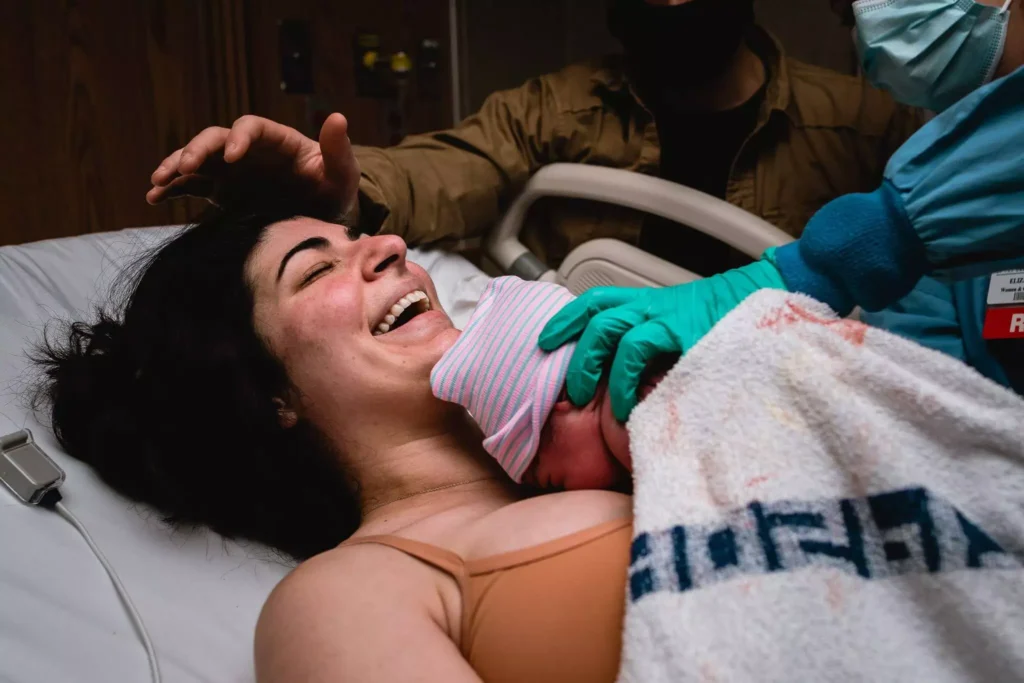

Learn the science of pregnancy and birth to take the mystery of labor away! Understand why you are feeling what you feel, and learn strategies to confidently move through pregnancy and birth!
- 9h+ of Video
- Support Group
- Close Captioning

- 5 Workouts/Week
- Gym Workouts
- Self-Paced

Instructor
GINA
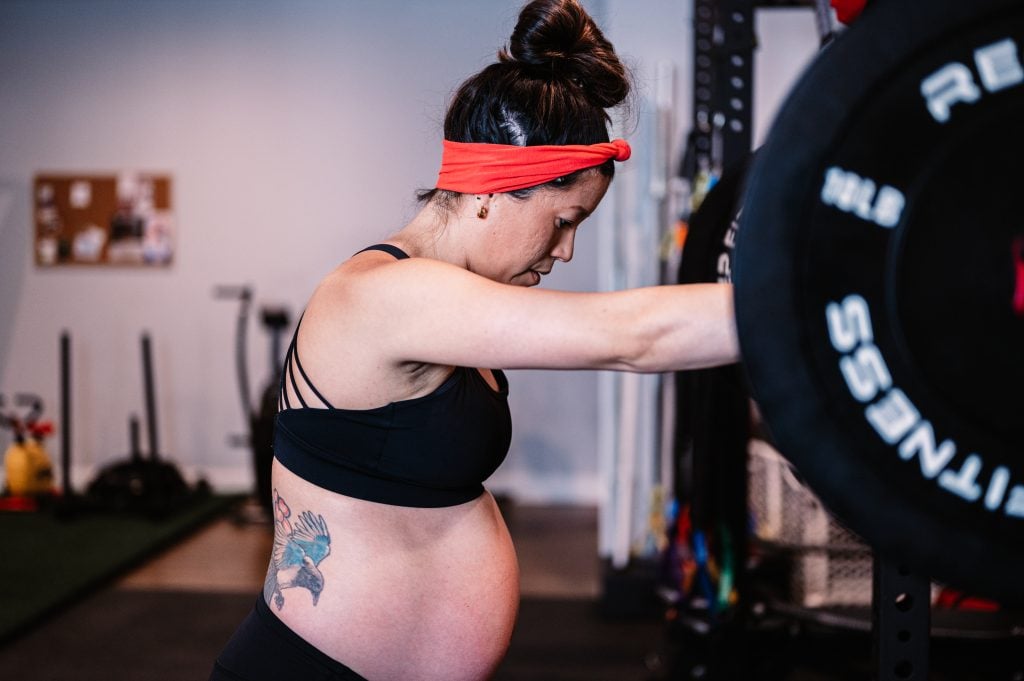
Workout on-demand with our prenatal fitness workout videos! Each workout is 30-40 minutes to follow along as you exercise at the same time!
- Birth Prep
- All Trimesters
- Mobility Work

Instructor
GINA
Find comfort and relief from pelvic girdle pain throughout your pregnancy and postpartum period! This program incorporates myofascial sling focused exercises to stabilize across the pelvic girdle joints.
- 3 Weeks
- On Demand Workout Videos to Follow