



Perineal massage starting at 34 weeks for about ten minutes a day has been shown in research to help reduce the occurrence of tearing at birth and decrease the need for an episiotomy. In one study, they found the difference to be: 24.3% of no tears in the perineal massage group compared to 15.1% of no tears in the control group, for an absolute difference of 9.2% (Labrecque et al 1999).
Most research supports that perineal massage tends to help more if it’s your first time having a vaginal delivery, as your risk of tearing decreases with each subsequent vaginal birth.
But, trying to do perineal massage can be a challenge of its own! Here are a few different positions to try out!
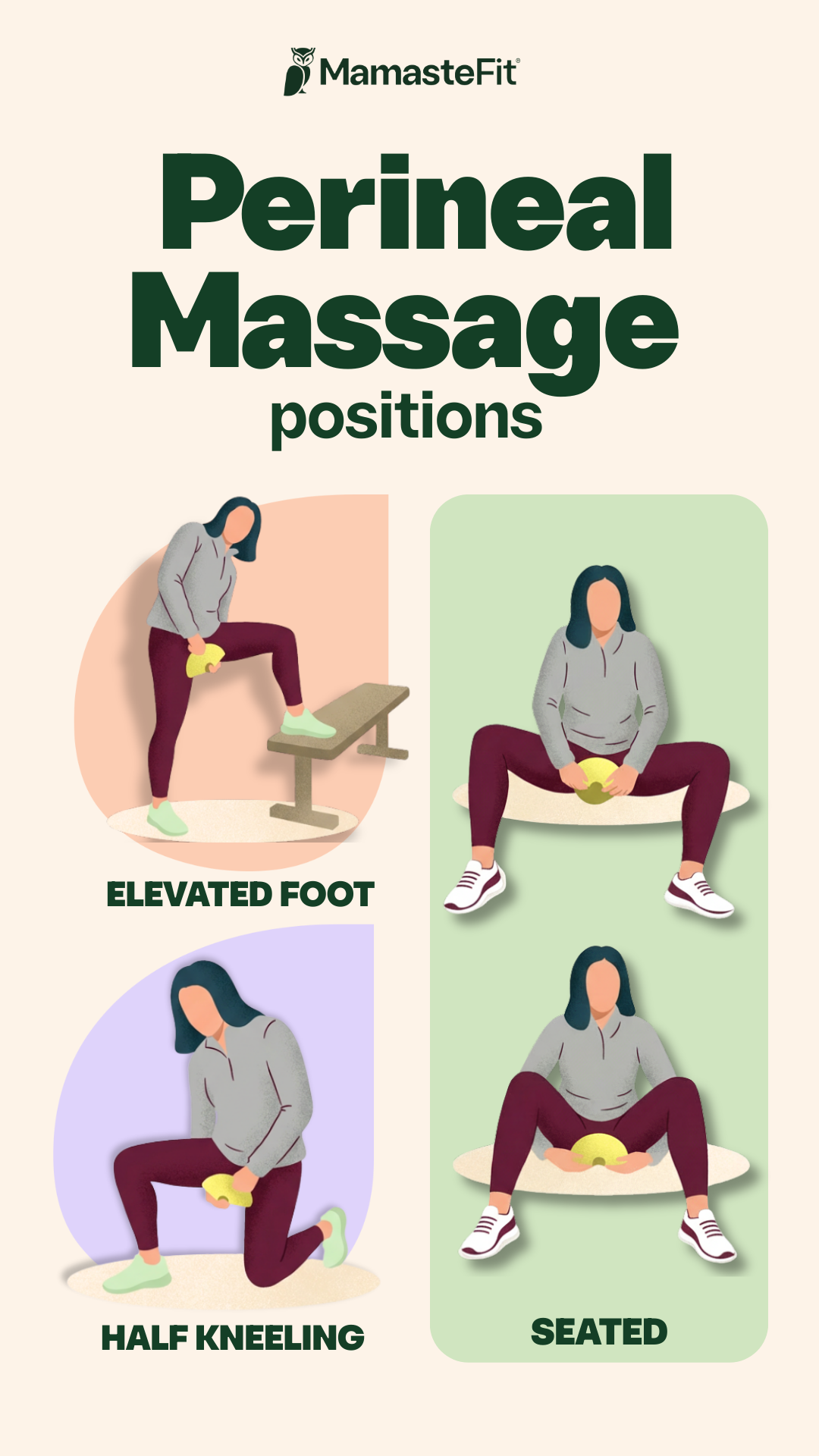
Perineal Massage Positions
- Standing with Elevated Foot
- Seated
- Half Kneeling
Standing with Elevated Foot
One option is to try perineal massage from a standing position. You can do this in the shower if you have a shorter ledge, or even the edge of your bath tub.
Lift one foot onto the elevated surface, then either reach around your belly or reach from behind to try perineal massage.
Seated
Another position could include a seated position. Usually doing this in your bed is easiest! Allow the legs to relax open, as you either reach around the belly or reach from behind the legs. Your partner may be able to assist with this, as well!
Half Kneeling
Another position is the half kneeling position. This is similar to the standing with your foot elevated, but may be a more comfortable, or supportive, position for you! Similar with the other positions, you can either reach around the belly or behind the leg.
What if you can’t reach??
If you can’t reach your perineum in any of the positions, sometimes using a perineal tool or wand can be helpful! This extends your arm a few inches so that you can reach much easier. A tool I used for my own pregnancy was a Therawand, but there are a lot of options available.