

Welcome to the MamasteFit Podcast! In this episode, Gina (doula/perinatal fitness trainer) and Roxanne (CNM, former L&D nurse) unpack how a decade in birth work—plus Gina’s first, distrust-filled hospital birth—shifted them away from polarizing “all natural” vs “all medical” takes. They discuss how social media fuels hate on both ends, how tension between doulas and providers can hurt the birthing person, and why an empowering birth isn’t defined by epidural vs unmedicated, hospital vs home, or vaginal vs C-section. Their big takeaway: the goal is informed consent, autonomy, and a trusted team—plus asking good prenatal questions early to find the right provider fit.
Read Episode Transcript
Gina: Welcome to the MamasteFit Podcast. In this episode, we’re going to be talking about how our perceptions as birth workers have shifted pretty significantly over the past decade from when we first started in birth work to where we’re kinda now.
Roxanne: Yeah.
Gina: So yeah, let’s talk about it.
So I’m Gina, in case you didn’t know. I am the birth doula in our pair. I’m also a perinatal fitness trainer. But more of my support during birth would be classified as the holistic aspect, ’cause it’s using movement to help solve problems, and the emotional support and all that stuff. And so the way that I support birth is from a different perspective. And I have a different set of tools available to me to help support a labor and a prenatal experience. Also, I, because I’m a doula, I typically have a client that I support throughout their pregnancy into their labor, so I have more of an established relationship with this singular client, and I only have, one client that I’m supporting at a birth usually. I don’t multi- I don’t… I very rarely have had two clients in labor at the same time.
Roxanne: But you still personally could not be at both of those births.
Gina: Yeah, so I’m only going to be at one, one at a time.
Roxanne: And I am Roxanne. I am the previous labor nurse, now certified nurse midwife side of the duo. So I do err on the more medical side of the birth world, that’s where my foundation and background, experience is. So that’s just my more comfort zone is that, on that side of the spectrum, if we’re going to be on polarizing ends.
Gina: Yeah. But, what is really beneficial about us at MamasteFit is, we do a good job of balancing each other.
Roxanne: Yeah.
Gina: Especially when we-
Roxanne: We talk each other off the-
Gina: We start going off the deep end, ’cause there are a lot of polarizing views, especially on social media. And you know why? It’s because polarizing views get engagement. You get more clicks, more likes, more whatever if you can share why the other side is wrong. And I see it on both ends, where there is social media content that’s very much on the natural birth side, the very holistic side. “There’s never emergencies, birth should only be like this, everyone should give birth unmedicated at home.”
Roxanne: “At home.”
Gina: “In this really specific way.” And there’s also a little bit of hatred that’s being, like, brewed on that side as well of, “The medical system is a scam, and they’re out to get you, and they don’t understand birth. Only we know birth.”
Roxanne: “Pitocin and the medicine is-”
Gina: “It’s all bad!”
Roxanne: “… Harmful to labor and birth and babies.”
Gina: So that’s, the very far end of, the holistic spectrum, where, “there’s never a need to intervene with birth ’cause our bodies are made for this, our bodies are perfect,” and all that good stuff.
And then you have the other side, that’s the very medical side- where it also is brewing its own hatred towards the other side. So both sides hate each other.
Roxanne: Yeah.
Gina: And I will see content that’s created by providers that is meant to be like, “I’m not out to get you.”
Roxanne: Yeah.
Gina: But it’s sometimes done in a really condescending way.
Roxanne: Yeah.
Gina: Of “Why would you even listen to that person?”
Roxanne: Yeah.
Gina: “That person’s so dumb.”
Roxanne: Like, “We need to save people from their pregnancies and birth.”
Gina: “People literally used to die during this!”
Roxanne: “Babies are dying, moms are dying, because of these, lack of interventions that people are choosing not to do!” And, “Why would anyone not choose to do a gestational diabetes testing, ’cause that’s just so unsafe and silly,” or, “Why would someone decline anything, because, modern medicine is amazing.”
Gina: Yeah.
Roxanne: And, “These are, like, the only things that are evidence-based, so why would anyone why would you question?” Like, “Why would anyone sway or question these evidence-based things?”
Gina: Did you go to medical school?
Roxanne: Yeah.
Gina: So it gets very hateful on both ends towards the other side, and it sometimes leaves the consumer, which is the person who’s going to give birth, believing that they can only trust one side, that they can’t have both, when there’s plenty of space for us to come together-
Roxanne: In the middle.
Gina: … And be on a team. And as a doula, the births that I have gone to where there was a lot of tension from either the medical team, not being into the, to the idea that this person can make their own autonomous decisions, or, the patient has consumed enough content to be like, “I can’t trust you,”- which, I was that person, too, where I was like, “I can’t trust you,” ’cause of the content that I have consumed. And so I can understand this fight that happens, but I don’t think that the fight needs to be there, and I think if we can all understand that we are all on the same team and we have different,- very important perspectives, and things that we bring to the table that don’t have to belittle or diminish each other.
And the births that I’ve been at where it was a really collaborative environment where everyone was working together, the nurse or the midwife or the provider is asking me for ideas on movements.
Roxanne: Yeah.
Gina: I’m asking them for feedback about this, we’re all consulting with the client on, what they’re wanting. Those, everyone leaves feeling really good from.
Roxanne: Yeah.
Gina: The ones where we’re all fighting, even if they get the specific birth that they were planning, there’s still tension.
Roxanne: Yeah.
Gina: Those ones are, “Okay, it’s over!”
Roxanne: Yeah.
Gina: “You got your unmedicated birth even though we had to yell at the doctor.”
Roxanne: Yeah.
Gina: “You got it, though!” Those ones I leave being like, “That was uneasy.”
Roxanne: Yeah. Which is, that, it’s a whole conversation on its own.
Gina: It really is. But I understand that the two polarizing sides are frustrated with each other.
Roxanne: Yeah.
Gina: The providers are frustrated because they have to maybe answer more questions, or they have patients that saw an Instagram post that’s telling them that they need to push just like this, or that they should decline these interventions.
Roxanne: Yeah.
Gina: And they’re frustrated ’cause now they have to do more education, people aren’t just doing what they want.
Roxanne: Yeah.
Gina: But then on the other side- which is, I’m not saying that’s what all providers are saying, but I could see, that’s the initial response to this- and then on the other side, you have folks that are on the more natural birth, holistic side that are like, “I can’t believe that, anyone would want to be electively induced and accept all those interventions. I can’t believe that these doctors are even recommending that.” And so there’s this fight that’s happening where each side is trying to demonstrate themselves as the superior person in this birth, this birth story, when it really doesn’t need to be.
Roxanne: It doesn’t matter. It doesn’t really matter for them.
Gina: It doesn’t matter that way.
Roxanne: What truly matters, and I think what our culminating understanding and change in our views, which we’ll get to how we got here, is that it does not necessarily matter what our personal opinions and viewpoints on what we would want for ourselves in our birth, matters. It does not matter for this specific person. What matters is what they would like for their birth, whether it is a C-section, whether it is an epidural birth, whether it’s an unmedicated physiologic birth, or an unmedicated induction- whatever they personally want and choose, as well as, taking their entire picture into account of, if emergencies happen, while rare, being able to support these people during these big changes so that they still feel good at the end of the day about their birth experience and how they met their baby, and they can look back fondly, again, regardless of the type of birth, that is not what’s important. And that is, I think, what we both ultimately have come to. We have each had, obviously, our own birth experiences, and that’s what we look back on fondly is our own experiences, or not so fondly for Gina, of things that we wish we, if we could go back, we could change. But we have to also remember that someone might have had the exact same experience and felt a different way about that experience.
So again, it’s not up to Gina doula or Roxanne midwife to decide if someone had a good birth experience. It is ultimately up to them. ‘Cause we might also be at the same births as them and been like, “Woo. That was a lot. I don’t know if I want to do that again.” And they’ll be like, “That was the greatest thing that I’ve ever been at. I love that provider, that nurse or that doula was great.” And I’ll be like, “Are you sure about that?”
Gina: What? Really?
Roxanne: But that’s fine. Okay. I’m glad that you feel great about it.
Gina: Okay. it was a good birth experience.
Roxanne: Great. We’re moving on!
Gina: So let’s start, or I guess we’ve already been talking, but-
Roxanne: Let’s go back to Gina …
Gina: The catalyst.
Roxanne: The catalyst.
Gina: What started the change? So-
Roxanne: Because I was a labor nurse and a nurse for four years, five years, before Gina had her baby, I was in the world already. And then the catalyst of both of our changes was Gina’s first birth.
Gina: So before I was pregnant and gave birth, I… And I think this is probably what most people think-
Roxanne: Yeah … Same, me too.
Gina: Is, “Birth is incredibly painful. Thank God for epidurals. Just show up and do what the doctor says. … And we just hope we survive.” There was really low expectations. I had no-
Roxanne: Which is also what many people also feel.-
Gina: I had no preferences. And I, now sometimes when I talk to people about birth and they are kinda like, “Eh,” about it, I’m like, “What do you mean?” But then I think back to Gina before she had a baby.
Roxanne: 2016 Gina.
Gina: No expectations. I had no expectations of the postpartum either. Zero.
Roxanne: Which I think is more-
Gina: I wish I had a little bit more. But, I had very little, care about birth, in regards to it being this experience for me. Yeah. I just was like, “This is just a thing that you have to go through to have a baby.”
Roxanne: Yeah.
Gina: And I think that a lot of people are really indifferent, are probably indifferent about it. And I have to remember that I live in a bubble of birth.
Roxanne: Yeah.
Gina: And so all the people that I interact with really love birth, and they love talking about it, and they love the experience of birth.
Roxanne: Yeah.
Gina: I don’t think that a lot of people have that.
Roxanne: No, I say the same thing about the placenta, ’cause I think the placenta is this really cool organ, and I’m like, “It does all of these amazing things.” And-
Gina: And most people don’t care …
Roxanne: and I was like, “You don’t have to just throw away your placenta. You can, look at it at least, or plant it. You can eat it if you want. You can make a picture out of it. you can do all these things.” And the people are like, “I’m good.” And I’m like, I realize and recognize not everybody thinks the placenta is as cool as I do. So same thing with birth.
Gina: So I went into this labor, or I went into this pregnancy with, no expectations. I’m going to show up. I’m going to get an epidural. I’m going to do whatever they say, and I hope I don’t have a C-section. Yeah. Was like, that was about it for my birth plan.
Roxanne: Yeah.
Gina: That was it. I had other things going on that I was mentally focusing on, and once that all got kinda settled, then I was like, “Wait a minute. Some people like to do this without an epidural. Why would you do that? That sounds terrible.” And I started to explore it a little bit more, and I was like, “Oh, it can be an empowering experience. I wonder if I could do it. I feel like I’m a really strong, fit person.” And so it became this challenge in a way to give birth without an epidural.
And so then I took a childbirth education class, and I think… I can’t remember which came first, if hiring a doula came first or the childbirth ed class came first. I think they might have happened right around the same time.
Roxanne: Yeah.
Gina: So we took a childbirth education class, and it was informative in reminding me that there was options, and that people did this in different ways. It was terrifying at the same time because it instilled a lot of mistrust or distrust in me with the medical system and with my provider, who at the time was literally my only option. Sure, I probably could have scrambled to find a home birth midwife. I had no idea where to even start with that.
Roxanne: Yeah.
Gina: I was also, in my third trimester.
Roxanne: You had, 10 weeks?
Gina: Nobody is available.
Roxanne: … Eight weeks left.
Gina: Nobody that is worth hiring is available in your third trimester in our area. so this was literally my only option, was to give birth in this hospital. I didn’t have the luxury of choice at this point.
Roxanne: Yeah.
Gina: And so I was left feeling like, I don’t have a choice to go anywhere else, but this doctor and this medical system, I can’t trust; so now I’m scared. And I don’t have anything to do with that fear. I’m just, “Okay, they’re not… They’re going to force me to do things I don’t want to do. It’s not going to be a supportive environment.” And so I went into that birth terrified. And then, my medical team did not do a good job of selling themselves as people I should trust.
Roxanne: Yeah.
Gina: So that kind of cemented things for me.
Roxanne: Yeah.
Gina: So I went into my, 40-week appointment, and I’m still pregnant, and the nurse was, like, really dismissive, and she was just like, “Your induction’s scheduled for this date.” And I am, like, in my head, ’cause in the moment I was, like, startled by, oh, we’re supposed to have a conversation. So in my head and in hindsight I was like… or after the fact, I was like, “But we were supposed to have a conversation. We were supposed to have informed consent. we were supposed to talk about, like, why this was necessary.”
My due date had also changed at the beginning of my pregnancy ’cause I had a dating ultrasound, and I’m like, “If I never did that dating ultrasound, you would have thought that my due date was 10 days ago, and I would be getting induced today. This is an arbitrary made-up date. This number doesn’t even fucking matter.”
Roxanne: It’s all a scam!
Gina: It’s all a scam! And so I am, like, terrified now, ’cause I’m like, “They’re not listening to me,” and I’m, like, trying to express this to the only person I know that’s in birth, Roxanne, who was like, “Pitocin’s not a big deal.” But literally everyone that I tried to express my anxiety to was like, “It’s not a big deal.” And these were, like, other women that gave birth. They’re like, “Everyone gets Pitocin. Just get an epidural. It’s not a big deal.” Like- Yeah … it was… Everyone was just, really dismissive. And then I showed up in labor, and I did not have a very friendly midwife, and I did not have a very friendly nurse, and so I was like, “These people hate me.”
And it just kinda cemented that they are out to get me. They do not care about me.
Roxanne: They’re out to get-
Gina: They only care about getting this bed empty. They’re trying to rush my labor. And they were doing all of the things that the childbirth ed course told me would happen. And so it was not a good way to start my journey into birth work.
So I… After a year from that birth is when I started becoming a doula. One of my fitness clients- I, I started MamasteFit shortly after my birth, and was only doing fitness, so pre- and postnatal fitness, and was starting to navigate a little bit of people’s birth plans and their preferences and trying to help them understand; but I also was like, “I don’t really know. I had my birth, and I could ask Roxanne.” So I was, like, relying on Roxanne a lot to help me answer questions. And I was just kind of like, “Well, I don’t know if we can trust doctors. Everyone that I’m meeting right now has had a kind of a traumatic birth experience, too. And there’s a common theme! We all gave birth at a hospital, and then the one person that gave birth at the birth center, had a great experience. So obviously the thing that equals good birth experience, empowering birth experience, is out of hospital, unmedicated. Those were, like, the two things that I was like, that’s how you have a good experience.
Roxanne: Yeah.
Gina: And so when I entered birth work, and then my doula course was also, “doctors don’t know what they’re talking about. They’re going to push all these interventions,” and then, other continuing education courses with pelvic mechanics where, “They don’t even understand pelvic mechanics, and they’re making everyone push on their back with their knees super wide for convenience, but it’s closing the outlet!” And so it’s all these things that were, like, just reinforcing that I can’t trust the doctor, that they’re not someone to be trusted.
Roxanne: Yeah.
Gina: And so I don’t think I did anything bad as a new doula, but I think that there were definitely moments where I could have been better, and I could have supported people in a different way. I could have offered them a little bit more. And so my clients that were coming to me with these really intense birth plans ’cause they were like, “I was traumatized last time, and I don’t want to be traumatized this time, and I need you to be, like, a fighting force for me in this birth,” and we would go into that labor ready to fight and to argue and to be this disruptor so they can have the experience that they wanted.
I… What I know now, I would have gone back to Gina, I would have gone back to those clients and been like, “Hey, let’s chat on what happened in the last birth. Do we need to pick a different provider, or can we find a place where we feel like we can trust the provider that we’ve chosen to support your labor?”
Roxanne: Yeah.
Gina: “If not, then maybe we need to choose somebody else if we have that option. If we don’t have the option to switch, what are some different questions that we can start talking to the provider about now so that you can build this relationship with them?” Because I do think it is really important for people to have trust in their provider. It is not realistic for somebody to do all of the research and to gather all of the information to be able to manage their own labors. You couldn’t manage your own labor!
Roxanne: No.
Gina: As a midwife. Like-
Roxanne: A midwife should not be their own midwife.
Gina: And so for somebody to put it just on themselves to do all of the research and gather all of the information to be their own provider is not realistic. And so we have to choose a provider that we can trust to guide us through medical decisions, to give us their expert opinion on things, to give us their recommendations, that we will trust will do that in a way that is not trying to coerce or steer us in a specific direction for their preferences, but they would also respect when we don’t choose what they want us to do.
Roxanne: Yeah.
Gina: That is, I feel like sometimes the hardest thing to find is a provider that you can truly trust in that way. But, I think that there’s more providers out there that do that, than don’t. But they all kinda get clumped into this pile together of evil doctors.
Roxanne: Yeah.
Gina: … Don’t even understand pelvic mechanics! When it’s, “I don’t know how to do a C-section.”
Roxanne: Yeah.
Gina: I don’t know how to give Pitocin. I don’t-
Roxanne: Yeah. Go ahead and suture somebody’s perineum.
Gina: I don’t know how to suture or anything.
Roxanne: Like- Yeah. But then there’s that thought is like, oh, these are not necessary.
Gina: I don’t need to-
Roxanne: It’s, you don’t need to know how to do those things, ’cause they don’t, we don’t need them! But no.
Gina: But that is how… So I started birth really distrusting the medical system and the way that they manage birth. I do think that there is value in physiologic birth. I do think there’s a lot of value and benefit to understanding pelvic mechanics and to offering movement and non-medical interventions and options to patients. I find that really helps people feel better about their births that don’t go the way they were expecting, ’cause we did all of the things. We tried all of the movements. We did all of the mechanic interventions. And then we tried some medical interventions, and then we tried… We did everything.
Roxanne: Yeah.
Gina: So they were left without this, what if?
Roxanne: Yeah.
Gina: And I think when you don’t offer that movement aspect, they’re left with a what if. What if I had known this, or what if I had tried that movement, or what if I had done this? When you have an opportunity to give them all of the options to try before their birth plans have to change-
Roxanne: Yeah
Gina: I feel like they leave that feeling better about the experience because we tried it all.
Roxanne: Yeah.
Gina: So yeah, that’s how it has evolved for me. As I supported more and more births over the years, I realized that there was a lot of different ways to achieve the same empowered outcome.
I initially thought the only way to really be empowered in your birth is to do it outside the hospital and to do it unmedicated.
Roxanne: Yeah.
Gina: And then I started having clients have a really empowering epidural birth.
Roxanne: Yeah.
Gina: Who had a really empowering C-section birth. Who had really positive hospital birth experiences. I had clients who gave birth at home that didn’t have a good experience.
Roxanne: Yeah.
Gina: Who gave birth out of a hospital that didn’t have a great experience. Who got, who went unmedicated and were like, “That was terrible.”
Roxanne: Yeah.
Gina: “I never want to do that again.”
Roxanne: Yeah.
Gina: And so I started just experiencing more types of births and realizing, there’s a lot of different ways that we can go about this, and there’s a lot of different choices that somebody can make that may differ from my own personal preferences, and that’s okay.
And I think it takes… it took me supporting a lot of births and then having my own really positive birth experiences that were very different from my first. Granted, my really positive birth experiences were giving birth at home, unmedicated, which I guess, is what I would have-
Roxanne: But it was your provider and your support team.
Gina: The key thing that changed was my provider. I felt more informed that if I did need to transfer, I can trust that her recommendation to transfer was not because she was tired and she didn’t want to be there anymore, or that she gave up on me. It was for a reason.
Roxanne: Yeah.
Gina: And I trusted that. And I knew if I have to transfer, I’m going to have Roxanne, I’ll have my husband, and they’re both informed, and I know I’m going to have a team to help advocate for me if needed. But also, I trust the hospital that we’re going to go to if I need to transfer for a non-emergent reason. I will survive the hospital that we would go to for an emergent reason, but at that point, really do, you do whatever you need.
Roxanne: Yeah.
Gina: If I’m dying, then, it’s okay. You don’t have to like, we don’t have to do nipple stimulation to to get contractions going.
Roxanne: Yeah. So- but I think, it was the trust in your team that was the biggest change- Yeah … whereas previously you did not have a trust-
Gina: I did not have any trust
Roxanne: …in the team. Despite the location being different, I think that your husband knew more, I knew more, and you trusted your provider, and that was the biggest change that you had.
Gina: Absolutely. And so it was, I saw a lot of different births that were all very empowering, that looked really different from my initial viewpoint of, “This is what empowering looks like.”
And so I started to recognize, there’s a lot of different ways to go about this. I was more educated on what interventions were, when they were necessary, and when maybe they weren’t, and we can ask more questions in a non-aggressive way that, like helped my client feel empowered to make a choice. But understanding that sometimes it can be helpful! It’s not bad to get Pitocin. Do you… Does everyone need it? No. Is there a lot of fear involved with it? Yeah. We need to take some time to explain why it’s necessary.
And so I think I just had… There was a lot of growth from that, and I think the one thing that really helped expedite my growth was the opportunity to debrief with you. ‘Cause I can make some bold assumptions.
Roxanne: Yeah. Yeah, she can.
Gina: On what happened out of labor and why it happened, but once I would have your perspective on it, it softened it a little for me, where I was like, “Okay, I still think, this, this, and this was pretty fucked up, but, I can understand.”
Roxanne: Yeah
Gina: Like this. Or, the other thing that was really enlightening for me was the client debrief, because they sometimes had a really different perspective on what happened versus what I did, and my perspective does not matter. Just because I was traumatized from their birth does not mean that they also need to be, and I’m not going to traumatize them if their understanding of the birth was really positive.
Roxanne: Exactly.
Gina: Not that I’m traumatized from people’s births, but…
Roxanne: Well, that’s also a conversation to be had …
Gina: those are also things that have really helped me grow a lot as a doula, is there’s a lot of different ways to have an empowering birth. Birth can happen in all sorts of different places. The most important factor is the provider and how much the client trusts them. And it doesn’t have to be a provider I like.
Roxanne: Yeah.
Gina: I don’t have to like the dude.
Roxanne: Or lady.
Gina: It’s for them. For them to love them. I don’t have to like them.
Now, are there certain providers that maybe I’m going to be a little more vocal about certain things, like they’re coming in with their sterile gloves. Am I going to be like, “Hey, do you want to be checked?” to my client to let them know that they’re about to try to stick some fingers in you? Sure. But yeah. Yeah, my understanding of birth is so nuanced now than it was when I first started.
Roxanne: Yeah.
Gina: How has yours really shifted?
Roxanne: So obviously I started on the medical side, the dark side, as Gina says. And I was in birth work and just, the maternal child health realm for five years before Gina even had her baby. I started postpartum, where I was, like, taking care of people medically, obviously, after having a baby and taking care of their brand-new babies, ones zero to three days. And that was a great experience because it is slightly different than traditional nursing, where you are doing the medical stuff, but it is a lot of education and enhancing bonding. And we always joke that maternal postpartum and just this whole world, is a very happy time for people. There’s, a very small period, unfortunately, 1% of this population is very sad. But, 99% of it, it’s a pretty happy place, whereas, on the other floor that I was on previously, everyone is sick, so everyone’s just not having a great time. Like kidneys and hearts and all the things. I was like, “I’m happy here because everyone is happy to be here as well.” So it was a lot of educating and happiness.
And then I went to labor and delivery, and all of the things that I had learned about, all of the interventions from a postpartum nurse perspective, that I was like, again, no big deal. You get Pitocin, you get your water broken, you get an epidural, you… If you develop complications, you get induced. These are the things that we do. Not understanding fully all of the things ’cause I wasn’t that yet, but when I went through the labor and delivery course, the Army sends you there for four months to learn all of the somewhat nuances of birth. And, the instruction that I had there was absolutely amazing, and was, like, really emphasizing, physiologic birth and benefits, and, I did a lot of research on home birth while I was there. I learned, this other type of birth, and unmedicated physiologic birth can be this thing that is beautiful and empowering and really cool. But I still was like, “I still just need to learn how to be a nurse,” and “What are all these interventions? How do we do them?” And so I was still very much like, “They’re not a big deal. People get Pitocin. they get an epidural, and you try to go unmedicated, and many of them will just get an epidural, and that’s okay, and not a big deal.” “Oh, you want us to break your water and your baby will get here quicker?” which is, obviously now I know, not an evidence-based thought process, but at the time, we’re like, “Yeah, let’s break your water and your baby will be here in no time!” Not a big deal. C-section, yes, a big shift, and emotionally, we can still, be compassionate people, but again, it’s life-saving, not a big deal.
Gina: Just another Tuesday …
Roxanne: we just, it’s just another Tuesday.
Whereas after Gina’s birth, obviously I was… I still very much loved unmedicated birth. As a labor and delivery nurse from the beginning, this was, like, my favorite types of birth, and learning how to… And this is something that I always loved, learning how to help them cope with labor, learning different labor comfort techniques, and all of these things, ’cause these were not taught. We had to learn them on our own, and some nurses were like, “Oh, you take it. I don’t want it. I don’t want to deal with that. She’s screaming. I don’t want to have to deal with that.” “She’s getting an epidural. You have this patient. I’ll go to that one.” And I’ll be like, “Cool. I love that. I love doing this.”
So I’ve always been a little bit more on that side, but I still, again, didn’t think interventions were a big deal, even with an unmedicated birth. And until Gina had her baby, and then voiced that I was dismissive, I think that, and even now, every time you share your birth story, I just, I cringe at my previous self ’cause I was just like, “God, such a B, such a B.”
Gina: This episode is tough ’cause we’re admitting that we weren’t always this amazing.
Roxanne: I know.
Gina: There was a version of us that needed to grow …
Roxanne: I think it’s also important to acknowledge that you have changed as a person. We are humble in that way, that, we were not always perfect, although Gina still claims she was always perfect, she was not. But there’s always room for growth, but it doesn’t necessarily mean we are bad people and ruining people’s birth experiences. I wasn’t, in 2015, I wasn’t, harming people, it’s just I had a different viewpoint in supporting birth, and now I have a different one. And it’s okay to, change your viewpoints.
Gina: And to grow as a provider-
Roxanne: And grow as a person.
Gina: As a birth supporter.
Roxanne: Because… Exactly, ’cause I do feel that after Gina had her baby, I had just moved back to North Carolina when she had her baby. So first, I didn’t work at this hospital that she had her baby at. I know nothing about it. I knew none of these providers, none of these people. I was just like, “What the fuck is this place?” And then she had her baby, we debriefed a little bit, and she voiced how we thought it was like, me and my mom were like, “Oh, it’s so beautiful,” cry- sobbing. We thought it was so beautiful, she finally met her baby, the first grandbaby, or my first niece, and it was, like, so exciting, and then Gina’s, “I’m traumatized.” And I was like, “Oh, fuck. I did that.” So obviously I’m adding a little humor.
Gina: That was a terrible experience. That was a…
Roxanne: I was like, “Oh, shit. I helped make that traumatizing. I am an awful sister.” But then this, catalyst happened where I began to explore more. Not necessarily to learn, what was, like, what could I have done to, help her not get an epidural? ‘Cause I don’t necessarily think, had you not got an epidural, you would’ve had a more empowering decision, or not that I think, if you did not get an epidural, you would’ve had a more empowering birth experience, but I do think, ’cause I do think, the way that you were treated, had an effect, and that would not have negated the way that you were treated.
Gina: I think if I had managed to not get an epidural, if I had held out for another hour or two and had an unmedicated birth, I would’ve still been traumatized and pissed off at the birth, but I would have felt like- I fucking showed you motherfuckers!
Roxanne: Yeah, that’s true.
Gina: I would have been, like, angry.
Roxanne: But you- but, like- still would not have been happy about it
Gina: But I wouldn’t have been sad. I would’ve been, like, angry and triumphant, as opposed to angry and sad.
Roxanne: Yeah, that’s true. But I don’t think, I-
Gina: But still, I don’t think that the thing that would have “fixed”, quote-unquote, that birth was, like, whether or not I had an epidural. It was who was there supporting my birth and my trust in them
Roxanne: Which I understand now.
Gina: That was very low.
Roxanne: I think back then, though, I was like, “I need to find the magic tools that I can implement as a nurse to help people have a good birth experience.” That’s when we started to deep dive more into, pelvic mechanics, though, and understand how the pelvis moves and, different positions that we can utilize ’cause, again, I… basic stuff is what I understood. And so we started doing that together, and then you were starting to be a doula. I, my brain was starting to expand to understand, yes, people don’t think interventions are a big deal, but some people do, and we need to be mindful of that. As well as, how can I assist someone who is in labor, especially ’cause 70% of my clients are getting epidurals. How can I help them not have a bad experience? Even if they change their mind and get an epidural, what can we do? And how can I enhance people’s experience, not just with mechanics and the mental aspects? And then the people that I worked with were also amazing at helping to mentor me in a way that made me question all of the things that we were doing and kinda come into my power as a nurse, and a labor nurse, to be able to collaborate with these providers in a way that, “Hey, you want to break their water. Let’s discuss why are you wanting to break their water. What is going to happen if we break their water?” ‘Cause, we gotta go in there and tell them that, this is the next step we would like to take, so you gotta tell me why. I don’t see what you see, so you need to tell me why. And I think that also helped me understand some of the nuance of birth, and also, I think, hopefully helped the residents who, at the hospital that I was at previously, it was just attendings, they had been OBGYNs- they graduated the residency, or they were very experienced midwives. Whereas here, it was a residency program, so these are, like, brand-new grads. For the first four years of their medical career, they’re learning from us, and they’re learning how to be… Like, they’re coming into their power as well. And so I hope that I also imparted some of my knowledge and learning as they also started to come into their own as OBGYNs, to question what we’re doing on more than just, this is the next step in the algorithm. Oh, we gave them this cervical ripening, we put a balloon in, and now I break their water. Do we need to do that? Is their labor progressing? Then maybe we just leave them the fuck alone. Or, their water broke on their own, great. We don’t need to do anything. Please leave them alone.
But, I had to have the mentoring from all of these other nurses, as well as experiences from like personal experiences, I feel like that kinda pushed me to come into my own, to begin questioning all of these things. They are not necessary for everybody, but they are tools available to us, and there’s not morality associated with any of these interventions, and obviously this has taken me, like 15 years to kinda go into it.
Gina: But just because there’s not morality doesn’t mean that people aren’t scared of it.
Roxanne: Exactly. And that is the important… That is, probably more important, is that, these are tools available to us, but we need to be sure that they are not afraid of this intervention, and they feel comfortable utilizing it. And if they don’t feel comfortable yet, we either continue to answer their questions until they feel comfortable in doing it or not doing it, and then if they choose not to do it, we have to honor that decision, which is the hardest that I see in the medical community, is that when they choose something that we don’t personally agree with-
Gina: Or professionally agree with…
Roxanne: or professionally agree with, but we still have to honor them, because they are a fully grown, autonomous adult who is bringing in another human into this world, and we need to honor their choice of what happens to their body, regardless of if we agree with it personally or professionally. So if somebody chooses for you not to check their cervix, you cannot do it, even if you know maybe deep down, this could be a really good thing. If they say no, that’s no. If you recommend an intervention and they say no, regardless of what you have recommended with risk benefits, you’ve gone through the whole thing and they still say no, that’s the end of the conversation. You don’t then start to double down and be like, I think, the most common thing to bring in is “Oh, this could harm your baby. You could die.”
Gina: Like- If there’s something that’ll make me start being, like, very vocal as a doula-
Roxanne: I’m like, “What? Is that truly…?” I think that’s, like- Yeah … super common with GBS. You’re GBS positive. Recommendation, as we know, is to give antibiotics. Antibiotics are not risk-free. It’s not oh, willy-nilly, let’s give it, this is not a big deal, just antibiotics! So if somebody chooses not to get antibiotics and they are GBS positive, why do they want… let’s discuss and fully go over what GBS positive is, what are the outcomes with antibiotics, without antibiotics, and then if they still choose without antibiotics even though you professionally agree with antibiotics, you still have to honor that decision. Again, they get to choose what happens to their body, and I think that’s often a forgotten portion. If someone just came in without us discussing, was like, “I don’t want antibiotics for GBS,” I’m not going to be like, “Okay, sounds good.”
Gina: Yeah, because-
Roxanne: That is not what I’m saying here, in any sort of way. There’s still informed consent that needs to happen. I need to ensure that they fully understand that by not saying no, they understand the risks associated with it, but they also potentially understand the benefits of maybe not getting antibiotics during labor. But that also they understand the risks of getting antibiotics and not getting antibiotics, or the benefits of also getting antibiotics.
Gina: Yeah.
Roxanne: So it’s, it’s not again, I’m just like, “Whatever. You do whatever you want.” It’s, I’m still going to inform people.
Gina: I’m here when you need me!
Roxanne: Yeah, “No, just let me know.” “Oh, you’re hemorrhaging, now you want me?” I think it’s giving people the full autonomous choice in what happens to their body during labor, regardless of my own personal views, that is what I’ve ultimately come to. And it may not be what I personally wanted, and I do feel that catalyst that kind of got me to where I am now was your birth initially with your first, and then all of the years subsequently, my mind has just grown more and more.
I’ve personally, thankfully, have had really four great birth experiences in vastly different environments, and I think that’s also helped me as a nurse. ‘Cause I know you can have an empowering experience in the hospital ’cause I’ve witnessed it, regardless of birth outcome, epidural, no epidural, C-section, vaginal birth, like, all of the things, episiotomy, whatever, all of the things, and they still feel really great about it. But I’ve personally also experienced the satisfaction of having a out of hospital birth in a freestanding birth center or at home with midwives, and I know that is also a viable option that if someone chooses, can be great. So it’s not necessarily where you give birth, but who you give birth with, and how you’re treated and how you feel at the end of the day that ultimately matters. But again, it’s not just “Okay, whatever you choose, have a good day,” “Goodbye. Job done.”
Gina: Yeah.
Roxanne: It’s like, I’m still, because I am still on the medical side, I’m still going to give you full informed consent. I’m going to go over your options because when you don’t know your options, you have none, which sometimes I feel like the two sides only go over each other’s options, and there’s no other options available. No Pitocin and Pitocin- there’s no, “Yeah, you can have Pitocin sometimes,” or, “No, you cannot have Pitocin sometimes,” like on the two ends. Whereas in the middle it’s, yeah, you can have one or the other. But I’m still going to go over the benefits and risks of all of them, and then whatever the hell you choose based off of that, I’m going to support you.
And then it’s also like, people make choices during their pregnancy of one thing, but then something occurs in their labor, like maybe they didn’t want antibiotics during their labor for GBS, but then something happens and they’re like, “You know what? I’ve changed my mind.” “Oh, you said you didn’t want antibiotics. I can’t give it to you now. So sorry.” We are allowed to change our minds, too, at any point, and I think that sometimes gets forgotten, that in birth, all of the, there’s so much nuance and so much individualization, that was a hard word, that needs to occur, and that’s where I’m at now, that I wasn’t at in 2015, 2014.
Gina: There’s a lot of different ways to do this.
Roxanne: Yeah.
Gina: There’s really no one right way to go about it. I think as professionals, the best thing that we can do is to be a part of a team and work together as a team, and recognize that each of us has our different roles. And maybe certain roles have a little bit more power or value to them- you as a provider have more responsibility than I do as a doula. I could like-
Roxanne: Life.
Gina: … Try to coerce my client into a specific way that I think is better, but I don’t hold the responsibility if something happens like you do, as the medical provider. So I can understand this, frustration towards my end of the spectrum.
Roxanne: Yeah.
Gina: Of, you’re, you guys are making your clients do all these things, or not do these interventions, or not do that and you don’t have any of the responsibility for it. And so I understand the conflict that occurs.
Roxanne: Yeah.
Gina: I understand that it probably makes your job harder to have to do informed consent, and to answer questions.
Roxanne: Yeah
Gina: And to wade through the fear that people have developed over rational or irrational, or true or untrue facts. Some people have certain beliefs on what this medication is, and who should receive it and when they should receive it, and black box warnings, and risks. And some things are based on reality, and some things are just, totally made up.
Roxanne: Yeah.
Gina: And so I can see that it’s harder as a provider to have to swim through the misinformation and to re-inform clients and to answer questions, and I can see the frustration.
Roxanne: Yeah.
Gina: … And where it comes from.
Roxanne: But it’s important.
Gina: And then from my end, it’s frustrating when I have a client that wants to be empowered and to feel in control and want to give birth in this specific way, and they’re not being supported to do that. They want to have freedom of movement, but the nurse wants them to be in the bed, ’cause the bed is easier to monitor, and so now they’re, like, tensing up, ’cause they’re in the the bed. Or we have a nurse that keeps coming in and asking, “Do you want your epidural yet? Do you want your epidural yet?” When they said they wanted to go unmedicated.
Roxanne: Yeah.
Gina: Oh, ’cause it doesn’t look like you’re coping.
Roxanne: Doesn’t look like you’re coping. Gosh.
Gina: And it’s like, goddammit. So there’s definitely, I can see frustration from both ends.
Roxanne: Yeah. Yeah.
Gina: But ultimately, when we’re pissed off at each other, the only person that we’re really hurting is the person that’s giving birth.
Roxanne: Yeah. And I agree.
Gina: And when there’s tension in the birth room from the doula and the provider or the nurse, and we’re all arguing with each other, it’s not helpful at all.
And so I think what I have kinda shifted to now, ’cause at the beginning it was, “Don’t give birth here. The doctors there are out to get you. Only give birth here.” That was, like, not great, ’cause some people have great experiences at this place that I don’t like, and some people, that’s their only option.
Roxanne: Yeah.
Gina: And so it’s not helpful to be like, “Just go over there,” ’cause not everyone can go over there. And so what I was finding to be more helpful for me as a doula was to help my clients come up with questions to ask that would help instill trust in their providers, or be a really big indicator that they really need to drive a little bit further to a different birth location. And it’d be like, “Hey, what makes you scared about your birth?” “I feel really anxious about X, Y, and Z.” “Okay, tell your provider that. Tell them that you’re scared of X, Y, and Z, and at your prenatal appointment, not… you don’t want to wait till birth, at your prenatal appointment, ask them about those things- and tell them that it makes you scared.” And then based on their response, how do you feel? Yeah. Do you feel good? “Oh, thank you.” Yeah. “Thank you so much for explaining that to me. That makes me feel so much better.” Okay, that’s a green flag. They’re a great provider for you, even if I don’t personally like them.
Roxanne: Yeah.
Gina: But, if you leave that appointment feeling more anxious, that’s a huge red flag.
Roxanne: Yeah.
Gina: We should go somewhere else.
Roxanne: I agree.
Gina: And so that’s what I have… I’ve put the power back into my, client instead of me trying to direct them to give birth in a specific place that I think is better, or to have their birth go in the direction that I thought would be empowering. It’s to really let them have the power and give them the tools to be able to do that. And, so if they are, like, scared about Pitocin or they are scared about X, Y, and Z, I can explain some stuff, based on I’m not a medical person, and so I’m going to explain it in a different way of, like, why they might be using it. But really, “Hey, these are good questions to ask your provider.”
And even in our childbirth education course, that course has evolved over the past five years that we’ve been teaching it, where we are very much, “These are the questions to go ask to better understand your birth location, and trusting your provider to guide you is so important.” And if you want to have a doula there to help you, make sure that doula is not a source of conflict for you. Make sure that they’re not anti-doctor. You don’t want them to be the hostile force. There’s a reason why I have to sign, “I’m not going to interfere with your medical stuff,” at all these hospitals, like, when I show up as a doula. I’m not going to be a nuisance for you. ‘Cause there probably was a doula that was, like, giving medical advice and preventing their clients from seeking, receiving emergency care.
And ultimately, I think what we have come to is there’s room for it all. There’s room for a really medicalized birth, there’s room for, completely physiologic, no intervention birth. Some people can give birth at home. Some people want to give birth in the hospital. Some people want an OB. Some people want a midwife. There’s even people that want to give birth with nobody. Do I personally want to give birth in certain places with certain providers? No. No. But that doesn’t mean that other people can’t, and that they wouldn’t love that experience.
Roxanne: But I think it’s important that there is awareness that there are options available, and that we can all explore the options that we would like, and that those options should be honored in a way.
Gina: And they’re not going to… I think sometimes when somebody chooses something different than you may personally choose, sometimes it feels almost like an attack or like there’s something wrong with what you’re choosing. We don’t need to judge our clients for the decisions that they want to make.
Roxanne: No.
Gina: We don’t have to judge people for wanting something different than we do. And it doesn’t mean that what we would have chosen professionally or personally is somehow belittled or diminished by any way. And I think that sometimes that’s the hard thing, where if someone says, “No, I don’t want that intervention,” or, “I don’t want your recommendation,” it can be a hit, where you’re like, “Then why would you hire me?”
Roxanne: Yeah.
Gina: “Then why are you even here? If you don’t want my recommendations-”
Roxanne: Which is, I think, a common thing that people say. “If you don’t want all these medical interventions, you should have just stayed home.” They didn’t want to stay home. They wanted to come to the hospital.
Gina: They wanted to be here. They feel safe here.
Roxanne: Yeah. And so let’s still make them feel safe.
Gina: It’s definitely a hard thing to navigate with multiple people on the team.
Roxanne: I do feel like there is a change though, slowly over time- and we’ll dive into the history of birth and how it has changed over the past millennia- but I do feel like there is a shift into not just the importance of the birth, just the birth experience in general, that a baby comes out of the body and both parties are happy and alive. But I think there is a shift to making it more of this experience and a happy and empowering experience in whatever way those people choose that to be. Where, people used to give birth alone, and now people are there to support them if they want them. So I think there is-
Gina: I feel like there’s a shift in medical care in general, where people want to be more informed, and they want more options, and they want to be listened to.
Roxanne: Yeah.
Gina: ’cause even in my primary care, like-
Roxanne: Yeah, and I think providers- …
Gina: I’m a little bit more-
Roxanne: … are understanding this more-
Gina: Yeah
Roxanne: … and are more open to this shift, whereas, when it first started to happen, providers were probably like, “What the fuck, man? Just do what I say just do… I am the doctor. What do you mean? You didn’t go to medical school. Like, why are you questioning me?”
Gina: Yeah.
Roxanne: Whereas I feel like now people are like, oh, they’re taking ownership. we are taking ownership of what happens to our bodies, and we are questioning what are the things happening to our bodies because it’s our body. Whereas, and now these providers are like, “I love that they’re taking ownership, and we’re going to help them take ownership of their bodies by understanding what’s happening in their body, so we are going to educate them more.”
And I honestly feel like the education that I provide in my appointments now, ’cause when I first was a labor nurse, all I would see was I’d meet them the day they were in labor, “Hello. Welcome. We are in labor. I don’t know anything about you other than what’s in your medical record. But I cannot ask you about your life story ’cause you are actively contracting every two to three minutes.” Whereas now I see them prenatally, and I can provide this education. And I find that it also helps me understand it in different ways based off of the questions that they ask during these educations, and it makes me just continuously change how I educate, but also my viewpoints. So I think that, the past two years of being in midwifery school has also helped shift to me being here, because now I know what prenatal care involves. So I do feel like there is a positive shift, not just in our viewpoints, but also the world.
Gina: All right. So-
Roxanne: I’m going to be optimistic here.
Gina: The one kind of repeating theme that I see with our childbirth education reviews, with my doula clients, with your patients, not that they call me, but I’m making an assumption here-
Roxanne: I hope so…
Gina: Is that when you only give a singular way that someone can do something, it’s really easy for people to feel like they failed.
Roxanne: Yeah.
Gina: And so if there’s only one way that you should push, there’s only one way that you should give birth, there’s only one way that you should be a mom, there’s a lot of opportunities to be a failure, and to feel like, “Oh, I didn’t do that right,” even though what I ended up doing felt better for me. I felt like I did something wrong because pushing on my side while exhaling didn’t feel right,” or, “I wanted… I found that getting induced was really just the best choice for me and, but I feel like I did it wrong.” And so then you leave these people who could have had a really empowering experience feeling like they failed-
Roxanne: And shame.
Gina: Because there’s only a singular way that they can do things.
And so with our childbirth education course, the online one and the in-person one, and how we have been approaching birth, I would say probably, I feel like the shift happened fairly quickly for us. It wasn’t immediate. I feel like it was within the past five or six years since the beginning of our childbirth education course online, ’cause we really were, like, things were really shifting for us when we really expanded online. The kind of, the feedback that we get from all of the people that take the course, even if they don’t have the birth that they were planning for, they truly felt like we wouldn’t have judged them for changing their plan. And they say this in their reviews. They’re like, “I really feel like if you were there at my birth, you would not have judged me for getting an epidural, even though it wasn’t my plan. That you wouldn’t have judged me for getting Pitocin, or that I wouldn’t have been judged for having a C-section.”
Roxanne: But also-
Gina: ‘Cause that made sense.
Roxanne: They weren’t scared to choose those options.
Gina: They weren’t scared of the interventions. And so I think that’s what I want for people. I never want them to feel like that we would personally judge them for choosing anything that felt best for them, that they felt good about doing. Hell yeah! What is it? “Hell yeah, shit yeah! I would never judge somebody for, like, choosing something that felt good for them! Even if it wasn’t what I would personally choose.
Roxanne: But I think it’s that they-
Gina: And so I’m glad that’s what people take from our course.
Roxanne: Yeah.
Gina: They’re like, “This is a judgment-free course. It’s unbiased. I feel like I can literally choose whatever works best for me.”
Roxanne: And it gave them the confidence.
Gina: “And that helps me feel successful in the birth.”
Roxanne: And it gave them the confidence. Another thing that’s commonly in reviews is that, “I felt confident about making decisions when things needed to shift within my birth. I knew my options, and I was able to choose the ones that I felt comfortable with because I knew which ones I n- was, I, knew what questions to ask my providers and how to express my concern or fear. But, the course helped me to get rid of some of the fear surrounding a lot of these things that are within birth.” And I do feel we really pride ourselves on the fact that we can remain as unbiased as we possibly can within the course to give people that power to choose what is the best birth for them, regardless of how that unfolds. Like- Yeah … it doesn’t have to be an unmedicated birth. It doesn’t have to be an epidural. It doesn’t have to be a C-section. It could be whatever the heck you personally choose, whether or not that’s what we personally chose, I don’t care.
Gina: And it can be based on the circumstances.
Roxanne: Yeah, and it can change. you could have wanted an epidural, and then you didn’t get it, but you have the tools available to cope with those contractions because your labor, you can’t get it. Or your labor has to shift to a C-section, and you know your options. So we’re going on a tangent here, but- We are … yeah.
Gina: Birth the way that you would like to birth, and we support you in whatever you choose. But if you are concerned or confused, we would love to help answer your questions.
Roxanne: Yeah.
Gina: Obviously. I don’t want you to choose things based out of fear or coercion ’cause you felt like this is what everyone else should do, so I should do it.
Roxanne: Or that’s what they think I should do.
Gina: Choose what feels best for you and feel confident on that, and then know that as professionals, there’s always opportunities to grow. I will know more stuff 10 years from now.
Roxanne: Yeah.
Gina: And I’ll look back on 10 years ago Gina, or I’ll look on Gina today and be like, “Oh, man.”
Roxanne: Same.
Gina: “This one little key thing that I learned could have been a game changer 10 years ago.”
Roxanne: Same.
Gina: What we offer now is still amazing. What we’re going to offer 10 years from now is going to be phenomenal.
Roxanne: Yeah.
Gina: And then 10 years from that, because we are always learning, and we are never satisfied with, like, where we’re at right now.
Roxanne: We’re always learning more.
Gina: And everything is always evolving,
Roxanne: And it’s okay to change.
Gina: Thank you so much for listening to this podcast. If you would like to learn more from us, check out our childbirth education….! So we do have an online childbirth education course if you would like to join that. we also have an in-person one that we offer at our gym here in Aberdeen, North Carolina, monthly. So if you are near us, we’re about an hour south of Raleigh, about two hours east of Charlotte. You can come learn in person with us as well.
And then for our professionals, we do have our pelvic mechanics course and mentorship group, where if you would like to learn from our style, we would love to teach you, and you can use code STORY10 to get 10% off any of our online offerings. And in 10 years from now, there’ll be new content in these courses as well. Ooh. And you’ll get access to all of those courses, all the new, new-
Roxanne: We’ll refer back to this episode in 10 years …
Gina: The new info. So thanks for joining us, and we will see you next week.
Additional Resources
Check out all our courses here!: https://mamastefit.com/fitness-programs/
Prenatal Support Courses
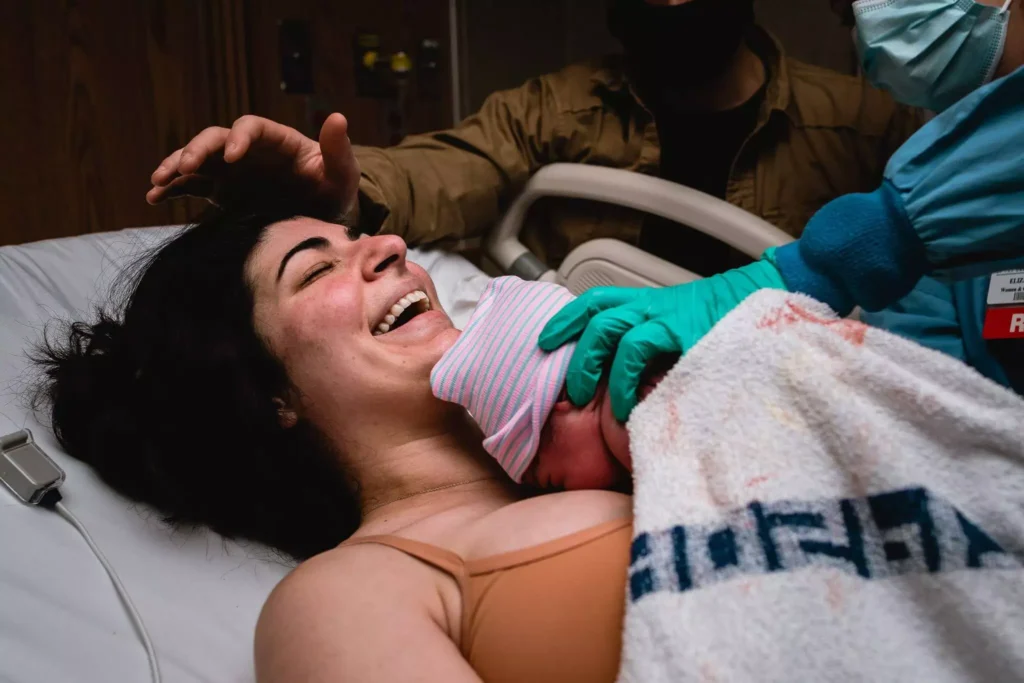

Learn the science of pregnancy and birth to take the mystery of labor away! Understand why you are feeling what you feel, and learn strategies to confidently move through pregnancy and birth!
- 9h+ of Video
- Support Group
- Close Captioning

- 5 Workouts/Week
- Gym Workouts
- Self-Paced

Instructor
GINA
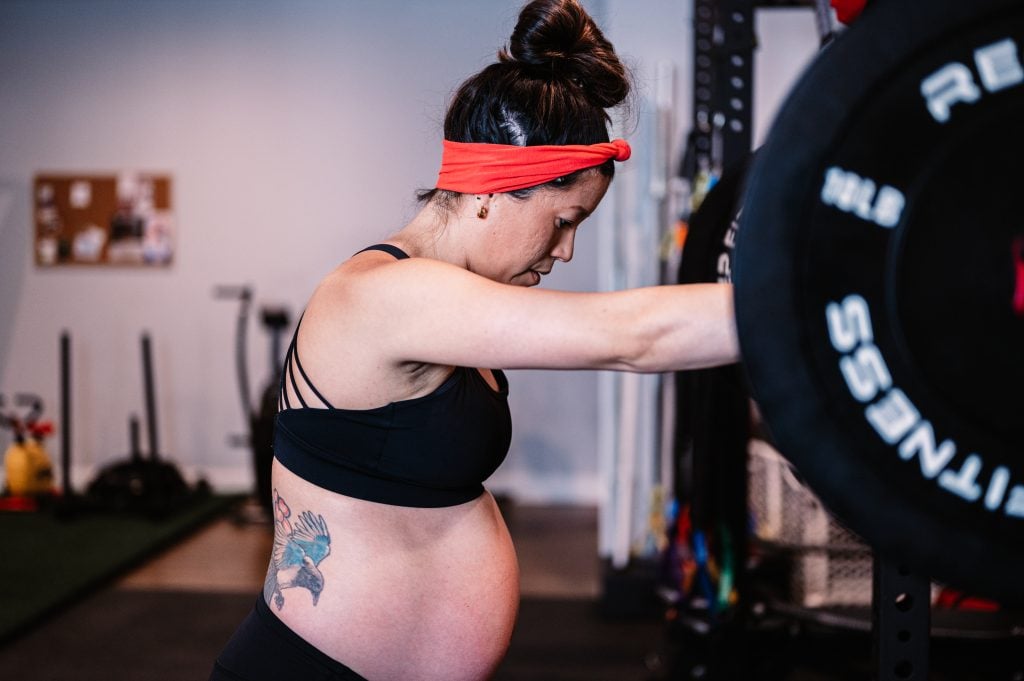
Workout on-demand with our prenatal fitness workout videos! Each workout is 30-40 minutes to follow along as you exercise at the same time!
- Birth Prep
- All Trimesters
- Mobility Work

Instructor
GINA
Find comfort and relief from pelvic girdle pain throughout your pregnancy and postpartum period! This program incorporates myofascial sling focused exercises to stabilize across the pelvic girdle joints.
- 3 Weeks
- On Demand Workout Videos to Follow