



Welcome to the MamasteFit Podcast! In this episode, Gina (doula/perinatal fitness trainer) and Roxanne (certified nurse midwife) walk through how birth has evolved, from mostly home births with midwives pre-1700s (but high death rates from infection, bleeding, obstructed labor, and blood pressure issues) to increasing hospital-based, physician-led care in the 1800s–1900s. They discuss key shifts like antiseptics, anesthesia (including twilight sleep), antibiotics, transfusions, prenatal care, and safer C-sections—improving survival but often reducing autonomy and satisfaction. They cover the 1970s natural childbirth and feminist movements, and the later push for evidence-based, family-centered care (partners/doulas, skin-to-skin, breastfeeding support, delayed cord clamping, shared decision-making). Their takeaway: modern interventions save lives, but they’re tools—not requirements—and blending safety with physiologic support matters.
Read Episode Transcript
Gina: Welcome to the MamasteFit Podcast. In this episode, we are going to be talking about the history of birth and how birth has evolved over the past few centuries, primarily in the United States, but also around the world.
All right. Roxanne is going to be sharing what she has learned about the history of birth, and we both do have some understanding of it from, our readings and studies over the years. And so she’s just gonna start from, the 1700s and just tell me what she has learned and how birth has evolved in both good and bad ways, or more optimal and less optimal ways over the centuries until we get to now, and I am just going to react, based on what she tells me. Yes. So Roxanne-
Roxanne: So we’ll start pre-
Gina: How did the cavemen give birth?
Roxanne: I didn’t find anything on that.
Gina: Oh, okay.
Roxanne: at home.
Gina: Or the cave ladies. At home. How did they give… In a cave.
Roxanne: In a cave. Whatever their home was, they gave birth there. And I… There’s probably some evidence of what birth was like for them, that I just didn’t, I didn’t deep dive into the caveman, cave- cave people era.
But I did deep dive into the pre-modern era, which was before the 1700s.
Gina: All right. So- Let’s go. 17-
Roxanne: So this, what birth looked like in the pre-modern era, pre-1700s, was 95% at home. Most of the time attended by some sort of trained either midwife or trained birth attendant, and birth looked similarly where they had their babies, they had optimal cord clamping, which is just delayed cord clamping with a different word because they didn’t cut it immediately back then. lots of skin-to-skin, breastfeeding by either them or somebody in their circle was doing breastfeeding for the babies, and it was an event that was, like, cherished and honored.
Mortality, though, was still fairly high. This was, childbirth was the leading cause of death in people who were in the childbearing age. So the mortality rate was 500 to 1,000 people in 100,000 births, and while that number sounds crazy, if you just, make it a little bit smaller to, conceptualize it easier than thinking of a 100,000 people, it is, one in 100 people, just to make it smaller. So it was fairly common that people were either being, like, trauma, having long-term complications associated with it, or unfortunately they were dying.
Why? Why was this happening? We know, obviously we can, retrospectively look back of why. One, hygiene. Germs were not known. People didn’t know about germs and infections.
Gina: They weren’t real back then.
Roxanne: People were just like, “Oh, they got an infection, then they die.” We didn’t have any treatments for, infections. people were not washing hands very well, hygiene, not a thing, which then was leading to increased infections. As well as people were bleeding heavily from childbirth, as we know, is the cause.
I think it was Game of Thrones, when I watched that, the birth of Jon Snow, and she’s bleeding heavily, in my mind, I’m watching him like, “Just do a fundal massage! Like, why is everyone just, watching? Do something!” But, that wasn’t known. People didn’t know, oh, if I rub this fundus, this would help the uterus contract. Hemorrhage was a leading cause of childbirth ’cause they didn’t have interventions for it. And then obstructed labor, labors that were not progressing, they had no tools other than, what they were taught in their trainings. And then we know, hypertension, preeclampsia and eclampsia is a complication of pregnancy for some people, and this, back then, people would just get high blood pressure seize and then unfortunately die.
So those were the leading causes of poor outcomes in pre-modern era.
Gina: Sounds not great.
Roxanne: Yeah, it’s a great time to have kids.
Gina: Yeah. That’s interesting that Game of Thrones had Jon Snow’s mom die from a postpartum hemorrhage, ’cause in the subsequent series, or I guess it’d be the prequel-
Roxanne: It’s a prequel.
Gina: In the House of Dragons, somebody in it had obstructed labor and also did not survive their birth.
Roxanne: Yeah.
Gina: Yeah.
Roxanne: It’s true too, there’s at least 100 people.
Gina: This series is all about showing birth in a really scary light.
Roxanne: Yeah. But something that did develop, so one of the first tools that were developed for birth, was forceps, and that happened in the th- 1600 era. And this was to help address obstructed labor. Obviously, forceps, while a tool that is available to us, was not always helpful back in the day. It did not greatly improve maternal mortality, but it did increase trauma, and infection rates when they were utilized. But it did save some babies’ lives and some mothers’ lives. Not a great number, but it was a tool.
Gina: But even, in modern era, forcep birth is-
Roxanne: Not used …
Gina: …can be very damaging to the pelvic walls. But we have pelvic floor PT and surgery and all sorts of things.
Roxanne: They did not have pelvic floor PTs- They did not … in the pre-1700s. That was not an option.
Okay, 1700s to 1800s is the early medicalization of birth. So we already discussed forceps were developed in the 1600s, but this is now when we are getting some male doctors, male physicians, male midwives, if you wish to say, are starting to attend more births.
Gina: Mid husbands.
Roxanne: Mid husbands! Whatever you would like to call them.
This is also when early C-sections were, like, starting to be developed more than, as, a theory back in the day. So this is when they were starting to use them, and they were usually only used as a last resort to maybe save mom and baby’s life- not used routinely in any sort of way. but it still had, shockingly, a very high mortality rate for mothers doing C-sections.
There was not a crazy improvement in mortality, though, with all of these early medicalizations of birth. Mortality decreased to 600 to 900 in 100,000, so a smidgen.
Gina: So- But the birth satisfaction rate might not have-
Roxanne: Yeah, maybe, not …
Gina: Might have dropped a little.
Roxanne: So mortality in some areas may have worsened, they say, because, of the physicians not washing their hands and spreading infection, and an overuse of forceps.
Gina: Fucking men.
Roxanne: And a misuse of forceps. Overall, not crazy changes, but an important turning point in why we talk about this era is that in Sweden, so not America, Sweden dropped their maternal mortality rate by over 40%. And how did they do that? They started having standardized care and a standard training for the midwives in their country.
So standardized care and highly trained professionals attending these births decreased the mortality rate. So not necessarily all of these interventions, by improving training and care practices, this improved mortality rate before we even got to an improvement of technology.
Which makes a ton of sense, ’cause I’m sure there’s a lot of, wisdom that has been lost over the centuries as midwives kinda got, pushed out of birth after s- attending it for centuries- Centuries
generations. But because a lot of them were probably practicing in, little pockets-
Yeah …
or maybe even in complete isolation, like, all they knew was the best practices for themselves personally or within their little group of midwives. Yeah. When some midwife group on the other side of the country may have had, a really successful way to manage birth-
Yeah
Gina: or to manage this complication that was happening- But they couldn’t share it … but they weren’t sharing that information because- ‘Cause they didn’t … they don’t have time. birth, workers are busy. They’re really busy.
Roxanne: But also, like, how are they gonna, travel across the world for, a month just to pass this?
Just
Gina: do a social media post. But, so I think it’s, instead of only being able to rely on the best practices for yourself- Yeah … you can now find the best practices for everyone. Yeah. And there’s probably more of, a shared community of, sharing this knowledge of, what, low intervention things help with the, with obstructed labor, or what is helping with hemorrhage, or what is- Yeah
helping with these things. So it makes total sense that standardizing care and having, standardized training is going to improve outcomes. Because it’s not just what worked best for me, it’s what’s working best for everyone.
Roxanne: Yeah. Yeah. So that’s… It’s an, a very important foundational part of the history of birth that, yes, we can talk about all these interventions, but just, that portion of standard training so that everybody is on the same page in the standard of care of how we manage pregnancy, birth, and even postpartum, can help improve outcomes.
So can’t forget that one. But now let’s move on. To the less exciting portion of history, which is the late 1800s, early 1900s, which is now the foundation of modern obstetrics. This is when birth was being managed And controlled and not experienced, which could be pros, f- depending on the person, pros at a great thing or a negative thing.
Gina: I don’t know. Where this story goes, not a great thing in my opinion, initially.
Roxanne: Initially. but- Rough draft. What, maybe we’re getting to the better drafts as we go on in the years. But
Gina: maybe we’re focusing on not the right parts of the story. Yeah. ‘Cause there are probably- There are … a lot of really great m- modern, medical advancements that occurred-
Roxanne: Yes
Gina: because of this era. But anyways, continue. Yes.
Roxanne: So
Gina: 1900s, early- 1900s.
Roxanne: 19, yeah. So birth primarily at the beginning, at home. 95% of these babies were born at home, mostly attended by midwives, but then obstetrics male physicians, because women were not obstetrics, just yet, were mostly then slowly transitioning them to the hospitals.
So by the 1930s, 50 to 60% of these babies were born in hospitals, and then now, 1960s and even tod- today, 99% of babies are born in hospitals.
Gina: Was there standardized training
Roxanne: for
Gina: these obstetricians?
Roxanne: Obstetrics. Yeah, so they would go to medical school and learn about obstetrics in their, in, their capacity, but, did not trust midwives, many of them, and they felt that they were less than.
and almost began to push them out of the birth world, which could be, like, an entire whole episode of, just midwifery in general, of how they became, pushed out, particularly, the granny midwives, lay midwives, traditional midwives, a large majority of them being African American. Whole episode I’m sure we could do on that.
we don’t have time to delve into that, but very important history that should be discussed. So two major innovations that occurred in this era is, one, antiseptics, decreasing the rate of infection. being clean and hygienic, washing hands in antiseptics helped decrease the rates of infection.
And then anesthesia began to be more developed. The major thing that people think of with anesthesia in this era is twilight sleep. So this is when people were being put to sleep, tied down on a bed, and episiotomies, pulling their babies out using forceps.
Gina: I wonder why they needed to be tied down if they’re just sleeping.
Roxanne: ‘Cause it’s, they’re not sleeping, Gina. So they were just not aware, they were, like, moving their hands and stuff.
Gina: They were, like, thrashing about?.
Roxanne: Yeah. Because, we didn’t fully understand antiseptics. Oh my gosh.
Gina: Not antiseptics.
Roxanne: Because we didn’t fully understand how anesthesia worked. So they didn’t have any memories, but that doesn’t mean that their body was not moving in a certain way, so that’s why they tied them down, so that they weren’t, maybe attacking people ’cause they’re experiencing labor still.
But no memory of this. So they didn’t have memories of their labors and their births, and it still, it became more of this procedure than this event.
Gina: How did babies respond to twilight sleep?
Roxanne: They did not love it. so we know any sort of anesthesia that’s going into the blood can pass through the placenta to the babies and cause respiratory depression.
And shockingly, these babies that were born via twilight sleep were coming out with respiratory depression and needing some assistance after birth. they didn’t understand it then, but we know now. So babies didn’t love it initially, and then a lot of people looking back on it didn’t love it.
Gina: What is respiratory depression?
Roxanne: Oh, that’s great. Thank you for
Gina: asking.
Roxanne: respiratory depression is where the… Our bodies has to use muscles to breathe, and certain medications can cause that effort to stop. So will not take a breath and stop breathing. but it’s not due to something being wrong. It’s just that medication when it’s given in large amounts.
So like people who overdose on like narcotics, it is due to a respiratory depression. so it just stops the effort, the respiratory effort to breathe. A lot
Gina: of people- And
Roxanne: so there are
Gina: medications that cause that in babies.
Roxanne: When… So babies are very small in comparison to humans, adults. So medication that we give to a human adult in a larger dosage, if it passes to the baby in that same dosage or just a larger amount because they’re smaller, a smaller amount of that same medication can cause a respiratory like decreased effort in a baby versus an adult.
So essentially, the… When someone was getting twilight sleep, there was a higher likelihood that their baby would need respiratory assistance at birth. Yes, after birth. Yeah. And we didn’t, we don’t… Now we have medication to like almost reverse it if that does happen. I- Don’t believe they had it then.
Gina: Yeah, but we’re not putting people to, to- We’re
Roxanne: not putting people- …
Gina: twilight
Roxanne: sleep Twilight sleep is a larger amount of anesthesia. But
Gina: not that far removed. Like there are- some folks where your grandmothers may have experienced it, or your like great-grandmothers-
Roxanne: 1910s to 1940s is
Gina: very common … could have experienced giving birth in this way.
Roxanne: Yeah. So 1940s was the latest end of twilight sleep era, so less than 100 years ago, which is wild.
Gina: So
Roxanne: did it improve
Gina: mortality rates? No, it did not, and
Roxanne: it did not. So that’s just- it’s still, so it did improve it slightly. I’m not gonna say n- it was still 500 to 1,000. It improved to 400 to 600 in 100,000.
So like four to six in 1,000.
Gina: Yeah, so my understanding of the timeline was that it initially spiked when people moved to hospitals, ’cause there was still like a little bit of like- There’s still- … figuring out- Yeah … how to have a lot of people in the same place and not spread disease.
Roxanne: Yeah.
Gina: And the training was not quite as standardized initially, but then it came back to- Yeah
the normal levels after a period of time.
Roxanne: Yeah.
Gina: But the- That first spike … birth experience and satisfaction rate, limited. Calamity.
Roxanne: Yeah.
Gina: Calamity.
Roxanne: Yes.
Gina: Or I guess in my opinion, maybe-
Roxanne: And then the C-section evolution was like continuing to evolve, but it still had, if a C-section needed to happen, it still had a very high mortality rate, due to bleeding and infection, because antibiotics are not created yet.
It was just antiseptics to help decrease the spread of germs and bacteria, but not to treat it if it does become infection. so still some limitations with the surgery as well as bleeding is still a high rate in this time. Like hemorrhage after birth, not fully, it did not have things to kinda treat that just yet.
and so in those ways. Standard of care slightly improving, which could be why it was decreasing slightly. but the other two big things that can cause, harm in birth, bleeding out and infection, not yet fully addressed.
Gina: I am a little curious, and I don’t, think you have the answer right now for this, is what made these male physicians so obsessed with birth and wanting to take it over?
do you think it was they felt that this Was like, I guess in some aspects you can consider, the act of, creating a life and birthing that life is pretty significant and, borderline being a goddess, and maybe that was uncomfortable for them. this is, a solely, female, solely, woman activity that’s happening that, it, that it’s uncomfortable.
But, women have their menstrual cycles every single month. and that doesn’t seem, that doesn’t seem to be, like, a huge- Yeah … huge market in that time. So it’s very interesting to me that there seemed to be this sudden push to take over birth from midwives, when I would assume that it would just be one of those, just do that in the privacy of your own home type of activities.
But I don’t know. I’d be very curious, what kinda sparked this, interest and
Roxanne: this obsession. I don’t know if it was just, obstetrics in general. I think it was just medicine in general. They were starting to understand the body in more ways, ’cause I’m sure if we, went, a history of just medical care in general and how it’s changed over the centuries, I think it will align with obstetrics.
Just, medicine and medical care in general just started becoming more interesting as we understood the body more, the anatomy, physiology, and how, our organs work together, and all of that. And then one of the organs in a body is a uterus, and babies come out of that. So it just became something else that someone was interested in, because medicine was already becoming…
And I think the invention of forceps, where, they were able to do something, further sparked that interest. But I would be super interested as well to know, was it, one person who was like, “Maybe we should do this,” and it was like- A God complex in a way where they could, like…
Gina: I can see it being, like, a God complex.
you’re-
Roxanne: Yeah …
Gina: doing things that are saving lives- Yeah … all of a sudden, and kinda going against, the natural order of things, and- Yeah … the, one human activity that is probably as close to being a divine being- is birth, and wanting to control that and not let women have that.
Roxanne: Yeah.
Gina: I don’t know.
I’d be very curious, what was the motive? Patriarchy, because, what made these male physicians, ’cause they were primarily male, care so much about birth in that moment? Yeah. maybe it was just, another aspect to control women. I don’t know. Anyways, continue.
Roxanne: Probably, probably.
Gina: Yeah. but- I’d be curious on anyone’s thoughts. write a paragraph- I would love- … or an essay on this video …
Roxanne: I would love to know … I would love… I’m sure that there’s, papers written on it. I just, I did not deep dive into that aspect of the history of birth.
Gina: Yeah, it’s just something I’m curious about.
Roxanne: ‘Cause that, again, could just be an entire episode. Braxton Hicks, Braxton is a man. Why do we call them Braxton Hicks? Just pre-labor contractions. Men. Yeah, but whatever. Okay, back to the history of birth.
So just to recap, pre-medicalization of birth, was primarily physiologic, hands-off, unless something was going on that we needed to, intervene in.
so it was similarly kinda little bit more of what we do now, is skin-to-skin, optimal cord clamping, breastfeeding, allowing that, mother-baby dyad to bond, and it was in a, an event for the family, a normal process of growing families. Beautiful, lovely. Still high mortality rate, though. Number one reason people in their childbearing years died was from childbirth.
Into now, it is more medicalized birth, mostly in hospitals, male physicians, and s- a slight improvement in mortality, but maybe more trauma, s- emotional and physical trauma associated with it versus before. so now let’s get into where the biggest turning point in America with, in regards to childbirth started.
Twilight Sleep era is probably, the biggest thing that changes within the 1930s to 1960s of history. But there was a lot of other things happening in America in the 1930s and 1960s. This is, the women’s right movement. So obviously, childbirth is a large movement within that movement. So lots of things happened to kickstart the change within childbirth.
Also, in just medicine in general, antibiotics. Whoo, finally we got some. Antibiotics, blood transfusions Great. Great. Also medications to help address when someone is hemorrhaging in birth. In the early days, it was a different… So like now we have Pitocin, whereas before they were using, synthetic medications that allowed the uterus to contract.
What we use now is like a similar thing is Methergine to allow… But it works differently on the uterus than the other Pitocin does. Pitocin didn’t come out until the end of this era, like 1950s. and Pitocin is a peptide-like hormone that we give to act on those re- receptors. and then prenatal care is now more standardized.
So we can detect if something is going on earlier on in somebody’s pregnancy. So like we can detect when their blood pressure is getting elevated, or if something’s going on with baby, or diabetes. So we’re learning now more all of these things that could increase risks in pregnancies, and being able to detect them earlier to decrease the risks on babies.
STDs are, at, the time, STDs, or sexually transmitted infections, were being, like, tested for more in pregnancy. So another thing that could decrease risks for babies is by treating those things with antibiotics. and hospital birth was still the standard, though, in this time. Most people still gave birth in a hospital, which became just the standard.
So home birth was, the exception. Hospital birth was the standard. mortality improved, though. So we, at the beginning of this episode, it was 500 to 1,000 in 100,000 births, and now it’s more like maybe 10 in 100,000 births. So that’s a pretty big- That’s a pretty big jump …
pretty big jump. And shockingly, decrease in infection and hemorrhage was one of the biggest things that addressed, mortality.
So recap what the causes of m- maternal mortality were. So postpartum hemorrhage, infection, and then blood pressure issues? So why outcomes were so poor previously was hemorrhage, infections, obstructed labor, and then hypertensive disorders. That we can, look back and determine it was hypertens- hypertensive disorders, but at the time they, they did not.
So now we already addressed, being able to standardize care, and then we just developed it more with prenatal care. and that’s, addressing being able to identify hypertensive disorders. Now we can address hemorrhage and infection more with antibiotics, where we started to in the last era because they had antiseptics, but now we can actually treat when someone has an infection.
But then obstructed labor, really the only tool they had for obstructed labor was the forceps still to be able to, react to it and maybe help it along. so that one’s still adjusting. And that one is probably still, C-sections and, interventions for obstructed labor are s- one of the now higher causes of mortality or morbidity for childbirth.
But we are developing those C-sections more, and they’re becoming less risks associated with C-sections. Obviously anesthesia is more developed in this time period, so the mortality rate is not as high As it was before. So now we’re st- at the, at tail end of this, 1940s to 1970s, birth’s still highly medicalized.
So women were mostly confined to the bed if they were laboring, if they didn’t do twilight sleep. movement in labor was very limited. and then routine interventions of episiotomies, forceps, twilight sleep, forced sedation, as, you will, very common.
Gina: I wonder if
Roxanne: those things contribute towards obstructed
Gina: labor.
Enemas so that baby aren’t poopin’. Gosh. I wonder if… Yeah, I don’t know. Yeah.
Roxanne: Anyways, just a thought. separation from baby, this is when it started becoming more of the norm, is that it wasn’t immediate skin-to-skin. Baby was taken to the warmer immediately after birth, which as we know, can affect birth.
Gina: breastfeeding was not encouraged
Roxanne: at this point. No, it was not encouraged. formula was starting to become more popular in this time period, as well as immediate cord clamping was done because convenience, you need to be able to hand the baby off to be assessed. and fathers and partners were not included in the birth room.
They were, they sat in the waiting room, and then when the baby was born and cleaned up, then they were welcomed into the room because it had to be, like, a sterile procedure. a lot of people were giving birth, by themselves. not even, parents, our mom was in our birth room. No, just you by yourself.
Just by yourselves. and then mostly physician-driven care Great. So those were the common practices at this point, because again, birth was believed to be inherently dangerous, and they needed to save people from it, and this was the standardization that they created for the birth. So like we learned, standardization of care is great to help improve outcomes, but maybe not this standardization of care.
Gina: it sounds like it improved outcomes, which I guess that in itself can be an argument. Oh, yeah. But-
Roxanne: But it was still not strong evidence that
Gina: was guiding. But I think it’s also still important to consider how somebody’s, emotional well-being is within their birth. Yeah. Like, how somebody feels during their medical care is also-
Roxanne: Which-
Gina: important. Yeah Other than just being alive. Wasn’t- But that’s-
Roxanne: Wasn’t a thought process, I think, in
Gina: the beginnings Which I think is more of a modern thought- Yeah … which is good. But anyways.
Roxanne: Other interventions, though, that were being developed, so vacuums at the tail end of this, 1950s to ’60s, vacuum extraction was starting to be implemented.
It had better outcomes when compared to C-sections and forceps for both mom and baby. C-sections became safer because now we have the antibiotics, blood transfusions, anesthesia, all of those things. and, they started, at the end of this, fetal monitoring, electronic fetal monitoring, and kinda deviling into that.
They still listened to babies prior to. we… The stethoscope was created, so then they created a fetoscope, which I think is so cool that you can listen to a baby with this little thing. but they started use- utilizing a fetoscope to listen to the baby’s heart rates, but, we didn’t fully understand what that meant, listening to a baby’s heart rate to know when would be an, potentially an issue.
and so then they developed electronic fetal monitoring, which, again, could also be an entire episode of, the practices and if it’s effective. but that started at the end, the 1970s, so now having monitors on their bellies during labors to be able to monitor contractions and babies, which, good or bad, depending on the person you ask.
All right. So now let’s get to the biggest change, where this was the natural childbirth and feminist movement, changing how birth was done routinely. So again, routinely before, by yourself, in a hospital, in a bed, forced sedation, episiotomies, vacuum forceps, and potentially C-sections to have a baby, and this was just the norm and what was expected when giving birth.
but now, this is a huge turning point because women are now advocating for autonomy. bodily autonomy is, something we are now fighting for. You crazy girl. In the 1970s, okay? That was 60 years ago.
and this is when people started to challenge those routine interventions associated with birth, and is this beneficial? And the rise of childbirth education, so like Lamaze and the Bradley Method, this is when it, started coming out, and people were starting to question, “Do I need to be put to sleep to have a baby?”
Or “Can I just do what our bodies, our ba- our bo- what our bodies want to do?” Partners were slowly starting to be allowed into the birth room, so the labor room, not necessarily the birth room. So you labored in a room with your partner, and then when it was time to have the baby, you were taken to a separate delivery room.
and then the focus was less on, the medical interventions of, forceps, forced sedation, not moving, monitoring baby, to using movement. Shocking. Breathing techniques. having more options for someone who doesn’t want a medicalized birth. and with those childbirth educations, they were learning all of these options.
And then also kangaroo care became more of a thing again, where they were wanting that skin-to-skin with their baby immediately after birth instead of being taken away, and the benefits of skin-to-skin, and then s- not necessarily delayed cord clamping just yet, we were still doing immediate, but, the benefits of that, important bonding and contact was starting to be talked about again.
So this is the beginning of family-centered care, 1970s.
Gina: But how prevalent was it?
Roxanne: Not very common. home birth, center, midwifery care, still very rare. and then more of this stuff was still, you had to fight for it still in the hospital. People were starting to learn about it, as well as like their just autonomy of their own bodies outside of childbirth, and fighting for our rights as women to do all of these things.
but it still took a very long time before it became normal. ‘
Gina: Cause this is also the era where women can have a bank account- Yeah … and a credit card.
Roxanne: and it’s important to note that all of these things that were implemented, so now, 2026, evidence-based care, very important. we need evidence in order to change and challenge care.
at the beginning of childbirth, when we started medicalizing birth, evidence was not always utilized. It was like, “Let’s try this thing. Okay, that kinda worked. Let’s just continue it.” But it wasn’t like research studies of “Oh, this thing works really well. Let’s continue using it and see how it changes care or doesn’t change care,” like improving outcomes, not improving outcomes.
They just were like, “Okay, this is now the norm. This is what we do now,” because we tried it, and it wasn’t necessarily always based off strong evidence. So now it’s the 1990s. So prior to evidence was still somewhat utilized, but not a very strong driver of how medical care was given, especially in childbirth.
Now 1990s to n- 2010s, okay, this is not that long ago. Now evidence-based practice is more pushed, and like you have to have evidence to change practice, to include the practice that was done when there wasn’t evidence. You have to prove that this new thing is better, so delayed cord clamping.
Gina: Did you know that there was a guy, his name was like Edward Clarke- Oh, yeah
who made up a bunch of stuff about if women exercise or they go to school, their uterus will dry up. And there were researchers That spent their careers debunking his just made up information that was viewed to be truth. And so it’s, funny to me that there was non-evidence based care and practices happening that were potentially harmful, that the only way to stop them was to do the research, which by the way, until 1993, women ex- were not included or needed to be included in research trials.
Roxanne: It’s just a dude deciding to do it, yeah.
Gina: like even a lot of the prenatal vitamin recommendations are not based on studies that include women- Yeah … in general, but they don’t even include like pregnant women or breastfeeding women, which is always very interesting to me when I see people that are very passionate about the prenatal vitamin general recommendations.
Yeah
Where I’m like, they’re not even based on, current evidence. there’s new evidence that says this other stuff is better.” Anyways, that’s interesting.
Roxanne: Yeah. Yeah, so yeah, so now 1990s to 2010s, and, I could be slightly off on some of these. This is just a generalization of years that, evidence was starting to be challenged, but, mostly at this time frame, now we’re starting to challenge how things are normally done based off of evidence, and we need evidence to show that it actually improves care.
Gina: When did the epidural come out in all of this? So we’ve got, women confined to a bed. They can’t move. Twilight sleep They’ve got monitors on them. So twilight sleep was the epidural prior to this?
Roxanne: Yeah. So twilight sleep was probably the first anesthesia utilized in labor, and then they started using different types of IV medications, that were, like, a little bit stronger with, s- but maybe, allowed more movement, and then in, the 1970s is when epidurals became more utilized slowly over time, and then, now 70% of people utilize this epidural.
Gina: Yeah, so I think my mother-in-law did not have an epidural. Yeah. But I don’t think that she got to move around and do stuff- ’cause I don’t think that she had one, had an option for it yet. Yeah. So when I was telling her that I was gonna give birth at home, she was like, “That’s a terrible idea. Why would you not get the epidural?”
and so I understand where that came from ’cause if I was confined to a bed and told I could not move and could not use coping tools- Yeah, it’s hard … to find relief from labor with my husband, that would be a little challenging to have an unmedicated birth. And so I could see why somebody is like, “You don’t wanna give birth without an epidural.
Are you a psycho?” Yeah. ’cause there are ways to give birth unmedicated that is not miserable. I don’t wanna do it every day, but I would not describe the unmedicated births that I had as traumatic or even, overly painful.
Roxanne: Yeah.
Gina: but I was able to use tools like movement and comfort measures and having physical support and mental and emotional support from my team.
Which was the
Roxanne: childbirth movement era, like-
Gina: Yeah …
Roxanne: because, if you think about the timeline, pre-1800s, early 1800s home birth, being taught how to cope with labor and move through labor, with, not just you’re by yourself. You, like you have your mom and, your aunt and, the midwife, and they’re there, helping you move through it and teaching you what to do.
And then once it became medicalized, people were removed from labor, and n- the coping mechanisms may have been lost in a way and were not always taught for a period of time. And then now And, once we started, women started fighting for bodily autonomy, childbirth era movement, then they’re learning these tools again, where it was, like, almost, not taught how to deal with and cope with labor and move with labor ’cause you were confined to a bed for so long.
we are almost, not necessarily going backwards in a way, but, going back to that, physiologic, slowly, getting there, to the physiologic birth and s- how we support that, again, in a way from just go to, go into a bed. Yeah.
Gina: just, a quick note because I, do think that there sometimes is a bit of, a romantization of how things might have used to be in birth.
I don’t think that everybody had a midwife.
Roxanne: No, some people were by themselves.
Gina: And I don’t think that everybody had, a village or community ’cause, so our own grandmother in Korea gave birth at home by herself
Roxanne: With just yeah
Gina: Just, no, just by herself. Her daughters were not involved, her sisters, her mom.
She only called a midwife for our mom ’cause she was stuck. Yeah … and she would’ve just died. So I
Roxanne: think- But it was like a midwife is available if needed, but you didn’t need it
Gina: Yeah, but I do think that is, it is important to not romanticize too much ’cause I don’t think that the, experience for everybody was to have a midwife.
Yeah Especially if they did not have the finances potentially. I don’t know how expensive midwives used to be. but our mom’s family was not of money.
Roxanne: Yeah. And this is South Korea, so South Korea’s gonna be different than, America In the ‘
Gina: 60s after the Korean War. Yeah but I think that it’s important to, note that if we look back on what birth used to be, it may not be this, really idealistic viewpoint that we had.
V- and so I don’t know if it’s necessarily, going back to that because the way that we do things now- I think it’s more,
Roxanne: to the physiologic support and process of birth, and, understanding that more and finding ways to support that, and away from the only medicalization. Yeah we need to save you from this birth experience ’cause you could die, and we, are going to save you and your baby, to, this is an experience that makes a, that is profound and is a physiologic process, and how can we ensure that this process is still safe without impeding upon it?
And I feel like that is the direction we’re slowly moving, but you have to go through this, unfortunately, this period where, you’re figuring all of that out to, fully understand it. because again, like, when birth was happening in, beginnings of this, people were secluded and not around other people.
Suzy over here could have been like, “Oh, I know that if I rub this fundus, it stops people from bleeding,” but, Sally on the other side of the world is still trying to figure that out, and so she’s “These people keep dying from bleeding out, and I don’t know what it is,” because Suzy over here can’t tell you, “If you just rub on the fundus, it’ll help you.”
Yeah But now we have these evidence-based places to go and be like, “How can we decrease these risks?”
Gina: Yeah. I’m, I was just saying, in regards to, like-
Roxanne: Yeah …
Gina: people used to give birth, we don’t- Yeah It’s this, it’s similar to where people, romanticize, like- certain, Asian cultures. we come from Korea, and people will, romanticize, “Oh, Koreans postpartum,” And our mom will be like, “That’s not what people were doing.” Yeah. and so I think it’s, that’s just, an important thing to put out. things are different now- Yeah … than they were pre-modern era, pre the medicalization of birth, I think in a good way. I think that there is more opportunity for, to have the physiologic birth at home with very little or no intervention, or even in a hospital with the medical advancements that are available- Yeah to us to keep us from dying. Yeah. And so I think it’s, a, it’s, we have an opportunity for a good blend-
Roxanne: Yeah
Gina: more increased support from our partners, from our communities, from- Yeah … the people that we choose to be there. Because there’s just more of an awareness, I think, of birth. Yeah. That maybe it wasn’t quite as- Yeah.
Roxanne: And I think that it’s also important to note that, partners were not involved with birth, really, in majority of history. It was, if you had someone, it was another, woman in the community.
Gina: Yeah.
Roxanne: or potentially just by yourself. the partners were like, “Oh, you do that.” And so when partners started coming into the birth room, that was, like, a huge change.
And in some cultures, they are still not involved with birth. the baby comes out, and then they’re like, “Oh, hello.”
Gina: Yeah, our
Roxanne: dad- It’s
Gina: a beautiful baby … was, like, a part of the… Like, when we were being born in the late
Roxanne: eight- It was, like, a newer thing … late,
1980s.
Gina: God. So we’re, we were born in the 1900s.
that’s, like, when it was just starting.
Roxanne: I mean- That they’re in the delivery room …
Gina: that they were even in the delivery room. And it was, like, a big thing where the nurses were- Yeah … trying to, really encourage him to be in there.
Roxanne: And, be a part of it.
Gina: And, and he sometimes still struggles with, women things, where, he’s definitely come a huge- Yeah
a huge step forward, and he’s much more respectful and, open to this stuff because we’ve had hard conversations with him. But, he grew up in an era where this was not the norm. you don’t do- Yeah … you don’t talk about your period to me. we don’t do… Birth is for women. Like- Yeah
that’s not something that I’m there for. Like- Yeah … you figure your own, like- Yeah … women being pregnant is an inconvenience. And again, this is, like-
Roxanne: it’s- … within the past 30 years …
Gina: and so he’s, really grown in the past, decade, I think, with a lot of these, really deeply ingrained viewpoints that he’s had.
and so I think it’s important to note that a lot of these changes have happened, within our lifetimes.
Roxanne: Yeah.
Gina: our, mom breastfeeding was weird.
Roxanne: Yeah.
Gina: it was really weird to a lot of people. Yeah. And she’s like-
Roxanne: And you, your mom had to stop- And she’s “Hi, this is-“
breastfeeding you because- Yeah … the doctor was like, she doesn’t like your milk. You just need to give her formula,” ’cause you kept spitting up ’cause you drank a lot of milk. I know, which
Gina: was the problem with all of my children, too. Yeah. They were just projectile vomiting, and I’m
Roxanne: like- Yes, you’re like…
“Are they okay?” Yes, they’re fine. Oh, they’re fine. But I do feel like The shift that happens in the 1990s, early 2010s, towards evidence base has made probably a big impact on birth in general because now we have these, this evidence to say, “What we were doing, does that improve outcomes, or does this improve outcomes?”
but it… with medicine, it takes years a majority of the time-
Gina: Or decades …
Roxanne: decades for someone to see the evidence and then actually implement it. I think, on average, it’s between five to 10 years for studies to come out and then practice to actually start to change. but maternal mortality, it is, seven to 12, per 100,000 for moms.
And then for babies, it actually has also improved. I never said the neonatal improvements, but, baby mortality rates also improved over the years. Major shifts that happened, though, in this period of time is that people were actually starting to explore community birth again with home birth midwives or, birth centers were starting to, come up again.
Episiotomy rates, shocking, decreased because they’ve learned that episiotomies don’t heal as optimally and were leading to more third- and fourth-degree tears from extensions of those epi- episiotomies, which we know third and fourth degrees lead to prolonged pelvic floor dysfunction a lot of the time, especially, like, when they’re still learning about all of this stuff.
So episiotomy rates decreased ’cause they’re like, “Ah, this is causing harm. We should probably stop using it unless it was necessary,” because they were previously using it to, make more space for the babies and allow delivery to be quicker so that they didn’t have to be there as long so a little bit of a convenience thing, to make someone not push as long, trim more space, but it was causing harm, so decreased it.
operative vaginal deliveries using forceps and vacuums became more of an option. forceps less common, but more, vacuums were more often starting to be utilized. but C-section rates also increased because one, they were being taught more, so it became more standard, less risks associated with C-sections for like hemorrhaging and infection.
so it became utilized as more of an option during this time period. things that were changing with like the f- kind of more physiologic portion of birth is skin-to-skin became more of routine practice over the years. So immediate contact after birth, as well as that golden hour based off evidence we know that improves bonding.
It improved baby’s like stabilization after birth, breastfeeding rates, and this is also when the baby-friendly initiation, in hospitals started becoming a thing to make hospitals baby-friendly, which sounds so silly, but it just makes it more of a family-centered birth experience where like the baby will just go straight to you immediately.
but this is when it, that all started. So immediate cord clamping used to be the thing where immediately baby’s born, they would clamp and cut the cord like within the first 30 seconds of birth, and then he would either go to the warmer or go to you. Now they’re seeing evidence of delayed cord clamping being a thing, so people routinely now will delay the cord clamping for 30 to 60 seconds, and this became routine in this time period.
even though now there’s stronger evidence for delaying even longer, but we’ll get to it. but we learned there’s benefits of delaying that cord clamping. Breastfeeding support was more readily available now in hospitals. So like again, when we were born, formula was still routine. Most people formula fed.
Over the 1990s into the early 2000s, now lactation support was more commonly found in hospitals as well as outside of hospitals, other than just like a lady being like, “Oh, let me help you latch your baby on,” that like maybe wasn’t like specially trained, and maybe like they breastfed their kil- kids, so they helped you.
because as we know, breastfeeding, some babies, fine. They figure it out. They do just fine, and then other babies need a little bit more support. and so now we’re learning, okay, we should, support them if they would choose to do that. so basically family-centered birth became the norm to include doulas attending births.
So not just partners in the rooms, but doulas, family members as well, or even friends that, are like family were starting to be allowed in the birth room, in the delivering room. and then shockingly, shared decision-making became emphasized in this time period. So it’s not just “This is what’s happening.”
It’s “These are your options.” What? “And now you can slowly decide.” But, this was the 1990s, so some providers have been practicing in a time period where, shared decision-making wasn’t the norm.
Gina: they might have started practicing in twilight sleep.
Roxanne: Yeah. this, the… It’s, a huge change in practice where, for me, I taught how to do shared decision-making in school And granted, like I kinda did it as a nurse, and this was like overly emphasized as like a nurse, but like this might not have been taught in some people’s school how to have informed consent in a way that they’re included in the process.
so that aspect kinda started in the, this time period. So it’s like the modern era of birth is a blend now of physiologic but also safety in a way. Like medicalization in regards that it is safety in mind, not just like for funsies, or “Hey, let’s try this out, see if it helps.” It is like we’re gonna utilize these things to improve the safety and improve outcomes, while also being able to support physiologic birth.
Gina: So I do think it is, and I’m sure this happened in every area, like, we kinda said, where there’s an overlap of people that kind of started their careers in birth in a prior era. And so like sometimes you’ll see there’s a doctor who’s been practicing for a really long time who maybe is a little outdated with some of their practices, but they’ve been doing it this way, and it’s really not gonna change until they retire.
Or if you are at a clinic where a lot of the providers have been practicing for a prolonged period of time, they may not be as open until some younger doctors start coming in. And that’s something that we’ve, I think, seen with some of the hospitals near us, is as like younger providers are coming in, who j- are still in their 30s and 40s- Yeah
but they’re a little bit more up to date on newer practices- Yeah … are the ones that are really changing like the birth environment in those birth locations, as like the older ones have started re- retiring as well. Yeah. and so I think there is a positive shift that’s happening in the hospitals.
I, I do think it is like a safe place to give birth and a good option for a lot of people- especially when we start thinking about like the finances and provider availability. And I do think that there is like a positive shift that’s happening, and I think for our specific era, a big influence on that is social media.
People have more, they have more access to information-
Roxanne: Yeah …
Gina: which could be, good or bad, ’cause some people also have access to misinformation- Yeah … that is frustrating, I think, for providers, but there’s still a little bit of empathy that needs… I think it makes the provider’s job harder because now you have to weed through misinformation.
Yeah. but, it’s also important to know that this person was seeking out something ’cause they’re scared about whatever it is, and they unfortunately maybe came across something that spoke- Yeah … to them in a way that made them feel safe. Yeah. That may or may not have been correct. And so it can be frustrating, I s- I can understand, for a provider to have to debunk a lot of stuff.
Yeah. and I do see more providers on social media trying to help provide education. Yeah. And I think there are ones that are more successful at it than others- Yeah … who I think are very compassionate with the way that they approach it. Dr. Jennifer Lincoln, she’s fantastic. I think she does a really good job with not trying to instill more fear or- Yeah
division amongst- Yeah … people, where she’s “Hey,” “I am an OB,” “That’s my perspective. However,” “These are-” Yeah … “the things that we can think about,” with these, standard things that we normally do that may or may not be evidence-based anymore- Yeah … or maybe we need to shift. And so I think she does a fantastic job.
Yeah. And so there are some great providers out there that- Yeah … I think do a good job educating, and I think there are some providers out there who are, like, really fed up with having to deal with patients that have questions. Yeah.
Roxanne: But I
Gina: think that it’s- and so I think th- what’s gonna really make a difference in this era is people have a really good opportunity to research and to find providers- Yeah
in a way that wasn’t even available to me when I was giving birth for the first time like nine years ago. Yeah. I didn’t have a Facebook group that I can join-
Roxanne: Yeah …
Gina: to find a midwife-
Roxanne: Yeah …
Gina: that we have now. there’s so many resources out there now- Yeah … to f- to be picky about your provider. And money is something that speaks in our country, and if we want to let our, desires for our birth known, like, where we spend our money is going to be that as well.
Yeah. So just as a-
Roxanne: I think that there’s the history of birth, while, shocking to, hear about what, how it’s changed over the years, I think it’s important to see that Why someone may be hesitant to trust their doctor is that when obstetrics started, they were doing some wild stuff. But it was ’cause they were…
I don’t think that they were inherently trying to traumatize anybody. I think they were tr- truly trying to learn, and, unfortunately, people were subject to that trauma, and no one took ownership of that, oh, oh, that was just part of… That, that’s just what birth was like, when you could also still be like, “Ah, now we know.”
Gina: th-
Roxanne: thank
Gina: you for your experience there were medications that were given that caused birth defects and complications. Yeah.
Roxanne: we have to take ownership-
Gina: Medicine is not innocent …
Roxanne: Yes, we have to take ownership that medicine… People are afraid of medicine and the medical community because it has done harm, and no one has taken ownership for the harm necessarily or, maybe taken as much as we should have, of the harm that has been happening, too, as we develop these things.
And now, we have, s- research study that is done before we can, implement these things. and so we’re slowly moving in that right direction. We’re like Medical, medicalization isn’t necessarily a bad thing. These are tools that are available to us, and the priority is safety. But that doesn’t mean that the opposite end of the spectrum of, physiologic birth is bad.
so some people may think, “Oh, why would you wanna do that?” But, we can also just be open that this is an experience, but how can we ensure, based off of what we know, how can we make it safe? And so blending the two now, like 200 years later from the beginning of the history that we discussed, lots of things have changed in that we can thankfully create the birth that you would want, utilizing the different tools, to include medical inductions, to include vacuums.
Episiotomy is fetal monitoring, all of these things are tools, but for some people, because of the history and how we got here, not everyone’s gonna trust that we need these things in different times. And so slowly, hopefully, we’re now moving to a place where, yes, we don’t need to use these tools that we’ve developed over, in every single birth.
Like again, not everyone needed twilight sleep to have a baby.
Gina: I don’t think anybody needed it.
Roxanne: I don’t think anyone needed-
Gina: Nobody- … twilight sleep … not everybody
Roxanne: needs
Gina: Pitocin. Not everybody needs an episiotomy. Not everybody needs… Like- But like they’re a tool … for my first birth, there was a good reason that maybe I had an episiotomy.
my baby’s hand was by her face. You know what doesn’t mold well? A fist. and once they cut it, she came out, and, I’ve had really great healing from it. Yeah. I know that’s not the case for everybody, but not every single person- Needs every tool … needs one. I have literally never seen another episiotomy except my
Roxanne: own.
I’ve only seen one other one, other than you.
Gina: and so I think, these tools are available to us. We have better research and information about the safety of these tools and how to best use ’em. We have more standardized care and practices and training so that everybody knows, what are the best ways to do things, and now we have this social media machine that is helping people learn about things as well before it becomes a research paper.
Yeah. Because knowing somebody’s clinical experience and that not being in a paper is limiting. ‘Cause even outside of birth, somebody may find that a certain medication is really effective against this symptom or this disease, but it’s not the standard way that it’s used, and nobody else is gonna know that.
‘Cause there’s not a paper on it yet. and there are some databases that are being created where providers can put in, “Hey, I used,” I, don’t know medicine, “ibuprofen, and it helped these people with these three other things as well.” And then, I’ve heard of people with, rare diseases finding, like- Yeah
cures to their- Yeah … issues because of that So it
Roxanne: would be
Gina: an off-label use- Yeah … of
Roxanne: different medications And
Gina: having that, shared, information even outside of, typical research studies and trials- Yeah … which are really time-consuming, like- Money intensive … it takes a really long time.
Yeah. And then it takes forever to get implemented. we can also see, what clinical experience are we having. Yeah. what actual professional experience do we see that is beneficial and helping people? Yeah,
Roxanne: yeah.
Gina: And then share that information. Yeah. And so that’s something that we’ve been able to do with our online platform is while we are just two people with two different perspectives of birth, like you’re the midwife, I’m the doula and the fitness trainer, and we’ve had this opportunity to teach these in-person courses to learn little tidbits- Yeah
from other people as well of, what’s really worked for them, and work through to figure out, okay, why did that work? let’s hash it out together so that we can then sh- spread this, and then we have more tools amongst ourselves. and so I… that’s something that we incorporate within our professional courses is, this is the stuff that we have learned from our personal- professional expertise, not personal expertise, but our professional expertise and our observations based on the papers that we’ve read, the courses that we’ve taken, and how we’ve combined it.
But there’s no, set research paper that says, “If you put someone’s leg in this position, it’ll help baby get underneath the pubic bone.” That is, an ex- that is a observation that we have made, and now if we wait until there’s a research paper that tells us putting somebody in this half lunge sometimes helps to dislodge a little baby head, we’re gonna do a disservice.
And so having the opportunity to share what we’ve learned and our evolution as birth workers over the years in our professional courses and in our workshops has been really cool, and I think a really interesting way that our current birth, era is evolving very rapidly to where providers and practitioners are seeking out a lot of information to help solve problems in a way that is different than just give them a pill or give them this medication, which are tools.
Yes. They are tools. there’s a reason why m- maternal mortality rate is lower than it was when we started this episode-
Roxanne: Yeah …
Gina: because of modern and medical advancements. Yeah. but not everybody needs all of them. Yeah.
Roxanne: Yeah. ‘
Gina: Cause again, only, 1 to 1 1/2 percent of people were dying in birth before, and now it’s a little bit lower, or a lot lower.
Roxanne: Yeah.
Gina: But it’s because we have anti-hemorrhage medication. It’s because we have prenatal care that’s identifying blood pressure issues. It’s because we have better tools to support upset, obstructed labor. I can’t remember what the last one was, but-
Roxanne: Infection …
Gina: infection. we know that germs exist.
Roxanne: Yeah.
Gina: And we can do
Roxanne: things about them. And I think that’s important to highlight, because a lot of people will be like, the reason that the maternal mortality rate improved was ’cause of hospitals and, modern medicine.” And I’m, I think a large majority of the improvements in mortality as we looked, standardization of care, highly trained physicians or midwives or just birth attendants, uterotonics, which are he- hemorrhage medications to stop hemorrhage, as well as blood transfusions, and then, hygiene and antiseptics and antibiotics.
So it’s like infection, we addressed it by creating antibiotics, being cleaner people, and washing our hands, and then antiseptics to, decrease the transfer of infections, in different, different ways. Having medications to address hemorrhage, and also identify when someone is at risk of hemorrhage.
if someone has, a low-lying placenta, having an out-of-hospital birth in some of those settings, because that increases that risk, maybe it’s not a safe option, and discussing that option with somebody. And those aspects of safety, different things would be like, it’s not necessarily the hospital, but it’s, like, all of the things that we’ve developed and all of the tools that we’ve developed to screen, identify, and react to all of those things that were leading to mortality in the, back in the day.
that is what’s making birth safer. It’s not community versus hospital, because they have all of these interventions that you don’t have at home. It’s, we wash our hands at home. We wash our hands out of hospital still. we have all of these things to be able to respond to birth, but the hospital has more.
one of the things was NICUs. NICUs became a thing in the late 1900s to be able to identify and save babies.
Gina: Didn’t they start as, a circus attraction? that’s how the dude paid for it, was he would put all these, preemie babies on display.
Roxanne: I didn’t look that up.
Gina: And that’s how it… But I mean- It was, like, an interesting story.
He, I don’t think he did it, maliciously. I think he, did it to, pay for it. I’m sure it’s- And he knew that people would be interested in this, sideshow thing.
Roxanne: I don’t know, Gina. It might be.
Gina: But yeah, no, I, think I, I saw it on social media, Roxanne! I’ll have to look it up.
Roxanne: I did not do my research on social media for this-
Gina: I’ll have to, I’ll have to look it up … but, yeah, like- It was really interesting …
Roxanne: I think that, the advancements of not just, we talk about the advancements in birth, but, for, us, like women, and how women have changed birth, like with fighting for our bodily autonomy and, seeking out care, and, we don’t just have to show up and, be put to sleep and have a baby come out.
there is other- Yeah … things to matter. But it’s also the babies that, their care has advanced in many ways, where, the, age of viability of, like, when someone could respond to a baby that’s born prematurely has greatly advanced in the past years, where, I think in some hospitals it’s, 23, 22 weeks- Yeah
that someone could, have a baby, and, the NICU is there to respond. modern advancements are there as tools that we- Yeah … if we need them,
Gina: they’re there for us. But- I would almost wonder that if there was a, like a, an OB that did this episode strictly from… So we are on the more physiologic birth pers- Yeah
the spectrum. our perspective is how these advancements may have impact that. So I almost wonder, somebody who’s on the very medicalized side- Yeah … if they did this episode, like, how that may highlight more of, the modern, advancements, and- Yeah … all these great things that we kinda created, over the years.
Yeah. Which I think we did highlight in this episode.
Roxanne: highlight, there are, there
Gina: are
Roxanne: advancements, but-
Gina: And so I think it’s important to understand, kinda where we sit on the spectrum of how- Yeah … we may approach this history- Yeah … of birth. but yeah, it has definitely-
Roxanne: Yeah …
Gina: advanced, or has- Yeah
changed over the years. I think I
Roxanne: still honor the medicalizations.
Gina: And I
Roxanne: think- And I th- I’m thankful for them. But- I
Gina: am a, I’m a fan of medical advancements. I think it has helped a lot of people- But I do think people who would no
Roxanne: longer be
Gina: alive- … be alive.
Roxanne: Yeah. I do think that on the medicalized side, people put a lot of emphasis on these advancements saving lives, when it, an, some of them may not have saved as many lives as they believe.
I think it’s… I think it’s… If we go to the basics of, like- I think it’s- … the hemorrhage, infection, blood pressure issues- Yeah … and obstructed labor as being the four main causes, some of them, yes, medicalized things that have addressed it. But also, like- Simple things of just standardization of care and washing hands and infection control also played a part.
We
Gina: don’t, yeah, we don’t need a hospital to, to wash my hands. To
Roxanne: do all of those things. Yeah. So I think that’s what… and I see people on both sides of “I don’t think that, hospitals really made a difference.” And the other side is, “Hospitals save lives.” But also just hand washing, and I think that we can honor both sides of the spectrum- Yeah
as being-
Gina: Absolutely. ‘
Roxanne: Cause we, I think we’re very in the middle.
Gina: I like to think that we’re in the middle. thank you for listening to this episode. If you have any insight on the history of birth or- That we
Roxanne: didn’t discuss, let
Gina: us know … maybe a different perspective, like if you know why all these ma- the- all these men- Yeah
wanted to get in on birth. maybe one of them’s like mom died or wife died, and they were like- Maybe … “I’m gonna, I’m gonna look, I’m gonna look it up.”
Roxanne: Yeah.
Gina: I’m gonna look it up. I’m gonna
Roxanne: find a social media post that tells me what happened. I don’t know, I don’t think that it was like one person, but
Gina: maybe, like the f-
Roxanne: the founding father of obstetrics.
Gina: Yeah. I think ultimately there is a lot of really great things that have happened over the past few centuries to, to advance, like medical care with birth that there are people… you would probably not be alive. If, from your hemorrhages.
Roxanne: Oh, I was like, gosh.
What do you mean? what something have happened to,
Gina: our mother? You would have probably died had you been giving birth in the olden days. Oh,
Roxanne: yeah, I would’ve.
Gina: And you had, like- Oh, I would be long gone … a no intervention birth. It wasn’t like, oh, because you received all of these medications, you hemorrhaged.
Yeah. you would have just died. I would’ve
Roxanne: just died.
Gina: All by yourself.
Roxanne: Yeah.
Gina: Yeah, and nobody would’ve known ’cause you would’ve been laboring alone in a cave. so these modern advancements in medicine do save lives.
they, those are good things. there are babies that are alive now because of NICUs and medical advancements.
However, it’s also really important to note that people’s experiences and their satisfaction with their birth and their emotional and mental wellbeing is also really important. Mental health is a thing.
Roxanne: Yeah, but also some of these medical interventions when we first started them also probably caused harm.
Gina: Yeah.
Roxanne: for- So like acknowledging both sides of that aspect. Yeah.
Gina: So there were not great things that happened with advancements. and there was also, really great things that happened. Yeah. And so it’s a balance. Ultimately, where we’ve come to now is not everyone needs every intervention.
Roxanne: They’re just tools
Gina: available. There is room to have a safe experience wherever you want, with whoever you choose to provide support for you, and we hope that we can help provide you with the education and with the comfort to feel empowered to make decisions that work best for you and your family, even if it’s different from what Roxanne and I would personally or even professionally choose for ourselves.
And so if you wanna learn more from us, check out our online childbirth education course where we break down all of this new stuff that we have learned over the years and what evidence currently says about birth. it’s a very physiologic birth focused course. It talks a lot about movement, pelvic mechanics, in addition to what are your options during birth and how to make them not scary, ’cause when I went into my first birth, I was terrified of Pitocin.
Pitocin was terrible. it’s really not that bad. it’s not, what I would totally choose, but there are times when Pitocin can be beneficial. And so there is no good or bad with interventions. It’s just whether or not it applies to this current scenario, and Roxanne does a really great job of explaining that in our course.
I talk a lot about the movement, the comfort measures, and things that we can do to make birth not necessarily, enjoyable, but not a miserable experience. And so you can check those all out on our website at mamastefit.com and use code STORY10 to get 10% off our online course. And if you want to check out our professional courses, we have our pelvic mechanics course where we talk all about how we can use movement and non-medical options to help support somebody’s labor, which of course we’re still like supportive of using medicine obviously.
But there’s also a really big realm of movement mechanics that we can use prenatally, because prenatal care is important, and during labor to help improve birth outcomes as well. And so you can check out our pelvic mechanics course on our website, and again, use that code STORY10 to get 10% off, or join us at one of our in-person workshops.
There’s no discount code for that, so you just got to pay full price to join that one. but you can check out our upcoming workouts on our website. just look up MamasteFit work- workshops. It’s, it’s listed on the website somewhere. If you can’t find it, just comment below and we will let you know where it is.
Prenatal Support Courses
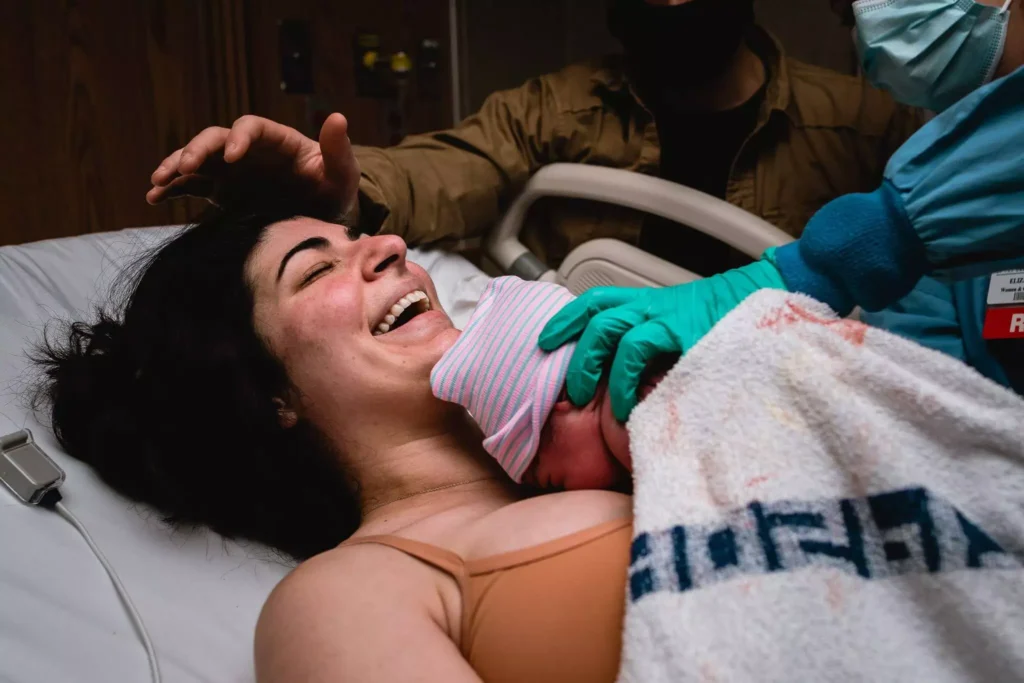

Learn the science of pregnancy and birth to take the mystery of labor away! Understand why you are feeling what you feel, and learn strategies to confidently move through pregnancy and birth!
- 9h+ of Video
- Support Group
- Close Captioning

- 5 Workouts/Week
- Gym Workouts
- Self-Paced

Instructor
GINA
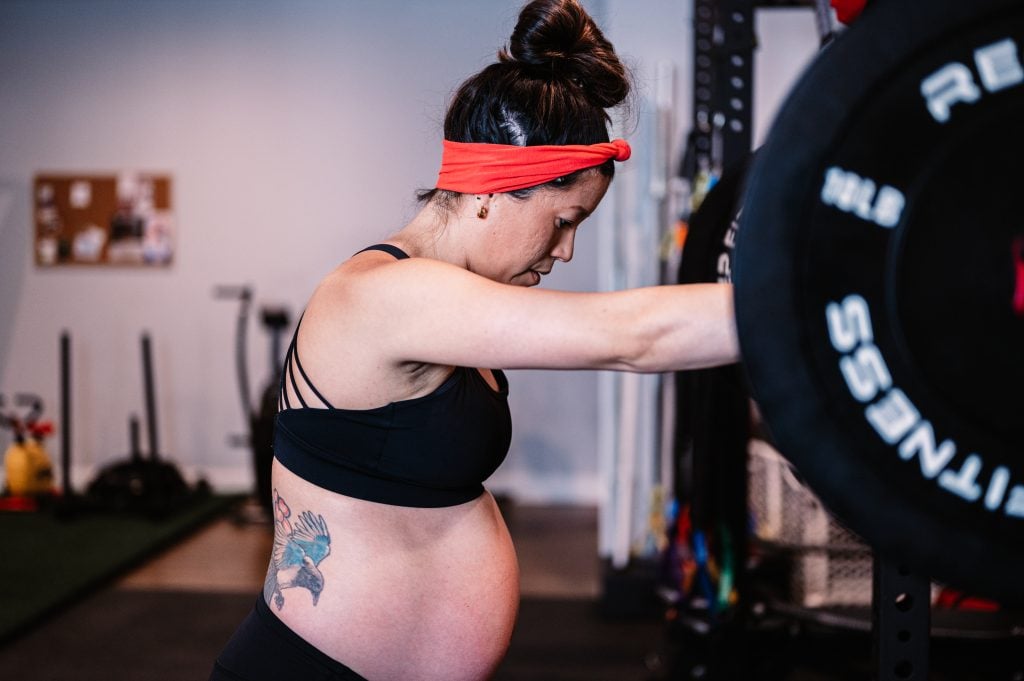
Workout on-demand with our prenatal fitness workout videos! Each workout is 30-40 minutes to follow along as you exercise at the same time!
- Birth Prep
- All Trimesters
- Mobility Work

Instructor
GINA
Find comfort and relief from pelvic girdle pain throughout your pregnancy and postpartum period! This program incorporates myofascial sling focused exercises to stabilize across the pelvic girdle joints.
- 3 Weeks
- On Demand Workout Videos to Follow