

Welcome to the MamasteFit Podcast! In this episode, Gina (perinatal fitness trainer and doula) and Roxanne (certified nurse midwife) recap Roxanne’s first postpartum 10K at 4–5 months postpartum in Asheville—advertised as flat but full of hills! Roxanne explains the run/walk method and how she managed mild pelvic floor heaviness later that day, but felt fine the next day, with no leaking or other prolapse symptoms! They discuss run/walk/run method (coined by Jeff Galloway) as a way to make racing more accessible, plus running-form strategies to reduce pelvic floor symptoms. They outline upcoming races and Gina’s planned 100-miler, then share practical training tips for busy parents.
Read Episode Transcript
Gina: Welcome to the MamasteFit Podcast. Roxanne ran her first postpartum race. It was a 10K.
Roxanne: Not my last.
Gina: Not her last.
Roxanne: ‘Cause somebody-
Gina: And I signed up for a 100 mile race, just to make this about me. But in this episode, we’re gonna talk about how we are running with prolapse, how Roxanne’s race went, and what my plans are for us in our running career.
So Roxanne, how was your first 10K race? What was your preparation like? How did it feel? Did you choose to do it all by yourself?
Roxanne: All by myself.
Gina: You, it was completely your idea and your decision.
Roxanne: It was completely my idea, 100%. I honestly texted Gina and was like, “Hey, look at this race I found in Asheville that we should definitely do together.” It’s all my idea.
Gina: That was what happened.
Roxanne: That’s for sure what happened.
Gina: That is what happened.
Roxanne: No.
So we’ll just start with me so then we can focus on Gina at the end. I ran a 10K race at… four months postpartum? Four or five months postpartum, and we did it in Asheville. Gina was like, “This race is all flat, and it’s a great first race for your first entry back into it.”
Gina: They had false advertising! …
Roxanne: Yeah.
Gina: They had false advertising. They told me-
Roxanne: We’ll just say that.
Gina: … It was net downhill, a nice flat, fast course.
Roxanne: It was a lot of downhills.
Gina: With a lot of uphills.
Roxanne: It was a lot of downhills. And a lot of it was flat. Net downhills for, to me, means that there is more downhills than uphills, which I do believe that. ‘Cause races are won or lost on the downhills is what I was told as a high schooler, and so I really am really good at downhills, and I think that’s probably why I had such a good time, but there are also a lot of uphills.
Gina: There were- There’s so many uphills …There’s shockingly a number of uphills.
Roxanne: So many uphills. which it was in Asheville. Gina also tricked me with a really cool cabin.
Gina: Yeah.
Roxanne: And she was like, “If you run this race, you can come and play in this fun, amazing cabin that I found,” and I was like, “Fine. I will do it.”
But no, I, we, we were collegiate runners, high school runners, like all of the types of runners growing up, so I do love running. I don’t… Gina doesn’t have to really trick me into doing a lot of running races, within reason, ’cause I do really love running. Like I ran a half marathon and a marathon out of my own free will before I had babies and after I had a baby. So I don’t want anyone to be like Gina’s forcing me to do any of this, ’cause I do truly love running.
Gina: I’m just highly motivating you-
Roxanne: Gina’s just motivating me-
Gina: … to do what you love
Roxanne: … to be better, and forcing me to find the time to run.
But my race went really well, honestly. I did do the run/walk method because I hadn’t gotten up to six miles straight of running yet in my training, so I didn’t want to push it. I think I’ve gotten up to three, four miles at that point. So I was like, “I’m gonna run/walk it.” I just picked a random time, honestly. I was like, “I’m gonna do three minutes of running with a one-minute walk.” And that, I probably could have done like four or five minutes with a one-minute walk ’cause it felt really good, like cardiovascular wise I felt amazing. My legs did get a little tired at like mile five, six, which is when Gina luckily-
Gina: Granted, the race was only 6.2 miles.
Roxanne: Yeah so, so that was really great, honestly. But Gina did meet me- … sometime after that fifth mile marker. And my last mile was a lot faster, ’cause I ran the entire thing. But like I felt really good.
Gina: Roxanne was doing run/walk.
Roxanne: Yeah.
Gina: Gina… was not.
Roxanne: Gina did not. Gina did not do a run/walk. Gina ran. We were dressed as Rapunzel and Pascal, which like we were like super excited about at the beginning, we were together, and I was just like, “I’m Pascal!” And then Gina abandoned me.
Gina: Immediately.
Roxanne: Not even “Oh, let’s run together for 10 seconds.” No, just gone.
Gina: So I did-
Roxanne: Gone …
Gina: So I started with them much further back than I probably should’ve been for my pace- not that Roxanne won’t get to my pace, but at four months postpartum she was not there. And I actually stopped and waited for you guys, but I had no idea where you were ’cause there were so many people and it was so crowded.
Roxanne: Oh, at the beginning?
Gina: Yeah.
Roxanne: Oh, yeah. There were so many people.
Gina: And I was like, “All right. I think this is a lost cause,” and I just, I took off.
Roxanne: She just left. Just gone.
Gina: But a quick note on the walk/run or run/walk/run method- that was something that I learned about at the RunDisney races.
Roxanne: Yeah, everyone does that.
Gina: Which is something that has really, I think, made running more accessible to so many people. ‘Cause before that, before I even knew about that, which, that just makes so much sense, that’s how we do our programming. Why would I not view that as a viable option for races?
Roxanne: Yeah.
Gina: I only viewed it as a way to get back into running. But I hadn’t thought about, oh, you can actually use this in a race. And so I learned about it at the RunDisney races, ’cause that’s, a highly promoted way to do these races, especially, the challenge weekends. And so when I went to my first Disney race back in January, which Roxanne was supposed to be there, and so she would’ve learned about it then, but…
Roxanne: Sorry, I was having a baby …
Gina: There was so many different types of people there, different bodies, different fitness levels. And I was like-
Roxanne: Ages.
Gina: Yeah, different ages, and I was, like, so impressed with all of these people that were doing the Dopey Challenge. I would not look at that person, not that I’m judging people by how they look, but, I would not look at that person and be like, “That is a, an endurance runner. They’re running a marathon today.” They just look like a normal person, and they were, like, there. And one lady was like, she’s like, “I’m a perfect Dopey runner,” which means, she’s done every single Dopey Challenge since it’s been offered.
Roxanne: Oh my gosh!
Gina: And she does not look like a runner, and I was like, “That’s amazing.” And the reason why she was able to do that, my assumption, is because she was doing the run walk run method, which was something that was popularized by RunDisney with Jeff Galloway, who was, like, an Olympian, ’cause he wanted to make running accessible to so many people, and that was how we can do it. ‘Cause you don’t have to run 26 straight miles. You could walk for a little bit, and then run for a little bit more, and then walk for a little bit, and run for a little bit more. And so I even used that during the Goofy Challenge in January, because I did not train. And I, although look like a runner, was not a runner at the time. And so it just makes total sense that you could incorporate that method, not only into your training to get more mileage, but also into races, so you don’t have to wait until, “Oh, I did a six-mile run. Now let me go do a 10K.” You can do it at a four-mile run.
Roxanne: Yeah.
Gina: Yeah.
Roxanne: Is it, the smartest way to train and then run a race, like only run four miles and then do a six-mile race? Probably not, but it makes it more accessible, I would say.
Gina: I’m not going to… not to bring this about me again, but, I’m not gonna run a 100-mile race in preparation for my 100-mile race.
Roxanne: Yeah, but you’re also… Like, when you do 100 miles, do you, actually run all 100 miles when you do-
Gina: No, you run walk it.
Roxanne: Yeah.
Gina: But same thing, even for marathons, you don’t wanna do a 26-mile long run in preparation for your marathon, ’cause the recovery from that is too much.
Roxanne: Are you not supposed to?
Gina: No.
Roxanne: Oh.
Gina: I guess you could, but, like- newer ideas are, maybe don’t do that.
Roxanne: Oh. So maybe I did it wrong. Maybe that’s why.
Gina: Maybe. So I think some people do a 22-miler or something like that. But you don’t necessarily want to do the distance that you are racing, necessarily. I don’t normally run 13.1 miles in preparation for my half marathon. All of my runs are much shorter.
Roxanne: Also, you could do… I guess if you’re a fast Olympic marathoner, you, it’s only three hours to do a marathon, you-
Gina: You probably could, yeah …
Roxanne: You could do that. For me, I don’t have six hours to go run 26 miles-
Gina: That’s a long time …
Roxanne: …in preparation.
Gina: Anyway, so I do think that it is realistic for your longest run to be shorter than the race you are going for.
Roxanne: Yeah, I guess if you’re running, 26 miles, yeah.
Gina: Yeah.
Roxanne: Or 100 miles.
Gina: Or six miles.
Roxanne: Six miles, maybe.
Gina: Or six miles. Anyways-
Roxanne: I should probably just run six miles ’cause I’m also gonna be running 26 miles.
Gina: How did you feel during the race?
Roxanne: So I felt really good during it. And, I think when I was walking, I would always tune in to my pelvic floor, see if I was feeling any heaviness or any tension that I was feeling within my body. And I was really, because I was able to walk it, I think that was also beneficial because then that’s when I would focus on, tuning into my breathing and, was I rotating in my shoulders? Was I feeling any weird things in my thoracic spine area? ‘Cause I, historically do not fully rotate when I’m running, so I know that when I don’t do that, I usually feel more pelvic floor heaviness or even pubic bone pain when I’m running. So I didn’t feel any of that, which was really exciting, ’cause I think that meant, I could definitely probably work a little bit harder on when I am doing my runs, ’cause I am capable of doing it.
But afterwards, I do think I had some… my pelvic floor was a little tired. So afterwards-
Gina: Understandable.
Roxanne: … In the evening time, I did, I took a nap after the race, ’cause I was just tired, but I think my pelvic floor was also like, “I think we need some rest. That was a lot this morning.” So I did feel some heaviness, like, when we got home and after I showered and everything. I was like, “I think I need to just lay down for the rest of the day.” But then, the next day I felt fine. So I had a little bit of pelvic floor heaviness after the race, recovered, and then felt fine. So I think had I done six-mile runs beforehand to train and prepare my pelvic floor for it, I probably wouldn’t have had that heaviness. But I was really happy with the outcomes, ’cause I didn’t have any other symptoms of my prolapse that I would have had, previously, with needing to splint or issues peeing.
I did not pee myself during the race, which I hadn’t done previously, but, I was a little worried. But I didn’t. I even checked in afterwards, and I think I said to Gina, I was like, “I didn’t pee,” and you were like, “Were you worried about that?” I was like, “A little bit.” But otherwise, yeah, I was really excited.
I did do better than I predicted. I thought I would, get around 70 minutes for the six miles, and I did an hour and seven minutes. I maybe could have gone faster had there not been as many hills.
Gina: Was not a great intro race in hindsight.
Roxanne: And of course, in my mind, I definitely still need to work on my mindset because I was like, “I’m still in my three-minute run, and there’s this huge hill, and I’m gonna continue running,” when, everyone around me was like, “It’s a hill. I’m gonna walk.” ‘Cause that is like part of some methods where it’s like you walk all uphills and then you just run for the other portions. And I was like, I probably could have taken that into my racing method. But I felt honestly fine on the uphills, but.
Gina: Sometimes the running the uphills can actually feel better for your pelvic floor because there’s less, like, impact that’s happening.
Roxanne: That’s true.
Gina: And potentially like you’re having- The downhills … more knee drive. There’s just different muscles that are activating. So it may actually feel better to run the uphills and walk the downhills, which may have more impact potentially.
Roxanne: Yeah.
Gina: And- Not for everybody, but just as an idea.
Roxanne: I think, I definitely think that w- on the downhills I would open my stride up a lot more, which is what… And like posture, a lot of people, I noticed when I did my first downhill, ’cause I didn’t wanna go too fast, ’cause oh, I don’t wanna push the pace on this downhill, ’cause it like, that could maybe hurt me, ’cause this is mile one. But I found that I actually did have more, like my pelvic floor felt weird when I was going on the downhills and I was like preventing myself from opening up on my stride. So like halfway through the first downhill I was like, “Why am I doing this?” And then once I opened my stride and just kinda let gravity kinda drag me down, I felt a lot better, because that’s what I normally do. But I was like, I was adjusting the way that I was running so that I wouldn’t go really fast on the downhills.
But then in my mind I was like, “Roxanne, races are won and lost on the downhills.” This, bec- this is, it’s so true though, because so many people don’t wanna fall on a downhill, especially if it is really steep, so you go slower on the downhills, when really you need to take advantage of this. And I would rest more. I would feel better at the bottom of a downhill because I was using less energy going down it, and my pelvic floor felt better, I was breathing better. And so I was like, “We just gonna send it.” “We just sending in it.”
Gina: So this 10K is a part of the Asheville run series. They have a bunch of races throughout the year where you can get a challenge medal.
Roxanne: Which Gina loves a challenge medal.
Gina: Which I, love a challenge. I love medals. And so I did the half marathon- there’s a half marathon series as well in the last race, which was, again, another net downhill! It was like a really big… I was like, “That is gonna be a super…” I was like running off a cliff is what it felt like. I felt like I was running on a cliff. Like it was so steep. But same thing, like if I leaned back- and fought it, it was much more stompy and a lot more pressure, and also you’re arching more.
Roxanne: Yeah.
Gina: And so there is a video on our YouTube channel that we’ll link below this in the comments where I talk about some different strategies while you’re running to help decrease pelvic floor symptoms. The first is gonna be rotation, like Roxanne was talking about, like actually moving your thorax. So your upper body, the arm swing is gonna play a big role. And this was something that was hard for me to overcome at first, ’cause when we were in high school and we were learning proper running form, it was like hip to shoulder, arms do not cross. Yeah. We actually do want our arms to cross.
Now, I’m not trying to bring my arm to my opposite shoulder, but rotation of the arms is going to lead to more rotation within the pelvis. And when we have more rotation within the pelvis, this is gonna help to change the tension within the pelvic floor, so that when you have every step and every stride, the pelvic floor is ready to stabilize and able to help with sphincter control and help with pelvic organ support. And so adding in the arm swing with upper body rotation is a really great way to help decrease any pelvic floor symptoms.
The next is gonna be paying attention to the forward and backwards motion of the ribcage. Are we really thrusted? Which if you’re trying to do a shorter stride- you’re gonna be very thrusted, and that’s gonna put more pressure to the front half of your pelvic floor. So being in a more stacked position with that rotation is gonna be really beneficial.
Roxanne: Yeah.
Gina: And the next thing is opening up your stride and actually running fast. ‘Cause when we run really slow or we try to force ourselves to run slow, like you were, we get very bouncy with our stride. And that bounciness is gonna increase impact.
Roxanne: Yeah.
Gina: And that increased impact is harder on the pelvic floor, and it also is gonna make more steps, which if we do less steps, and there’s less pressure, it’d be better on the pelvic floor. So those are just a few tips that can be really beneficial.
We also don’t wanna just squeeze a Kegel the whole time.
Roxanne: No.
Gina: The pelvic floor is meant to change tension with each stride. And so same thing, if we add in that rib rotation, it’s gonna add in- that rotation within the pelvis, which is gonna help to change the tension within the pelvic floor. So portions of it will tighten, similar to- the contraction or a Kegel, to help support the pelvic floor, and then vice versa. And that’s also gonna help with joint comfort, with movements down the knee, into the ankles as well. So we’ll link the video below where I show what all of that looks like with our tips to help with running form to prevent those pelvic floor issues.
Roxanne: Yeah.
Gina: So recovery felt pretty good for you.
Roxanne: I wasn’t, I was sore, like in my legs a little bit the next day, ’cause going up and down the stairs was a little… going down the stairs was a little rough.
Gina: Yeah …
Roxanne: going up wasn’t bad. But honestly, I felt really great overall. I do feel that, one thing that I could have done was, well, run more- but one thing that I could have done after the race was just do a little bit of, reclined diaphragmatic breathing into my pelvic floor, ’cause I think that last mile that Gina made me run, I might have been clenching a little bit in my pelvic floor because I was doing more than I had been the entire race, and I think that also contributed to my heaviness, because I was, like, clenching a little bit.
Gina: So it’s my fault.
Roxanne: It’s all Gina’s fault. 100%. But I, so I don’t think that helped me after, like, when I w- again, it wasn’t immediately that I felt it. It was, like, a couple hours later, and I think if I had just sat, laid down, and just did some breathing to, find that movement again in my pelvic floor, I would’ve probably felt a little bit better. That’s my one… ‘Cause you can always improve. That’s my one improvement, other than just training more.
Gina: So what is next for you?
Roxanne: Oh, I don’t know.
Gina: What have you chosen to do all by yourself?
Roxanne: What is my next, what is my next race?
Gina: Well, I think we’re doing a 5K?
Roxanne: Oh, yeah, we are doing a 5K, oh, gosh, next weekend. Oh, gosh.
Gina: In two weeks.
Roxanne: Yeah, but that’s three m- 3.1 miles. I’ve been running- Yeah … three, four miles. That’ll be fine.
I think the harder thing- … that’ll be fine … will be the heat ’cause it’s July.
Yeah. And I’m running with my daughter, we gonna probably run, walk, because I don’t wanna abandon my child, my seven-year-old in a race.
Good luck. Also- yeah, it’s gonna be really hot.
It’s gonna be really hot.
And then we have Wine and Dine- And then- … in October … yeah, so that is, probably, the next legitimate race that we have is Wine and Dine in Disney, which I’m, very nervous for, but also very excited for ’cause we’re doing all of them.
5, 10, and a half mile, a half marathon. Half mile. Half mile. A half marathon. I wish. so that one, I’m needing to focus a lot more with my trainings. But what did I do to train for this other than just heart? Just a lot of heart, is I don’t really have time to run every day, or, what I would’ve done to train for a race when I was pre-kids, because I have this job.
I have four children, and I have a midwife job. So I don’t have five days to run. so I usually try to get two runs in a week, one on a treadmill and then one outside if I’m able to. If not, two on a treadmill. I really like running outside, though, so I try to get it in when I’m on call and I have no children to take care of, but it doesn’t always happen ’cause people also have babies when I’m at work.
But that has been, those two days of just running have been enough for me to be able to train because then the other days I get some strength training in, which I think help me longterm be able to increase my mileage without having, five days to just build that foundation.
For me, I definitely find that the lifting aspect- is surprisingly beneficial for running. It’s so helpful. it’ll, it definitely allows me to run a lot less volume- and still- Do well … still do well. Like- Yeah … which is, which was pretty surprising to me. So going into the Goofy Challenge, where I did not really run-
Much … much, after that June marathon last year, I was like, “Marathons suck.
I never wanna do them again.”
And then look at you.
And now look at me. But I’m in better shape now, and so marathons aren’t as miserable, granted I haven’t run one. I guess I did the Disney one, which was super fun, ’cause you get to ride a rollercoaster. I think the Disney one is so fun because there’s so many people, so many things to do along the way, that it’s, not just- It’s like a party the whole time it’s not just a run. Yeah. It is an experience.
It really is. I was a little disappointed. Like- So I did the Disney marathon, and then I went to Disneyland, which is- Just not as much experience … the timing worked out, which wasn’t as fun of an experience. Yeah. I felt like the Walt Disney World run Disney stuff- Yeah was, like, way more fun. So I am really excited for October for all of us to do that together. Yeah. I think that’ll be a good time. I’m excited to do it, and I think my daughter’s excited to do these races.
But the strength training aspect, I should have- It’s huge … not been able to do those races. I didn’t, I think if I look- I- at my run history, I did, two runs-
Yeah …
in preparation. Like- But
I think that this is the good comparison, is that you did all of the, you did both races, the Goofy. So you did a half marathon and then a marathon, and you were still able to go to Disney the entire next day. Granted, you were sore, but, you were still able to recover fairly well and not feel like trash the next day.
Yeah. Where, and you probably trained similar amounts that I did for my Disney marathon that I did in 2013 pre-children, where I just did not … I think I ran a total of 15 miles in preparation for this race that I signed up for in March of 2012. and I could not walk for, three or four days.
The strength training really makes a difference with durability but I, we did not really strength train then, ’cause I had just joined the military at that point, and I didn’t … I think we did CrossFit a little bit, but, did not really strength train at that point. No, it was just, random stuff. And that was just pure heart of a marathon that I ran straight and was, probably injured myself yeah.
Yeah.
But the difference is I didn’t strength train or run, but you strength trained and didn’t run.
Yeah.
And so I feel like that’s a research study of two.
Yeah, there we go. S- sold.
Yeah.
Sold.
So strength training is important. Resistance training, using weights can help prevent injury, and not to, commercialize, you don’t have to run, and you can run a marathon.
You should still run. You should still- You should still run … absolutely run.
You should still run.
Gina: So let me share what my kind of race schedule is. Well- And then we can talk about how our differed schedules work-
Roxanne: Yeah …
Gina: with our training plans, because the way that I approach workouts is different than the way that you can.
Yeah, it’s- And so I think that comparison will be- If I
Roxanne: had a few hours extra in the day-
Gina: I know …
Roxanne: it’d be like a 30-hour
Gina: day. Step one. Yeah, 30-hour days. That would be great. Make that happen.
Roxanne: That’d be great.
Gina: so for me, I started racing again about nine months postpartum, and I went full send. I did a marathon for my first race, which was miserable, but I didn’t have any pelvic floor symptoms, which was great.
But I was like, “This sucks. I will never do that again.” but I also had only been training for, two months, which- It
Roxanne: was also in June in North
Gina: C- … spoiler, is not enough time. The heat wasn’t- It wasn’t that hot? The heat was not the problem. Okay. My lack of training was the problem. Or my limited amount of training was the problem.
so that was my introduction back to racing. I then did a 10-mile race a few months later with fairly little training ’cause I was so disheartened from that marathon that I did not wanna run anymore. And then the Disney marathons in January really reignited- Yeah … my, love for running- But that 10-miler is
Roxanne: fun
Gina: ’cause I was like… It was fun, but I was in not great shape. It- I gave it my all, though. Yeah,
Roxanne: you
Gina: did. but the Disney marathon was just so fun. there’s characters at the beginning. Yeah. There’s characters on the route. It’s hard to go back. There’s music. there’s, rides along the way. there’s so much fun entertainment along, and then at the end, there’s, a mini party that’s happening- Yeah
where you take more pictures. And so for me, I was like, “This was really fun. You know what would make this more fun? If I can run faster.” ‘Cause then I would not have to wait in line for all these characters. Yeah. Which my very next race I did train for two weeks and ran, and I was near the front of the pack, and I was first in line for all the characters, and I didn’t have to wait for them.
And then the next race was the same thing. I was like, “Okay, so the key is to be able to run fast so I can have more fun on these races.” And so it really, motivated me to get back into racing. In addition, I was also really struggling with that Zoe was my last baby, and not that I want more children, but it’s like this chapter is closing, and now everyone dies.
Oh my gosh. And it gets really dark very fast for me. so with racing, though, I’m like, if I get pregnant again, because I don’t want to move on from this chapter- Yes … I will reset all my progress. And I only have so many years left of, my prime racing. I’m gonna be able to get faster and faster for probably, the next, 10 years, and then I’m probably gonna start to see my times get a little bit slower.
I’m only gonna be able to get so fast in my lifetime. Yeah. And I would like to have max opportunity for that now that I have built my family. And so for me, racing and running has helped me mentally a ton with accepting that the chapter is closing and not, staying up all night, thinking about this is over, therefore everything ends, and we all- The storm of mortality it gets really dark, super fast for me. but now it doesn’t ’cause I can just go running with Mickey Mouse. so after the… I did a few half-marathons, and now upcoming I have the Wine and Dine races with you, and the 5K with you, which are gonna be more of, my fun races. I’m not going for time with any of them.
She’s still gonna leave
Roxanne: me behind.
Gina: I will not leave you behind. don’t get crazy. I will not leave you behind. It’s no fun to take a picture by myself. She still will. At Disney. stay tuned for our October episode, where Roxanne says that I abandoned her. and then November I’m doing a half-marathon for time, where I’m trying to get under an hour and 30 minutes, which is likely-
Roxanne: What one are you doing?
Gina: unrealistic. There’s one in Greensboro. Would you like to do it with me? Totally your choice
Roxanne: Depends on when it is.
Gina: It’s in November.
Roxanne: when in November?
Gina: Before Thanksgiving. If Roxanne would like to choose to do it with me, she will be there, but that one’s gonna be for time. And then we have- But she
Roxanne: will abandon me
Gina: the Dopey Challenge in January, which is also for Roxanne, that she totally chose to do on her own, which is the 5K, 10K, half, and full marathon in one
Roxanne: weekend. To be fair, I agreed to the Goofy. I was like for sure gonna do Goofy. I didn’t do it last time ’cause I got pregnant, unfortunately. So sorry. but then my daughter wanted to do the 5K ’cause Gina’s kids were doing the 5K, and she wants to dress up, too.
And I don’t know if she fully remembers that we also have to run, but she wanted to do the 5K, so I was like, “Why would I just do the 5K when it’s cheaper to just do the whole thing?” Yeah. The whole Dopey.
Gina: that was my logic, too.
Roxanne: so I guess I will just do all four at this point. and that is how I convinced- I would prefer to do- That is how I reasoned to do the Dopey versus the Goofy.
Gina: I would prefer to do the Goofy Challenge.
Roxanne: I would be fine with just the Goofy.
Gina: But for
Roxanne: the
Gina: next- But- … probably
Roxanne: 10 years- Because my- … we will
Gina: be doing
Roxanne: the Dopey Challenge. … children, because my children wanna do the 5K I have to do the 10K as Well,
Gina: after the Dopey Challenge in January, in February we have the Everywoman’s Marathon.
Yeah. Which Roxanne also volunteered to run. It was totally her choice. Yeah. It’s in Louisiana, though, so- It’s, yeah, New Orleans … or New Orleans, so beignets.
Roxanne: Yeah, there’s so much good food. Hot
Gina: chocolates,
Roxanne: shrimp po’boys. It’s
Gina: like
Roxanne: Everything.
Gina: Don’t tempt me with a good time. My medal is actually a beignet.
Roxanne: I’m just going for the beignets, honestly.
Gina: so after February, though, I was like, “I’m gonna be at the end of my endurance season before I chill for the summer,” and then I saw an ad for a hundred mile race, and I was like, “I think this is- So- … this is the algorithm talking to me, that this is what I need to do.”
It’s on the Outer Banks of North Carolina. It’s called the Blackbeard Revenge. Which is honestly really fun. It’s a point to point, so you don’t- I’ve watched
Roxanne: Outer Banks.
Gina: I know what it’s like … you don’t, re- redo any part of the race. We run by three of the lighthouses for North Carolina. Which, they’ve got a lot of lighthouses.
Which North Carolina is known for lighthouses, pirates. Do you
Roxanne: go over bridges?
Gina: Yes, which I will walk. I will do a lot of walking. It’s a hundred mile race. Yeah. It will be a lot of walking.
Roxanne: When do you s- like, where are, like, the rest points? Are there, rest points within there?
Gina: When I’m done.
Roxanne: Oh, you just walk the hundred.
You just run a hundred miles straight? You don’t rest at any point?
Gina: you only … You have to maintain, a 19-minute pace, so there’s not really an opportunity to-
Roxanne: Oh my gosh, so you just run for a day straight?
Gina: Yes. There are aid stations along, so there is a bit of a logistical plan with ultramarathons.
Yeah. You-
Roxanne: Stay tuned for Roxanne’s
Gina: training- People are not racing …
Roxanne: to be support.
Gina: Roxanne will be running this with me. Just kidding, or maybe not. I don’t know. No. We’ll see. Roxanne will choose- I’ll, run
Roxanne: 10 miles of her 100-mile-
Gina: Roxanne will choose- … we’ll do a relay … to be there with me as a pacer. But also,
Roxanne: who’s then gonna hand you snacks and water?
Gina: They have aid stations. And gear drop bags. Anyways, we’ll do a whole episode on, ultra marathon prep and logistics and everything. But- Yeah, we’re learning together … that is, my big race that I am preparing for that I would’ve won, never thought that I would’ve done. Although, I have been tempted.
Roxanne: You’ve done ultra marathons, though. you’ve- I’ve
Gina: not done a 100 mile race, though … done them. But I have been tempted in the past, year. I’m not surprised. I think I’ve seen a lot of people doing, a lot of women doing ultra marathons and winning them. I don’t wanna win this one, ’cause I don’t want to die.
You could
Roxanne: do it, though. Maybe I could.
Gina: Maybe I could. I’m gonna win it. I’m gonna win. Stay tuned for the March episode where Gina dies. From winning an ultra marathon.
Roxanne: I ju- I don’t know. I’m Gina’s hype woman. She could win. May- maybe- She could totally win. Maybe I could win.
Gina: Yeah, I could win.
Roxanne: we said that you were gonna go, you were gonna win something from the Asheville one.
We manifested that. And I did. And you won a cup.
Gina: I got a, cup.
Roxanne: You got, third. You could’ve got first.
Gina: I could’ve. Why didn’t I?
Roxanne: I don’t know. Work on yourself.
Gina: Anyways, so ultra marathons and just marathon training in general is a little time-consuming.
Roxanne: Yeah. You gotta train to run 100
Gina: miles. Just working out in general as a mom or as a parent is challenging.
Yes. ‘Cause it’s not pre-kids where you just got all the time in the world- Oh my gosh … to do whatever you want … like leaving the
Roxanne: house.
Gina: So easy. So let’s talk about our tips to train with children as a mom or as a parent and what we are doing, ’cause our schedules are different from one another. Yeah. ’cause you’re a- Working mom of two jobs
a single mom that works two jobs. You’re not single. I’m
Roxanne: not single. I have a husband.
Gina: You’re solo parenting. But he is, I’m solo parenting for the next year. Solo parenting mom. Solo parenting-
Roxanne: Works two jobs … with
Gina: two
Roxanne: jobs who loves her kids and just never stops.
Gina: I saw, We stop at Buc-ee’s whenever we do road trips, and, there was a shirt that was Reba, and it said, “I’m a survivor.”
And I was like, “Roxanne, I’m gonna get you this shirt.” She…
Roxanne: Did you? No, I did not.
Gina: She
Roxanne: did not. Which is, a funny aside is, like, when I was in college, I was a wild person in college and my friends called me Reba, because one time we were out drinking and a guy mistaken me for a girl named Rebecca. And so then whenever-
I got drunk, everyone was like, “Reba,” ’cause that’s who I was in college. Not anymore.
Gina: Yeah. Now you’re still struggling. See, now I’m- But you’re sober … but I’m still
Roxanne: Reba in a
Gina: way. You’re so- so you’re sober now.
Roxanne: I am sober. Not because I don’t drink, but because I just don’t have time.
Gina: We don’t have any time. ’cause we’re trying to work out and train for a marathon.
Yeah. We don’t have time to drink. It’s a 100 mile race. so the things that help me get my workouts in is, one, having a space to work out.
Roxanne: Wow
Gina: Step number one. so we have our MamasteFit gym here, which you can bring your kids to, which makes the barrier of childcare not an issue. Yeah ‘Cause you can just bring your kids to work out here, and we bring our kids to work out here.
It’s a little chaotic when all of the Conley Albert children are together. Yeah, it’s, a
Roxanne: lot of kids.
Gina: It’s too- A lot of kids They’re very loud.
Roxanne: We almost can’t work out at the same time-
Gina: Sometimes it’s too
Roxanne: much … sometimes because they get too
Gina: crazy. It’s too much. But we do have a gym that moms can join, and they can bring their kids.
And so the barrier of childcare alleviated. There are gyms that do offer childcare, which we’re j- we’re members at a gym that has a pool that has, a dedicated childcare, but their hours are limited. it’s only certain hours- Yeah … throughout the day that it’s offered, and there’s also, age restrictions, and you can only do so much time.
so for certain ages you can do up to two hours, and for, younger ages it’s, one hour. Yeah. And so sometimes that can be a limiting factor. But there are gyms that do offer- Yeah … childcare. Like
Roxanne: YMCAs.
Gina: which could be an option if you don’t have a MamasteFit near you. The other option is to build your own gym, which depending on space availability and finances could be a barrier as well.
but you don’t need a ton of stuff to have, a s- a home gym setup. I would say at a minimum if you had, a set of dumbbells, a, a light, a heavy, and a medium weight for you would be, more than enough. So three sets of weights. Having, im- an assortment of mini bands and long bands.
A place to attach those would be helpful, but, not necessary. having a workout bench I think would be beneficial. But that would probably be the one thing I would maybe, omit from the list if that’s too much. But having a workout bench I think is really helpful, and, a plyometric box- to do step ups and different movements on, would be, like, my minimum things that I would have in a home gym setup. Yeah. So when I travel, I will bring a set of, medium to heavy dumbbells with me, my bands, and then usually, a yoga block or something. If
Roxanne: you’re driving.
Gina: If I’m driving somewhere, yeah.
If I’m flying I’m not packing a suitcase of, with a dumbbell- Dumbbell … in it by any means.
Roxanne: But most, if you’re traveling somewhere and you’re staying in a hotel, most hotel gyms will at least have dumbbells. the mini bands and the long resistance bands they may not have, so those would be the one things if you’re traveling- Yeah that
Gina: I would bring. But I would say, at a minimum if you were trying to build your own home gym setup- Yeah … I would have, those four pieces of equipment. Which is what I have. And then you’d be able to do almost everything. you won’t be able to do barbell work and stuff, but, like- Yeah there’s ways to make dumbbells heavy- Yeah … for you with, the way that you approach the movement. So you don’t need, a full home gym setup. And they sell- But you could make your own home gym setup,
Roxanne: which- They sell so much stuff though that makes it so you don’t have to buy a barbell and a bunch of weights.
‘Cause they sell dumbbells that are adjustable in weights- so that you can have from, two pound weights all the way up to, 65 pound weights that are probably the same cost that buying, a set of dumbbells are. So I think, I bought a set for, $190 that has from five to 25 pound dumbbells.
But you can also just buy adjustable dumbbells for, 2, 300 bucks Which that’s still a lot of money, but, for items for a home gym, that is, something that you can use in almost every workout to make it accessible in your home. And then resistance bands are, like, not that expensive.
Gina: No.
Roxanne: So-
Gina: So Rep Fitness and other, fitness equipment companies will have, bundles as well- where they might have, a light home gym set up too. Yeah. So you can always look that up. We have, an Amazon list with some, some of our ideas of things that you can grab. but you don’t need a ton. Now, I do have, a more- Gina
Roxanne: has a robust
Gina: home gym … fancy home gym set up that we’ve built over the past, 10 years.
but some of the equipment we don’t really use that much and was not a necessary purchase. But those, I would say having something at home if you don’t have, a gym that you can go to is gonna help you get some of your strength training workouts in and just make it so much more accessible with children.
Yeah. the other thing that I have at home and we have here at our gym is cardio equipment that’s stationary and a Pack ‘n Play to throw small children in. our treadmill here at the actual gym, we, actually have surrounded by a baby gate. So the treadmill is what has allowed me to get almost all of my running in.
Like- 90% of my running is on the treadmill, because it’s just the distance that I have to run and, this, the trail availability outdoors for us here is- Yeah … just not as robust. And so I would have to coordinate for childcare to, have someone come over to, watch the kids while I drive to wherever this trail is, do my run, and then drive back, and then coordinate that every day during a time of day that’s not a million degrees or, dark.
And so having the treadmill allows me to kinda run whenever I want with my kids nearby without having to coordinate childcare. I do have a Peloton Tread+ here at our studio and at home, because they have classes that you can take and there you can watch videos. I don’t normally watch, the movies and stuff, but I do read while I run at the same time with my Kindle.
Yeah. So I’ve r- I’ve read a few books running on the treadmill- Yeah … which has been really nice. So doing, the running classes has made running on the treadmill not as miserable.
Roxanne: Yeah.
Gina: I actually like
Roxanne: treadmill running more. Which treadmill running is awful without it, I feel like. ‘Cause we did it at the Asheville Airbnb and I was like, “I forgot how terrible it is- Oh, yeah, they’re awful
when you don’t have a screen- They’re awful … to entertain you.” Yeah,
Gina: the screen with the video to follow is really nice. Although they do have it with the Peloton app, you can watch the video-
Roxanne: Yeah, that’s true …
Gina: on, a normal treadmill too- Yeah, that’s true … which could be an option as well if you’re at, a gym treadmill.
But having the treadmill is literally the only reason why that I can run. Yeah. ‘Cause, one, I have four kids.
Roxanne: Yeah.
Gina: I don’t wanna push all four kids in a stroller. That sounds awful. Don’t send me your recommendations for four-kid running strollers. Oh, do they even- I don’t
Roxanne: want them … does that exist?
Gina: I feel like there’s at least…
Somebody told me that you can push a stroller and then you can have one attached to your waist that’s behind you, and I was like, “I don’t want your recommendation ’cause that does not sound like a good time.” Yeah. It sounds terrible.
Roxanne: I think I’ve seen, so many, reels about stroller running. if you wanna get out and run, just put your kids in a stroller.
there’s sidewalks everywhere. There’s, you can just get out and run. you have no excuse. And I’m like, one, we don’t have sidewalks.
Gina: We don’t
Roxanne: have sidewalks. We don’t have any, stroller-friendly running routes close by other… I would have to drive 15 to 20 minutes to get to all of the running stroller-friendly runs.
But then, again, I got four kids.
Gina: Yeah.
Roxanne: I don’t wanna push a 70- We can alternate
Gina: who’s running.
Roxanne: Yeah. No. I, like- When I only have two kids not in school, yeah, then I will use my stroller if I really wanna go outside. But, no. Where
Gina: are you gonna run?
Roxanne: No.
Gina: Where are you gonna run? Yeah, so I will say that the reels that I’ve seen that are like, “Just put your kids in a stroller,” and do what?
Where? And where? Where am I supposed to do that?
Roxanne: And, not every place has running safe routes. safe running routes because you are a target if you are running with children as well in certain- that’s
Gina: another thing- … certain
Roxanne: areas …
Gina: just in general with running outdoors is there is a lot… I feel like I’m known about more.
Oh,
Roxanne: I learned, no, so much. Like, when I run outside I have, a little pack with pepper spray and my phone always. That’s
Gina: terrifying. just the safety of being outdoors by yourself as- Yeah … a woman is terrifying. So quick tip for some outdoor running tips as a woman- Yeah … for your safety. There’s a difference between a soft target and a hard target.
Roxanne: You wanna be a hard target.
Gina: You wanna be a hard target. And this is gonna apply even when you’re not running, just in general if you’re outside. A soft target, the way I explain it to my daughter, if there’s a kid who’s sitting there and he’s got a really cool toy right next to him and you want that toy- you’re a thief, you wanna steal from this kid. Are you gonna steal from the kid that’s just, not paying attention and, maybe has, their headphones on, maybe watching their iPad, and the toy’s sitting right next to them, or are you gonna steal from the kid that is, staring at you?
I’m looking at you. That’s a hard target.
Roxanne: Yeah.
Gina: That kid who is, aware of their surroundings is a hard target. So when I go running outside, which blows my husband’s mind, he’s like, “I don’t know how you can do that,” I don’t listen to music. I do not have headphones on. I am not distracted at all by something that is not my surroundings. Which maybe is crazy of me, I don’t know. But I am-
Roxanne: It’s probably slightly crazy …
Gina: 130 pounds. I am not a large person. My husband-
Roxanne: You are a soft target in that way, where you are easy to pick up.
Gina: I already have things i- not in my favor to being a target is I am small, so tiny and petite.
I am a small person who could be easily picked up. I am not good at combatives- … so I need other things. I think I could flail around, but, I physically look like a good target ’cause I’m just small. you, easily picked up. My husband, double my size, he’s “I could never run without headphones.”
yeah. no one’s gonna pick you up. I can’t even pick you up. so I don’t run-
Roxanne: You could, you can hip thrust him.
Gina: I could hip thrust him. A thief could hip thrust him away. so I don’t run with headphones because I want to be aware of my surroundings. I also don’t love to do, workouts running because I don’t wanna be, like, so fatigued that I am, like, completely consumed within myself.
I wanna be able to run away if needed. Yeah. and then you can have things to protect yourself as well that you know how to use if you- Yeah … whatever you want. I don’t really carry anything additional with me. I just- I put,
Roxanne: I put a little tiny
Gina: pepper spray in my pocket … hope for the best. I have my phone with me.
I try to remind myself how to use the emergency settings on it if I need to, quickly call for assistance besides, “Hang on one sec, before you rob me,
Roxanne: 911, please.”
It’s like you’re trying to rob a runner. Hold on
Gina: one second. Hold on one second. Let me stop my watch.
Roxanne: Let me catch my breath real quick. I’m
Gina: very exhausted. Let me stop my watch. so that would be the… That’s the biggest thing for me with, safety is, don’t do it in the dark. If you are running in the dark, reflective equipment.
Roxanne: Oh my gosh, the number of people-
Gina: Don’t wear all black to run in the dark-
Roxanne: I will say- … for the love of God … every person that I’ve ever seen running in the dark.
Gina: Or just in general, wear reflective, bright clothing so people can see you.
Roxanne: I even do that in the daytime.
Gina: In a battle between you and a car, you would
Roxanne: lose.
You’re gonna lose always. You
Gina: would lose. Wear bright clothing. So I don’t wear headphones. I don’t… I try to be really aware of my surroundings. I wear really bright clothing, and I also just don’t run outside. I run on my treadmill almost all the time, so that’s how I stay safe while I run. my top tips to be a hard target.
if you’re out with your children also, don’t play on your phone. Just- Get to where you need to go as best you can, but a little bit harder. You’re, you are physically a softer target with your children. But anyways, so having a setup to actually exercise- Yeah … step one, have a gym, have either y- that you go to, in your house, having equipment to train on.
Investing in that is beneficial if this is something that you wanna do. And I am, again, always thinking about my mortality. Now that I’m done having children, the next chapter for me is death. so knowing that as… we have both a health span and a lifespan. We all can live a really long time now. We have, modern medicine has allowed us to live much longer than our health span may allow for us, and I would like to go to Disney as a 70-year-old and walk around Maybe not do rides, but, I wanna be able to walk around and do ultramarathons at 70 years old or whatever.
Okay. But the way that I’m gonna be able to, h- increase my health span is by exercising now.
Is by being stronger now. That’s how I’m gonna prevent osteoporosis and getting injured if I fall, or falling in general. And so while it may feel easy to be like, “Hey,” “when my kids are older is when I’ll focus on myself,” it doesn’t have to be two-hour-long workouts.
It can be, like, 10 minutes.
Roxanne: Yeah.
Gina: 15 minutes is still beneficial for you. and so I’m not just thinking about Gina right now, although I am really focused on, the races that I have upcoming and the things that I wanna do f- with that. I’m also thinking about 70-year-old Gina and wanting to have good mobility so I can, play with my grandkids, and I can do stuff with them, and I can travel or, do a puzzle or s- I don’t know, whatever.
Whatever a 70-year-old- Puzzles are
Roxanne: so physically demanding …
Gina: I know, so physically demanding. if you’re standing there. Anyways, so m- I think making the time and the investment to have a space for you to work out is really beneficial.
Roxanne: Yeah.
Gina: The other thing that is beneficial is to schedule it.
Roxanne: Yep.
Gina: Is to figure out in your week when you are going to exercise. Now, not everybody is gonna be able to work out every single day. Yeah. I don’t. ‘Cause we have a limited number of hours. I
Roxanne: know. 30-hour days.
Gina: And if you- Petitions … are working full time, and then you’re balancing your children’s schedules, it becomes hard to squeeze it all in.
I have a very flexible schedule. I am my own boss. I am boss babe. so I have a lot of flexibility with my schedule- Yeah … because I work for myself.
Roxanne: Yeah.
Gina: I am my own business owner. I have figured out my schedule in a way that allows me to work out a lot, which 100 miles is a lot, so I work out more than the average person, and the volume that I work out is not what I think is realistic-
Roxanne: No, not at all
Gina: for most people, not even for you.
Roxanne: No.
Gina: And it, I also don’t think it’s necessary for everybody. if I was not training for a 100-mile race, I would not work out at the volume that I work out.
Roxanne: I mean…
Gina: Maybe I would. I don’t know …
Roxanne: When you were training for just a 26-mile race, you were still similarly doing things, but-
Gina: Yeah, but now…
Roxanne: Now, 100 mile race.
Gina: I’m a little more motivated, yeah. My volume will pick up a little bit. I work out two to three hours a day.
Roxanne: Yeah.
Gina: Which is not realistic-
Roxanne: No …
Gina: for almost everybody
Roxanne: 99% of the world.
Gina: It’s not realistic and necessary. I think most people just need 20 minutes a day. But because I do have a higher volume of training that I’m doing, I put it in my calendar. My family calendar has when all of Gina’s workouts are gonna be.
Roxanne: It’s on my family calendar.
Gina: It’s on my, with my husband. He doesn’t need to put his workouts in his schedule because his work schedule includes exercising. but for me, I put in, “This is when I’m going to lift. This is when I’m gonna do this running workout.
This is when I’m gonna do this easy run.” Yeah. “This is when I’m gonna go swimming.” And I put it in the calendar, and then I either rearrange my workout schedule based on, d- daily demands, ’cause every day is a little bit different for me routine-wise, where I’m like, “Okay, I can’t do my run this day, but this is an important run, so I’m gonna switch it to this day and kind of move things around.”
Or, “This day I’m not gonna be able to exercise at all. There’s just too much going on-” Yeah … to where I’m just, this is gonna be my rest day now. But I put it in my calendar so that I know this dedicated time is for me to go do my workout. I’ve either arranged for my childcare for it, we’ve switched our schedule around to allow for it, or my kids have a plan of what they’re gonna do while I’m exercising.
But putting it in my calendar has been really helpful for me to, one, know when I’m actually gonna work out each day versus, trying to see where I could fit it in as the day progresses. ‘Cause eventually it’s the day’s over and I’m like, it’s 9:00 PM. Should I go exercise now, or should I- Yeah
watch a movie?” so putting it in my schedule, or on my calendar is, super, super helpful for me. You have a much busier schedule- I have
Roxanne: a very
Gina: busy schedule … than I do, so how do you schedule your workouts?
Roxanne: So I do similarly, where I put it into my personal, I guess I should add it to a family calendar, apparently.
But, I don’t,
Gina: If you put it in the family calendar, I can force you to do it. Yeah, encourage you, highly encourage you- … to do what you want to do.
Roxanne: But no. one thing, I also, like Gina, own a business, co-own a business. So I do have some flexibility in that job, where I, one, I’m, forced to be at a gym because we coach at least one or two days a week, Gina two, me one, sometimes two, most of the time one, where I’m sitting here w- helping other people work out so then I’m like, I’m already here also, so let me just stay and work out as well.”
So that forces me to work out ’cause I’m here, and that is the time that I dedicate to get a workout in, and that is mostly the strength-based ’cause I can’t just leave to run. so that is one thing. I’m forced to work out ’cause I work in a gym. So thank you for that job. and then the other thing is I do schedule time to either swim, run, or strength train during the week, but I have to be very intentional on scheduling it because if I don’t schedule it, I won’t do it.
If I do not make time and room in my schedule, I will find other things to do because I have 9,000 things to do in a household of four children where my husband is gone, as Gina knows. So I will always find, if I didn’t schedule it, be like, “Oh, let me just do some laundry. Let me clean my living room that is a disaster all the time.
Let me do some dishes,” or randomly decide to garden, water these plants. I will find anything else to do other than work out. So if I put it in my schedule and also tell my children, ’cause my children will keep me accountable, shockingly, because they like coming to the gym. They love coming to the gym. So if I’m like, “Hey, we’re gonna go to the gym on Thursday morning and work out,” they’re like, “Okay.”
So then Thursday morning I will wake up and be like I don’t wanna go. And they’ll be like, “Mommy, are we gonna go to the gym?”
Gina: “Roxanne Albert, GET UP.”
Roxanne: They’ll be like, “Mommy, are we going to the gym? You said you were going to the gym. Are we going to the gym? I wanna go see Eoghan. Can we go to the gym?” And I’m like, “Goddammit. Just we’ll go.”
Gina: Yes.
Roxanne: But when I wouldn’t tell them that we were gonna go to the gym, they would just, lollygag and drag in the mornings. And then when I’m finally like, “No, we’re going to the gym,” they’d be like, But when I tell them, leading up to it, they motivate me, especially at summer break. They motivate me, and then they’re also excited to go to the gym knowing that it’s coming. So then that forces me to also go. I can’t do that during the school year ’cause they’re obviously in school, but, I have to self-motivate.
But by scheduling it, whether it’s a run or lifting, whatever, that has helped me a lot. Because the days– I know the weeks that I don’t sit down and schedule it out, I don’t do it. But for me, I can’t schedule two to three hours ’cause I don’t have two to three hours in every single day because I also am in the clinic as a midwife, and I’m also on call.
And because… one of the biggest benefits of being a birth center midwife is oh, you don’t have to always be there. But because I’m outside of the radius, if someone were to show up and I’m an hour away, I can’t. I’m gonna miss a birth potentially. So I have to stay at the birth center, and that also forces me because, if there’s not a patient and I’m just sitting there, oh, I can just go for a run and just do, body weight or resistance type stuff ’cause I don’t have dumbbells there.
But I’m, like, forced to, what else am I doing? Might as well get my workout in while I’m here. Or I’ll do my run before or after my clinic day, depending on. So I also find scheduling is really helpful. But I do a lot of 15-minute workouts when I wake up and my kids are all still asleep because they sleep in forever.
And so I have dumbbells just in my bedroom, and I, have a million resistance bands. So I’ll do some of the workouts that are more accessory movements. obviously, I’m not doing my squats or my deadlifts or my hip
thrusts with
my- You got a squat rack in your bedroom? Yeah, I just got a squat rack in my bedroom.
Because they’re asleep, and, I can’t go to the gym and just abandon them at home. Little Harvey, he’ll be fine, sir. if they’re sleeping or even, just going into my gym in the backyard ’cause, again, Harvey is still small enough that I can’t just, leave him on the floor in my bedroom. and the baby monitor doesn’t reach our gym in the back.
So I just do a lot of my accessory movements in my little bedroom room with my little muscle mat, my, all my stuff. And I found that has made it where I can do a 15-minute circuit And at least get something in versus being able, like when I’m at the gym, I can do my whole hour-long workout because I have time.
But when I’m at home, I don’t always have an hour, so I can do, which I really love the MamasteFit program, obviously, just toot our own horn, that it’s broken up into those circuits that are easily able to-
Gina: You can split it up easily.
Roxanne: I can easily split it up, but also, the circuits aren’t where they’re gonna take me 25, 30 minutes.
They’re something that’s going to n- take me 15 minutes because, one, I know the movements, so I don’t have to watch the video 47 times to, learn them. Now I just know them. So when I read it, I know what to grab. I know, what I need to set it up easily, and then I’m able to quickly go through it in 15 minutes with even the warmup, s- to be able to knock it out, and then be able to go about my day.
And my kids are like, “Oh, you’re gonna do your quick workout. We’re gonna either do it with you, watch it, or we’re just gonna go do another activity while you finish that, and then we’ll go do our thing for the day.” ‘Cause that’s the one thing, like when they’re babies, I’m like, “Oh, when they get older and they’re able to move, I’m gonna have so much more time to work out.”
No I got activities that I gotta drive them to- Me too. Me too … and pick them up, and drive them to, and pick them up. So that has, scheduling has made it really, accessible. And then I think also getting them involved with it. So like my daughter really wants to make the swim team as well. she did not make it last year.
Was pretty distraught, and then I forgot, and now we’re working very hard to hopefully make it, just like Eoghan. And so that has got me back into swimming too. I know. I have also gotten back into swimming. Which I love swimming. So this is-
Gina: So we’re gonna be signing up for a triathlon soon. Ooh,
Roxanne: I hate biking, though.
I really-
Gina: We do not own a bicycle. We don’t own a bicycle.
Roxanne: I’m gonna buy a bicycle with a basket, and then we’re gonna do a triathlon- I do not have a bicycle … with a little basket in front.
Gina: but speaking of the MamasteFit program, that would be my next tip is to have an actual workout plan that you follow.
Yes. ’cause that is gonna help with the decision fatigue, and then you know that what you’re doing is actually helping you towards whatever goals that you have. following an actual program can be beneficial. We have, obviously have a program that you can follow for pregnancy, for postpartum, and for beyond postpartum, so if you’re more than six months.
So that way you don’t have to figure it out on your own. we just tell you what to do. But there’s a lot of other options out there as well. There’s YouTube videos that you can watch if you prefer to, follow a video as you work out. There’s a lot of different, like fitness programs out there, depending on, like your fitness goals.
In addition, you can also join a gym that has workout classes, so that way you don’t have to figure out the workout. You can just do the class. Yeah. And a lot of the gyms that offer like workout classes as their primary mode of exercise typically have childcare too. now the hours availability may be limited depending on they only may have it at like certain hours.
but just doing like a group fitness class can be a great way to work out. Also, a lot of gyms, if you’re, if it’s like a fitness class, have like a cancellation policy, so if you sign up for the class, you can either lose your pass or you can show up. So that’s another scheduling tip. Yeah. Thanks. To motivate you to go.
the number of times- Do you wanna lose your
Roxanne: money?
Gina: The number of times where I have still shown up to a class because I was like, “Oh my God, I don’t wanna lose my like $30 for this class,” and where I’ve been solely motivated by the cancellation policy has been more than once. so that can also be a thing- Yeah
to help motivate you to work out.
Roxanne: Even if you have, an unlimited membership, and then you sign up for a class, they will charge you if you don’t show up- Yeah … or cancel, late cancel. So that is a g- If you’re a business, that’s a good, that’s a good policy to add in- Good motivator … to get people to come to your classes.
Yeah.
Gina: so our tips, make workouts accessible by having the equipment available to you or by joining a gym or something that has childcare so the barrier of, I don’t know what to do with my kids during my workouts- is el- eliminated for you. The second thing is gonna put it into your actual calendar.
that is literally the only reason why, that I can work out the volume that I do, is ’cause I, make an appointment with myself. I schedule it in my week. So that way I can figure out, okay, this is when, my kids are in an activity, so I can emphasize my workout, or this is when, I need to coordinate for some childcare- or I’m gonna put them in this childcare. I figure all that kind of stuff out. But scheduling it is what really helps me. It also helps me figure out, like, when I’m not gonna work out, like when I’m gonna have to skip a workout. ‘Cause I’m not 100% compliant to, my plan. 100%, I think, is not realistic.
I’m like 80%, 70 to 80%- … compliant to, whatever it is that I have planned because life. I have other things going on. I don’t like to work out on vacation. I just wanna be on vaca- I wanna do my thing on vacation. Also, all my vacations typically involve a lot of walking and activities. Yeah,
Roxanne: your vacations are your workout.
Gina: So I’m like, “I don’t really need to go do a run. I just walked 30,000 or thir- 30,000 steps today. I think I’m good.” so I liked to be able to not work out when I, when my schedule doesn’t allow for me to do But having a better understanding of what that’s gonna look like for me- by scheduling it is really beneficial.
I also prioritize different things throughout my day as well. maybe I’m not gonna do dishes every day. Maybe I’m not gonna clean this area up of my house. so there are certain things that I, don’t do, because I like to work out instead. Yeah. and the last thing is to have a plan that you actually follow so we don’t have the decision fatigue.
You know what to do. Yeah. You have an idea of, what equipment that you need for it. You have a setup so that way you don’t have to think about that portion. Which is so hard. And that really helps to make workouts more accessible. And then just prioritize it for yourself. It has to be something that is important to you that you want to do.
And for me, the way that I motivate myself is, one, I have races that I’ve signed up for that I want to perform for, that I want to have different times for. and two, I’m thinking about my old lady body. I’m thinking about all of the benefits of exercising now and how that’s gonna impact my health span later in my life.
‘Cause I see, older people that really struggle to just move their bodies.
That really struggle to just exist and to enjoy their life because of mobility issues, because of lack of exercise throughout their life. And I th- I, think there’s people that, like … our dad was fairly active throughout his life and then had some injuries that have made him a little bit harder to, move around, but he’s still fairly active.
Roxanne: Yeah. But I think, he has more pains in his body because he’s not as active now, and that is something that we are trying to prioritize for him now so that he can, again, have a very strong old man body.
Gina: Yes. We are thinking about his old man-
Roxanne: Body, yeah … body
Gina: as well.
Roxanne: I think, you can be active now, but, you have to, find something that’s going to work for you for your entire lifetime because, we’re not gonna have two to three hours a day always to work out.
But, do you have a plan for when you only have 15 minutes? Do you only have … You have a plan when you only have 25 minutes to work out. And so I think that’s the b- the benefit, is that we, have the ability to do a two-hour workout if we wanted to with a plan, but also you can make that plan a 15-minute workout very easily.
Gina: I will say sp- our mom does not do structured exercise, and she- She’s in, great physical condition because she does a lot of physical activity during her day with gardening. And so if you have a hobby that is also very physically intensive, that could replace
Roxanne: your- Yeah, she holds a squat for two hours as she-
exercise, plucks her garlic. I
Gina: know. Impressive. so Roxanne did pretty well on her first 10K that she totally signed up for all by herself. There was no- I did
Roxanne: pay for it with my own
Gina: dollar bills MamasteFit paid for it. Did you sign me up? I think so. No, it was the
Roxanne: marathon. MamasteFit paid for the marathon.
Gina: Okay. Sorry, you signed up for your own 10K. I
Roxanne: paid for the
Gina: 10K with my own bra hairs. She signed up all by herself with no pressure or coercion-
Roxanne: She did- … from me … Gina did remind me, “Did you sign up for the 10K yet? Do you want to run it?” And then I did pay for it- Yes
and sign up for it all on my own.
Gina: She may not have-
Roxanne: I did not- …
Gina: totally volunteered for the marathon,
Roxanne: but whatever … I did not, volunteer for the marathon. I was forced to do that one. But-
Gina: I will not force her to do the 100 mile race.
Roxanne: I did, I do want to run the every, women’s marathon. I do want the beignets though, mostly.
Gina: So
Roxanne: Roxanne’s feeling pretty good. We’ll do a whole nother episode on Gina’s 100 mile prep.
Gina: We will. We will. There’s a lot.
Roxanne: There’s a lot to cover. Because this was about me.
Gina: And-
Roxanne: Slightly …
Gina: a little bit about me too. but that’s how we get back into running. We have tons of programs to help support you- Yeah
after, during your pregnancy, after you give birth, because obviously we are really big fans of fitness. And the benefits of it, especially as women in our childbearing years, as we move rapidly towards death. Oh, man. Therapy.
Roxanne: Therapy, guys.
Gina: Should Gina see a therapist? S- check yes or no. thanks so much for tuning in with us this week on the MamasteFit podcast where we shared hopefully helpful tips for you.
if you enjoyed this episode, be sure to like and subscribe to our channel so that you get notified whenever we release new videos. If you did not enjoy it, do not tell
Roxanne: us.
Gina: Do not tell us. We are sensitive and we’ll be very sad.
Roxanne: Yeah. Keep it to yourselves.
Gina: But if you have other tips on how you get workouts in to make that more realistic for you that you think would apply to other people like you, feel free to comment below to share your tips.
‘Cause I think Roxanne and my schedules are really different from one another, so the way that she approaches workouts is different than how I approach workouts. she also has me to force her to exercise as well. So if you don’t have a older sister Gina to do that for you- Find one … just message me and I will tell you to go fucking exercise.
All right. She’s very motivating. we will see you… Yeah. This, I’m s- so soft and gentle with my cor, my coercion. we will see you next week
Additional Resources
Check out Gina’s running form tips video here: https://youtu.be/pew3XaAzD4Q
Prenatal Support Courses
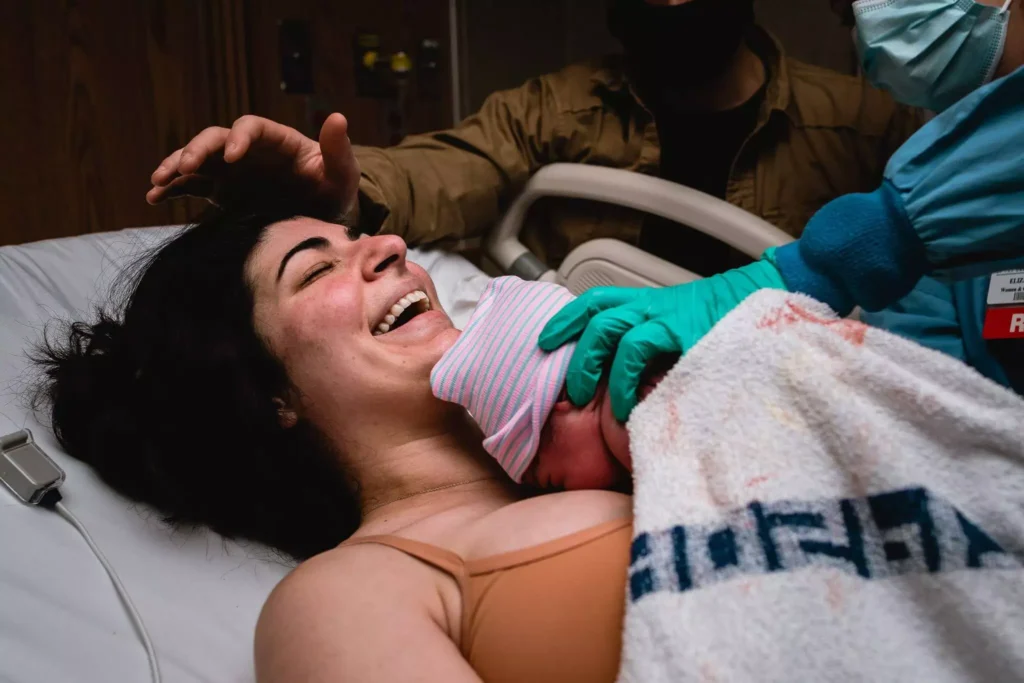

Learn the science of pregnancy and birth to take the mystery of labor away! Understand why you are feeling what you feel, and learn strategies to confidently move through pregnancy and birth!
- 9h+ of Video
- Support Group
- Close Captioning

- 5 Workouts/Week
- Gym Workouts
- Self-Paced

Instructor
GINA
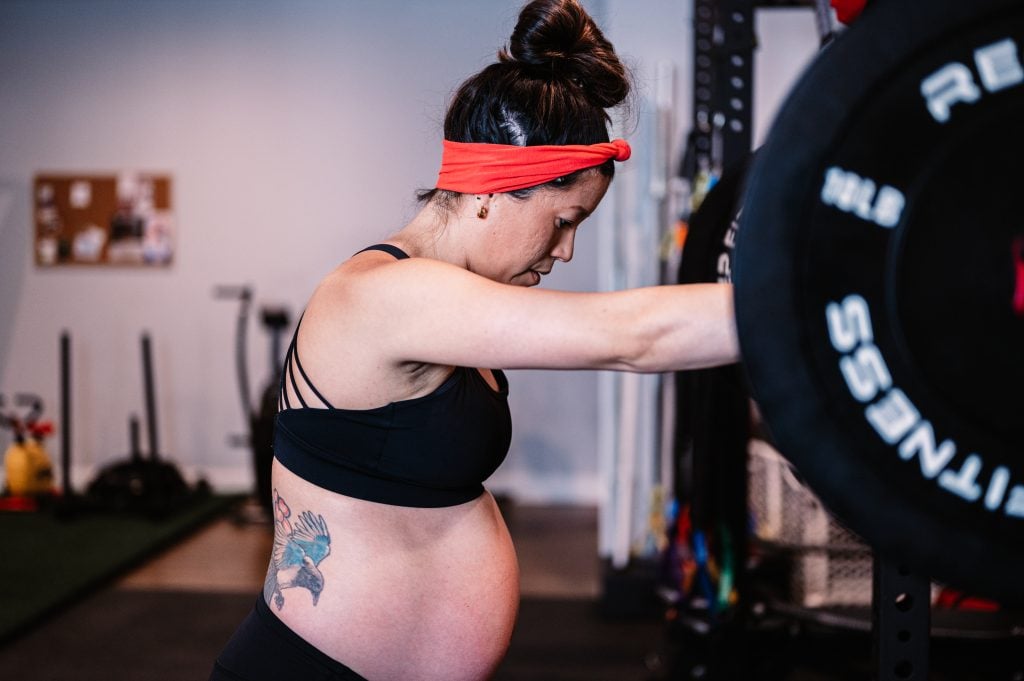
Workout on-demand with our prenatal fitness workout videos! Each workout is 30-40 minutes to follow along as you exercise at the same time!
- Birth Prep
- All Trimesters
- Mobility Work

Instructor
GINA
Find comfort and relief from pelvic girdle pain throughout your pregnancy and postpartum period! This program incorporates myofascial sling focused exercises to stabilize across the pelvic girdle joints.
- 3 Weeks
- On Demand Workout Videos to Follow