



Welcome to the MamasteFit Podcast! In this episode, Gina (perinatal fitness trainer and doula) and Roxanne (certified nurse midwife) define “unmedicated birth” as giving birth without an epidural, and explain why some people choose it. They cover potential benefits like easier position changes, fewer issues if an epidural doesn’t work as expected, and physiologic/hormonal effects. They address concerns about epidural medications (including fentanyl use in some hospitals) and emphasize there’s no morality in epidural vs. no epidural. Practical tips include choosing a supportive birth setting/team, touring hospitals, asking about monitoring options, tubs/showers, nitrous, and using comfort tools and mental skills—especially in transition—while remembering it’s always okay to change your mind!
Read Episode Transcript
Gina: Welcome to the Mamaste Podcast. In this episode, we’re gonna be talking about unmedicated birth or giving birth without an epidural, why somebody would even want to do that, some of the benefits of giving birth unmedicated, and ways to set yourself up for success if that is your birth goal.
Welcome to the episode. First, let’s talk about what does unmedicated birth mean, and know that it can mean something slightly different for you as an individual. Uh, for some folks, unmedicated means just no epidural, so no pain medication, either no epidural. Sometimes it means you can have IV pain meds.
Sometimes it means you don’t get IV pain meds. So it really is just kind of whatever you define it as. Mm-hmm. It can also be, like, no medical interventions at all. Um, but for us in this episode, we’re gonna be talking specifically about not giving birth, or giving birth without an epidural- Mm-hmm … as our definition of unmedicated.
But you may have other things included in that bundle of giving birth unmedicated.
Roxanne: Yeah. And this is important to kind of portray when you choose to have an unmedicated birth, and when you’re speaking with your provider of, like, what you’re wanting, like, what does that mean for you? Does that mean, like, nothing, no interventions, no IV pain relief, no nothing, or does that mean just no epidural?
Gina: So let’s talk about what are some of the benefits of giving birth without an epidural, and why would anybody want to do that? Like, an epidural is a gift. We should take it. Why would you not want to give birth without it?
Roxanne: Why would you want to feel all of that?
Gina: I know, which I guess if we, if you listen to our History of Birth podcast and you see how birth was prior to an epidural, I could see that as a better alternative with, like, twilight sleep essentially being, like, unconscious but not unconscious.
Roxanne: Yeah.
Gina: You just have no recollection of the experience. An epidural sounds like a better alternative to me. Um, however, there are people, ourselves included, that want to give birth without an epidural, and there’s a number of reasons for that. For me personally, I just wanted to be able to feel my body and be more connected with the experience.
I felt like without an epidural, I was able to tell kind of, like, where my baby was and how my labor was progressing. I had more freedom of movement, so I could intuitively adjust my position to help to support my baby’s rotation through my pelvis, and I felt much more connected to the experience overall And I felt like birth was something that I was doing.
My first birth, I did have an epidural, and it very much felt like this was an experience that was happening to somebody else, and I was just there, like, observing it. Like, I felt very disconnected from the experience, that I didn’t have, like, an active part in it, even though I was the one in labor. But it, I felt like it wasn’t as…
Like, I still, I love my baby, and I am very excited that she’s here, and I don’t want to change anything about her story, but her birth was not what I would define as, like, an empowering experience. It wasn’t a great intro to motherhood, but it wasn’t because I got an epidural. It was because the whole experience was pretty shitty.
Roxanne: Mm-hmm.
Gina: But the epidural portion of it was when I really felt like I let go of my, like, control of the situation, where I just kinda gave up essentially. Um, so for me, that epidural was not an empowering choice, but I have been at a lot of births where the epidural was a really good and a very, like, empowered choice for somebody to make as well.
So my personal experience of my epidural birth was not what I would call a great experience versus my unmedicated births where I felt, like, very in control. Like, I felt very, like, connected to the experience. I felt very empowered and, like, strong during it. It’s just my personal experience. But the biggest difference for me was, like, my provider between the two.
Like, that was what really made each experience more empowering. But for me, that was why I wanted to have an unmedicated birth, was I wanted to be more connected to the experience. I wanted to be able to feel where my baby was and to do better movements to help support their rotation through my pelvis.
Roxanne: Yeah. My reason is slightly what Gina… I, like, wanted, like, control and the ability to move around, and that’s why I wanted to have an unmedicated birth, but I also have been supporting births at this point for, like, gosh, th- four-ish years, and I was like, “I feel like I just wanna know what it feels like and if I could do it,” and that’s what I kinda went into it.
I was just like, it was like a, a challenge at first ’cause I wanted to be able to understand what other people are feeling within their bodies to be able to support them. ‘Cause I did have multiple patients, um, in the four years prior to having kids who I was like, you know, encouraging them when they’re, like, in labor and in transition with, like, words of affirmation like, “You’re so strong and amazing.
You’re doing great.” And they would look at me and be like, “Have you ever did this before?” And I’d be like, “No, I do not have any children, so I’ve not personally done it.” “So you don’t know what I’m feeling.” So I was like, “I wanna know what you’re feeling, all of it, if I can,” to, like, make me a, like, a better labor delivery nurse at the time, and then midwife, um, to be able to, like, sympathize with what they’re experiencing, to be like, “Yeah, I know.” Like, “I know. I know.”
Gina: I had the opposite experience where I, like, literally had just given birth, like, two or three months prior. It was one of our good friends. And this was, I think, after Sophie’s birth or Eoghan’s birth maybe, and I remember, like, right before pushing being like, “Oh, man, this is gonna suck, and I really don’t wanna do this part.
Like, I really don’t like the pushing part. Like, it’s so terrible.” And, and I remember hesitating and, like, not wanting it to come, and I’m like, “I’ll just be here.” I know. And I remember being kind of scared of it.
I know.
And then in… It was, like, our friend, and she was, like, right at that point, and she’s like, “Gina, I’m really scared,” ’cause she had given birth unmedicated, so she knew what was coming.
She knew what was coming. And I was like, “I know. I was there. I remember also being really scared of what was coming, but we both know there’s only one way through this, and it’s to push your baby out.” It’s to push. And she was like, “I know.” And, like, after the fact we were talking about it. Yeah. And I was like…
I felt kind of bad ’cause I should’ve been like, “No, you got this.” Like- No … “We’re gonna do this together.” Like, I should’ve been empowering, but instead I was like, “I was also really scared.” But I feel like- And she was like, “No, I needed that.
I needed that” … validation of the fear. Like, it’s okay to be scared and fearful of different things, especially, like, when you, you know what’s, you know what’s coming.
Yeah. Like, unmedicated birth is beautiful and empowering for many people. Um, but when you’ve done it before and you know what’s coming, it’s also like, “Oh, gosh.” Yeah. Like, it’s not the worst thing in the world, but like again, not something I would like to do every single day. For me personally, like pushing and crowning, I don’t love.
That’s why like- Yeah. Don’t love it … if you could just be in labor, then a baby appears, like that would be great.
Maybe this is not a good ep- Um … like episode-
Roxanne: Introduction …
Gina: to unmedicated birth.
Roxanne: But it’s like when you’ve done it before and you know it’s coming, so I think both of us have done it, though, is that like we almost will have a pause right before pushing of just like, “Fuck.”
God. “Okay.” And we take a breath, and then you just do it, and the baby comes out, and then it’s all worth it when you have that baby in your arms. Like, it was all for a reason, which is one of like the biggest probably like coping skills of unmedicated birth. But like now that we went over like different reasons to like why did we personally choose it, Gina wanted the control and the movement, and I wanted to just know what it felt like to support patients, but then why did I choose it for like every subsequent birth, was that empowering moment of like holding my baby that I like motivated by just like doing it, and being like, “I did it.
I’m amazing.” It’s like a very big confidence boost, but it’s also the mobility, like being able to move and feel where your baby is, is a really big aspect that other people also choose, um, having an unmedicated birth. But it’s not just because like I wanted a trophy. Like, um, no one gives me a trophy.
Gina: No, there’s no trophy.
Roxanne: Um, but there are like reasons and benefits of choosing an unmedicated birth. It’s not just because like we enjoy being in pain, and we wanna move around, um, and we want a trophy. It is because there are actual physiologic benefits of having an unmedicated birth that sometimes are, I feel like, dismissed when someone wants to have an unmedicated birth
Gina: I would say one of the first ones that I can think of is the movement capability.
Mm-hmm. And so when you are in labor, before you have an epidural, there is this intuitive movement that happens, and I see it in almost everybody that does not have an epidural. And there’s a little bit there with an epidural, but it’s not quite as strong. Yeah. Where they move in a way that is helping to support their baby’s position.
And for me, this is a really helpful, like, observation to make, ’cause I can kind of tell where somebody’s baby is within their pelvis without having to, like, put my hands on them, without them having to have a cervical exam, just based simply on how they are kind of tilting or twerking their pelvis around.
Mm-hmm. And so certain movement patterns are associated with different places within the pelvis, and so if I see somebody who’s, like, over-favoring certain movements, then I know they’re probably working a little hard to get the baby to engage, or they’re working a little bit hard to get the baby to start rotating.
And then I can make recommendations on, like, movements that we should try. But even if there’s not an issue in labor- Mm-hmm … which commonly there’s not an issue, you’re gonna be moving in a way that’s helping to rotate your baby through your pelvis, helping them to engage and to move around and to do all that just intuitively without thinking about it.
Mm-hmm. And you have the movement capability to get up and to do it without- Yeah … having somebody else have to move your leg and stuff around. So for me, like, that is a huge benefit to being unmedicated for if not your whole labor, as long as you can, ’cause this is gonna help your baby get into a really good position and move through your pelvis.
But it can also help you to identify that there’s an issue, and it’s much easier to resolve a movement or position-related issue with somebody who’s unmedicated versus somebody who has an epidural in, in my experience. It’s not impossible. It can totally still happen with an epidural. It just takes a little bit more.
Um, but it’s definitely, like, much easier when somebody can get into an inversion on their own. They can walk around. They can do that lunge. They can do the squat. They can do the movement. Mm-hmm I also think that there’s more, like, comfort options available, too. And one of the big things for me with that is that epidural doesn’t always work the way that you want it to, and you don’t always know if it’s gonna work well for you.
And so sometimes for those folks where it doesn’t work very well, like they still need comfort measures, but they are now immobilized, and they can’t fully utilize all their comfort measures. But they also didn’t want to feel contractions, and they- Yeah … still feel contractions. Which is- And there’s no relief, or they have to have an epidural that’s so strong that they cannot move in order to have the relief, which then kinda defeats the purpose.
Yeah. Um, so that is, like, another aspect with going unmedicated is you know how an unmedicated birth is probably gonna go. Yeah. Like, you will feel contractions to some intensity level- Yeah … which you can’t always control, like, how strong you feel them and how frequently you feel them. But an epidural, I feel like there’s a little bit more, like, iffiness to it.
Like, the, I think the m- majority of the time- I think- … work really well … I
Roxanne: feel like 95 per- 90 to 95% of the time.
Gina: They work pretty well most of the time. Yeah. But I have been in a lot of births lately where it did not work the way that we had hoped, and it caused a lot of problems.
Roxanne: Yeah.
Gina: Um, not necessarily with, like, the delivery or the birth of the baby, but just, like, it was a really challenging experience- Both
Roxanne: mentally-
Gina: because we wanted the pain relief, and then we weren’t getting it at all. Yeah. And it was… it’s, it’s really hard to come back from wanting to, to be over and then- Yeah … just kidding. Um, so that’s one thing that, like, I recommend people to consider is, like, sometimes they don’t work the way you want it to.
For some people, they will work fantastically. Yeah. And I don’t wanna keep that from anybody, but for some people, it doesn’t work the way that you want it to.
Roxanne: But I think that that’s an important thing- And being prepared for that-
Gina: Yeah …
Roxanne: with
Gina: comfort measures is really important.
Roxanne: Like, even if your choice is an epidural, having some sort of comfort measures in your pocket for if you are that person where the epidural doesn’t fully cover the entire contraction pain, and you still have some.
Because, again, it is… labor and birth is hugely mental. Yes, it is physical, ’cause, like, physically, your body is doing all of these movements to bring a baby out. But it’s also a huge mental game of whether or not you are going to be coping or struggling. And if you are… your only coping measure is, “I’m gonna get an epidural, and I’m gonna feel nothing,” and then you are that person that still feels something, sometimes it’s not even the contraction pain.
Sometimes it’s just the pressure, because we can’t always take away the pressure as well, and that sensation is still s- something you weren’t expecting. Then you have no skills to then cope with that pressure. And, like, we could continue to give you medication through your epidural to maybe try to get rid of it But sometimes it doesn’t, it doesn’t work, and then you are then struggling while also having an epidural, which is not what you were expecting.
So always have some coping skills or tools in your belts, whether it is mental or physical, regardless of the birth choices you make.
Gina: So what are some other benefits or reasons that you’ve had, like, patients say that they wanna go unmedicated?
Roxanne: Um, I think there is, like, physiologic benefits of having an unmedicated birth ’cause with the hormones that are involved in labor, in birth, one of them being, like, the stress hormones, is that all of these stress hormones are released during transition.
Uh, and these h- stress hormones pass through for you to, like, be, like, amped up and excited to, like, push a baby out, as well as it passes through to the baby and amps them up to, like, be excited to be born and do all the things that they need. And you don’t get that same stress hormone release. Um, it’s still happening, but it’s not as intense, and so it’s not as much, um, with epidural birth versus unmedicated birth.
And so, like, that is one huge benefit is… Well, I guess it’s benefit or negative depending on how you respond to stress hormones. Uh, but that is one thing that’s not always happening as much with an, with an epidural birth, and so that is probably the number
Gina: one. Why would you want baby to have more stress hormones?
Roxanne: Because it motivates them to, when they come out, to transition to life. So, like, change all of their circulatory systems, take their breath, regulate their temperature, be ready to eat. Um, and so that is, like, a big benefit in, like, transitioning and breathing at birth would be helpful. Not that it doesn’t happen with an epidural, but it’s just those stress hormones are there for that reason, and without those stress hormones, there is just an increased risk that- They might just take- They might need some help – they might need some help, or it might just take them a couple more seconds to kinda transition to life outside of the womb. Um, so that is one thing that a lot of people dismiss, I feel like, the most, the physiologic benefit of that with transition. But also, the hormones of labor and birth, oxytocin and prostaglandins.
Oxytocin is our love hormone, where we feel safe and supported. So if you need the epidural for you to feel safe and supported and coping, then that is a benefit of that. But the side, the other side hormone is prostaglandins. This is released when there’s pressure on the cervix. Any manipulation or pressure placed on the cervix increases that prostaglandin release.
And with an epidural, a lot of the time, you can’t be as upright a lot of the time, so you’re not putting as much pressure onto the cervix in certain positions as much as you would be with an unmedicated birth because you can’t be as upright, which, like, yes, we don’t want you walking around with an epidural and just, like, falling on yourself ’cause your legs are numb to the world.
Um, so that is, like, shown by evidence that with an epidural, labor potentially could be longer because, like, we can’t put as much pressure onto the cervix. There are now so many different techniques that we know with positions that if you get an epidural, there are still things that we can do to help labor progress with, like, magic peanut balls and utilizing different pelvic mechanics, like we teach within our course, but you still can’t be as upright as you would be without an epidural, so that is another huge benefit.
So the movement capabilities, the hormone and physiologic capabilities, and third, a really common reason that I’ve been hearing a lot is that people are concerned about the medication that’s in an epidural. So previously, the medication that was in an epidural was bupivacaine, which is, like, a numbing agent, or lidocaine, and that didn’t really cross over to the baby, and that was proven, like, it doesn’t really affect the baby, and that’s why it was used in epidurals.
But we’ve been finding that, like, that didn’t cover all of the pain as well as if they added in fentanyl into that bag to provide for epidurals, and that has been really helpful f- to help cover and provide more pain relief for people during labor. But that fentanyl has now been shown, it does cross the placenta and does affect baby in some sort of amounts.
Not a huge amount, but it still does affect baby, and so that is something that I’ve been hearing, that the reason people don’t want an epidural is for that. That is not used in every hospital. There are still hospitals that don’t use fentanyl in it, so that could be a question if someone is concerned about the epidural medication.
What does the hospital use? Do they use fentanyl in the epidural? Do they not use fentanyl in the epidural? To kind of help make that choice for themselves. But that does, that can make baby almost, like, slightly sleepier, m- a little less alert some of the times with that medication. So valid concern. Um, but, you know, working with your provider to see if that’s even a concern for you, ’cause again, we have hospitals here that don’t use it, and then other hospitals that do use it.
So it’s very hospital based.
Gina: And this is important to know, that the benefits that we’re talking about are, they’re as important to you as an individual as you want them to be. And so if your ability to cope is, like, not there to go unmedicated- Yeah … these, like, benefits are not gonna be very helpful- Yeah for you, ’cause you’re gonna fight the whole process, and it’s gonna be traumatic. Yes. Like, we don’t, we don’t want to not cope with labor.
Roxanne: Exactly, and so that is the biggest important thing is that yes, there’s benefits, but there are some negatives, and one of them could be, like, you are no longer coping in labor, and an unmedicated birth is not for you, and potentially could lead to more trauma because you are struggling, and it’s traumatizing you through, with an epidural.
So that is important.
Gina: Mm-hmm, and so there are benefits to an epidural as well, like, if that is your preference. But this episode is about unmedicated birth. Yeah. Um, we’ll do another episode that’s all about the epidural. Um- Mm-hmm … I think we already have one, but we’ll do another one. But this episode is specific to unmedicated birth.
Yeah. So if that’s the type of birth that you are wanting or you were thinking about, we’re gonna talk about some ways that we have found you to be, like, successful, quote-unquote, with that birth goal or that birth desire. Um, there is no, like, success or, like- like, better birth or anything by any means No Like, sometimes I hear, like, unmedicated birth referred to as, like, natural birth, implying that the other ways are unnatural.
It’s all natural. Like, the language that you use to describe your experience is unique to you. Like, you can use whatever words that work best for you. Um, but let’s talk about some ways that people are more successful with achieving an unmedicated birth, if that is your desire, and then some reasons why they change their minds- Yeah during it as well. And sometimes it has nothing to do with, like, you as an individual. It’s, like, external stuff that is really making it hard to, like, cope well. And I’ll talk about, like, what made me change my mind. ‘Cause my first birth, I wanted an unmedicated birth. I did not achieve it, and there’s a number of reasons that I can point to why.
Just a few. Just a few. Um, so the first thing that I find is going to help you to better have an unmedicated birth is where you choose to give birth and who you choose to give birth with. I think this is probably one of the most important factors. Like, you want to be in a birth environment that is supportive of you giving birth without interventions or without an epidural.
Um, and so if your birth location has, like, a 99% rate epidurals, like, like, almost everybody gets an epidural, that’s maybe not gonna be the place that you go to give birth unmedicated. Um, now, if your p- place doesn’t offer epidurals, that obviously makes it much easier to give birth- Yeah … without one.
Roxanne: So home
Gina: or birth center.
So giving birth at home or a freestanding birth center, it’s gonna be much easier to not get an epidural. However, those are not always included with insurance, and so, like, there can be, like, a financial gap when it comes to, like, giving birth, like, in a community birth setting. But- Mm-hmm … really easy to give birth without an epidural when it’s not an option.
There’s not one available to you. Yeah. Like,
Roxanne: you have to, like, go there when
Gina: you want it. I know. In my own home births, during transition, this is how I always knew I was about to start pushing, was I would sit there, and I would think about how far the hospital was and how long it would probably take for me to get an epidural.
And then by the end of this, like, 30-second, like, conversation in my head, I was like, “I’m totally gonna have a baby before I have any relief.” Just gonna
Roxanne: have a car baby.
Gina: I was like, “I guess I’ll just have a baby right now.” Um, and then I would start pushing. But, like, there was a moment in my head, even at home, where I was like, “Hmm, I wonder if I can make it and not have to do this unmedicated anymore.”
Yeah. But usually it was ’cause I was in transition. I was in a stressful state internally- Yeah … with all of my hormones, um, that was making me, like- prior coping really well
Roxanne: But this is such a
Gina: common response transition, not coping quite as well. Like, in
Roxanne: transition, I mean, transition is just stress, and so everyone responds to stress differently.
And a very common thing people ask for, regardless of your birth location, is, “I don’t wanna do this anymore. I would like an epidural,” because you are, like, so stressed out, and you’re like, “I, I th- I know that thing exists, and I’m told it’s really helpful,” or, “I know it’s really helpful with, like, taking away this, this sensations that I’m feeling.”
But, like, it can’t numb your brain, so it’s not gonna lessen the stress in the moment. Um, but it’s a very common time. And sometimes it’s, they literally will just say it the entire contraction of like, “I want an epidural. I don’t wanna do this anymore. I want an epidural.” And then in between, they’re like So I’m like, “D- do you want it, or do you-
Gina: Yeah
Roxanne: not want it?”
Gina: So let’s talk about that. Like, how do you know that somebody’s just in transition, and they’re still coping well, and they’re just saying that they want an epidural as a coping mechanism- Mm-hmm … but they don’t actually want one, and they’re probably gonna have a baby soon, versus, like, somebody who is, like, just not coping well?
Yeah. ‘Cause sometimes it can be hard to tell. Like, are they not coping well because they’re three centimeters, or are they not coping well ’cause they’re nine centimeters? Like- Yeah … and they’re in transition. Um, so the ways that I can usually tell, like, this person is just in transition, and they are probably gonna have a baby soon, is, one, the movement pattern is a big clue to me.
Yeah. They will be kind of like, “I don’t wanna do this anymore. How much longer will this take?” They suddenly don’t believe in themselves anymore. Loss of confidence. They’re starting to doubt themselves. They’re asking how much longer. They’re saying that they don’t wanna do this anymore, and then when I ask them, like, what do they want, they’re like, “I don’t know.”
Yeah. “Do you want me to squeeze your hips?” “I don’t know.”
Roxanne: Classic signs- “
Gina: I don’t know” … transition … is like a big, I, I have lost all- Yeah … like, thought and, like, ability to make a decision, is, like, a big clue to me that somebody’s probably, like, really overwhelmed by their emotions- Yeah … and they probably are in transition.
But the movement pattern accompanied with that tells me that this is transition versus somebody who is not coping well, is it’s always these, like, little mini squats that they do. So, like, for people that are listening, you won’t see it, but from the video, they kinda, like, do these, like, little… This is not a great video, but these, these little mini squats, and then they also get, like, on to their tippy toes.
So they get up onto their tippy toes, either both feet or, like, one feet, and they get very, like, hip shifty. One foot. One, yeah, one foot, one feet. I was not an English major, but English is our only language. Our only language. Our only language. Um, yeah, we have an amazing team that helps us with all of our audio and graphics and stuff, and English is not their first language.
It’s probably their eighth language. Yeah. And so when they make a spelling error, I always feel really bad when I’m like, “Hey, so, uh, strength is spelt T-H at the end.” Um, I’m not mad at all. I’m just- You know
Roxanne: more languages than
Gina: I- I want to point this out just- … have ever … ’cause this is my literal only language.
Um, but if you sent me something in Macedonian, I would not know what it meant, so you’re winning. But can we spell strength correctly? Thank you, sorry.
Roxanne: Yeah.
Gina: Um, anyways If you get up on… If they’re doing the mini squats, they are on their tippy toes, and they’re doing, like, other intuitive movement patterns where I’m like, “This person’s about to start pushing.”
Roxanne: Yeah.
Gina: And they’re like, “I don’t wanna do this anymore. I don’t know what to do anymore.” And they might even be like, “Ugh.”
Roxanne: Yeah.
Gina: Like, starting to bear down. I’m like, “We’re just gonna have a baby.”
Roxanne: Yeah. “
Gina: We’re just gonna have a baby.” Um- And it’s
Roxanne: also common that they’re saying all of these things during a contraction, and then in between, they’re usually in a calmer state.
They might still be a little bit of like, “Oh, I, I’m gonna… Like, there’s no way I’m close. Like, this is gonna be so much longer. Like, can you tell me, like, how much longer it’s gonna be? ‘Cause I just… I don’t think I can do that again.” ‘Cause they were, like, super stressed during the contraction, but they’re a little bit calmer in between, or again, they fall asleep in between, or they just stop talking in between.
Like, they’re very vocal during the contraction of like, “F this,” and then in between, they’re like, “Okay, I’m good now.” Yeah. “I’m good now.”
Gina: So something that I will do with those people is in between, I’ll offer something else. Yes. Where I’m like, “Do you wanna get in the shower?” And if they’re like, “Yes,” then I know, like, they’re just having a harder time.
Yeah. Let’s get them into a different place- Yeah … where they’re a little bit more comfortable. Let’s get in the tub. Let’s get in the shower. Kind of just, like, delaying it- Yeah … to see if they start pushing or not. Which- ‘Cause if they don’t start pushing, then maybe they’re only like- Yeah … five centimeters.
Roxanne: I will say, getting to the shower, 99% of the time, it’s, it’s, it works. Yeah. And then a baby is born.
Gina: Yeah. Um-
Roxanne: Not in the shower, but, like, sh- shortly after … maybe in the bathroom. Maybe in the bathroom In the shower is also fine, but- Yeah …
Gina: but- Like, we’re gonna change the environment … it’s my go-to. We’re gonna change the comfort measure, and then if during that they’re still like, “I don’t wanna do this,” or if they tell me no, they’re like, “I don’t want to get…
I don’t wanna get in the shower. I want an epidural,” I’m like, “Okay.”
Roxanne: Then that’s-
Gina: I’m not gonna stop you … and it’s the- I’m gonna start the
Roxanne: pro- … decision- To help you start the process … in between the contraction, though. That is when you’re in more of a, like, cognitive state, in between contractions versus during a contraction.
So, like, you can make that decision. I usually say give it three contractions, and then if you still in between every single one of those, you’re like, “No, I don’t wanna do this anymore,” then we go. But, like, don’t just base it off of one, because, like, that one could’ve been just, like, a really strong one, and then the other two you were like, “Okay, I can do this.”
But it’s also in between, a lot of the time, if they are, like, seriously a- like, ready and no longer coping, in between, they’re also still stressed, and they’re breathing fast, and they’re like, “This No. Yeah. I’m good. Like, I am not… I am on the struggle bus to struggle town. Please. I’m done. Which was
Gina: me in my first labor.
Roxanne: Yeah. We tried, Gina.
Gina: Like- We tried … in between I was like, “Fuck you guys.” I was-
Roxanne: Gina kicked me
Gina: in the head at
Roxanne: one point. I
Gina: am not… Uh, okay, first of all, it wasn’t like, “I want an epidural.” “No.” Pew. Like, the way that you described that- No … made it sound like I drop kicked you … I was asleep.
Roxanne: We were all asleep, and I was sleeping at the foot of her bed, and she woke up.
Our-
Gina: I was trying to get somebody’s attention …
Roxanne: she was trying to get our attention, so she kicked me in the head. And we were like, “Okay.”
Gina: It was a gentle
Roxanne: tap. “Let’s, let’s get out of the bed and into the bathtub.” Or no, into the, the toilet. And you’re like, “I hate all of you.”
Gina: Well, the toilet was also the worst place to be.
Roxanne: Gina hates the toilet. We also know this. The toilet was the worst place. Like, we should’ve got in the shower, in hindsight.
Gina: Yeah. The toilet was a terrible place. The
Roxanne: toilet was a terrible place ’cause Gina still hates the toilet with every single labor. Yeah. So- I love the toilet …
Gina: I do not like the toilet.
Gina
Roxanne: hated it.
Gina: I do not like the toilet.
Roxanne: We should’ve just stood up, honestly.
Gina: But in between contractions, I was like, “No, fuck you guys. This sucks. I don’t wanna do this anymore. Get me an epidural.” Yeah. “I don’t fucking care.” But then everyone left the room, and I was like, “Oh, I finally ha- I don’t have, like, eight people talking to me at the same time.”
Like- Well,
Roxanne: there was only five of us, but-
Gina: Well, then you have, like, the nurse and the midwife, like, yelling at me. Mm-hmm. And I’m like… But I just felt like this, like, this moment of peace where I was like, “I’ll just do this by myself. I’m good now. This isn’t so bad.” I know. And then I was like… And then anesthesia walked in, I was like, “Ah, whatever.
This is over.” Yeah. Um, anyway, so. We learned a lot. With transition, if you can offer them something else that they take in between to find relief, then they’re probably just in transition, or they just maybe had a hard contraction. Mm-hmm. If in between they are still like, “No, I have changed my mind. I am aware of, like, this decision.
I understand that my plan was this. I don’t care.” Maybe you had a code word set up ahead of time, and they’re like, “Pink flamingo. Pink flamingo, I’m t- I’m good. I’m done. Like, pink flamingo.” Um, I am not going to keep somebody if they are having a conversation with me in between contractions that they want something.
Roxanne: Yeah.
Gina: I’m not gonna be like, “No.” I’m- “You told me you-” Yeah … “wanted to go unmedicated.” Like, I’ll push them. I’ll be like, “Are you sure this is-” Yeah … “what you want?” Like.
Roxanne: Yeah.
Gina: And they’re like, “No, shut the fuck up. Get me…” I’m like, “Okay. We will get it for you.”
Roxanne: I say, like, and this is literally what I say at the birth center, is that, “I’m not going to hold you hostage at this birth center because you decided you did not want an epidural, you did not want a hospital birth, you wanted to be here.
But now you’ve changed your mind.” I’m not gonna be like, “Too bad. You’re stuck here forever until that baby comes out.” No. If you tell me, “I want an epidural,” and despite everything that I have tried, you still want to leave, and you get up yourself to leave Okay, let’s go. We’re g- I’m going with you, and we’ll go to the hospital and get an epidural.
But I’m not gonna be like, “No,” throw you over my shoulder, and keep you here. Drag you back in. Like, drag you back in. Yeah, no. If, though, you’re like, “I want an epidural,” and then you just continue to lay there, or in the tub, or wherever you’re at, and you just stay there, and you don’t make the efforts to leave the room, like, you’re not packing up your bag, again, I’m not gonna then throw you over my shoulder and drag you to the hospital either.
And throw you on the
Gina: curb. So,
Roxanne: like, like- … either way, you do have to make the effort to either go or not go. So that also tells me if someone’s like, “I want an epidural. I don’t wanna do this anymore,” and then they just, again, stay there in between.
Gina: Yeah. It’s also the person that is, like, v- very… Y- you can kinda tell, like- Somebody who is not coping well.
Yeah. They are, like, thrashing around their, with their- Yes … contractions. They are, like, screaming. So what are signs that you see that someone- Not… They are, like, not having a good time … no longer coping? In between contractions, they’re, like, sobbing, like- Yeah … “I don’t wanna do
Roxanne: this anymore.”
Gina: Shoulders- Like, “This is terrible” up by
Roxanne: the ears.
Gina: But it kinda- Angry … but like you said, it maintains in between contractions- Yeah … too, where it is… It has completely become a fight. Like- Yeah … in the flight or fight, we are now in the fight portion- The entire time … of that, like, fear. Sympath- or, uh, sympath- sympathetic nervous system- Yeah like, activation. Like, you are like- Fright … “I am not here.”
Roxanne: But some people are also in flight, ’cause they’re like, “I’m leaving.” I’m
Gina: leaving. “Goodbye.” I’ve had people be like, “I’m leaving.” I’m like, “And go where? And go where?” Yeah. Like, you’re still gonna be in labor wherever you go.
Roxanne: Yeah, yeah. Um, but
Gina: that is, like, a very good sign.
Um, but it is, like, a big difference between somebody… Usually, I find that people who are, like, in transition or just having a harder time are just, like, a little bit more, like, weepy. Like, “Oh, these suck.”
Roxanne: Yeah. Tears are a good, good sign.
Gina: Like, they’re a little bit more just, like, sad.
Roxanne: Yeah.
Gina: Versus somebody who is, like, not coping well is, like, yelling.
They are, like, in fight at this- Mm-hmm … like, typically. Um, and y- I mean, hopefully you have people with you that are close to you that can tell the difference between, like- Yeah … you are not coping at all. Yeah. But it’s usually, you maintain it in between contractions.
Roxanne: So what can someone do, though, if in transition they’re want- they’re asking for an epidural, and they are more in that fight?
What can someone do to help bring them out of the fight?
Gina: One, it’s okay to change your mind- Yeah … and to get an epidural. Pushing sucks more when you are fighting it- Mm-hmm … too. So, like, just because you made it to eight or nine centimeters, or even 10 centimeters, doesn’t mean that an epidural is off the table if you’re like, “You know what?
That was good enough for me. I’m good.” Like, pushing sucks. Now, pushing doesn’t always last very long.
Roxanne: Pushing doesn’t suck- But
Gina: sometimes …
Roxanne: for everybody. I personally just don’t like the lack of control, I feel like, sometimes that I have with pushing, ’cause your body’s just doing it, and I’m just there Say, “Go team.”
Um, sometimes, like, I can, like, decide, like, I do… I don’t have the fetal ejection reflex with most… Out of the three births or four births that I’ve had, three of them, I just, I was able to still cognitively decide, “I’m gonna push now,” or, “I’m not gonna push,” and my body will just do it. Joan was… I didn’t enjoy that at all.
But when I was, like, able to be like, “Okay, I’m gonna start pushing. Okay, and now I’ll push,” and then a baby came out or not, that was probably the worst part of, like-
Gina: Or not. Or not. They did come out.
Roxanne: Well,
Gina: I
Roxanne: mean, like, with that push. Or, like, in that push. Yeah, with that push or not. Um, but, like, that, it’s the one, one point of, like, right before you decide, “Okay, we will push,” and then you start pushing, that point, I, I don’t like the most, that part.
And then crowning The burning sensation of crowning I also didn’t love. But outside of that, pushing is really not that bad, ’cause it, you actually were able to do something with the contraction pain- Yeah … in my mind. So, a lot of people do like that aspect. They’re like, labor, awful. Pushing, because you could do something with the sensations you’re feeling, so pushing felt better for a lot of people.
Gina: Taking it out then.
Roxanne: Um-
Gina: I’m just saying, if somebody wants to change their mind-
Roxanne: But yeah, like you have- … it’s okay … full permission at any point. It’s okay. Like, it, there is no such thing as too late to change your mind, unless a baby is literally actively emerging, like crowning. I mean, or born. Or born. Like crowning or born.
Yeah. Then it’s too late, unfortunately. Then it’s too late. So sorry. Then
Gina: it’s too
Roxanne: late. Um, but what are other things that someone could do if they are in that fear, tension, response cycle, or in the f- just the fight of the fight or flight?
Gina: So, if they are, like, kinda coping but not coping anymore, like changes in the environment.
So, getting in the shower or the tub would be, like, the first thing that I would recommend, if that’s an option available to you. Now, if you are tethered to the bed because your birth location doesn’t have, like, wireless monitors or, and you’re currently being monitored, um, then offering a different position or a comfort measure.
Like, we need to change it up. Like, whatever is happening- Mm-hmm … is, like, not working anymore. Um, and we need to, like, change it up. Sometimes just going to the bathroom-
Roxanne: Yeah …
Gina: can be, like, a good place to go, ’cause it’s a little bit quieter. Like, sometimes some of the tension is because there’s just too much traffic in the room.
Like, we have- Mm-hmm … too many people coming in and out. Maybe, like, a nurse that’s super loud. Yeah. Maybe you have, like, extra support people there. So, like, sometimes just a little bit of privacy can help. And so even in my own labors, when I was feeling a little overwhelmed, I would go to the shower, and I would kinda hide there for a little bit to, like, kind of…
One, I really like the shower, but it was also just, like, a quiet place. Like, nobody was- Yeah … like following me into the shower. It’s a dark, dark, little shower. It’s also dark. Um, I did have twinkly lights in there. Um, the bathroom is, like, another place to go. Yeah. I don’t really like laboring on the toilet.
I think it’s too intense, but some people really like- I like the toilet … the solitude of the toilet.
Roxanne: The toilet is the dilation station for a reason, but again, a biggest thing, which we’ll get into, is being able to soften with contractions. And if you are not softening with a contraction, you are not going to enjoy the toilet, um, ’cause it’s too intense for a lot of people.
Yeah, so
Gina: that would be my biggest thing. But- If you are struggling with contractions and you’re like, “Maybe this is transition, maybe it’s not,” change the environment, change the comfort measure. Yeah. And that can sometimes help you come back to a place that is helping you out. And so a part of preparation is to have a lot of comfort tools available to you.
‘Cause you- Yeah … don’t always know what’s gonna work for you. Yeah. Especially if this is your first labor. If it’s, like, your third or fourth, like, you, you- You kind of have an idea … you kinda know what’s gonna work for you. Yeah. And I feel like it stays kinda the same from birth to birth. Like, my preferences have been the same each time.
Um, so some people- I did like the balls this time … really love counterpressure. And so you and your partner practicing counterpressure is during pregnancy totally fine. It’s not gonna be as good prenatally as during labor, I personally think. But, like, your partner also needs to strengthen themselves to be able to hold a squeeze for a minute at a time.
So, like, bench press exercises, like, chest strengthening exercises prenatally for your partner is gonna be really beneficial for that. So if hip squeezes are kind of your thing, we wanna make sure that your partner knows how to do it, and they can sustain the hold. Mm-hmm. Hydrotherapy, shower or tub can be beneficial, but not every birth location has both- Yeah or either, and so being aware of what is available to you in your birth location will be really beneficial. Um, like a TENS unit can be helpful, a heating pad, using, like, cold washcloths. Like, there’s so many different comfort measures out there, even simply just changing positions and knowing how to use stools, birth balls, how to use your labor bed, which is a great tool.
It transforms into a lot of different positions. Yeah. And so knowing how to change your positions, get in and out of those positions, and how your partner can provide comfort for you in those positions is a great preparation thing to do as well. Yeah. Um, that is what’s gonna really help you to feel more comfortable during your labor.
Yeah. And that was, like, a huge thing for me in contrast from my first to, like, my next three, was I was so much more familiar, like, my husband and I were just so much more familiar with what comfort measures worked for us. We had more tools available. We knew, like, more laboring positions. Like, we were just a little bit more informed on, like- Yeah how to go through the labor process, even though my second birth was my first unmedicated birth, and there was a little bit of, like, “I don’t know if I’m gonna be able to do this. Like, I guess we’ll see if I can do this or not.” My first one was really hard. I really just… I was struggling at four centimeters, and it was not a good, like, “I don’t know if I’m gonna be able to do it.”
Roxanne: Not
Gina: a good time. Yeah. Um, in contrast, with my second, third, and fourth, like, those labors were not- as painful, even though it was probably the same contractions. Like- Yeah … those were so much different ’cause I felt more confident in myself. I had a more supportive team there with me, like I didn’t feel tension externally, which is again, coming back to ch- where you choose to give birth.
You can totally give birth unmedicated in a hospital. Yeah. That is a total possibility, but you need to do it with a team that is supportive of that, that wants to help you do that. Mm-hmm. And so this is coming back to labor comfort measures. What do they have available in their birth location that is going to help you to have an unmedicated birth?
They should have some sort of wireless or portable monitor so that if you do have to be monitored, which typically you will in a birth location or bir- hospital birth setting, and even at home you get monitored, but it’s with a handheld Doppler. Like, people are still checking on your baby- Yeah … even
Roxanne: at home.
But that’s another thing, like at home they’re doing what’s called intermittent auscultation. So they’re listening to baby’s heart rate before, during, and after a contraction every 30 to 60 minutes, and that is an evidence based way to monitor baby in low risk pregnancies and labors. But in hospitals they just routinely do continuous fetal monitoring.
But the, some hospitals will do intermittent auscultation, so like asking that question, “Do I need to be continuously monitored, or can you just listen to the baby every 30 minutes to be able to tell?” Is that something that like the skill set of the nurses have, and that like this hospital has a policy on?
‘Cause I would really enjoy that option. If you are like low risk, one baby, and all of that, and not being induced or anything, that is an evidence based way to monitor baby, and it allows more freedom of movement than being attached to monitors. ‘Cause even just the monitors on your belly, even if they’re wireless, some people still don’t enjoy them.
Gina: Yeah. I will say like the, the monitors and what is available at the birth location is a big sign to me whether or not like they are supportive of unmedicated birth. Mm-hmm. If they only have wired stationary monitors, they’re not gonna be as supportive of un- unmedicated birth. Not that they’re not on board, or that there’s not a nurse that likes it, but in general it’s probably not the norm there, and you may be seen as difficult with not wanting to get an epidural, and someone may bring it up to you a lot.
So in the hospitals that I’ve worked at as a doula, where there is a continuous, like it’s attached to the wall or- Mm-hmm … a stand monitors, usually they, the nurses will come in pretty frequently to ask, “How are you coping? Do you think you’re still coping well?” It doesn’t look like you’re coping well. “Do you think you’re still coping well?”
It doesn’t look like you’re coping. Just, you just let me know when you want your epidural. And that is really not helpful to somebody who is trying to go through a hard thing unmedicated, to have somebody like constantly be like dangling the carrot- Yeah … in front of their face, and then it’s like, “Huh, I’m kinda tempted now.”
Yeah. Like, do you not think that I’m coping well? Yeah. Um, so the monitors for me is a big sign. Does this birth location support unmedicated birth? Like, in a very like- helpful way. Yeah. Um, so we’re looking for wireless or portable monitors that you can still move around if you are being monitored, or that they use the fetal Doppler to do an assessment.
And that those
Roxanne: mo- if they are using the continuous, they’re waterproof.
Gina: Um, the other things that I’m looking for is what type of amenities do they have? Do they have a shower? Do they have a tub? Amenities. Do they have a, a gym? No, no gyms. Um, but if they have a shower and a tub, what do they look like?
Almost all birth locations will have, like, a birth ball and a peanut ball. I’ve, I have not been to a hospital in our area that did not have one.
Roxanne: No.
Gina: Um, the bed typically has a squat bar, although they may be limited on the number that they have for the floor. Yeah. So I would ask for- Which, like, every bed
Roxanne: comes with one, so I wonder, like, what is happening to them?
Maybe they get
Gina: lost.
Roxanne: I don’t know. Maybe they break.
Gina: Some of them, every room has one already, but some of, some of the hospitals I’ve been at, they, you have to, like, ask for it, and there’s like- Yeah … three available or something. Which
Roxanne: is interest- I just thought of that now. What happened to them?
Gina: I don’t know.
Maybe they got, like, some-
Roxanne: Maybe it
Gina: is, like- Maybe they saved 50
Roxanne: bucks to
Gina: not get it … maybe it’s
Roxanne: a separate… Yeah, maybe y- they didn’t order it with every bed.
Gina: Yeah. Um, so getting, like- Let us know, bed manufacturers … a squat bar attachment can be really helpful. Like, having someone show you how to use the labor bed- Yeah can be, like, a helpful thing. But we’re looking for wireless or portable monitors, or if they’ll use fetal Doppler, what type of, like, amenities do they have? Do they have a shower and a tub?
Roxanne: Mm-hmm.
Gina: One or the other, both preferably. Yeah. What does that look like? Is it a nice tub? Like, some of our hospitals here have really nice tubs, and some of them have, like, a standard, like, fiberglass tub- Yeah where I’m like, “Eh.” I don’t
Roxanne: know. I think also, I, I found, like, doing a tour of your hospital, and it’s usually led by either an education person or the nurse is doing the tour, asking them, like, “What is the comfort of the staff for an unmedicated birth?” A lot of the time, if they do love supporting unmedicated birth, the nurses will be like, “All…
We all love it. Like, we fully support it. This is, like, what we do to kind of help support you have that unmedicated birth.” Um, or they’ll just be like, “Oh, well, you know, we’ll support whatever you wanna do,” or like, “Oh, nobody does that
Gina: here.” It’s like, why
Roxanne: would you wanna do that? It’s like, why would you wanna do that?
Like- Um, so it’s like differing responses … gauge their response. Like, yeah, gauge the response of that question on those tours. And that is also why I do recommend people take a tour, because especially if you’re, like, in military hospitals, the clinic that you’re seeing is also, like, usually within the same hospital that they’re going to deliver.
It’s, like, all together, and so, like, they work in that hospital, and then you kind of get the feel of, like, everybody And what it’s like there. But like some, in like civilian world, this is what I’ve learned since leaving the Army 10 years ago, is that it is separate clinics, and they all go to different hospitals.
And they have privileges. So then it’s different clinics going to different hospitals, and like even one clinic I’ve… is within a hospital, but they don’t deliver there. They deliver at a different hospital that you then have to go to. Oh, that’s random. Which I was like, “But you’re in the same building. Why don’t you just go to the same building?”
Yeah. But so it’s like learning where do they have privileges, ’cause sometimes you could go to multiple hospitals. So like, where do they have privileges, and then what is that hospital like? Because it could be the clinic is one experience, and they could be super supportive and great and amazing, and then you get to the hospital, and the hospital is different than the clinic’s experience.
Because again, there’s multiple practices at that hospital, not just yours. And so that is why hospital tour is always beneficial. Because, yes, you could get the vibe of your provider, but it’s also, unfortunately, your provider is not there 90% of the time. It is the nurse at a hospital. So, like, your nurses really could make or break the experience.
And so, yes, your provider has a big say in the culture at that hospital, but if your nurses are really excited about and will advocate for you and know all the things to kind of help you with an unmedicated birth, that makes a really big difference. That, like, even if your provider themselves maybe is just like, “Eh,” about unmedicated birth, the nurses will f- force them into it.
And so that is why- But they
Gina: need to feel empowered to do that, the
Roxanne: nurses And so that is why, like, touring the hospital to get their sense can be really helpful.
Gina: Something else that I find is a clue to me that they’re sup- they’re supportive of unmedicated birth is if they have nitrous oxide.
Roxanne: Yeah.
Gina: So there’s, like, these are just, like, little clues to me that we’re probably going to a place that is supportive of it.
If they have a midwifery practice within- Midwifery … their clinic as well, like, they’re still OBs, but if they are working together really well, that’s also, like, a big clue to me that they’re probably pretty supportive of- Yeah … unmedicated birth. So the things that I look for specifically to let me know that this birth location is gonna be supportive is the type of monitors they have.
I’m looking for portable or wireless monitors that are waterproof, or that they’ll do fetal Doppler with the- Intermittent auscultation Yeah. Um, I like to say fetal Doppler specifically because intermittent monitoring with a continuous fetal monitor is different than using a fetal Doppler. Yes. Um, which, uh, you can get mixed up with ’cause they’re both kind of the same first name.
Roxanne: Continuous monitoring is, like, a printout tracing. Yes. Intermittent auscultation is we are auscultating, which means listening to the heart rate. Yes. There’s no paper.
Gina: But people will refer to the continuous one as intermittent ’cause they only do it for 10 or 20 minutes too. Yes,
Roxanne: that is intermittent monitoring.
Yes. Key difference. That’s important. Yeah.
Gina: Um, so what type of monitors do they have? What type of amenities do they have? Like, do they have a tub and a shower? Do
Roxanne: they
Gina: have Peloton in your room? What does that tub look like? Do you have your own Peloton Tread? Um, and then, um- The nitrous oxide. Those are all, like, big clues to me that this is a supportive environment.
I do also highly recommend doing the labor tour, and if you are unsure and you’re like, “I don’t know, that feels like a lot,” ask local doulas. I would also recommend having a doula if you’re wanting to have an unmedicated birth, ’cause-
Roxanne: Especially for the first …
Gina: they are going to have their arsenal of comfort measures, and then there’s a lot of- Be able to provide different types of doulas out there, too, and so you have to figure out, like, what’s really important to you. So a lot of people hire me specifically for the movement mechanic aspect of things, but not everybody wants that. Some people want different personalities for them. Yeah. And so this is like, it can be a really helpful person to have.
Um, if you are looking at hiring a doula, make sure they have a contract, that they have a solid backup plan, that they are a professional. Like, we’re not looking for, like, “Hey, send me a Zelle, and I’ll be there, I promise.” Um, like, um, people do Venmo me sometimes for my doula payments, but, like, in general, like, they should be a business.
Like, it is, like, they are a professional. Mm-hmm. They should have, like, a contract, the ability to take a credit card. Like, things like that should be, like, I think standard as a-
Roxanne: Business …
Gina: a solid backup plan, a clear contract, um, just to, like, protect yourself and for them to be able to protect themselves as well as, again- Yeah a business as well. Um, so you could ask local doulas, like, their opinions, and you can ask a few different ones ’cause everyone’s- Mm-hmm … gonna have a different opinion on things, and that’ll also help you figure out, like, what doula is probably really confrontational versus which ones are, like, really supportive as well.
‘Cause you also want somebody there with you who is equally as supportive of your birth desires as well, as opposed to what they want your birth to be, which is what we’re not looking for in our provider, so we should not look for that in other support people as well. Yeah. Um, but having a doula can be really helpful to having an unmedicated birth- Mm-hmm ’cause they will kind of know what to do to help you cope. But If you do have, like, a family member or a close friend that has given birth unmedicated before and they are, like, a very, like, calm person-
Roxanne: Yeah …
Gina: like, we love our mom, and I’m so glad that she was at every one of my births, but if she was my only support person, I would’ve been so stressed out.
Oh, no. But she had Roxanne to, like, chill her out. Chill out. And then she had me to chill her out- Yeah … in each of our labors. But I loved
Roxanne: having her there. Honestly, she… It was, it was honestly kind of funny when she’d be like, “Oh, no.” “
Gina: Oh, labor is so painful, but that’s what mommy’s gotta do to have the baby.”
“They… You need the pain.” “
Roxanne: It’s not easy to have a baby.”
Gina: Thank you, Mom. Thank you, Mom. That’s- Um, so we want- … a little bit of reality … somebody, if you’re not gonna have, like, a paid professional, having a family member or a friend that is, like, well-versed in labor- Yeah … maybe done it themselves, is a great alternative, I think.
Roxanne: Yeah. But- I mean, granted, Gina was my doula because she is a doula- Oh, yeah … but she’s also my sister.
Gina: Yeah, which, you know, is a benefit. But I would’ve taken some classes to, like, figure out what to do as well. And so we will also have, like, partners or, like, friends that will take our professional courses because they want to help.
Yeah. It was cheaper for them to take the course and figure it out to then support as opposed to hiring a doula for something. Yeah. Yeah. Um, and then you have that really close emotional connection, uh, with- Which is really beneficial … with the person. Yeah. So those are kind of, like, my top tips for setting up your environment- Mm-hmm to have an unmedicated birth. ‘Cause you can do all of the preparation, but if you are not in a place that is going to support you in this, there’s gonna be a lot of tension, there’s… You’re gonna feel more stressed out there, and that is gonna really impact the level of pain that you feel. And that was what happened with me in my first.
I did not choose… Granted, I didn’t really have much of a choice and I didn’t know my options. Um, I did not choose a provider that was supportive of me as, just as a person. It didn’t matter what my birth preferences was. She was not a happy camper. Um, and that really impacted my ability to feel comfortable going into my labor.
Like, the end of my pregnancy, I felt a lot of tension from the clinic. During my labor, I felt a lot of tension from the staff, and that really impacted my ability to just have contractions and to be in labor- Yeah … when I’m, like, scared the whole time. And that really impacts your labor feedback cycle. I mean, I’m not gonna have a good flow of oxytocin if I’m, like, looking over my shoulder every contraction for the vacuum that I didn’t know what was.
The
Roxanne: Bissell vacuum.
Gina: The Bissell vacuum to come suck my baby out. So the way that we can set up our environment to help to support us to have an unmedicated birth is, one, choosing where you give birth, which can be anywhere, the hospital, birth location, at home, with your chosen provider, and ensuring that your provider is somebody that is supportive of an unmedicated birth.
So they don’t have any skin in the game on whether or not you get an epidural or you go unmedicated. They’re literally just there to support you with whatever it is that you want. What options are available for you at your birth location to help you give birth unmedicated. So what type of monitors do they have?
What type of amenities do they have? Like, are the nurses supportive of giving birth unmedicated that you found out from your labor tour or from, like, the local doulas that are letting you know what’s available to you? Like, choosing where you give birth is gonna play a huge factor in whether or not you are gonna be able to give birth unmedicated or not.
Like, you can totally, like, grit your way through it and do it, but if we’re going through that whole experience just fighting the whole time- Mm-hmm … and there’s so much tension the whole labor, I would not walk out of that birth feeling empowered- Mm-hmm … and feeling completely supportive. ‘Cause one of the big things That has made me want to give birth unmedicated over and over again, not every day, I would need at least two years in between them, um, is how supported I felt the whole time.
Mm-hmm. Not just simply giving birth without any epidural, but, like, my midwife was like, “Gina, you can do this, and you’re amazing” and Roxanne was like, “Gina, you can do this, and you’re amazing” and my husband was like, “I’m so proud of you, and you’re so strong, and you’re amazing.” Like, so everyone was just, like, cheerleading me- Yeah the whole labor, and I felt just so supported and that everyone just, like, truly believed in me, and that I believed in myself, and I did this, and this is amazing. And it was, it was the whole experience that was empowering. Yeah. Not just a baby came out of my vagina, and I did not have an epidural. Like, that alone was still awesome, or maybe not in the moment.
Yes. Like, that was still cool and amazing, and I did it, but it was kind of the whole, like, build-up to it that was empowering. Like, my whole team that I had here was so supportive of me, and I f- I did this. Like, we did this together. I did most of the work, but, like, we did it together. And so that is what made an empowering experience for me, and that was simply from setting up my environment and being intentional with, like, where I was choosing to give birth and who I was choosing to give birth with.
And you can totally have that in a hospital setting. You can have that at home. You can have that in a birth center. But that is what’s gonna really help with not only the physical aspect of giving birth but also the mental aspect of giving birth, which between my first labor, where I had an epidural, and my next three, my mental space was significantly different because I didn’t have that external tension from the team, from, like, who was supporting my birth- Mm-hmm with, like, the provider and with the nurses. Throughout my whole pregnancy, during my labor, was… that was so different that it allowed me to be in a better mental state so that I can actually surrender to this very vulnerable experience- Mm-hmm … and feel empowered within it. That’s it. Episode over.
Roxanne: We have a lot,
Gina: we have a lot of…
We have a lot of stuff that we talked about.
Roxanne: There are so many, like, labor comfort tools that we’ve discussed, like the physical ones, counter pressure, acupressure tools, TENS unit, hydrotherapy, and I feel like all of those are great to kind of help get through the contractions of labor, but I think the mental preparation and the mental space is not always talked about as much, and it is- Just im- as important or even more important for an unmedicated birth preparation, because it is a lot of surrendering that needs to occur.
But also, there’s a lot of labor comfort techniques, like, that you can use that ha- that are just your brain and mind tricks and convincing your brain that you are safe, and this is normal, and this is okay, uh, for you to make it through. And I find that, yes, they’re, they are beneficial throughout all of labor, these mental tools, but during transition, the mental game is where it can make or break your labor.
Because, again, like, yes, you can change your area. Like, you can change the environment that you’re in in transition. You can offer different things, but, like, if your mental space is chaotic, and anxiety is just running around in there, finding something to calm the mind and having a mental coping skill to calm the mind is super important.
And so, while-
Gina: For me, sobbing. Ugh.
Roxanne: Yeah, but, like, that is fine. Like, s- finding a way to release, because with unmedicated birth, we’re trying to, again, stay on the coping train and off of the struggle bus. And how you’d stay on the coping train is mental skills. Yes, we can use the physical labor comfort techniques to decrease the stress we’re experiencing, the sensations we’re experiencing so we can remain coping, but labor is so much a mental game and having skills.
So breathing techniques, your provider and the nurses having skills to help bring you back to center. But also, like, again, the environment that you’re in, ensuring that it allows you to drop in and surrender and enter labor land and stay there is so important. So, like, yeah, if you’re in labor land, and then someone comes up to you and is like, “Would you like an epidural?
Gina: It
Roxanne: doesn’t appear you’re
Gina: coping well” Would you like an epidural?
Roxanne: That is-
Gina: Are you coping? Or just like, “How are you doing?” “Can you rate your pain on a scale of one to 10, please?”
Roxanne: It’s like, Jesus. And I’m just like, it startles me. Or even just like, “Hello, how’s everyone doing?” Like, read the room, ma’am. It’s really quiet in here.
Gina: Lights are
Roxanne: off. Yeah, so it’s like- There’s quiet, peaceful music playing are affecting the mental space in allowing you to surrender and just be in labor. And so that is one of the, all of these mental things. So breathing techniques, surrendering to the birth process, but having things that if you become stressed, what can somebody do other than squeeze your hips and massage your shoulders?
‘Cause while that, again, is helpful, s- for some people, they’re like, “Please stop touching me.” And then you’re like, “I thought… I’m out of, I’m out of skills. That’s all I stu- that’s all I practiced, was helping you squeeze your hips.” So, like, how can you coach someone through breathing, or what are breathing techniques that you like?
Mantras. We all love being complimented. Gina, like she said, she loved when she was like, “You’re amazing,” in labor. We love to be complimented. Even if you’re like, “Oh, stop,” you loved it. Endorphins, natural pain relief. We love to be complimented, so words of affirmation, mantras being repeated to you or yourself, really helpful in transition when you’re like, “The world is on fire,” and then let me put it out with telling you how amazing and strong and proud we are of you Roxanne
Gina: told me to relax her shoulders, and I was like, “Oh, yeah.
That’s a great idea.”
Roxanne: Yeah, the relaxation sequence, like, it is… It has not let me down very much, the relaxation sequence of just like, “Hey, you are trying to touch your ears-
Gina: No, it’s 10 out of 10,
Roxanne: times worse … with your shoulders. Let’s just soften in our shoulders.” And
Gina: adding in the Tactile Tune, like- We
Roxanne: have
Gina: a whole video where we talk through the relaxation sequence as well on our YouTube channel that we’ll link to this episode.
Because
Roxanne: it is-
Gina: We’ll also link our hypnobirthing video … such a game changer … and other videos with, like, techniques for the mental aspect- Because
Roxanne: it
Gina: is so important … of unmedicated birth, ’cause it is really helpful. So setting up an environment, like a physical environment that is going to allow you- Bring things that you would like to
to mentally be safe. So where you’re giving birth, who you choose to give birth, what stuff you bring with you to your birth, turning the lights off- Just turn the damn lights off … playing some spa music. We’re thinking, like,
Roxanne: a labor cave. Although, someone did tell me they, they wanted, like, um, more hype-up music for the labor portion, and, like, the buildup, and then during transition, they’re like, “That’s when I want the spa music.”
And I was like, “You know, you do you.” I had someone play screamo their entire labor- Which is them … and that brought them calm. So not always spa-like, if that’s not you as a person, but just whatever music calms you.
Gina: We are trying to drop into a deeper state, so I don’t know if, like-
Roxanne: I mean, some people s- the-
Gina: No, I mean, you never know.
I guess techno music could, like, help relax you, just based on the number of beats that they have.
Roxanne: Yeah, like-
Gina: Um- …
Roxanne: fa- whatever music brings you calm and peace. For us, it was spa-like music. Yeah,
Gina: just spa-like. Actually, I think I played, like… It was definitely slower-
Roxanne: Indie,
Gina: indie music …
Roxanne: music
Gina: that was just, like, chill.
But we wanna set up the space so that we feel safe to drop in and to surrender and to be vulnerable in it. Yeah, ’cause labor is- And that is what’s gonna help you to relax more with your contractions, so that they are not as painful.
Roxanne: Mm-hmm.
Gina: They will still be painful, but they will be less painful than if you were, like, clenching- Yeah
or fighting your whole labor. Um- Yeah … which, again, for me, is the biggest difference between my first labor and my next three. My first labor was, was so painful.
Roxanne: Yeah.
Gina: And I was like, “Oh, my God. How do people do this?” Yeah. And my next three, like, still, you know, I didn’t wanna do it every day. I
Roxanne: mean, if you
Gina: think about-
Roxanne: But it,
Gina: I was so much more relaxed with- Yeah my contractions that they didn’t hurt as much.
Roxanne: But I think, I mean, if you think about labor in, just using an ocean analogy, when it is calm seas, the waves are still happening, but they’re not as bad. Whereas when it is a stormy sea The waves are a lot stronger and they’re harder, but it’s the same wave, so it’s like, it’s the same contraction, it’s just feels harder.
Gina: I don’t know. Those, those seem like different waves to me.
Roxanne: I mean, it’s still a wave. It’s still a wave. It’s still the ocean. It’s still the wave. It’s still the ocean. It’s just the seas are a little rockier, especially in between the waves. It-
Gina: Yeah …
Roxanne: especially if you’re on the shore, it’s like still a wave, it’s just a stronger wave that’s knocking you over because of the stormy seas.
Whereas if it’s a calm sea-
Gina: Okay, yeah …
Roxanne: the wave is still, again, happening. That’s a better- It just feels- Okay … better.
Gina: I’m down with what you’re saying.
Roxanne: You were thinking the waves in the ocean. I was like- I’m, I’m like I’m on the shore … those are the same. They’re still- Those are
Gina: the same … they’re still happening.
Those are very different waves. A storm, I’m thinking like Frozen, Elsa and Anna’s mom and dad, “Bye-bye.” Like, that’s a different wave than like… But, no, I understand what you mean by your analogy. Gosh, Gina’s just crushing
Roxanne: me.
Gina: I learned, I, uh, saw, speaking about analogies that didn’t make sense to me until today.
You know when they have like the honk if you like pizza? And I’m always like, “Oh,” like- Are people supposed to honk if they enjoy pizza? Like, that’s interesting. I wonder if people honk at this person. And today I realized they put that sticker on there because they are probably a bad driver, and they get honked at a lot.
And so when they get honked at, they’re like, “Oh- Oh … that person likes pizza.” I, okay- Not because I’m
Roxanne: a shitty driver. I thought, I thought you were discussing, like, when people are holding up signs on the side of the road- Oh … with like, “Honk if you like the Canes,” or like, “Honk if you like pizza- Oh, no … or whatever.”
I think our, I think in college we held it up in our college town. It was like, “Honk if we should drink beer.” Um, not like a sticker on… That was like,
Gina: why are they- Yeah, no, it’s a sticker on the car. Yeah, no. Got it. No, I see. So they probably get honked at a lot. Yeah. So it’s kinda like us where somebody’s like- Or
Roxanne: like-
Gina: being a jerk- My gosh … and I’m like, “They probably have diarrhea.” Yeah. Honk if you have diarrhea. So they’re honking at me ’cause they like pizza.
Yeah. Honk if you shit your pants. Damn, no wonder that person’s mad. They just shit their pants. Anyways. Road
Roxanne: rage
Gina: is only ’cause of diarrhea. Anyways. Um, yeah. Uh, so hopefully this episode was helpful for you. To give birth without an epidural, which we have willingly done collectively seven times.
Roxanne: Yeah.
Gina: One time I tried and was not successful.
Well- Um, in giving birth without an epidural, but my environment and my mental state were not ready- Yeah … for it. Um, so if you do change your mind during your labor, it’s okay. It’s still a successful birth. Y- You will still love your baby just as much, and the benefits of giving birth without an epidural are beneficial, but your baby will still be super smart.
And my oldest- Amazing … who- And advanced … um, I had an epidural with, and Pitocin with, and IV fluids with.
Roxanne: She’s reading chapter books
Gina: at nine. She’s reading chapter books.
Roxanne: She does
Gina: puzzles. When she was in kindergarten… She was, Roxanne. She was very ahead of her peers.
Roxanne: In kindergarten? I thought in first grade she was reading chapter books.
Gina: I mean, on the cusp of kindergarten. We homeschool. It’s whenever I want it to be.
Roxanne: I was like… Gina’s also, like, she was walking at, like, e- seven months.
Gina: Uh, she was, at eight months, actually. Um, but when she was born, I was like, “She’s so advanced.” You’re- And Roxanne was like-
Roxanne: I was almost nine months, so it was, like, eight months and a few weeks Which is still great in advance, but
Gina: It manifested.
Anyways
Roxanne: My daughter walked four days after Gina’s daughter I
Gina: had an
Roxanne: epidural with her.
Gina: I had an epidural, and my oldest still beat Roxanne’s,
Roxanne: so. She is amazing. She’s an amazing person- She’s
Gina: amazing … and child, and So it, the, the benefits of getting an epidural are still, or not getting an epidural, are still valid and worth doing, ’cause I did it three times afterwards.
But the side effects of getting an epidural are not profound either. So if you do change your mind, you didn’t ruin your child.
Roxanne: I think it’s also, just to end, last little bit to end on before we finish this long podcast, is that an epidural, it’s not good or bad. Yes. There’s no morality associated with it, just like going unmedicated is not good or bad.
It, no morality. You are not a better person because you got an epidural or didn’t get an epidural. But it is a tool or an option available to us. Going unmedicated is an option available to us, and for some, you didn’t have a choice. You just, labor progressed, and this is where you’re at. And for some, an epidural, in a moment, is a tool available to us that, you know, pivoting your birth to getting an epidural is just an option.
Eventually, you will still have a baby And you get to hold them.
Gina: You cannot be pregnant forever.
Roxanne: I promise. We haven’t met someone who was still pregnant for years and years with the same baby.
Gina: No. But different ones, yes. Different ones,
Roxanne: yes.
Gina: Well, thanks so much for joining us for this episode, which was much longer than we had anticipated.
It’s tangents. If you would like to learn all these comfort measures and labor positions, check out our online childbirth education course where we break it all down for you. We also talk about birth options to include the epidural and Pitocin and all the other things that could be available to you, ’cause like Roxanne said, there’s no morality to them.
They’re not good or bad. They’re just tools that may or may not be available to you. But when we better understand what our options are, how to navigate our birth experience, it makes it so much less scary and can help you to surrender more to the experience and what you may or may not need in the moment.
So check out our online course. If you want more of the physical preparation for birth, we have our prenatal fitness programs online, and you can bundle them all together to save, like, 15% off. And coming soon is our pelvic floor foundations course. So right now we have a pelvic floor prep for birth course, which is more about, like, the pelvic floor prep specifically for labor, but this course is gonna expand to offer both pregnancy preparation, birth, and postpartum recovery as well.
And beyond. So that’ll be included with the bundle also for the same price, for the same low price, or I guess not low. Grab it now. It de- it depends. Grab it now. Um, but it will be included at the same rate within the bundles, um, that is listed right now, or you can buy it separately. Yeah. Whatever. Anyways, you can use code STORY10 to get 10% off everything online to include our bundles, which will give you 25% off, which pretty much means we paid you to buy it.
Roxanne: Yeah, girl math.
Gina: So.
Roxanne: Or mom math.
Gina: Check it out on our website at mamastefit.com, and thanks so much for joining us. We release new educational episodes every Wednesday, and every Tuesday on our YouTube channel we release new workouts or exercise breakdowns. So check it out, subscribe, all the things. Follow.
Follow. All of this stuff is- Share … free to do. Um, if you wanna pay us, you can do that, too. We would accept your money. But, uh, we offer as much free education as we can, so thanks very much for joining us.
Additional Resources
Our video on hypnobirthing:
Our Relaxation sequence:
Prenatal Support Courses
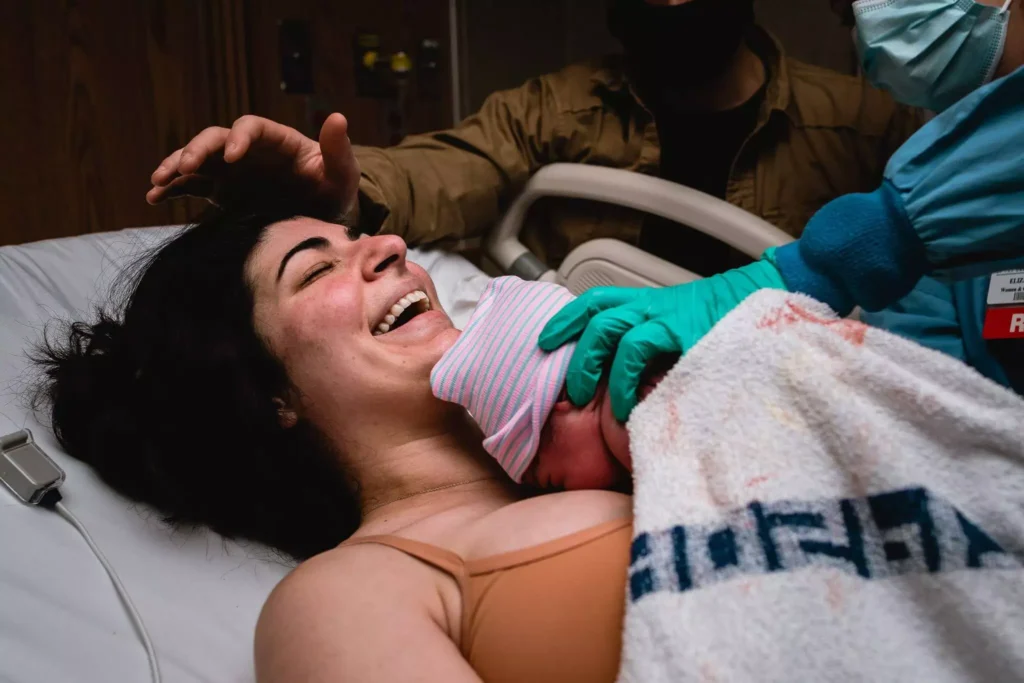

Learn the science of pregnancy and birth to take the mystery of labor away! Understand why you are feeling what you feel, and learn strategies to confidently move through pregnancy and birth!
- 9h+ of Video
- Support Group
- Close Captioning
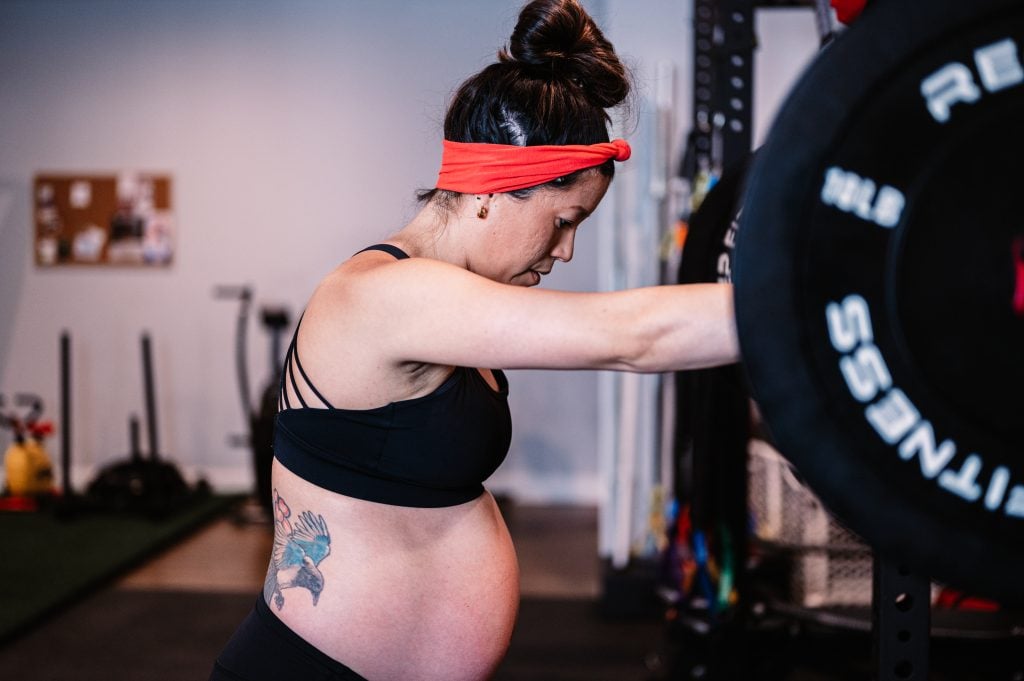

- 5 Workouts/Week
- Gym Workouts
- Self-Paced

Instructor
GINA
Workout on-demand with our prenatal fitness workout videos! Each workout is 30-40 minutes to follow along as you exercise at the same time!
- Birth Prep
- All Trimesters
- Mobility Work

Instructor
GINA
Find comfort and relief from pelvic girdle pain throughout your pregnancy and postpartum period! This program incorporates myofascial sling focused exercises to stabilize across the pelvic girdle joints.
- 3 Weeks
- On Demand Workout Videos to Follow