
TRAINING FOR TWO

Move Confidently in Pregnancy!

NEW COURSE! ‎ ‎ ‎ ‎ ‎‎ ‎ ‎ ‎ ‎ ‎ ‎ ‎ ◆ ‎ ‎ ‎ ‎ ‎‎ ‎ ‎ ‎ ‎ ‎ ‎ ‎ Pelvic Biomechanics ‎ ‎ ‎ ‎ ‎‎ ‎ ‎ ‎ ‎ ‎ ‎ ‎ ◆ ‎ ‎ ‎ ‎ ‎‎ ‎ ‎ ‎ ‎ ‎ ‎ ‎ for Pregnancy and Birth. ‎ ‎ ‎ ‎ ‎‎ ‎ ‎ ‎ ‎ ‎ ‎ ‎ ◆ ‎ ‎ ‎ ‎ ‎‎ ‎ ‎ ‎ ‎ ‎ ‎ ‎ NEW COURSE! ‎ ‎ ‎ ‎ ‎‎ ‎ ‎ ‎ ‎ ‎ ‎ ‎ ◆ ‎ ‎ ‎ ‎ ‎‎ ‎ ‎ ‎ ‎ ‎ ‎ ‎ Pelvic Biomechanics ‎ ‎ ‎ ‎ ‎‎ ‎ ‎ ‎ ‎ ‎ ‎ ‎ ◆ ‎ ‎ ‎ ‎ ‎‎ ‎ ‎ ‎ ‎ ‎ ‎ ‎ for Pregnancy and Birth. ‎ ‎ ‎ ‎ ‎‎ ‎ ‎ ‎ ‎ ‎ ‎ ‎ ◆ ‎ ‎ ‎ ‎ ‎‎ ‎ ‎ ‎ ‎ ‎ ‎ ‎ NEW COURSE! ‎ ‎ ‎ ‎ ‎‎ ‎ ‎ ‎ ‎ ‎ ‎ ‎ ◆ ‎ ‎ ‎ ‎ ‎‎ ‎ ‎ ‎ ‎ ‎ ‎ ‎ Pelvic Biomechanics ‎ ‎ ‎ ‎ ‎‎ ‎ ‎ ‎ ‎ ‎ ‎ ‎ ◆ ‎ ‎ ‎ ‎ ‎‎ ‎ ‎ ‎ ‎ ‎ ‎ ‎ for Pregnancy and Birth. ‎ ‎ ‎ ‎ ‎‎ ‎ ‎ ‎ ‎ ‎ ‎ ‎ ‎◆ ‎ ‎ ‎ ‎ ‎‎ ‎ ‎ ‎ ‎ ‎ ‎ ‎
Written by

Gina Conley, MS

The Midpelvis: Two Pelvic Levels

The midpelvis can be opened with asymmetrical and uneven hip movements. But, if we want to get more complex, the upper and lower level of the midpelvis open in slightly different ways. Read this blog post to learn how to open each level of the midpelvis to support baby beginning and finishing their rotation through the pelvis.

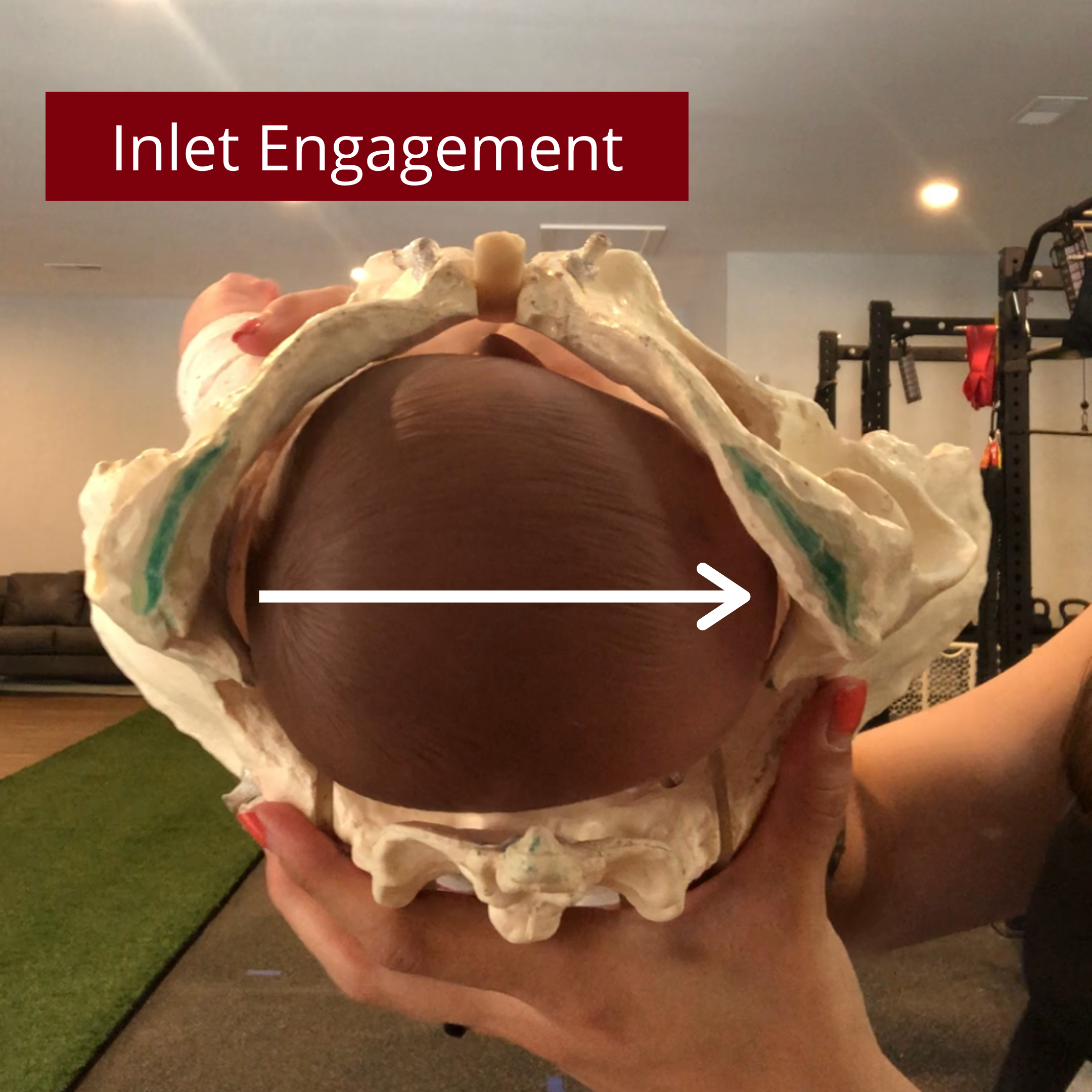
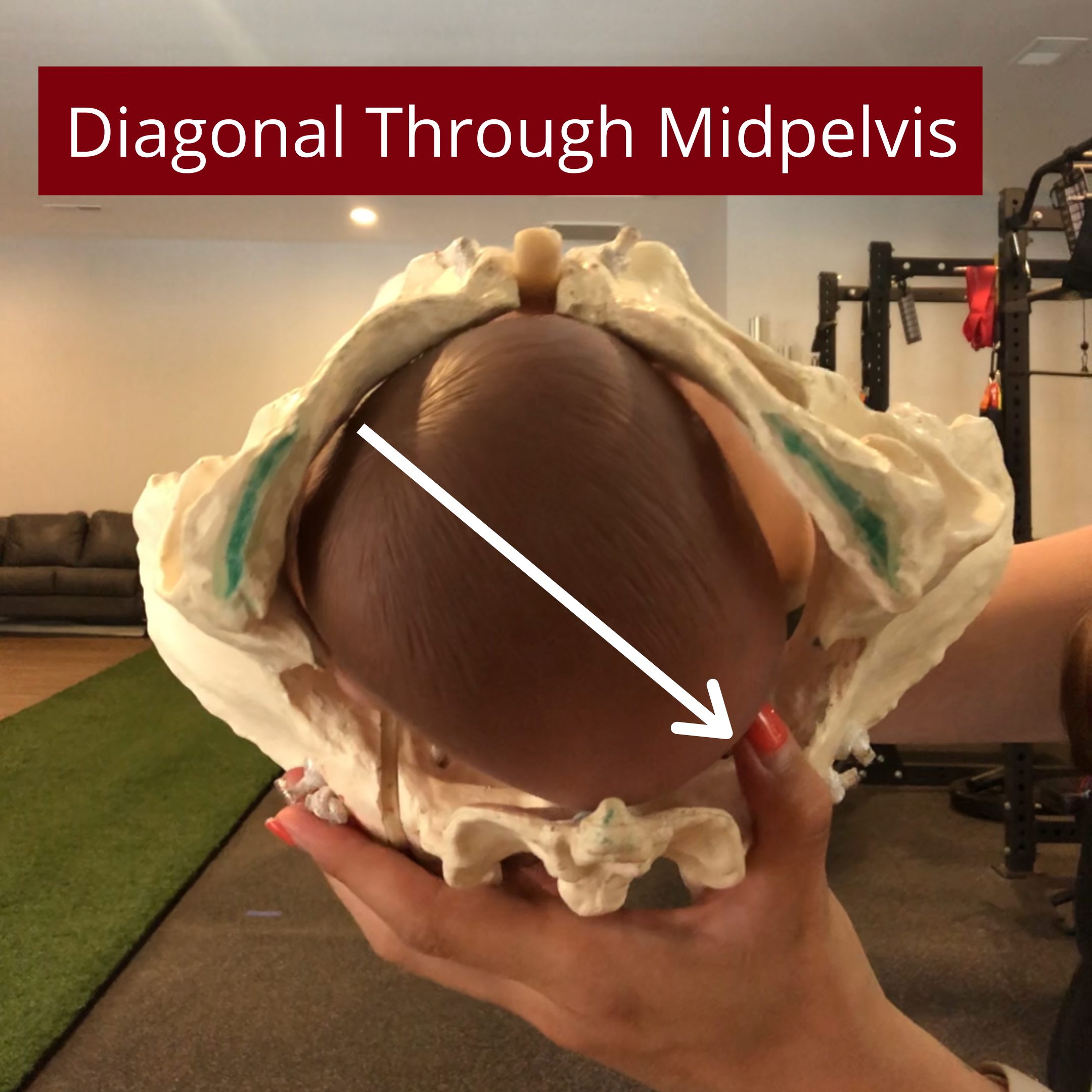
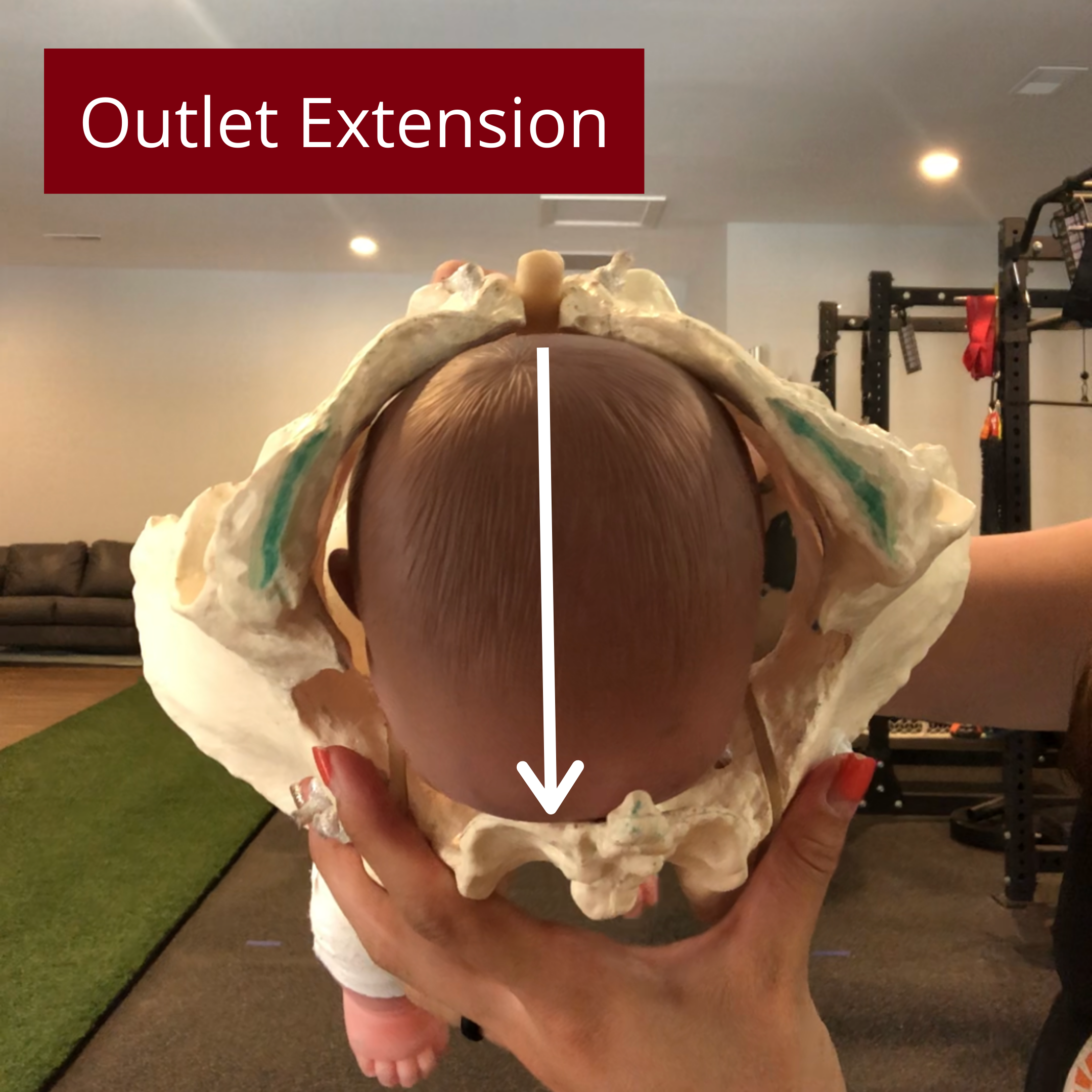
The midpelvis is the bony structure of the pelvis that baby needs to rotate through during labor. The midpelvis begins around -1 station, or when your baby’s head is just above the ischial spine and entering the pelvic inlet (see left image below), and ends around +1 station, or when your baby’s head is under the ischial spine and likely finishing their rotation under the pubic bone (see right image below). Based on the shape of the midpelvis, your baby will need to rotate through this space to navigate from the top of the pelvis to the bottom of the pelvis.

If your baby continues to try to move through the midpelvis in an occiput transverse position (back of the head towards the hip), then they will eventually hit the ischial spines and ischial tuberosities, and not be able to descend any future. In addition, the perineal tissues of the vagina open better when your baby’s head is lined up vertically to the pelvic outlet. So, your baby will rotate through to fit between the ischial spines in a diagonal pattern to finish in an occiput anterior position or the back of the head towards the front of the pelvis.

But, the midpelvis has some more complexity to it! We can divide the midpelvis into two levels: the upper midpelvis and the lower midpelvis. Each of these levels opens in a different way, but luckily as long as we are rocking and shifting between both an external and internal rotation of the femur, we will likely be opening both levels with movement without even realizing it!

The Upper Midpelvis: External Rotation

Upper midpelvis opening

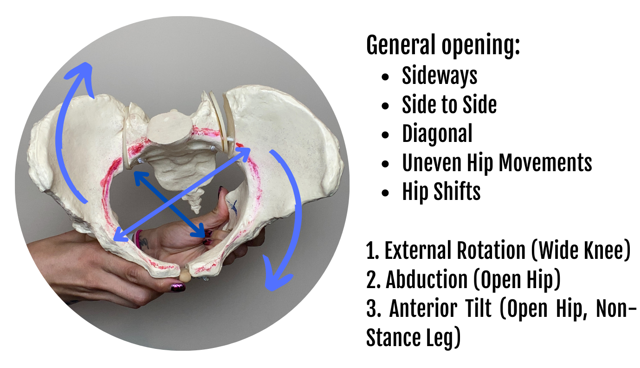
The midpelvis opens with asymmetrical movement patterns: one hip is doing something differently than the other. This creates more space diagonally, allowing baby to better fit through this pelvic level. But, we may want to emphasize certain movement patterns based on where baby is in its rotation through the midpelvis. If baby is beginning their rotation, we may want to create more space in the upper midpelvis. This may be -1 to 0 station.

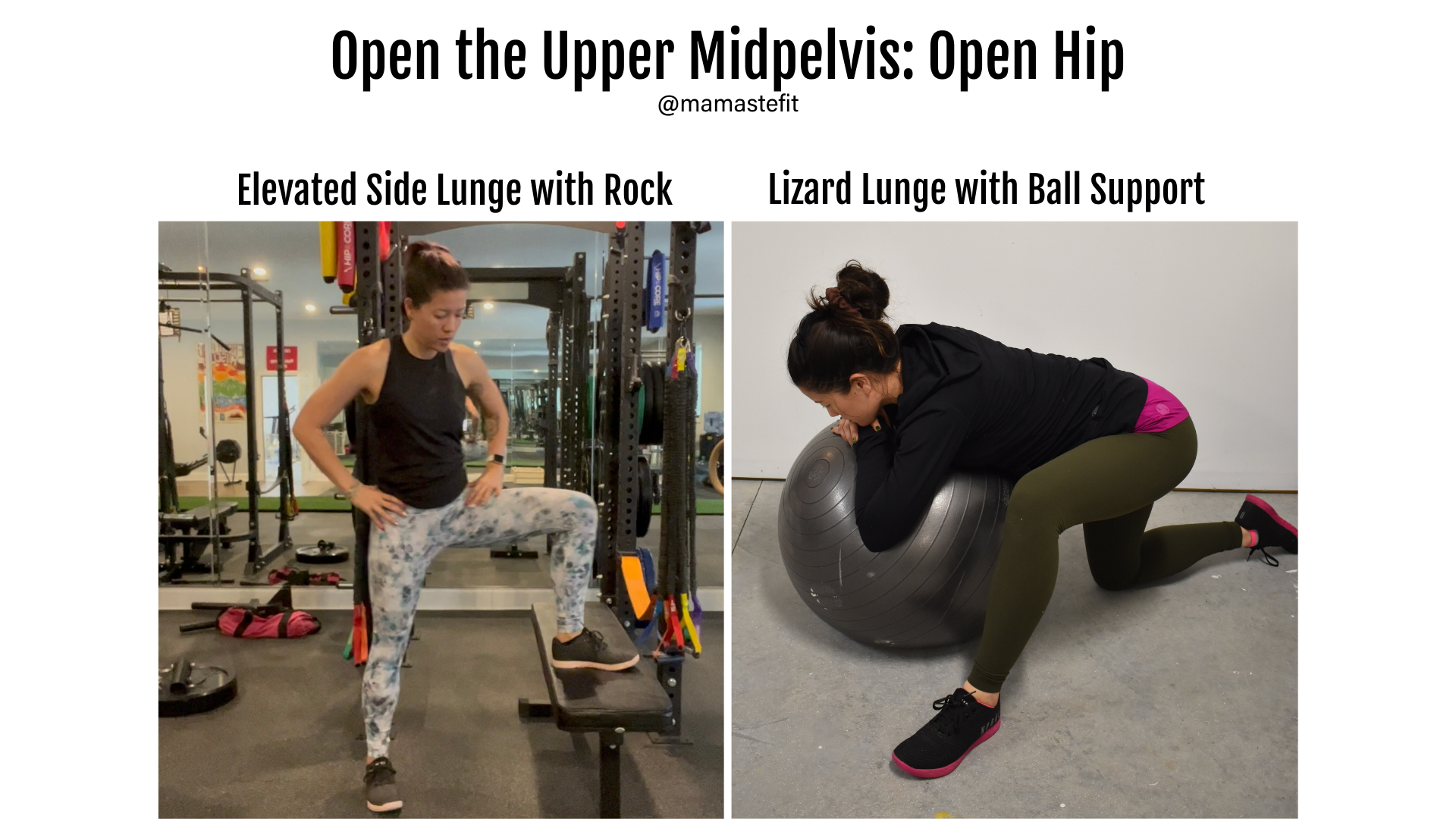
We can open the upper midpelvis more with external rotation of the femur (open hip, or wide knee) on the side baby is on (most likely left), abduction (leg moving outwards), and an anterior pelvic tilt (pelvis falling forward on that side). How can we achieve this? Focus on an open hip position, where the angle at the femur and hip crease is greater than 90 degrees. You can also think drive the knee forward, and this tends to open the hip angle, as well!

You could try movements such as: elevated side lunge with rocking or lizard lunge with ball support!

The Lower Midpelvis: Internal Rotation

As long as we are shifting weight from leg to leg, and bringing each leg into a closed and open hip position, we are creating space in the midpelvis. But, if we want to emphasize opening in the lower midpelvis to help baby finish their rotation, there are some movement patterns that can support that! This may be 0 to +1 station, or even as low as +2 station.

We can open the lower midpelvis more with internal rotation of the femur (knee in, ankle out, and closed hip angle) on the side baby is on (most likely left), adduction (leg moving inwards), and a posterior pelvic tilt (pelvis tucking under on that side). How can we achieve this? Focus on driving the hip crease back on the side baby is on (again, most likely left).

Helpful tips when driving the hip crease back is to think: drive the femur back into the socket; put weight into that leg (stance leg tends to internally rotate); and rotate the upper body towards the internally rotated leg. Watch the video below for some tips on how to create more space at the lower midpelvis!

Ultimately, if we rock from hip to hip, finding an open and then a closed hip position on both sides, we will be opening the midpelvis. This opening will help baby descend and rotate through, even without specific focuses on helping start or finish rotation. If you need some extra support with helping baby begin their rotation (such as helping them shift from a less optimal position) or helping baby finish their rotation (such as when pushing but baby is still trying to rotate under the pubic bone), then focusing on either opening the upper or lower midpelvis could be helpful!

Learn more about pelvic biomechanics our childbirth education courses and labor biomechanics webinar. We break down each level of the pelvis and how to move to create more space to facilitate your baby’s descent and rotation through the pelvis for birth!

prenatal Fitness Programs