



Table of Contents
How Your Pelvic Floor Actually Works
If you’ve been told that squeezing your pelvic floor over and over (aka doing Kegels) is the only way to train your core in pregnancy or postpartum… this post is for you. The most effective pelvic floor exercises for women involve so much more than static squeezes.
Because here’s the truth: the pelvic floor is part of your deep core system, and it needs more than just static squeezes. We need movement, breath, strength, and mobility—especially as your body changes during pregnancy and heals postpartum
Your pelvic floor doesn’t work in isolation. It’s part of your “core canister,” which includes your diaphragm, deep core muscles, and pelvic floor. When you breathe in, your diaphragm and pelvic floor both expand and lengthen. As you exhale, they recoil and lift together.
If you’re just doing Kegels without syncing with your breath or movement? You’re likely creating more tension than strength—and tension isn’t always helpful, especially when it’s time to give birth or recover from it.
Why Thoracic Mobility Is Crucial for Pelvic Floor Function
Your rib cage and thoracic spine (mid-back) directly influence the position of your pelvis—which in turn affects how your pelvic floor functions. If your thoracic spine is stiff or stuck in extension (arching), your pelvis often tucks under or rotates asymmetrically. This can lead to compression in the back of the pelvic floor and make it harder for the muscles to function or release.
Improving thoracic mobility—being able to round, arch, rotate, and side bend—gives your pelvis more freedom to move. This helps:
- Reduce pelvic floor tension
- Improve breathing coordination
- Restore balance in the core system
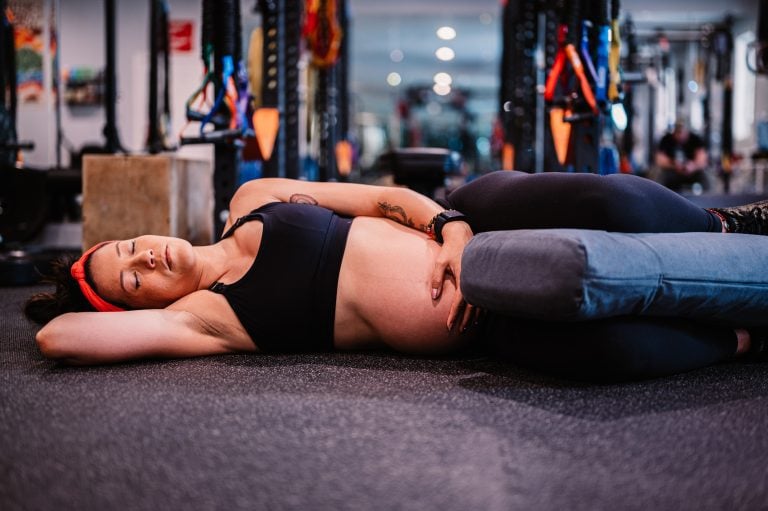
Here is a thoracic mobility warm up routine that includes pelvic floor releases too! If you address your rib cage mobility, you may find that your pelvic floor feels more ready to support.
 On-demand video · 30 workoutsCore, Pelvic Floor & Pelvic StabilityThirty follow-along workouts across beginner, novice, and advanced levels, ten per level — core and pelvic floor strength for pain relief in pregnancy or postpartum.Learn more
 Bundle · lifetime accessMamasteFit BundlesCombine courses and programs for lifetime access and save up to 15% — grouped for birth preparation, the third trimester, or the whole pre and postnatal journey.Learn more
 Video course · 7 modulesPrepare Your Pelvic Floor For BirthSeven modules on releasing the pelvic floor rather than only strengthening it — breathing drills, thoracic and pelvic mobility, and how to relax it during labor.Learn more
So… What Are the Best Pelvic Floor Exercises for Women?
Here are the top movements I’m doing right now (10 months postpartum!) to support my pelvic floor, feel strong in my workouts, and stay symptom-free—even while lifting heavy and chasing my kids.
These exercises are featured in my latest Instagram post and break down like this:
1. All Fours Back Expansion
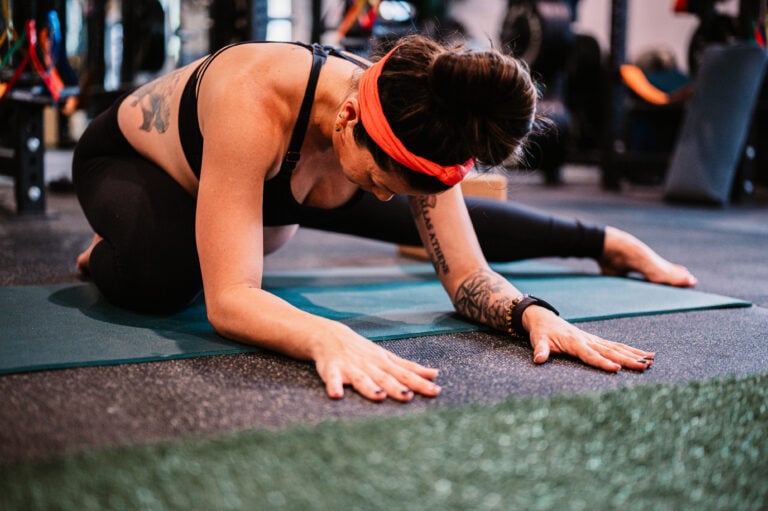
Start with some back expansion. Many of us favor a more extended position–where we are arching more in our backs. This compression to the backside of the body can cause your pelvis to tip forward into an anterior pelvic tilt. This tilt puts more pressure to the front of your pelvic floor (and may be causing more bladder related issues) and tightens the back of your pelvic floor (hello, constipation).
Start in a table top position and round in your back. Then just breathe here! Really focus on inhales to feel your back expand and stretch, and exhale to pull belly to spine to find a slightly deeper round.
2. Lateral Hip Shifts
The pelvic floor does not operate in isolation–this is a big reason why just doing kegels is not helpful. Your rib cage position (and mobility) related to your pelvic position (and mobility) all impact your pelvic floor’s ability to function.
In the lateral hip shift (one of my fav pelvic floor exercises), you are finding a side to side hip shift. In this exercise you are stretching your inner thigh (adductor) as you shift into your opposite hip (posterior pelvic floor release). In addition, if you keep weight in BOTH big toes, it will help offload the straight leg anterior pelvic floor.
3. Split Squats with Internal & External Rotation
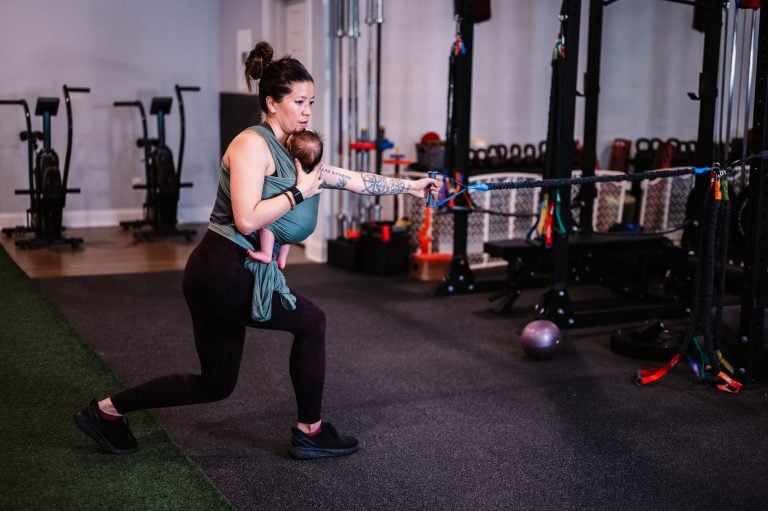
Next, we can add in more hip rotation. The lateral hip shifts were more pelvic rotation, but adding in a closed to open hip position with your pelvis as you do lunges helps to improve hip mobility.
In this lunge (and other single leg exercises), you can add in a closed hip position at the bottom of the movement. In a closed hip position, you’ll feel more of a stretch in the glute and hamstring as you bring your belly to your thigh.
Then stand up to extend in the hips as you find an open hip position (belly away from the thigh) where you may feel more of a stretch in the groin of the forward leg.
Add on weights or resistance bands to increase the activation!
4. Copenhagen Planks
Copenhagen planks are a favorite in my pelvic floor toolbox—especially postpartum. This side plank variation targets the adductors, or inner thigh muscles, which play a huge role in pelvic stability. During pregnancy, our pelvis shifts to accommodate baby, which can create asymmetry. After birth, that asymmetry doesn’t automatically resolve. That’s where Copenhagen planks come in.
They help restore balance by strengthening the inner thighs—particularly important if you’ve had pelvic girdle pain, pubic symphysis discomfort, or feel “wobbly” in your hips or pelvis. I often program longer holds on the left side since most of us favor a right stance, meaning our left adductor tends to be weaker.
Start by placing your top leg on a bench or elevated surface, with your bottom knee on the ground. Hold the position for 15–30 seconds per side. You can modify this exercise by placing your top leg lower or keeping your bottom leg bent if you’re just starting out.
This movement improves more than just strength—it helps you feel grounded and stable in your pelvis again.
5. Step-Ups with Banded Row
This is a powerhouse movement that connects your upper and lower body while directly challenging your pelvic stability. Step-ups already require single-leg strength and balance, but adding a banded row trains the posterior oblique sling—the fascial connection between your lats and opposite glute. That means you’re integrating your core and pelvic floor in a functional, real-life way.
Why is this so important? Because your pelvic floor doesn’t just fire when you’re lying on a mat doing breathing drills—it activates when you’re walking up stairs, lifting your toddler, or hiking uphill. That’s why I love this move as both a prenatal and postpartum staple.
Start by anchoring a band at about waist height. Step up with your right leg while rowing the band with your left arm (and vice versa). Focus on rotating through your torso as you row to create a diagonal core engagement.
Want to make it even more effective? Add a small pause at the top of the step to challenge balance and pelvic control before lowering back down.
This one’s a favorite for a reason—it builds total-body strength while reinforcing that deep core connection from foot to floor to hand.
Why This Matters for Pregnancy and Postpartum
In Training for Two, I talk a lot about how pregnancy affects your musculoskeletal and core systems. Hormonal changes increase joint laxity. Your growing belly shifts your center of gravity. If we ignore pelvic alignment, breathing, and pressure management, we can set ourselves up for more discomfort—or a harder time recovering postpartum.
The Beyond Kegels guide emphasizes that pelvic floor training should:
- Include full-body movement
- Prioritize breath over brute force
- Build strength and mobility
- Help your pelvic floor release, not just contract
That’s exactly what these exercises do.
Final Thoughts: Strength Through Movement
Your pelvic floor needs to move to be strong. It needs to lengthen and release to support birth. And it needs to be trained in real-life positions like lunges, squats, and shifts—because that’s how you live and move.
Whether you’re pregnant, 10 months postpartum like me, or years into motherhood, these exercises are my non-negotiables for feeling strong, stable, and symptom-free.
📥 Want a guided workout with all of these? Check out our prenatal and postpartum programs here.
🎥 And for more breakdowns, I’ll be linking YouTube demos for each movement throughout the blog.
 App program · 40 weeksPrenatal Strength TrainingA gym-based program that syncs to your current week of pregnancy — four strength sessions plus one pelvic stability workout a week, with demo videos for every exercise.Learn more
 App program · 16 weeksPostpartum Return to FitnessSixteen weeks of rebuilding, four strength sessions a week, with a vaginal or cesarean recovery track and follow-along videos for the first six weeks.Learn more
 App program · 64 daysPostpartum Return to RunningSixty-four training days, four sessions a week, with plyometrics and running programming beginning at week seven — a structured way back to your first run.Learn more