



There are SO many labor positions that you COULD do, but what labor position is best for you during your labor? We want to create more space in the pelvic level that baby is currently trying to navigate.
- If baby is trying to engage into the top of the pelvis, we want to open the top of the pelvis more!
- If baby is trying to rotate through the middle of the pelvis, we want to create more space in the midpelvis.
- If baby is trying to finish their rotation under the pubic bone, we want to create more space in the lower midpelvis and pelvic outlet.
Let’s explore HOW you can tell WHERE baby is in the pelvis so you can better decide what labor position is best for you!
3 Pelvic Levels: How to Open the Pelvis
There are three main pelvic levels that all open in a different way:
- Pelvic Inlet: Top of Pelvis
- Opens more with external rotation of the femurs
- Creates more space side to side
- Posterior pelvic tilt
- Creates more space front to back
- Anterior pelvic tilt
- Changes pelvic angle and makes external rotation easier
- Opens more with external rotation of the femurs
- Midpelvis: Middle of the Pelvis
- Asymmetrical movements create more space in this pelvic level
- The upper Midpelvis opens more with external rotation of the femur
- Lower midpelvis opens more with internal rotation of the femur
- Pelvic Outlet: Bottom of the Pelvis
- Opens more with internal rotation of the femurs
- Slight Posterior Pelvic Tilt
Learn the science of pregnancy and birth to take the mystery of labor away! Understand why you are feeling what you feel, and learn strategies to confidently move through pregnancy and birth!
- 9 hours of on-demand video
- Lifetime Access of E-Course
- Watch on Mobile Device
Each pelvic level opens in a DIFFERENT way. There is no one movement that opens the entire pelvis. Different movement patterns will open a specific pelvic level! So, if we focus on WHERE baby is in the pelvis, we can better create space with movement to support our labor progress.
But how do we know WHERE baby is in the pelvis? Your intuitive movement pattern, or how you move without thinking about it, tends to be a really good clue to find what labor position is best for you to do to support your labor progress!
1) Intuitive Movement for Top of the Pelvis

The pelvic inlet, or top of the pelvis, opens more with external rotation of the femur or wide knees, and pelvic titling.
A posterior pelvic tilt, or butt tucked underneath, tends to open the pelvic inlet more front-to-back as it moves the sacral promontory out of the way.
But an anterior pelvic tilt makes external rotation easier to do, which probably influences the pelvic space more than the sacral movement. An anterior pelvic tilt may also change the pelvic angle, making it easier for the baby to engage.
If the baby is trying to engage in the pelvis, we tend to see more front-to-back rocking movement patterns and butt-tucking under movement patterns!
Inlet Opening Labor Position: Squats

One labor position that you could try (and there are so many great ones) to open the TOP of the pelvis is a squat!
The squat has a wide knee movement that emphasizes external rotation and we can add some extra support with your partner to allow you to sink into the position with a more rounded back.
2) Intuitive Movement of Midpelvis

The upper midpelvis opens more with external rotation of the femur or an open hip position. Our non-stance leg or wide leg tends to favor more external rotation!
If baby has engaged and is trying to begin their rotation into the pelvis, you may begin to favor a side-to-side movement pattern! You may also emphasize more of an open hip position on one side as you sway.
Upper Midpelvis Opening Labor Position: Elevated Lunge
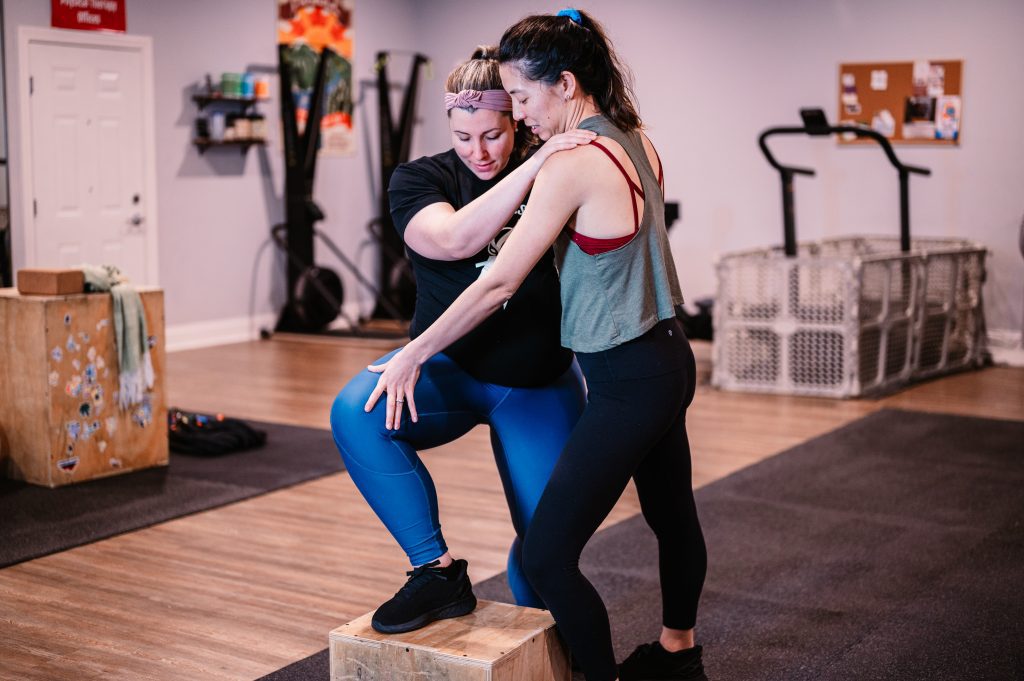
If baby is engaged and starting their rotation into the pelvis, we want to focus on opening the upper midpelvis! A supported elevated lunge can be a great option!
3) Intuitive Movement of Lower Midpelvis
The lower midpelvis opens more with internal rotation of the femur or a closed hip position. Our stance leg, or the leg we put weight into, also tends to move into internal rotation.
If baby is trying to finish their rotation under the pubic bone, we may notice that you are repeatedly shifting your weight into the same leg over and over again during a contraction (usually the left leg).
If I see my clients rocking repeatedly into one leg, it is a huge clue to me that we may be pushing soon!

Lower Midpelvis Opening Labor Position: Hip Shifts

In an all fours hip sway, you can sway the hips side to side! If you want to emphasize opening the lower midpelvis, repeatedly shift into one leg or add a yoga block under the leg you are shifting into to create more space.
4) Baby is LOW: Tippy Toes and Mini Squats

If baby is trying to navigate under the pubic bone, we tend to see more favoring of tippy toes and mini squats.
As you are laboring with a contraction, you will shift your weight into one leg, as you come up on the tippy toes of the other. This is helping you:
- Exaggerate the internal rotation of your standing leg by putting more weight into this leg. Our stance leg tends to internally rotate, which creates more space in the lower midpelvis to help baby finish their rotation under the pubic bone.
- Tippy toe positions can also change pelvic floor tension, helping baby’s position.
As you are laboring, you may start to favor more mini or quarter squats, which can be a big clue that baby is lower in the pelvis!
As you do your mini squats, you may notice that your knees knock in or move inward more, as well, which helps to open the lower half of the pelvis!
Lower Pelvis Opening Labor Position: Hinge

If you are feeling more pressure and favoring lower pelvis opening movements, you could try a supported hinge!
In the supported hinge, focus on pushing your hips BACK to the wall behind you, NOT the floor below you (this would be more of a squat).
You could also allow the toes to point inward and the knees to cave in as you shift around.
5) PRESSURE
If you are feeling the sensation of PRESSURE in your vagina or rectum, it could be that your baby is LOW. I also felt more pressure in my outer hips, or the sensation of my contractions shifted from my abdomen to more of my outer thighs/hips. The change in sensation can be a huge clue that your baby is moving lower into your pelvis.
Find What Labor Position Is Best
Do you want to find what labor position is best for you? We can choose the best labor position for YOUR birth based on HOW you are moving without thinking! You know your birth best! You will move in a way that intuitively creates space in your pelvis to make more room for your baby to navigate the pelvic space.
- If baby is in the top of the pelvis you tend to rock more front to back, tucking your butt underneath.
- If baby is in the middle of the pelvis you tend to sway from side to side.
- If baby is getting low you’re feeling a LOT more pressure, but you may also notice that you shift repeatedly into one leg, may be coming up on your toes, and favoring a mini squat pattern.
Paying attention to HOW you are moving can be a HUGE clue to where baby is in your pelvis, and what type of labor position you should do!
Learn more about pelvic mechanics and laboring positions in our childbirth education course!