



Table of Contents
Welcome to the final episode of our Postpartum What to Expect series! In this blog, we dive into 4 to 6 weeks postpartum. We’ll cover the physical changes you may experience, like stopping vaginal bleeding and the healing process after a C-section. We’ll discuss baby’s first mental leap and other developmental milestones, including recognizing their surroundings and making sounds. Plus, we’ll guide you on returning to structured exercise safely and recognizing signs that you might need professional support. Join us to learn how to navigate this crucial postpartum period for both you and your baby!
Subscribe to our YouTube Channel for more weekly workouts and educational videos! We publish one new workout video and 2-3 educational videos a week on our channel.
Your Body at 4-6 Weeks Postpartum
Vaginal Bleeding & Healing
By this stage, your vaginal bleeding should be slowing down or stopping entirely. While some women may continue experiencing light spotting up to ten weeks postpartum, if you’re still bleeding heavily, it’s essential to consult your healthcare provider.
This is also when many women have their first postpartum check-up, typically scheduled between four to eight weeks. During this visit, your provider may clear you for exercise and assess your overall recovery. If you had a C-section, your incision should now be fully healed, appearing more as a scar than an open wound. This is the perfect time to start incorporating scar mobilization techniques, which can aid in healing and desensitization.
Returning to Fitness
You may begin considering a return to structured exercise at this stage. Some key indicators that you’re ready include:
Postpartum bleeding has stopped.
No significant pelvic pain or discomfort.
No signs of pelvic organ prolapse or unresolved diastasis recti.
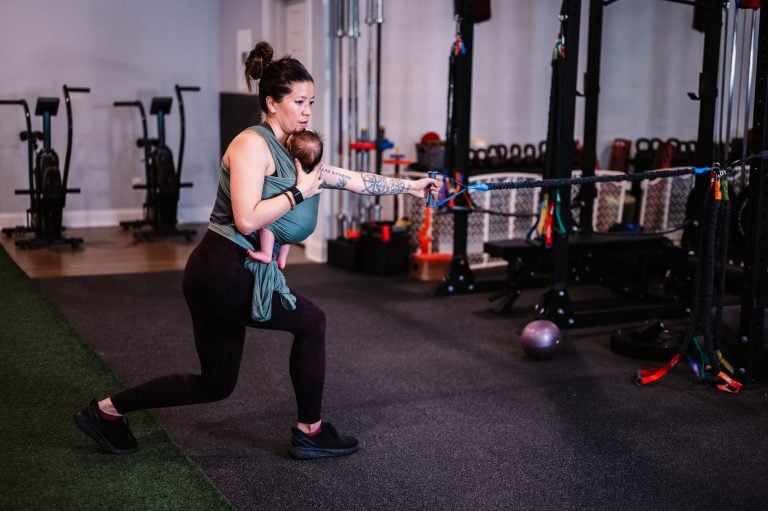
While medical clearance is not a strict requirement for returning to fitness, consulting a pelvic floor physical therapist for a thorough assessment can be beneficial. A gradual approach is best—starting with foundational movements, core stabilization, and relearning movement patterns. Our MamasteFit Postpartum Return to Fitness Programs can guide you through this transition.
Common Postpartum Symptoms
At this point, some pregnancy or birth-related symptoms may still linger, or new concerns may emerge:
Diastasis recti (abdominal separation): If your core still feels weak or unsupported, professional guidance can help address posture, breathing mechanics, and core engagement.
- Pelvic organ prolapse: While this condition may feel alarming, it is manageable. Symptoms like pelvic floor heaviness or discomfort should not be ignored, and a pelvic floor therapist can provide valuable support. Options like internal pessaries or external support garments can also help alleviate symptoms.
- Leaking urine (incontinence): While common, this is not something you have to live with—pelvic floor therapy can significantly improve or eliminate symptoms.
 Video course · 3+ hoursC-Section Scar MobilizationOver three hours of video on scar mobilization technique and movement for recovery, plus a live webinar every other month you can attend or watch back.Learn more
 App program · 16 weeksPostpartum Return to FitnessSixteen weeks of rebuilding, four strength sessions a week, with a vaginal or cesarean recovery track and follow-along videos for the first six weeks.Learn more
 App program · 16 weeksAfter C-Section Recovery WorkoutSixteen weeks of cesarean-specific rebuilding with scar mobilization included — developed with physical therapist and two-time c-section mom Casey.Learn more
Your Baby’s Development at Weeks 4-6
Mental Leaps & Increased Awareness
Your baby is undergoing their first major mental leap, which can make them fussier than usual. This developmental milestone involves recognizing that they are a separate person from you—a big realization that can be overwhelming!
Apps like Wonder Weeks help track these leaps, providing insight into why your baby might be more irritable and offering tips on how to soothe them.
Physical Milestones
During this time, your baby’s motor skills and sensory development are advancing:
Head movement: Babies start turning their heads from side to side during tummy time, exploring their surroundings more intentionally.
Improved vision: At around four to six weeks, babies can see up to 12-17 inches away, making them more curious about objects and faces.
Cooing and early communication: Your baby may start making sounds other than crying. Responding to these coos by mimicking them helps lay the foundation for language development.
Smiling: While early smiles are typically reflexive, intentional smiles will emerge around six to eight weeks.
Crossed eyes: This is common at this stage and usually resolves on its own.
Discovering their hands: Babies begin realizing they have hands and may put them in their mouths—not always as a hunger cue, but simply as an exploration of their bodies.
Supporting Your Postpartum Journey
Motherhood is a transformative experience, and your body and baby will continue evolving well beyond these initial weeks. If you’re experiencing any lingering discomfort or challenges, know that support is available through medical providers, pelvic floor therapists, and fitness programs tailored to postpartum recovery.
Thank you for following our Postpartum What to Expect series! We’re here to support you throughout your motherhood journey. If you’re looking for guidance on returning to fitness, check out our postpartum programs and use code YOUTUBE10 for 10% off any online offering.
Your recovery matters—let’s navigate this journey together!
 App program · 64 daysPostpartum Return to RunningSixty-four training days, four sessions a week, with plyometrics and running programming beginning at week seven — a structured way back to your first run.Learn moreMembership · ongoingBeyond Postpartum Strength TrainingAn ongoing subscription with a new training cycle every 6 to 10 weeks — strength endurance, max strength, then power, with deload weeks and running add-ons.Learn more
 App programTrain for a Marathon After BabyProgressive run workouts and strength training from 5K to the marathon finish — long runs, tempo work, easy miles, and a weekly pelvic stability session.Learn more
This mini-course guides you through the first month postpartum as you begin your recovery after birth! This program includes weekly guidance on how to reconnect with your core and pelvic to support your healing.
- Breathing and Core Connection Exercises
- Mobility Exercises to Relieve Common Discomforts
- Gentle Core Exercises
- Watch on Mobile Device