Hi, I’m Gina—perinatal fitness trainer, birth doula, and founder of MamasteFit. Today, I want to guide you through a gentle and effective mobility flow designed to release and rebalance your pelvic floor using a birth ball.
This flow is perfect for pregnancy, postpartum, or anytime you feel tightness or tension in your hips and pelvic area. For the demo, I’m using a TriDeer birth ball, which I love for its comfort and durability—but any stability or birth ball will work just fine!
Subscribe to our YouTube Channel for more weekly workouts and educational videos! We publish one new workout video and 2-3 educational videos a week on our channel.
Why Pelvic Floor Release Matters
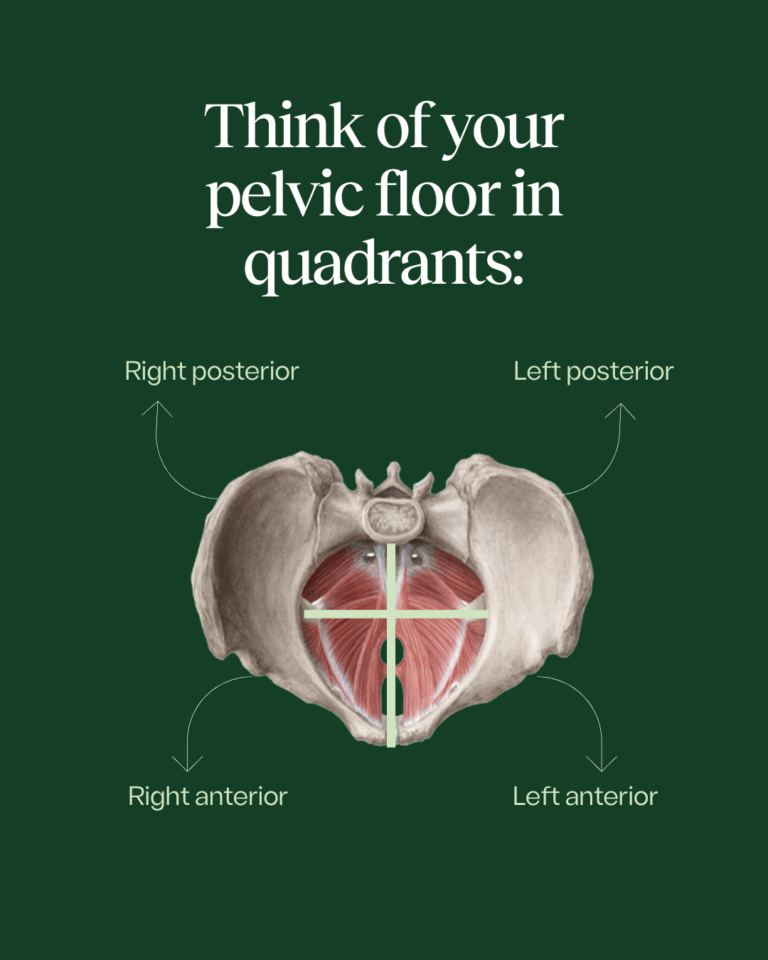
Your pelvic floor is a group of muscles that supports your bladder, uterus, and bowel, while also playing an essential role in core stability, posture, and birth.
However, there isn’t one single stretch or exercise that targets the entire pelvic floor—each portion requires different movement and awareness.
In this flow, we’ll explore positions that help you connect with both the front and back halves of your pelvic floor, allowing for deeper release and improved coordination.
Step 1: Seated Breathing and Connection
Start by kneeling with your knees a little wider apart.
Place your forearms on the ball and gently press into it to activate your core. Round slightly through your spine, and begin with deep, intentional breaths.
Inhale: Breathe into your back and the back of your pelvic floor—imagine gently expanding that space.
Exhale: Draw your belly to your spine and lift slightly through the front of your pelvic floor—as if lifting a blueberry with your vagina.
This mindful breathing helps you lengthen and relax the back of your pelvic floor while engaging the front gently.
Step 2: Deep Squat Release
Next, come into a deep squat, leaning slightly forward into the ball. Continue the same breath pattern—inhale into your back, exhale to lift through the front.
This wide-legged position helps stretch the front half of the pelvic floor while the rounding of your back brings gentle length to the posterior side.
You can add a gentle rocking motion, shifting from toes to heels, to open up the hips even more.
Step 3: Half Lunge Flow
From your squat, step one leg forward into a half lunge position.
Gently rock forward and back, keeping weight in your big toe as you move. Rotate your belly slightly away from your front thigh to deepen the stretch through your groin.
This movement targets the front quadrant of your pelvic floor—particularly the inner thigh and groin on the side of your forward leg.
Switch sides and repeat, noticing if one side feels tighter or more restricted. It’s completely normal for one half of your pelvic floor to feel more overactive than the other.
Step 4: Adductor Rock Back
Now, extend one leg straight out to the side.
As you push the ball forward, hinge your hips back to feel a deep stretch along your inner thigh.
Pause at the bottom, then slowly come forward to extend your hips.
Think about tucking your pelvis slightly as you push forward to release tension in the groin and front of the hip.
Switch sides and notice any differences between them—sometimes one side may feel tighter or “pinchier,” which can signal overactivity or imbalance in the pelvic floor muscles.
Step 5: Hip Shifts on the Ball
Lean forward with your chest resting on the ball and knees a bit wider than hip-width.
Shift your hips gently to one side—when you shift your weight to one side, you’ll feel a stretch in the inner thigh and groin of the opposite leg.
Gently shift your weight forward into the ball and back towards your heels.
Play with your posture—adding a bit more arch will target the front half of your pelvic floor, while rounding your back reaches the back half. Continue to move slowly and breathe deeply through the transitions.
Step 6: Hero Rock Back
To finish, bring your knees together and ankles out—a gentle internal rotation.
Press your forearms into the ball again, lightly engaging your abs as you sit back as far as feels comfortable. You can place a yoga block under your hips if you need support.
This position focuses on the back half of the pelvic floor, which is often tighter and more compressed—especially for those who sit frequently or experience low back tension.
Avoid arching your back here; instead, keep a gentle posterior pelvic tilt to truly target the deeper muscles.
Stay here for about a minute, breathing intentionally:
Inhale into your back body.
Exhale to lift the front gently.
This combination creates balance—lengthening the back half and engaging the front half of the pelvic floor.
Conclusion
This flow offers a complete release for your pelvic floor, helping to ease tension, restore balance, and improve awareness of how these muscles work together.
Many of us carry tightness in the back half of our pelvic floor, while the front tends to be more lengthened—this practice helps recalibrate that relationship through mindful movement and breath.
If this felt amazing (and I hope it did!), I invite you to explore our online prenatal and postpartum fitness programs. These self-paced, video-based programs are designed to support you through every stage of your pregnancy, birth, and recovery.
Use code YOUTUBE10 to get 10% off any of our online offerings.
Additional Resources
Prenatal Support Courses
Learn the science of pregnancy and birth to take the mystery of labor away! Understand why you are feeling what you feel, and learn strategies to confidently move through pregnancy and birth!
- 9h+ of Video
- Support Group
- Close Captioning
- 5 Workouts/Week
- Gym Workouts
- Self-Paced
Instructor
GINA
Workout on-demand with our prenatal fitness workout videos! Each workout is 30-40 minutes to follow along as you exercise at the same time!
- Birth Prep
- All Trimesters
- Mobility Work
Instructor
GINA
Find comfort and relief from pelvic girdle pain throughout your pregnancy and postpartum period! This program incorporates myofascial sling focused exercises to stabilize across the pelvic girdle joints.
- 3 Weeks
- On Demand Workout Videos to Follow