



Table of Contents
When most people think about pelvic floor health, they immediately think about strengthening exercises like Kegels. But the truth is, a healthy pelvic floor isn’t just about strength—it’s about coordination, mobility, and the ability to relax. That is why pelvic floor breathing exercises can be such a powerful place to start.
If you’ve been experiencing pelvic heaviness, tension, lower back discomfort, or simply feel disconnected from your deep core, incorporating pelvic floor relaxation breathing into your routine can be a game changer.
This guided pelvic floor release workout focuses on diaphragmatic breathing techniques to improve pressure management, release tension, and restore balance to your deep core system. Let’s break down why this matters and how this breathing practice can help support better pelvic floor function.
Subscribe to our YouTube Channel for more weekly workouts and educational videos! We publish one new workout video and 2-3 educational videos a week on our channel.
Understanding the Pelvic Floor’s Role in Core Function
The pelvic floor is much more than a group of muscles you squeeze and release.
It forms the base of your deep core canister, a coordinated system that includes:
- The diaphragm (your primary breathing muscle)
- The transverse abdominis
- Internal obliques
- Multifidi (small stabilizing muscles along the spine)
- The pelvic floor
Together, these muscles work to:
- Stabilize the spine
- Manage pressure within the abdomen
- Support posture and movement
- Maintain continence
- Assist with breathing mechanics

When these muscles coordinate effectively, your pelvic floor can respond appropriately to the demands of daily life, exercise, pregnancy, postpartum recovery, and beyond.
However, if pressure isn’t being managed efficiently—or if your breathing mechanics are off—it can lead to dysfunction such as:
- Pelvic floor tension
- Pelvic heaviness
- Lower back pain
- Core instability
- Difficulty relaxing the pelvic floor
This is why breathing matters so much.
Why Diaphragmatic Breathing Is Essential for Pelvic Floor Health
We take tens of thousands of breaths every single day.
That means your breathing pattern has a massive impact on your pelvic floor.
What Happens During an Effective Diaphragmatic Breath?
On an inhale:
- The diaphragm moves downward
- Pressure increases inside the abdominal cavity
- The abdominal wall expands in a 360-degree pattern
- The pelvic floor gently lengthens and responds to that pressure
On an exhale:
- The diaphragm rises
- Pressure decreases
- The abdominal wall recoils
- The pelvic floor naturally lifts and recoils
This rhythm allows the pelvic floor to move through its full range of motion, which is critical for optimal function.
When breathing becomes shallow or chest-dominant, this natural coordination is disrupted.

Relaxation vs. Activation: Understanding the Difference
There are two primary types of exhalation:
Passive Exhale (Relaxation)
This happens during rest.
Your body simply recoils naturally after the inhale—like a stretched rubber band returning to its original shape.
This type of breathing helps:
- Release tension
- Calm the nervous system
- Encourage pelvic floor relaxation
Active Exhale (Core Engagement)
This occurs during exertion, such as lifting, squatting, or exercise.
Here, the abdominal muscles actively assist the exhale to manage greater pressure demands.
A healthy pelvic floor needs both.
This workout primarily emphasizes release and pressure awareness, helping your body reconnect with efficient breathing mechanics.
How Finger Placement Can Redirect Your Breath
One of the most unique parts of this pelvic floor release workout is the use of specific fingertip connections.
By lightly pressing different fingers to your thumb, you can subtly shift where your body directs breath expansion.
This helps improve awareness and encourages expansion into different regions of the torso.
Index Finger to Thumb
Encourages expansion into:
- Upper chest
- Upper ribcage
- Shoulder blade region
Middle Finger to Thumb
Targets:
- Mid-ribcage
- Bra strap line
- Mid-back expansion
Ring Finger to Thumb
Promotes breathing into:
- Lower back
- Posterior ribcage
Pinky Finger to Thumb
Directs expansion toward:
- Pelvic floor
- Perineum
- Lower pelvic space
This simple strategy can improve your ability to access deeper diaphragmatic expansion.
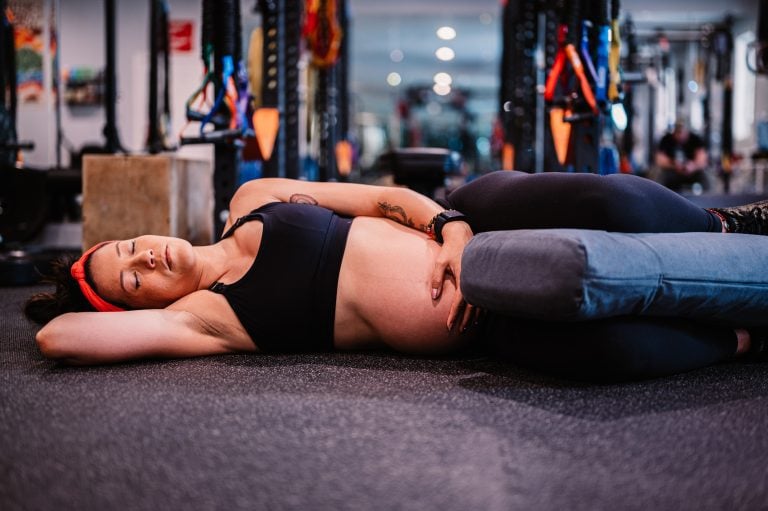 On-demand video · 30 workouts
Core, Pelvic Floor & Pelvic Stability
Thirty follow-along workouts across beginner, novice, and advanced levels, ten per level — core and pelvic floor strength for pain relief in pregnancy or postpartum.
Learn more
On-demand video · 30 workouts
Core, Pelvic Floor & Pelvic Stability
Thirty follow-along workouts across beginner, novice, and advanced levels, ten per level — core and pelvic floor strength for pain relief in pregnancy or postpartum.
Learn more
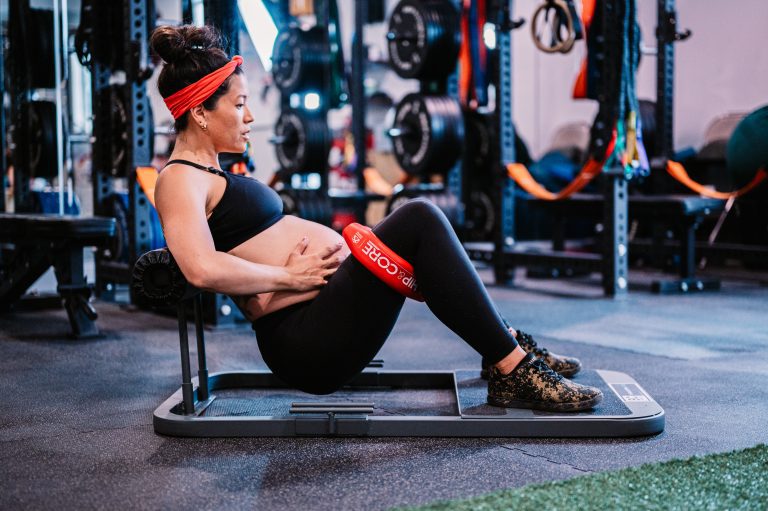 Bundle · lifetime access
MamasteFit Bundles
Combine courses and programs for lifetime access and save up to 15% — grouped for birth preparation, the third trimester, or the whole pre and postnatal journey.
Learn more
Bundle · lifetime access
MamasteFit Bundles
Combine courses and programs for lifetime access and save up to 15% — grouped for birth preparation, the third trimester, or the whole pre and postnatal journey.
Learn more
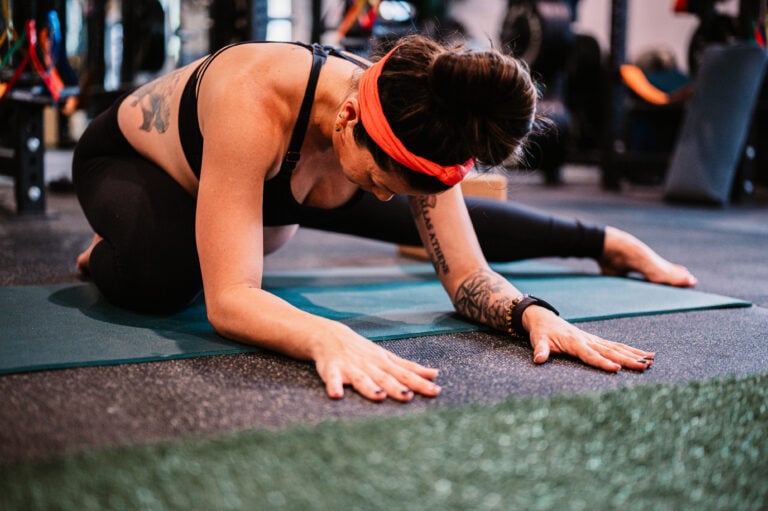 Video course · 7 modules
Prepare Your Pelvic Floor For Birth
Seven modules on releasing the pelvic floor rather than only strengthening it — breathing drills, thoracic and pelvic mobility, and how to relax it during labor.
Learn more
Video course · 7 modules
Prepare Your Pelvic Floor For Birth
Seven modules on releasing the pelvic floor rather than only strengthening it — breathing drills, thoracic and pelvic mobility, and how to relax it during labor.
Learn more
Pelvic Floor Breathing Exercises to Try
This breathing practice uses several body positions to encourage expansion in different areas.
1. Supported Supine Chest Expansion
Lying on your back with feet elevated helps reduce tension and improve upper ribcage mobility. Press index fingers to thumb and reach one arm overhead.
Focus on:
- Keeping the ribcage down
- Expanding through the upper back
- Releasing tension in the chest and shoulders
This position is especially helpful if you tend to breathe high into the chest.

2. Rounded Back Breathing
Using a Pilates ball or pillow under the torso creates gentle spinal flexion. Press the middle fingers into the thumbs and round over the ball with forearms on the ground.
Benefits include:
- Expanding the posterior ribcage
- Releasing lower back tension
- Improving mid-back mobility
If you often stand in an extended posture, this can feel incredibly relieving.
Many people spend much of the day in slight extension due to walking, standing, and postural habits.
This breathing position provides a valuable counterbalance.

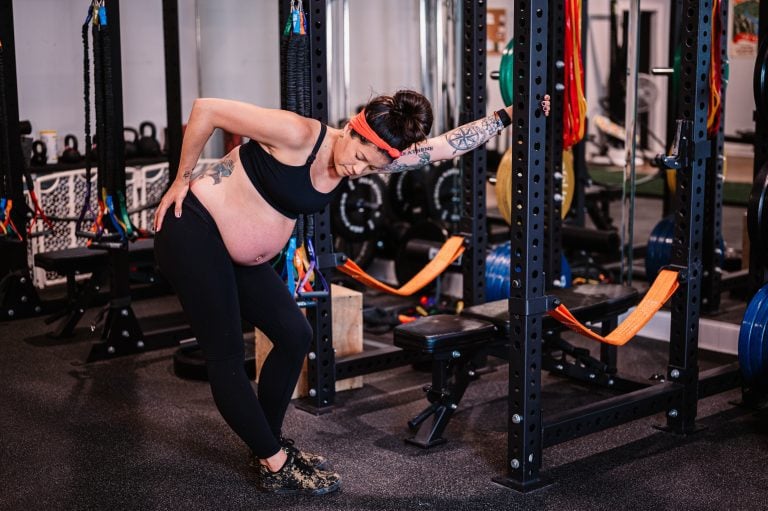
3. Hip Shift Breathing
This asymmetrical position helps access breath into the lower back and posterior pelvic floor. Place one knee on the block and shift into the elevated leg. Pressing the ring fingers into the thumbs, place the forearms on your elevated surface.
It can be particularly useful for:
- Addressing side-to-side tension differences
- Improving pelvic mobility
- Releasing lower lumbar stiffness

4. Seated Perineal Feedback Breathing
Sitting on a Pilates ball (or modified cushion) provides direct sensory feedback to the pelvic floor. Press the pinkies into the thumbs as you breathe.
This helps you feel:
- Pelvic floor descent during inhale
- Natural recoil during exhale
- Relaxation through the perineum
For many people, this is the first time they truly feel pelvic floor movement.

Signs You May Benefit from Pelvic Floor Relaxation Work
Pelvic floor release breathing may be especially helpful if you experience:
- Pelvic pressure or heaviness
- Difficulty fully relaxing
- Lower back discomfort
- Core tension
- Constipation
- Pain with intimacy
- Feeling “always braced”
- Trouble connecting with deep core work
Sometimes the pelvic floor doesn’t need more strengthening.
Sometimes it needs permission to move.
How to Incorporate This Into Your Routine
You don’t need a long session to see benefits.
Try adding 5–10 minutes of diaphragmatic breathing:
Before Workouts
To improve pressure management and core coordination
After Exercise
To down-regulate and restore balance
During Recovery Days
To release tension and improve mobility
During Pregnancy & Postpartum
To reconnect with changing core mechanics
Consistency matters more than duration.
Pelvic Floor Health Is About Function, Not Just Strength
A strong pelvic floor is not the same as a tight pelvic floor.
True pelvic floor function means the muscles can:
- Lengthen
- Contract
- Relax
- Respond dynamically to movement and pressure demands
Breathing is one of the most effective ways to train this.
By improving diaphragmatic breathing mechanics, you support your entire pressure management system—which directly impacts pelvic floor performance.
Final Thoughts
Pelvic floor relaxation breathing is a powerful yet often overlooked tool for improving core function, releasing tension, and restoring balance.
By learning how to direct your breath into different regions of your body, you can improve:
- Pelvic floor awareness
- Core coordination
- Pressure management
- Overall movement efficiency
Whether you’re pregnant, postpartum, or simply looking to improve pelvic health, this type of breathwork can create meaningful change. If you want more structured support, be sure to check out our online fitness programs and use code YOUTUBE10 for 10% off any of our online offerings!
Additional Resources
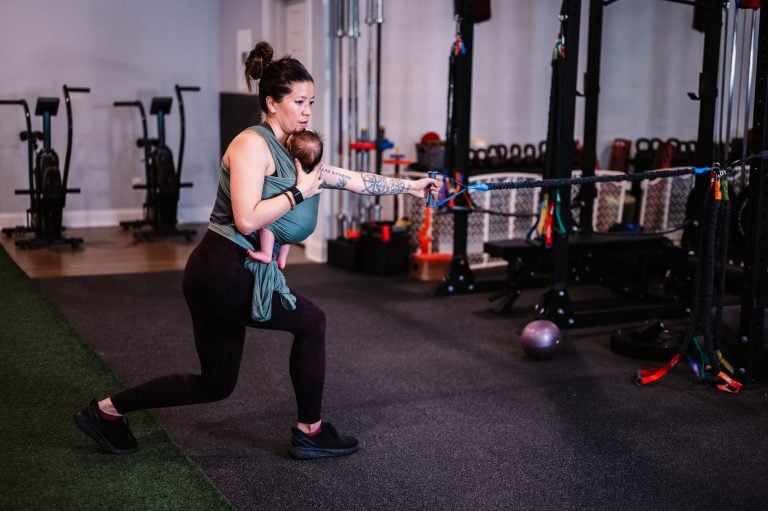 App program · 16 weeks
Postpartum Return to Fitness
Sixteen weeks of rebuilding, four strength sessions a week, with a vaginal or cesarean recovery track and follow-along videos for the first six weeks.
Learn more
App program · 16 weeks
Postpartum Return to Fitness
Sixteen weeks of rebuilding, four strength sessions a week, with a vaginal or cesarean recovery track and follow-along videos for the first six weeks.
Learn more
 On-demand video · 128 workouts
Prenatal Workout On-Demand
Follow-along workouts from week 5 to week 41, four or five a week with guided warm-ups and cool-downs — over 128 sessions coached in real time alongside the video.
Learn more
On-demand video · 24 workouts
Birth Prep Workout Program
Twenty-four workouts that open the pelvis for each stage of labor — strength, mobility, and positioning you can start at any fitness level, 15 to 30 minutes each.
Learn more
On-demand video · 128 workouts
Prenatal Workout On-Demand
Follow-along workouts from week 5 to week 41, four or five a week with guided warm-ups and cool-downs — over 128 sessions coached in real time alongside the video.
Learn more
On-demand video · 24 workouts
Birth Prep Workout Program
Twenty-four workouts that open the pelvis for each stage of labor — strength, mobility, and positioning you can start at any fitness level, 15 to 30 minutes each.
Learn more