



Table of Contents
If you’re looking for a core workout that goes beyond endless crunches, grab a foam roller and get ready for a serious challenge. These six foam roller ab exercises pack into a 19-minute workout that uses one simple piece of equipment to create instability, forcing your core to work harder while also strengthening your shoulders, hips, inner thighs, and glutes.
Whether you’re preparing for pregnancy, returning to exercise postpartum, or simply looking to build a stronger, more functional core, this workout delivers a full-body challenge that emphasizes stability over speed.
Let’s break down why foam roller training is so effective and what you can expect from each movement.
Subscribe to our YouTube Channel for more weekly workouts and educational videos! We publish one new workout video and 2-3 educational videos a week on our channel.
Why Train Your Core with a Foam Roller?
Most people think of a foam roller as a recovery tool, but it can also become an incredible strength-training accessory.
Because the roller moves underneath you, every exercise requires your deep stabilizing muscles to constantly adjust. Instead of simply holding a plank, your body has to actively control movement in every direction.
Benefits include:
- Improved deep core activation
- Better shoulder stability
- Increased balance and coordination
- Greater hip control
- Enhanced body awareness
- Functional strength that carries over into everyday activities and athletic performance
Rather than focusing only on the visible abdominal muscles, this workout challenges your entire core system—including the muscles that stabilize your spine and pelvis.
Who Is This Workout For?
This workout is ideal for:
- Anyone looking to improve overall core strength
- Individuals working toward pull-ups or upper body strength goals
- Athletes wanting greater trunk stability
- Parents rebuilding strength after pregnancy (once cleared for exercise)
- Anyone who enjoys challenging bodyweight workouts
Because each exercise can be modified, beginners and advanced exercisers alike can benefit from this routine.
If you begin to lose form, don’t hesitate to modify. Quality movement always beats pushing through poor mechanics.
Workout Overview: The 6 Foam Roller Ab Exercises
The workout consists of six exercises performed for one minute each before repeating the circuit for a second round.
The structure alternates between:
- Front core work
- Side core work
- Hip strengthening
- Stability training
This variation helps maintain muscular endurance while allowing certain muscle groups brief periods of recovery before being challenged again.
Exercise 1: Plank with Feet on the Foam Roller
The workout begins with one of the most challenging plank variations.
Instead of placing your feet on the floor, both feet rest on top of the foam roller. Immediately, your stabilizing muscles have to work overtime to prevent the roller from moving.
Focus Points
- Push strongly through your hands.
- Keep your shoulders stacked over your wrists.
- Lift your hips so your body forms a straight line.
- Avoid letting your lower back sag.
- Imagine pulling the foam roller toward your hands without actually moving it.
That subtle intention dramatically increases abdominal engagement.
If maintaining the position becomes too difficult, simply lower your knees for a brief reset before returning to the full plank.
Remember: maintaining excellent form is more important than never taking a break.

Exercise 2: Foam Roller Knee Tucks
Next comes dynamic core work.
With the foam roller positioned around mid-shin, pull your knees toward your chest before extending back into a strong plank.
This movement challenges:
- Rectus abdominis
- Deep transverse abdominis
- Hip flexors
- Shoulder stabilizers
The goal isn’t speed.
Instead, focus on creating a controlled tuck while maintaining spinal alignment.
As you pull the knees in, think about bringing your rib cage and pelvis closer together rather than simply bending your hips.
Exhale during the tuck.
Inhale as you extend back out.
If the movement feels too difficult, move the foam roller slightly closer to your knees to shorten the lever arm.

Exercise 3: Side Plank with Foam Roller Support
After the demanding plank series, the workout shifts into side-body strengthening.
The top knee rests on the foam roller while the bottom leg remains grounded.
This unique setup creates instability while strengthening:
- Obliques
- Inner thighs (adductors)
- Hip stabilizers
- Shoulder muscles
Although many people don’t immediately think of the inner thighs as part of the core, they play a significant role in pelvic stability.
Strong adductors help support the pelvis, which directly influences how efficiently your core functions.
Maintain lifted hips throughout the hold.
If necessary, briefly lower the hips before pressing back up.

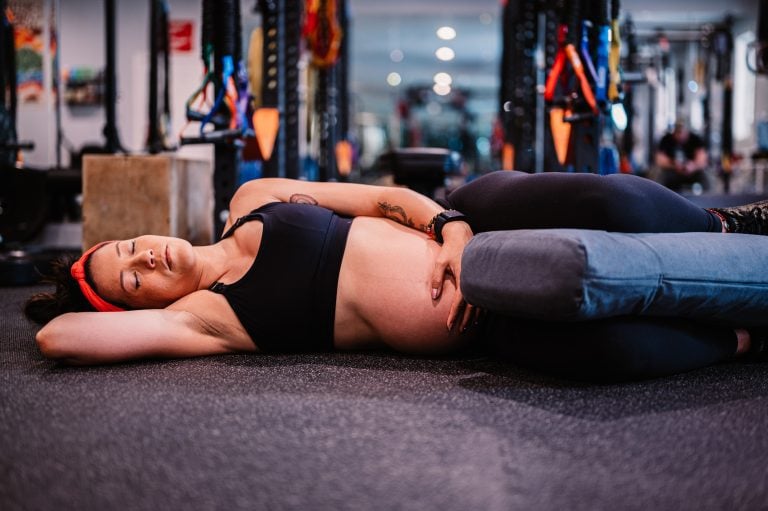 On-demand video · 30 workouts
Core, Pelvic Floor & Pelvic Stability
Thirty follow-along workouts across beginner, novice, and advanced levels, ten per level — core and pelvic floor strength for pain relief in pregnancy or postpartum.
Learn more
On-demand video · 30 workouts
Core, Pelvic Floor & Pelvic Stability
Thirty follow-along workouts across beginner, novice, and advanced levels, ten per level — core and pelvic floor strength for pain relief in pregnancy or postpartum.
Learn more
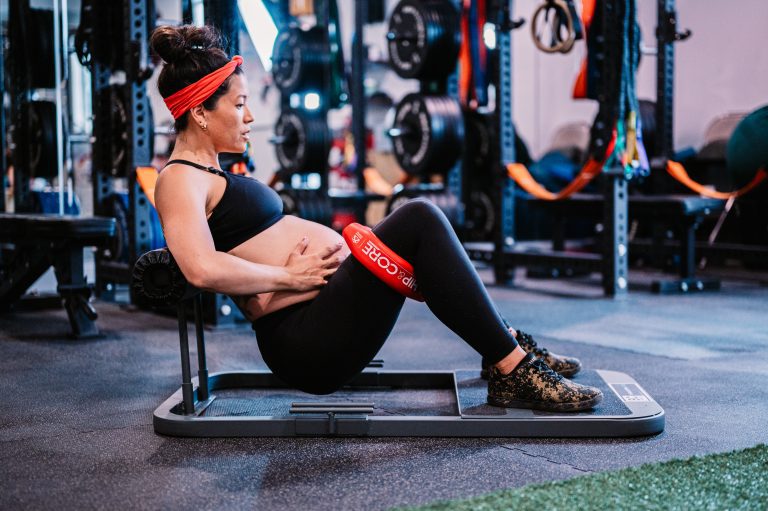 Bundle · lifetime access
MamasteFit Bundles
Combine courses and programs for lifetime access and save up to 15% — grouped for birth preparation, the third trimester, or the whole pre and postnatal journey.
Learn more
Bundle · lifetime access
MamasteFit Bundles
Combine courses and programs for lifetime access and save up to 15% — grouped for birth preparation, the third trimester, or the whole pre and postnatal journey.
Learn more
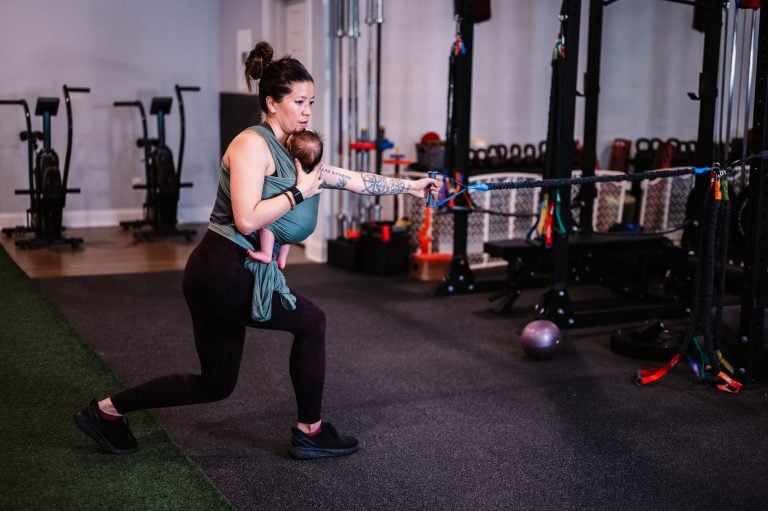 Membership · ongoing
Beyond Postpartum Strength Training
An ongoing subscription with a new training cycle every 6 to 10 weeks — strength endurance, max strength, then power, with deload weeks and running add-ons.
Learn more
Membership · ongoing
Beyond Postpartum Strength Training
An ongoing subscription with a new training cycle every 6 to 10 weeks — strength endurance, max strength, then power, with deload weeks and running add-ons.
Learn more
Exercise 4: Forearm Plank on the Foam Roller
The second plank variation shifts the instability from the feet to the arms.
With your forearms resting on the foam roller, maintaining stability becomes a completely different challenge.
Focus on:
- Pulling your ribs down
- Tucking your pelvis slightly
- Avoiding excessive arching
- Keeping tension throughout your trunk
Think about gently dragging the roller toward your knees without allowing it to actually move.
This cue helps activate the deep abdominal muscles even more.
Again, modifications are encouraged.
Dropping one or both knees briefly allows you to recover while maintaining good movement quality.

Exercise 5: Single-Leg Knee Tucks
The challenge increases by asking one leg to work independently.
One foot stays on the roller while the opposite leg supports your body.
This unilateral variation requires even greater stability because your body naturally wants to rotate.
The objective is to resist that rotation.
Drive one knee toward your chest before slowly extending back.
Maintain square hips throughout each repetition.
Quality repetitions matter far more than completing continuous movement for the full minute.
It’s perfectly acceptable to perform a few repetitions, rest, and then continue.


Exercise 6: Side-Lying Hip Abduction
The final exercise gives the front core a break while continuing to strengthen muscles essential for core stability.
Lying on your side with your bottom knee supported by the foam roller, lift and lower your hips while engaging the outer glutes.
This exercise targets:
- Gluteus medius
- Hip stabilizers
- Obliques
- Pelvic stabilizers
Instead of lifting straight upward, think about gently driving your hips slightly forward.
This creates better alignment and encourages proper activation of the lateral hip muscles.
Since the foam roller elevates the body slightly, you’ll also experience a bit of instability that requires additional control.

Why Hip Strength Matters for Core Function
One of the biggest takeaways from this workout is that core strength extends far beyond your abdominal muscles.
Your:
- Glutes
- Inner thighs
- Hip flexors
- Obliques
- Pelvic floor
- Deep spinal stabilizers
all work together to create a strong, resilient trunk.
Weak hips often lead to compensations elsewhere, contributing to poor movement patterns, discomfort, and reduced athletic performance.
By incorporating lateral hip work alongside planks, this workout trains the entire system—not just the abs.
Progress Over Perfection
One of the most encouraging aspects of this workout is the reminder that everyone needs breaks.
Even experienced coaches pause, modify, and reset when fatigue sets in.
Instead of viewing rest as failure, use it as an opportunity to preserve excellent technique.
You might only complete three knee tucks before needing a break today.
Next week, maybe you’ll complete four.
Progress happens gradually through consistency—not perfection.
Foam Roller Training for Pregnancy and Postpartum
At MamasteFit, we emphasize functional core training throughout pregnancy and postpartum.
While some of the advanced plank variations in this workout may not be appropriate during pregnancy or early postpartum recovery, the principles remain the same:
- Prioritize stability over intensity.
- Coordinate breathing with movement.
- Build strength throughout the entire core system.
- Train the hips alongside the abdominal muscles.
- Modify exercises based on your body’s current needs.
Always consult your healthcare provider before beginning or returning to exercise, especially during pregnancy or after birth.
Final Thoughts
This 19-minute foam roller workout proves that you don’t need heavy weights or complicated equipment to build serious strength.
By introducing instability through a simple foam roller, every exercise demands greater control, coordination, and deep core activation. You’ll challenge your abs, shoulders, hips, glutes, and inner thighs while improving the stability needed for everyday movement, athletic performance, and long-term strength.
Remember that the goal isn’t to perform every minute without stopping. It’s to move with intention, maintain quality form, and gradually build endurance over time.
App program · 16 weeks
Postpartum Return to Fitness
Sixteen weeks of rebuilding, four strength sessions a week, with a vaginal or cesarean recovery track and follow-along videos for the first six weeks.
Learn more
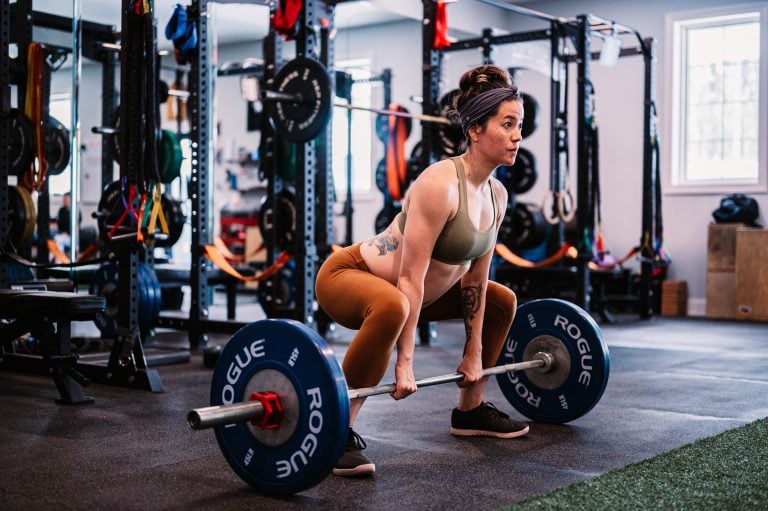 App program · 40 weeks
Prenatal Strength Training
A gym-based program that syncs to your current week of pregnancy — four strength sessions plus one pelvic stability workout a week, with demo videos for every exercise.
Learn more
App program · 40 weeks
Prenatal Strength Training
A gym-based program that syncs to your current week of pregnancy — four strength sessions plus one pelvic stability workout a week, with demo videos for every exercise.
Learn more
 On-demand video · 128 workouts
Prenatal Workout On-Demand
Follow-along workouts from week 5 to week 41, four or five a week with guided warm-ups and cool-downs — over 128 sessions coached in real time alongside the video.
Learn more
On-demand video · 128 workouts
Prenatal Workout On-Demand
Follow-along workouts from week 5 to week 41, four or five a week with guided warm-ups and cool-downs — over 128 sessions coached in real time alongside the video.
Learn more