21-Minute Birth Prep Workout to Create More Space in the Pelvis for Labor
Birth Preparation, Fitness, Prenatal
Preparing your body for birth involves more than stretching and mobility exercises. While releasing tension is important, your body also needs the strength to actively support pelvic movement during labor. That’s exactly what this 21-minute birth prep workout is designed to do.
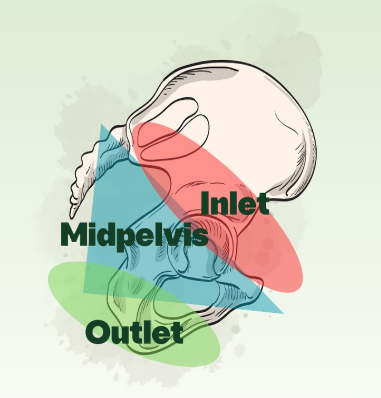
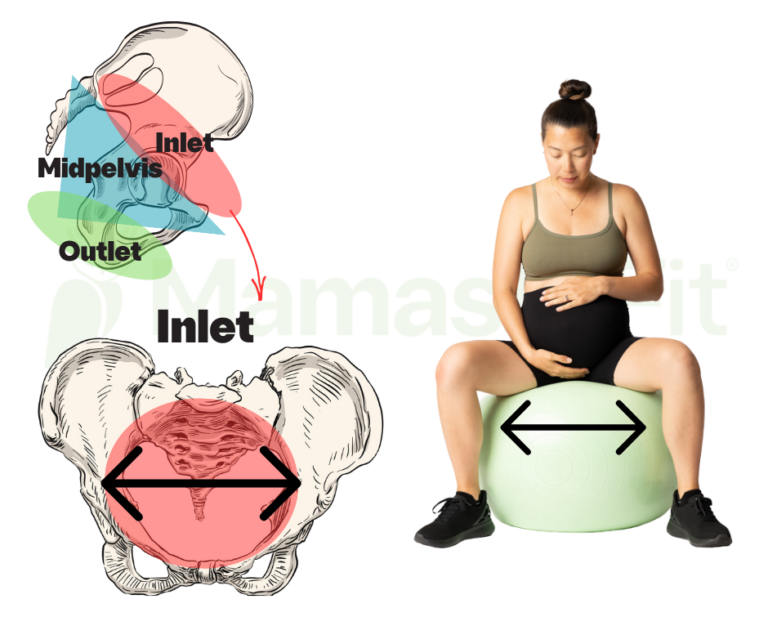
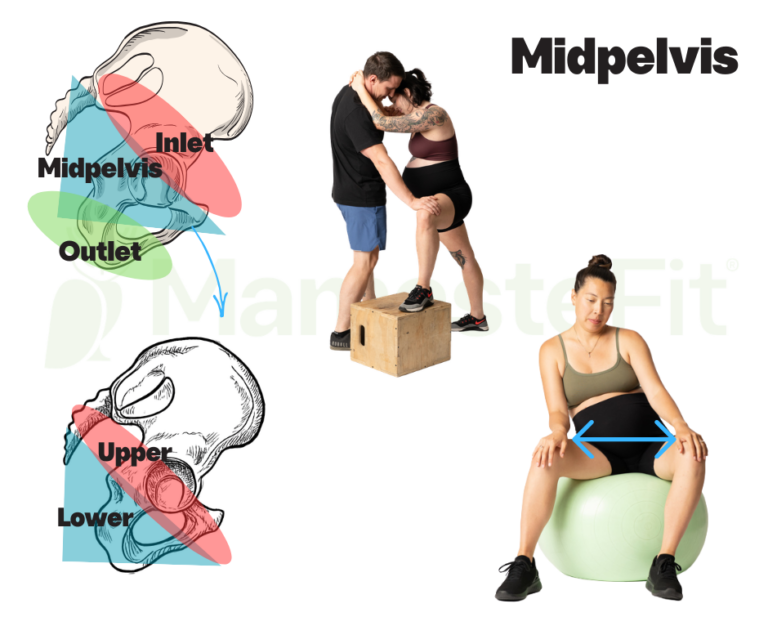
This workout combines mobility, strength training, and intentional pelvic positioning to help create space throughout all three levels of the pelvis:
The pelvic inlet (top of the pelvis)
The mid pelvis (middle of the pelvis)
The pelvic outlet (bottom of the pelvis)
By strengthening the muscles that influence pelvic mechanics, you can improve your ability to move into labor-supportive positions and potentially make it easier for baby to descend and rotate during birth.
Subscribe to our YouTube Channelfor more weekly workouts and educational videos! We publish one new workout video and 2-3 educational videos a week on our channel.
Why Pelvic Mechanics Matter During Birth
Pelvic mechanics refers to how the pelvis moves and changes shape throughout labor. Different pelvic positions can create more space in different areas of the pelvis, helping support baby’s movement through the birth canal.
Many birth prep routines focus heavily on stretching and mobility work, which is incredibly valuable for reducing tension. However, mobility alone is only part of the equation.
Your muscles create movement through contraction and pulling forces. That means your body also needs strength to actively position the pelvis during labor.
This workout combines both concepts:
Mobility to create movement options
Strength training to help your body access those positions effectively
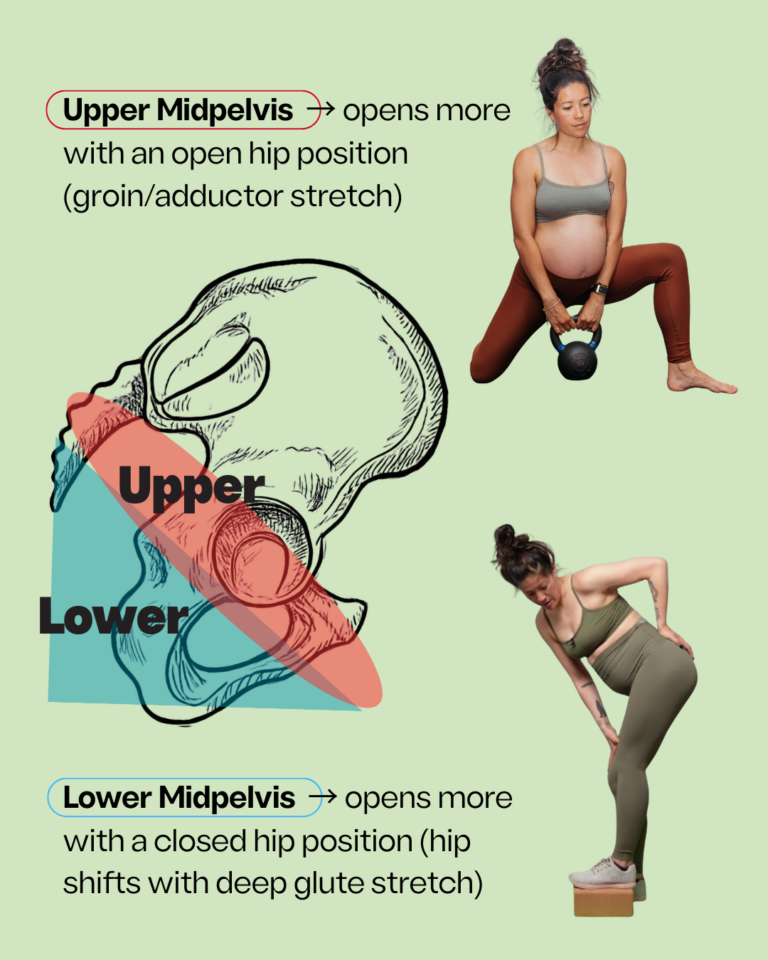
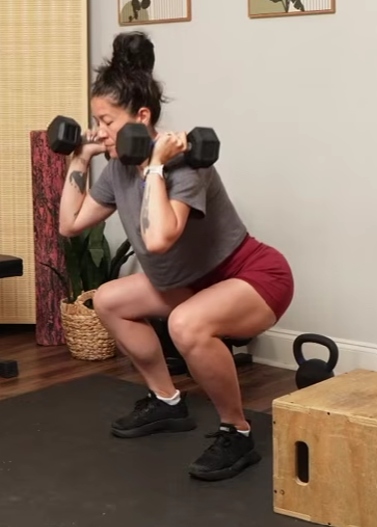
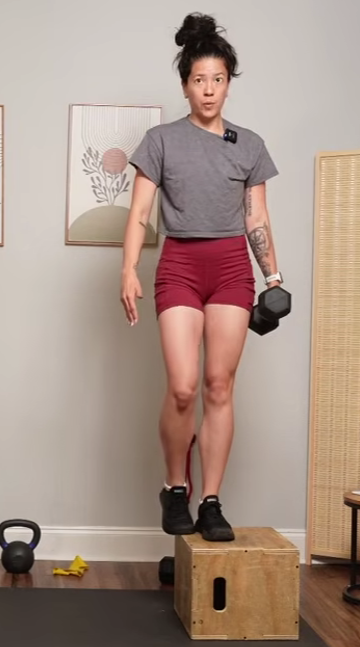
Holding the weight on the same side as the working leg creates a slight external rotation bias, which supports opening in the upper pelvis.
This variation targets:
Glutes
Quads
Single-leg pelvic stability
It also mimics many asymmetrical positions used naturally during labor.
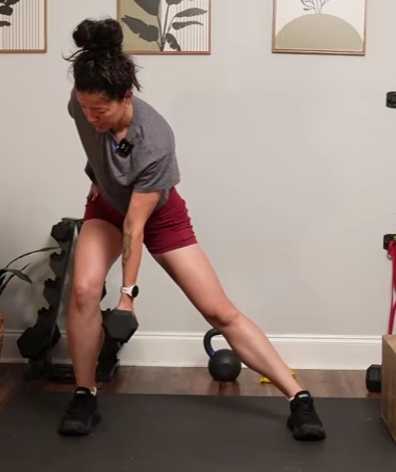
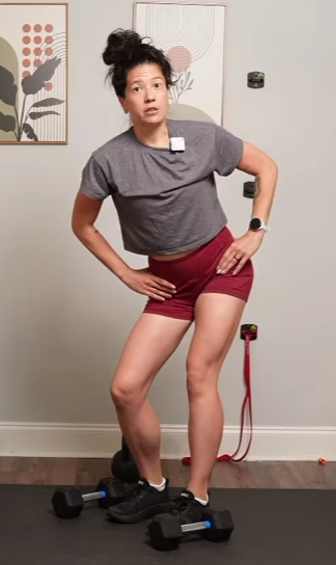
Lateral Hip Shifts
Lateral hip shifts introduce:
Pelvic rotation
Adductor lengthening
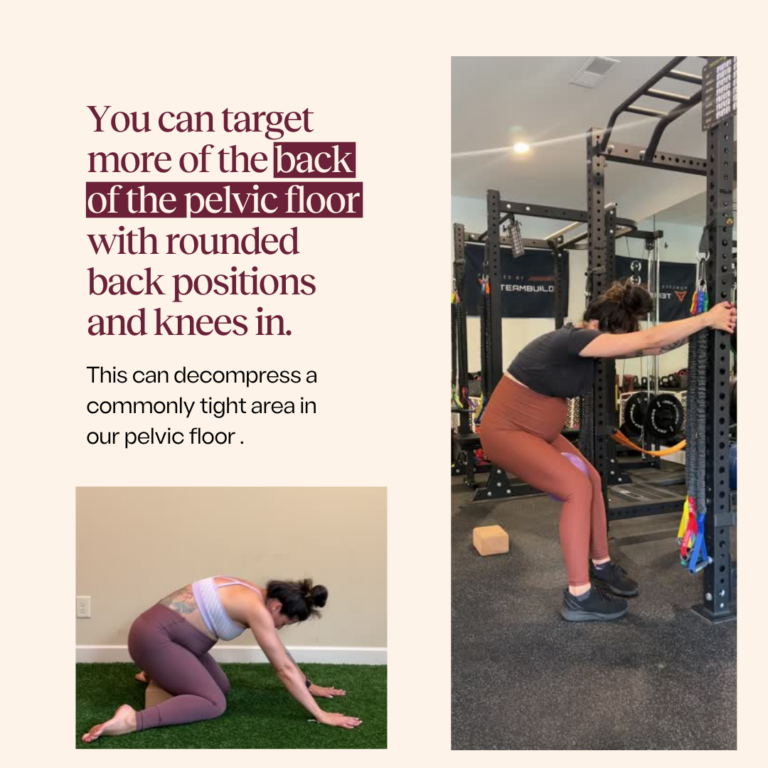
Pelvic floor mobility
These movements can help release tension through the anterior pelvic floor while also improving hip mobility.
Slow, controlled shifts are more beneficial than rushing through the movement.
Part Two: Creating Space in the Lower Pelvis
The second half of the workout transitions toward internal rotation and hinge-based exercises.
These movements target:
Hamstrings
Inner thighs
Posterior pelvic floor
Lats
Together, these muscle groups help influence pelvic outlet space.
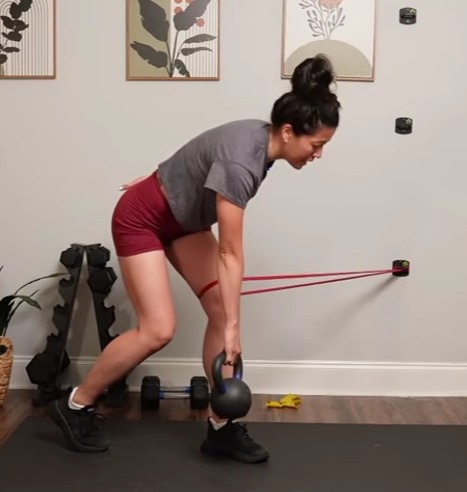
Staggered Stance RDL with Band Activation
This exercise combines:
Hamstring strengthening
Adductor engagement
Internal rotation mechanics
The resistance band placed at the inner knee encourages activation of the adductors, while the hinge pattern strengthens the posterior chain.
Why does this matter for birth?
The hamstrings and inner thighs work together to help pull the pelvis into internal rotation, which may support baby’s ability to rotate and descend through the lower pelvis.
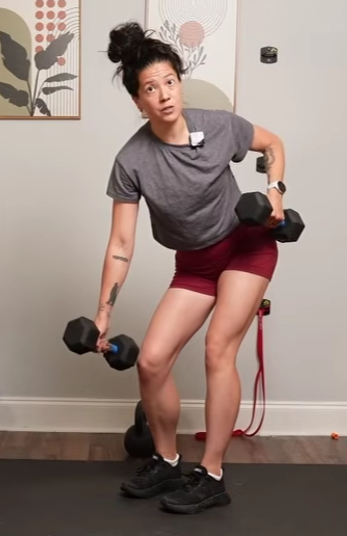
Alternating Hip Shifts
These standing hip shifts improve:
Pelvic rotation control
Weight shifting
Single-leg stability
Adding a rowing motion introduces lat activation, which may help traction the tailbone backward and create additional space in the pelvic outlet.
This movement pattern also helps coordinate the upper and lower body together — an important component of labor movement.
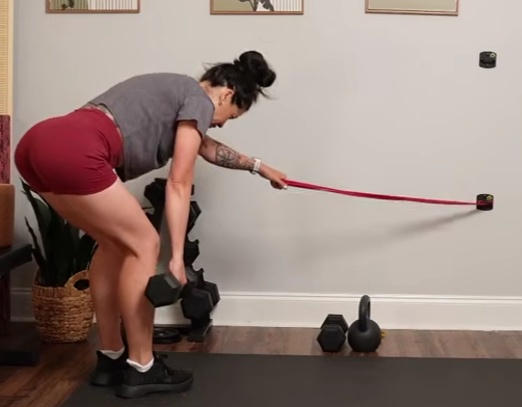
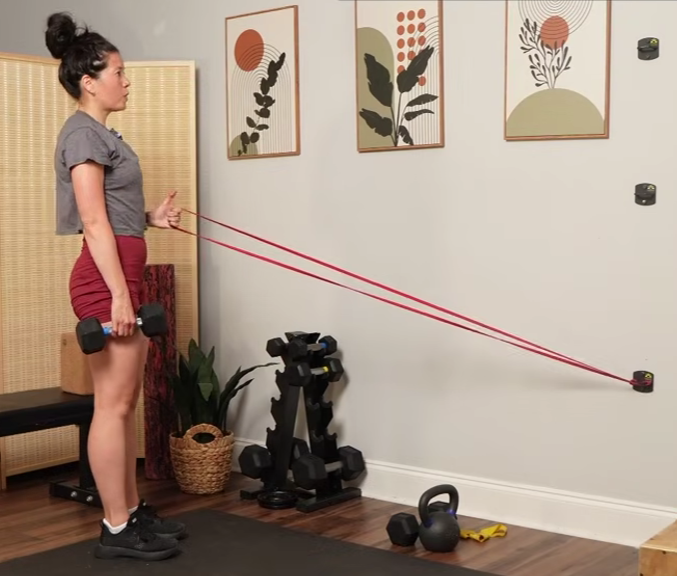
Suitcase Deadlift with Row
This final movement combines:
Hinge mechanics
Core stability
Lat engagement
Posterior oblique sling activation
The rowing component is particularly interesting in birth preparation because the lats connect into the thoracolumbar fascia and influence tailbone positioning.
This may explain why many people instinctively pull on a support, towel, or partner during pushing.
Why Strength Matters in Birth Preparation
One of the biggest misconceptions about birth prep is that it only involves stretching.
Mobility without strength can leave your body unable to actively access or maintain beneficial labor positions.
Strength training during pregnancy can help:
Improve pelvic control
Increase movement options during labor
Support pelvic floor coordination
Reduce discomfort during pregnancy
Build endurance for labor and delivery
The goal isn’t perfection or guaranteeing a specific birth outcome. Birth is unpredictable.
Instead, birth prep workouts aim to optimize the conditions that support efficient movement, comfort, and adaptability during labor.
Tips for Modifying This Workout During Pregnancy
Every pregnancy is different, and your workout should reflect your unique needs.
Consider these modifications:
Use lighter weights if needed
Reduce range of motion
Hold onto support for balance
Slow the pace
Rest longer between rounds
Omit bands if they feel uncomfortable
If you experience:
Pelvic pain
Dizziness
Contractions
Vaginal bleeding
Significant discomfort
Stop the workout and consult your healthcare provider.
Final Thoughts
Birth preparation is about creating options for your body.
This 21-minute workout helps combine mobility, strength, pelvic awareness, and movement coordination to support the natural biomechanics of labor.
By training both external and internal rotation patterns throughout the pelvis, you can help your body feel stronger, more mobile, and more prepared for the demands of birth.
Remember: no exercise routine can guarantee a specific labor experience. But intentional movement during pregnancy may help you feel more confident, comfortable, and connected to your body as you prepare for birth.
If you enjoy workouts like this, incorporating regular prenatal strength training and pelvic mobility work into your routine can be an incredible way to support both pregnancy comfort and labor preparation.
Learn the science of pregnancy and birth to take the mystery of labor away! Understand why you are feeling what you feel, and learn strategies to confidently move through pregnancy and birth!
Find comfort and relief from pelvic girdle pain throughout your pregnancy and postpartum period! This program incorporates myofascial sling focused exercises to stabilize across the pelvic girdle joints.