



Table of Contents
Pelvic floor exercises for pregnancy aren’t just about doing Kegels or squeezing the right muscles. A truly functional pelvic floor is deeply connected to how your pelvis moves, how your hips rotate, and how well you can shift weight from side to side. As your body changes through pregnancy—and later birth and postpartum—your pelvic mobility becomes even more important.
I’m Gina, a perinatal fitness trainer, birth doula, and mom of four. Inside this post, I’m breaking down three workout strategies you can use to improve pelvic balance, enhance pelvic floor function, and feel more comfortable throughout pregnancy and postpartum.
Subscribe to our YouTube Channel for more weekly workouts and educational videos! We publish one new workout video and 2-3 educational videos a week on our channel.
Understanding How the Pelvis Actually Moves
Before diving into the strategies, it’s important to understand two key concepts:
1. The pelvis is highly mobile.
Your pelvis isn’t a single fused structure. It’s made up of four joints:
The pubic symphysis in front
Two sacroiliac (SI) joints in the back
The coccyx joint at your tailbone
This mobility naturally increases during pregnancy due to hormonal changes. It peaks during birth and remains elevated through the postpartum period.

2. The pelvic floor is organized in quadrants—not one single unit.
Different pelvic and hip positions stretch, lengthen, or activate different parts of the pelvic floor. There is no single movement that strengthens or stretches your entire pelvic floor.
Most of us start with an asymmetrical pelvis.
Because many people habitually stand with more weight on the right leg:
Right pelvic half tends to sit back, internally rotated, and adducted
Left pelvic half tends to sit forward, externally rotated, and abducted
This isn’t “bad,” but if you’re experiencing pelvic floor symptoms (pain, tightness, leaking, or instability), addressing this asymmetry can make a life-changing difference.

Strategy 1: Add Rotation to Your Single-Leg Exercises
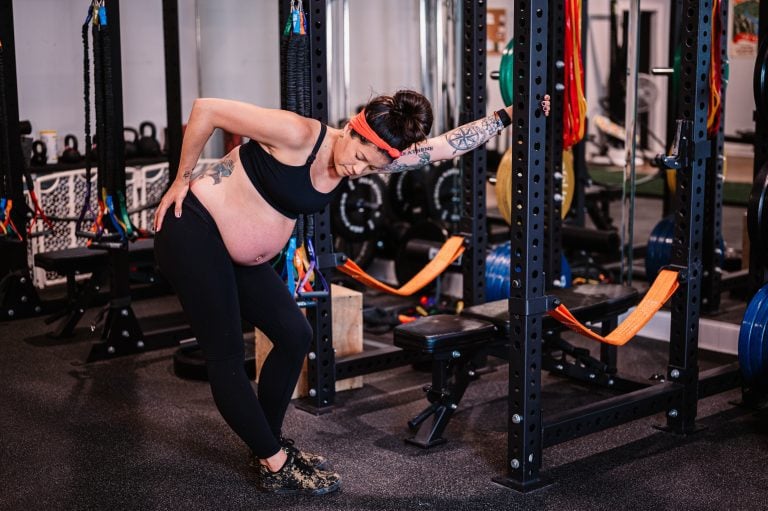
Rotational awareness is one of the most effective ways to improve pelvic mobility and restore pelvic floor balance. Both lunges and hinge-based movements like RDLs can help you access different pelvic positions.
Closed Hip Position → Internal Rotation
At the bottom of a lunge, shift into a closed hip (internal rotation):
Pelvis rotates slightly toward the front leg
You’ll feel a stretch in the glute, hamstring, and even posterior pelvic floor
Keep the big toe grounded to prevent the knee from flaring outward

Open Hip Position → External Rotation
As you stand up:
Rotate into an open hip (external rotation)
Glutes and quads fire to create space in the front of the pelvis
Repeating this cycle helps you strengthen underused pelvic floor quadrants while relaxing those that tend to be overactive.

Try it with:
Reverse lunges
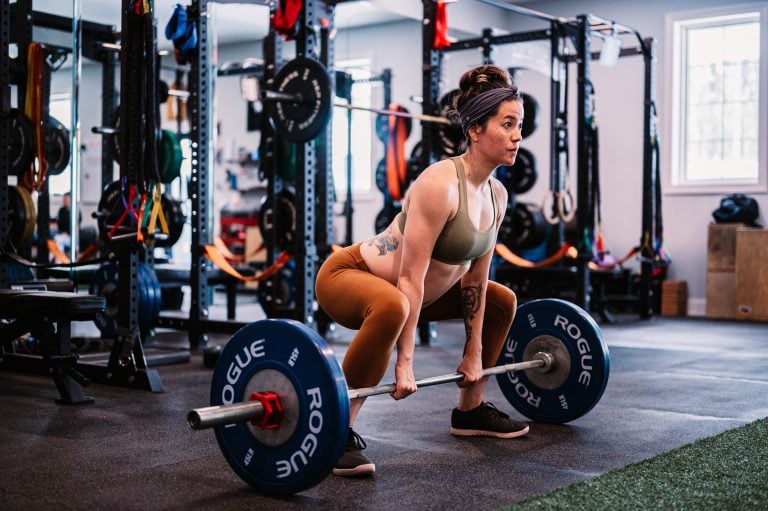
Staggered-stance RDLs
Single-leg hinges
Adding a banded row or a hand weight can deepen the rotation and increase upper-body integration.
 On-demand video · 128 workoutsPrenatal Workout On-DemandFollow-along workouts from week 5 to week 41, four or five a week with guided warm-ups and cool-downs — over 128 sessions coached in real time alongside the video.Learn more
 App program · 40 weeksPrenatal Strength TrainingA gym-based program that syncs to your current week of pregnancy — four strength sessions plus one pelvic stability workout a week, with demo videos for every exercise.Learn more
 On-demand video · 30 workoutsCore, Pelvic Floor & Pelvic StabilityThirty follow-along workouts across beginner, novice, and advanced levels, ten per level — core and pelvic floor strength for pain relief in pregnancy or postpartum.Learn more
Strategy 2: Use Unilateral Band Loading to Activate Key Hip Muscles
Bands can help you strengthen the muscles that directly influence pelvic floor balance.
For the Left Side: Prioritize Inner Thigh Activation
Because the left hip tends to sit open and externally rotated:
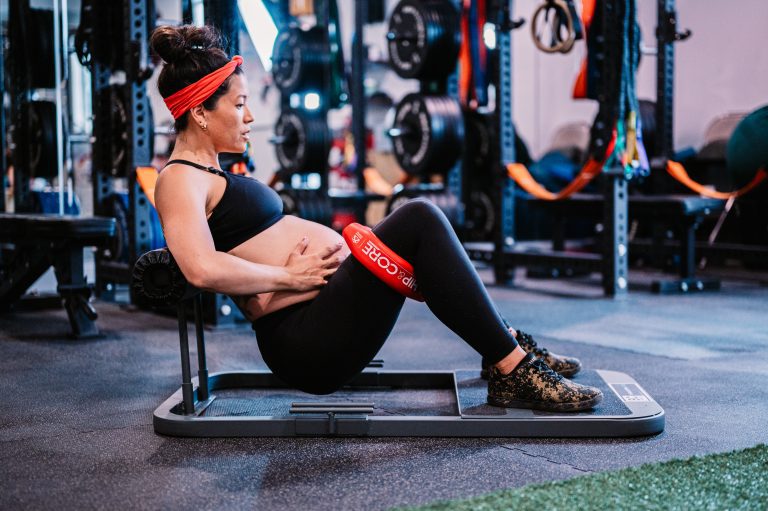
Wrap a band around the inside of the left thigh
This increases adductor (inner thigh) activation
Helps balance the pelvis by bringing the left hip into a more neutral position
Use this variation during:
Lunges
Staggered RDLs
Single-leg movements

For the Right Side: Prioritize Outer Glute Activation
The right hip tends to be more internally rotated and tucked. To encourage better alignment:
Place a band around the outside of the right knee
This increases activation of the outer glute and improves knee tracking
Again, incorporate it into your lunge and hinge variations.
This unilateral band work helps restore balance between the right and left sides of the pelvis, which can dramatically improve pelvic floor function.

Strategy 3: Hold Your Weight on One Side to Influence Hip Rotation
This is one of the most overlooked—and most effective—ways to shift hip mechanics during strength training.
Hold the weight on the right side for BOTH LEGS.
Yes, both!
Why hold weight in the right hand for the right leg?
This is ipsilateral loading, which:
Encourages external rotation
Helps you move out of the right hip’s tendency toward internal rotation
Is especially helpful if you experience hip impingement or tightness in the right groin
Use this in:
Lunges
Squats
Staggered or single-leg RDLs

Why hold weight in the right hand for the left leg?
This becomes contralateral loading, which:
Encourages internal rotation
Helps the left hip come out of its typical externally rotated pattern
This contrast becomes especially visible in single-leg deadlifts, where each side’s rotation needs are more obvious.

How These Strategies Improve Pelvic Floor Function During Pregnancy
Each of these techniques helps you:
Move out of habitual asymmetries
Access underused pelvic floor quadrants
Relax tension in overactive areas
Improve hip mobility and stability
Enhance comfort during pregnancy and postpartum
Prepare your pelvis for the functional movement of birth
When you build awareness of your hip and pelvic alignment during exercise, your entire pelvic floor benefits.
 Bundle · lifetime accessMamasteFit BundlesCombine courses and programs for lifetime access and save up to 15% — grouped for birth preparation, the third trimester, or the whole pre and postnatal journey.Learn more
 Video course · 7 modulesPrepare Your Pelvic Floor For BirthSeven modules on releasing the pelvic floor rather than only strengthening it — breathing drills, thoracic and pelvic mobility, and how to relax it during labor.Learn moreOn-demand video · 24 workoutsBirth Prep Workout ProgramTwenty-four workouts that open the pelvis for each stage of labor — strength, mobility, and positioning you can start at any fitness level, 15 to 30 minutes each.Learn more
Prefer Workouts That Already Integrate These Concepts?
All of these strategies are already built into the MamasteFit prenatal, postpartum, and beyond-postpartum programs.
We offer:
Prenatal Strength Program
Self-paced, gym-style workouts synced to your pregnancy week.
Prenatal On-Demand Video Program
Full-length follow-along workout videos you can stream anytime.
Postpartum Recovery & Strength
Combined follow-along and self-paced options to help you rebuild strength, mobility, and pelvic function safely.
Beyond Postpartum Programs
Continue getting strong through every stage of motherhood.
Use code YOUTUBE10 for 10% off any online program at MamasteFit.com.