Birth Prep Exercises: Create Space in Every Pelvic Level
Birth Preparation, Fitness, Prenatal
If you’re preparing your body for birth, one of the most powerful things you can focus on is creating space within the pelvis while maintaining strength and support. In this 30-minute birth prep workout I’ll walk you through a strategic combination of birth prep exercises—mobility and strength moves—designed to:
Open the top, middle, and bottom of the pelvis
Improve rib cage mobility in all three planes
Release tension in the pelvic floor
Support baby’s engagement and rotation
Help you feel more comfortable during pregnancy
This isn’t just about stretching. It’s about intentional movement that prepares your body for the biomechanics of birth.
Subscribe to our YouTube Channelfor more weekly workouts and educational videos! We publish one new workout video and 2-3 educational videos a week on our channel.
Why Creating Space in the Pelvis Matters
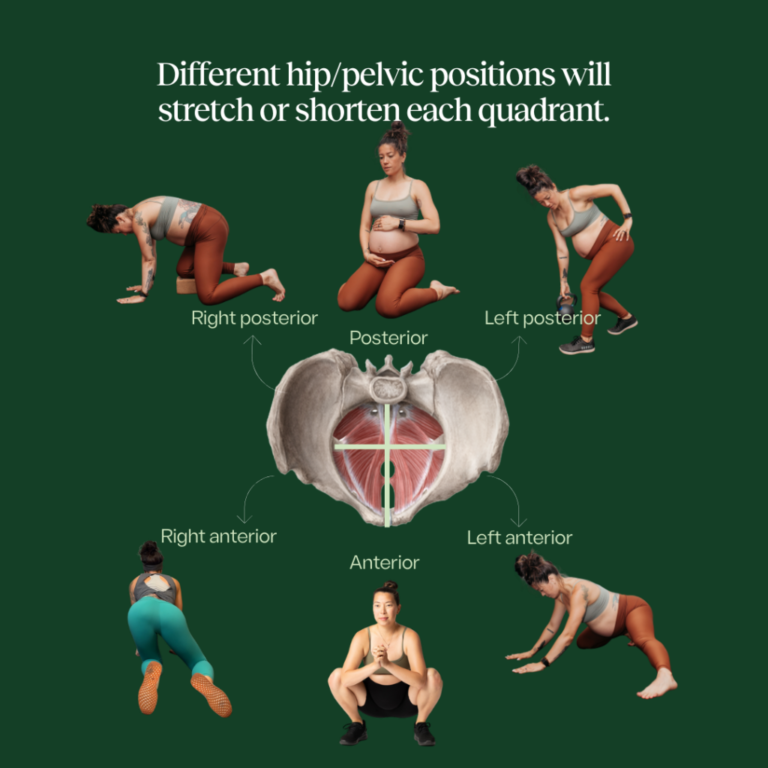
Your pelvis isn’t one static structure. It has multiple “levels” that baby must navigate during labor:
Pelvic Inlet (Top of the Pelvis) – Where baby engages
Upper & Lower Mid Pelvis – Where baby rotates
Pelvic Outlet (Bottom of the Pelvis) – Where baby emerges
Each level requires different hip positions, muscle engagement, and rib cage mobility. Pregnancy naturally shifts posture, often increasing spinal extension and tightening certain muscles (like the lats), which can limit space where it’s needed most.
The goal? ✔ Open when we need openness ✔ Strengthen the muscles that create that space ✔ Improve rib cage mobility to support pelvic positioning
Level 1: Opening the Top of the Pelvis (Pelvic Inlet)
What We’re Targeting:
External hip rotation (knees out)
Hip abduction (legs wider)
Front-to-back rib cage mobility
Quad and glute strength
Mobility: Deep Squat Therapy
Using a yoga block for support, begin in a relaxed deep squat. Elbows press gently into knees to create outward pressure.
This position:
Encourages external rotation
Opens the pelvis side-to-side
Helps baby engage
If ankle mobility feels restricted, elevate your heels with a mat or wedge.
Strength: Loaded Squats
Holding one or two dumbbells:
Inhale to lower
Exhale to stand
Maintain even weight through big toe and pinky toe
Squats strengthen the quads and glutes—the muscles that help pull the pelvis into a more open inlet position.
Many pregnant bodies default to extension (arching). This can make it harder for baby to settle into the pelvis.
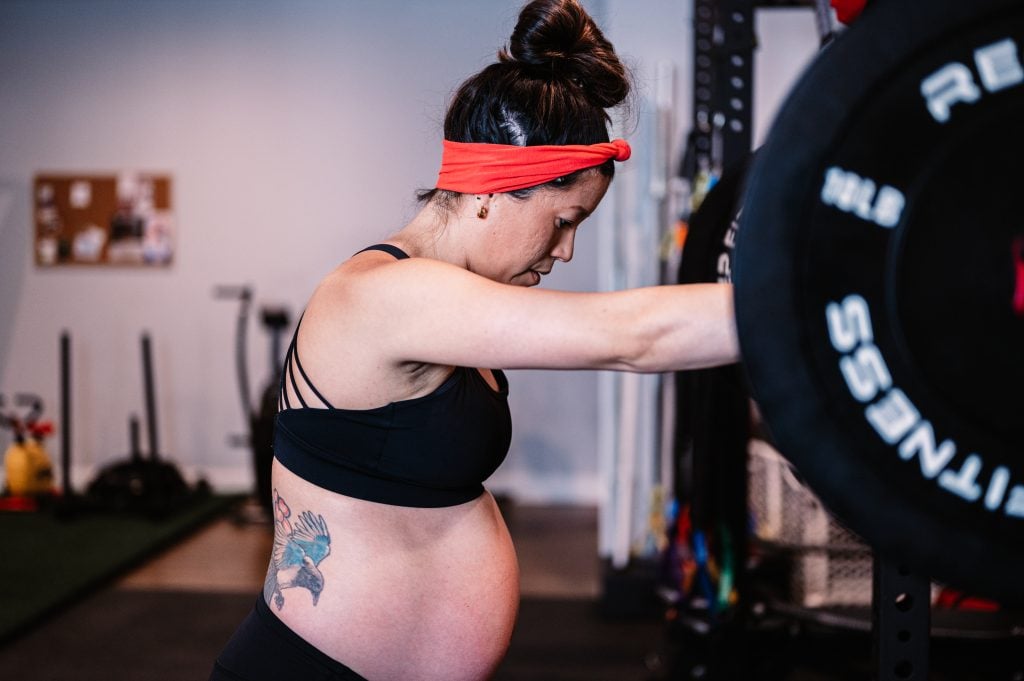
Lat Release
Using a wall or doorframe:
Hinge back
Press into the wall
Square chest to floor
Releasing tight lats makes it easier to find a rounded spinal position—key for creating space in the back of the inlet.
Core March (Pregnancy-Safe Core Work)
Holding weights in front:
March slowly
Maintain upright posture
Avoid leaning back
Strong, adaptable abdominal muscles support pelvic positioning without excessive strain.
Level 2: Upper Mid Pelvis (Baby Begins Rotation)
Now we shift to one-sided, externally rotated positions.
Mobility: Lateral Hip Shifts
Shift into one hip
Bring opposite hip toward knee (belly to thigh)
Feel stretch in groin and inner thigh
These movements create space in one side of the pelvis—important as baby rotates.
Add thoracic rotation for deeper impact. Remember: Your rib cage and pelvis are connected through the spine. Restriction in one affects the other.
Strength: B-Stance Squats (Ipsilateral Load)
Hold weight on the same side as the front leg.
This:
Biases external rotation
Targets glutes and quads
Strengthens muscles that open the upper pelvis
Then add banded open-chain hip rotation (mini band above knees) to strengthen hip rotation when the femur moves on a stable pelvis.
Both pelvic rotation and hip rotation matter.
Hip Rotation Drill
Now we layer in something slightly different.
Place a mini band above your knees:
Shift weight into your right foot.
Exhale to move your left knee out.
Inhale to return with control. Switch sides.
This movement is hip rotation, not pelvic rotation.
Earlier movements like:
Lateral hip shifts
B-stance squats
Were pelvic rotation exercises (pelvis moving over a stable femur).
Now:
The pelvis stays anchored
The femur moves in the socket
Both are essential!
Why This Matters for Birth
When baby rotates, your body needs:
Strong external rotators
Single-leg stability
Controlled asymmetry
This open-chain band work strengthens the hip differently than planted exercises. It mimics the asymmetrical stability demands of upright labor positions.
It also prevents over-reliance on external rotation dominance — something many pregnant bodies default into.
Training both pelvic rotation and hip rotation improves coordination, space, and comfort.
This strengthens adductors and supports internal rotation—often undertrained during pregnancy.
During pregnancy, the inner thighs can become lengthened because we tend to favor more of an open position or externally rotated position.
Rib Cage Mobility: The Missing Link
Your rib cage needs to move:
Front to Back (flexion/extension)
Rotation
Side-to-Side (Lateral Expansion)
In 90/90 hip positions, add side-body reaches to improve lateral rib mobility.
Many people notice one side feels tighter. That asymmetry is common—and worth addressing.
Final Focus: Pelvic Outlet (Bottom of the Pelvis)
For the pelvic outlet, we emphasize:
Bilateral Internal Rotation + Hinges
Block between thighs:
Deadlifts (RDLs)
Knees stacked
Hips hinge back
Think: flashlight on your tailbone shining behind you.
Hinges:
Strengthen posterior chain
Create outlet space
Prepare you for pushing mechanics
Finishing Movement: Hero Pose Sit-Backs
In a kneeling internal rotation position:
Exhale, pull belly toward spine
Gently tuck pelvis
Sit back as tolerated
Focus on abdominal engagement—not glute clenching—to create a rounded spinal position.
The 7 Essential Birth Prep Exercises
To truly prepare your pelvis for birth, your routine should include:
✔ Both legs externally rotated (open hips) ✔ Both legs internally rotated (closed hips) ✔ One leg open ✔ One leg closed ✔ Rib cage front-to-back movement ✔ Rib cage rotation ✔ Rib cage side-to-side mobility
When all seven are incorporated, you:
Create space in every level of the pelvis
Release pelvic floor tension
Support baby’s rotation
Reduce discomfort during pregnancy
And remember: Pain is not a requirement of pregnancy.
Learn the science of pregnancy and birth to take the mystery of labor away! Understand why you are feeling what you feel, and learn strategies to confidently move through pregnancy and birth!
Find comfort and relief from pelvic girdle pain throughout your pregnancy and postpartum period! This program incorporates myofascial sling focused exercises to stabilize across the pelvic girdle joints.
You don't need to wait until your third trimester to begin. As we explain in how to open your pelvis for birth, movement doesn't put you into labor, so birth prep exercises won't induce it—which means you can start them much earlier in pregnancy. Rather than treating birth preparation as something that only matters at the very end, think of it as strength and mobility you can build throughout your pregnancy. Starting sooner simply gives your body more time to create space and rehearse the movement patterns labor will ask of it.
What exercises are good for labor prep?
The most effective birth prep exercises blend mobility and strength to create space at every level of your pelvis. This workout walks through deep squats and loaded squats to open the top of the pelvis (the inlet), lateral hip shifts and B-stance squats to support baby's rotation through the mid-pelvis, and internal-rotation work like staggered-stance RDLs and side-lying lifts to open the outlet for pushing. Layer in rib cage mobility—lat releases and side-body reaches—so your ribs and pelvis can move together. Aim to cover all seven essentials: both legs open, both legs closed, one leg open, one leg closed, and rib cage movement front-to-back, rotational, and side-to-side.
Do birth prep exercises work?
Birth prep exercises aren't a guarantee of any particular birth outcome, but they can make a meaningful difference in how prepared and comfortable your body feels. The goal isn't just stretching—it's intentional movement that creates space in the pelvis, builds the strength to control that space, and improves rib cage mobility so baby has room to engage, rotate, and descend. Many people also find this work eases common pregnancy discomforts along the way. Check in with your provider about what's right for your body, and remember: pain is not a requirement of pregnancy.