



There is a big emphasis on forcing baby into the perfect position during pregnancy. We get asked frequently:
- What exercises can I do to get my baby to engage?
- What exercises can I do to get my baby to be in the perfect position?
It’s important to understand that there really aren’t movements that are going to force your baby into a specific position.
Rather, movement can encourage baby to shift their position, or more importantly, release the tension, or obstacles, in your baby’s path to their “perfect” position.
Let’s explore four movements you can do to help clear your baby’s path, so they can more easily find their perfect position!
4 Exercises to Include in Your Prenatal Workout to Support Your Baby's Position
When focusing on supporting your baby’s position, instead of trying to force them into a specific position, we can focus on helping to clear their path to their optimal positions.
The things that may impede your baby’s path that we want to focus on releasing tension in could include:
- The Uterine Ligaments
- Surrounding musculature
- The pelvis
- The pelvis floor
If there are restrictions or tension in baby’s path, it could make it more difficult for them to rotate to their optimal position.
For example, if the round ligaments that run vertically are tight, it could act as a vertical speed bump as baby tries to rotate horizontally.
If the broad ligament is tight, it could act as a horizontal speed bump as baby tries to descend into the pelvis.
Key areas that we want to focus on when releasing tension to support baby’s position include:
- The broad ligament
- The round ligaments
- The uterosacral ligaments
- The posterior pelvic floor
Watch the video below for the uterine release circuit that we incorporate into our prenatal fitness programs in the third trimester!
1) The Round and Uterosacral Ligaments: Release the Vertical Ligaments for Easier Rotation
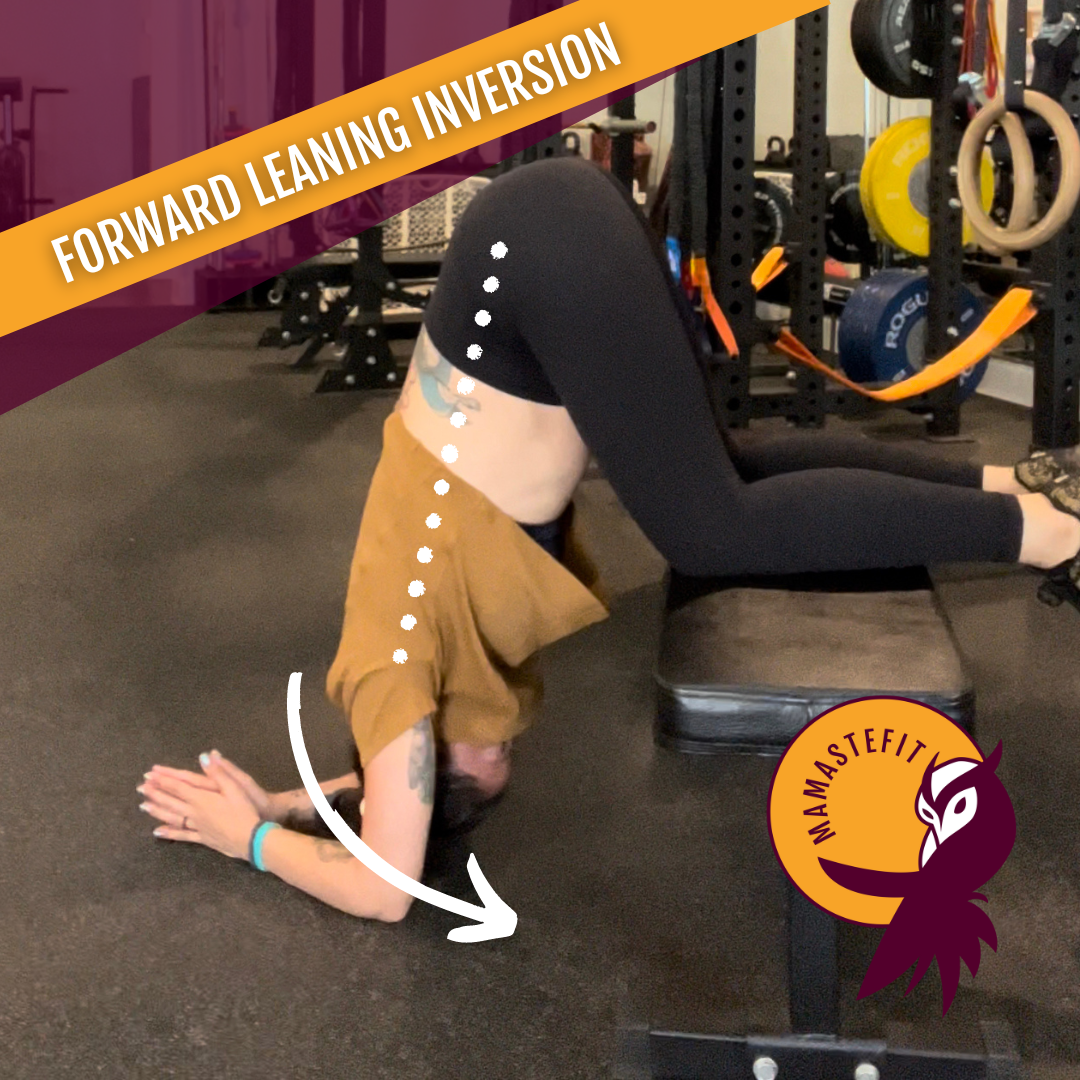
The first movement is the forward-leaning inversion to release the vertical running ligaments: the round ligaments on the front of the uterus, and the uterosacral ligaments on the bottom of the uterus.
The inversion can vary in setup based on your comfort and should strength, with the forward-leaning inversion being the most difficult (and one you will have the most release) and the puppy pose being the easiest.
Starting on your elevated surface, drop the forearms to the floor. Tuck the chin, and take three DEEP breaths here. You should be in the inversion for about 20-30 seconds.
When in the inversion, you should feel that the sacral area and lower belly are stretching! This is where those ligaments are attached from the pelvis to the uterus!


If you have high blood pressure issues or lots of heartburn, inversions may be contraindicated or not comfortable at all!
2) The Broad Ligament: Release the Horizontal Ligament for Easier Descent into the Pelvis
The broad ligament runs horizontally across the front of the uterus. If this ligament is tight or has tension, baby’s movements may be painful. Releasing this ligament will make it easier for baby to move DOWN into the pelvis!
There are a number of ways to release this ligament, but we find that the easiest way to do it without a partner is with pelvic tilts.
Starting in an all-fours position, begin to drop the belly to the floor to feel the core stretch, then exhale to lift the belly up to the spine as you round in the back. Do about 10-20 pelvic tilts, syncing the movement with your breath!
3) The Posterior Pelvic Floor: Release the tension to support baby's final rotation in the pelvis!
After releasing the uterine ligaments, we want to focus on the pelvic floor that your baby has to navigate through during labor! The posterior half of the pelvic floor tends to have more tension, particularly the left posterior quadrant. The next two exercises are focusing on shifting the pelvic position to target the posterior quadrant on the right and left side.
Starting in an all-fours position, place a yoga block under one knee. Then shift your weight towards the elevated knee. This will shift that hip into internal rotation (closed hip position) and will stretch the posterior pelvic floor of that hip.
Take a deep inhale to feel the pelvic floor stretch, then exhale to release. You have the options to add in some pelvic tilts to emphasize the release in the posterior half! Watch the video below for a breakdown!
4) Posterior Pelvic Floor Release Exercise #2
The next posterior pelvic floor exercise is the standing breathing drill and standing hip shift. This breathing drill focuses on releasing the posterior half of the pelvic floor and then each quadrant of the pelvic floor.
If you want to learn more about pelvic floor asymmetry, and how we can shift our pelvic position to release the tension on the pelvic floor, check out our labor biomechanics course!
We break down exercises to do to release the posterior pelvic floor, and how doing so supports your baby’s final rotation during labor!
This course includes our 90-minute labor biomechanics webinar recording plus our 24-page labor biomechanics quick reference guide.
- 90-min webinar
- 24-Page E-Book
- Upcoming Live Webinar & Q&A
- Watch on Mobile Device
The supported standing hip shift allows us to target the posterior pelvic floor! Grab onto a sturdy structure, and hinge at the hips (think belly to the floor) to feel the hips push to the wall behind you.
You have the option to stand on a yoga block to elevate the hip, but this is optional.
Hold on with the opposite arm as the focus leg, then shift back as you shift your weight into the focus leg. This leg will straighten, and you will feel more a stretch in the hamstring and glute.
Rotate belly towards the straight leg, to feel the posterior pelvic floor stretch more so on that side.
Take 10-20 breaths here to feel that posterior pelvic floor stretch and release. Then shift sides. Watch the video below for a breakdown!
Release tension to make baby's rotation and descent EASIER!
Instead of trying to force baby into a position, we can focus rather on releasing the tension in your baby’s path. Some babies need strong contractions to rotate and engage into the pelvis, and others will do it easily during pregnancy. Neither is necessarily better nor means your labor will be easier/harder.
But, if we can clear baby’s path, it will remove the obstacles in their journey to find their optimal position to support an easier birth!