5 Pelvic Internal Rotation Exercises for Pelvic Floor Strength
Fitness, Pelvic Floor, Postpartum, Pregnancy
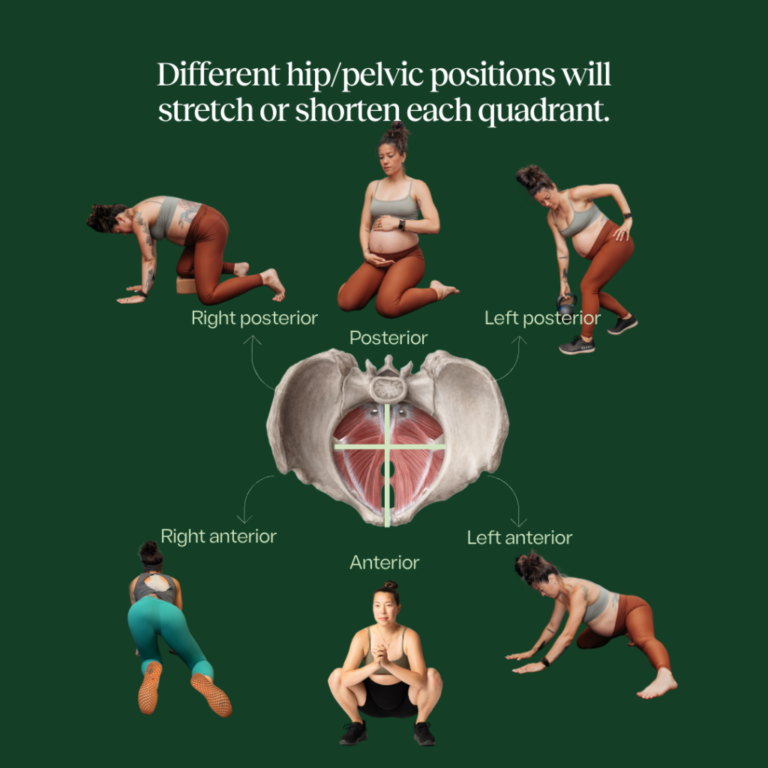
When people hear “internal rotation,” they often think about traditional hip mobility drills—like 90/90 stretches, clamshells, or mini-band exercises. While these movements absolutely have value, there’s an important distinction that often gets overlooked when it comes to pelvic health, pelvic floor function, and birth preparation: hip internal rotation is not the same thing as pelvic internal rotation.
Understanding the difference between these two movement patterns can completely change how you approach mobility work during pregnancy, postpartum recovery, and beyond.
If you’ve been dealing with hip discomfort, lower back pain, pelvic floor tension, tailbone discomfort, or simply want to improve your body’s mobility for labor and delivery, learning how to train pelvic internal rotation can be a game changer.
Let’s break down what it is, why it matters, and the top exercises you can start incorporating today.
Subscribe to our YouTube Channelfor more weekly workouts and educational videos! We publish one new workout video and 2-3 educational videos a week on our channel.
Hip Internal Rotation vs. Pelvic Internal Rotation: What’s the Difference?
Hip Internal Rotation
Hip internal rotation refers to how the femur (thigh bone) rotates within the hip socket.
This is typically trained in open-chain positions, meaning the foot is not anchored to the floor. Common examples include:
90/90 hip switches
Clamshell variations
Mini-band rotations
Supine hip mobility drills
These exercises focus on how the leg moves relative to the pelvis.
Hip internal rotation is incredibly beneficial for:
Improving hip joint mobility
Supporting gait mechanics
Reducing compensatory movement patterns
Enhancing overall athletic performance
But while helpful, it doesn’t fully address the movement demands of pelvic floor function or labor preparation.
Pelvic internal rotation flips the movement relationship.
Instead of the femur moving within the socket, the pelvis rotates over a fixed femur.
This usually occurs in closed-chain positions, where the foot is planted and the leg acts as the anchor point.
Why does this matter?
Because pelvic internal rotation directly influences:
Pelvic floor mobility
Pelvic outlet dimensions
Glute lengthening
SI joint function
Labor positioning mechanics
This movement helps create more space in the lower pelvis and can improve your ability to adapt to movement demands during pregnancy, birth, and daily life.
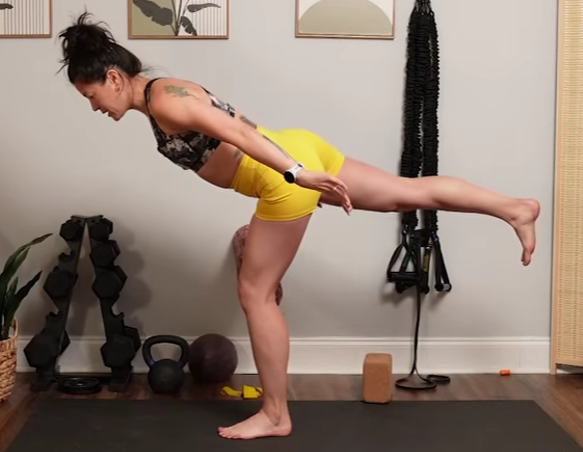
Hip airplanes are one of the best full-body mobility exercises for improving pelvic rotation control.
Option 1: Use a foam roller
Anchor your leg with the foam roller for stability.
Option 2: Use a wall
Place your hands against a wall for additional support.
How to perform:
Hinge forward into a single-leg position
Open the pelvis toward one side
Rotate closed
Alternate between internal and external rotation
You’ll likely notice:
Open position: groin stretch Closed position: glute stretch
Why they’re powerful
Hip airplanes:
Improve SI joint mobility
Build rotational control
Enhance pelvic adaptability
Reduce compensatory lumbar movement
They’re especially beneficial for those experiencing pelvic asymmetry or unilateral discomfort.
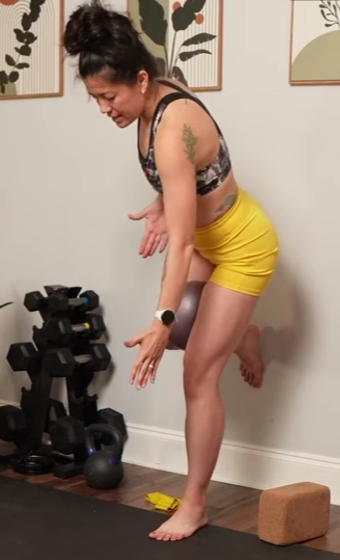
4. Staggered Stance Rotational RDL
This drill combines pelvic rotation with strength and control.
Setup:
One foot planted
Opposite foot lightly supported behind you against a wall
Place a small ball or foam roller between the thighs
Movement:
Shift the pelvis forward into internal rotation, then back into external rotation.
Think:
Forward shift: hip toward opposite knee
Backward shift: femur gliding back into the socket
This creates a controlled oscillation between rotational positions.
Why it works:
This drill strengthens the ability to move through pelvic rotation under load—critical for:
Functional movement
Single-leg stability
Birth preparation
Postpartum return to exercise
Add a Mini Band Variation
Placing a mini band around the thighs increases glute activation.
This can be especially helpful if:
One side feels “stuck”
You struggle to feel glute engagement
You need more external rotational feedback
Some people respond better to:
Inner thigh activation
Outer glute activation
Experiment to discover what your body needs.
5. Integrate Pelvic Internal Rotation Into Strength Training
This is where mobility becomes functional.
You can incorporate pelvic internal rotation into nearly every single-leg exercise.
Examples include:
Lunges
As you lower, guide the hip toward the opposite knee.
Single-Leg RDLs
Allow the pelvis to internally rotate at the bottom position.
Step-Ups
Use the standing leg as the anchor while shifting the pelvis.
Add Resistance for Feedback
You can increase awareness by using:
Inner thigh activation
Foam roller
Pilates ball
Outer glute activation
Mini band around thighs
These tools help reinforce pelvic positioning while strengthening the surrounding musculature.
How This Supports Birth Preparation
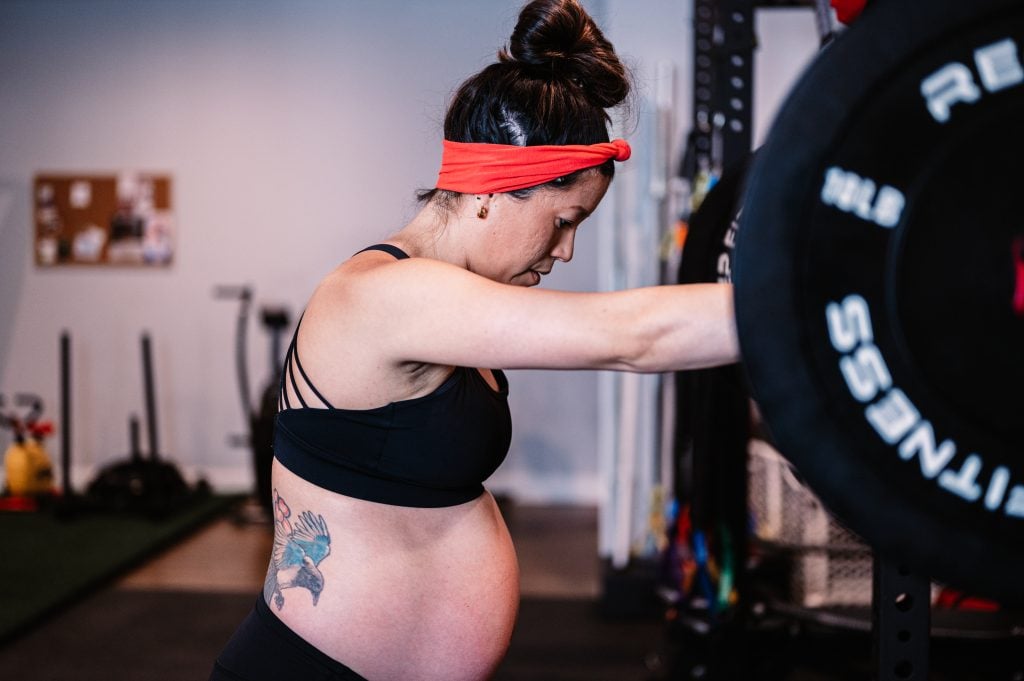
Pelvic internal rotation plays a direct role in labor biomechanics.
During birth, the pelvis needs to adapt dynamically.
Internal rotation can help:
Increase space in the pelvic outlet
Improve pelvic mobility
Support fetal descent
Reduce unnecessary tension patterns
Training these movement options during pregnancy gives your body more strategies to access during labor.
It’s not about forcing specific positions—it’s about improving adaptability.
Don’t Skip Traditional Hip Internal Rotation
To be clear: hip internal rotation still matters.
Exercises like:
90/90 transitions
Band rotations
Clamshells
Supine hip mobility drills
are still valuable.
The goal isn’t to replace them.
It’s to layer pelvic internal rotation on top of traditional hip mobility work for a more complete movement practice.
Final Thoughts
If you’ve been working on hip mobility but still feel limited, uncomfortable, or disconnected from your pelvic floor, pelvic internal rotation may be the missing piece.
By learning how your pelvis moves over a stable femur, you can improve:
Pelvic floor function
Hip mobility
Glute strength
SI joint comfort
Birth preparation
Long-term movement resilience
Start with the foam roller drills, explore what feels best on each side, and gradually integrate these patterns into your strength training.
Mobility isn’t just about stretching.
It’s about giving your body more movement options so it can adapt, perform, and feel better for years to come.
Learn the science of pregnancy and birth to take the mystery of labor away! Understand why you are feeling what you feel, and learn strategies to confidently move through pregnancy and birth!
Find comfort and relief from pelvic girdle pain throughout your pregnancy and postpartum period! This program incorporates myofascial sling focused exercises to stabilize across the pelvic girdle joints.