When most people think about pelvic floor exercises, two movements usually come to mind: Kegels and deep squats. While those exercises can be helpful, they only address a small part of what your pelvic floor actually needs.
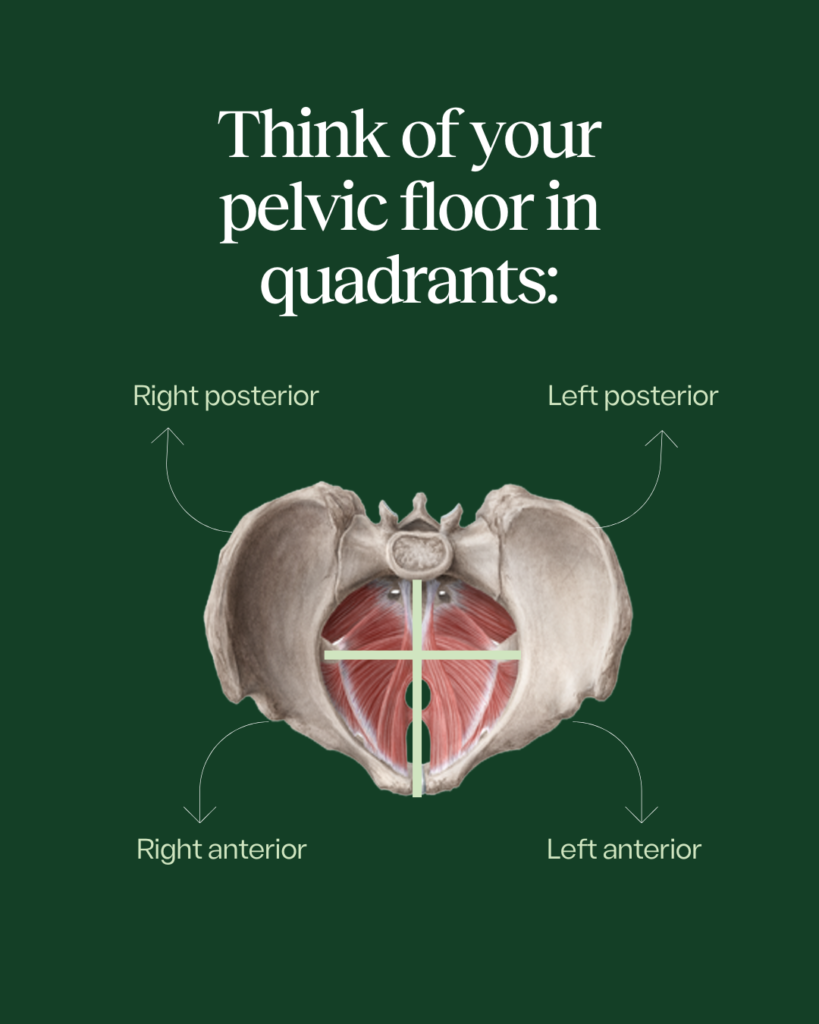
Your pelvic floor is not a single muscle—it’s a dynamic group of muscles that respond to movement, hip position, and pelvic orientation. That means effective pelvic floor training requires more than simply squeezing or stretching in one position.
In this workout, we take a non-traditional approach to pelvic floor training by incorporating mobility, targeted stretching, and strengthening exercises that address all quadrants of the pelvic floor. This method helps improve pelvic balance, support pelvic health, and build functional strength that carries into everyday movement.
Subscribe to our YouTube Channelfor more weekly workouts and educational videos! We publish one new workout video and 2-3 educational videos a week on our channel.
Why Pelvic Floor Training Should Go Beyond Kegels
The pelvic floor attaches to the pelvis, which means changes in pelvic position alter tension within the pelvic floor muscles. Because of this relationship, there is no single movement that can stretch or strengthen the entire pelvic floor.
Think of it like training your legs. One exercise alone cannot effectively train your quadriceps, hamstrings, glutes, and calves. Instead, you need a variety of movements that challenge the muscles from different angles.
The same concept applies to the pelvic floor.
To build a balanced and functional pelvic floor, we need exercises that:
Target both the front and back quadrants
Incorporate different hip positions
Include both mobility and strengthening
Use single-sided movements to address side-to-side differences
This approach can help improve symptoms like:
Bladder urgency
Hip impingement
Tailbone discomfort
SI joint pain
Lower back tension
Part 1: Releasing the Front Quadrants of the Pelvic Floor
The first section of this workout focuses on the anterior (front) quadrants of the pelvic floor.
These areas are often influenced by open hip positions and external rotation, so our mobility work places the hips in positions that gently stretch the inner thigh and groin.
Lateral Hip Shift
This movement introduces pelvic rotation and lengthens the front quadrant of the pelvic floor.
Start with your feet slightly wider than hip distance and shift your weight toward one leg. As you shift, imagine bringing your opposite hip toward the knee of the weighted leg. This rotation helps target the groin and inner thigh.
To deepen the stretch:
Slightly arch the back
Externally rotate the opposite leg
Lower to the forearm for additional rotation
You may notice one side feels tighter than the other. That’s completely normal and often reflects differences in pelvic floor activity between sides.
Interestingly, many people experience more overactivity on the right front quadrant, though this varies from person to person.
Adductor Rockbacks
Next, we move into adductor rockbacks, which stretch the inner thigh in a slightly different way.
Unlike the previous exercise where the knee was bent, this variation keeps the leg straight while shifting the hips backward toward the heels. This position lengthens the inner thigh muscles and changes the stretch distribution along the pelvic floor.
Adding gentle forward-backward movement helps the body explore the range rather than forcing a static stretch.
Standing Lateral Hip Shifts
Once the mobility work is established on the floor, we bring the same concept into a standing position.
Standing variations help integrate the movement into more functional positions used in daily life.
From a wide stance:
Sit back into one hip.
Keep weight in both big toes.
Rotate the pelvis by bringing the opposite hip toward the bent knee.
You should feel a stretch through the inner thigh and groin of the extended leg.
Adding a light weight can enhance the rotational component and deepen the stretch.
After mobility work, the next step is strengthening the anterior pelvic floor.
The front quadrants respond well to exercises that involve:
Open hip positions
External rotation
Quadriceps and glute engagement
All-Fours Knee Lift
Placing one knee on a yoga block allows the pelvis to move between open and closed hip positions.
As you lift the opposite hip, the pelvis rotates and the hip opens. Lowering the leg returns the pelvis to a closed position. If you want to add more, you can open the hip up at the top, then return to starting position.
This controlled movement strengthens the hip and pelvic stabilizers while reinforcing the pelvic floor’s role during hip motion.
Standing Hip Lift with Rotation
The standing variation adds balance and further pelvic rotation.
Standing on one leg, the opposite knee lifts and opens outward before returning to the starting position. This exercise challenges the glutes and encourages coordinated pelvic rotation. Feel free to add a weight to the moving leg.
Slow and controlled movement is key to feeling the muscles engage properly.
B-Stance Squats
To finish strengthening the front pelvic floor, we incorporate staggered stance squats.
Holding the weight on the same side as the front leg encourages external rotation and greater glute activation.
These squats emphasize:
Quadriceps
Glutes
Pelvic stability
At the top of each rep, adding a slight hip opening reinforces engagement through the anterior pelvic floor.
Part 2: Releasing the Back Quadrants of the Pelvic Floor
After focusing on the front of the pelvic floor, we shift attention to the posterior quadrants.
Unlike the front portion, the back half responds more to closed hip positions and internal rotation.
All-Fours Hip Shift
This exercise uses a yoga block and a wall to create a controlled hip shift.
By pressing the knee into the wall and shifting the pelvis toward the opposite side, one hip closes while the other opens. The closed hip creates a stretch deep in the hip pocket area.
Adding a small pelvic tuck can intensify the stretch and target the back portion of the pelvic floor more effectively.
Standing Posterior Hip Shift
Standing on an elevated foot introduces a functional version of the movement.
From a slight hinge:
Open the chest toward the elevated leg.
Shift weight into the big toe.
Bring the opposite hip toward the elevated knee.
This movement targets the area around the back of the pelvis, often felt near where your back jean pockets sit.
Many people find this exercise helpful for relieving:
Tailbone pain
SI joint discomfort
Lower back tension
Strengthening the Back Pelvic Floor
To strengthen the posterior pelvic floor, we focus on muscles that promote internal hip rotation, particularly the inner thighs and hamstrings.
Adductor Side Plank
This variation places one leg on a yoga block while performing a side plank.
Pressing through the top knee activates the inner thigh muscles, which work with the hamstrings to support the back half of the pelvic floor.
You can modify the exercise by:
Keeping the bottom leg on the floor
Pulsing the bottom leg
Holding an isometric position
Staggered Stance Romanian Deadlift
The final movement is a staggered stance RDL, which targets the hamstrings and glutes while reinforcing pelvic control.
Holding the weight in the opposite hand of the front leg encourages rotational control and pelvic stability.
As you hinge forward:
Reach the hips back rather than down
Allow a small amount of torso rotation
Keep the movement slow and controlled
On the way up, the hamstrings and glutes shorten to bring the pelvis back into alignment.
Why Pelvic Floor Balance Matters
Pelvic floor health isn’t about squeezing harder or stretching deeper.
Instead, it’s about balance.
Your pelvic floor functions best when it can:
Lengthen when needed
Contract when necessary
Respond to movement throughout the body
By incorporating mobility, rotation, unilateral strength, and varied hip positions, you train the pelvic floor to function the way it was designed.
A strong and functional pelvic floor requires more than just Kegels.
When you train the pelvic floor through multiple planes of movement, different hip positions, and both mobility and strengthening exercises, you create a system that is:
More resilient
More balanced
Better equipped to support daily life, workouts, and pregnancy or postpartum recovery
Your pelvic floor is part of a larger movement system. When the hips, pelvis, and surrounding muscles work together, the result is a body that feels stronger, more mobile, and more supported.
Learn the science of pregnancy and birth to take the mystery of labor away! Understand why you are feeling what you feel, and learn strategies to confidently move through pregnancy and birth!
Find comfort and relief from pelvic girdle pain throughout your pregnancy and postpartum period! This program incorporates myofascial sling focused exercises to stabilize across the pelvic girdle joints.