

Welcome to the MamasteFit Podcast Birth Story Fridays! In this episode, Roxanne welcomes Dr. Abha Chopra, prenatal chiropractor, to share her second birth story. She shares her empowering story of having a hospital VBAC with an epidural at 41 weeks, following a switch to a more supportive provider at 28 weeks. Abha discusses her preparation for pregnancy and birth, including prenatal fitness and VBAC courses. She recounts her labor, the importance of choosing the right birth team, and the empowerment of being given the choice and truly being supported for a VBAC. Abha’s story emphasizes advocacy, self-preparation, and the impactful difference a supportive provider can make in the birth experience.
Read Episode Transcript
[00:01:06] Roxanne: Welcome to the MamasteFit Podcast Birth Story Fridays. On today’s episode we have Abha who’s going to be sharing her VBAC birth story. Thank you so much for being here.
[00:01:14] Abha: Thank you for having me. I’m so excited and this is going to be so fun. I feel like I manifested this and here I am with you guys. So yay!
[00:01:23] Roxanne: I’m so excited! So tell us about how did you prepare for pregnancy and birth?
[00:01:28] Abha: Yeah. So this is my second birth. I gave birth about a year ago. My daughter just turned a year last month. And in her birth is where I used your work a good bit to get me going.
[00:01:44] Abha: Prior to, my son, who’s now six, I had him in 2018. During like those few years before I got pregnant with my daughter, I used to, get, you know, a lot of your content and come across a lot of your work on Instagram and I used to share it with a lot of my patients. Just as a background, I am a prenatal chiropractor in Atlanta. And I would love just like sharing information, learning little tidbits and helping patients with your content and letting them know there’s a great resource. I don’t have to do the work. Someone else has done it.
[00:02:17] Abha: So similarly, when it was my turn to go through the pregnancy, round two, I ended up signing up for a VBAC course originally, and then I also went down, the rabbit hole of yoga and birth prep work for the actual birth. Because this pregnancy I was, you know, hoping to successfully achieve a VBAC after having a non emergent C section first round. And it wasn’t until about 28 weeks during my second pregnancy that I finally just pulled the trigger and switched providers and ended up going kind of full force VBAC prep mode.
[00:03:03] Abha: And so that’s where MamasteFit came in handy, a lot. And it was nice to be on the flip side and actually be a receiving, recipient and patient of the work. And I can’t recommend it enough. And like after giving birth I ended up doing the return to postpartum fitness as well.
[00:03:20] Roxanne: Yeah. I’m glad that we could be a little bit of your birth prep and that you recommend us to your patients. That’s such an honor.
[00:03:26] Abha: All the time! All the time.
[00:03:27] Roxanne: That’s awesome. So how was the end of your pregnancy?
[00:03:32] Abha: So, thank goodness, I ended up achieving a VBAC as planned. You know, thankfully. It was definitely the most surreal, empowering moment, redemptive in a lot of ways. It was an absolutely beautiful birth, all said and done.
[00:03:50] Abha: I did go over the 40 week mark. I ended up delivering at 41 weeks, one day. And my son, five years ago, was 42 weeks and one day. So, a huge component was just trusting my body in that moment and kind of having a very supportive provider and team in place that, you know, prepared a game plan at 38 weeks, 39 weeks, 40 weeks and 41 weeks, which was kind of our cutoff.
[00:04:16] Abha: And, I think what I learned from my first birth going into my second birth was that we can do all the planning we want, but ultimately what ends up happening in the moment, you know, for the safety of you and your child, is what will be done. And so this round, even though in the back of my mind, I knew that I knew I had done everything in my power to prepare for this birth the best way I could. And if it was meant to be for this baby girl to come through vaginally, then great. And if not, you know, it is what it is. As long as we come out on the other end, super healthy and happy, so.
[00:04:53] Roxanne: So tell us! So you went into labor at 40 weeks. So tell us the labor and birth story.
[00:04:59] Abha: Yes. So my labor actually wasn’t until 41 weeks. And then, as I mentioned before, I switched providers at 28 weeks with somebody. If you’re in Atlanta and you’re familiar with the birthing community here, there’s only a handful of really good, supportive, VBAC providers that are both, tolerant and, in fact, supportive. So, I switched providers, which means I switched hospitals, and, basically started at 28 weeks onwards with them.
[00:05:29] Abha: And maybe because I had the knowledge prior to of my own birth, and just based on what I’m able to do on a daily basis with my patients, I knew that there was a higher chance I would be a good candidate for a VBAC. And so that’s why I felt okay, kind of advocating for myself and switching providers, and coming up with a game plan that would be favorable.
[00:05:52] Abha: Had there been any risks associated, I may have not considered it, but both of my pregnancies were very textbook. I stayed pretty active during the whole thing, had, you know, barely any health issues, blood pressure was good, all that good stuff. Thankfully it was very textbook.
[00:06:09] Abha: And so my provider and I had agreed on doing no cervical checks either during this pregnancy, until close to 40 weeks. And that 40 week check would be either a membrane sweep or a cervical check just to kind of assess where we’re at. You know, given that my prior pregnancy at 41 weeks, I was just closed shut and there was no, you know, hope coming my way at all. And there was never a forced induction conversation, or there was never a force of, “This just does not look favorable for you. I think we should just go down the surgical path right off the bat.” It was always a very supportive conversation. Like at 36 weeks, we’re going to start the primrose oil. At 37
weeks, we’re going to start the six to eight dates a day. And yeah, she, my provider trusted me enough to make sure I was doing the things necessary to anatomically get my body ready and like my pelvic anatomy and all the good things to get my hip flexors opened up. Just like literally preparing my birth prep as if this was already just going to be a vaginal birth, like no questions asked.
[00:07:19] Abha: And so I spent a lot of time, a lot of time, just kind of walking, strength training, doing a lot of hip opening moves. Probably right up until 40 weeks and then from, or 39 and a half weeks, from 39 and a half weeks to 41 weeks, I think I just walked a lot and did curb walking a lot. I just walked and walked and listened to a lot of podcasts and just got my mind right and stayed in a good mental space, while not forgetting that this could also go the exact opposite way. And that’s also okay if that, you know, ends up happening.
[00:07:52] Roxanne: Yeah.
[00:07:52] Abha: But, and I don’t know if it was the usage of primrose oil or intentionally and mindfully moving my body in the way that it was meant to move versus, you know, trusting the natural nature’s process and, magically, the baby would just fall out. Because that obviously did not happen first round, you know?
[00:08:11] Roxanne: Yeah.
[00:08:12] Abha: So I think the preparation and having the guidance and reassurance constantly from my provider and from my husband and just kind of surrounding myself with the right, you know content, or mindset brought me where it did.
[00:08:27] Abha: And then so I did end up having a cervical check at 40 weeks. AKA like a quick membrane sweep. And the membrane sweep was possible because my body felt ready for it. So it wasn’t uncomfortable. I also just kept in mind how to breathe through the process, you know, from your course and the content, and how to allow the membrane sweep to happen. And that happened at 40 weeks plus three days ish, and that, within the 24 to 48 hours after that visit, I started, you know, like some things started to stir and, there was some movement or some, you know, kind of some loss of mucus plug. And I’m like pretty sure I messaged my provider like by the hour, “What is this? What is this? What does this look like?” She’s like, “You’ve done this before!” I’m like, “I know, but I actually have never witnessed going into labor before!” You know? So a lot of times we feel like, okay, well, we’re gonna be second and third time mothers. We know been there done that but if this is a birth that’s
gonna look completely different from your first birth, you actually don’t know what it’s gonna look like.
[00:09:35] Roxanne: Yeah.
[00:09:35] Abha: More than likely, like, it’s gonna be brand new, all over again. So a lot of this was brand new all over again.
[00:09:43] Abha: And then our game plan was, come 41 weeks- that was kind of like our cutoff, and my like weekly dates were on a Friday anyway- so our plan was on 41 weeks, we would go in, just do another ultrasound to make sure, you know, fluid levels were good, growth levels were still looking good, and there wasn’t like a risk in any areas. And as long as we got an okay on the ultrasound, my provider would recheck me, and we would just then come up with a game plan. Can I get a mild induction or am I in fact dilated where this could, you know, progress somewhere in my favor? Or are we now just talking surgery within two to three days, given that it was the weekend?
[00:10:20] Abha: And so something in that morning, because I knew I was going for my ultrasound check, I dropped my son off to school, I saw him walk down the hallway and I like called him back to give him like a really tight hug, and somewhere in my like mind, I knew I wasn’t going to see him that night, that I think I was going to stay put at the hospital. It was very weird. It was like 8 a. m. and…
[00:10:41] Roxanne: Your intuition.
[00:10:42] Abha: Yeah. you know, you think about this gut instinct, intuition, and I remember walking back with my husband to the car and I was like, “I think, I don’t think we’re going to see him. And I think we’re going to see him next with the baby.” And he’s like, “You’re crazy. Let’s just get to the hospital. Let’s get to the doctor’s office. We’ll deal with it then.”
[00:10:59] Abha: And we had brought our hospital bag anyway, just because the hospital that I switched over to was about 40 minutes away. And so my, or my provider’s office at the hospital is around the corner. And so she had said, “Bring yourself just in case it looks like things are progressing or if the ultrasound looks like there’s, you know, something terrible or not favorable, at least we’re right there and we don’t have to worry about you driving back.” And if you’re from Atlanta, you know, the traffic here, it’s insane.
[00:11:26] Roxanne: It’s awful.
[00:11:26] Abha: On so many levels. And so, we had our stuff with us, so we went and got our ultrasound and then, sure enough, she was like, “Yeah, you’re about three, three and a half centimeters dilated. The membrane sweep was favorable. And while I’m checking, I’m able to move things a little bit more.”
[00:11:44] Abha: And so I was like, “Oh, okay!” This was at like 9:30 in the morning. And she’s like, “I’ll tell you what, nothing will change today versus,” and this was on a Friday, so she’s like, “nothing will change today versus on a Monday, like two days from now. My suggestion is we get the show on the road. Let’s get you in the hospital. Let’s get you checked in. Let’s get you like, you know, settled in. And we’ll just start with a very, mild induction of a Foley bulb. And then like as low dosage of Pitocin as needed, if at all. And then we’ll just take it from there, but I’m pretty sure you’re gonna have a baby today!
[00:12:17] Abha: And I was, like, floored. I’m like, what? You know, talk about intuition somewhere deep down in my belly. I’m like any minute someone’s gonna tell me like, “Nope. We’re just gonna go to a C section again because your body’s just not ready for it.” You know cuz like it’s what I was told in the beginning stages.
[00:12:33] Roxanne: Yeah.
[00:12:33] Abha: That, “No. Once a C section, always a C section. Your body is gonna not be favorable. There’s a super high risk of uterine rupture,” and so on.
[00:12:42] Abha: And so when we heard that, we’re like, “Okay, cool. Yeah.” Like, “We’re going to go to the hospital!” And so she gave us a couple of hours to just go grab a coffee and get something to eat because it would be a while before we would eat again, especially as you know, labor would progress.
[00:12:58] Abha: And so around 12:31 PM, so fast forward a few hours, we got into the hospital, checked in, got settled in, they like hooked me up to the IV setup and got the Foley bulb attached, which was a very interesting experience also, cause I had never had that before. I had learned about it in my bootcamp, or my birth bootcamp classes. But, Foley bulb was favorable within a few hours, not even, maybe three hours, the bulb popped out, meaning that it brought me closer to six and a half centimeters, six to seven centimeters, which was great.
[00:13:35] Abha: The labor during that time and the contractions during that time were extremely, extremely painful. And I remember with my son’s birth, I probably labored for about 18 hours before I gave in with the epidural. And I
labored that entire time with pretty high dosage of Pitocin. So in my mind, I kept reminding myself, “You’ve done it worse. It was way worse. At least this is your body’s natural, you know, response to the waves that are, that it’s bringing to you, which means one more wave is one step closer to the baby. And so you can do this, you can do this.” And, it, it was pretty rough. It was pretty rough. There were a lot of times I’m like, “I’m just going to throw up and I want to, I just want to be done. I can’t do this anymore.”
[00:14:22] Abha: Once the Foley bulb popped out, we kept laboring a little bit longer and did all the things, right? Like during my first birth I had a doula and I still remembered a lot of stuff because I like share a lot of that stuff with my patients. So through your courses, I learned a lot of things, I’m just doing all the things. But in the moment in the thick of it your brain just like stops and you’re not remembering anything because you’re just trying to like work through the amount of pain that you’re, you know, experiencing.
[00:14:51] Roxanne: Yeah.
[00:14:52] Abha: And so thankfully, my husband, I joke now and like my birth team jokes now, like he was like the best husband doula I could ask for. Cause you know, he remembers the flip side of things with a different perspective. And so, he was super encouraging and super, you know, like, “You got this! Let’s go be on the toilet backwards. That might just help the send the baby a little bit more. We don’t want like an asynclitic position,” cause that’s what happened with my son. And so it was very encouraging to have an extra set of hands that was so familiar with a lot of things, who typically isn’t familiar with anything female related. So that was really nice.
[00:15:29] Roxanne: That’s awesome.
[00:15:30] Abha: Which is great. And so, and my provider, and she was at the time training a new midwife to join her team. And I like count my lucky stars because I essentially was able to give birth with two phenomenal, you know, midwives. And so they kept checking in every 20 minutes and you know, assisting and whatever I needed.
[00:15:52] Abha: Eventually around seven and a half, eight centimeters, when like things got very intense and very heated, we had the conversation of getting, an epidural, and I kind of got like a window, like, “If you want to get it, this is the time, because after this, things are going to progress, because they already are.”
[00:16:10] Abha: And, I ended up getting the epidural. Somewhere in my gut instinct, I kept thinking like, while things are happening and we’re progressing and the baby’s good, heart rate’s good, there’s a very strong chance I’m going to get wheeled into the surgical room anytime. So at least I already have the epidural. Like I just had like such terrible flashbacks coming to my body over and over again, while trying to stay sane and you know, think of the bigger picture and think of the bigger perspective here.
[00:16:37] Abha: So anyway, we agreed on the epidural. Of course, anyone who knows who’s gotten an epidural, once you agree, magically it takes an hour before you can actually get it.
[00:16:45] Roxanne: Oh, yeah. Now you’re like, “I do want it though!”
[00:16:48] Abha: Yeah, I’m like, “I do want it. I just would like it like now, instead of waiting for this IV bag to run out, or like another 45 minutes to an hour.” So to me it felt like an eternity. And ended up getting the epidural, I do remember it being more painful this round than the first round for sure. Maybe because I had gone so long that I wasn’t gonna get it. And then the provider, the anesthesiologist who came to give the epidural is chatting up a storm about like patients and practices and like all of this fun stuff. And all I can think about is, “I’m trying not to throw up on someone’s face ’cause this is so uncomfortable on so many levels.”
[00:17:23] Abha: The goal of the epidural…
[00:17:24] Roxanne: (laughing) Not the time!
[00:17:25] Abha: Yeah!
[00:17:26] Abha: Each time the goal of epidural was really just get it, get some rest. Hopefully it helps the baby progress and lets my body just chill out for a minute. Because at this point over the last three days since my first cervical check or, the membrane sweep, I hadn’t slept a whole lot anyway just because, you know, I was a little anxious, a lot of the fear of the unknown. So the goal was just like, chill out for a little bit, lay down. Let like your body do its thing and then it’ll be go time again.
[00:17:55] Abha: And two hours, it was about two hours, I would say, I got my epidural around like 7 PM, 7:30 I would say. And then around 9:30 ish, my providers came to check, it was close to 10 I would say, my providers came to check 10 at night, and she’s checking, and things are progressing, and she’s like,
“You’re complete! Time to push!” And I literally, came out of a coma, almost. I’m like, “What did you just say? What? What? What?!”
[00:18:26] Roxanne: You’re like, “What do you mean?!”
[00:18:27] Abha: Yeah, those words, I was expecting, “Nope, you’re still sitting at about seven centimeters, things have not progressed.” Again, talking about flashback from my last birth, there was, I think I was on an epidural for about six hours, and my station just did not budge. I stayed at negative one for, five or six hours. And so in my mind, I was like, what do you mean? What do you mean it’s, you know, we’re, what do you mean we’re ready to push? So music to my ears, of course.
[00:18:55] Abha: And, I think the first thing I said to her, I was like, “I don’t know how to push.” Like I, everything I feel like I learned or spent time learning, I don’t know how to push. And she’s like, “Don’t worry. Like we got you. We’ll walk you through all of it.” And the same concept, right? Like second time mom, you would think, you know, but if you haven’t got to experience that first round or first birth pushing, or even laboring, all of this is super new.
[00:19:21] Abha: So, her, my providers, both of them and a couple of nurses came in, coached me through like how to go about pushing.
[00:19:29] Abha: And I just spent like some time to remember all the things I had learned both from MamasteFit and a lot of my like birth prep courses. I think we pushed for maybe like 20 minutes, 25 minutes or so. And my husband got to deliver my baby girl, which was incredible. It was so cool.
[00:19:51] Abha: And it was really like my epidural was very tapered off. I don’t think I ever increased it at all, like from the time I got it. So it was the same dosage the entire time. So during the pushing stage, I like felt a lot of everything, minus like the excruciating pain, but I felt like the sensation of like my body opening up or pushing the baby down or pushing it down, descending down the canal.
[00:20:15] Roxanne: Yeah.
[00:20:15] Abha: So that was really great because I understood what it means to be in sync with your body and allowing it to do its job that it’s meant to do. And we ended up literally, I’d be like, “Okay.” Like before the monitor even showed you know, a peak of contraction, I’d already say, “I think I’m ready, like I’m ready for the next round,” or, “I’m ready. It’s coming on.” And, even with
my epidural, they allowed me to kind of move a little bit, during the pushing stage, which was really great. I ended up getting like that T bar and really allowing my body to get like a deep squat, which was awesome.
[00:20:52] Roxanne: Yeah.
[00:20:53] Abha: It was just like the most surreal experience ever.
[00:20:56] Abha: Especially when like you’ve been told that, “I just don’t think your pelvis could handle the movement of the baby’s head descending down.” Or, “there’s a reason why the station didn’t budge because you’re like anatomy is XYZ, or your pelvis is, you know, torsioned a certain way.” And for someone who does this for a living, I find that hard to believe because literally I’ve helped patients get to the other side for that very reason. And to have that be on me, felt like a huge, you know, sense of failure and sense of unaccomplishment. So to go experience it where it is favorable because, you know, now you’ve intentionally put in the work and, you know, are really prepared in more ways than you ever were, was just like the most beautiful thing ever.
[00:21:44] Roxanne: That’s amazing. So it sounds like you had, you picked the perfect kind of birth team with your provider. And then as well as your husband was so supportive and helpful for you during your entire labor. So did you end up needing Pitocin at all or was the Pitocin…?
[00:22:02] Abha: We ended up doing a very, low dosage of Pitocin, like the bare minimum. And it tapered off pretty quick. it wasn’t for too long.
[00:22:10] Roxanne: They were able to turn it off.
[00:22:11] Abha: Yeah.
[00:22:12] Roxanne: That’s awesome. So your body did it!
[00:22:14] Abha: Yeah, which was really cool. And I think she said that usually when the Foley bulb ends up being favorable, that means that your body’s already kind of getting, you know, warmed up to what’s to come. So that was super helpful.
[00:22:25] Roxanne: Yeah.
[00:22:26] Abha: Had that not been the case, maybe the conversation would have been a little bit different. But, it was a very cool experience.
[00:22:26] Abha: Had that not been the case, maybe the conversation would have been a little bit different. But, it was a very cool experien
[00:22:33] Abha: And just like to your point, like having that birth team, I think the reassuring component was that I knew it would be either one or one or two midwives. And that’s it. They wouldn’t be like any guess of, “Here’s a team of send providers. We don’t know who’s going to be at your birth.”
[00:22:52] Roxanne: Yeah.
[00:22:52] Abha: And here’s, you know, one visit to meet them and hope that, you know, things work out well. Which was the issue with my last provider, which I adored and love my last provider, but I understand it’s a very, medical heavy office, therefore they can’t guarantee who, you know, you’re going to get, unless you have something scheduled, ready to go or an induction date, ready to go. And so, you know, I like talk about this often now with like friends who are attempting this, or like patients, or I talked to my husband, the magic happened for me by getting an extra week in this pregnancy, right?
[00:23:29] Abha: Because before, had I stayed with my original provider or many other providers that are with similar views on, you know, attempting VBACs or a TOLAC, they needed me to have a date on the schedule right before 40 weeks. So 39 and a half weeks was my cutoff. And I just never understood that. I’m like, “What difference will 48 hours really make if there’s nothing physically wrong with me or the baby?” And like nobody could answer that. And by no means was I like challenging them in any way in their like system of education and what they do on a daily basis, but I generally just didn’t understand why 39 and a half weeks, and why not 40 and two days? Because what if someone actually genuinely went into labor in those two extra days? Don’t you deserve to experience that or allow your body to experience that?
[00:24:21] Roxanne: Yeah.
[00:24:22] Abha: You know?
[00:24:23] Roxanne: Yeah.
[00:24:23] Abha: So having that extra week, given that my last birth, my first birth was at 42 weeks, a little over 42 weeks and one day, and this one was a whole week over, I know that I know my body does not produce babies before their due date. And we all know that due date is exactly that, it’s an estimated week. We just don’t know when it’s going to happen.
[00:24:42] Roxanne: Exactly.
[00:24:43] Abha: Right?
[00:24:44] Roxanne: That’s amazing. So I loved your story and. I think it also brings to light that yes, you had a C section with your last baby, but yeah, like no one can say, “Oh, you can’t have babies vaginally. That’s not in the cards for you.” If you’re never given the chance to try.
[00:25:04] Abha: Yeah.
[00:25:04] Roxanne: Because there’s so many people who can still have a vaginal birth. Like maybe something was off with the first baby’s position. There’s so many things that could be like going on, that it’s hard for someone to be like, “Oh yeah, your pelvis is too small.”
[00:25:20] Roxanne: That’s a pretty definitive statement to tell someone. And then even you, who super educated in like the pelvis, like this is like one of the things you do with your job is like aligning people’s pelvises. If someone tells you something like, “Oh no, you can’t do it. Like you couldn’t do it last time, so you can’t do it this time,” you know that you know the body, but that seed of doubt can still grow. And then even during your birth, it like kind of came up a little bit where that little plant was like, “Oh, can you still do this? No, I’m going to get an epidural, cause there’s still a chance that they can roll me down to the OR at any point. This can go wrong at any point.” When like you were doing it, it was going beautifully for you.
[00:26:06] Abha: What is interesting is that there’s nothing wrong with the C section, right?
[00:26:11] Roxanne: No! Not at all!
[00:26:12] Abha: Thank god that there’s modern medicine available and they’re skilled providers who do beautiful surgical work. Some women prefer it for whatever reason, some would generally emergently need it and that option exists. Like how wonderful is that?
[00:26:25] Abha: But, telling somebody that this is one all, done all and then there is no other way around it, I think is a little absurd. And don’t get me wrong, like with the new provider and the new hospital that I switched to I did meet with like their main OB surgeon at an appointment, during my midwife’s appointment. And that’s routine. And I like signed off paperwork saying that, yes, there is, I am signing off on the risk that I could die. Right? Yes, there is a chance of uterine rupture, but there’s also a chance of plethora of other issues that can pop up that we’re not even discussing. But if you know anything about birth, literally anything can go down.
[00:27:05] Roxanne: Yeah.
[00:27:06] Abha: Knowing your risks and knowing the likelihood and chances of your success rate, versus being told that, “Nope, it’s just not going to go down.” I think are two very different things, right?
[00:27:18] Abha: The two things I learned out of this whole thing was like really advocating for yourself and doing the due diligence and doing the research and interviewing the providers and spending the time, you know, outside of like your provider’s office or outside of your own space to put the time into your body because you deserve it, right? Not only A) for the birth experience you’re desiring, but also for what does recovery look like going forward?
[00:27:44] Roxanne: Yes. Exactly.
[00:27:46] Abha: I thankfully had a pretty good recovery with my C section. I had a pretty good recovery with my vaginal birth. I had no tear, like no tears whatsoever with my vaginal birth. But I still trickle a little when I’m, you know, doing jump rope. that’s just the reality of things, right? But you put in the work. And then you question, within reason, what does your success look like in here, instead of just being told outright that, nope, it’s just not going to work.
[00:28:15] Roxanne: It’s like you were given the choice, which is such an important thing.
[00:28:19] Abha: Yeah.
[00:28:19] Roxanne: And it’s such an empowering thing to be able to have made that choice for yourself.
[00:28:23] Abha: Absolutely.
[00:28:24] Roxanne: Yes, some people are given the choice of C section and VBAC and they choose C section. And that is amazing and empowering because you made the choice. But it’s when someone’s like, “No, like you can’t. You shouldn’t even try cause your body can’t do it. So we’re just scheduling your C section.” That’s when it’s that’s a huge, like huge thing. Give them the choice to do that because you don’t know if their body can’t have a vaginal birth.
[00:28:48] Abha: You’re never going to know until you give that opportunity to somebody, right? Like I knew that I did not want to experience the kind of postpartum within minutes of giving birth to my son and not seeing him for an
hour and 25 minutes this round. Like I knew that I did not want that. If I had the option of doing it any other way, a hundred percent, I’d want the baby on my chest immediately and get that golden hour. And not only did I get a golden hour, I got four golden hours. Nobody came, nobody bothered us, we didn’t, we still didn’t know what we were doing, but we were just together.
[00:29:21] Abha: You know, and it was like, that alone was like healing in itself, like on so many levels.
[00:29:27] Roxanne: Yeah.
[00:29:27] Abha: And it is a huge sense of advocacy that goes in at the same time as understanding that like, it’s okay if you need to, you know, leave a provider to go to a different one that might be a little bit more supportive of your goals. Because if you’re already having a hard time having a conversation with a provider who’s not on your team or is not supportive, then that’s a major red flag.
[00:29:54] Roxanne: Yes.
[00:29:54] Abha: You know?
[00:29:55] Roxanne: And I think it’s important to note that you can… yeah, granted you’re in Atlanta, so there’s a lot more options for providers, but like the provider that’s closest to you may not be the best provider for you. So being open minded to potentially driving farther, like we drove an hour for my birth to a provider that is really supportive of just like unmedicated, low intervention pregnancy and birth. Versus like the one that’s closer is not as supportive. So like knowing you have options, potentially you might have to travel a little bit further, but is that worth it to you as well? Like these are choices and options that are available to you that should be part of that consideration.
[00:30:35] Roxanne: So if someone was in your shoes, had a C section with their past birth and now looking into a second birth, second pregnancy, and navigating like that choice of the C section or VBAC, what kind of questions did you think of that helped you decide which one you wanted to go with?
[00:30:54] Abha: Yes. So, when I decided that I was gonna make the switch, I had a list of three providers that I was going to interview and/or just call and get on a phone call with them and, you know, pick their brain as best as I could. Thankfully, the first of the three providers is who worked with me well. And we kicked it off really well and I felt heard, which was a huge component, number one. And I felt supported right off the bat and I hadn’t even met her in person. This was just a phone call.
[00:31:29] Abha: And the type of questions I asked was, if I broke down my entire first birth plan and birth story, where do I realistically, like if I was your daughter who was in this position, what would you advise me to do? Do I stay where I’m at? And to be fair, my original provider basically was like, “If your body goes into natural labor before 40 weeks, a hundred percent, we can just make this happen however your body allows. But if it doesn’t, that by 39 weeks, a few days, we’ll have to have a C section on the schedule as a backup.” So when I asked my new provider, I was like, “If this was your daughter, or if you were in my shoes, would you say, ‘yes, let’s give your body the chance to do this?’ Or, ‘sounds like there’s too many risks associated. There’s been like, I don’t know, gestational diabetes, or there’s been, you know, like a lot, of visits with like super high blood pressure, or there’s always a risk associated. There’s cholestasis X, Y, Z. I’m not going to risk it.'” Right? Thankfully, I did not have any of those factors. And like I said, it was a pretty textbook pregnancy, that she said, “Yeah, like you’re going to be a great candidate. You’re going to be a phenomenal candidate. And yes, there’s a risk of uterine rupture, but the risk is much less than, you know, someone might make you feel is the case.”
[00:32:51] Abha: And I know that from the statistics on your VBAC course, right? Like I use that statistic quite often. The other question I asked her was, like if I were to end up in a C section again and it happened in the hands of a new surgeon or at a new hospital, can I make switch last minute and be like, I just want to go back to my old provider, you know?
[00:33:16] Abha: So the way she broke that down for me was she goes, “Yeah, like no one can make you show up obviously. If your provider is happy to take you back, go. That’s cool.” Number one. Number two, but she’s like, “If you’ve had a C section prior to this, like someone going in for a repeat C section already has a blueprint on your body. So they’re not doing anything different in terms of a new scar or new anything. It’s just going back where there’s already a scar and redoing all the things all over again.” And so that was a reassuring question for me because I was kind of paranoid about having this big, huge abdominal surgery all over again. Given that I have a five year age gap between my kids, I spent a lot of time healing, re healing, healing my scar tissue and like reworking on you know, the cut of the seven layers. And so I would ideally love to not have to go through that again. And so it was helpful to have these honest, open conversations.
[00:34:14] Abha: And I will say my experience going down a midwife team versus, a traditional OB team was, the abundance of time that I got, right? I also paid out of pocket for this. So, that’s another, you know, benefit in that my insurance was not dictating anything. I ended up getting the service I wanted with scheduled 60 to 90 minute visits, have all the conversations and all the questions and concerns, and I was never rushed. The actual birth from the hospital was billed to my insurance, but having a very comfortable conversation, every single visit with any concerns, was so helpful. And I just was never rushed with anything. And it was always like, “Here’s a list of pros. Here’s a list of cons. The pros are outweighing the cons. I think you’re okay.”
[00:35:04] Roxanne: That’s amazing. So I love that you had like the questions that you would ask your providers to find, and you felt confident in this decision by also knowing the statistics as well as just like what you were wanting out of your birth. And I love that you had an empowering pregnancy and birth. And obviously we were like a tiny portion of it, but I’m glad that we were able to support you!
[00:35:27] Abha: I loved it! It was so helpful. And I still, I think I had a email from either Gina, or it might’ve been Gina, or your team asking if I was done my postpartum return to fitness. I’m like, “No! I’m still using it.” I definitely still use it like at random, especially if I’m traveling. Cause I can just pull it up on my iPad or my phone and knock out a quick 30 minute workout. It’s just been so useful. And I think that’s been very encouraging for patients or friends to let them know that like you have so much content on your Instagram, or on your YouTube, or you know like your website, that like even if you don’t want to go down the road of like paid courses yet you can still learn so much.
[00:36:07] Roxanne: Yeah.
[00:36:07] Abha: And learning is ever evolving and, you know, in the case of like parenthood, motherhood, birth advocacy, you’re forever a student because things are changing and evolving. And the more, you know, the better you’ll do, hopefully.
[00:36:23] Roxanne: Yeah. I love that. Well, thank you Abha, for coming on to the podcast and sharing your pregnancy and birth story and your tips for VBAC. Thank you so much. And I’m glad that we were able to support you!
[00:36:35] Abha: I know! I’m so happy. Thank you so much. You guys are, I’m definitely like fangirling always over it. So I hope, someday I can make it to where you guys are at and do a training session or come see the facility and everything, so.
[00:36:49] Roxanne: Yeah, we would love it. You’re always welcome.
[00:36:51] Abha: Yay. Thank you for having me. I appreciate it so much.
[00:37:33] Roxanne: Thank you for listening to Abha’s birth story where she shared about her empowering VBAC. And she switched providers halfway through her pregnancy, and knowing that’s an option and is such an important option that we can switch to a more supportive provider for the birth choices. Whether it is a C section or a VBAC, or an epidural, but they are supportive of the choices that you’re wanting for your birth and allow you to make the choices yourself rather than telling you what they’re going to do.
[00:38:00] Roxanne: By Abha switching to a more supportive VBAC friendly provider, she was given the choice to be able to go for a VBAC, wait till she was 41 weeks, given the option to get those membrane strips, and be able to make the choices throughout her induction process and birth. And this made this experience so much more empowering for her versus her provider only giving her to 39 and a half weeks to go into labor, even though she has a history of going to 42 weeks. This experience would have been a little bit different than the experience that she was able to achieve by switching providers.
[00:38:34] Roxanne: And Abha shared some really great questions that you can ask your providers to see if they’re a good fit. Because not every provider is going to be a fit for everybody. We have different personalities, and so finding a provider that not just supports you, but also jives with your personality can be really beneficial.
[00:38:51] Roxanne: If you enjoyed this episode, please and subscribe to our podcast so you can be notified whenever we release new ones. We release new educational episodes every Wednesday and birth stories every other Friday.
[00:39:00] Roxanne: And if you’re pregnant and looking for more support, we have an online childhood education course where we break down the science of labor and birth to take away some of the mystery and make it less scary. We discuss birth options as well as how your partner can support you, different things to expect in the hospital birth, as well as a little bit of out of hospital birth. We discuss a little bit of postpartum care, but we also have an entire course on what to expect in the postpartum for both you and baby to help you prepare because postpartum is sometimes forgotten about.
[00:39:29] Roxanne: We also offer prenatal and postpartum fitness courses. Our prenatal fitness is offered in two formats, our TeamBuildr app, and an on demand program. Our TeamBuildr app is available in a full length and a mini program. This is an app based program where we have a list of exercises with demo videos that you work through at your own pace. The full program takes between 45 to 75 minutes, and then the mini program can take 15 to 20 minutes. Our on demand program is a video that you watch and work out along with us. And we have different trimesters. So first, second, and third trimester on demand videos. And we also have postpartum fitness programs available in the same options of the TeamBuildr app or an on demand.
[00:40:07] Roxanne: And you can check out all of our offerings at mamastefit.com and use code YOUTUBE10 to get 10 percent off any of our offerings.
Additional Resources
Order Training for Two on Amazon: https://amzn.to/3VOTdwH
📧 Download our free birth prep circuit guide with six exercises to prepare your body for birth: https://mamastefit.com/freebies/prepare-for-birth-circuit/
📩 Join our free early postpartum recovery course: https://mamastefit.com/freebies/early…
Prenatal Support Courses
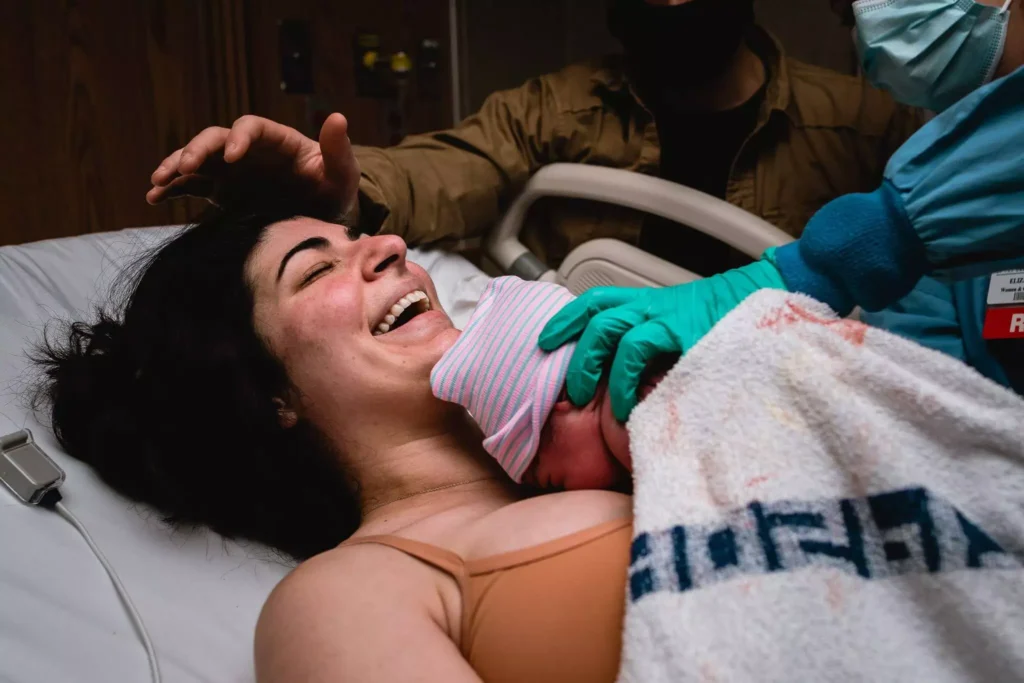

Learn the science of pregnancy and birth to take the mystery of labor away! Understand why you are feeling what you feel, and learn strategies to confidently move through pregnancy and birth!
- 9h+ of Video
- Support Group
- Close Captioning
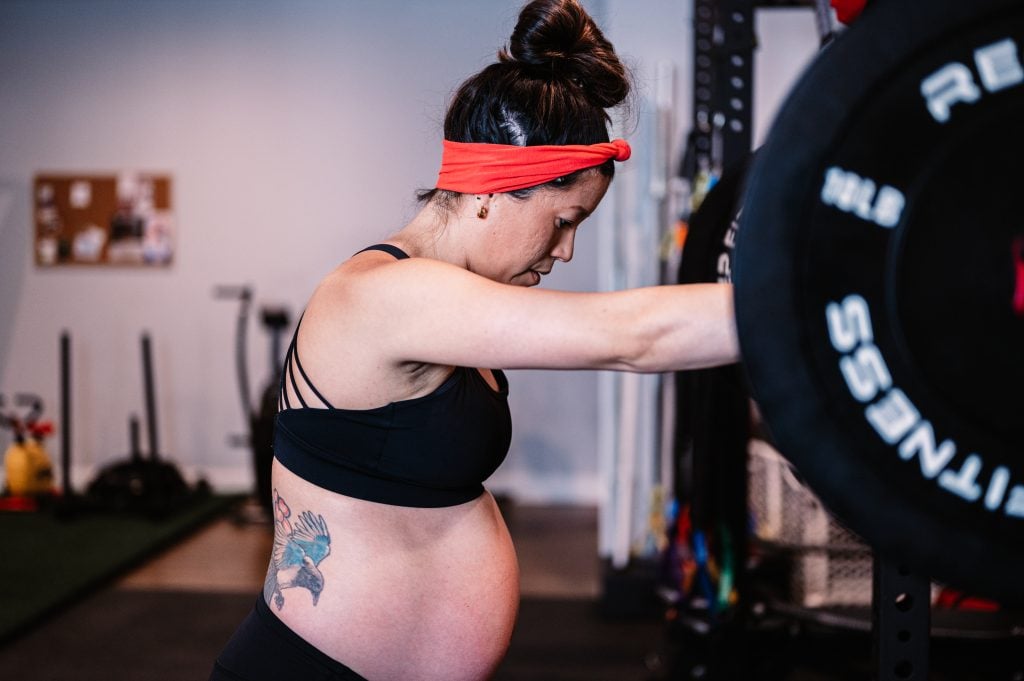

- 5 Workouts/Week
- Gym Workouts
- Self-Paced

Instructor
GINA
Workout on-demand with our prenatal fitness workout videos! Each workout is 30-40 minutes to follow along as you exercise at the same time!
- Birth Prep
- All Trimesters
- Mobility Work

Instructor
GINA
Find comfort and relief from pelvic girdle pain throughout your pregnancy and postpartum period! This program incorporates myofascial sling focused exercises to stabilize across the pelvic girdle joints.
- 3 Weeks
- On Demand Workout Videos to Follow