

Welcome to the MamasteFit Podcast Birth Story Fridays! In this episode, Roxanne is joined by Allison, who shares her transformative journey through two births. Allison’s first experience involved an induction that ended with a C-section during the peak COVID-19 shutdowns, where she felt like a passive participant in the birth process. Her second birth was a VBAC, highlighting the power of proper education, advocating for oneself, and the importance of building a supportive birth team. Allison’s story underscores how being an active participant can lead to a more empowering and positive birth experience.
Read Episode Transcript
Roxanne: Welcome to the MamasteFit Podcast, Birth Story Friday. On this episode, we have Allison here to share her two birth stories. The first one was a C-section, and then the second one was a VBAC. One thing she really emphasized throughout her stories was the power of educating ourself on our options throughout birth.
Roxanne: Welcome to the MamasteFit Podcast, Birth Story Fridays. On this episode, we have Allison here who’s gonna be sharing her two birth stories with us. Thank you so much for being here!
Allison: Thank you so much for having me. I’m so excited to share with you guys.
Roxanne: All right, so let’s just dive right into your first pregnancy.
Is there anything that you did either before pregnancy or what did you do during pregnancy to prepare for pregnancy and birth?
Allison: My first birth, or, in my first pregnancy, I don’t think I really did a whole lot to prepare. I was definitely like that first time mom. I just thought, my body’s just going to do it. I was really lucky to have an easy pregnancy, so I don’t really have many complaints. Towards the end of my pregnancy I did have really swollen feet, and just being really, really heavy at 40 weeks, and like waiting for baby to come. but I was pregnant in, I was due in April of 2020, so…
Roxanne: Okay.
Allison: Peak shut down with Covid. So it was great.
So a couple weeks before I was due, they were talking about, maybe you know, your husband might not be allowed in the room with you. I remember like crying in the bathtub with my big old belly, like, “How am I gonna do this alone?” Yeah.
We did get to take a breastfeeding course and I think a newborn care course, but we did not take a childbirth course because they shut it all down, there was nothing virtual yet. So right before I was due, I was trying to like YouTube things. I think I saw something from, Bridget from Built to Birth about like breathing. I learned about a little bit about jay breathing, but, I’m like, “Cool.”
Roxanne: That’s it.
Allison: “This is gonna get me through it….” Yeah.
Roxanne: This is enough.
Allison: So it was not, not nearly.
So at my 40 week appointment, I saw a midwife that took my blood pressure and it was the first time I ever met her, but my blood pressure reading was a little bit high, and I had one other instance of a high blood pressure in my pregnancy. And so, first time meeting her, she’s like, “Oh, you’re 40 and 1. I really don’t feel comfortable with you going another week pregnant, just in case your blood pressure goes up. What do you think about an induction?” And, first time mom, no real education, no experience, I’m like, “Yeah, sure! If the baby can come today, why not? Let’s do that.” Huge red flag. I would’ve asked to monitor my blood pressure. What are other options? Nobody told me how long an induction would last. It lasted three days. I thought baby was coming that day.
So at 10 in the morning, that pregnant, that day, 40 and 1, I think I got a dose of Cytotec. They did a membrane sweep, super painful. I think I was two centimeters dilated, and they put in a Foley balloon. And sent me home.
Roxanne: Oh my gosh!
Allison: It was a really hot summer day. I was wearing shorts. I don’t know if this is like regular, but they put in the balloon and had the tubing taped to my leg, showing out of my shorts!
So I went and it was like early in the morning, and we were supposed to come back at eight o’clock that night. So I’m just at home, yeah. The Foley balloon definitely had just started, maybe not started contractions, just had pain with it, if anything it was just some cramping. At eight o’clock that night. We went back to the hospital. They started me, I don’t know if it was like another dose of the Cytotech and I just labored through the night. Maybe they started me, already, on Pitocin, and they just kept increasing it. I don’t think the Pitocin was as bad because I wasn’t in actual labor yet. And so all day Saturday we were just walking around the hospital unit, trying to bounce on the really tiny ball they had in the room. I really didn’t know anything about how to move my body to encourage the baby to descend or anything like that.
So I think I maxed out on the Pitocin, if I remember correctly, and it really wasn’t bad. But I did have a really sharp pain in my abdomen. I wanna say like it was like the baby’s foot in my rib or something, but it was the worst pain I ever felt. And that’s why I asked for my epidural, ’cause I didn’t know what to do, how to resolve it. I think they gave me a dose of fentanyl, which took it away for a while, but then it came back.
So I had my epidural. I was only four centimeters dilated. It took away the pain for a little bit. The pain came back. I think they had to redo my epidural.
Roxanne: (Gasp!)
Allison: Yeah. I was just like, not good.
Gina: Girl!
Allison: Yes. Yeah, I was definitely on the road of just like typical escalation from induction to this outcome- foreshadowing, it was a C-section.
So, I think Saturday nights I still like really wasn’t progressing. Obviously I was like numb, couldn’t move my body, was just expecting baby to come out on his own. So that night they offered to break my water. I was like, “Sure, why not?” Again, like I had no idea. Sure, if they’re offering! I really just wanted to trust my nurses and my doctor, like they know what’s best. So I agreed. I had a really funny moment. I think she must have been a resident or something, and she came in with the doctor who was gonna break my water and she offered, “Oh, do you want me to hold your hand?” and I’m thinking in my head like, “I’m completely numb. I can’t feel anything, but sure, let’s hold hands.” I’m just there holding her head.
Roxanne: Holding hands.
Allison: Yeah. A stranger, we’re just, yeah, holding hands.
So they broke my water. And maybe a few hours later, I think I probably hit that 12 hour mark of my water being broken, then they came in to discuss what’s happening. I was still only at a four. No other suggestions on how to progress my labor, just, “You can labor for four more hours, or let’s maybe have a C-section.”
I am a respiratory therapist, so I work in a hospital. I have to attend births in case the baby needs support. I’ve seen a lot of C-sections. I knew this is not something I wanted to do. Also during my pregnancy, my baby was measuring big every time somebody touched my belly there, “Oh, that, that’s a big baby!” So all these things in my mind just made me think, you know what? He might be too big anyway. Just get him out. Like I don’t see me progressing in the next four hours, just get him out. So I did consent to that.
I had a C-section. I did not have a good experience with it. They had to do my epidural two or three times. I was nauseous on the table. After that, I felt like I was really fluid overloaded from everything that they give you during the C-section. When my baby came, he really couldn’t latch well. He had a tongue tie and I was so swollen, it was like trying to latch onto a balloon, you know? So we had to stay for a few days in the hospital because he had some jaundice, but never had to go under the light.
But at home I exclusively pumped for the first three months because I couldn’t get him to latch. But then at home I was really determined and I even set up a whole SNS feeding with the tube coming down with a nipple shield.
Roxanne: Dang girl!
Allison: Everything! And I got my son to latch, and we breastfed for two and a half years, yes. Yeah, so I was really proud of that.
Roxanne: So you worked hard at it?
Allison: I did. I was very determined. Yeah, like, “I don’t want that to set me back!” So yes, I was very determined.
But I did not have a good experience. So, from my son’s birth up until my next pregnancy, which was like four years, I researched everything I could, I followed all the accounts. I found you guys. And so I was like prepared.
Yeah, so then going into my next pregnancy, it was four years later. I did prepare a lot more. I knew a lot more just absorbing education and things, but I knew that I did not want another C-section.
Roxanne: Yeah.
Allison: I wasn’t totally set at the time when I first got pregnant for an unmedicated birth, but listening to your guys’, all the births, I probably listened to every birth story. It is so invaluable, I just have to tell you. And that kind of swayed me like, you know what, maybe I wanna try to go unmedicated. I knew I did not want another epidural because I had a horrible experience with it.
Roxanne: Yeah.
Allison: So, just in all the research, every birth story you guys have, if whenever they ask a mom at the end, “Would you consider doing an unmet unmedicated birth?” 10 outta 10, everybody, “Sure. Absolutely. I would.” So I’m thinking, there has to be something there. Like why is everybody saying this?
So I did a lot of research. I always told myself, it was like an 80/20 mental versus physical. So I just tried to get really prepared, mentally. I felt like my body hadn’t even gone through labor the first time, so I felt like it was a definite redo. I still didn’t know what to expect because I really didn’t feel like I had experienced contractions.
Roxanne: Yeah.
Allison: So I was preparing for that. I got a doula- highly recommend a doula. Even like for first time moms, if I could, I would go back in time to tell myself, get a doula.
Roxanne: Yeah.
Allison: So that was awesome. I’m really happy that we had that experience because researching for a doula, my husband goes, “Why are we gonna pay someone? I could do that! I could be your doula!” Like, you….
Roxanne: No, no, no, no, no..
Allison: You sweet thing! No.
So she was really invaluable too because she provided, a lot of education, which nothing was new to me that she told me, which also gave me like reassurance that I was learning all the proper things.
But for my husband, it really gave him an insight on what should happen, the natural progression of things, and it helped a little bit for him. It did really help for him to advocate for me in the hospital. But for like labor-wise, he was still wanting to jump the gun. “Are we gonna the hospital now? Should we go now?”
Roxanne: Yeah.
Allison: So my second pregnancy, was also very good, very easy, I wanna say. I did do some stretching all the things, like you guys, just your really easy, free, all your free education, it’s so, so good! So just moving my body more, stretching and trying to open things up. And then I was still carrying my toddler like upstairs for his naps and things, so hauling that 30, 40 pounds, that was my…
Roxanne: Yeah, that’s still helpful.
Allison: That was my workout. Yeah.
Roxanne: That is a good workout though!
Allison: It really was, I think so.
So for him, I also, for my second son, I had met with midwives again, which I really loved sticking with midwives over OBs, in the hospital system. And this one lady I had met, I really loved her, she was like a big teddy bear. She felt like a warm hug! I told everybody right away, “I wanna shoot for a VBAC. I’m not interested in considering a C-section.” I thought it was completely unnecessary the first time around. I know better this time, so I am gonna, I’m, gonna do a VBAC. Even though I was a little offended whenever they would say, “Yeah, okay, we’ll put you down as a TOLAC, a trial of labor.” In my head, I’m thinking…
Roxanne: You’re like, no, no, no, no.
Allison: This is a VBAC, yeah! And then still though, even telling everybody I met how I’m shooting for a VBAC, I told everyone, “I’m gonna do this,” they would always say, “Yeah, let’s consider our options. Are you sure you don’t wanna just schedule a C-section?” I’m like, “Absolutely not.” Yeah.
So the midwives, I think, were very encouraging. “Sure, we’re definitely going to support you as best we can to help you get that goal.” Whereas like the OBs were just, “You had a big baby the first time,” he was nine pounds and seven ounces.
Roxanne: Okay.
Allison: So he was a bigger baby, but not huge.
So with my second pregnancy, they sent me for a growth scan to see if this baby was gonna be big. He wasn’t, he was like measuring perfectly. But at my 38 week appointment, the nursing assistant came in just to say, “Hey, you’re right around that mark. Sometimes the OB will want to try and check your cervix, they’ll offer you a membrane sweep.” And I told her right then, “No, I’m not, interested in that at this visit.” And as soon as this OB walked in, the first thing she said, not even a greeting or a good morning, was open the door, “So should we check your cervix?” I said, “No thank you.” And she, I’ll never forget ’cause it’s seared into my memory, she goes, “Oh, why?” And I said, “Because I’m not interested in that. Thank you, though.” So I felt really good sticking to my guns and advocating for myself. But no, that’s not something I wanna do. Yeah. I did not want.
Roxanne: Yeah, that’s awesome!
Allison: Yeah, I didn’t want a membrane sweep this time. Nothing. I wanted to go into spontaneous labor. I was so turned off by her though that visit, I told my husband like, leaving my appointment, I texted my doula, “Oh, you’ll never believe what she suggested! I texted my husband, “You know what? I don’t think I’m gonna show up to my appointment next week! They’re just gonna see me when I go into labor.”
Roxanne: But that is sad because that’s the experience that turns people off from getting prenatal care.
Allison: Yeah.
Roxanne: And going to their doctors, like they’re treated like poorly one time and that’s enough for them to never go back. And I hate that for people because I want them to feel supported in their pregnancy. And I’m sure that OB thinks that like offering cervical exams ’cause maybe people really want them at 38 weeks and that’s something like if you want one that’s great that she’s offering. But I think that like in her mind, cervical exams at three, eight weeks is like a great thing to offer everybody.
Allison: It’s so early!
Roxanne: She thinks it tells her a lot. But it honestly, it tells you nothing, ’cause they could be zero centimeters and still have their baby tonight, they could also be five centimeters and still be pregnant for two more weeks. So it literally tells you nothing but what it’s doing in that moment. But that makes me so sad for people.
Allison: Yeah. And I am glad that I knew better this time. I knew exactly that, that it’s not gonna tell me anything at this moment.
Roxanne: Exactly.
Allison: I could be pregnant and I think I mentioned, I could be however dilated for the next two weeks, so what good is it gonna do me? So I said, “No, I am, I’m okay.” I was in my mind telling myself, you could go, based on all the birth stories and all of Gina’s births, I’m like, “I could be pregnant for the next three weeks!”
Roxanne: Just forever!
Allison: I was telling myself, “I’m gonna be pregnant for 41 weeks,” in my mind.
Roxanne: That’s good!
Allison: Yeah, like, that’s what we’re gonna do. But surprisingly, I went into labor at 39 weeks.
Roxanne: Spoiler.
Allison: Yeah. A spoiler definitely.
So the end of my pregnancy was really great. I didn’t feel too uncomfortable because I was doing my stretches. I was doing a lot of like meditation. I did a lot of, even the breath work of the in for four out for seven, I, yeah, I did a lot of that and it really came in handy. So like I had an app ready to go for that. I listened to the birth stories every time I went to work and back. And yeah, so it was really pleasant.
And so I had some Braxton Hicks, I think really early on since it was my second pregnancy. And this time around it was a lot more painful! Like even at work, I’d be sitting there and I like had to breathe deeply. I’m like, these are just Braxton Hicks. what is going on?
Roxanne: Yeah! Just practice, practice breathing with your contractions though.
Allison: I exactly was, yes!
So, we live like in a farm area. I’m an hour away from San Francisco, I’m an hour inland, so we have a lot of…
Roxanne: Oh, no.
Allison: Yeah, but my hospital it was close by, so I did not have to go to the city.
Roxanne: I was like, oh no, did you have to drive an hour? Oh gosh!
Allison: Yeah, no. No, actually our hospital’s a couple minutes away, but we live around a lot of farms. So prior to going into labor, we were like going cherry picking with my big, huge belly, I went like peach picking, I think the day I went into labor. So I was like staying very active. Yeah. And it helped.
So one night I was sitting on my yoga ball, and it was like after dinner, I don’t think my husband or my son were home and I felt some twinges in my back. Oh no, it was actually, it was down low in the front. And I thought, this is much different than a Braxton Hick. My mother-in-law lives with us, and she was here at home and I thought, oh gosh, like this could be a practice contraction. I thought, okay, now, like we’re getting outta Braxton Hicks, we’re going into like real practice contractions. So I was like, oh, that’s exciting. I even timed it out a little bit just to see like could it be like prodromal labor or something? I didn’t know, but I was just like, let’s see what’s going on.
So that night I stayed up a little bit later than I would. I went to sleep like maybe around 10. 11:30, I woke up, I felt like I just had to go to the bathroom and I would try to go back to bed. And my husband was sleeping with my son in his room at the time, and I noticed I kept, I couldn’t fall back asleep, I kept having to get up and feel like I had to go to the bathroom. And my room and my bathroom are connected, it’s one big space. And so I’d walk back and forth and I’m like, I can’t, I’m not getting comfortable. I had some pain in my lower back, and I thought, “Oh, it’s the way I’m sleeping, it’s really become uncomfortable. I can’t go to sleep.” But that continued for maybe two hours. And then like I had to start breathing through them. I’m like, “Okay…” and so, you know, I’m doing my timer like, okay, like these are lasting a minute in intensity.
And so like around 1:30 in the morning, I still hadn’t gone back to sleep. And I thought okay, I was texting my doula and I’m like, “There’s like little twinges. I’m really not sure if it’s prodromal labor, if it’s like actual labor.” And she luckily was doing like a nighttime doula gig, so she was like, awake with me, all during the night, which was really great. I thought, what if I text her and she doesn’t get back to me for hours? But luckily she responded. She gave me like some positions to try to alleviate that pain, offered like water therapy, get in the bath or get in the shower, but I wasn’t there yet. But I was like leaning over my bathroom counter to try- it almost felt really bad sciatic pain.
Roxanne: Okay.
Allison: And if you like, yeah, didn’t move. And it just felt like, oh! I felt like my back wanted to split open. So I was trying to, yeah, move and sway with those.
But around 1:30 I went and told my mother-in-law like, “Hey, I’m gonna wake up my husband because I need some support here.” And very calmly, I go into the room where my husband and my son are sleeping, and I’m just like, “Babe,” it was very, “Babe. I need you. Come on.” And so he didn’t know what was going on! He came into the room and I’m like, “Yeah, I need something. I need you to do hip squeezes, or just something.” And so, I don’t think I admitted to myself that I was in labor yet. I thought, “Oh my gosh, like this isn’t gonna turn into anything. What if it fizzles out and it’s prodromal labor?”
Roxanne: Yeah.
Allison: And I got a little bit scared with the intensity and how fast they came on. I felt like it went from zero to a hundred. Like they were consistent, they were back to back, and I needed help managing through them.
So my husband did some hip squeezes, which we practiced a little bit before, but they’re a lot harder than- not for me, for him.
Roxanne: Yes!
Allison: You know when you really need that intensity? And I’m like, “This is not it!” So I’m like, “Can we get like the TENS unit?” But like a pro tip, don’t try out your TENS unit when you’re in labor. Try it out earlier because we could not get this thing…
Roxanne: Yeah, so you know what to do.
Allison: We could not get the settings down. They were not where it was at. They would like ramp up and then fizzle out the intensity of the TENS unit, and I needed like strong support the whole time through.
What did I do? I think I tried all my hands and knees to have hip squeezes. Every time I moved positions, I felt like it brought on the next contraction right away. There wasn’t an actual two to three minute break. It was just like, boom, if I moved. So I was a little bit apprehensive to change positions.
I did get in the tub, but I am taller, so if anything, just my legs were in the bathtub. My husband was pouring water down my back, which helped a little bit. But then I think I did get in the shower so I could have that beating water straight on my back. And that did help a little bit just about, which I noticed right around the 30 minutes when you’re supposed to change positions, it felt like the water wasn’t doing as much to help.
Roxanne: Okay.
Allison: So then I would get out and kind of change positions and do something else. But I was on the hands and knees on my floor, and I was just so tired, I hadn’t gotten much sleep. And I remember telling my husband like, “Ugh,” I wasn’t crying yet, but I was like, “Man, I don’t wanna do this right now. I’m tired! I just wanna go to bed. Can we put this on hold and we’ll start it up again tomorrow?”
Roxanne: Yeah, it’s let me get a nap in and then I’ll redo tomorrow.
Allison: Yeah. And so I did try, which I couldn’t find much rest in between contractions, which was tough for me too, that I wasn’t feeling rested to take on the next contraction. And yeah, time was not a thing for me, I have no idea what time it was. But my husband was texting my doula, and luckily she came over right after she had just finished a nighttime doula shift. So it’s about 7:30 in the morning and she came right over, just to support me. I just remember she was just like rubbing my legs. I think it was just more reassurance like, “We’re in this, we’re gonna manage each one as they come.”
But then we tried using my husband has that mechanical massage gun.
Roxanne: Oh!
Allison: Like for sports?
Roxanne: Yeah.
Allison: I’m telling you- and I recommend it to absolutely everybody I talk to now.
Roxanne: Oh!
Allison: I used that thing for about 10 hours straight, and the battery lasted. Through every contraction, and even in between, I needed that on my back, yes.
Roxanne: Okay! We’ve probably had people message us and they’re like, “Can I use this?” And I was like, “Technically you can. I don’t know anybody that’s used it, but I could see it being helpful.” So now, we know.
Allison: Yes.
Roxanne: It is helpful! So, maybe try it out!
Allison: Yes, I would highly suggest it. Especially if the TENS is not doing it for you, like hip squeezes, you know, you can ramp up the intensity to get it really, really going. So that really helped.
At this time though, my water had not broken. I hadn’t had lost my mucus plug. No bloody show, nothing. So I was just riding these contractions for hours, and I’m thinking like, is this still prodromal labor? When is something gonna happen? So changing positions, my doula suggested using the ottoman of my rocking chair, which I had for my first son. And so I straddled that, rocking my hips, side to side, and I was leaning over my bathroom counter. My eyes were, I was in labor land, my eyes were closed from that point on through delivery, I had no, no idea of my surroundings. But I remember my son came in because it was about eight in the morning, and he’s talking to me and, “Oh, we’re gonna get ready for brother to come!” and I’m just like, “Okay, yeah. I love you, Baby. Get outta here. Love ya, see ya!”
Roxanne: Please leave.
Allison: I love you, please leave. So I’m still rocking on my ottoman and I’m thinking, “When is something gonna happen?” My doula very calmly suggested, “Let’s get up and try to go to the bathroom.” I hadn’t had to use the bathroom through my labor. I’m like, “Let’s get up and go see.” And so on the toilet, when she was helping me, boom, there it was my whole mucus plug, my whole bloody show. And she’s like, “Look, cervical change is happening! Something’s happening.” So that was, yeah, what I needed to see, like to help keep going.
But on that ottoman, I don’t know how dilated I was or anything, because we had no way to check, but I had started at the end of my contractions, grunting a little bit. I needed to just ugh, you can’t explain it, but you just really need that little bit of pressure at the end. Mind you, before my doula got there, my husband’s like, “Okay, we’re getting through this contraction, then we’re going to the hospital.” And I’m like, “No, I’m not. What are they gonna do for there?”
Roxanne: You’re like, “Maybe the next time, maybe the next one.”
Allison: I’m just like, “Yeah, okay.” And so when I was in the shower for a second time before my doula came and my husband had left me to go pack the car, get it ready. During my contractions when one ended, I was recovering, as soon as the next one would come, I wouldn’t just say, “Oh Honey, I need some help,” I was like, “Help. I need you. The massage gun help.”
Roxanne: Yeah, single words. Yeah, those are good signs.
Allison: Yeah. Yeah, it’s good.
Roxanne: All the signs!
Allison: Yeah. But I’m like, in my head I’m thinking like, Come on honey! We like, we prepared to stay here for as long as we can. I’m not going to the hospital- as much as I wanted to, I wanted some type of relief. But the other half was thinking like, what are they really gonna do for me there? They’re gonna offer me pain meds, or they’re gonna offer me the epidural. They’re not gonna do anything to help me in that moment.
So yeah, somehow, I stayed at home as long as I wanted to. But, when the time came for all of us to decide, “Okay, are we’re gonna go to the hospital,” it’s about a 10 minute drive from my house. So it’s not bad, but I was really afraid of the car labor because I had heard…
Roxanne: Uh-huh!
Allison: It’s really intense. I was prepared to be in the back of my van, like on all floors. And my doula and my husband are like, “You’re not gonna be loose back there when you’re in labor.” I don’t wanna sit in the car! And at that point I’m like, “You know what, I’m, I think I’m gonna give birth here. I’m gonna stay right here.”
Roxanne: Yep.
Allison: We’re gonna have a home baby.
Roxanne: Yeah. Yeah.
Allison: I did not.
Roxanne: It goes through your mind.
Allison: It did. It definitely did. I know like Gina said, “I live here now. This is where I’m gonna stay.” I did not look forward to getting up because I was afraid it was gonna bring on more contractions. I have a set of stairs I have to walk down. I was not looking forward to it.
Roxanne: Oh no.
Allison: Yeah. But we did, we we got all together. I don’t know why this phenomenon though, I could not open my eyes during my labor, I had to have them closed.
Roxanne: Yeah.
Allison: Yeah. So I was relying heavily on my husband to guide me to get down the stairs.
Roxanne: Same, though, same.
Allison: Yeah. So at that point, it was probably about maybe 10 in the morning. I remember the sun was out, it was nice and warm, but I had to stop right in front of my garage and have a contraction. So I was almost worried, I hope no neighbors are outside seeing me have a contraction!
Roxanne: They’re like, “Yeah! You got it!”
Allison: Right?! So I was like, “Oh God.”
But the car ride was actually not as bad as I thought.
Roxanne: It’s only 10 minutes.
Allison: Yeah, it was only 10 minutes. Breathing through them, and like counting those breaths to myself, I think was a huge saver for me. During my contractions while I was like in the shower when I was finishing my contraction, telling myself if there’s only three sets of those breaths, in for four, out for seven, if I do that three times, the contraction will be over.
Roxanne: Yeah!
Allison: And so when I got to the peak of my contraction, I’d be out loud going like, “4, 5, 6!” counting to myself like, “It’s almost done!” But that really helped. And I did that, it had to be for hours telling myself, yeah, to stay on those breaths. It was the biggest thing I could recommend. I did that for my sister.
Roxanne: Breath work is so powerful.
Allison: Yes. When she was in labor, she, my sister just a side note, gave birth four months after I did, and so I was there helping her in labor and I just, yeah, just counted those breaths for her because it, ugh, it was so helpful for me.
Roxanne: Yeah.
Allison: So we go to the hospital. I can feel the turns, ’cause I know the road to get there. But we pull up to the front, I hadn’t known at the time, but I think, who was he? Maybe an anesthesiologist, was just passing by, and he saw what was going on. He brought the wheelchair, brought me into the hospital. Like I told my husband, “Make sure to thank that man. I don’t know who he is, but thank him!” Whoever’s in the lobby is witnessing me in full-blown labor.
We have to go up the elevator to the second floor. They get me into the triage, which as you know about me and movement, I did not wanna move. And I was like, already in this wheelchair, now they want me to get up and undress and everything to get on the bed to check me. I’m just like, “Nope, that’s not happening. Can’t you just check me while I’m standing up?”
Roxanne: Valid.
Allison: Yeah, I thought! I was like a little, I wanna say I was a little bit sassy during my labor, but I think, no, I was just direct and I knew the options I had. Can’t somebody just check?
Roxanne: You knew what you wanted.
Allison: Yeah, yeah, I did. So they brought in a midwife and it turned out to be my big, fluffy huggy midwife I had seen right in the beginning of my pregnancy, and she was on call and was gonna be there for my birth. So that made it a hundred times better because she had known that I wanted a VBAC, so she was, that was like a blessing that day.
Roxanne: Aw, you manifested it.
Allison: I think I did. I’m so happy for it.
So she did check me while I was standing, I didn’t have to lay on the bed. And I was seven centimeters dilated, I think I was 90% effaced. So I did some good work, yeah.
Roxanne: Yeah!
Allison: I was very pleased, yeah. And having only gotten to a four before, I was over the moon, yes. And so we continued to labor. We brought the massage gun from home- the biggest, oh my gosh, biggest blessing. We used that for the next couple of hours. I labored on my hands and knees. I had gotten off and stood on the side of the bed and my water still hadn’t broken. So I’m like, “Why? I don’t wanna have an en caul birth!” And when they checked me, they did say that I had a bulging bag of water.
Roxanne: Okay.
Allison: Yeah, so I’m like, when’s this gonna happen? I was laboring, I was still grunting towards the end of my contractions. The biggest nuisance for me was the pulse oximeter to check my oxygen! I didn’t, I thought it was the room, but it was me, I was so sweaty during labor! I wanted that thing, I kept sweating it off my finger, and it was kinda just one thing to distract you from being in labor land, it was that pulse oximeter! I was not happy about it.
Roxanne: Yeah, I don’t love that pulse oximeter either.
Allison: No, no. And then I was hoping that they wouldn’t have to have the continuous fetal monitoring around my belly, but they did. I think just citing that because I had been a previous c-section and they had it on, so it was okay, the fuss of always having to reposition it. So that just like took away for me, too.
My eyes were closed. I had no idea how many people were in the room, no idea of my nurses. But when I was on the side of the bed and I was bearing down, the nurse goes, “Oh, if you’re gonna push, you have to get back on the bed,” and I’m like, “I’m not pushing,” and in my head I said, I’m gonna push a little bit, just a little bit.” Just a little bit. So I got back on the bed.
Roxanne: Just a tiny push.
Allison: Just a tiny one. So yeah, nobody was gonna tell me nothing. I had gotten back on the bed, on all fours, I remember, and I think my position was too lateral. And I thought at the time it was my doula suggesting to raise the head of the bed, so I could, be around the head of it for gravity to help bring the baby down. She had kept going up and up, and it was like so uncomfortable, like really making my contractions, ’cause I’m sure it was helping the baby come down. And in my head I was so pissed at my doula for making it go higher and higher, and I came to find out later that it was my husband pushing the the button of the bed raising it higher. I could have killed him!
Roxanne: So it’s a good thing you didn’t see.
Allison: It’s true, yes!
So let’s see. They checked me again. I didn’t want too many checks, but I did wanna know where I was at because like my water still hadn’t broken, like, not how much longer, but you wanna know how much longer is this gonna go on for?
They did check me. What was I? Maybe an eight, which I’m like, “Okay, cool.” The water was still there. They did offer to break my water and I really, I did not want that. At the time when they’re saying, “Oh, it could really help, the baby finish descending. It could really help that last kind of push before the baby actually comes.” And I asked my doula, “Do I really, should I let them break it?” And she’s like again, just the reinforcement, “You don’t have to let them do anything. Your bag’s gonna come when it comes, if it breaks, now if it breaks when baby’s coming, if baby’s born en caul, like it’s gonna come out. You don’t have to do anything you don’t want to.” So I’m like, “Okay,” and I thought though, I just want it to go a little bit faster. I was gonna let them break it. I was on all fours, my doula was at the foot of the bed where my feet are, rubbing my legs, and during a contraction, right at the end, I felt that pop! So they didn’t break my water. My water broke spontaneously. It didn’t break, it exploded!
Roxanne: Oh, did your doula get soaked?
Allison: Her whole leg, yes! I think it was the first time for her, but yes, it did!
Roxanne: Oh my gosh. I never stand at the end of the bed for that reason, ’cause those amniotic sacs can be very forceful!
Allison: It really sounded like it, because I heard it like splash all over the floor, I know! Oh gosh!
Roxanne: Oh my gosh!
Allison: So not too far after that, they must have checked me again because I was at a 10. And I remember thinking like, okay, I’m 10 centimeters, but… and I think I was still, I was just going with my body. I was like, I was feeling those kind of grunting feelings towards the end. I did not wanna flip on my back when it was time to push. What were they doing? I think at one time they couldn’t find the baby’s heartbeat, probably because of the position of the fetal monitor. And right in the middle of all this, they’re saying, “Oh, we have to get her on her back because we have to reposition it. We have to see what the baby’s doing.” They’re trying to fuss all over my belly. And again, because I work in the hospital, I’m like, “Can’t somebody use a Doppler even and stick it up on my belly and get his heart rate or something? Because I’m not getting on my back. I’m just, it’s not happening.”
Roxanne: Yeah.
Allison: Then they even try to suggest the, that coil, the, what’s it called?
Roxanne: The fetal spiral electrode.
Allison: Yes, which I already knew about. We had, my husband and I had learned about it, again, through our doula, like in our kind of prenatal courses. And if you see that thing, it looks like a wine corkscrew. And I’m like, “There’s no way to in hell that, that thing’s going anywhere near my baby! Nope, we’re not doing that either, so we’re gonna have to find another option.” It was, yeah, that was not good.
Roxanne: So did they find, did they get baby on the monitor?
Allison: I think they did. Maybe I did flip over to my back for a quick second, so I’m like, “Okay, get it placed,” because I didn’t wanna be on my back.
Roxanne: Yeah.
Allison: When it was time to push, I believe I was on my side. So I forget who was holding my leg, but even that feeling of somebody pushing it back towards my armpit to get that opening, I did not love. And so right away I’m just like, “No, no thanks. Don’t push it back that far.” It made the pain worse. And so I think I pushed for about 45 minutes if my doula remembered correctly. It wasn’t super long. But it was such a strange feeling when you’re being coached by your team to push three times during your contraction period when you don’t have the urge to push. And so that’s what I really remember feeling is like I felt like I wasn’t working with gas. I’m trying to like push, but my, it didn’t feel like my body was like, helping me.
Roxanne: Yeah.
Allison: And that’s what I remembered. Looking at, when I saw other moms give birth is, and that’s what I thought in my first pregnancy, like that we have to generate the force to push the baby out, but then feeling that feeling with my second son, it’s like, no, you really have to wait for your body, hopefully moms get there, to feel that at a fetal ejection reflex. Because otherwise, like you’re working against the natural forces.
Roxanne: Yeah.
Allison: Yeah. And so I did feel like the baby kind of descend and then go back up, which I know is normal, too. And just yeah, just in that moment I just, I was just like, I was just in it. Just waiting for that feeling.
Roxanne: Yeah.
Allison: And then a big tip, again, I don’t know the nurse, ’cause I did not have my eyes open, was again, coaching, “Take a big deep breath in and push as hard as you can.” And in my head I’m like, “Nope, no, I will not be doing that.” I tried to not loudly, but like open glottis push, just like trying to breathe my baby out.
Roxanne: Yeah!
Allison: I forget how many pushes after, maybe it wasn’t the most effective that they’d like to think. So even my doula was like, “Hey, if you want to, you can vtry to hold your breath and push a little bit and see how that goes.” And so I did do that towards the end, I think, before my baby came.
And so I think I was, they wanted me on my back towards the end. I did want the option to, early on, I wanted to try and catch my own baby.
Roxanne: Yeah!
Allison: Well, it was a great thought, but. And then having the IV, it was the IV block, I also did not wanna be hooked up to an IV because of the fluid overload from my C-section.
Roxanne: Yeah.
Allison: But having that on my hand, plus the pulse ox, it just felt like a lot of stuff on me.
So I did reach down, and feel his head and felt his little squishy hair. And yeah, so that was very sweet. And then, yeah, just like a couple more pushes, his head came out, and I am very glad though that I was fully aware, I did not know and would not have known unless I had my experience from the hospital, that a lot of old OBs or midwives, reach around when the baby’s head comes out to form, like the path in your vagina for his head to come through.
Roxanne: Oh.
Allison: And I felt every second of that, yeah, it’s the strangest thing! Like they’re literally like helping like stretch and yeah, that was not fun.
Roxanne: Not everyone will experience that, but some do. They do like perineal massage during labor, in pushing, to kinda like help stretch the perineum. Whether or not it actually helps, no one truly knows. But if you are unmedicated, it don’t feel great!
Allison: No.
Roxanne: That don’t feel great.
Allison: I can definitely see if, especially unmedicated moms, how that could feel like that could be causing the ring of fire. I feel like a lot of births that I’ve seen, like every provider does that, that they’re either stretching or they’re even pushing the perineum, like back towards the mom for the head to emerge.
And so I had a little video and I definitely stuck my hand there and I’m just like waving, “No, don’t do that!”
Roxanne: Yeah!
Allison: ‘Cause yeah, it was very painful, that part, not even like the baby’s head crowning.
Roxanne: Yeah. That is a lot.
Allison: Yeah, it was a lot. But other than that, I did feel the ring of fire. I fully expected for that to be the most pain to feel. It wasn’t terrible, it was, obviously, it was a burning sensation. But I’m glad that it wasn’t like all that it was hyped up to be, or that a lot of people are scared of.
Roxanne: Yeah. Did it last, like when your baby was crowning, did it last like more than one contraction? I’m getting ahead of the story. Or was it a few contractions?
Allison: It was probably maybe two contractions, if that. Yeah, maybe one or two. Yeah, so it was not long at all because, yeah, he was coming right after that, so soon after.
Roxanne: Good!
Allison: Yeah! And something else I had seen in different births and maybe different birth stories, along with that stretching and things, that providers after that will, not reach in, but try and guide the baby and spin them to finish their natural rotation. And I know that I told like my doula and I told my team, I don’t want that. I want the baby to finish his rotation on his own. It’s just another thing that I don’t think moms know anything about and trying to go unmedicated, it could definitely cause pain and take away from a fully physiological birth.
Roxanne: So did they do that?
Allison: They did not, no. I’m glad. Yeah, she was very hands off, especially after I just waved her off, she did not. But after that. I couldn’t muster up the energy to reach down and pull him up myself.
Roxanne: It’s a lot.
Allison: It was, it’s a lot, yeah, I did not realize. But so he just came out like less than one contraction after his head was born. And I’m glad, yeah, he was, placed on my chest. I was aware enough to tell people like, “Nope, just gimme the blanket.” And I wanted to wipe him off myself. Especially, I did not get that with my first son, with the C-section, they took him away.
Roxanne: You don’t get that immediate skin to skin, and that definitely changes.
Allison: That was a big thing on my birth plan for my second baby. I didn’t even want anyone like to touch him. I wanted him on my skin and I wanted to rub him and dry him off and I totally got that and it was the best thing ever.
Roxanne: I love that! I feel like your entire birth story, it just shows the importance of advocating for yourself and speaking up. And like I’m sure you’ve had a provider that you felt trust in, though, where if she would have recommended something else, and if you voiced your opinion of not doing that, but she felt that maybe it was the better decision, you would have also felt comfortable that she had your best interest at heart. But you also felt empowered enough and like had the knowledge to be able to still advocate, be like, “Hey, I don’t wanna do that. That doesn’t feel right in my body and I don’t wanna do that. I know what I feel and I’m good. I’m good with not doing that.”
And I feel like your first experience, usually when we have a follow on VBAC, we do like over prepare in a way that like you know everything. And so like you knew, “Oh no, I’m good with that. No, I’m good with that,” ’cause like you’ve researched it all to have a different experience the next time. And that led to you having a really empowering experience with your second birth. And I love that you had the team that you wanted with the one midwife, and that your doula and husband were more supportive with this second labor, throughout the entire thing.
So just to get to the end of your birth. So baby was born, you got your skin to skin time. How was like your postpartum recovery afterward?
Allison: I mean, a lot better because I didn’t have that incision. That was pretty painful, yeah, to deal with. I, my first son, I wasn’t able to change any of his diapers because I couldn’t get out of bed easily. So with this one, yeah, a lot better. It did feel like I got hit by a bus for about two days after birth, which I think is just normal. My back was sore, but I’m gonna count that up to using the massage gun for hours on it.
Roxanne: For 10 hours, yeah! That would do it!
Allison: Yes. I did also use a birth comb. I remember if I had one or two. I did like that. I don’t know if I used it in the correct way because I did cause some pretty good damage to my hand.
Roxanne: Oh no.
Allison: I was squeezing it, must have been so hard that, yeah, my hand was like red and puffy. But I will still say like I still encourage other people to use it.
Roxanne: Yeah, it can be effective. Yeah, maybe not so hard that you’re like, puncturing your skin. But yes, it was helpful in the moment and that’s all that matters, honestly.
Allison: Yeah, it was.
But yeah, recovery was better, a lot more manageable. We still had a little hiccup with breastfeeding. My second son also had jaundice. He was always just right under the brim for needing, the bilirubin light. We had to go into the lab, three or four days in a row, which is a little bit tough right after you just gave birth.
Roxanne: Yeah.
Allison: I had to pump right away. Which I pumped, obviously with my first son I pumped for a year, which I did not mind. But this one I was hoping to breastfeed right off the bat and then pump when I got closer to going back to work.
Roxanne: Yeah.
Allison: But I had to do it a little bit sooner to get him those extra ounces to help his levels return to normal. Which in hindsight yeah, I’m not mad about now or anything and I was able, I’m still able to breastfeed. My son’s nine months old now and, yep, we’re still breastfeeding, so that’s amazing.
Roxanne: Yeah, that’s awesome!
Allison: Yes!
Yeah, but like you were saying though, it’s really, I feel like it’s unfortunate, and it happens to a lot of first time moms, and I know I hear a lot of birth stories that you have to go through your first birth to then really know what you want in your subsequent birth. And I just feel like I wish there was a lot more resources for first time moms to be empowered and educated, to really know how to have a great birth every time.
Roxanne: Yeah, exactly. And I feel like, I feel that the people who have a good experience for every birth also almost feel guilty that they didn’t have it because it is so normal and so many people, that first birth is very traumatic in a way. And that’s very unfortunate ’cause like I obviously wish that everyone can just have a beautiful empowering birth experience, regardless of the outcome, but just like how you feel. ‘Cause like you can still have a C-section and still feel great about your birth and feel empowered and feel involved in the care that you received and not hold onto like physical trauma, obviously you still had a C-section, but like mentally you don’t feel like when you look back, sad about it.
Allison: It’s true.
Roxanne: But I think it’s how we are treated during labor and pregnancy and birth. Sometimes regardless, like people who have vaginal births still leave like traumatized because of how they were treated during that experience. And I feel like that is what your first experience with pregnancy and birth, you were not like a part of the decisions. You were just told, “Okay, you’re 40 and one, you’re gonna go have an induction.”
Allison: Exactly. Yep.
Roxanne: “And we’re gonna do these things to you, rather than you being a part of the decision,” which sometimes can definitely affect the outcome. And I think you coming on and sharing your story will hopefully help somebody who might be with that first pregnancy and unsure what to do, and this could motivate them and encourage them enough to like get the education and get the team, build the team, so that you can feel empowered through the entire experience and still feel so happy when you get to hold your baby that first time, after all of the hard work. So I’m so grateful for you to come on to the podcast.
With your first C-section, I forgot to ask this, but after you had your first C-section, did you seek any counseling or speak with anybody to like work through what happened with your birth?
Allison: I did not, no. I don’t feel like I ever really processed it. I just knew from the get go, as soon as it happened, that this wasn’t necessary, that other things could have happened. I definitely felt like a passive passenger, like you said, like things happened to me, not me going through birth. And so as soon as he was born, I knew that I did not want it to go that way again. I wanted to be an active participant. And so yeah, that’s what really sparked off my journey for knowledge and to make sure that, yeah, it went a completely different way the second time.
Roxanne: Some people do find it helpful to seek counseling or therapy to work through birth processing. And for some people that process though is just by learning everything. So it’s, there’s something for everyone to work through their first births and I love that you found your thing.
But thank you so much, Allison, for coming on to the podcast and sharing your two stories. Both different experiences, but like something that you learned from both of them and were be able to share that experience with all of us here. Before we let you go though, what is like one piece of advice that you would give to someone who potentially is in similar situations that you were in, in either pregnancy?
Allison: Definitely that education is power. It’s your most valuable tool. There are so many resources online than, I feel, even that there were in 2020. But there are so many resources. You guys are like my number one to suggest to anybody that I know that’s pregnant.
Roxanne: Thank you!
Allison: Of course! Even going through second and third births, I’m like, “You guys, you have to follow MamasteFit!” Even if they’re not interested in other aspects of it, all your education courses, which, honestly I didn’t enroll in any of myself, but just your free content was a game changer for everything. So you guys, yeah, and Built to Birth that just to empower women and moms, that you can do this. The biggest thing is education.
Roxanne: Yeah, and obviously we wholeheartedly agree in the education portion because that is honestly a game changer. You don’t know your options or you don’t know what’s gonna happen, if you never educate yourself on it. So that is our goal with all of the free content, and obviously our course, if people can afford our course, that’s great, but that’s why we put out all of this free content, to get people the knowledge so that they can search through our Instagram feed and our YouTube feed and pretty much get our childbirth education. It takes a little more work, but they can still get all of the resources that we provide in our childbirth education if they work really hard on our Instagram. But obviously please buy our courses.
Allison: Oh, yes, I know. I would highly, highly recommend it!
Roxanne: Because they’re also great.
Allison: Yeah, they are.
Roxanne: But thank you so much, Allison, for coming onto to the podcast again, and sharing your wonderful birth stories with us. And I think that someone else will listen to this and really find a lot of value in it.
Allison: I hope so. Thank you so much for having me.
Roxanne: Thank you for listening to Allison’s birth stories. I hope you enjoyed them as much as I enjoyed listening to them. And something that Allison really shared throughout her two birth stories was the importance of being an active participant in our birth and being able to help make the choices that are happening to our bodies instead of just being a passive participant and letting things happen to us. We can decide what we want in birth, within reason. Building our team is so important. She was able to manifest the midwife that she wanted to be at her birth that she really loved, was able to be at her birth and support her, and have the perfect team to support her for her VBAC, whereas her first experience was not as supportive.
So building our team and being educated can make a really big impact on our birth outcomes. And the birth outcome is not just necessarily vaginal or C-section, it’s how you feel at the end of your birth.
So if you’re looking for more education to prepare for birth or postpartum, check out our online childbirth education course where we go into the science of labor and birth to discuss birth options, what to expect in the labor timeline, what hormones are involved in the labor timeline, all of those things can help make birth less mysterious. As well as any of our prenatal fitness programs to help strengthen our body to prepare physically for birth. We also have postpartum and newborn prep courses to help prepare for what to expect in the postpartum for both you and baby. And all of these courses can be bundled together to save an additional 15%. And as a thank you for listening to this entire episode, you can use Code STORY10, get additional 10% off, and you can check out all of those offerings at mamastefit.com.
Additional Resources
📧 Download our free birth prep circuit guide with six exercises to prepare your body for birth: https://mamastefit.com/freebies/prepare-for-birth-circuit/
📩 Join our free early postpartum recovery course: https://mamastefit.com/freebies/early-postpartum-recovery/
Recover after birth and return to fitness with MamasteFit: https://mamastefit.com/fitness-programs/postpartum/
Prenatal Support Courses
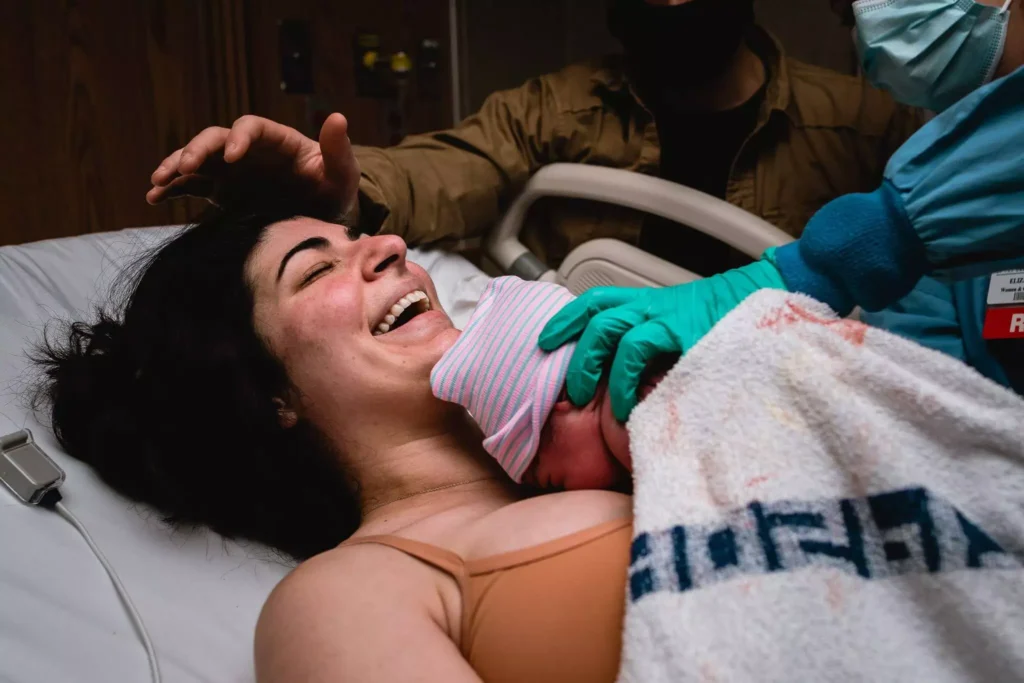

Learn the science of pregnancy and birth to take the mystery of labor away! Understand why you are feeling what you feel, and learn strategies to confidently move through pregnancy and birth!
- 9h+ of Video
- Support Group
- Close Captioning

- 5 Workouts/Week
- Gym Workouts
- Self-Paced

Instructor
GINA
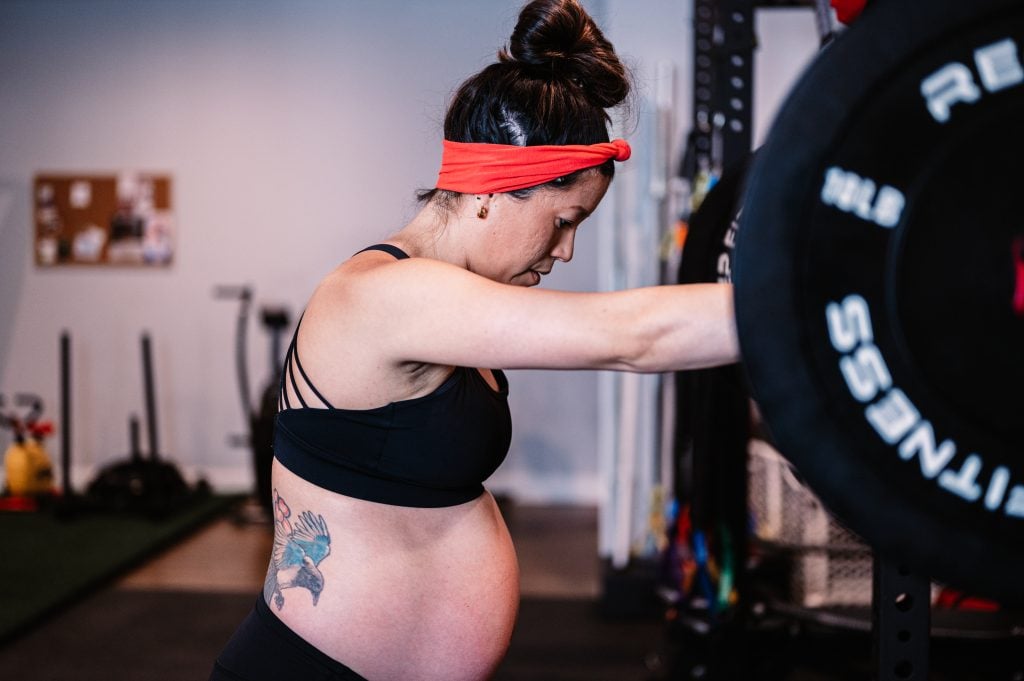
Workout on-demand with our prenatal fitness workout videos! Each workout is 30-40 minutes to follow along as you exercise at the same time!
- Birth Prep
- All Trimesters
- Mobility Work

Instructor
GINA
Find comfort and relief from pelvic girdle pain throughout your pregnancy and postpartum period! This program incorporates myofascial sling focused exercises to stabilize across the pelvic girdle joints.
- 3 Weeks
- On Demand Workout Videos to Follow