

Welcome to the MamasteFit Podcast! In this episode, we have Allison who’s going to be sharing her birth story, where she noticed decreased fetal movement towards the end of her pregnancy when she was only 34 weeks pregnant. She had listened to our “Count the Kicks” podcast episode, and Roxanne encouraged her to go in and get seen. If you ever notice that your baby is moving a lot less than normal, it is totally okay to go to your birth location and get checked out. We would rather you go to your birth location and get told that everything’s fine, so that you have that reassurance that you and your baby are doing well, as opposed to staying home because you’re nervous about being a burden to your birth location’s team. They are there to help support you, and so if you were ever concerned about your baby’s movement, at a minimum, call your provider to have a conversation with them, or go in to be seen. I’m excited for you to listen to Allison’s birth story because it is an incredible story on learning how to surrender and to tune into your intuition to help protect you, and your baby.
Read Episode Transcript
Gina: Welcome to The MamasteFit Podcast. This week we have Allison here to share her birth story. So thank you so much for coming onto the podcast, Allison!
Allison: Hi! Thank you so much for having me. It’s an honor to get this opportunity to share my birth story.
Gina: And one of the really exciting parts about, I guess maybe not exciting, but it’s still a really important part of Allison’s birth story, is that she noticed decreased movement towards the end of her pregnancy, and she went in- and this likely saved her baby’s life. So I just wanna thank you, Allison, for one following us, so that you were encouraged to go in, and I’m so thankful that you and your baby are both doing really well now.
Allison: Thank you.
Gina: So let’s start with your pregnancy journey. So this was your first baby, so how are you preparing for birth and navigating your pregnancy?
Allison: I was preparing in every way possible. So even preconception, I was very involved in trying my hardest to have a healthy time trying to conceive, and then throughout my pregnancy as well. So even in that preconception phase, I was learning as much as I could about nutrition and listening to podcasts and trying to read some books. So I was very curious and wanted to learn a lot.
So when I did get pregnant- which did take me a little longer than I expected, and we did conceive, through some fertility treatments, it luckily it was very quick and I had a IUI that worked on the first round, so that was an incredible miracle to begin with- I was just fully dedicated about learning as much as I could about pregnancy and taking the best care of my health and body that I could. And so that’s really where my mindset was, just like, how can I have the best pregnancy for my baby? And then of course, knowing you know’s there’s no perfect health and no perfect way of going about it either, but I just wanted to do the best that I could.
Gina: Yeah, you wanted to set the conditions in their favor. Did you have a specific like vision for your birth that you were planning on? Were you wanting to have an unmedicated birth? Were you probably going to get an epidural? What was your vision for your birth going in, navigating your pregnancy?
Allison: Yeah. When I was trying to conceive and started learning about pregnancy and birth, I became very interested in the most natural approaches possible. And at one point I thought, oh, a home birth would be really beautiful. But as I got pregnant and started, just, once you get pregnant, you start to look at things a bit differently, and I started to feel a little worried, but still interested in a home birth option. But I knew I wanted to try to go the most natural route possible. So I was looking at doing an unmedicated birth and was open to hospital or home birth, and started leaning more towards the hospital side of things. I was looking at doing, having a midwife- I’m in Canada too, maybe a little different from the states, but- I was looking at having a midwife or an OB. And some things happened in my early pregnancy that led me down the path of having an OB, and that pushed me towards having a hospital birth, too. There was some surrendering I had to do there where I started in my mind thinking like I wanna have the most natural birth possible, maybe even a home birth, and ended up being like, okay, I… some things just shifted and I had to surrender and let go and be like, okay, this seems like in this moment this is the best path of going with an OB and likely a hospital birth, and I’ll do whatever I can to have as least interventions as possible, do it unmedicated.
And I started to do visualizations of, just what it might feel like to have the contractions come on, what my morning might be like that day, just trying to put in my mind the most positive experience possible. I listened to a lot, especially your, podcasts on terms of like healthy workouts and different birth stories. And was trying to just keep myself in a positive mindset of birth stories and experiences, and not so much some of the negative ones. So I tried to listen to as few as those as possible, as I heard that can be helpful. So that’s where I was in terms of what I was looking for in terms of my birth, and hoping for, although knowing, trying to also let go and know that things could happen and I didn’t want to be in a place where if something did happen, where an intervention was needed, that I would feel so, like, unable to let go of the birth that I wanted to have, that it would cause trauma or a negative experience. So while I tried to create in my mind a happy holistic birth, I also was trying to prepare myself for, if it doesn’t go that way, you gotta let go of it, too. So it’s hard to do, but I knew that’s where my mindset needed to be.
Gina: And it seems like that was likely a very beneficial mindset for you to have. And I think everyone can really benefit from this ability to surrender to whatever the circumstances of our births are as well.
So let’s move to the end of your pregnancy. So you’re listening to our podcast. You listened to our Count the Kicks episode. How was the end of your pregnancy and what kind of triggered you to make a big change in your birth plan?
Allison: Yeah, I had finally felt like near the end of the second trimester, going into the third trimester, that I was feeling pretty good, and especially after a tough first trimester, with a lot of challenges and morning sickness and all that. And so just around that time, where things started to change was, I had a weekend that my husband and I were taking to just like prep for the baby as much as possible. We like planned doing some shopping for some baby things, taking time to go for lunch, and dinner, and talk about my hopes for the birth, and the plan, and ways to help prep him for labor and all of that. And so that was the focus of that weekend. And on the Sunday, near the end of the weekend, he was just asking me, “How’s the baby feeling? Have you felt her kick?” And there was a moment where first I was like, “Hmm… When was the last time I felt her kick?” So I just started to pay attention, and he kept asking and asking every couple of hours, like, “Has she kicked again?” And I was like, “Okay, yeah, I felt like a couple here and there.” And then that night I noticed she wasn’t moving. Usually at nighttime she’d do somersaults and some pretty big kicks, and I didn’t feel it that night, so I just kept a close eye on it. But in my mind, I also kept saying, “Everything is fine. She has been kicking.”
And so just kept going on with my day, and life. And the next day I did end up calling the hospital to just ask if there’s anything I should do or if I should come in. I was like, “I don’t know if she’s moving as much,” and they just told me to do a kick count, within 45 minutes, get to a certain number of kicks. So I did that and I got enough kicks, so I felt okay, that’s good, I don’t think I need to go in. So I continued to just monitor and try to be aware as much as possible whether she was kicking or not, and she was, but I still felt like I wasn’t feeling the same strength that I had before.
And so two days went by. And then the third night I was in the gym listening to your podcast episode on Count The Kicks, and there I heard some things that just stuck out to me that I hadn’t heard before. I had done two birth courses and hadn’t done a lot of things around kick counts. And it just wasn’t something that was ever really emphasized to me, like my OBGYN had just given me a printout on, “this is what counting kicks are and you should do them.” And I was like, this doesn’t sound that important. I think it’s more important if I just know that she’s moving. So I didn’t know a whole lot about different types of movement or monitoring it, that really was never on my radar. So when I listened to that episode, a few key things stuck out to me of, just new information and learning that was really helpful. And there was also something they mentioned in that podcast episode that was huge, she said that the hospital is there to help you so if you ever have any worry, just go. It’s better to get checked and to just go home and be like, “Everything was fine!” than to have any regret. So that really stuck with me and that helped give me that little push to just listen to that intuition that I had with my baby that was just like, “Something here is not exactly right.” And so that pushed me to go to the hospital.
And at the hospital, I was set up with fetal monitoring so they could keep track of her heart rate. And they also asked me to track how many kicks she was doing, and she was kicking a ton. I don’t know what it was about the hospital, but her kicks felt strong. She was doing a million kicks a minute, it felt like! She seemed good. And different residences and OBs were coming in- my exact OB wasn’t there, but I was being monitored by a couple of different people and things seemed fine. Even one resident, maybe shouldn’t have said this, but she was like, “Oh, things look really good. You’ll probably be going home in not too long!” And I was like, “Oh, okay, great! Yeah, I think I’m feeling good. She seems like she’s doing well.” And they’re like, “We just wanna keep you here a couple more hours.” So I was like, “Oh, okay. Things seem fine. I should be going home anytime.”
And then they kept monitoring, and then finally one OB came in and she said that, there’s three things with the heart rate that we watch for within babies- three different things of like acceleration and, I dunno what, medical terms that I don’t remember exactly. And she said, “There’s one thing that we’re not quite seeing yet. And so we just wanna keep monitoring for a bit longer and see what baby does.” And so that made me like a little nervous, but like I’m sure everything is still fine and a lot of things I had learned in my birth courses was like the hospital will want to intervene a lot and they may set you down a path of intervention that you don’t want. So I was very guarded, too, I think just being at the hospital, knowing like I still want the natural birth that I have planned, and I’m going to protect my energy and my baby’s energy and not let anyone push me into anything I don’t want. So I was there, listening, but also we’re not going to do anything too crazy today.
So, they ended up sending me for an ultrasound in the middle of the night. Even that ultrasound technician was kinda like, “I don’t know why you’re here…” they’re not really supposed to say everything looks good, but she was saying everything looked good. And so I was like, “Okay.” And more checks, things seem fine. I went back to triage and waited for the doctor to take a look at those results. And even after they looked at results, they didn’t see anything wrong, but they said, “Okay, we still want to keep you overnight longer to keep monitoring things, so we’re going to move you to Labor and Delivery so you can sleep a little bit better in a better bed, your husband can stay and sleep in that room with you, and we’re just going to monitor overnight.” So I still felt okay, not ideal, but things don’t seem that bad, so I’m sure I’ll just be going home in the morning and they’ll say everything looks fine.
In the morning I woke up and a nurse came into the delivery room that we were sleeping in. And she said, “Hey!” like, introduced herself and said, “I’m going to start prepping you for an IV just in case we need to go into surgery.” And I was like, “Hold the phone!”
Gina: That escalated!
Allison: Yeah, I was like, “What are you talking about? Can you like, give me some more information here? Because I’m not prepared for having a C-section. I don’t want an IV. This is not what I want.” And she was like, “The new OB on call said there was some things that started to look concerning. I’ll get her to come see you and talk to you right away. She just came in this morning, so she’s just seeing someone else, and she’ll come over,” and I said, “Yeah,” I was like, “please don’t prep me for anything until I talked to the OB.” So I was probably being a little bit difficult, but I think I was just like really in shock there. I was 34 and a half weeks pregnant, so in my mind, too, I was like, baby is healthier and safer inside of me than outside. So that concept of needing to get baby out in emergency hadn’t crossed my mind yet that could be a possibility, that baby’s safer out than in. So I was starting to feel really confused and scared at that point.
Luckily, the OB came in pretty quickly, and she told me that overnight, and very quickly in the morning, she started to see signs of distress that weren’t even necessarily there when I first came in. And she said that what she was suspecting was happening was that the baby was losing blood. So things got very real in that moment, and it was… a lot. So all of a sudden it went from 0 to 100, and I was trying to understand as much as possible from her, like how this could be happening, why it was happening. And she was very much just like, “We’re getting to the point where now we just need to get baby out, and baby’s safer out than in because I think baby is losing blood based off these things that I’m seeing in her heart rate.” That was pretty, pretty intense. And very quickly from there, once I asked her some more questions of just like, how serious is this? What? I didn’t even know, what does it mean for the baby to lose blood at that point? And she pointed out very clearly that it was a life or death situation, and that if babies don’t get the blood they could have brain damage, like all these sort of things that she didn’t wanna say, but I needed to hear that to really understand like how serious the situation was.
And so then I was like, “Okay, do what you need to do. I’m letting go now at this point, this is out of my control.” And so I agreed to being prepped for an emergency C-section immediately. And so I was prepped and got into the ER, and was getting ready. I had the epidural and was getting ready, and the anesthesiologist was like, “Can you,” they test you, “can you feel this? Can you feel this?” And I was like, “I can still feel that. Still feel that.” And then a few seconds later I was like, “Oh, that feels really sharp,” and they’re like, “Oh, okay. Yep. The anesthesia’s not taking.” So I was like, “Okay, great.” So they had to put me under with general anesthetic. So again, another very different, very far from a natural birth, where now I’m being put under for my baby. I was put under, she was birthed by Cesarean, C-section. She had lost blood, so she needed a blood transfusion immediately at birth and was taken to the NICU and that did save her life.
When the OB stopped in the next morning to come see me, she said, “I don’t normally come talk to patients afterwards, and I wanted to come and see you because of what happened. And I know you were,” she knew I was very skeptical, but also knew that this needed to happen. So she felt the desire to come chat with me, which was so nice and lovely to get that loop closed with her of just that intense experience. And she just told me again how we saved baby’s life by doing that Cesarean section and by me coming in when I did. So she said if I hadn’t have come in, if I had waited another day, then my baby probably wouldn’t have made it, she would’ve lost too much blood. So that was really, really something and I’m just so grateful, of course, that it worked out the way it did, and that she’s okay and that we’re here now.
Gina: So it’s incredible that the timing of when that episode came out with your baby needing that support, like you’re the second person that has messaged us to say, like listening to that episode, they then went in and then like their baby’s life was saved and it really reinforces for us, like how important this work is because there are literally lives that have been saved because of it. And I’m so thankful that you we’re listening to your intuition and that you took the advice from the episode and got checked out because it did save your baby’s life. And I think that is so powerful.
Did your baby have to spend some time in the NICU after birth, or how was that experience for you, navigating this really big shift in your birth plan, and then also probably an unexpected postpartum timeframe as well?
Allison: Yeah, and I will just say again, like how grateful I am for that podcast episode. Like the timing is so divine, and it’s amazing as that that happened to someone else, too. Because I just couldn’t imagine if I hadn’t had listened to that and it gave me that extra nudge of it’s okay to take the step to just go to the hospital, I just couldn’t imagine not having my baby girl right now, ’cause she’s everything to me. So the work you do really is life saving and changing. So thank you for doing that episode, for putting it out and I’m so grateful I listened to it when you did.
Gina: I am too.
Allison: And yes, my daughter did spend time in the NICU. She was there for about a week and a half. So she was born, since she was 34 and a half weeks, early, she was about four and a half pounds, so very tiny. So she had to be on a air, and she had a little bit of jaundice, the blood transfusion, so there was a lot of little things that they had to watch on and help baby with in the beginning. So I was in the hospital for two, two nights- three nights, ’cause I spent that first night in the hospital and then had two nights in the hospital and went home. And she was in the NICU at a hospital really close to us for, she was there for three days, but had to stay an extra day while they waited for a bed at a lower, less intensive care at another hospital to open up. Because she was doing so well, luckily she moved on from the intensive care pretty quickly and we moved to another hospital, which luckily had a lot more room and space for us. So we had to drive, it was like 20 minutes, but we drove every day home and back ’cause we couldn’t sleep over there at that hospital. And so we did that for about a week and a half as she grew stronger, and was eventually able to come home with us.
And she did great. The doctors at that hospital were always just calling her a superstar ’cause she just knocked off all the things that she needed to do to graduate to going home pretty quickly and gained her birth weight back really well and grew really strongly. So she, she knew what she was doing when she decided to come early, so…
Gina: I believe she’s a superstar! When you went into triage, she was like, “Wait a minute. Let me do all my moves so that you know that I’m good.” So I believe it that she was a superstar in the NICU too, and was like, “All right, let me show them how amazing I am.”
How is she doing now? How old is she now?
Allison: She’s eight months now.
Gina: Okay. So she’s pretty close to Zoe’s age. And she’s probably, what? Crawling? Like doing all the amazing things that she’s doing.
Allison: Yeah. She’s not crawling too much, but she is… ’cause her gestational corrected age, she’s supposed to be a Christmas baby and she was born middle of November, so she’s sitting up a lot, she’s eating food now, talking lot. So she’s doing all those things.
Gina: She’s still crushing it.
Allison: Yeah.
Gina: She’s still crushing it.
So do you have any advice for somebody that is preparing for their birth? Because there are some folks that, so whenever we post about, “Hey, make sure you’re doing your kick counts and you’re monitoring baby’s movement, like this could be something that saves your life,” we always have one or two people that say we’re fear mongering. That by telling somebody to go in when they’re concerned, like, in the United States, we don’t have universal healthcare, so it could potentially be like a bill to go into the hospital to get checked out. And then similar to how, like you were feeling where, “Oh, they’re going to try to push interventions on me.” And so there are some folks that believe if, if we’re telling all these people to go in, that we’re likely introducing more interventions, more intervening. What advice would you have for somebody that’s battling that, where they’re like, “I don’t wanna be like scared to go do this,” but it’s also important because this is your baby’s way to communicate that something is wrong. Like how, would you help somebody navigate that, like that path?
Allison: It’s a good question. It is definitely tough and going to be unique for everyone. I think for sure, however way you are feeling is valid and correct, so listen to the way that you’re feeling and honor it, to start. If you are feeling nervous or worried or, even worrying about hospital is totally valid as well. But also I think it really comes down to listening to your intuition again, and trusting that and surrendering a bit to the process. So you know, take in the information that you need to feel prepared, and there’s ways that you can prepare yourself to ask questions in an appropriate way to doctors so that you’re protecting yourself and your baby too, and you’re informed and you can decide whether an intervention is necessary or not.
I think going in with the mindset too, of really, they are there to help at the hospital. There’s definitely different hospitals and policies and procedures, but there’s also a lot of really, a lot of doctors and a lot of nurses get into it because they do care. I felt so much care and love and protection at the hospital too, with all the nurses and doctors that did help us. But that helped me feel safer, too. And when things were happening that I didn’t feel comfortable with, I pushed back a little bit and asked the questions that I needed to get the information that helped me make the decision that felt right for me and my baby. And you always have a choice. You can always say no if it doesn’t feel right for you. And you can also let go, I think, of your ego too, if you have that, like I maybe did a little bit where I was like, “Okay, I’ve done all this research. I think this is the best way,” but also I’m not a doctor, so I don’t know when it’s life or death and life changing. So I had to let go of okay, I thought this is the way that it could go and be more natural, but, this medical intervention is probably going to save my baby’s life. And it did. So that’s what was best for me and my baby in that moment, and it could be different for someone else. And I think it’s just having a little bit of grace and flexibility and fluidity through the process because you never know where you’re going to go and end up and what might happen. So I think that’s the best way to prepare yourself is having the information ready at hand and surrendering, letting go to what does happen and what’s out of your control.
Gina: Absolutely. Thank you so much, Allison, for coming on the podcast and sharing your incredible birth story with us. And thank you so much for being a listener, so that you knew to go in when your baby needed It, it means so, so much to us to know how we are helping, like, our listeners and our following. We get like messages all the time and it’s always really rewarding, but to hear about stories like yours is, it really motivates us to make sure that we keep doing this work because it’s literally saving lives.
Allison: Yeah. Thank you so much for having me. It’s been an honor to share. And I will add that your content for working out has been truly helpful during pregnancy and postpartum as well. I’ve always enjoyed fitness and I do have a bit of a background in personal training, but when it came to pregnancy, I was really nervous for the first time of like how to work out properly, pregnancy and postpartum, and you have so many different movements, like pelvic shifts and tilts were very new and different to me in terms of helping take care of my pelvic health during pregnancy and afterwards, too. So there’s just so much that I continue to learn from you in different ways as well. That has just been incredibly helpful for helping me take care of my body, especially since postpartum and post C-section that is very, challenging, but.
Gina: Oh, yes, postpartum is… it’s a whole beast of its own. But I’m really glad to support you in that way too, with prenatal fitness and with postpartum fitness as well.
Allison: Yeah, so I just wanna add that in there. So thank you.
Gina: Thank you!
I am so thankful that we were able to support Allison, not only during her fitness journey, during pregnancy, and now into the postpartum as she’s navigating a very new phase of life, but incredibly thankful that we were able to support her in preparation for her birth.
It is incredibly important to monitor your baby’s movement in a way that feels non-stress inducing for you. And so you can just pay attention to how your baby moves throughout the day and notice some of their trends. I found using like a notes app where I would just write down, “Hey, at 10:00 AM my baby tends to be more active. At 12:00 PM my baby’s more active,” and then just monitoring that each day.
Your baby’s way to communicate to you is through their movement. And so if you notice decreased movement, this is a good reason to go in and see your provider. You may have been told that if you notice decreased movement, that this is because your baby’s running outta room in the third trimester, which is not true, or you may be told to drink something sugary or to eat something cold to help perk baby up. This is also not helpful advice. If your baby is decreasing movement because they are in distress, we can do these things and they may be slight bandaids and false reassurance. And so if you notice decreased fetal movement, it is important to go in and see your provider to get checked out. The best case scenario is they tell you that everything is great and they just send you home. And worst case scenario, you are in a birth location where your baby’s life can be saved.
We are all about supporting you throughout your pregnancy into your postpartum journey with confidence. We don’t want to scare you or to fear monger you or to add additional stress to make this experience any more stressful or anxiety producing as it already might be for you.
With our prenatal and postpartum fitness programs, we want to guide you to feel strong and comfortable within your body, regardless of the phase of life that you’re in. It is totally reasonable to be pain free and to move with confidence in both phases of life.
Our childbirth education course is about providing evidence-based information to you without fear mongering. We want to provide unbiased support to you because what you may choose for you and your baby may be different than somebody else, and that is totally fine. We want you to have the information so that you can make the best decision for you and for your family because ultimately that is what is most important.
You could check out all of our online offerings, both for our fitness programs and our education courses on our website at mamastefit.com and use code STORY10 to get 10% off any of our online offerings.
This podcast is sponsored by Needed. Needed is nutrition company that specializes in optimize and nourishment for the perinatal timeframe. You can use our code MAMASTEPOD to get 20% off your order.
Additional Resources
Prenatal Support Courses
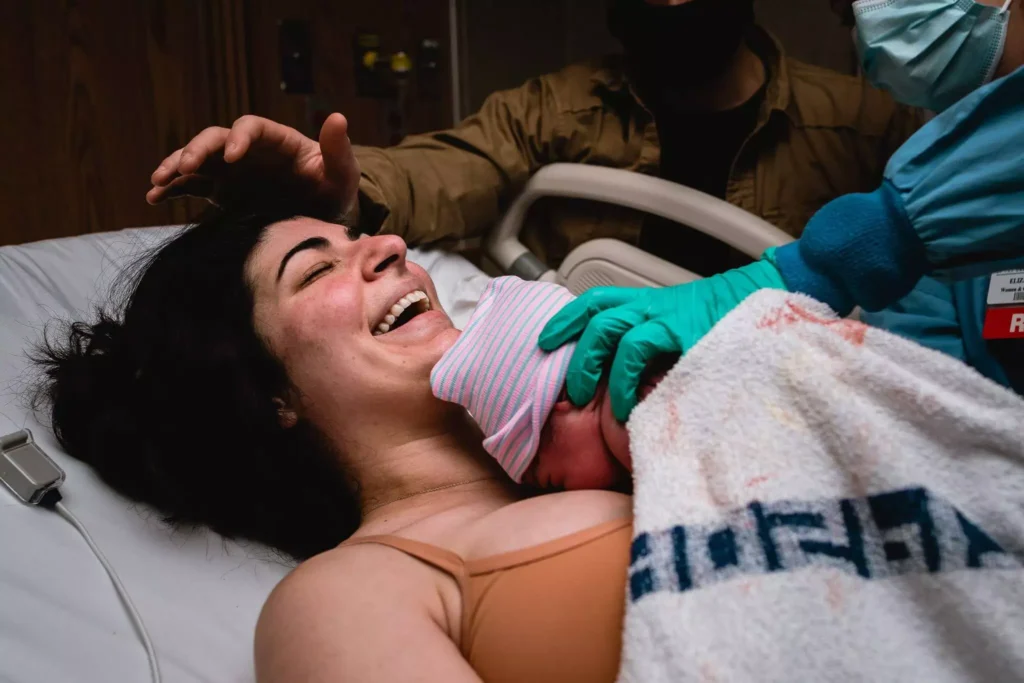

Learn the science of pregnancy and birth to take the mystery of labor away! Understand why you are feeling what you feel, and learn strategies to confidently move through pregnancy and birth!
- 9h+ of Video
- Support Group
- Close Captioning
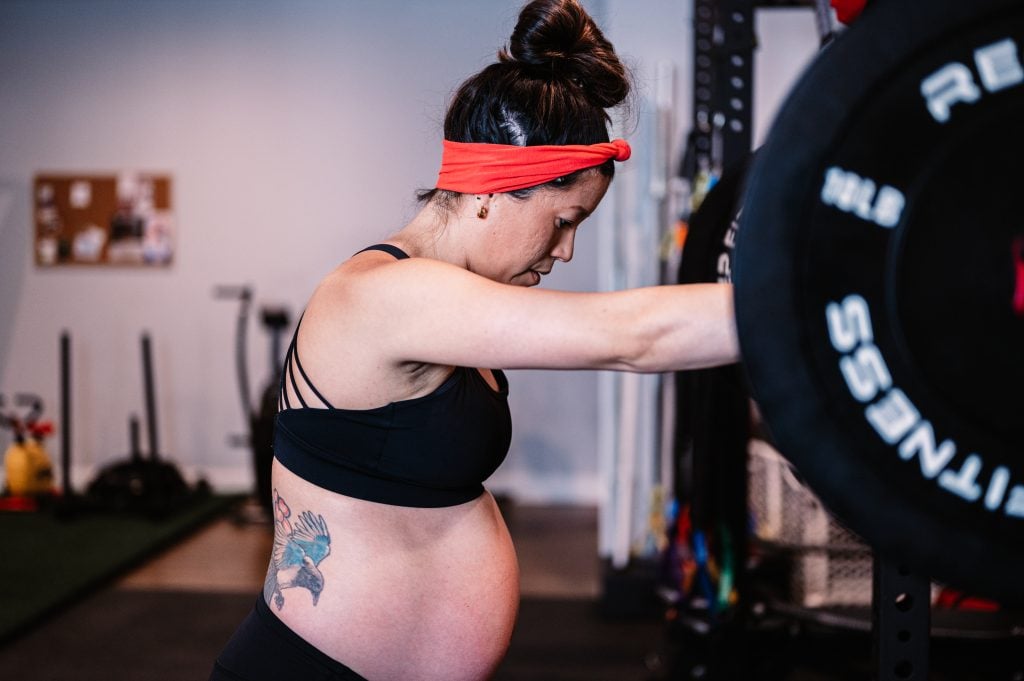

- 5 Workouts/Week
- Gym Workouts
- Self-Paced

Instructor
GINA
Workout on-demand with our prenatal fitness workout videos! Each workout is 30-40 minutes to follow along as you exercise at the same time!
- Birth Prep
- All Trimesters
- Mobility Work

Instructor
GINA
Find comfort and relief from pelvic girdle pain throughout your pregnancy and postpartum period! This program incorporates myofascial sling focused exercises to stabilize across the pelvic girdle joints.
- 3 Weeks
- On Demand Workout Videos to Follow