



Table of Contents
Most of us never think about the subtle asymmetries that exist within our bodies—how we stand, how we walk, or which leg carries more of our weight. Yet these patterns quietly influence how our hips move, how our pelvic floor functions, and even how comfortable we feel during pregnancy and postpartum recovery.
In this full body pregnancy workout, we explore those normal asymmetries and use them to your advantage through targeted unilateral (one-sided) strength training. This routine not only helps correct imbalances but also supports pelvic floor health, hip stability, and overall body alignment.
Whether you’re pregnant, newly postpartum, or simply wanting a more balanced, resilient body, this session will guide you through smart, intentional movement that creates strength where you need it most.
Subscribe to our YouTube Channel for more weekly workouts and educational videos! We publish one new workout video and 2-3 educational videos a week on our channel.
Understanding Normal Asymmetry in the Body
Before jumping into the workout, it’s important to understand why your body naturally moves the way it does.
Why We Favor the Right Side
Most people place more weight into their right leg. This causes:
The right hip to sit more internally rotated
The right hamstring and inner thigh to work a little harder
The right anterior pelvic floor to be more active
On the left side, the opposite typically happens:
The left hip prefers external rotation (an “open” hip position)
The left glute and quad often become stronger
The left posterior pelvic floor tends to feel tighter
In day-to-day life, these patterns rarely cause issues. But during pregnancy and postpartum—when the body carries extra load and the pelvic floor is under more demand—they can contribute to discomfort, imbalances, or restricted mobility.
This workout intentionally leans into those asymmetries to help restore balance.

What You’ll Need
To complete the workout, gather:
One medium-to-heavy dumbbell
Two medium-to-heavy dumbbells (for rowing)
A wedge or rolled-up mat (optional)
A yoga block
We’ll move through two full rounds of exercises, ending with pelvic floor release work and a core-activating bird dog variation.
THE WORKOUT
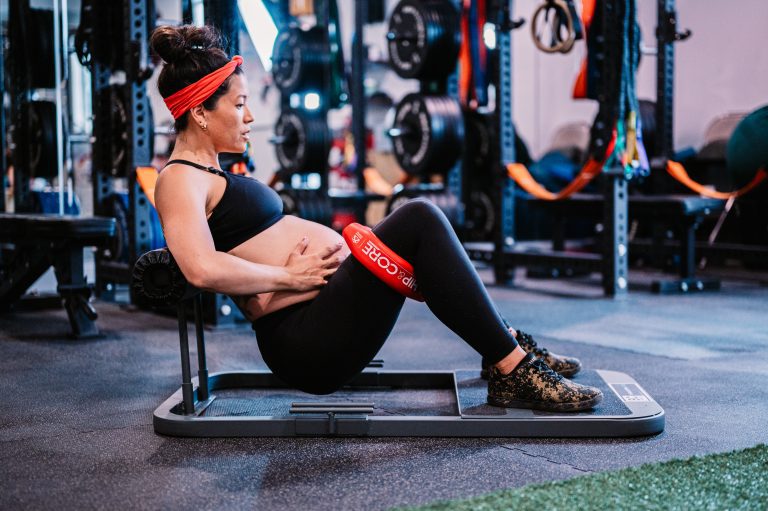
1. B-Stance Squat (Left & Right)
How It Works
The B-stance squat puts one leg in a kickstand, allowing the front leg to do most of the work. How you hold the weight changes the hip bias.
Left Side — Contralateral Hold
Left foot on the wedge
Right foot in kickstand
Weight in the right hand
This setup encourages internal rotation on the left hip—helping stretch and strengthen the areas that don’t get as much load in everyday posture.

Right Side — Ipsilateral Hold
Right foot on wedge
Left foot kickstand
Weight stays in the right hand
This biases external rotation on the right hip, countering the usual compressed, inward-turning pattern many people have on their right side.

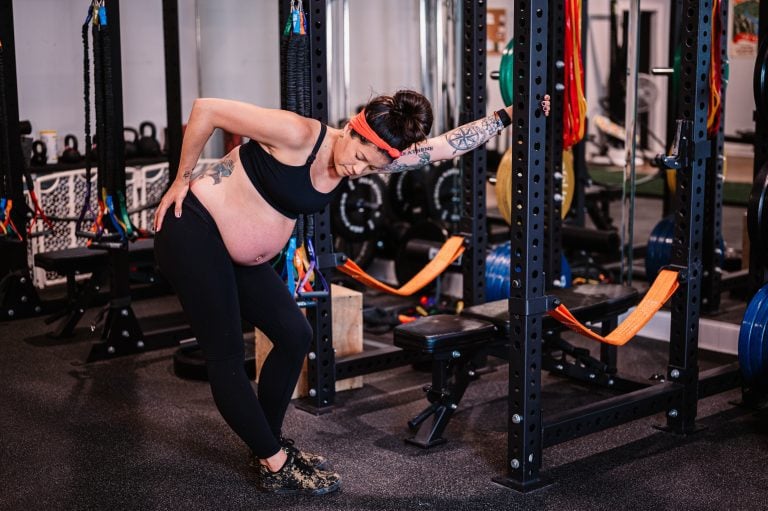
2. Single-Leg Deadlift (Left & Right)
Left Side — Contralateral Hold
Weight in the right hand
Support with left hand on wall (optional)
This variation deepens rotation toward the left hip, encouraging a more balanced relationship between the hamstrings, glutes, and inner thigh.

Right Side — Ipsilateral Hold
Weight remains in the right hand
This biases the right side into a more open hip position, reducing tension in the front of the hip and helping rebalance the right pelvic floor.

3. Seesaw Rows
Using two medium-to-heavy dumbbells, hinge forward about 45 degrees and alternate rowing each side with rotation.
Why It Matters
Restores natural ribcage mobility
Helps unwind right-side compression
Improves how the ribcage and pelvis coordinate
When the ribcage gets “stuck”—whether extended or rotated—it directly affects how well the pelvis moves. Adding rotation is one of the best ways to restore that mobility.


 On-demand video · 30 workoutsCore, Pelvic Floor & Pelvic StabilityThirty follow-along workouts across beginner, novice, and advanced levels, ten per level — core and pelvic floor strength for pain relief in pregnancy or postpartum.Learn more
 Bundle · lifetime accessMamasteFit BundlesCombine courses and programs for lifetime access and save up to 15% — grouped for birth preparation, the third trimester, or the whole pre and postnatal journey.Learn more
 On-demand video · 128 workoutsPrenatal Workout On-DemandFollow-along workouts from week 5 to week 41, four or five a week with guided warm-ups and cool-downs — over 128 sessions coached in real time alongside the video.Learn more
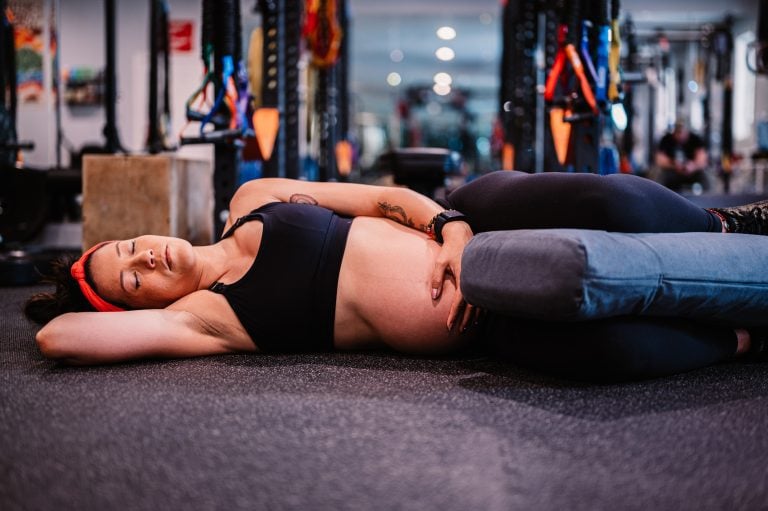
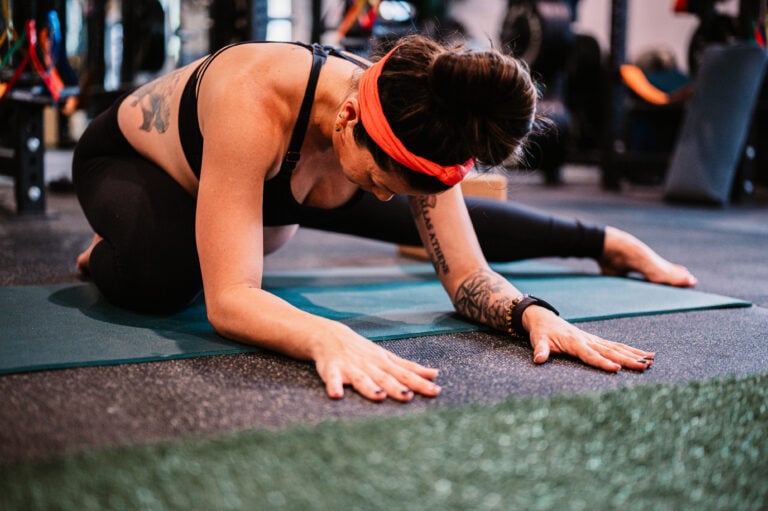
4. All Fours Hip Shift (Pelvic Floor Release Work)
This is one of the most important parts of the workout—an intentional release and reconnection to your pelvic floor.
Left Posterior Pelvic Floor Release
Left knee elevated on the yoga block
Shift 80–90% of weight into the left hip
Move between:
Rounded pelvis (exhale, engage core)
Arched spine (inhale, soften belly)
You should feel this in the back left “hip pocket”—the place you’d slide your hand in a jean pocket.

Right Inner Thigh & Front Pelvic Floor Release
Knees wider
Weight shifted toward the left
Right knee pressing into the floor
The arched position targets the front pelvic floor, while the rounded position again taps into the posterior chain.

5. Bird Dog Variations (Core Integration)
These are not your typical bird dogs. They’re designed to keep the ribcage and pelvis connected—without arching the back.
Left Leg + Right Arm
Reach long without lifting too high
Draw elbow to knee
Keep ribs and pelvis gently pulling toward each other


Right Leg + Left Arm (Side Body Focus)
Reach back and slightly behind for a side-body opener
Bring knee to elbow to round
This helps lengthen the right side of the body, which often feels tighter and more compressed.


Round Two
The second round repeats the same series of movements—with the same intentional asymmetrical loading. Expect deeper connection, improved mobility, and more balanced strength as your body adapts to the patterns.
Why This Full Body Pregnancy Workout Works
This routine is more than a strength workout—it’s a strategy to support:
Pelvic mobility
Hip strength and stability
Ribcage rotation
Core connection
Postural alignment
By intentionally loading each side differently, you’re teaching the body to move with more symmetry—even though it’s naturally asymmetrical.
This becomes especially helpful during pregnancy and postpartum when shifts in weight distribution, ligament laxity, and core changes can intensify existing imbalances.
Want More Workouts Like This?
If you want to continue building balance, pelvic floor strength, and confidence in movement, check out our online fitness programs for:
Pregnancy
Postpartum recovery
Strength training in motherhood
Use code YOUTUBE10 for 10% off any of our online fitness programs.
And don’t forget to subscribe on YouTube—new workouts drop every Tuesday, educational videos every Wednesday, and short-form content throughout the week.
 Video course · 7 modulesPrepare Your Pelvic Floor For BirthSeven modules on releasing the pelvic floor rather than only strengthening it — breathing drills, thoracic and pelvic mobility, and how to relax it during labor.Learn moreOn-demand video · 24 workoutsBirth Prep Workout ProgramTwenty-four workouts that open the pelvis for each stage of labor — strength, mobility, and positioning you can start at any fitness level, 15 to 30 minutes each.Learn more
 App program · 16 weeksPostpartum Return to FitnessSixteen weeks of rebuilding, four strength sessions a week, with a vaginal or cesarean recovery track and follow-along videos for the first six weeks.Learn more