



Table of Contents
Welcome to the MamasteFit Blog! Preparing your body for childbirth is an essential part of your pregnancy journey and one way to ensure a smoother delivery is through targeted pelvic mobility exercises. In today’s workout, we focus on creating space in the top and bottom of the pelvis to improve mobility and support labor progression.
Subscribe to our YouTube Channel for more weekly workouts and educational videos! We publish one new workout video and 2-3 educational videos a week on our channel.
Why Train Pelvic Mobility During Pregnancy?
Prenatal exercise isn’t just about staying fit; it’s about preparing your body for the unique demands of childbirth. Here’s why these exercises are so beneficial:
Enhanced Pelvic Mobility: Regular practice of these movements helps counteract the natural tendency during pregnancy to favor an extended spine and externally rotated hips.
Improved Labor Efficiency: As your baby rotates and positions itself for birth, it’s crucial for your pelvis to be mobile. A more open pelvis allows the baby to apply effective pressure against the cervix, potentially shortening labor time by stimulating the release of key labor hormones.
Mind-Body Connection: By focusing on mindful movement, you become more attuned to your body. This awareness can translate into better control and confidence during labor and delivery.
Holistic Strength: The workout balances strength and flexibility, ensuring that both the anterior and posterior parts of your pelvic floor are supported—critical for both a smooth labor and postpartum recovery.
These movements not only prepare the body for labor but also enhance overall comfort during pregnancy. By focusing on releasing tension and improving mobility, this routine can help ease discomfort and promote a more fluid birth experience.
Equipment You’ll Need
Before beginning the workout, gather these essential items to support your movements:
Yoga Block: Use this for support in deep squats and as a prop for some movements.
Step-Up Surface: Options include a wooden box, stool, or stairs for dynamic stepping exercises.
Resistance Band: A thin band is perfect for rows that engage the upper body and hips.
Weight: A medium to heavy weight for the Romanian Dead Lifts (RDLs) to help strengthen the posterior chain.
The workout includes two rounds of deep squats, step-ups, resistance band rows, calf raises, walking hip shifts, and staggered stance RDLs—all aimed at improving pelvic mechanics and increasing mobility where you might feel the most tension. Let’s get started!
1. Deep Squats for Pelvic Opening
The deep squat is fundamental in this workout. It serves dual purposes: building strength and increasing pelvic mobility.
How to Do It: Lower yourself slowly to a box or an elevated surface if needed. Ensure you press your knees out to encourage external hip rotation, and allow a slight rounding of the back.
Benefits: This movement helps release tension in the pelvic floor and enhances the posterior tilt necessary for a more rounded pelvis, which is beneficial during labor.

2. Step-Up with Hip Rotation
Next, transition to step-ups using your chosen elevated surface.
How to Do It: Start by placing one foot on the box, loading your weight into that leg while keeping your belly towards your thigh. As you extend your hip and step up, notice the stretch in your glute muscles.
Benefits: This exercise targets the lower half of the pelvis, encouraging internal rotation. It also stretches the glute and posterior pelvic floor—areas that can be particularly tight during pregnancy.

 On-demand video · 24 workouts
Birth Prep Workout Program
Twenty-four workouts that open the pelvis for each stage of labor — strength, mobility, and positioning you can start at any fitness level, 15 to 30 minutes each.
Learn more
On-demand video · 24 workouts
Birth Prep Workout Program
Twenty-four workouts that open the pelvis for each stage of labor — strength, mobility, and positioning you can start at any fitness level, 15 to 30 minutes each.
Learn more
 Video course · 7 modules
Prepare Your Pelvic Floor For Birth
Seven modules on releasing the pelvic floor rather than only strengthening it — breathing drills, thoracic and pelvic mobility, and how to relax it during labor.
Learn more
Video course · 7 modules
Prepare Your Pelvic Floor For Birth
Seven modules on releasing the pelvic floor rather than only strengthening it — breathing drills, thoracic and pelvic mobility, and how to relax it during labor.
Learn more
 Video course · 9+ hours
Childbirth Education
Over nine hours of video on contractions, comfort measures, pushing, and recovery — so you walk into labor knowing what's happening and what your options are at each stage.
Learn more
Video course · 9+ hours
Childbirth Education
Over nine hours of video on contractions, comfort measures, pushing, and recovery — so you walk into labor knowing what's happening and what your options are at each stage.
Learn more
3. Resistance Band Rows
Integrate a resistance band to incorporate upper body movement.
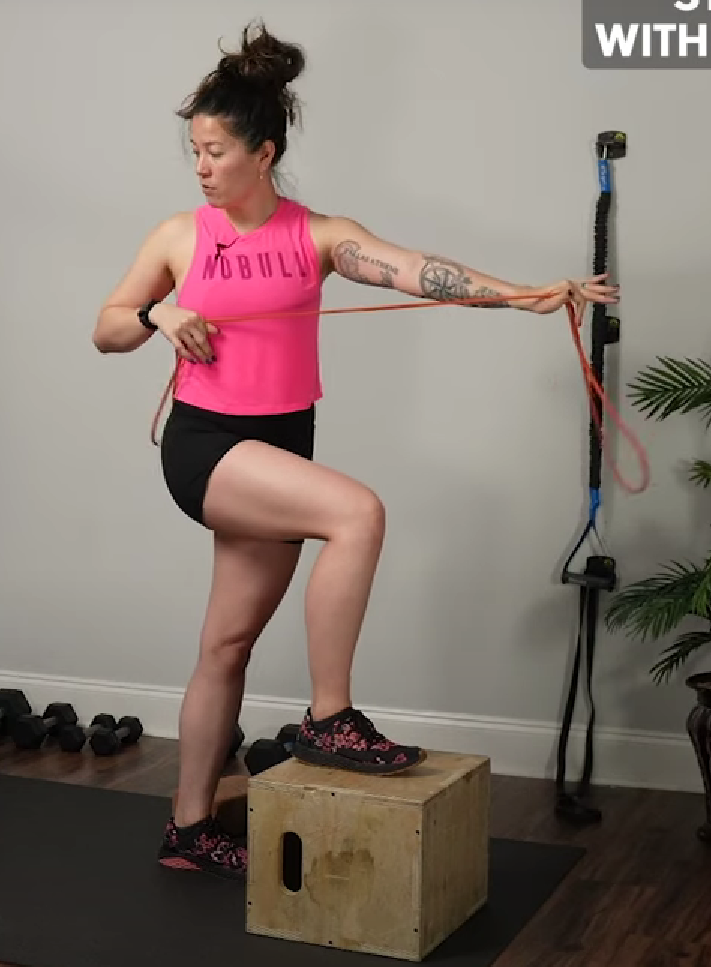
How to Do It: Grab a hold of your band and with your foot on the elevated surface, row by rotating your upper body towards your thigh. Keep your knee aligned and your belly drawn in.
Benefits: This row not only strengthens your upper body but also reinforces the connection between your core and pelvis, ensuring that your rib cage and pelvis work together in harmony.
4. Calf Raises with Support
Don’t underestimate the role of your calves in pelvic mobility.
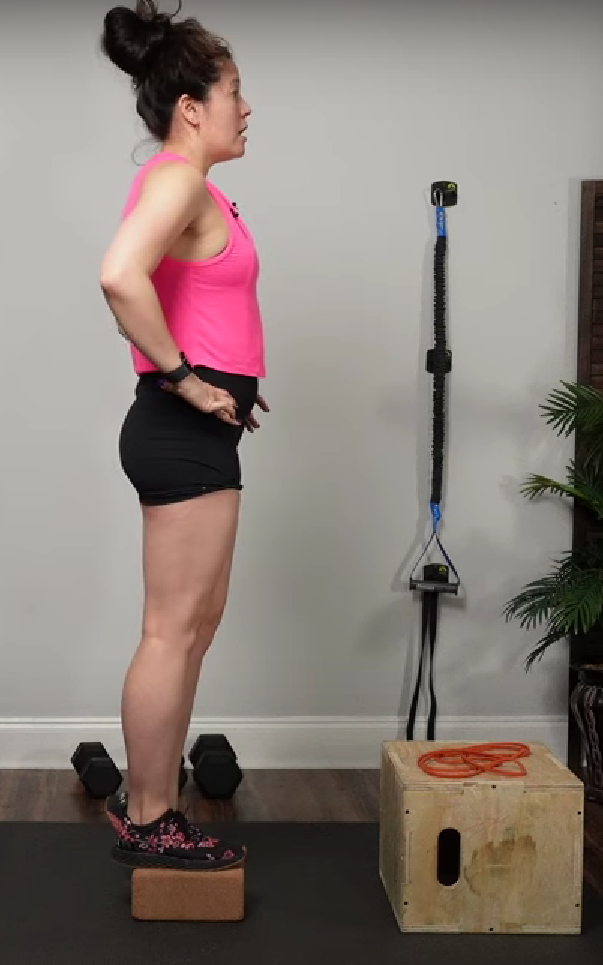
How to Do It: With one foot on the support, perform calf raises. This movement shifts weight from the box to the floor, engaging the lower leg muscles.
Benefits: Strong calves help pull the pelvis into internal rotation, which is crucial for opening the bottom half of your pelvis—a key element in easing the baby’s descent.

5. Walking Hip Shifts
Inspired by a simple yet effective dance move (think “Single Ladies”), walking hip shifts further promote pelvic rotation.
How to Do It: Stand with your feet parallel, then shift your weight from one leg to the other while reaching across with the opposite hand.
Benefits: This dynamic movement encourages the pelvis to rotate on the femur, enhancing the stretch in your glute and hip pocket area, which is essential for a smooth labor progression.


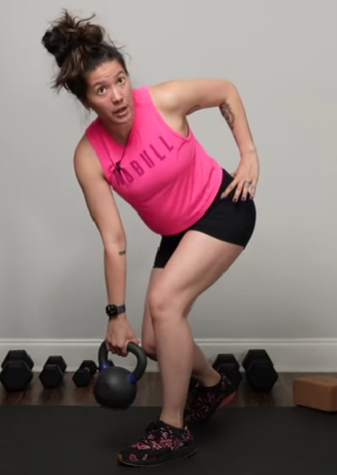
6. Staggered Stance Romanian Dead Lifts (RDLs)
Finish the workout with a staggered stance RDL, focusing on controlled hip hinge movements.
How to Do It: With a weight in hand, place one foot forward and the other back. Hinge at the hips by reaching down with the opposite hand towards your foot, keeping your core engaged and your back straight.
Benefits: RDLs strengthen the hamstrings and lower back while reinforcing the closed hip position. This helps in creating space in the bottom half of the pelvis, crucial for facilitating the baby’s rotation during labor.
Final Thoughts
Integrating pelvic mobility work into your prenatal routine can make a significant difference as you prepare for childbirth. Each exercise in this routine is thoughtfully designed to create space in your pelvis and strengthen the muscles essential for a successful labor process. Remember, the key is to move slowly and listen to your body. If you’re new to these movements, start gently and gradually increase the intensity as your body becomes more comfortable with the motions.
For more detailed workouts and additional prenatal fitness programs, check out our online offerings. Our programs are not only designed to help you stay fit but also to support you through the unique challenges of pregnancy and postpartum recovery.
Thank you for joining us on this journey toward a stronger, more prepared body for childbirth. Happy exercising, and here’s to a healthy and empowering pregnancy!
 Bundle · lifetime access
MamasteFit Bundles
Combine courses and programs for lifetime access and save up to 15% — grouped for birth preparation, the third trimester, or the whole pre and postnatal journey.
Learn more
On-demand video · 30 workouts
Core, Pelvic Floor & Pelvic Stability
Thirty follow-along workouts across beginner, novice, and advanced levels, ten per level — core and pelvic floor strength for pain relief in pregnancy or postpartum.
Learn more
Bundle · lifetime access
MamasteFit Bundles
Combine courses and programs for lifetime access and save up to 15% — grouped for birth preparation, the third trimester, or the whole pre and postnatal journey.
Learn more
On-demand video · 30 workouts
Core, Pelvic Floor & Pelvic Stability
Thirty follow-along workouts across beginner, novice, and advanced levels, ten per level — core and pelvic floor strength for pain relief in pregnancy or postpartum.
Learn more
 App program · 40 weeks
Prenatal Strength Training
A gym-based program that syncs to your current week of pregnancy — four strength sessions plus one pelvic stability workout a week, with demo videos for every exercise.
Learn more
App program · 40 weeks
Prenatal Strength Training
A gym-based program that syncs to your current week of pregnancy — four strength sessions plus one pelvic stability workout a week, with demo videos for every exercise.
Learn more