



Welcome to the MamasteFit Podcast Birth Story Friday. In this episode, we have Ashley who’s going to be sharing her birth story. Ashley found out that her baby was breech towards the end of her pregnancy and she opted to have an ECV with her provider where they manually rotated baby head down. The ECV was successful, and then she went on to have a vaginal birth.
Read Episode Transcript
[00:01:48] Gina: Welcome to the MamasteFit Podcast Birth Story Friday. In this episode, we have Ashley here who’s going to be sharing her ECV birth story, where she had an ECV during pregnancy and then went on to have a vaginal birth. So we’re really excited to have you here, Ashley.
[00:02:02] Ashley: Hi!
[00:02:03] Gina: So tell us about your pregnancy. How was your pregnancy? What did you do to prepare for birth?
[00:02:09] Ashley: So I actually did your mini bundle to start for birth we knew that we wanted to start trying so I started looking around I wanted to be prepared going into it. So I found you guys fairly early. And I started it right at six weeks. So basically right when I found out.
[00:02:28] Gina: Were you able to work out in the first trimester?
[00:02:31] Ashley: I was, yeah. So I got fairly lucky where, I did have morning sickness, but it was super light. I found that it was mostly, just nausea, but if I ate right when I was hungry, I was fine. If I didn’t, it would hit me like a truck.
[00:02:48] Gina: Oh man. That’s how it was for me too.
[00:02:50] Ashley: Yeah. Stay on top of it, which was nice. So yeah, as long as I ate enough, I was able to kind of keep moving and my job was fairly active as well. So that kind of helps with things. But yeah, just to get us started.
[00:03:07] Roxanne: So what else did you do during your pregnancy to prepare for birth?
[00:03:11] Ashley: I did a lot of yoga. Honestly, as I progressed, I wanted to work out quite a bit less. So I focused more on the stretches, too, in the courses that you did and then also I was just doing 20 or 30 minutes of yoga most days. And I found that to be helpful to kind of keep moving without I really felt like overdoing it. I just wanted to nap all the time.
[00:03:37] Gina: I feel ya!
[00:03:38] Ashley: Yeah.
[00:03:39] Gina: So sow was the end of your pregnancy? I’m assuming this is when you found out that baby was breech. How was it navigating that with your provider?
[00:03:47] Ashley: Yeah, so, I honestly, when I went in, I was so excited, I was gonna get another scan, they’re like, “We’re just gonna check to make sure that she’s head down.” And I remember the week prior, my midwife, was kind of feeling around, and she said, “I can’t feel the head, but that’s okay, cause you have, we have another week, we’re gonna look next week, and we’ll kind of verify that.”
[00:04:09] Ashley: And, you know, I was so confident. I was like, “You know what? It’s a fluke. She’s fine. I can feel all the movement. So we’re great.” And then the following week, they were like, “Oh, well, her head is up here, like in your rib cage.” Oh, okay. So like everything that I thought I had been feeling, just kidding, it was the opposite.
[00:04:33] Ashley: Because I had my appointment a little later, they said ideally they liked to do it at 36 weeks, I got mine done at 37. And so they, basically they said, “We want you to meet with an OB right away and they’re kind of going to discuss more options with you. But right now, what we’re, what like we’re going to tell you is that you can choose to do an ECV or, you can choose to schedule a C section, or you can wait it out.”
[00:05:03] Ashley: So I was given the three options. They said there are a lot of people that choose to wait it out, but just know that there is a high chance that she won’t turn. So, I kind of didn’t want to leave it so much up to chance. I wanted to try. And so I did schedule the ECV. I talked to the, to an OB instead of my midwife. So, how they do it is they, they’ll bring one of the midwives in that I had been working with, and then they’ll help to do the ECV with an OB. So, I talked to her and she said that the success rate is like 50/50, and she said she was about on track for that as well. So, she just wanted me to keep that in mind.
[00:05:52] Ashley: She’s like, “If you still want to do it, that’s great. I’d love to do that with you.” And then she did suggest, she’s like, “I suggest you take some form of pain medication.” So I actually ended up doing a spinal as well. Because she said that most of her, the times that she’d been successful, women had used some form of medication. And I really wanted this baby to flip. So I was like, “All right, let’s do it.” Never had anything like this done before. It was intense.
[00:06:27] Ashley: So yeah, they scheduled me for three days later. I went in and I didn’t really know what a spinal was. So I had that explained to me as well. That was a weird experience of going in, because you have to be in the OR when they get everything done, just in case. And so my husband had to wait outside while they got me all prepped and ready and numb, and that was new for him too. And, yeah, we went into the, the room and when he came in, I’m just laying flat on this table kind of angled. And they asked me like, “Okay, are you ready to go?” “I guess. I don’t, I’m not really going to do anything. I’m just laying here!” And I got to just see my husband’s face and all his reactions while they’re trying to turn my baby. And his face, I wish, I had pictures of that. It was just shock, so much shock. His eyes were so big. When we left, he’s like, “I did not know that they could put that much pressure on someone’s belly or on the baby,” and I was like, “Yeah, me either, I guess, but here we go.”
[00:07:43] Ashley: They did take, they tried three times and they got it on the third try. So they, really put their all into it though. They were breaking a sweat. I’m like, wow.
[00:07:55] Gina: I feel like that’s the common trend when we hear, successful ECV stories is that the provider is like, sweating, like by the end of it.
[00:08:04] Ashley: Oh yeah. Oh yeah. I’m like, I can tell that they put their all into it. But it was really cool. It was different. It was intense, but it was cool. And then the, rest of that was just kind of waiting for my body to not be numb. And then I did, they suggested and they had me wear a binder for a week. So just to kind of encourage her to stay in that same place. So I did do that because I was, I really wanted her to stay there. I’m like, “All right, if you flip back, that’s your choice. That’s what we’re gonna have to go with.” But I was pretty excited. “Okay, we made it.”
[00:08:42] Gina: All right. So then labor, did you go into spontaneous labor? Did you get induced? How did birth go?
[00:08:48] Ashley: I went into spontaneous labor. I actually thought that I had gone into labor on a Thursday night. I was like so ready to. I knew that I wanted to wait to go in, so when I started having contractions, “I’m like, okay. It’s there, we’re starting, I’m going to wait it out, we’ll see if they get closer.”
[00:09:09] Ashley: And they did. I got to about six minutes apart. It lasted for a long time. It went all through the night into the following afternoon. And I lost my mucus plug. I was like, okay, this is a great sign. I’ll just wait it out a little longer. I’m going to take a nap because I’m exhausted at this point. I stayed up all night.
[00:09:29] Ashley: I took a nap and they were gone.
[00:09:31] Gina: Oh, no.
[00:09:32] Ashley: Oh. Ok…. And so I was like, well, maybe they’ll just come back. Like this happens. And so I went Friday and Saturday, nothing. Okay. Well, it was fake. We’ll try again later. And I also, I was so surprised because I was, I just turned 39 weeks. And I was expecting like, I’m going to go to at least 40. Everybody says you’re going to go to 40. I’m a first time mom. There’s no way I’m going early. So it’s okay. This was just a practice run and we’re going to make it. And so I just kind of settled back in. All right, it’s probably going to happen in like a week. We’ll just hang out.
[00:10:15] Ashley: And then Sunday night they started again, and I did not believe it. I’m like, it’s this, it’s gonna be the same thing. It’s not, I’m not ready yet because it was exactly the same. Contractions weren’t any more intense. They did get closer together, so that should have been maybe my clue. But it started at night, went all the way through the night. And the following morning I’m like, okay, they’ll probably just peter out. It’s just another practice. We’ll get closer. And I went to my chiropractor, I came home and they were about three minutes apart. I probably would have just hung out at home for a while longer. My husband was freaking out. He, replied, “Okay, it’s three minutes. It’s been this way for a long time. You just call. Will you just call?” Okay. I’ll call.
[00:11:08] Ashley: And so I get on the phone and they had me talk to one of the nurses and I was so calm about it, I think that they also, they’re just like, “Okay, we’ll schedule you an appointment for this afternoon. You can come in. It’ll be, we’ll just see where you’re at.” And the way she was talking was like, no, you’re nowhere near this. We’re fine. I get off the phone. I’m like, “See, it’s nothing. She wasn’t worried. I’m not worried.” And so I go to my appointment the following, er, that, that afternoon, and I get checked, and they’re like, “Well, if you’re ready to come in, just come in. You have your bags, you’re 4 centimeters, your 90 percent effaced, if you’re ready to go, let’s go.”
[00:11:52] Ashley: And I was very excited. I’m like, okay, it’s the real deal this time. Let’s go. We’re going in. I messaged my friend. She’s, she was my other support person in there. And she was also just so excited. She’s like, “All right, I’ve got my bags. I’m going to be there soon.” I was like, “There’s definitely no rush,” but she was also very excited. So she got there 30 minutes after me and just, and then we hung out for a while, for a long while. We’re just, hanging out.
[00:12:22] Ashley: So we get checked into the hospital and things kind of, they progress normally. I, I preferred sitting on the ball for sure. I tried a couple different things, I did try to take a bath. I did not find it as relaxing as I wanted
it to be. And so we got out of there real fast. I think I just didn’t like to be fully sitting ever. I did not want to relax. I had to be moving at least a little bit. That being said, I also did not like standing. Walking was not my thing. So the ball was a nice, happy medium.
[00:13:00] Ashley: And I had the, a birth comb and was sitting on the ball for hours, just kind of talking and talking to my husband, talking to my best friend, just passing the time. And I got to about six centimeters. And they definitely, they came in and they said, they had come in a few times, “Do you want an epidural? If you don’t, that’s fine. If you know you don’t want it at all, just let us know. We do want to tell you, if you change your mind, you do have to be able to sit still for 15 minutes.” I was like, “Okay, that’s totally fine.” As I progressed, I did start getting, my hips started hurting real bad. So with every contraction, my hip was, like, pulsing.
[00:13:46] Ashley: And I was, I had, back labor. Real bad. The entire time. That’s most of my contractions, I felt them all on my back. So, as we progressed, that’s what I felt. It’s just kind of my hips throbbing and my back was hurting. And I was handling it fairly well, I thought, but I did get to, six centimeters and I, did call it.
[00:14:10] Ashley: I’m like, “No, I would, I think I’d like the epidural. I don’t want to go any further.” And so, yeah, I was like, “You know, I probably could, but I don’t want to.” And again, I had a very supportive, team. My friend was like, “You know what, if you want me to push you and you don’t want it, tell me right now because I will sit here and I will hold your hand through all of this.”
[00:14:33] Ashley: Nope, that’s fine. Let’s get the epidural. It’s probably gonna be a little bit anyway, and I’ll just breathe through it right now. She said, “That sounds great!” So, so that’s what I did. They actually had a bunch of people that needed to, what is it? The anesthesiologist. So it took another 45 minutes before he came in anyway, and I did end up getting the epidural.
[00:14:59] Ashley: That was, not my favorite. And also my husband’s hardest time was during the epidural. He did great during labor. He did great when my baby came out, and watching me get the epidural, I thought he was going to hit the floor.
[00:15:14] Gina: For some reason that, that happens.
[00:15:17] Ashley: Yeah. I just remember hearing my friend go, “Oh, maybe you should go sit over there.”
[00:15:26] Ashley: And you know, you can’t move. So I was like, “I’m just going to have… Please be okay….”
[00:15:32] Gina: I’ll check on you later.
[00:15:33] Ashley: Yeah. I’m like, “Oh, we’ll come back for you.” But he kept it together. Barely. I remember looking up, I’m like, “Oh, he’s the wrong color.”
[00:15:42] Gina: Oh no!.
[00:15:44] Ashley: But he made it. So, at this point, I did get, there was, I don’t even know what it’s called…. they had this blow up thing that you could lean over, kind of where you were on all fours, but supported.
[00:15:58] Gina: Oh, I think that’s called a… I think it’s called a cub.
[00:16:01] Ashley: Yeah.
[00:16:01] Gina: It’s like a, it’s kind of like a C shape.
[00:16:04] Ashley: Yeah. So I did use that for a while at the beginning cause I could just stay in the bed and that was super nice.
[00:16:13] Ashley: With the epidural, I did end up just switching and using the peanut ball. And so I was kind of just on my side and switching back and forth. I did have a labor stall, so they came in, my contractions started to get really far apart. And they said, “Do you mind if we break your water?” Cause my water never broke.
[00:16:34] Ashley: And I was like, “You know what? It’s been a couple hours. I would. That’s great. I would love for you to do that. Let’s get this moving. I’m ready.” And so they broke my water and nothing happened.
[00:16:46] Gina: Oh God.
[00:16:46] Ashley: Yeah. Like nothing. They’re like, “Okay, we’re just going to have you switch positions a couple more times.”
[00:16:51] Ashley: And we gave that more time too. I think it was another like two hours. And then they came back in and they said, “It’s totally up to you, but would you like to start Pitocin?” And because I had been moving in the bed and
I had been doing things and it just really, we were not progressing. I was like, “Yes, let’s start Pitocin.”
[00:17:11] Ashley: And so they started me on a really low one. And still I wasn’t really progressing. So they said, “We’re going to up it a little bit.” And so they upped it a little bit and then finally things started moving. And that was really nice. It was nice to get moving. I’m like, “Yes, we’re getting closer. All of this is for a reason.”
[00:17:30] Ashley: I guess I should mention, so on top of being breech previously, she’s also, she was sunnyside up for most of the time. And so during my whole labor I’m also working on that as well, where she’s still sunnyside up. And I was told, I was like, that’s probably why I had so much back pain.
[00:17:48] Ashley: But this whole time there, they bring in, they ended up bringing in an OB again. And he assesses her position and he’s you know what, let’s just have her labor down some more and I’ll come back in and we’ll see if this baby’s turned a little bit on her own. Okay, great. And as we, I get closer and I start, I get to the point where they’re like, okay, you’re good to push.
[00:18:13] Ashley: I’m like, okay, I’m going to start pushing and I’m pushing and I’m pushing. I pushed for an hour and a half, which I actually thought went really fast. That is pretty quick. I was not anticipating that. Like when everybody tells you about it, they’re like, it’s going to be a really long time. You’re a first time mom and you’re going to be exhausted. You’re going to feel like you can’t do it, but you can. And I mean, it was a lot. It was a lot. But I did not expect it to go that fast. When they said, “Oh, you pushed for an hour and a half.” I was surprised. “I don’t know, I think it was like 30 minutes.”
[00:18:51] Gina: It goes super quick because contractions sometimes space out a little bit, so you don’t have as many like active pushes during, so it feels not much time has passed and you’re like, what do you mean it’s been two hours, but 90 minutes is pretty quick for a first time.
[00:19:07] Ashley: Yeah, I mean, I thought it was great. I really went for it. I remember towards the end, they told me that they were going to have that OB come back in because she kept her chin tucked and she was still slightly turned. And so as I was pushing, they were kind of trying to, I think figure that out. This part’s a little hazy for me.
[00:19:30] Ashley: And so they’re like, “Hey, this is taking a little bit longer.” My heart rate had started to go up. I had spiked a fever and I’ll come back to that too. They’re like, “We’re gonna bring this doctor back in and he’s gonna
help if you’re okay with that. We do think it’s time to bring in an OB,” I was like, “Okay, that’s fine.”
[00:19:48] Ashley: And I pushed as hard as I possibly could at that point because I was, trying to, I was like, I’ll just go with it. We’re going with the contractions. We’re doing great. And then they said, “We’re going to bring in another person because we’re just not sure,” and I was like, “No.”
[00:20:04] Gina: That’ll do it. That’ll do it.
[00:20:07] Ashley: Yeah, I was not having it. I’m like, I mean, if he’s needed in here, that’s fine, but I’m going to do the most that I can to make sure he’s not needed. And she was out before he got in the room.
[00:20:17] Gina: Oh, that’s awesome.
[00:20:19] Ashley: Yeah, I was like, absolutely not. Let’s go.
[00:20:24] Ashley: But I did, I think another reason that there was kind of the urgency at the end is I did, I had an infection. And so I had started to get a little hazy at the end. I did have a fever. My heart rate was going up. My baby’s heart rate was going up as well. And so they were like, “Okay, now or nothing! Let’s go.” Like, all right, well, that’s a great motivator. Let’s go. And yeah, some three big pushes and there she was.
[00:20:52] Gina: So with the beginning of labor, looking back on it, did you know the difference between the prodromal labor and when it was the real thing, or were they both like super similar to you?
[00:21:03] Ashley: I thought they were very similar, honestly. I had the same, it was, it felt like it was in my back and kind of radiated through. I, the only thing that changed for me is they did get a lot closer together. But even then, I had them, my contractions, close together for a while. It didn’t feel like it started, you know, you’d have one, 30 minutes and then it’d start to get closer, where you’d have 10. Mine started at maybe 10 apart and they were at 3 the next morning and stayed through all the way until I stalled.
[00:21:38] Gina: So sometimes it’s hard to know.
[00:21:39] Ashley: Yeah, it was very hard to know. I think, just, I mean, they did get closer together, so that was kind of my indication, but it felt very similar.
[00:21:48] Gina: So how was the postpartum for you? So you have your baby, hopefully she’s right there on your chest and she’s crying and doing all the things. How was like the recovery from birth and like the first, like few weeks after birth?
[00:22:01] Ashley: I had so many people share their horror stories with me.
[00:22:04] Gina: Oh my gosh.
[00:22:05] Ashley: I think I like, I, I built it up where it was, I thought it was going to be worse than it was. Not the method that I would suggest to people for coping, but it definitely worked for me where I was like, almost worst case scenario.
[00:22:20] Ashley: I’m like, “My baby’s not gonna latch, and she’s gonna cry all the time, and I’m not gonna heal correctly, and I’m not gonna…” you know? I’m like, “I’m gonna cry all the time,” and then, it just all came so naturally. I don’t know. I, do think I got really lucky with latching. She did great. I mean, even the nurses were like, “Oh, you’re doing fine? You don’t need us here?” No, just, let us be, please.
[00:22:49] Gina: That’s awesome.
[00:22:50] Ashley: But I also have a child that does not like to be swaddled at all. So that was one thing that every time they come in to help you, they’re like, let us swaddle her. And I realized right away, I’m like, she does not like that. She doesn’t want it.
[00:23:03] Gina: My, children do not like being swaddled either.
[00:23:06] Ashley: Yeah. And it was, it’s like their go to, too. They’re like, “We’ll just swaddle her and set her next to you. And it’s going to be great!” And I’m like, “It’s not though.” I’m like, “I tried it. I tried it multiple times tonight. She sleeps better when you just leave her.”
[00:23:20] Ashley: I think just the, things that you’d expect is exhaustion. That definitely, that’s there. It’s present. Still now, it’s two months later. I think you just get used to being tired.
[00:23:31] Gina: Yeah, I feel like I’ve been in a continual state of fatigue for like… my daughter, my oldest is almost seven, seven years now? Eventually we will get there, but it’s not because of her. It’s because of the new ones that I keep adding. I just keep resetting the clock.
[00:23:49] Ashley: Yeah, no, I understand.
[00:23:52] Gina: Do you have any advice for somebody who found out that their baby is breech or someone who’s trying to figure out what they want to do for pain relief during birth, or if you can go back and talk to yourself, would you give yourself any like tips?
[00:24:05] Ashley: For advice, I would just say, leave yourself open. Know what you want to do beforehand, but just give yourself some grace. Because I know going into it, I definitely wanted to lean towards not having any interventions in my pregnancy, but I also, I told my support team, I was like, I might change my mind, I have never been, I’ve never been through labor before. And so I just let them know, I just want you to ask me twice, and I’d like to be checked beforehand. So maybe having some, contingencies where it’s, where you have something that you’re leaning towards, but yeah, just allow yourself to, to change your mind.
[00:24:52] Gina: I think that’s a really great, that’s really great advice for somebody who’s kind of on the fence of which way they want to go- if they want to go on unmedicated, if they want to get an epidural- having a plan with your support team on how you can receive, if you do change your mind is always super beneficial.
[00:25:09] Ashley: Yeah. Yeah, for sure. Cause I definitely, I, they gave me some pushback because I asked for it. They’re like, “Are you sure you want to do this? Do you want me to walk around with you? Do you want me to talk to you longer? Or do you want to wait and set a timeframe for it? Like maybe you don’t want it now, but you want them to come back in and ask again in an hour.”
[00:25:28] Ashley: And I was like, “No, I’m ready now,” which it ended up being another 45 minutes anyway, but. I was happy with my decision because I knew that I really wanted it. And so I think that’s important. That’s where your team can come in and be like, “Are you sure you want this? You’re not going to think about it later and wish you hadn’t?”
[00:25:45] Gina: Yeah, that’s awesome advice.
[00:25:47] Gina: Well, thank you so much, Ashley, for sharing your birth story on our podcast. We really love hearing everyone’s stories, especially folks that take our childbirth education course that we were able to support during their pregnancies. So thank you so much.
[00:26:00] Ashley: Yeah, of course. Thank you for having me on.
[00:26:05] Testimonial: All of my clients that have used Gina and Roxanne’s programming have raved about it. They have, you know, people that haven’t ever lifted or done anything before they really feel like it made their pregnancy easier if they were having SPD pain and they started working out later on, they started to see changes in that and it started to alleviate it.
[00:26:27] Testimonial: It just all goes very hand in hand. And I’m thankful as doula that I have the programming to be able to share with my clients and just really set them up for success because, you know, working out in pregnancy, like we are strong, we are capable, like even when we feel completely nauseous and sick, like getting to the gym, working on ourselves, working for our babies just really helps push us and lets us have a better pregnancy.
[00:26:53] Testimonial: The programming has been great and I’m super thankful that I can share it with my clients and that they’re able to have better pregnancies because of it.
[00:27:04] Gina: Thank you so much for listening to Ashley’s birth story. If you want more support throughout your pregnancy, be sure to check out our online prenatal fitness programs and our online child birth education course.
[00:27:13] Gina: Ashley used our prepare for birth mini bundle, which involves our prenatal mini program. It’s an app based program. So it’s self paced workouts. It only includes three strength exercises each day. So the workouts are about 15 to 20 minutes. And then you can bundle it with childbirth education and Pelvic Floor Prep to save 15 percent off all of the courses.
[00:27:31] Gina: We offer a lot when it comes to prenatal fitness. And like we said at the beginning of the episode, our prenatal fitness programming is here to help you stay strong throughout pregnancy, pain free, and also to help you prepare for birth. Because again, our prenatal fitness programs have to be more than just a bunch of pregnancy safe exercises. It also has to be intentional with how we are moving our bodies throughout pregnancy In preparation for our birth.
[00:27:53] Gina: You can check out all of our online courses on our website at mamastefit.com and use code STORY10 to get 10 percent off. If you enjoyed this episode, be sure to like and subscribe to our channel so you get notified whenever we release new episodes. We release new educational episodes every Wednesday and new birth stories every Friday.
Prenatal Support Courses
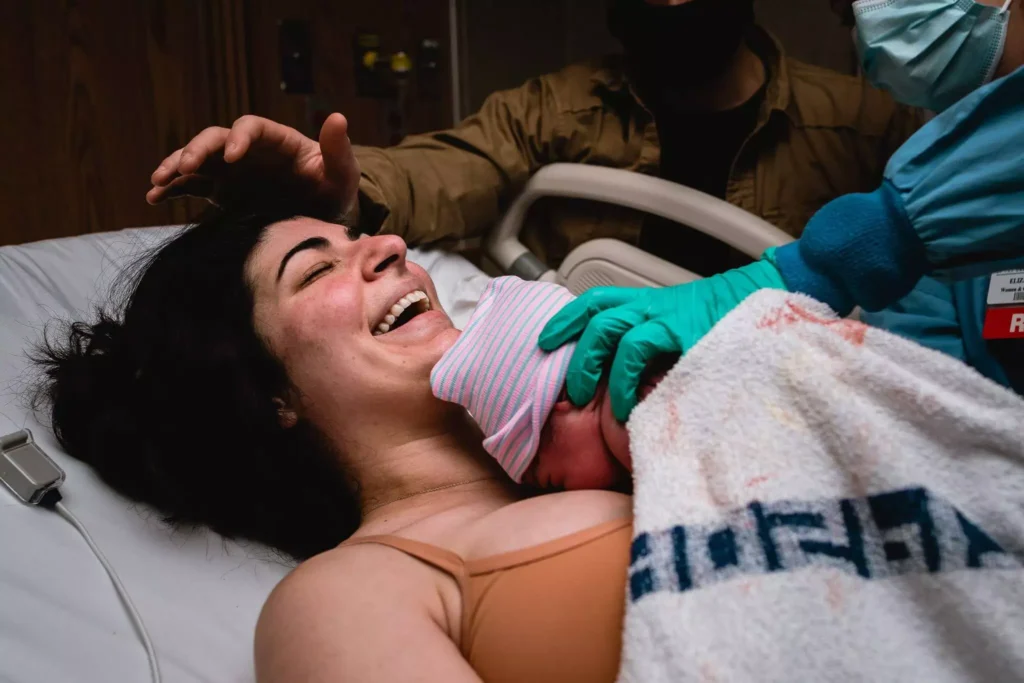

Learn the science of pregnancy and birth to take the mystery of labor away! Understand why you are feeling what you feel, and learn strategies to confidently move through pregnancy and birth!
- 9h+ of Video
- Support Group
- Close Captioning
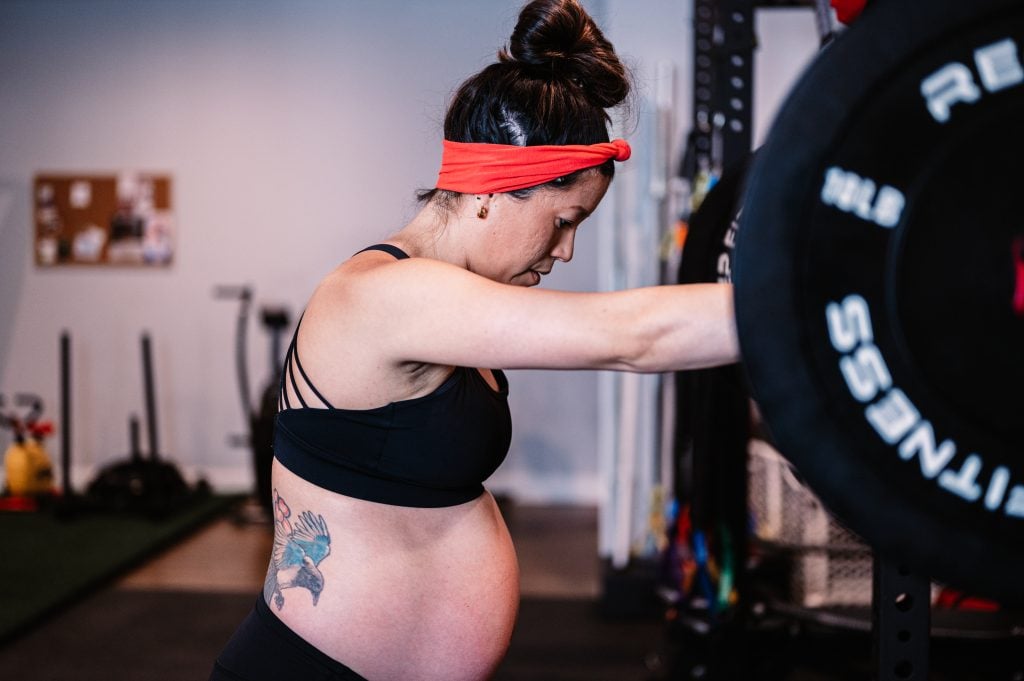

- 5 Workouts/Week
- Gym Workouts
- Self-Paced

Instructor
GINA
Workout on-demand with our prenatal fitness workout videos! Each workout is 30-40 minutes to follow along as you exercise at the same time!
- Birth Prep
- All Trimesters
- Mobility Work

Instructor
GINA
Find comfort and relief from pelvic girdle pain throughout your pregnancy and postpartum period! This program incorporates myofascial sling focused exercises to stabilize across the pelvic girdle joints.
- 3 Weeks
- On Demand Workout Videos to Follow