



Welcome to the MamasteFit Podcast Birth Story Friday. In this episode, we have Julie, one of the co-founders of Needed, a perinatal nutrition company that supports optimal nourishment during pregnancy, sharing her two home birth stories and the conception and birth of her company, Needed.
Read Episode Transcript
[00:02:36] Gina: Welcome to the MamasteFit Podcast, Birth Story Friday. In this episode, we have Julie, one of the founders of Needed here to share her birth stories and also the birth of her company, Needed. Thank you so much for being here, Julie.
[00:02:47] Julie: Yeah, thank you for having me.
[00:02:50] Gina: So tell us how, what, what was your pregnancy like with your first? What was the birth of Needed like?
[00:02:56] Gina: I think you were saying that Needed kind of started, the conception of that started before your pregnancy. So I would love to hear kind of how all of these, the birth of all of these things kind of happened.
[00:03:07] Julie: Yeah. Um, so my co founder Ryan and I, uh, met when we were in business school. Um, this was about, uh, well, I guess we started Needed about two, two and a half years before I became a mom.
[00:03:20] Julie: Um, and really the inspiration for starting the company was, uh, Ryan and I are both trained nutritionists. We are, uh, lifelong nutrition nerds, um, who, uh, were working in different careers, but each of us pursued nutrition certification, in addition to yoga teacher trainings, we were just trying to learn more about how to keep ourselves healthy.
[00:03:43] Julie: And through that process, uh, we learned a lot about the importance of nutrition and we prioritized nutrition a lot in our diets. We were doing a lot of the things that we thought were the right things. We were shopping at the farmer’s market. We were eating locally and, you know, eating an abundance of whole foods.
[00:04:01] Julie: Um, and at this time, um, at home nutritional testing was becoming, uh, more popular and both of us tested our nutrient levels, really just for fun, like, “We’re gonna ace this, like I bet we’re looking pretty good!” And we were absolutely shocked to find how deficient we were in not just in one or two nutrients, but across for me, it was like 10 or 12 nutrients. It was so overwhelming. I, I literally was like, what do I even do with this information? Everything is in the red and how is that even possible? Because I am, like, the most nutritionally obsessed out of all of my friends. I’m eating so healthfully, how can this be possible?
[00:04:41] Julie: So it was really eye opening for both of us, and enough so that we dug into the research and we started interviewing health and wellness practitioners and seeing our own naturopathic doctors and registered dietitians to figure out what do we do about this. And the consensus from their research and from the clinical experience of practitioners was that this is a widespread problem for women that upwards of 95 percent of women have nutrient deficiencies, and oftentimes those are nutrient deficiencies that are really important for fertility and pregnancy and a healthy postpartum.
[00:05:16] Julie: And so it was sort of confusing to us. Why would this exist in the research? And you see that even throughout pregnancy, when women are taking prenatal vitamins, these nutrient deficiencies are persisting. And a lot of the conventional wisdom is that you take a prenatal vitamin and it covers your bases. It’s, like, there to fill in the gaps in your diet. And now, having been through three, uh, well, really four pregnancies, um, uh, three to the stage that you and I are both at now, um, I know firsthand that it’s really difficult in pregnancy to, um, eat perfectly, especially in the first trimester if you’re nauseous. But even still, a prenatal vitamin, as I understood it, was there to fill in the gaps so that you didn’t have these deficiencies. And that didn’t align with what the research was showing that across so many nutrients from choline to magnesium to vitamin D to omega 3, B12, the list goes on, women have widespread nutrient deficiencies that supplements weren’t addressing properly.
[00:06:20] Julie: So that was really the inspiration for Needed. And as you said, the conception journey, if you will, was, uh, was longer than it has been. I’ve been fortunate to have relatively easy conception journeys, um, in my own pregnancies, but starting Needed took quite a few years. Um, we spent the first two and a half years in research mode, in R&D mode, working basically to redesign the prenatal vitamin and the other supplements that women need for a healthy perinatal experience from the ground up. Working very closely alongside, um, a large collective of health and wellness practitioners getting insights from their practice, a lot of these practitioners test women’s nutrient levels every single day. And because there are gaps in the research in this life stage, um, for many reasons, women’s health is understudied and underfunded, but also in pregnancy, many women are intentionally excluded if they’re pregnant or lactating from clinical research, so we consulted all of the available research, but there’s also gaps. And so to fill in those gaps, we worked with practitioners to see in their practice from testing women’s nutrient levels and then supplementing with, you know, kind of like a tailored, uh, supplement routine, what do women need to get up to optimal ranges? And we collated thousands of data points to basically formulate, um, our first products, which was our prenatal multivitamin, um, our collagen protein, which I know you and Roxanne are both a big fan of, um, our pre and probiotic and our Omega 3. And we think about those four products really as the foundation of, um, your baseline nutrient needs. So it’s covering your micronutrient needs, it’s covering your microbiome needs and your macro protein needs. Um, as well as the specific amino acids and collagen that are so important to pregnancy and the placenta and skin stretching and, um, your healing postpartum and the like.
[00:08:19] Julie: Um, and the, timing wise, um, I, my husband and I conceived our first baby in the fall of 2019. We had been working on Needed at that point for over two years, um, and actually, I gave birth in July 2020, and Needed’s first products came to market in August 2020, so thankful to have a co founder, Ryan, who could hold down the fort. She’s actually now on her second maternity leave right now, so it’s been, um, just such a nice, uh, I guess, experience to be able to go through this motherhood journey together and to be able to, you know, pinch hit for one another. But the company, the products actually launched, um, about three weeks before I came back from maternity leave.
[00:09:04] Julie: So, the journey’s been very much, um, intertwined with my pregnancy experiences.
[00:09:10] Gina: I remember, I think it was the summer of 2020 when we got connected with you guys as well, because I had just had my baby also, because I feel like we’ve had all of our babies, like, um, like on sync with one another.
[00:09:23] Julie: Other than you were one ahead of me, but yeah, I think Eoghan and Leni are pretty close in age and, and then Sophie and Marlowe are like a week apart. Um, and I think you’re due now, like about a week a little more than a week ahead of me.
[00:09:36] Gina: Yeah, end of August. Yeah, Eoghan was mid, mid June 2020. Sophie was October 1st, 2022.
[00:09:43] Julie: Yeah, we are very, we are very in sync!
[00:09:46] Gina: We are right on cue. We have synced our cycles. So tell me about, did you feel that there was a difference between like your first pregnancy and your subsequent ones since now we have the Needed products to support you during your pregnancy?
[00:10:00] Julie: Yeah.
[00:10:00] Gina: Because I know that you are very focused on nutrition. And I know that there’s a lot that goes into why a lot of us may be nutriently deficient now, even if we are eating like those whole foods, like our soil is different. And these are all things that I’ve learned from you guys. Um, did you notice a difference between your pregnancies?
[00:10:18] Julie: I definitely did. Um, with my first pregnancy with Leni, um, I think, you know, with the, with the first pregnancy experience, you don’t yet have the benefit or the, you know, there’s a little bit of this, like, naivete around what’s it all going to be like, and what’s your body going to go through throughout those, you know, in my case with Leni, about 10 months of pregnancy because she was born past, about two weeks past her due date.
[00:10:44] Julie: Um, and then the postpartum experience and the healing and all, all that goes into the nutrient requirements of breastfeeding. So I think that although I intellectually had such an appreciation for what we were learning through the research and interviewing women and hearing from them about their experiences, I don’t think I fully appreciated how vital nutrition would be until I went through it myself.
[00:11:09] Julie: So for my first pregnancy with Leni, I felt pretty good. I definitely had a little bit of morning sickness and food aversions. Um, and, but then it was kind of like a cruisy pregnancy other than, as similar to you, you know, about two thirds of the way through or so, um, it was very much interrupted by COVID. And, you know, we can talk about that as it relates to birth stories, but I come from a family of medical doctors and, um, very much like, those who are probably more allopathically oriented, not as much focused on integrative wellness and, um, the concept of midwifery was foreign, other than through the practitioners that I was meeting through Needed, both doulas and midwives and just this like incredible community of practitioners that I was exposed to, um, that helped me to see that there is a different way, uh, to give birth and I was hoping to have, my plan all along was working with an OB, but, um, having a doula and I wanted to have a low or no intervention, you know, no medication birth, if possible, but in a hospital setting.
[00:12:17] Julie: And it was always in the back of my mind, maybe I would do a home birth for a second baby. Um, but for the first, this is like the safe route, like I’m going to go with this. And then COVID kind of turned that upside down, um, and we decided, really, I think it was like, around 32 weeks is when we officially made the decision to switch care to midwifery and to have a home birth experience.
[00:12:41] Julie: Um, and my subsequent pregnancies I’ve had, I’ve now had two home births, I’m planning for another home birth. Um, I’ve now been through, you know, one full pregnancy and half of this pregnancy in midwifery care. The first time around, I think it’s kind of helpful to contrast. With an OB, there was like, no talk about nutrition, and this was an integrative OB, and I don’t say that as, uh, a point of criticism, it’s just that the midwifery model of care is so closely tied to staying low risk. And therefore, there is a greater appreciation for the role that nutrition plays in staying low risk, in managing blood sugar and blood pressure, and how mom is feeling, and making sure that baby is growing on track. And I found that, kind of like immediately transitioning into midwifery care, it was really eye opening to see how different the care models are.
[00:13:39] Julie: And where I’ve landed now in subsequent pregnancies, I think, similar to you, I find the best of both worlds is, is working with a midwife but having integrative care within OB GYN and I’m fortunate that my OB GYN is, um, Dr. Fabilia Affleck. She goes by Dr. Fabi. She’s actually, um, a Needed, um, change maker and she’s like an amazing OB that, um, practices like a midwife. She delivers in hospitals, she’ll back up home births and she’s actually now starting to offer home birth, uh, to her patients directly. Um, she’s apprenticed with midwives. She’s just amazing. She’s a bit of a unicorn where she, um, has very much the perspective of like, “I’m here to learn from midwives. I don’t know everything. I’m a trained surgeon and, you know, I’m trained in one modality,” but, um, but like the integrative care model is one that she very much espouses. So that’s worked really well for me in subsequent pregnancies.
[00:14:36] Julie: Um, but I will say that I think each pregnancy has gotten harder. Um, with my second, so after Leni was born, it was a, um, really, like, about as, um, smooth a process as it could have been other than waiting for her to be born and, you know, having tons of people be like, “Are you ever going to give birth?” because my whole, like, friend and family circle had never seen home birth. They’d never seen, like, someone, um, go to almost 42 weeks of pregnancy. It was very much outside of the, the normal course. Um, and that got in my head quite a bit. So I think that was the hardest part for me about the first birth experience. Um, but my postpartum was relatively smooth. Um, and breastfeeding went pretty smoothly for us. And thankfully in postpartum I was able to switch to Needed, um, and took Needed all throughout. Um, I ended up breastfeeding my daughter for two years, um, including through, um, as it turned out, two subsequent pregnancies. Um, one of which ended in a pregnancy loss at around, um, 11 weeks, or I found out about it at 11 weeks.
[00:15:45] Julie: Um, and I think that whole arc of now, so I’ve now had, you know, two pregnancy and birth experiences, another pregnancy that ended in a loss, and then this pregnancy now, to be able to have all of those, experiences influenced to some extent by the products that we’ve created at Needed, I think, um, just adds so much more meaning to what we’re doing and, um, so much empathy for, you know, I’ve not personally had difficult conception times, but I’ve, I’ve been through the ups and downs of, you know, losing a really wanted pregnancy and, um, then going through the experience of trying again after loss and needing to replenish your body because, you know, I, I was, um, you know, mid to late way through the first trimester, there is still a nutrient toll that goes into, you know, preparing your body again to conceive and, um, emotionally, you know, processing that experience and kind of gearing up for a subsequent pregnancy and, I ended up, yeah, breastfeeding Leni through my pregnancy the entire time, through my pregnancy with Marlowe, which wasn’t my plan.
[00:16:54] Julie: Um, and then kind of in the arc of the journey with Marlowe, have now experienced, um, some challenges with breastfeeding. She just like, we, we tried, um, for quite a while to have her latch and got her assessed for tongue and lip tie and all of that. And it was just a kind of like a preference. She just didn’t like um, nursing, but I pumped for about 14 months before this pregnancy. And, um, I think having seen it now through not just how I feel, but also through my lab work, that like what I’m doing through taking Needed is absolutely necessary to, um, be able to have these subsequent pregnancies, to be able to have healthy postpartum experiences, um, to make sure that my body has enough of what it needs to support another life, but also like to feel somewhat, you know, somewhat like myself.
[00:17:50] Julie: And I think that’s really at Needed what we’re shooting for is like, there is so much more than the bare minimums that we’ve been, you know, sold of like, just take a prenatal vitamin and it doesn’t matter what else you do. Or like this expectation that you’re going to feel bad in your pregnancy or you’re going to feel, um, depleted postpartum. We’re very much like, about changing that, flipping that narrative so that, you know, women see that like, actually there’s a better way, there’s so much more out there for you, and yes, you can’t control everything on this journey, pregnancy losses happen, fertility struggles happen, but nutrition is one of these really, really big aspects of the journey that you can control. Um, and we’re, I think what Needed exists for is to, to be there on that journey with you to help you to make sure that the nutritional side of it is really as, um, optimal as it possibly can be.
[00:18:49] Gina: Absolutely. So can you share a little bit more about like the actual birth story? So what was, so your first birth was in the COVID pandemic, which was the same for me. I also switched to home birth, um, in my like third trimester because of all the hospital restrictions. Was planning to give birth with an OB, and then for my subsequent pregnancies, with Eoghan, yeah. And then for my subsequent pregnancies, it was the same, it was similar to you, where I chose midwifery care with a home birth setting from the beginning and then had my dual care with a OB provider in case I risked out. Um, cause again, it’s like the best of both worlds. Like I don’t want to limit my options like should my pregnancy need something else. And I feel like it is really wonderful to have something that allows me to feel in control a little bit. Like again, we can’t control everything that happens, but my nutrition, like exercising, doing things to try to keep myself healthy during my pregnancy, like has helped me feel a little bit more in control as well.
[00:19:50] Gina: But I would love to hear like, like sneak peeks of what each of your births also were like.
[00:19:56] Julie: Yeah, absolutely. So as I mentioned with Leni, she was, and it’s so fitting to her personality, she is, um, I don’t know if you’re, if you’re into horoscopes, I’m not like overly into them, but I, you know, with having kids, I’ve, I used it kind of as a tool to understand my kids a little bit more, not horoscopes, but like zodiac signs. Um, and she’s a Cancer and she’s very much like a typical, um, Cancer, little baby. Um, she’s very attached and she’s very like comfortable with her family and comfortable in her shell. And, um, she very much, I, we, my husband and I joke now, we’re like, she would still happily like be attached to my body all day if she could be. Um, currently co sleeping in my bed, um, with me most nights.
[00:20:44] Julie: Um, but in any event, um, my pregnancy with her ended, um, or well, you know, I got to 40 weeks and I was feeling pretty good. I was like able to still hike and go for long walks. We were doing a lot of walking during COVID. Um, and I felt really good in my body. Um, but I didn’t really have major signs of labor, in retrospect. At the time, like I had Braxton Hicks and I’m like, “Oh, maybe this is it!” Um, but it was probably not until much closer to like 41 or even 41 and a half weeks that I started having like bigger signs of labor. Um, and that process was challenging for me. It was like, you know, “Wait, but I’ve like, I, I signed up for a home birth and I’ve like prepared my mind to go to 41 weeks. Like why isn’t my baby here yet at 41 weeks?” Like I didn’t, I didn’t mentally prepare to go to 42 weeks. Like I, you know, I wasn’t like ready for this huge life changing event to be so out of my control, like as to when it started.
[00:21:51] Julie: Um, and you know, I think that’s like, for me, that was the lesson I needed to learn is to like surrender to the fact that like, this isn’t just about me. This is not just my birth. It’s my daughter’s birth, and that you don’t control everything. And I think in, in hindsight, I really, like, although it was incredibly challenging and I was definitely emotional some days and I would call my midwife and cry and she was wonderful at helping me to work through it, like, what am I really, am I, is it a fear or is it an anxiety about the timing? You know, what was really up for me? But in retrospect, I think it really set me up for, um, a really awesome postpartum with Leni. I feel like that act of surrendering and accepting that, like, I’m ultimately not fully in control and there is no, I think one of the hardest things for me to accept as a parent is that you do your absolute best and yet you are ultimately not fully in control of how they turn out, but also like their well being. That was a thought, you know, that crossed my mind heading into 41 to 42 weeks was like, but what if something happens to my baby and we didn’t intervene? I think that came from the, like, medical family background of, like, intervention, intervention, like, safety, safety. Um, and, you know, I was doing the things to make sure that the pregnancy was safe, like, NSTs, uh, we did a non stress test, and, um, I was, you know, going to see, um, a backup OB every few days, um, to make sure that everything was healthy with the pregnancy, so there wasn’t really a presenting risk, it was, it was much more mental for me.
[00:23:36] Julie: Um, but come 41 and 1/2 weeks, my midwife, um, who, that midwife at the time, I’ve, um, worked with different midwives throughout my pregnancies because, um, I’ve had midwives who’ve left L. A. sadly, so, I’ve had to transition care, but that midwife was very, um, you know, very much like, “Let your body, let your, let it happen naturally, let your body, you know, go into labor naturally, and then, if you’re really close to the timeline, there are things we can do. You know, we can try a cervical sweep, we can try homeopathy, we can try herbs, and then we can try castor oil if we really need it.” Um, so we, I went in for, I think I was like 41 and a half weeks, went in, um, as part of that, um, non-stress test, and I remember her being like, “Do you wanna get a sweep?” And I was like, “Yeah. Like let’s get this show on the road. Let’s do it.” I was ready for some kind of intervention. And I wasn’t dilated enough to do a sweep. And that was like so discouraging, ’cause I was like, “What? This, this baby in California…”
[00:24:37] Gina: What do you mean?!
[00:24:38] Julie: Yeah. And in different states it varies, but in California licensed midwives can’t, um, oversee a home birth if you’re not in active labor by the time you reach 42 weeks. And so my mind, like, I have three or four days to go, like, how am I not even one centimeter dilated enough for her to do this sweep?
[00:24:56] Julie: So that got to me. She was like, “Don’t, don’t worry, like, you know, you’re a first time mom. These things can change, like, instantly.” You know, you could be completely not dilated and in active labor, six hours later.
[00:25:09] Julie: Um, and so we started with some, um, homeopathy. Um, she had a routine. It was like, you know, do some homeopathy, pump, take a shower. Like it was a whole circuit to kind of try to bring, um, contractions on. And I did that for like, I don’t know, six hours, one day, something like that, this circuit. And then I think I took some herbs, um, as well. Um, I was a little concerned about a, a couple of the herbs, like the cohosh herbs, um, from what I was reading online, um, I consulted, now I’ve, I’ve honestly revisited, um, I loved the series that you and Roxanne did on, um, ways to kind of naturally induce labor. Um, I took part in your poll on castor oil, as I’ll get into, I ended up taking castor oil. Um, but at the time I was like, um, I found Evidence Based Birth to be a really good resource for some of these things. Like, what are the risks? What are the benefits? Like, does it work? Um, so basically at that point I tried, I was trying, willing to try everything.
[00:26:13] Julie: Um, come 41 in five days. I, I was like, “You know what?” It was like midday that day, I’m like, “I’m, I’m going to try a little bit of castor oil.” My midwife was like, let’s wait until I think Saturday I would have been 41 and six. She’s like, “Let’s wait till 41 and six.” But I was getting anxious. And I ended up taking, um, doing the midwife’s brew of, um, it was like apricot nectar or lemon verbena, something like that. Um, almond butter. And, um, it was supposed to be two tablespoons of castor oil. I, I was like, I’m gonna do one and a half because I’m not gonna, I’m not gonna go like all in because I might need to do this again. I’m gonna take one and a half. I took it. I like had, maybe I did have to go to the bathroom, maybe 30 minutes later and then nothing. And then it was like, six hours passed and I’m like, “Okay, cool. Like that didn’t work. Tomorrow’s a new day. We’re gonna, like, I guess I’m gonna start this, you know, whole train over tomorrow.” And I was discouraged honestly, and just like didn’t really know what to do at that point. Because I thought that like, okay castor oil will be my like my last resort and it should work.
[00:27:31] Julie: In any event my husband and I kind of like carried on with our day. We were getting ready to go to bed. We were like, maybe, I think it was probably around just before 10 o’clock we were watching a movie and all of a sudden I feel a pop. And I was like, “Oh my gosh, I think that was my water.” So I go to the bathroom and I’m like, yeah, that’s my water. I’m like, pretty sure that my water just broke. Um, and it, it was probably a hind leak because it wasn’t a ton of water, but it was like enough of a sensation that I was like, that’s different. Um, and thankfully the water was, um, clear and, um, I felt good about that because I knew that one of the potential risks with castor oil is, um, or one of the potential, I guess, the concerns is that the baby will pass meconium, um, in utero, uh, because of the GI kind of like, um, stimulation of, um, castor oil. And thankfully that didn’t happen in my case.
[00:28:29] Julie: And I was just like, immediately so excited. I was like, “Oh my God, like it’s gonna happen!” Um, and I remember calling my sister, who was pregnant at the time, she and I are, um, pretty close in age, similar to you and Roxanne, um, and she was pregnant, she was like about seven weeks behind me in her pregnancy. And I called her and I’m like, “My water just broke. I think it’s going to happen.” And, and I remember going upstairs, um, to my bathroom upstairs. We were downstairs. We were like living in a townhouse at the time. So it was a couple levels. I went upstairs, called her and then like maybe five minutes later at that point, I was having no contractions, it was just that I had a, you know, my water broke. Maybe five minutes later. I was hit with like, what in retrospect I think was like immediately moving into active labor. Like right away. Super intense contractions that were coming every like two to three minutes probably to start and lasting about a minute. Um, almost immediately like labor started into an active state.
[00:29:34] Julie: Um, I was prepared so kind of funnily I was not prepared to go to 42 weeks but my midwife had prepared me um, to have a longer labor. You’re a first time mom. It could be a day, it could be longer. Like rest when it starts, you know? So I’m like, I need to rest. I need to, um, let me get in the, you know, I think I tried to lay down and I was like, no, no, no, I can’t lay down. Let me get in the shower. I’m someone who loves water and I thought that that was going to be so soothing for me and it was totally not. I just was like, not able to, um, find a position that was comfortable. I tried my birthing ball. Um, literally nothing was comfortable. My husband tried a TENS machine that, you know, I immediately wanted off of me. Um, and I found that the only position that was comfortable for me to labor in was sitting on the toilet, which for many is a very uncomfortable position because it’s like gets things really going, um, or it can at least.
[00:30:33] Julie: But in my case, it was like all of my contractions were in the front, in the lower kind of abdomen part and I would describe it as kind of like really intense, like stomach cramp, like a gas pain almost. And I don’t know if that’s because of the castor oil, um, sneak peek, I took castor oil in my second pregnancy too, and I didn’t have a, uh, um, contraction experience like this at all, so it might have just been the way that my body was, um, laboring the first time around, but that was the only position that was comfortable. So I, I literally labored on the toilet for several hours. Um, it was me and my husband, we were in touch with the doula, um, we had let our midwife know, but it was like, you know, just at the beginning of the night, so they were all gonna go get some rest and said to call when it got intense. But it got intense quickly, so we called the doula, maybe after like an hour, I’m trying to remember, probably like an hour or two of me, probably two hours of me laboring, um, we called the doula when I was getting to the point where I was like, I don’t know if I can actually do this, like if it’s going to be another 24 hours of this, like, I’m not sure if I can make it, I might need like pain medication. So my husband’s like, don’t, like, let’s not go there. Let’s just call the doula.
[00:31:51] Julie: Um, she lived on the other side of LA, so it took a little while for her to get there. Um, but her coming into that, like, birthing space was so helpful for me, just the knowing that somebody, and she was actually, um, both a doula and a midwife. She didn’t check me. She didn’t do any cervical exams, but she could just tell I was in active labor and it was really comforting for her to say, like, “You are, like, you are pretty far along, like, I can tell you’re far along. You’re doing great. Like, this is the hard part.” Um, and it was just really reassuring to be like, oh, so I don’t have to do this for 24 more hours, like, I’m actually in active labor and this is going fast? Um, and so she was there for maybe, maybe an hour at, at, at, and at that point she was like, I think we need to call the midwife.
[00:32:42] Julie: So my midwife came, my backup midwife came. I don’t really, I’m still in the bathroom. I’m just kind of like in my own zone laboring. At one point, I think we, um, got a pillow and I leaned up against, like, to take little micro breaks. I would, like, rest in between contractions and then, um, like, for a minute, you know, and you, you hear stories about how can people fall asleep in, like, a minute? But I really was, I was like, you know, kind of like building back my energy in between contractions. Um, and then, yeah, I think my, my midwife got there. She and Joe, my husband, were, um, like busy in the other room setting up the birthing tub. Um, cause I wanted a water birth, but then I was like, it was kind of not even in my mind at that point, cause I was just like, so focused on what I was doing.
[00:33:32] Julie: So they’re filling the tub and getting the room ready. Um, and my midwife came over and she, she wanted to check me to see how far along I was to see if I was ready to push. She checked me once, um, and she was like, you’re almost fully there. You have a small cervical lip, so I want you to just like having contractions for like, don’t push, um, which was honestly excruciating because at that point I had the fetal ejection reflex, I had like a strong feeling that I needed to push.
[00:34:05] Julie: So my doula was helping me to breathe through that feeling and to try not to push so that the cervix wouldn’t swell while they were finishing up in the other room. And then my midwife came back, so maybe she checked me one more time, I don’t remember, I, I, I kind of remember only her checking me once, but in retrospect, maybe she checked me twice to know that the cervical lip was gone, but she was like, I think it’s time to push, do you want to have your baby here, or do you want to be in the tub?
[00:34:35] Julie: And I’m like, is it going to feel better? And she’s like, yeah, honey, it’s going to feel better to be on the water. So I made my way over to the bedroom, which was a very short walk, but was very hard, um, and got in the tub, um, and started pushing, and it, I probably, you know, she was really helpful in, um, helping me to push, but also to, um, not push too hard, so that I would, you know, not tear, um, um, significantly. Um, I pushed for probably 30 minutes, really hard.
[00:35:08] Julie: I, I have found pushing to be the hardest part of my labors both times. Um, it’s, I guess I understand where some women come from where they’re like, but it’s something I can do, unlike a contraction where you just have to breathe through it and move through it. But pushing has been hard for me. I think my girls have big heads.
[00:35:26] Julie: Um, and Leni came out with a nuchal hand, um, by her head. So I did have…
[00:35:31] Gina: So rude.
[00:35:33] Julie: I know! I did have a first degree tear, but it wasn’t bad. Um, and all in all, she was born about seven hours after, um, I had that, you know, water break. Um, so it was really pretty fast. Um, she was born in the middle, about 4 a. m. Um, and it was like, honestly, I think, I think I was just, I think the first thing I said was like, thank God she’s out.
[00:35:59] Julie: Um, that’s really how I felt. It was like, I can’t believe I did that. I can’t believe I had my home birth, but also like, thank God it’s over with, um, is how I felt. Um, and it, you know, I think in thinking back about, you know, we then, I think I moved to the bed to deliver the placenta and had the, you know, the golden hour. And honestly, like, the, after having experienced it, I would have a home birth of, you know, if, if I was low risk, I would have a home birth every single time for the postpartum experience. Because there’s just nothing like being in your own bed, having your midwife and if you have a doula or a backup midwife there to, like, get you food and, you know, teach you how to breastfeed.
[00:36:47] Julie: And I mean, it was just like an absolutely amazing postpartum experience. It made the whole thing feel worthwhile. I also felt just like so amazed that it worked out because, you know, for days I’m like, I’m never going into labor. It’s never going to happen. Um, and it was amazing to be able to call my family, like, at a reasonable hour the next morning and be like, “She’s here!”
[00:37:10] Julie: You know, my mom didn’t even know I was in labor and she’s definitely like a little bit of a worrywart. So it was, um, it was nice to be able to just call them and be like, “Baby’s here, home birth went well, you didn’t have to worry. You didn’t even know I was in labor.” Um, other than my sister who did know I was in labor.
[00:37:26] Julie: Um, and yeah, it was like, it was an amazing experience. I think the, the birth, the high that I felt post birth, um, you know, came down gradually, but I never had like a, um, a dip kind of in my mood, postpartum. I felt really good. Breastfeeding came pretty easily to me and Leni. Um, although it wasn’t without challenges.
[00:37:50] Julie: Um, you know, in retrospect, it was a pretty smooth process and healing was pretty smooth other than the, um, you know, I think the probably laboring on a toilet for seven hours, um, you know, was a lot of strain to the perineum. So I, I like felt, I felt like postpartum healing was harder the first time than the second time.
[00:38:11] Julie: Um, I don’t know if that’s been your experience as well, but, um, second time around I was like, I feel like I can walk, like two days later, I, you know, I feel, feel much better than the first time around. Um, but yeah, overall it was like a very, you know, positive birth experience, um, other than, other than the waiting.
[00:38:32] Gina: With my, both my girls, so my first and the third, I was 41 and three when they were finally born. So I didn’t quite make it to 42 weeks, but yeah, I will say once I hit that 41 week mark, I like felt myself starting to panic and was like, cause it’s the same in North Carolina where if you hit 42 weeks, like you cannot, like a midwife cannot support your birth at home.
[00:38:53] Gina: And so like that kind of like is like looming in my head and I’m like, I’ve been preparing for this home birth. And my baby is not complying with me. So I feel ya.
[00:39:07] Julie: It’s especially hard in that first pregnancy. I was like, I literally had to like, my OB wouldn’t continue working with me. She was not a supporter of home birth. So I was going into it like, if I, if I risk out of home birth because I’m 42 weeks, I’m going to have to go get induced in a hospital. I don’t want to get induced and I’m not going to have a care provider that I know. In subsequent pregnancies, I’ve had a backup OB, so I know that the, you know, I would know the person unless it’s like in a true emergency and, you know, a transfer, um, that needs to happen and she’s not available, um, I would know the person there. But the first time around, I think that was what added to the worry was like, but I just spent all this time and like we, we’ve like fully like prepared ourselves for this experience and to maybe not be able to have it is, um, yeah, it was like scary for me. So I was really glad that it ended up working out.
[00:40:03] Gina: Just like another level of, of stress when you’re trying to relax so that your baby will come, but you’re like, but I’m still stressed out.
[00:40:11] Julie: Yeah, it’s like the, you know, just relax and it’ll happen. It’s like what some people say about fertility and like, you know, sometimes these things are just not in your control and you can be relaxed and it can still not happen.
[00:40:22] Gina: I used to think that that was why for my first, like, I was super stressed out at the end of my pregnancy because I didn’t want to get induced and I was like, but then for my second, I was like much more relaxed and I went like a day after my due date and I was like, oh, it’s because I was so much more relaxed.
[00:40:39] Gina: And then Sophie, my third, I went to 41 and three and I was like, all right, that’s just a bunch of horseshit. Like, like, uh.
[00:40:48] Julie: Yeah, I’m, I was interested to hear it. Cause I, you know, everybody says like the third is a wild card and I’m like, what is that going to mean?
[00:40:55] Gina: What does that mean?
[00:40:57] Julie: Yeah. Is it going to be longer? Is it going to be more unpredictable? But, um, but no, my, so my pregnancy, or I guess the preparing for labor with Marlowe, um, she was my rainbow baby. And I will say that I was, I was just like so ready to have her here. I think Eoghan is your rainbow baby.
[00:41:16] Gina: He is.
[00:41:17] Julie: Right And I was just like, I was just so ready for her to be here.
[00:41:22] Julie: She was, I was also having prodromal labor for, you know, and I, I think there’s like, I’m not exactly sure, you know, oftentimes prodromal labor will be like due to a positioning issue. She was in a perfect position. I think maybe it was just my body’s way of warming up for labor, but I would have. hours of consistent contractions, usually at night.
[00:41:45] Julie: So I wasn’t able to sleep. Um, and then they would never, they were intense enough to have to breathe through them, but I never had to, it was never like moving into active labor. But it was, it was definitely, there was something happening, you know, or at least it felt like something was happening, enough so that I couldn’t sleep comfortably. Um, and they would be consistent, but they would never build. They would never get closer together, and they would eventually, I would just get back in bed and go to sleep, and then by the next day, they would be gone.
[00:42:16] Julie: So I had had a few weeks of that. Not every night, but enough that it was like, come on, what, like, you know, is this, is this happening? Is it not happening? Um. And, um, so yeah, so I guess I hit 40 weeks with her, which I was not surprised to do, um, given how, um, much later Leni had come. Um, but around, I think it was like a day after 40 weeks, I had another night of that prodromal labor enough so that that time I called my midwife and I was like, it’s been consistent, like it’s manageable, but like, I don’t, you know, it might be real, it might not be real.
[00:42:55] Julie: And, you know, she was basically, I was like, should I like try to make it happen? Should I get up and walk and whatever? And she was just like, honestly, no, like just go to sleep. Take some, you know, I forget, Benadryl or whatever, like just,
[00:43:11] Gina: Tylenol.
[00:43:11] Julie: Drink a glass of wine, go to bed, like, um, try to get rest because your body, and she knew that I had had a fast first labor, so it was like, your body knows what to do and it’s going to happen when it’s going to happen and the last thing you want is to be exhausted.
[00:43:28] Julie: So, I followed that advice, I fell back to sleep. You know, the next day came, like 41 and 2, and I didn’t have any contractions all day, and, you know, we went to the farmer’s, it was a Sunday, we went to the farmer’s market, and just had like a nice family day, um, spent time with Leni. Oh, I forgot to mention, I was breast, so I, because I was breastfeeding Leni, anytime she latched, I would have contractions, and it was like Braxton Hicks, but with an edge, like, maybe prodromal labor, like, almost every single time.
[00:43:58] Julie: Um, and I think that was part of it. It was like, my uterus was like either irritated or it was like oxytocin flowing and it was just like, everything was getting ready, but it was not moving into active labor. Um, so other than nursing Leni that day, the, I didn’t really have contractions at all. Went to bed at a normal time and woke up at like, maybe midnight or one in the morning with contractions again, with like the steady, low grade contractions.
[00:44:27] Julie: Um, enough that I couldn’t sleep. I was like, you know, just up puttering around the house, moving around. They weren’t super uncomfortable, but it was, it was just, they were irritating. It was like enough that I couldn’t really ignore them. Um, and I remember like, basically like try, trying to connect with the baby and be like, are you ready to come? Like, are you, I feel like you’re ready to come. Are you really ready to come? I felt like I really didn’t want to pick the baby’s birth date, but she was, um, uh, both she and Sophie, I think were like due around the like you know, Virgo, Libra cut off and I was like, I don’t want to pick her like, you know, her zodiac sign because Leni’s such a Cancer and like, I just didn’t want to pick their birth date.
[00:45:16] Julie: Um, but I would just have this intuitive sense that like, Marlowe was ready to come, but like, uh, but I don’t know. I just like, I guess I, maybe it was a combination of like, I am so over this prodromal labor and I really feel like she’s ready and I really don’t want to go to 41 and five again. And I didn’t have a super long maternity leave, um, with Leni or with Marlowe.
[00:45:43] Julie: Um, um, and was like starting to get anxious about when I needed to go back to work and. All of that and I basically I like meditated and I listened to music for a few hours while I was having low grade contractions and I just basically came to the like epiphany that like I’m gonna take a tablespoon of castor oil and if it’s if she’s meant to come she’s gonna come, and if she’s not meant to come she’s not gonna come. And if she doesn’t come I’m gonna like put this idea to bed and I’m gonna go through the next week and I’m just gonna like let her choose her birth date and I’m not gonna try to do this again.
[00:46:22] Julie: And she came, very quickly after I took castor oil. Um, since that time I’ve, I’ve spoken to midwife, my midwife, and um, I didn’t have a birth doula in that pregnancy, but I did work with a postpartum, uh, well with like a pregnancy loss doula, which I think is an amazing resource for anyone who experiences pregnancy loss. Um, she was so helpful in us processing the, the loss, but also the pregnancy after loss. And we had a session with her after Marlowe was born, and I was telling her about this, and I felt a little bit of guilt, like, did I pick her birthday? And she’s like, “Oh, like, honey, like, you took like a tablespoon of castor oil. Like, babies don’t come if they’re not ready to come, like, you can’t.” And I think that’s the reality with any of the, like, natural interventions. They’re not going to work, like I know people who’ve done it at 42 weeks and their baby didn’t come for another five days. Like, then it’s not going to work if it’s not, if the baby and your body aren’t ready.
[00:47:20] Julie: Um, but I, yeah, but I guess my body and the baby were ready. So probably it was kind of like a similar start to with Leni where I took the castor oil, went to the bathroom and then there was a pause, but it was a much briefer pause. It was like within maybe 30 minutes I had active labor contractions. I had a bloody show.
[00:47:45] Julie: As soon as that happened, I called in my husband and was like, it’s go time. Like, this is real. These contractions are the real deal now. This is not prodromal labor. We called the midwife. The midwife was at another birth. Had I known I would not have taken castor oil, but she was wrapping up the birth.
[00:48:02] Gina: Oh no!
[00:48:02] Julie: She was like, I know. She was in the last like few, I don’t know, last hour at the birth that she had been at the night before. Um, the backup midwife who, uh, to my midwife at the time practiced with another midwife. So, um, one of them was off call. They had a backup midwife who was on call, but she was at another birth because as it turns out, September birth, September is a very busy month to have babies.
[00:48:30] Julie: Um, but she found another midwife who, um, actually was able to arrive a little bit before my main midwife. Um, so I was in active labor at that point. Someone comes into our house. I’d never met her before, but it was like completely fine. I think maybe if it had been my first pregnancy, I would have been more nervous, but at that point I was just like, someone’s here to catch a baby. That’s great.
[00:48:52] Julie: Um, she and Joe started getting the house ready or the, the bedroom ready and the birth tub, um, and filling it up. This time I was like, the contractions were real, like really kind of big, um, but I was able to talk through them. In between, I could talk. I didn’t have the same, like, stomach cramping feeling I had with Leni’s, um, labor.
[00:49:16] Julie: So I felt like I got a real break in between the contractions. And, like, you know, I was like, I was definitely in active labor, but I was talking in between them. So it was a little bit confusing to me. I’m like, this is intense, but also, like, I feel fine. I feel great. Um, and that lasted for probably, like, maybe two hours. Our midwife got there, I think about an hour before Marlowe was born, um, I got into the tub probably about an hour before Marlowe was born.
[00:49:46] Julie: I had some contractions in the tub before I was ready to push. And the water felt amazing and honestly at that point I was feeling like this is like crazy that I love this like second labor experience. This is amazing compared to the first. Until it came time to push. Um, and with Marlowe, my, my bag of waters was still intact.
[00:50:07] Julie: And as it turns out, she was a much bigger baby. She was about a pound, a pound and an ounce bigger than her sister. I didn’t know it at the time, but pushing was really hard. That’s where I did all of the work was in pushing, um, with Marlowe. And I felt the urge to push. So it wasn’t like me pushing before my body was ready, but it felt like just this massive bulk of baby and sack and water, like, just so much pressure that wasn’t being alleviated through pushing, which was different than my first experience because the water had already broken and it was like baby’s head and baby emerging, not like, trying to get a baby in call out.
[00:50:47] Julie: Um, so it was really hard. I felt like I’m never doing this. I literally said out loud while pushing, I’m never doing this again. And then once she was born, I was like, “Next time…” I knew that we would have a third. Um, but in the moment I was like, this is, I’m never doing this again.
[00:51:05] Julie: Um, at the tail end of pushing, I was like asking my midwife, can you break my bag of waters? I think that’s what I need to be able to get her out. And she’s like, I think you can do it. Just like, reach down and apply pressure on your next contraction. And I did, and my water broke. And it was a relief, but it was also then like, oh, now the baby’s coming out. Um, she did not slide out. I had no, like, second baby’s gonna slide out in three contractions. Um, that did not happen. But then it gets more intense with baby’s head, you know, directly, um, kind of in the birth canal.
[00:51:44] Julie: In any event, she was born, um, it was about three hours from the first contraction, probably about four hours from when I took castor oil, three hours from the first contraction. Um, thankful, I was just so thankful that everybody was there and it was a smooth process. Um, that, um, you know, it’s kind of cool to give birth at a different time of day. The sun was out, it was like 8:30 in the morning. Um, and I don’t know, just kind of like similar, but different to the first experience, faster and, um, the actual contractions were so different that it felt like a very different experience, even though they were both born in the water and pushing was hard with both of them.
[00:52:28] Julie: Um, that time I tore, I had like a second degree tear with Marlowe, um, but I got stitches that time and I think that that really helped my postpartum healing. The first time around because it was a first degree tear, um, my midwife was like, sometimes with first degree tears, the stitches can actually cause more trauma to the area, so we let it heal naturally. And I think that, um, in retrospect, I preferred having stitches, because I felt like I had more support in the perineal area. Um, and healing was, as I mentioned, like, pretty smooth, I felt, like, really, really good a few days after giving birth, I felt like I could walk around, you know, like, go for short walks, like, a week or so after she was born. Um, but our big challenge with Marlowe was the, the breastfeeding experience.
[00:53:18] Julie: Um, she was making it known early on that she was different than her sister and, um, you know, over the last, you know, year and a half, it’s been fun to see her come into more of her personality, but that is who she is. She is like much more persistent, much more like, I, I think probably had I not taken castor oil with Marlowe, she probably would have come that day or a day or two later.
[00:53:40] Julie: I think she was ready to come sooner than Leni was, um, and that feels very fitting with her personality. Um, but she’s just like, you know, I’m, I’m happy for it, um, especially because she’ll be our middle child, but she is an independent little girl. She is like, knows what she wants. Um, she might be like an old soul because it’s, it’s like she came here knowing what she wanted.
[00:54:04] Julie: Um. And the experience with her has been about, like, surrendering to the breastfeeding experience and different aspects of the experience with Marlowe looking different than I thought it would or what I wanted. But, um, you know, now that she’s a little bit older, it’s been amazing to see that, you know, with Leni, we had an immediate bond and the breastfeeding was so simple and, um, you know, we were so connected and I didn’t get that with Marlowe, but I’m still so connected to her and we have, we, we have a different relationship.
[00:54:37] Julie: I, I bond with her in different ways, but I am no less connected to her than I was to Leni. And, um, I’m grateful in retrospect. It was really hard at the time, um, to just accept that. It felt like I, there was something I should have been able to do. Like I should have been able to fix this breastfeeding issue. Um, and I couldn’t, but I think it’s been, I think in retrospect, like a really, important lesson for me and, um, an important experience. And I’m grateful to have a little bit more understanding for what women who, you know, Needed customers who struggle with breastfeeding and, and different aspects of that journey go through.
[00:55:17] Julie: And that’s kind of how I feel too about, I’m sure you, you feel similarly about your loss experiences, like, every incremental experience I’ve gained gives me a new vantage point into, like, helping other people through those experiences. And, um, ultimately, like, I think now on the other side of it, I have gratitude for it, although I very much hope that this, we’re having a boy next, I very much hope he’s a good breastfeeder, and that we don’t have that experience, and also that I don’t take castor oil, I would love to just, now I’m super curious about the experience of just like fully seeing if it’s any different. Because I really don’t know like where my births shorter? Where they, did they happen earlier because the castor oil? Or is it like a placebo effect and my body was ready and you know, I don’t know.
[00:56:03] Julie: You can never know. Um, but we’re definitely looking, I’m looking forward to this birth experience and, um, uh, you know, a little bit, a little bit intimidated too. I don’t know if that’s how you feel. It’s sort of like, I’ve done it twice before. I know I can do it, but it’s still daunting to think about doing it again. Um, but also really exciting.
[00:56:23] Gina: Yeah. Cause there’s certain aspects of it where I’m like, oh, that was really, like pushing is always like really, really intense. And I’m always like…
[00:56:32] Julie: Yeah.
[00:56:34] Gina: Uh, if we could just skip that part. Fortunately, it’s been super, my pushes have been very short.
[00:56:41] Julie: That’s great.
[00:56:42] Gina: So I’m hoping that this fourth one will also be very short cause I don’t know if I, I think I will mentally spiral if it’s more than like 10 minutes long.
[00:56:50] Julie: Yeah.
[00:56:52] Gina: Um, I mean, I’m sure I’ll be fine.
[00:56:55] Julie: Mine were remarkably similar. They were like 30 minutes. Both times and that’s the that’s like my one intention is like can pushing be like I would just love, or my vision would be like a quick pushing experience, even if contractions are longer. I think I could handle that. Um, I don’t need a birth that’s any shorter than the three hours of Marlowe’s birth, but I would love for pushing to be a little bit more ease filled, but. You know, I think you just, you can’t compare your birth experience to other people’s birth experiences. Ryan just had her little boy and I’m sure she’ll share her birth stories at some point, but she had like a baby the same size as Marlowe and pushed for four minutes and you know, baby was out easily.
[00:57:40] Julie: And, you know, in my mind I’m like, “Oh man, Wish that was me.” But you can’t, you can’t compare the experiences. Um, I think, you know, you have the birth experience that you’re meant to have and that your baby’s meant to have. So trying to, trying to keep that in mind.
[00:57:55] Gina: Well, thank you so much, Julie, for coming on the podcast and sharing the birth of Needed, plus the birth of your two babies and I’m really excited to hear how birth a baby boy is this fall, around the same time as the birth of my baby. Thank you for being on the same timeline as me.
[00:58:13] Julie: I’m so excited to see! I remember being at the tail end of my pregnancy watching, you know watching to see when’s when’s the baby gonna come and are you in labor yet? And it’s just fun to go, you know to be able to like, you know feel like you’re on the journey. I’m sure so many women who are pregnant at the same time as us feel that way about you sharing about your pregnancy experiences. But it was, I think in both of these two pregnancies, I love seeing your weekly updates and it’s just like really, I don’t know, it feels like you’re not alone when you’re going through it and somebody is like at the same stage as you and waiting for their baby to come just like you’re waiting for your baby to come and all of that.
[00:58:51] Julie: And, um, I definitely had admiration for you. Um, with being patient for labor to start, um, with Sophie. And I’m gonna, I’m gonna try to, you know, hold on to that, like, patience intention this time around.
[00:59:05] Gina: I think I was feeling patient until I was like 41 and 2, and I was like, this is never gonna happen.
[00:59:11] Julie: Get this out. Yeah! It’s so funny, though, that like, even though you’ve been through it before, you still, in your mind are like, this is never gonna happen, I’m gonna be pregnant forever. You won’t be. But it feels like that in the moment.
[00:59:23] Gina: It does. Well, thank you again, Julie, for coming on the podcast and sharing your story. Really love using Needed products. So for those of you that are listening, definitely check them out and thank you again.
[00:59:34] Julie: Thank you.
Additional Resources
Check out Julie’s company, Needed for more support throughout your conception phase, pregnancy, and beyond! Use code MAMASTEPOD for 20% off your first order. Roxanne and I use and love Needed’s products to support our entire motherhood journey–and there is a men’s line too!
Prenatal Support Courses
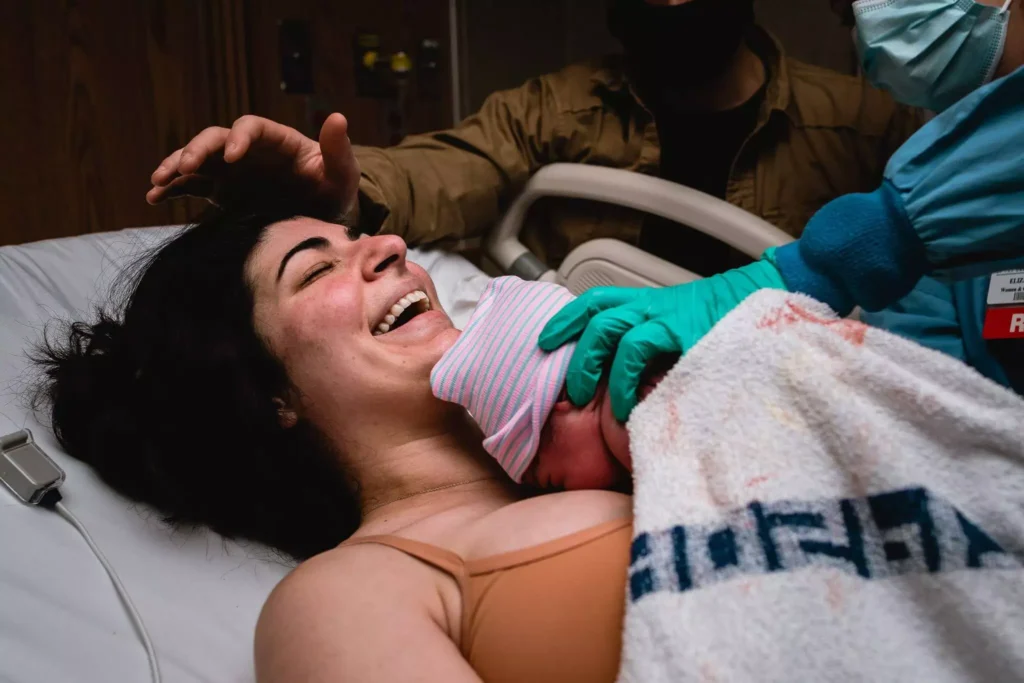

Learn the science of pregnancy and birth to take the mystery of labor away! Understand why you are feeling what you feel, and learn strategies to confidently move through pregnancy and birth!
- 9h+ of Video
- Support Group
- Close Captioning
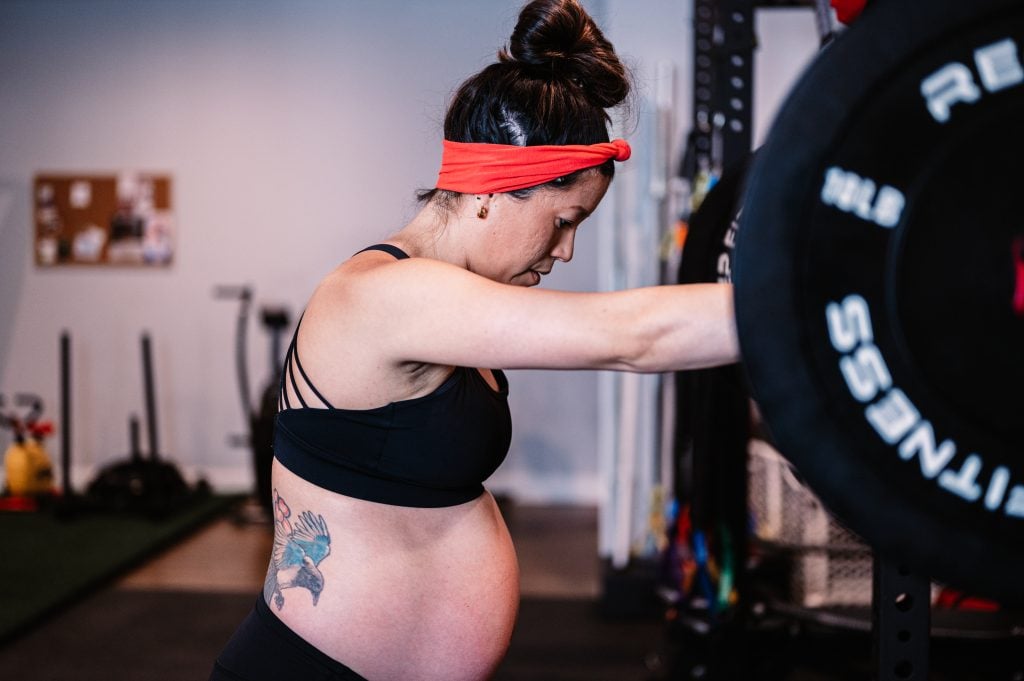

- 5 Workouts/Week
- Gym Workouts
- Self-Paced

Instructor
GINA
Workout on-demand with our prenatal fitness workout videos! Each workout is 30-40 minutes to follow along as you exercise at the same time!
- Birth Prep
- All Trimesters
- Mobility Work

Instructor
GINA
Find comfort and relief from pelvic girdle pain throughout your pregnancy and postpartum period! This program incorporates myofascial sling focused exercises to stabilize across the pelvic girdle joints.
- 3 Weeks
- On Demand Workout Videos to Follow