
Table of Contents
Balancing breastfeeding and fitness can be a challenge for many new moms. Questions like “Will exercise reduce my milk supply?” or “Can I work out while still meeting my baby’s nutritional needs?” are common concerns. The good news is that with the right approach, working out while breastfeeding is absolutely possible — you can maintain your milk supply while engaging in a fitness routine. This blog post will break down key insights on breastfeeding, maintaining milk supply, and exercising postpartum.
Subscribe to our YouTube Channel for more weekly workouts and educational videos! We publish one new workout video and 2-3 educational videos a week on our channel.
Understanding Milk Supply: The Supply and Demand System
Milk production follows a simple principle: supply and demand. The more frequently and effectively milk is removed from the breasts, the more milk your body will produce. Here are some key factors that influence milk supply:
Baby’s Latch and Milk Removal: Ensuring a deep and effective latch is crucial for adequate milk transfer. If you’re pumping, make sure your pump is well-fitted and effectively removes milk.
Hydration and Nutrition: Breastfeeding requires additional calories—approximately 450-500 extra calories per day, and sometimes more. Hydration also plays a vital role in milk production.
Hormonal Factors: Prolactin is the hormone responsible for milk production, while oxytocin triggers milk ejection. If you are struggling with supply despite proper feeding and pumping, checking hormonal levels might be beneficial.
Common Breastfeeding and Exercise Myths
Myth #1: Exercise Decreases Milk Supply
Many moms fear that working out will reduce their milk supply. However, research shows that moderate exercise does not negatively impact milk production or composition. The key is to fuel your body properly and stay hydrated.
Myth #2: Exercise Changes the Taste of Breast Milk
There is a belief that high-intensity workouts increase lactic acid in breast milk, making it unpalatable to babies. While lactic acid levels may rise, studies suggest that babies generally do not reject post-workout milk. If your baby seems fussy after a workout, a simple wipe-down to remove sweat might help.
Myth #3: You Should Wait Until You Finish Breastfeeding to Start Exercising
Some believe that estrogen levels are too low during breastfeeding to allow for effective muscle recovery and strength gains. While recovery may take longer due to hormonal changes, exercise is still beneficial. It improves mental health, supports postpartum recovery, and enhances long-term bone density.
 App program · 16 weeks
Postpartum Return to Fitness
Sixteen weeks of rebuilding, four strength sessions a week, with a vaginal or cesarean recovery track and follow-along videos for the first six weeks.
Learn more
Membership · ongoing
Beyond Postpartum Strength Training
An ongoing subscription with a new training cycle every 6 to 10 weeks — strength endurance, max strength, then power, with deload weeks and running add-ons.
Learn more
App program · 16 weeks
Postpartum Return to Fitness
Sixteen weeks of rebuilding, four strength sessions a week, with a vaginal or cesarean recovery track and follow-along videos for the first six weeks.
Learn more
Membership · ongoing
Beyond Postpartum Strength Training
An ongoing subscription with a new training cycle every 6 to 10 weeks — strength endurance, max strength, then power, with deload weeks and running add-ons.
Learn more
 App program · 64 days
Postpartum Return to Running
Sixty-four training days, four sessions a week, with plyometrics and running programming beginning at week seven — a structured way back to your first run.
Learn more
App program · 64 days
Postpartum Return to Running
Sixty-four training days, four sessions a week, with plyometrics and running programming beginning at week seven — a structured way back to your first run.
Learn more
Tips for Working Out While Breastfeeding
1. Prioritize Nutrition and Hydration
Aim for nutrient-dense foods rather than simply increasing calories.
Ensure protein intake is sufficient, especially after workouts.
Stay hydrated—milk production relies on adequate blood flow and hydration.
Consider adding electrolytes to your water for enhanced hydration support. We are a big fan of the LMNT electrolyte salts!

2. Choose the Right Sports Bra
A supportive but non-compressive nursing sports bra prevents discomfort and reduces the risk of clogged ducts.
Avoid wearing tight-fitting sports bras for extended periods.
- One of our favorite workout and nursing bras is the love and fit strappy back nursing sports bra!
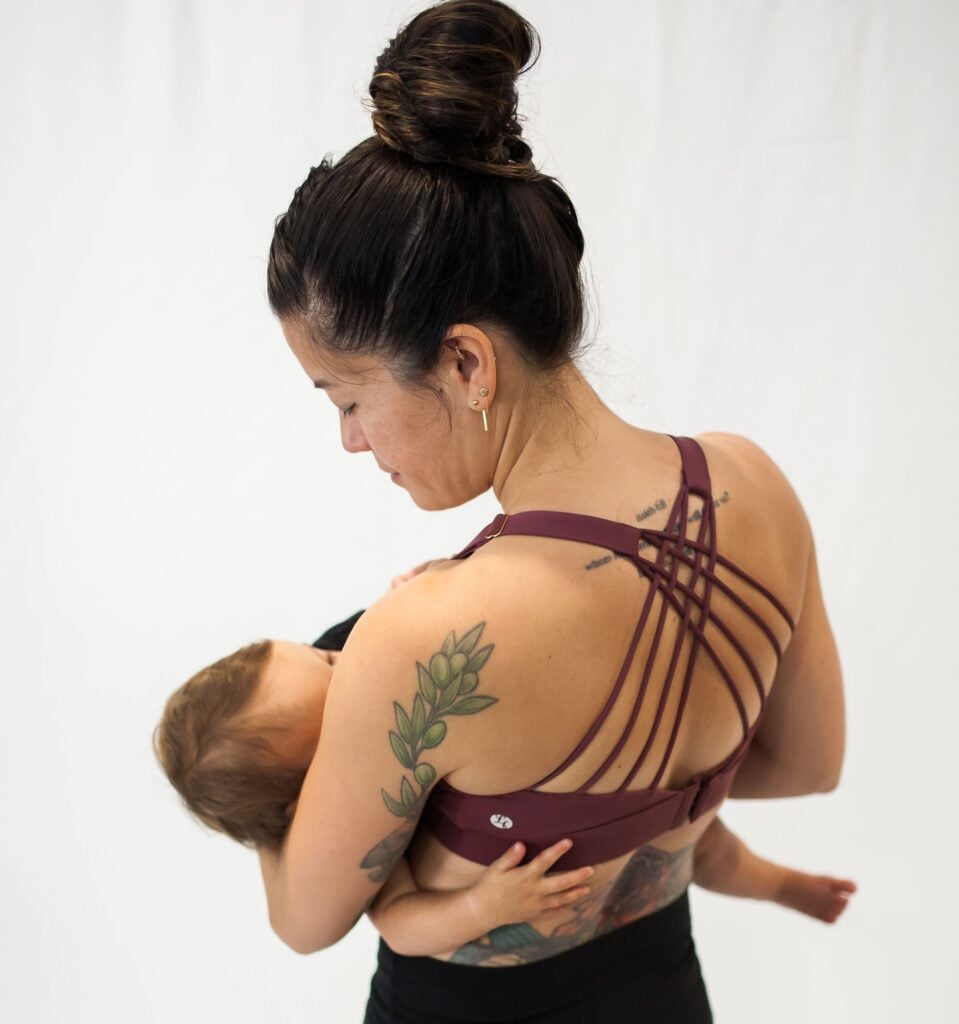
3. Feed or Pump Before Exercising
Emptying your breasts before a workout can prevent discomfort, especially during high-impact activities like running.
If your baby is with you, nursing during or immediately after a workout is an option.
4. Modify Workouts Based on Recovery Needs
Postpartum bodies take longer to recover. Prioritize mobility, stretching, and active recovery.
Gradually rebuild strength, focusing on deep core activation and pelvic floor stability.
Weight training helps increase bone density, counteracting potential bone loss due to breastfeeding.
5. Give Yourself Grace and Adjust Expectations
Some workouts may be interrupted by your baby’s needs—and that’s okay!
Focus on functionality over aesthetics. Your body has gone through immense changes, and strength should be the priority.
Including your baby in workouts can foster a love for movement from an early age.

Recognizing Signs of Milk Supply Issues
If you are concerned about milk supply, watch for these signs:
Frequent, prolonged cluster feeding (beyond normal growth spurts).
Persistent tension in baby’s body post-feed (hands remain clenched, body appears stiff).
Fewer than 6-8 wet diapers per day.
Slow weight gain despite frequent nursing.
If you notice these signs, consult an IBCLC (International Board Certified Lactation Consultant) for evaluation. Checking hormone levels with your healthcare provider may also be beneficial if all other factors seem optimal.
Final Thoughts: You Can Successfully Breastfeed and Work Out
Exercise is a fantastic tool for postpartum recovery, mental well-being, and long-term health. With proper nutrition, hydration, and mindful recovery, you can maintain your milk supply while staying active.
If you’re looking for a structured fitness program, check out MamasteFit’s Postpartum Fitness Program, designed to help moms safely rebuild strength while supporting their breastfeeding journey.
By prioritizing nourishment, recovery, and movement, you can confidently navigate breastfeeding while achieving your fitness goals!
 Video course · 3+ hours
C-Section Scar Mobilization
Over three hours of video on scar mobilization technique and movement for recovery, plus a live webinar every other month you can attend or watch back.
Learn more
Video course · 3+ hours
C-Section Scar Mobilization
Over three hours of video on scar mobilization technique and movement for recovery, plus a live webinar every other month you can attend or watch back.
Learn more
 App program · 16 weeks
After C-Section Recovery Workout
Sixteen weeks of cesarean-specific rebuilding with scar mobilization included — developed with physical therapist and two-time c-section mom Casey.
Learn more
App program · 16 weeks
After C-Section Recovery Workout
Sixteen weeks of cesarean-specific rebuilding with scar mobilization included — developed with physical therapist and two-time c-section mom Casey.
Learn more
 App program
Train for a Marathon After Baby
Progressive run workouts and strength training from 5K to the marathon finish — long runs, tempo work, easy miles, and a weekly pelvic stability session.
Learn more
App program
Train for a Marathon After Baby
Progressive run workouts and strength training from 5K to the marathon finish — long runs, tempo work, easy miles, and a weekly pelvic stability session.
Learn more