



Welcome to the MamasteFit Podcast! In this episode, Roxanne welcomes Briana to share her experience of a vaginal unmedicated birth at a freestanding birth center. Briana discusses the challenges she faced when she discovered her baby was breech at 36 weeks and the steps she and her husband took to turn the baby. They eventually opted for an external cephalic version (ECV) procedure which led to a successful head-down position for the baby. Briana then details her birth experience, from laboring at home to giving birth in a birthing tub, and her journey through a challenging postpartum period characterized by exclusive pumping. The episode also features helpful advice on navigating pregnancy and birth with confidence, plus support resources for postpartum recovery.
Read Episode Transcript
Roxanne: Welcome to The MamasteFit Podcast. On this episode, we have Briana here to share her vaginal unmedicated birth at a freestanding birth center where she had to navigate a bit of a hurdle at the end of her pregnancy when she found out her baby was breeched at 36 weeks. Thank you so much for being here.
Briana: Thanks for having me!
Roxanne: Of course. we’ll just dive in. Can you tell us what you did to prepare for pregnancy and birth?
Briana: Sure. So I, my husband and I, started to try to get pregnant and it took about seven months to get pregnant. So during that time I started to think about how can I change my diet, my exercise, my stress levels to conceive. And so after seven months, we were successfully able to conceive. There were two sort of avenues that I really tried to focus on while pregnant, which I think led to a very healthy pregnancy.
One of them was movement. I’ve always been very physically active and was doing a prenatal barre blend exercise program that kept me moving and mobile and strong throughout the process. And then, I also am really big into hiking- my husband and I live near the mountains, so we continued to do hikes, at least through the end of the second trimester, third trimester it became a little bit more complicated, and exhausting! So I took a break from that.
The second avenue that I really focused on was nutrition. A week before I found out I was pregnant, I actually signed up for a health coaching training program. And I’m glad that it worked in that order because I think if I’d found out I was pregnant, I would’ve found some reason to put off being a part of that program. And as part of the program, I got coached on what’s called the Habit Change Coaching Method. So I was learning how to make small, incremental changes to my diet, my relationship with sugar, how I think and feel about food. And it made a big impact on how I felt throughout the pregnancy. And so I was super energetic, even into the third trimester and managing my food really well. And then was also able to plan some good postpartum, like, frozen meals, that were ready after I had the baby. So that’s the process and the mindset that I took throughout the pregnancy.
Roxanne: Okay. Did you have anything come up during pregnancy, like with either pregnancy pains or complications, that you had to like navigate through?
Briana: Yes. So I found out at 36 weeks that our son was breech. I was devastated because we had been planning an unmedicated birth at a freestanding birth center, and we had developed this incredible relationship with the midwives and the team there. So at the very onset of that, I was just like, “But I wanna spend my birth with these people that I built this relationship with”
Roxanne: Yeah!
Briana: And so they, when they found out that he was breeched, they said, “Let’s not go schedule a C-section tomorrow. There are a lot of things that you can consider doing.” So they gave us what I call, “the breech binder,” which had a lot of Spinning Babies exercises, some evidence-based research on vaginal breech births and C-sections. And then we, my husband and I made it our full-time job to do Spinning Babies every day. We went to the pool a couple times a week, so I could do handstands in the pool. We did moxibustion, so burned a moxa stick by my pinky toes. I was going to the chiropractor regularly- and that was really helpful, specifically because the way that my son was sitting, which I found out later, was that he was cross legged, so his knee was in my belly button and in my back. And just the change in weight distribution just made my hips hurt a lot, so.
Roxanne: Yeah.
Briana: So I had a chiropractor, getting regular adjustments was really helpful, even just beyond trying to flip him, but with pain management as well. And then I was drinking a lot of drinks with stevia and electrolytes in it to try and increase his amniotic fluid.
And, my husband is super supportive throughout this process too, because when we found out he was breeched at that appointment, I walked out and thought, “I don’t even know how to feel right now. I can’t articulate how I should be feeling in this moment.” And he said, “Let’s just roll up our sleeves and figure it out.” We went to lunch, we came up with a game plan, and at the end of the day, I am really grateful for the experience because doing Spinning Babies with my husband and going on this journey and making decisions together actually brought us a lot closer towards the end of the pregnancy, which I really appreciated.
Roxanne: Yeah. That’s so nice, ’cause I know that can be so stressful finding out that your baby is breech at 36 weeks because most birth centers, you cannot have a breech vaginal birth there. And similarly with at home, like it’s harder to find someone who can support those births. So it’s like almost like this unnecessary stress on you that you now have to like, navigate this whole huge hurdle. So what did you guys end up doing?
Briana: We went to a hospital for an external cephalic version. It was an interesting experience.
We got there at 10 o’clock in the morning and we were told it was a very short process and, we were there till, I think like 6:30 that night. We ended up actually getting the procedure done at four o’clock in the afternoon because…
Roxanne: Oh my gosh!
Briana: In the hospital setting, they need to make sure there’s an OR available just in case there’s a problem and there’s an emergency C-section needed. And then, I had to fast, so I was very hangry at this point.
Roxanne: Yeah.
Briana: And I had an IV, they took my blood just in case, and they gave me a uterine muscle relaxant. I didn’t use any anesthesia ’cause I wanted to feel the baby during the procedure. So the doctors came in, they’re very friendly, very professional. There’s a lot of pressure put on my abdomen and there are three people holding onto each, different part of the baby and trying to turn him. And it was quite painful. I was trying to deep breathe through it and it was challenging because people were putting a lot of pressure on my abdomen. And after the second attempt out of three, I just said, this isn’t, like in my bones, I knew- don’t try a third time. And so that was a little disheartening. At the end of the procedure, the doctor said, “Okay, let’s go ahead and schedule you for a C-section at 39 weeks.” And I was like, “Let me talk to my birth team,” and she said, “Okay, that’s fine.” And, I honestly didn’t get any pressure from the hospital. They were just like, “Okay, if you wanna talk to your provider, that’s fine,” which I appreciated. And then, a few hours later, they wanted to keep me for monitoring, making sure the baby’s heart rate stayed okay, and they were seeing if there were any contractions that were starting. A few hours later, right before I left, a doctor came in and said, “Oh, I’ve noticed some slight contractions. I wanna, I can do an internal exam but I’ll wanna keep you for a few more hours.” First thing in my mind was like, “I just wanna eat. Please don’t keep me.” And I said, “Can I talk about it?” ‘Cause my palms were getting really sweaty.
Roxanne: Well yeah, your blood sugar’s dropping!
Briana: Yeah. And the doctor left and one of the nurses who we had built a relationship with over the span of the day, who’s really a supporter of unmedicated births, she hung back and said, “This is normal. You don’t have to do this. Stand your ground. So like you can go home if you want to,” and my husband and I looked at each other, we’re like, yeah, let’s go home. Because my concern was that, if I was even a centimeter dilated and I had a breech baby, then it would just lead to this like cascade of events and then, end up with a C-section. So I at least wanted to take a step back, talk to our midwives, and then go from there.
Then, we had some serious conversations with our midwives over the next couple of days. The guidelines in their birth center is that they will perform a vaginal breech birth on a mother who has already had a vaginal birth before. And since this is my first pregnancy, they said, “We really wanna stick to our guidelines.” They gave us some resources, including a doctor in Richmond, which is an hour and a half away from our house, who would give us an honest assessment of the risks- not just associated with a vaginal breech birth, but with a C-section. Because what happened when I was in the hospital and they said, okay, let’s schedule a C-section. It wasn’t, “Here’s the options and here’s the risks associated with the C-section,” so we at least wanted to talk to someone who would give us an honest assessment of both of those risks. And then they recommended a midwife in Richmond as well, who performs vaginal breech births in a hospital setting.
Roxanne: That’s amazing!
Briana: We thought that would be a really good step. And your podcast, the interview with Dr. Stu Fishbein, that was transformational. I listened to it a couple of times, my husband listened to it, and I was so shocked to understand that not only is vaginal breech birth possible, but it could actually be a really beautiful experience. So that was very empowering to hear, and it just like further bolstered the support that we were getting from our midwives. And one thing I’d like to say about the midwives is that they said, “If you give birth in Richmond, if you give birth in a hospital, we will be there. We will come to the hospital.” And our doula said, “We will be there. I will be there for you.” And one thing that just made me feel so emotional and just cared for was that one of the midwives said, “You know, if you have to give birth in a hospital, we invite you and your husband and your baby to come spend time in the birthing room that you had wanted to give birth in to just have that special time together in that room.” And just I just can’t say enough of like how cared for, and intentional their care was, for my family.
Roxanne: That’s amazing. That is so amazing.
Briana: So we went to Richmond then, and then met with the midwife. And we’re talking about how we wanted to do a vaginal breech birth, and she’s like, “Let me just see if an ECV will work, because I have done an ECV on myself a couple of times,” when she was pregnant herself, and, I said, “Okay, doesn’t hurt to try.” She took us up to the ultrasound room and within 15 minutes she flipped the baby head down, which, I was shocked! And I was breathing deeply, she was listening to me and the baby, and it turns out, at the hospital, they saw a pocket of amniotic fluid, like in front of the baby’s face so they were turning him forward, but because his legs were crossed, he wasn’t budging. And so she’s like, “I think the baby is like a little more open to moving backwards.” And she just did a backwards roll on him and his head engaged, and my husband said he saw the whole thing happen. And I was just in shock at that point.
Roxanne: That’s amazing. So that’s so cool, ’cause Virginia, I didn’t realize that midwives had the scope to do breech vaginal birth as well as ECVs, ’cause that is not the case in every state. So that is such an amazing option that you have access to there.
Briana: Mhmm!
Roxanne: All right. So now you are head down.
Briana: Yep. The baby’s head down
Roxanne: 39 weeks.
Briana: So this is a Wednesday. My last day of work was the day before, so I was like, okay, baby’s head down on Wednesday, now maybe I’ll get a couple of weeks to relax and maybe sleep in. So, Thursday I did just nap all day and watch TV and relax. Thursday night I, had the worst diarrhea all night. Like I was just on the toilet, and even afterwards I was just sitting on the toilet, ’cause I just felt like I needed to be there. The next morning I’m exhausted because I just didn’t get a good night of sleep and my stomach had been bothering me.
Luckily a friend came over to visit, so I was like really distracted, I was just laying in bed and we were just talking, and we had an appointment with the midwives at four o’clock that afternoon to make sure that the baby was still head down. And he was. I said, “I’m like feeling a lot of back pain and like lower abdomen pain, and I had diarrhea. I just feel so bad right now.” And they’re like, “Okay, just have some crackers and soup. It’ll just make your stomach feel better.” Turns out they had an inkling that like I was in early labor, but were just like, “Let’s just, let’s see how this plays out. Let her go home. See what happens.” So I went home that night, took a bath- when my son was breech I had started taking a bath every night to just like, calm my nerves and just bond with him. And so I took a bath and I felt something in between my legs and I called my husband and I said, “Is there something there?” And he’s “Yeah,” like, he told me to pull it up, whatever it was, and it was my mucus plug. And I was like, “Okay, this could mean something, it could mean nothing.”
So I just was excited that there was this sign that something was happening, but the timing was unsure. So I went to bed, couldn’t fall asleep. The back pain and the lower abdomen pain was just really bothering me. My husband came to bed, fell asleep. A couple hours later I just woke him up, ’cause I was like, “If I’m miserable, you have to be miserable with me!” And then I took a shower just to help with the pain in my back, and then there was some discharge coming out. And so my husband called the midwife. She’s like “Yeah, so she’s in early labor. Just tell her to try to get some sleep- that might sound impossible!” But, we had this like whole setup in our living room, with like twinkle lights and like cute curtains and just like this, like really zen space for laboring at home and then for the postpartum period. And my husband and I were watching tv, I was having contractions, I’d tell him every time a contraction hit, but I like really couldn’t get comfortable. So I’d be on the bed, then I’d be on the yoga ball, then I’d be walking up and down the hallway and I felt like, I had the chills and my teeth were like chattering. And I think that was just the adrenaline in my body going through all these changes really quickly. So it’s just super uncomfortable.
And, around five o’clock I told my husband, “Please call the midwives. We need to go in,” and it was funny because he was like, “Why don’t we just labor at home a little bit longer? And I was like, we have to go in.” And he’s like, “Oh yeah. I remember our doula gave us that paper that said the mom will know it’s time to go in!” And so when he called the midwives, they said, “Why don’t you get here at seven o’clock?” We live an hour away, so it wasn’t like we had to wait around for a long time, and the drive there was fine. We live in a rural area, so potholes and gravel roads while, having contractions, not comfortable. But then when we got onto the main roads, we were like calling friends and family, letting them know and that was a really exciting point in the process.
Arrived at the birth center at seven. They were already filling the birthing tub, which I was super excited about using. They just talked to us about the run of events for the day. Our doula got there and she said, told my husband, “Why don’t you go take a nap? We’ll, Briana and I’ll go for a walk by the river,” because the birth center is right by a river.
Roxanne: Oooh!
Briana: And, so every 20 feet, I would need to stop and put all of my body weight on her and go through a contraction. There’s a guy running by who was very confused about what was happening, and she, and my doula was like, “She’s okay! Don’t worry!” And then we’ve got to a point where, there’s this sort of like gate that I leaned on and she was like pushing her hands and fingers in my lower back and I started like grunting. And she’s like, “Do you feel like pushing?” And I was like, “Yes,” and she’s like, “Let’s get back. I don’t think your husband wants to miss this part.”
We get back, the midwives ask if they can do an internal exam and so I say, “Yes, but please don’t tell me how far along I am because if I’m only two centimeters and I’m feeling this, I will lose it.”
Roxanne: Yeah.
Briana: They checked, my waters were still intact, and they said, “Just do some cat cows on the bed and then you can get into the birthing tub,” which is something I’d been dreaming of doing, throughout the entire pregnancy. I did some cat cows on the bed, sat on the toilet, or the dilation station, a little bit longer. And then I got into the tub.
The pain was pretty intense. I could definitely tell things were progressing, but I kept a good sense of humor throughout the process- that’s how I handle stress or anxiety. And I was being told some funny things that I was saying, like in between contractions, like at one point in between contractions I said, “Gee willikers!” for some reason. And then I was being fed a mama chia packet and in between contractions I asked one of the midwives like, do I have chia seeds in my teeth? Because that’s apparently where my head was in the middle of labor.
Roxanne: Yeah!
Briana: And we just had this playlist that I had prepared and listened to all throughout pregnancy, and that was playing in the background, and just the midwives and their team and then our doula, just these people we’ve formed like really close relationships with, just all of them were surrounding us and it just felt like the perfect environment to bring our son into the world.
And, this was like around 8:30 is when I got back from the walk. Like nine o’clock, got into the tub, little bit later, maybe 30 minutes later, my waters broke. And then, my son was born at 10:18 that morning. And it was really challenging when this, in between pushes, like I’d push his head out a little bit and then it would come back and then out and then back. And our midwives were like, “You’re doing such a great job, Briana!” And I was like, “I don’t believe you! Nothing is happening! You’ve been saying that for an hour!”
Roxanne: Yes!
Briana: And I actually made the conscious decision to tear because I was like, “I need this to be done.” And so his head came out. I felt so much better after that. They let me take a break for, a minute and, they said that his, head was just out and his eyes were just looking around, like exploring the world, like while waiting for the rest of the birth process to complete. So I got up on my knees, pushed him out, and then he was put on my chest immediately. We didn’t know the sex of the baby and so we got to find out in that moment that he was a boy.
Roxanne: Oh!
Briana: And that was really amazing. And what’s interesting is that I thought the baby’s gonna be put on my chest. It’s gonna be this like incredible experience. I’ll fall in love with him immediately and everything will click into place. But in reality, I just, the whole time was thinking, “I did it! I can’t believe I did it.” This, like, dream came true.
And so I ended up birthing the placenta a few minutes later. The baby was still on my chest. They helped me get out of the pool with the baby still on my chest. Someone was holding the bowl with the placenta in, so everyone was kinda like shuffling to the bed. And I just laid there for the golden hour with the baby on my chest, the placenta in the bowl between us and my husband. And it was just this… it was better than I could have imagined it would be. And yeah, I just feel so grateful that we had an amazing team who helped us get to the point and led us down a road where we could have the birth that we wanted to and really trusted us and that my husband and I trusted each other to make the right decisions that led to this birth.
Roxanne: Oh, I love that. So you had the birth of your dreams, even though you had a little like hurdle at the end, of baby being breeched and having to shift, like Plan Bs. But then you’re able to go back to plan A!
So you had the birth you wanted. How was postpartum?
Briana: Postpartum rocked me to my core, and some days, honestly, it still is. I’m 11 most postpartum. The biggest challenge for me was with breastfeeding. I had this image of during the golden hour that my son would latch and everything would be amazing, but he was asleep like the rest of the day. Apparently being born is exhausting, so his vitals and everything was fine for him, but, he just, he didn’t latch in that initial period. Luckily, we were able to get some donor breast milk to feed him until the midwives came to visit us the next day at our home. He still wasn’t latching at that point. We got connected with a lactation consultant who did home visits, and she was incredible. We actually worked with her for a couple of months and his latching ended up being consistently inconsistent in that some days he’d latch once, some days he’d latch none, some days he’d latch six out of seven feeds. And every time he’d go through a growth spurt or a like a developmental leap, he would forget or just have issues latching. His jaw was also very recessed when he was born, and because of his positioning when he was breeched, he was very tight on the left side of his body. And so there were a lot of positions that were very uncomfortable for him, especially when it came to moving his neck. So we saw the lactation consultant, the chiropractor who supported us before he was born, we saw a pediatric physical therapist who all were just trying to help him be in the best position to successfully latch.
During this period of time, during the period of time when he was breech, I started a journal writing letters to him of, “You’re in the position that you’re supposed to be in!” I didn’t wanna make him feel like, oh, you should be head down you shouldn’t be, butt down.
Roxanne: Yeah.
Briana: “Your position is wrong.” I really wanted to be intentional about saying whatever we can do to support you, let me know in some way. And then it was the same thing with breastfeeding. I was writing him letters about the struggles we’re going through together and talking about how we were both crying in the trenches at three o’clock in the morning when he was hungry, but he wouldn’t latch and I was trying to also pump at the same time.
And, so it was really rough and I had a lot of emotional moments about it over the course of a couple of months. One thing that was huge to me was learning about the term breastfeeding grief. I think that there are a lot of smaller things like, or challenges we experience in everyday life, and people are very sympathetic about it. But when a mom struggles with latching and breastfeeding, I feel like the knee jerk reaction is to say, “You can just use formula.” And it’s no, like I’m really trying to do this, to have this relationship and this, feeding journey with my son. And the term breastfeeding grief really put words around how I was feeling and validated that yes, you can feel very deeply about not being able to feed your child the way that you had wanted to.
I didn’t like- I had a very good supply, luckily. There were some moments that I wanted to give up because pumping all of the time is really difficult, especially in the beginning. I received some really good advice, from someone in a postpartum support group I’m a part of. She said, “Never quit during your hardest moment. If you decide to quit, make sure you’re doing it with clear eyes and with intention.” There were also times that, I was like crying, while pumping and just telling my husband, “I, I can’t do this anymore.” And he said, what is one thing that makes this hard? And I’m like, “Like my hands are raw and bleeding from washing pump parts and drying them constantly.” He said, “Let’s get a bottle washer to clean your pump parts.” And then, he said…
Roxanne: Oh, yeah.
Briana: “What’s something else that’s hard for you today?” And I’m like, “I just I hate having to pump when I’m out in public,” and he’s let’s get a wearable pump. Like every time something was hard, he said, “Let’s find one way to make this a little bit easier.” And I attribute a huge amount of my success in this to him and supporting me throughout the process. Because he could have just said, “Do it yourself,” or, “Use formula.
Roxanne: Yeah.
Briana: Or whatever. And so that is what I think has led me to be able to exclusively pump for 11 months. I am five weeks and six days away from reaching my goal and starting to wean. And, I feel like this is the biggest accomplishment of my life. I also want to emphasize that this is a good way to feed your child- like I never knew exclusive pumping was a thing. I just kept pumping because he wasn’t latching. And then I found out there’s a whole community of women who exclusively pump for their children. And I understand that like the things that have made it successful for me are not accessible for everybody, and I feel very lucky for the support that I had, but just knowing that there’s a word for it and that there are other people going through the same journey just really helped propel me towards continuing even in the hard moments.
Roxanne: Like what were some resources online that she felt was really helpful for exclusive pumping outside of like your like support groups.
Briana: I would say, Milky Mama was a good resource. They have some like brownies that you can eat and stuff, and lactation support types of foods and tinctures. But one of the things I appreciated was that one month postpartum they said, “One month of pumping. You got this, Mama!” And I like cried because I was like, “You’re right. I do have it. Like I’ve got this.”
Roxanne: Aw! That’s so sweet.
Briana: Yeah. Things like that. And then also a lot of Instagram people who are exclusively pumping and just seeing other moms going through the same things i’m going through. Moms showing this is a realistic amount to pump, ’cause sometimes when people are oversupplying, they’re like showing that on Instagram and I’m like, “But I’m getting like a quarter of that, total!”
Roxanne: Yeah.
Briana: And so, yeah, so seeing other moms be like, “This is a realistic amount to pump.” And, so I, think between The Milky Mama and the resources that they are providing, and then also just Instagram influencers who are going through similar issues.
Roxanne: That’s amazing. And that’s one of the, like social media obviously has its faults, but that is one really big benefit of social media is that it helps you create this village, almost, of people who are going through the same experience, so you feel less alone. ‘Cause it’s not as common- it’s more common now- but it like when we first started like breastfeeding and seeing it on social media, exclusive pumping was not commonly talked about, really only latching was talking about. But now there’s like literally Instagram pages dedicated to people who give reviews of breast pumps ’cause they exclusively pump and they’re like, “This one works really well for me. These are the things I like about this one. Like this bottle washer is really great.” And so then you feel that like one it’s a totally valid way to feed your baby. It’s a lot of work, but you can make it work for your family. And it takes a village, even with your partners, like having your partner there to support you through all that. Like my husband would wash a lot of my breast pump parts because I was like, “I can’t do that.” And so he is like, “Oh, I’ll just do it. It’s fine. I’ll wash the bottles.” And you can’t do it all alone- or, you can, but it’s substantially harder to continue. So you need your partner and I love that you had that support.
So if there is like one piece of advice that you would give to somebody who listened to your entire story, or is similarly going through something that you were going through, what would be one piece of advice that you would like to leave our listeners with?
Briana: I would have to say, block out the noise. When we found out that our son was breech, there were a lot of people who were really nervous about our decision to pursue a vaginal breech birth. That came with people sharing a lot of anecdotal stories about the most traumatic birth experiences that they’ve ever heard of, even though they had nothing to do with a vaginal breech birth, but it was just like, they, with good intentions, wanted us to be healthy and to have a successful and safe birth, so I understand where it was coming from. And at the same time, it was really like we needed to stay focused and continue to feel calm about the decision to give birth the way that they, that we had decided to. At that point we needed to put up the barriers and think, okay, we will listen to each other, we will listen to the baby, we will listen to our birth team, and we will listen to the trusted resources that we rely on.
I think Dr. Google and the internet and like information from other people, can get really distracting and conflicting and sometimes deflating. The success rate for ECVs at 39 weeks is almost unheard of. And so I thought going into this situation like, oh, it’s never gonna work because I’m too far along. All of these things that were really getting in the way of us focusing and being in good spirits leading up to the birth. So we decided to just, block out all the noise and then focus on the resources that we feel are supporting the birth that we want. And that, I think, made a huge difference, especially towards the end.
Roxanne: Yeah, because that, I think that is like creating your little bubble and making sure that it’s positive and that it’s like intentional can really have an effect on just the mindset as you go into birth. So I love that you, that is a really great, piece of advice.
Thank you so much, Briana, for coming onto the podcast and sharing your pre-pregnancy, your pregnancy, birth, and postpartum journey with us on the podcast.
Briana: Thanks for having me!
Roxanne: Thank you so much for listening to Briana’s birth story, as well as her postpartum journey, navigating exclusive pumping. I loved her advice at the end of the story where she shares shutting out the noise of the other people’s opinions and thoughts on what you’re wanting to do for your own birth and your own postpartum. Kind of creating that bubble surrounding you where it’s positive energy and vibes. This can have a really big impact on how you enter into your birth as well as your postpartum recovery and journey.
If you’re also pregnant and looking for more support, check out our online childbirth education course as well as our prenatal fitness programs. Our childbirth education breaks down the science of labor and birth to take away some of the mystery so that you can feel confident and empowered as you navigate pregnancy and birth. Within our course, we break down labor options, labor comfort measures, we even talk about what to expect during pregnancy and birth with changes within our bodies. And then we also have a little small portion on postpartum preparation because as Briana said, postpartum rocked her world. And we don’t always prepare as much for the postpartum period as we do for pregnancy and birth. So we also have a postpartum and newborn preparation course where we break down what to expect in that first month postpartum for both you and baby, so that you’re not Googling at 2:00 AM if this is normal or not or what should I expect in the next coming weeks that is gonna happen within my body, physically and also mentally? And then also what to expect from your baby. So if you are also looking to prepare for postpartum, check out that postpartum newborn preparation course.
Our prenatal fitness programs are broken up into two different formats. We have our on-demand version, which is a video that you can follow along and you can break up the little parts into like different parts of the day or over the course of the day to whatever fits into your life. We also have our traditional format, which is a list of exercises with demo videos that you work through at your own pace. We have a full version, which takes 45 to 60 minutes per workout, and then we have a mini version, which takes 15 to 20 minutes per workout. All of these are available in bundles with childbirth education as well for just like a full bundle for childbirth prep. You can check out all of our offerings on our website at mamastefit.com. And as a thank you for listening to this entire episode, you can use code STORY10 to get 10% off.
This podcast is sponsored by Needed. Needed is nutrition company focused on the perinatal timeframe that both Gina and I utilize during our pregnancies, during this current pregnancy, my postpartums, and then our mom even uses this and she is past menopause. And if you wanna check out Needed head to thisisneeded.com and use code MAMASTEPOD to get 20% off your first order.
Prenatal Support Courses
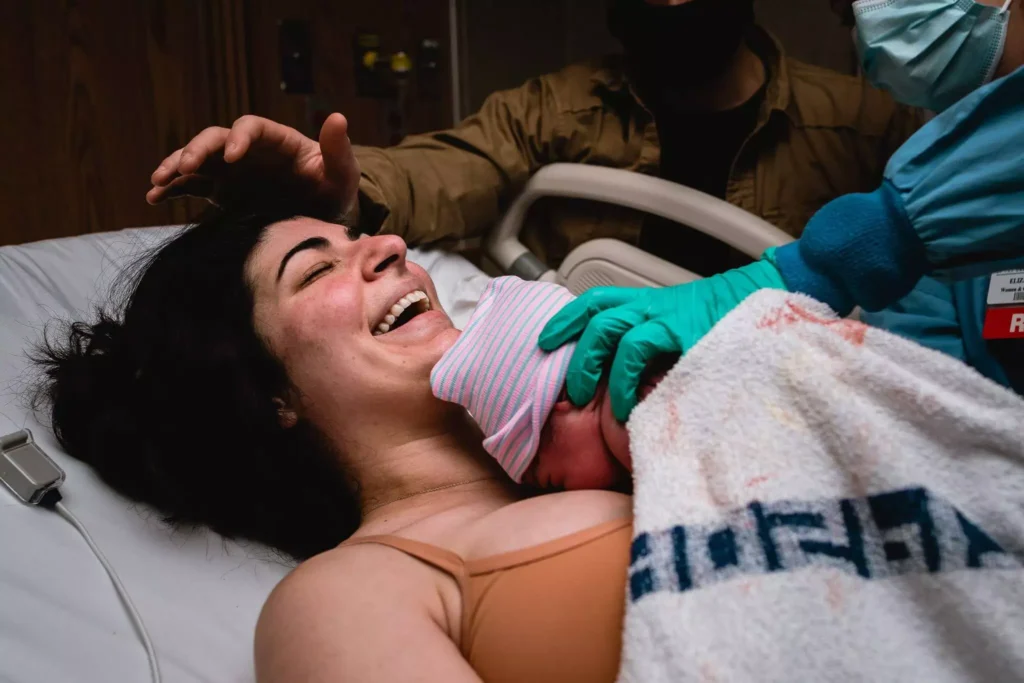

Learn the science of pregnancy and birth to take the mystery of labor away! Understand why you are feeling what you feel, and learn strategies to confidently move through pregnancy and birth!
- 9h+ of Video
- Support Group
- Close Captioning
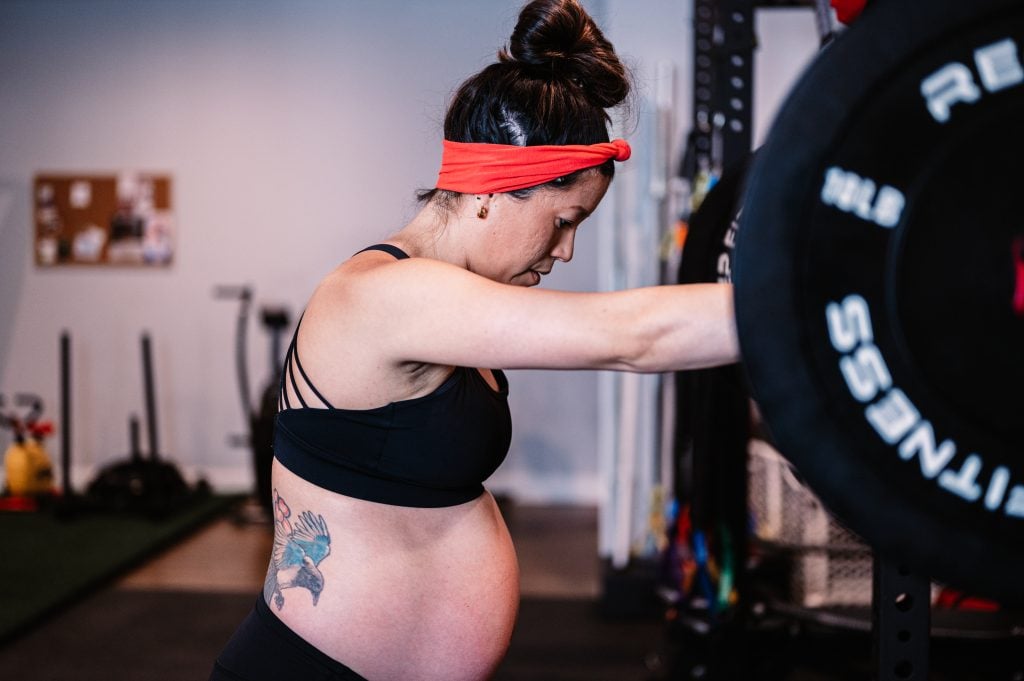

- 5 Workouts/Week
- Gym Workouts
- Self-Paced

Instructor
GINA
Workout on-demand with our prenatal fitness workout videos! Each workout is 30-40 minutes to follow along as you exercise at the same time!
- Birth Prep
- All Trimesters
- Mobility Work

Instructor
GINA
Find comfort and relief from pelvic girdle pain throughout your pregnancy and postpartum period! This program incorporates myofascial sling focused exercises to stabilize across the pelvic girdle joints.
- 3 Weeks
- On Demand Workout Videos to Follow