



Welcome to the MamasteFit Podcast. If you’re wanting to give birth in an out of hospital setting known as community birth, we’re going to discuss what that means in this episode, why someone may want to choose to give birth outside of the hospital, and what are some barriers that may be involved with wanting to give birth in a community birth.
Read Episode Transcript
[00:01:05] Gina: Welcome to the MamateFit Podcast. In this episode, we’re going to be talking all about community birth. What that means, why would anybody choose to give birth outside of the hospital, what are some reasons that we personally chose to give birth in a community birth setting? And then also, what are some barriers that could be involved with wanting to give birth outside of the hospital, such as finding a provider? In addition, sometimes the financial
aspect of wanting to give birth outside of the hospital can be a barrier to seeking this birth option.
[00:01:33] Gina: But before we dive into the episode, I want to share that my book, Training for Two, is now available for pre order. Training for Two comes out September 10th of 2024, and it’s all about how you can use prenatal fitness to help support a strong pregnancy, a pain free pregnancy and also to help you prepare for birth. The book is filled with tons of exercises that you can do throughout your pregnancy and why you may want to choose certain exercises. And it doesn’t include just pictures and written descriptions, but there’s also QR codes to break down videos to really help make it clear what these different movements are. And so you can check out Training for Two down in the show notes below. We’ll link it there. And again, the book comes out September 10th of 2024.
[00:02:14] Gina: So Roxanne, what is a community birth?
[00:02:17] Roxanne: So “community” refers to birth that’s outside of a hospital. So this is either at a freestanding birth center, or potentially at home, or somebody else’s home, or like the farm that is like in Tennessee, that is a community birth. That is probably like more of a community birth than anything because you’re literally in the farm community. By referring to community birth as, “community birth” instead of, “out of hospital birth,” it shows that it’s not just like hospital is a standard and we’re doing something outside of the standards by delivering outside of the hospital, but it’s more just another option that’s available to us.
[00:02:49] Roxanne: So hospital is one option and then community is another option, whether it’s a freestanding or a home birth.
[00:02:56] Gina: And in this episode, when we talk about community birth, we’re talking about giving birth outside the hospital with a trained medical professional. So we’re not going to be referring necessarily to free birth, which is different than community birth in our opinion. It’s an option that some folks choose to take, but that’s not what we’re talking about when we’re discussing community birth in this episode.
[00:03:15] Gina: I will say that something that is a common confusion for some of my doula clients is they’ll be looking for a birth center and they’ll google, birth center and then, the local hospital will pop up because they refer to their labor floor as a birth center. And so that can sometimes be a little confusing if you’re wanting that community birth setting where you’re wanting to give birth in that freestanding birth center, when you’re searching for a birth center, sometimes a hospital will actually be what pops up.
[00:03:42] Roxanne: And this is true where the hospitals now are moving away from being called a labor and delivery unit to a birthing unit and some of them have changed their unit names to “birthing unit” or “birthing center” because they know people are kind of looking for a different type of experience.
[00:03:58] Roxanne: And some hospitals do have a birthing center. It’s not a freestanding birth center. It is a birthing center attached to their like their birthing units, labor and delivery units, that are completely run by midwives. So it’s a different type of experience and management of your labor, but it’s still attached to the hospital. So if you have a hospital that has like a birthing center, it can be helpful to ask about the management of your labor in this birthing center to see if it is truly like a community birth type management, or is it just hospital management in a birthing center.
[00:04:33] Gina: So let’s talk about why somebody would choose to give birth outside of the hospital setting in a community birth. So Roxanne gave birth in a freestanding birth center when they were out in California, and I’ve had two home births now and planning my third. And so we’re well versed in giving birth outside of a hospital setting. We have also had hospital births as well.
[00:04:54] Gina: And so one of the reasons for me personally, that I chose to give birth in a home birth setting, for example. is that I wanted to be in control of who was in my space. And so for me in my first birth, when I reflect on it, the one thing that was really challenging for me is that I had no control, like who the provider was, who the nurses were were, like, who was interacting with me throughout my birth experience. And looking back on it, if I had had different people supporting me at different points of my labor, it would have made a huge difference for me. I would have had so much more of a positive experience. And so moving into my second birth, one, it was COVID, and there were so many restrictions in the hospital that I was kind of like, well, maybe we’re not going to give birth here.
[00:05:37] Gina: We ended up switching to home birth and it ended up being like really great for me because I had full control who was in my home. Like I knew who the midwife was going to be. I knew who her birth assistant was going to be. So those were kind of like the quote unquote, like strangers to the experience.
[00:05:53] Gina: And then I got to choose the rest of my birth support team, like Roxanne was there, my husband was there, my mom was there, my child was there, I had a massage. I have like kind of a party when it comes to my labors. I have a lot of people there. I did have some friends like text me and be like, “Can I come?” and I’m like, “No.” I mean, it’s a party, but it’s not a party. Like you can’t just come to my home birth. I don’t think so. But I had full
control who can be in my space. And that was really important to me to be able to relax and to feel safe and supported in my environment. So I think that that’s a common reason that folks will choose to give birth in a community birth center, especially at home because they want to control their environment as much as possible.
[00:06:36] Gina: And you have more ability to do so when you’re at home as opposed to a hospital where it’s just, you know, whoever’s on shift. There’s plenty of wonderful labor and delivery nurses and midwives and OBs, but sometimes you just get somebody who’s having a bad day, or maybe isn’t as into it as maybe they should be, which is what my first birth was.
[00:06:54] Gina: And so for me, having control of who is in my space was really important. And it was also just like more comfortable at home. Like I’m in my own environment, like I have things that I’m familiar with, my shower, my bed, my space, like I could eat, I could drink, like whatever. So I was just like, I was able to be more comfortable with the experience because I was at home.
[00:07:17] Roxanne: Yeah, so control and, comfort are probably two of the biggest reasons that people choose to have a community birth. And my, probably my biggest reason I chose to have a community birth, one, because it was an option available to me. It was seven minutes down the road and, it would not have been an option had we had a baby here in North Carolina. So I was like, “Yes. We’re gonna go for it.” I learned about, birth centers in nursing school when we were going over, the labor and delivery maternal health portion, and I was like, that sounds really cool. I would love to deliver in one of those. But they’re not a very common option. So, in a lot of areas, it’s not even an option, or it wasn’t an option for my third baby, so we, we went the hospital route.
[00:07:59] Roxanne: But as soon as I was pregnant and we learned we were moving to California, I was like, yes, I would love a birth center. Because home birth, for me, personally, my own preferences, is a little bit more stressful. And I think, I would just never go into labor because I would be so stressed about the possibility of needing to transfer is a lot harder for me to let go of as a nurse, than it is for Gina, because she, ignorance is bliss sometimes. I know way too much from just school and life that it would have.
[00:08:26] Gina: Because Gina’s dumb.
[00:08:28] Roxanne: Well, no, not dumb. Like I’ve just seen more things that go wrong in labor. And so like, all of that is just in there forever.
[00:08:39] Roxanne: Whereas at this freestanding birth center, cause not all freestanding birth centers are the same, some of them have different capabilities, but this one, they had capabilities to do CPAP or like different resuscitation measures for baby that they wouldn’t have at other birth centers. So I like, asked a bunch of questions and I felt comfortable going to this one because they did have, the basics of resuscitation that if baby needed to, need anything as soon as he was born, they would have been able to help.
[00:09:08] Roxanne: And it’s just a different environment and a different experience where, comfort is probably, number one for them. It’s, obviously, a safe labor and birth is important, but, like, how comfortable you are and, like, how safe you feel. And how confident your providers feel in you and your ability to birth is so important and I didn’t fully understand it probably until I had my second birth because of the environment that I was in so.
[00:09:39] Roxanne: Out of hospital birth for me was just, one, it was just something that I’ve always wanted to do. A lot of people who want an unmedicated birth also, your chances of having an unmedicated birth are a lot higher if it’s not even an option. There’s not an anesthesiologist waiting at your front door, at the birth center’s front door, ready to give you an epidural. You would have to drive to a hospital to get an epidural. So some people who know, they’re like, “I would rather not have an epidural for my birth” like choosing an out of hospital, freestanding birth center or home birth kind of limits your options for pain relief by being able to not have an epidural.
[00:10:21] Roxanne: So that is one reason that I know people are commonly using the home birth or freestanding birth center, because they want an unmedicated, uninterrupted, intervention free birth, which is pretty much what you get out of freestanding birth center or home birth.
[00:10:36] Roxanne: But a common thing that I hear about community birth is that, “I’ll try it for my second birth, I want to make sure I can do it before I try it. My first birth is like the test run. So I’ll do that in a hospital because ah, I don’t know if I can do it.” But again, if it’s an option in labor, you might be like, “Ah, I changed my mind. Please call him.”
[00:11:01] Gina: If you had an option to do your freestanding birth center every birth, would you have chose that over a hospital personally? Not that this is what everyone should choose, but if you had the Monterey Birth Center?
[00:11:13] Roxanne: Oh, if I had the, if I still lived in Monterey, I 100 percent would have delivered there for my third baby. Obviously love them. Love them very much. Miss them. Wish I could have had Joan there. Granted I still, I probably would have had to transfer postpartum cause I like bled excessively
and might’ve needed a blood transfusion, but just the birthing experience itself. And then it was kind of nice being able to go home and sleep in my own bed and see my babies immediately after having a baby. I would have 100 percent had a birth center birth for my third, but it wasn’t an option available. There were no birth centers open when I had Joan.
[00:11:50] Gina: No. There wasn’t, they had all shut down.
[00:11:53] Roxanne: Or I could have drove two and a half hours, but no.
[00:11:56] Gina: No, thank you.
[00:11:56] Roxanne: I have limits, guys.
[00:11:57] Gina: That would have been awful.
[00:11:58] Roxanne: I would have chosen, though, an out of hospital birth. I would have not. I would have chosen a community birth for my third birth if I had the option. I would not have chosen home birth. One, my house was under construction. So, I’m not delivering at your house. Sorry, Gina. I’m not very. I’m not, I’m not choosing somebody else’s home.
[00:12:15] Gina: I don’t want you to give birth at my house either.
[00:12:19] Roxanne: But I also don’t feel as comfortable delivering at home. I would have wanted to be somewhere else, just for the cleaning problem.
[00:12:31] Gina: I mean, other people clean up for you.
[00:12:33] Roxanne: Yeah, but I don’t want to have….
[00:12:34] Gina: So let’s talk about home birth then, because Roxanne’s over here, like…
[00:12:37] Roxanne: I don’t want to clean afterwards.
[00:12:39] Gina: So I do want to first state that if you have a trained medical professional at your home birth or your birth center birth, they have the capabilities to respond to emergencies.
[00:12:49] Gina: Now, they don’t have the same capability as like a C section or like NICU, things like that. But they do have the ability to help stabilize you and your baby.
[00:13:00] Roxanne: Yeah.
[00:13:01] Gina: For transfer. And what we’re looking for at a home birth or these out of hospital birth settings is we’re looking for pink flags, like we’re not waiting for the emergency to happen.
[00:13:11] Gina: And so if there’s like some signs that maybe we’re heading down a path that we don’t want to be on right now, that we’re probably going to need some more support during this birth or postpartum, we’re going to transfer. And obviously every midwife and every provider that’s doing community birth birth is going to have a different kind of parameter or threshold of what they feel comfortable with.
[00:13:35] Gina: And so for me, when my husband and I were choosing home birth, his biggest concern, and obviously this was my biggest concern, too, because I would like to not die.
[00:13:44] Roxanne: Yeah.
[00:13:44] Gina: During birth. And I don’t want my baby to be harmed either. I think that’s a standard for everybody, like minimum standard, we’re all alive and thriving.
[00:13:52] Roxanne: Which is minimum, minimum.
[00:13:54] Gina: So obviously I’m not… For me, it’s not home birth or bust. Like I have, I have limits as well.
[00:14:01] Gina: And so one of the big things that we were concerned about was how do you keep us safe? Like our first birth, it’s pretty uncomplicated. There was no concerns during my pregnancy, during my labor. And so for the second, third and fourth, like, how do you keep us safe?
[00:14:19] Gina: And one of the big things is to make sure that you have a community birth provider who takes their job very seriously. And it’s not, “give birth outside of the hospital or else,” like it’s not home birth or bust. It’s, “it’s home birth if you’re a low risk patient, and then once you kind of exceed certain risk factors, it’s no longer a good option for you to be at home.” and this is
again, different for every provider. So choosing what you feel comfortable with is going to be really important.
[00:14:46] Gina: The next thing is having a transfer plan. Where are you going to go if something happens during your labor, that’s not an emergency yet, but it’s probably not safe for you to be home anymore? Is there a different hospital that you maybe want to travel to? So for me, there’s one that’s about an hour away that if it was like a non emergency, but we’re like, not looking good, we would head to that one. Now, if it was like, emergency, like we, made it to that point, like I’m hemorrhaging or something’s going on, we’re going to transfer to the nearest hospital, but you have to have that plan established. And this is something that you develop with your provider. What are we going to do in the event of X, Y, and Z? what are some reasons that you would transfer for? What are some concerns that like would be like an emergency situation? How can you keep me stable in those situations?
[00:15:36] Gina: So my midwife shows up with eight bags. She’s got her resuscitation bag. That’s for baby. She’s got stuff for me. She’s got things to help with postpartum hemorrhage, to help limit it, and so again, it’s not as much as like a hospital would have, but it’s enough to at least get you stable so that you can transfer to wherever you go. So having a transfer plan is gonna be really important. And the next thing to know is, yes, there are emergencies that can happen during birth, but they’re not common, like the things that could happen to me as a low risk patient are not super common, and so that kind of was reassuring to me as well.
[00:16:10] Gina: Now, I don’t have the same experience that Roxanne has with birth on the medical side, and so maybe there’s a little naivety on my part as well. but I feel very confident with my midwife’s experience level with how serious she takes things, that she’s not going to transfer me like on a whim, “Oh, it’s a Tuesday. I don’t really feel like attending your birth.” Like she’s going to give me the best opportunity, but I know I’m going to be safe with her care. It’s not like, “We’re going to give birth here no matter what.” So I think that’s really important. And my husband also talked to an emergency room doctor that he worked with all about all the risks and stuff that could happen and he like went in depth with him and what midwives can do to help keep us all safe and that was like super reassuring for him as well where he was like, “Okay, well. My friend, who’s like a doctor, told me that this is, this can be a very safe option for us,” and that was very reassuring for him.
[00:17:04] Gina: So yeah, it’s not home birth or bust. There are ways that you can be safe at home. And not everyone is a good candidate to giving birth in a community birth setting. There are, and different providers, again, have different thresholds on what they feel comfortable with taking on as a provider
outside of a hospital setting. And so it’s important to kind of be realistic with what makes the most sense for you and for your baby.
[00:17:29] Roxanne: And even free standing birth centers have a transfer policy as well where they have relationships with a local hospital whether it’s not necessarily the closest hospital, but they have a local hospital that they will transfer their patients to, because they’ll know they’ll still have a great experience at this hospital.
[00:17:46] Roxanne: And they have like different thresholds as well as if your labor is taking a really long time or you’re having some labor dystocia or stalls, like these are reasons that they transfer. Or if you’re wanting pain relief, or maybe like you are having increased bleeding, or maybe baby’s heart rate is giving us signs that we need to transfer- they have all of these policies, one, written down already, as well as they’ll go over all of these things if you have any questions. And then they have different resuscitation measures. Obviously like a home birth provider is not going to be able to bring a full baby warmer with all of the resuscitation measures, but they have pretty much all of the same things because you only need really room air oxygen for resuscitation of babies. They may not have like epinephrine to be able to do a full blown code on a baby, if a baby comes out and needs that. They may not have every single medication on the 20 page list that they could give someone for a postpartum hemorrhage, but they have like the medicines that they can give you until they can transfer you to a hospital that is able to address all of those things.
[00:18:48] Roxanne: So it’s, It’s not like one is better than the other, like free standing birth center isn’t “Oh, it’s a lot better than, like a lot safer than a home birth.” It really is like pretty much the exact same, except like some minor extra things. And, one, it might be slightly closer to a hospital, depending on the free standing birth center. So the one that just locally open to us is literally across the street from the hospital. So it’s, it’s a very short transfer to a big, you probably walk there quicker than the ambulance is going to come. So it’s just different thresholds on the providers of whether or not like they are practicing safely.
[00:19:21] Roxanne: So interviewing providers is probably the biggest thing in like understanding what their thresholds are and if that jives with your thresholds and makes you feel safe in their hands as you’re laboring. Because that’s one thing like, I know that when I am giving birth, I can pull out of Labor Land very easily if I’m feeling confused or concerned about the environment that I’m in, and I knew that if I was at home, I would always pull out and become labor nurse, Roxanne, and be like, “No, I feel like something’s off, like maybe…” and this would interrupt my labor progress and potentially cause me to transfer because of my labor would stall out. Whereas for some reason, out of birth center, I didn’t feel that at all.
[00:20:04] Gina: Well, they had a little bit extra options available, like for if you needed support, which I think was probably like really reassuring.
[00:20:11] Roxanne: And they had a really nice tub. I think that was also part of it.
[00:20:14] Gina: It was the tub.
[00:20:15] Roxanne: It was the tub, really. Honestly, I don’t have a garden tub in my home.
[00:20:19] Gina: It was a really nice tub.
[00:20:20] Roxanne: I wanted a water birth. I didn’t want a blow up tub. I did not want a blow up tub.
[00:20:26] Roxanne: Let’s take a break from this episode to hear about our sponsor, Needed.
[00:20:29] Roxanne: Needed is a nutrition company focused on the periodontal timeframe, and they make the prenatal that is one of our favorites that we took during our pregnancies.
[00:20:36] Gina: And what’s really cool about Needed is they have these trimester bundles that kind of adapt as your needs throughout your pregnancy kind of adjust.
[00:20:43] Gina: So first trimester, you get to choose what type of prenatal you want, because for me, pills, not happening. it was not going to happen, so a powdered version, first trimester. Wonderful. They also have the collagen in the first trimester in addition to hydration support and the omegas and so and probiotics as well, which you need all the time apparently. And then in the second trimester they add on sleep and relaxation support because sleep starts to get a little bit harder during that phase. And then in the third trimester, they add on iron because our iron needs tend to increase in the third trimester, which is something that I discovered being borderline anemic. Am I tired because I’m pregnant or because I have very low iron levels? It’s the low iron levels at combination with pregnancy.
[00:21:26] Gina: But I really that Needed has these trimester bundles that kind of take the guesswork out of figuring out what I need throughout my pregnancy. And you can subscribe, so they just automatically send you whatever you need and bundling them saves you like 15 percent or something.
[00:21:41] Roxanne: It just saves you something.
[00:21:42] Gina: It saves you something, which is really nice as well. So if you want to check out Needed and their trimester bundles, or if you just kind of want to pick and choose what you need, because you already know and you’re smarter than me, cause I didn’t, I didn’t know what I needed, you can check them out at Thisisneeded.Com and use code MAMASTEPOD to get 20 percent off your first order.
[00:21:59] Gina: So since we’ve been talking about transfers, let’s discuss what are the top reasons that someone would transfer.
[00:22:05] Roxanne: So the top reason that someone transfers in a community to birth setting is there is something, a labor dystocia, so something is going on with their labor that labor is not progressing as it normally should. And one, the midwives can tell when labor is not, progressing. There are signs that are like, you seem as if you’re stalling and you’re staying the same when it should be increasing either in intensity or just like progression.
[00:22:32] Roxanne: And you, yourself, can also feel it. So every birth center birth that I’ve attended that had to be transferred, they felt, they’re like, “Something is going on. Why isn’t my labor progressing?” Or like, “Why isn’t baby coming? Like I feel baby should be here by now, like something is going on.” And they knew that something was wrong, as well as the midwives were like, I feel like you… it’s not even like the dilation hasn’t been changing. It was like the labor pattern had not been changing. Like the intensity as well as the noises that they’re making. And then they’re also starting to get tired from that. Because, there’s only so long you can labor at the same point in labor for a long period of time. And that’s when they would discuss transferring because they’re like, “You either need to rest with an epidural or maybe you need extra assistance like Pitocin that we’re not able to give you.” They could try some nipple stimulation at the birth center, but, usually, It, it wouldn’t necessarily progress it to the point where the baby was going to be there.
[00:23:38] Roxanne: Some people were worried when they transferred, “Oh, it’s going to end in a C section because my labor has stalled out, so I’m going to get to the hospital and they’re going to give me a C section.” That was never the case. Sometimes when you get to that hospital, you are going to need some interventions to kind of help move your labor along, especially if they’ve done a bunch of positions with you to try to reposition baby. Maybe your uterus is just tired and needs a little bit of Pitocin or whatever interventions.
[00:24:02] Roxanne: But, like that is probably the top reason, that is the top reason for transfer is like something is going on with the labor pattern, and they
had to go and need further interventions and it was no longer safe to deliver at hospital because there’s only so long that you’re body can be in labor like you can’t just be in labor for like weeks and weeks and weeks, like there is a point where maybe we need to no longer be in this community birth center and transfer to that hospital. And labor stalls it’s like one of the top reasons for that. The second reason though is pain relief. Because you realize either because you are on like day five of labor and you’re like, “F this, I would like to sleep.” Or you just decide, “Hey, I’m good. I’m good. Nitrous oxide is great. It’s not an epidural. I would like an epidural.”
[00:24:50] Roxanne: Because you could have prepared intensively throughout pregnancy for an unmedicated birth, but then you, during labor, your body and yourself and your mindset during labor, you’re just like, “I’m good.”
[00:25:04] Gina: I will say, even for me at my home births, knowing what my labor pattern is at some point I’m like, “How far is the hospital?”
[00:25:14] Roxanne: Yeah.
[00:25:14] Gina: “Cause that epidural sounds like really good right now.”
[00:25:17] Roxanne: Especially because you know, you know, what the epidural is like.
[00:25:19] Gina: I know it’s because I’m in transition and I’m like, “Well, by the time we get there, I’m going to be pushing this baby out, so I might as well just stay home.”
[00:25:28] Roxanne: So pain relief is one of the top reasons, like number two top reasons.
[00:25:33] Roxanne: And then the last reason is not really even, labor related. So you would have had your baby, And then you would transfer a postpartum, which is my biggest fear, is you would transfer a postpartum for either heavy bleeding, so postpartum hemorrhage, or baby is having trouble transitioning from intrauterine life to extrauterine life. So they were used to a certain type of living inside, and now they’re required to do a lot on the outside. So depending on either how quickly their labor came out, if they needed a little bit of resuscitation when they’re born, or they’re just taking longer to get all that fluid out of their lungs and change their circulation to life outside of the womb circulation, they sometimes need a little bit of help with some more oxygen or just some more monitoring that you can’t really get at home.
[00:26:19] Roxanne: Like your midwife can’t stay with you at home for over 12 to 24 hours just to monitor your baby for you. There is a point where like they can’t stay there. They need to go home as well. And you need to go to a hospital to be closely monitored. Same with a birth center. You can stay there for up to 12 hours at birth centers, usually it’s the standard, and sometimes even longer depending on the birth center. But if you are being monitored that closely after 12 hours, usually there is like probably an indication you need to go to a hospital because maybe baby or you need some like more assistance than you can get at a birth center.
[00:26:55] Roxanne: The transfer rate, it depends on the state, because there are different states that have a higher rate of home births just in general, but it can range between 10 to 30 percent transfer rates, again depending on the state. As well as like the regulations, because some states have regulations of oh, well, if you have this, you need to transfer to a hospital, you can’t give birth at home anymore. And so then you could like, mid labor, transfer for those reasons. But the lowest risk is those OB emergencies, it was like, less than 5 percent were true emergencies that needed to be transferred. It is 99 percent of births go without any sort of issue. And they, you literally, your provider is just there to hand you your baby. You did it all. You did all the work. They’re just handing your child to you and then repairing to make it look as good as it did before.
[00:27:48] Gina: If you need a repair. Because your risk of tearing is also lower in a community birth setting.
[00:27:53] Roxanne: Yeah, it is.
[00:27:53] Gina: Which doesn’t define birth success or not, whether or not you tear, but it is a little bit lower.
[00:27:58] Gina: And so I will say the difference between a hospital birth medical team versus a community birth medical team, they approach birth a little bit differently. Not to say that either is better, because we’re all individuals and kind of our needs are going to be a little bit different.
[00:28:14] Roxanne: Yeah.
[00:28:15] Gina: But the way that a team that is primarily used to using tools that they have in a hospital, versus a team that doesn’t have access to those same tools, like they’re going to be using different things to monitor your birth and to help your birth along and to support your birth. And if they’re supporting births in a community birth setting, they’re typically seeing a different type of birth as well. Like most of these folks are having a physiologic labor. Like they went
into spontaneous labor. They labor unmedicated, they push their babies out unmedicated, and it’s just a little bit different than if you were induced, and then you got an epidural, and then you needed additional interventions during your labor.
[00:28:53] Gina: And so the access to tools, I think, makes a big difference in the approach to birth because it’s really hard to be in a community birth setting and be like, “I’ll just use Pitocin to speed your labor up,” because you don’t have access to that. You need to be able to use other tools and to identify different things to help support somebody’s birth. And so, again, the way that a hospital team versus a community birth team is going to support somebody’s birth is different, and so it’s going to give you a different vibe to your birth.
[00:29:20] Roxanne: Yeah.
[00:29:21] Gina: And again, one’s not better than the other.
[00:29:24] Roxanne: And every hospital is not the same.
[00:29:26] Gina: And every hospital is different, too.
[00:29:26] Roxanne: And every community birth provider is not the same as well.
[00:29:29] Gina: And so, for me, when I look back, because I asked you, if you had the option, would you give birth in the birth center, every single birth? If I could go back to first birth Gina, I probably would have been like, “Hey, you’re going to prefer a home birth. You should just do that.” Because it would have saved me a ton of trauma. But, again, I have also supported really positive births in a hospital setting as well, so I’m not trying to, say, you can’t have a good experience in a hospital. But for me personally, I would have had a better experience at home with my first. And it’s just because of how my home birth midwife supports births. That’s the vibe that I like. So I wish I had interviewed my providers a little bit. I didn’t really have that many options with my first.
[00:30:10] Roxanne: You really didn’t have an option.
[00:30:12] Gina: I had, I had one option.
[00:30:13] Roxanne: Yeah.
[00:30:14] Gina: Just based on like insurance and stuff.
[00:30:16] Gina: So let’s talk about some of the barriers. Involved with home birth and community birth settings.
[00:30:22] Roxanne: So the first barrier that I think, and probably the top barrier for community birth, is the financial barrier. And this is financial barrier for like you as a patient because you, a lot of the time, have to pay out of pocket either up front and then you’re reimbursed by your insurance. Or like they are completely cash based and like you have to pay all of it out of pocket and maybe you’ll get reimbursed if your insurance even covers it.
[00:30:46] Roxanne: And that’s the other part, not every insurance, for some crazy reason, doesn’t cover community birth, when it’s like half the cost. Which you think that they would be like, “Oh, you want to, you want us to pay less? Okay, sounds great.” But it’s not always covered by every insurance. And then there are certain limitations on what providers would be reimbursed.
[00:31:08] Roxanne: So like our insurance does not cover CPMs, so certified professional midwives, even if they’re licensed by the state. They are only, they only reimburse for certified nurse midwives. Just, that is their rule, and that is some insurances, other insurances, just other than ours, that is the rule, that they will only reimburse for certified nurse midwives, even if you’re state licensed CPMs.
[00:31:33] Roxanne: The other side of this is that it’s hard to make a living as a community birth provider at home birth or freestanding birth centers without burning yourself completely out. Because one, being a home birth provider, it’s usually just you and your on call 24/7. Unless you schedule out time, like, a lot of time, because you can’t decide when someone’s gonna go into labor, so if you make a vacation, you have to have, so many backups and, plan all these backups to be able to go on that vacation and, have time to yourself, and not every midwife knows how to say no.
[00:32:11] Roxanne: It’s hard to say no, because you want to provide this service to everybody and you want everyone to have this type of birth and be able to support them, that it’s hard to say no. And I’m sure it’s the same with Gina when she’s a doula. She wants everyone to have this amazing birth. It’s really hard for Gina to say no.
[00:32:25] Gina: But as a doula, the difference between me and a provider is I’m not also doing all of their prenatal appointments and all their postpartum care appointments. We might meet once or twice during their pregnancy. And then I’m at their birth for however long their labor is, and then like maybe one time postpartum.
[00:32:44] Gina: But as the provider, you have however many appointments throughout pregnancy.
[00:32:49] Roxanne: Oh, so many.
[00:32:49] Gina: And they’re all like an hour long each. And then you also have postpartum visits, because I had four or five postpartum visits that were all an hour long each. And then the birth, and then you’re the prime person for labor support. You are, like, you’re making some calls during labor. me as a doula, I’m, like, falling asleep in the corner, and I can still squeeze hips. my mind can be turning off, and I’m still…
[00:33:12] Roxanne: You can’t turn your mind off. So it’s, both physically demanding, but all, also mentally and emotionally demanding as a provider to do home birth and community birth. And like you, you’re not going to charge someone like, you know, $15,000 to go and attend their birth, depending on where you live, maybe you would if you lived in a really high cost of living area, but it’s hard to make a living as a midwife and be in the community birth setting. Like running a birth center is very expensive. And running a home birth center is also still expensive.
[00:33:44] Roxanne: And that is why it’s so hard to find a birth center or some home birth providers because of the financial aspect of being able to afford to have a life, pay your bills, almost, while still providing this amazing service. So I know home birth midwives that have left and went back to the hospital because they’re like, “I could not do On Call anymore. I just couldn’t do it. I needed like some time to like work 12 hour shifts, like where I’m, no one’s going to call me outside of that time.” Because it’s beautiful and amazing and it’s a great thing to do, but it’s also we, we also have to take care of ourselves.
[00:34:26] Roxanne: And so that’s the two financial aspects is can you afford it? And can they, physically and mentally afford it in a way?
[00:34:36] Gina: The other barrier, in addition to the finances, is just finding a provider, because it’s very limited. So some states are more restrictive on their laws with home birth and how midwives can practice.
[00:34:48] Gina: And so, North Carolina, for example, only a certified nurse midwife can legally practice within the state. That doesn’t mean that there’s not CPMs in North Carolina that are practicing, it just means that they’re not licensed. And so some states they can practice legally, other states they can’t.
[00:35:05] Gina: And so it’s state by state, and that’s going to really limit the providers that are available. And then if your provider is not licensed, there’s no regulation kind of overlooking them as well, which for some folks, they’re like, “Well, I don’t really want people regulating me.” Also, like, when you have those regulations, you know that people are doing things to a standard, and it’s like a set standard, and so you, as a patient, have confidence that, they’re going to do things in a certain way to help support you.
[00:35:34] Gina: And so because there are limitations in certain states on what type of providers can practice, it can sometimes limit, your opportunities to get birth out of hospital. Cause again, not every midwife wants to support out of hospital birth because it can be exhausting. It’s the burn out rate is hight.
[00:35:50] Roxanne: And some just prefer to be in a hospital as well.
[00:35:55] Gina: So let’s talk about some ways to like, overcome these barriers potentially. If you’re really wanting to give birth in a community birth setting, and the financial aspect is a barrier or maybe finding a provider is a barrier, what are some ways that somebody can kind of overcome these?
[00:36:09] Gina: And so one, most midwives will have some sort of payment plan, where if you hire them early on in your pregnancy, you can just pay a little bit throughout. And that can be really helpful. Some folks will put it on like their registries instead of getting the 85 baby swings. They’re like, “I want you to contribute towards my home birth fund.”
[00:36:29] Gina: Some midwives will do a sliding scale as well. So like asking for a provider that does that. Like we have one that’s local to us that will really change their price ranges depending on like your income status, which I think is really awesome. So folks that make a little bit more money, they charge more versus those that make less money she charges less. And she said she hasn’t had any issues, because folks that are giving birth in this setting like are usually like, “Oh, if me paying a little bit more help somebody else out, like I’m all about it.” And so it’s usually, it’s like a pretty easy thing to do, but not every midwife offers it, so asking about a sliding scale can be super beneficial as well.
[00:37:09] Gina: And then you don’t need to have every single person at your birth. Like you don’t need to have a doula. You don’t need to have a photographer. You don’t need to have the person come and encapsulate your placenta too. So if you want to give birth in the community birth setting and finances is a barrier for you, figure out what you really need for that birth as well. I’m not saying that you shouldn’t get a doula or that you shouldn’t get a photographer and all those things, but if we’re kind of limited on funds, maybe focus on the midwife and then add on the other things. Maybe you could do
trades with a doula to have as well because like I’ll sometimes do trades with folks where I’m like, they do a specific service that I’m really interested in, and we’ll just trade services with one another.
[00:37:52] Gina: When it comes to finding the provider, if you’re in North Carolina, there’s like a whole Facebook group just, it’s like called North Carolina Home Birth Group. I think most states have some sort of Home Birth Facebook group. I find Facebook to be like the easiest place to go to seek out support. And so if there’s like a local mom group, I would ask in that group, “Hey, I’m wanting to have a home birth,” or, “I want to give birth in a birth center. What are my options?” Going in like the home birth groups can be like another good option. Calling and asking local doulas could be another good option as well, even if you have no intentions of hiring them. Like as a doula I am so happy to help with whoever wants extra support. If they want to have a out of hospital birth or they want to have a hospital birth and they are trying to explore their options like I’m more than happy to give the information. I’m not gatekeeping that info and I think most doulas are like that as well. So just calling and asking, “Hey, I might hire you. I probably won’t, but I really wanted to give birth outside of the hospital. What are my options?” And so that can also be a really great place to go. And if you’re like, “Well, how do I find a doula?” Google.
[00:39:00] Roxanne: Yeah. Google.
[00:39:01] Gina: “Doulas near me.”
[00:39:02] Roxanne: Or even Facebook again. Like Google, “Hey, I’m looking for a doula” in like mom groups. And they’ll be like, “Oh, I had this doula and she was great.” And yeah, again, people aren’t trying to gatekeep their information. They want to share all of the information.
[00:39:15] Roxanne: There are like registries, though, online. So for especially birth centers, there is accreditations for birth centers, especially if you’re looking to potentially be reimbursed through insurance. Some insurances require that they be accredited. And this doesn’t mean like the birth center is better if it’s accredited or not accredited. It’s just some insurances, again, will reimburse better, or will actually reimburse if you are accredited. So it’s just like a requirement, but it takes some time and obviously some money to get accredited. So not every birth center will be. But I’ll link it below, or we’ll link it below like the website, but it’s like the AABC accreditation is like one of the things that they look for. And this is actually where I found my birth center in Monterey, is I went on this website and they were accredited, which was a requirement for insurance, but they were CPMs, so they, I could not be reimbursed for them.
[00:40:07] Roxanne: So just to conclude, community birth is a very valid and safe option for someone who is a low risk pregnancy. And low risk is very, dependent on your provider of, what is low risk to them. It could kind of be different per providers. I think, there are OBs that even attend home birth. So their definition of low risk may be even different than a midwife’s definition of low risk. So if you have no health complications, like you don’t have a heart disorder or like a bleeding disorder or anything, like reaching out if a community birth is something that’s interesting to you, because it is a perfectly safe option for people to seek out, that evidence shows will, decrease your risk of having a C section, decreases your risk of interventions, as well as decreasing people’s need for pain relief during labor, just because of all of the different tools that they have in their tool belt that they’re able to utilize during your birth.
[00:41:01] Gina: And when it comes to determining whether or not you are low risk, just speaking to the provider can be really helpful as well. Because again, every provider’s threshold is a little bit different, so you don’t have to just label yourself as, “this is not an option for me because I have this complication,” because that may not be something that is too risky for someone to give birth in a community birth setting as well.
[00:41:21] Gina: And so this is why it’s really important to, one, the choose a provider that is trained, like a trained medical professional, to help support you throughout your pregnancy. You’re still getting that prenatal care. I’m even doing dual care with a hospital clinic. So if I do need a transfer, I already have, my continuity of care established. I have a clinic that I’m already working with. I’ve done all my labs and, my prenatal care with them throughout my pregnancy. I have my home birth midwife that I’m doing my prenatal care with. I don’t have the same frequency of appointments with the hospital, clinic, and my home birth. My home birth one is much more, because she’s my main provider. I see them for my labs and ultrasounds and they’ve accepted being number two on my roster. I don’t think everyone in their clinic knows, but it’s okay.
[00:42:07] Roxanne: You’ll hopefully never see them.
[00:42:08] Gina: Yeah. They’re all like, “We hope we don’t see you at your labor!” Which I’m like, “Thank you!”
[00:42:14] Gina: So having that prenatal care throughout your pregnancy and then knowing that it’s not community birth or bust, like there could be reasons that we need to transfer during pregnancy to a higher level of care. There could be reasons to transfer during labor, which is typically going to be a labor dystocia. Something’s going on with your labor that is not normal anymore. And
then wanting pain relief. Which is a valid option. It’s a valid, valid desire. And then postpartum, bleeding, maybe something with baby is going on.
[00:42:44] Gina: But know that in a community birth setting, they have skills to respond to emergencies as well. Not the same level as, a hospital, but…
[00:42:54] Roxanne: They just don’t have the same equipment as a hospital.
[00:42:56] Gina: We’re not looking for the red flag. We’re looking out for those pink flags, there’s probably something happening, which is why when you’re having a not normal labor anymore, would be a reason to transfer because that could lead to different issues during labor as well.
[00:43:11] Gina: And so we’re supportive of you choosing whatever birth path and place feels most aligned with your birth desires and like kind of your birth vibe that you’re looking for. If it’s a hospital setting, that’s awesome. I fully support you. If it’s out of hospital setting, fully support you as well. Like we’re all about helping you understand what your options are, so you can choose what works best for you and for your family, regardless of what Roxanne and I personally have chosen for ourselves. birth center is not the best way to give birth. Hospital is not the best way to give birth. It’s all about what works best for you and for your family.
[00:43:47] Roxanne: So with that community birth also, like if you know that you have high risk factors, so if you have chronic hypertension, or like you have a heart condition where you know that you have to deliver in a hospital. You can always have dual care with a midwife to get those like hour long prenatal visits for that emotional aspect as well of having that emotional care throughout your entire pregnancy and that postpartum, because they’re going to be able to see you a lot longer as well as more often. They’re just not going to be there for the birth. And so then like the first couple of postpartum visits are just like updating you on what happened during the birth. And some people find that doing that dual care where they know that they’re not going to be able to birth at the birth center or at birth…
[00:44:28] Gina: That’s kind of like opposite of what I’m doing.
[00:44:30] Roxanne: Yeah. So it’s like opposite dual care, but because of like the, hour long visits with their midwives during the pregnancy, they’re able to build this relationship. And then in the postpartum, they’re more supported because they’re able to get more postpartum visits than just the one six week visit that you get out of the traditional, medical model for OB care. Like the postpartum visits as well, can be really beneficial.
[00:44:54] Gina: I guess we didn’t talk about the appointment length difference between a community birth and a hospital birth. Usually hospital appointments are like 15 minutes, if that.
[00:45:04] Roxanne: Well, you’re there for an hour, but you only see your provider for 15 minutes.
[00:45:07] Gina: Because they have, there’s just a higher volume of patients. That’s how hospitals and like these clinics are able to make more money than a community birth person is because they can see so many patients in a short period of time. When it comes to community birth, the, my prenatal appointments are all like at least an hour long, and we’re talking about like, how am I feeling? What am I eating? What are my favorite snacks? What kind of weird symptoms am I having? And then we go over different strategies to try to help kind of overcome those. I can also text her whenever. She doesn’t always reply right away, but sometimes she’s at a birth.
[00:45:39] Roxanne: Yeah.
[00:45:40] Gina: So I feel like I have been able to learn so much more about my own pregnancies, and ways to kind of navigate them and postpartum as well, because I get to be so much more involved with my care with these hour long appointments. And then postpartum I had five visits, like they were there 24 hours after birth to check on us, like 72 hours, two weeks. And then I think there was like one at four or five weeks and then the six week one. So there was like several appointments where they came to my house and visited.
[00:46:10] Gina: And that’s something else, some home birth providers will actually come to your home. To do all of your prenatal care. my midwife, I go to her clinic or her office, and then one appointment towards the end of pregnancy, she comes to the house. But all my postpartum visits are at home, minus the six week one, which I do at her, her office. But that’s like another reason why some folks will choose community birth as well, is because of the type of care that you receive is just a little bit different than a hospital based clinic, because they have less patients, like they have less people that they support, not patience as in like, not they’re impatient. They have less people that they’re focusing on each month, less clients. Yes. as opposed to a hospital based clinic. And so they have the time to dedicate to you and they’re also not taking insurance. So they don’t have that dictating their schedules.
[00:47:02] Roxanne: That it’s like, insurance is probably that’s the whole episode, just insurance. The reason people, you can’t see, you can’t see like multiple patients for an hour in a hospital based, just based off of the medical
insurance model. So there are midwives that do do the same like hour long visits during prenatal care and then will deliver at a hospital still.
[00:47:23] Roxanne: So if you’re looking for that, you can also find a midwife. Usually it’s cash based, so you do have to pay out of pocket for all of those visits, but your prenatal visits will be an hour long. You get all of the benefits of the community birth provider length visits and feeling, but still delivered at a hospital with that provider.
[00:47:42] Roxanne: So that could be a different, another option if you’re wanting those hour long visits to build this relationship, ask all the questions, not feel rushed this, this is another option that some midwives do provide, but still deliver in the hospital. So again, it’s a little bit more maintainable for work life balance.
[00:48:01] Gina: So we hope that this episode was helpful for you to understand first, what is a community birth? Did you know that you had other options besides just the hospital?
[00:48:09] Roxanne: Why would someone choose it?
[00:48:10] Gina: Why would somebody even choose that? For me personally, it was to have more control over my space, not necessarily more control over my labor because it’s hard to control labor, but I had more control over my environment, which was huge for me to be able to move through my labor easier because I knew who was there. I felt safe and supported by my entire team. My home birth midwife just approaches birth differently than like a hospital based provider typically does, not that none of them do, but most of them are just going to kind of look at it a little bit differently because they have different tools available to them. She’s going to be looking at other things. Different types of training. Like she was a hospital midwife for a very long time before she switched to home birth. So she has lots of, and lots of experience. But making sure that the provider that I had was one that truly aligned with my own birth vision was really important for me. And then I got to choose who was in my space. That was like the biggest thing for me.
[00:49:04] Gina: If you’re wanting to have an unmedicated birth, giving birth where there’s no epidurals is a really helpful way to do that. It makes it a, it makes it much easier to not ask for one cause they don’t have it. Also the quality of prenatal care or the quantity of it is much higher with community birth settings.
[00:49:23] Gina: But there are some barriers that could be involved with it as well, such as financial, like whether or not you can afford it. And so there are different things and strategies that you can use to be able to afford an out of hospital birth, such as a sliding scale, potentially asking for money for your registry instead of like baby items. You can also ask in like these Facebook groups, too, that are specific to home birth because people give tons of really great suggestions as well to their local area where they’re like, “Well you can try this and this and this.” Or they may be able to give you a specific recommendation for midwives that do have sliding scales as well.
[00:49:56] Gina: And then another barrier is finding a provider, because each state in the United States has different legislation on who can practice legally, and that could potentially limit you on who was available to support your birth as well.
[00:50:09] Gina: So if you’re interested in a community birth setting, ways that you can find providers, Facebook is a really great place. Go to the local mom groups. There might be even a local home birth group that you can join. Calling and asking local doulas or emailing them, you don’t have to call if you don’t like talking on the phone, which I don’t, you can just email me.
[00:50:25] Roxanne: Don’t call me ever.
[00:50:27] Gina: Working, like trying to communicate with like local birth doulas to see what their recommendations are or who they know in the area can be really helpful. No one wants to gatekeep that information. We want everyone to have amazing births. And so hopefully this episode was helpful for you to kind of understand the basics of community birth.
[00:50:47] Gina: But ultimately, the best place to go to figure out whether or not you’re a good candidate, whether or not a midwife aligns with you is to that midwife. And so have a conversation with them. On what your concerns are, what you’re hoping for, and yeah!
[00:51:00] Gina: So, thanks to you for listening to this episode, if you enjoyed it, be sure to like and subscribe to our channel so you get notified whenever we release new episodes every Wednesday, and Birth Stories on Fridays.
[00:51:09] Roxanne: If you’re pregnant and looking for more support, check out our online childbirth education course where we discuss the science of labor and birth to kind of break down the mystery that surrounds it and make it less scary. We discuss birth options, so like where you can deliver, who can deliver
you, and then as well as birth interventions, potentially to see if they would be things that you would want to utilize during your birth.
[00:51:30] Roxanne: We also discuss labor comfort techniques, as well as what your partner can do during labor to help support you.
[00:51:35] Gina: In addition, we also offer prenatal fitness programs where you can feel strong throughout your pregnancy as you prepare for birth. So we offer our prenatal fitness programs in two formats. We have our app based format, which is going to be self paced workouts as a list of exercises with short demo videos. And this is going to be a great option for somebody who wants to work out in a gym setting with a barbell. With that program, we do have a mini version as well. If you do like to work out self paced, but you only have 15 to 20 minutes, and maybe you do want to work out at a home setting, mostly with like dumbbells, the mini strength program can be a great option.
[00:52:06] Gina: If you prefer to follow a video as you work out at the same time, we do have our prenatal on demand workout programs. We have our fitness programs. We have our birth prep program, and we do have prenatal yoga. And so if you want to check out any of our online courses, you can check them out at mamastefit.Com and use code STORY10 to get 10 percent off any of our online courses, and you can bundle them together to save an additional 15 percent off.
[00:52:29] Roxanne: This podcast is sponsored by Needed, a nutrition company focused on the perinatal timeframe that both Gina and I have utilized during our pregnancies. Our husbands utilize it. I even give some of it to my kids. And you can check them out at thisisneeded.com and use code MAMASTEPOD percent off your first order.
Prenatal Support Courses
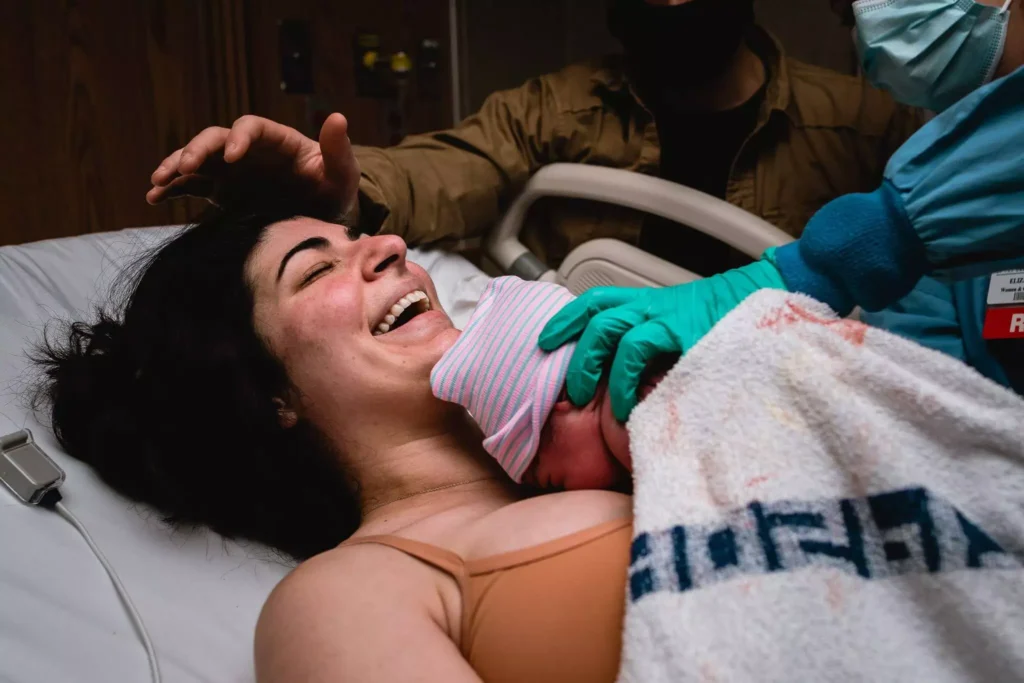

Learn the science of pregnancy and birth to take the mystery of labor away! Understand why you are feeling what you feel, and learn strategies to confidently move through pregnancy and birth!
- 9h+ of Video
- Support Group
- Close Captioning
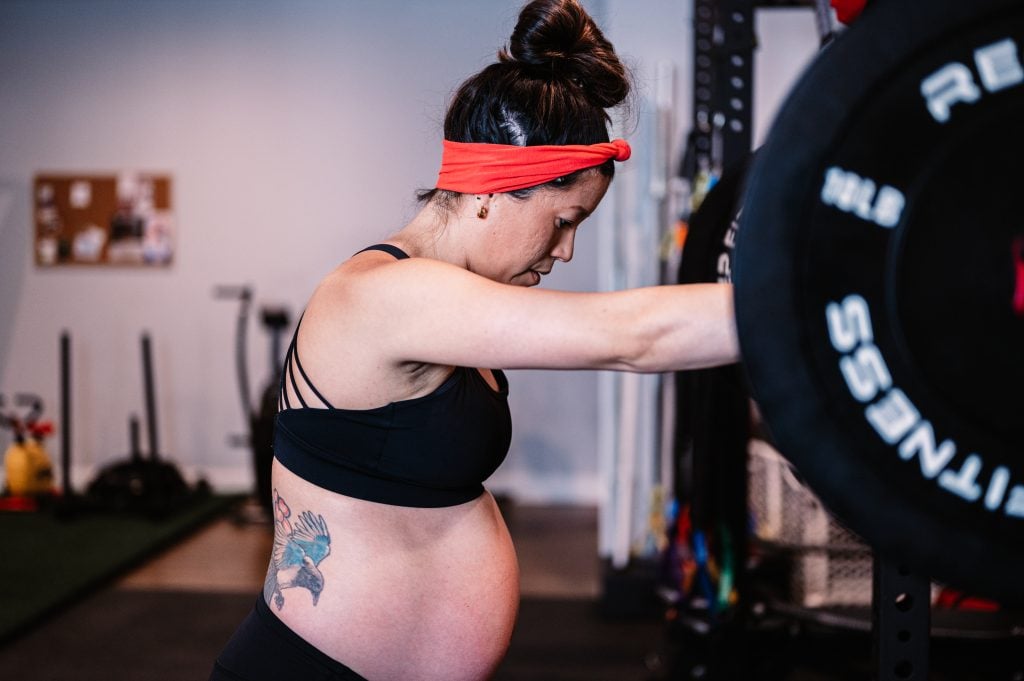

- 5 Workouts/Week
- Gym Workouts
- Self-Paced

Instructor
GINA
Workout on-demand with our prenatal fitness workout videos! Each workout is 30-40 minutes to follow along as you exercise at the same time!
- Birth Prep
- All Trimesters
- Mobility Work

Instructor
GINA
Find comfort and relief from pelvic girdle pain throughout your pregnancy and postpartum period! This program incorporates myofascial sling focused exercises to stabilize across the pelvic girdle joints.
- 3 Weeks
- On Demand Workout Videos to Follow