

Pregnancy and postpartum are transformative periods in a person’s life, bringing unique changes to the body—especially the core. Many questions arise about core training during these phases, such as:
- Is it safe to train my core?
- How do I prevent diastasis recti (DR)?
- What exercises are okay or not okay to do?
- What are the best exercises for pushing prep, healing diastasis, or addressing the c-section shelf?
Let’s dive into the answers to these questions and explore what core training means during pregnancy and postpartum.
What Is Core Training? Reframing the Core
When we think of “core,” many of us picture the abs, but the core is so much more! It’s the entire torso, functioning as the anchor for all movement. It provides stability, manages pressure, and helps us move efficiently and safely.
The core consists of three levels:
1. Local Stabilization System (Deep Core)
This is the anticipatory core, the foundation of all movement. These muscles attach directly to the spine. These muscles react and stabilize before movement occurs, providing spinal stability and postural control. The goal of the local stabilization system is to maintain your spine position during movement–and this is where all of our movement anchors to provide support. It also helps us manage pressure in the abdominal cavity to aid in stabilization!
Key muscles:
- Transverse abdominis (TA)
- Multifidus (MF)
- Diaphragm (DA)
- Pelvic floor (PF)
- Obliques (OB)
The deep core manages pressure within the torso and stabilizes the spine, limiting excessive compressive, shear, or rotational forces. Here is an example of a deep core exercise from our prenatal and postnatal fitness programs.
2. Global Stabilization System (Reactive Core)
This layer activates after the deep core, helping stabilize the spine and pelvis while transferring load between the upper and lower body. These muscles attach from the spine to the pelvis to stabilize during functional movement. These are key players in pelvic stability exercises!
Key muscles:
- Rectus abdominis
- External and internal obliques
- Gluteus medius
- Psoas major
- Quadratus lumborum
- Adductor complex
Here is an example of a global stabilization system exercise–this one targets pelvic stability and helps integrate movement from the upper to lower body.
3. Movement System
These muscles connect the pelvis and spine to the extremities. They produce and control movement during dynamic activities.
Key muscles:
- Latissimus dorsi
- Hamstrings
- Hip flexors
- Quadriceps
To train the core effectively, focus on stabilizing first, then building strength, and finally incorporating power. For example:
- Start with isometric holds (e.g., bird dogs).
- Progress to dynamic movements (e.g., alternating limbs, adding load).
- Incorporate speed and power when stable.
What Exercises Should You Do During Pregnancy?
Core training during pregnancy focuses on stabilization, rotational strength, and managing pressure.
Core-Friendly Exercise Types:
- Anti-Rotational: Exercises like pallof presses or bird dogs that resist twisting forces.
- Extension: Back and core stabilization, such as modified planks or all-fours positions.
- Rotational Strength: Incorporating safe twists through thoracic (upper back) rotation.
Should You Never Twist?
Twisting isn’t inherently bad during pregnancy. Twists can be beneficial if done safely, focusing on the upper back rather than the lumbar spine. Avoid twists that feel strained or cause symptoms like coning or pelvic floor heaviness.
What Exercises Should You Avoid?
Exercises to avoid are those that cause:
- Coning: A visible bulging or doming along the midline of the abdomen.
- Pelvic floor heaviness: A sensation of pressure or bearing down.
Coning happens when the abdominal muscles can’t manage pressure effectively, causing bulging at the midline. If you notice coning:
- Stop the exercise immediately.
- Focus on re-engaging your deep core with techniques like diaphragmatic breathing and gentle transverse abdominis activation.
Examples of Exercises to Modify or Avoid:
- Overhead pressing (may cause excessive extension)
- Hanging exercises (e.g., pull-ups, as they increase intra-abdominal pressure)
- Crunches or sit-ups
- Exercises that feel like they strain your core or pelvic floor
Can You Prevent Diastasis Recti (DR)?
You cannot prevent diastasis–it’s a normal adaptation of pregnancy. While DR is a normal part of pregnancy, you can minimize its severity by:
- Managing intra-abdominal pressure.
- Avoiding exercises that cause coning or excessive strain.
- Strengthening the deep core and pelvic floor.
Core Training for Birth Preparation
Core exercises can help prepare for labor by improving pressure management and pelvic stability. Our prenatal fitness program includes:
- Anti-rotational exercises for stability.
- Diagonal core activation (e.g., cross-body movements) to mimic pushing mechanics.
- Pelvic floor relaxation and breathing strategies.
Can You Heal Diastasis Recti?
Healing diastasis recti (DR) postpartum requires a multifaceted approach. While reconnecting and strengthening the core muscles is essential, focusing on posture, breathing mechanics, and strategic exercises can make a significant difference in recovery. Let’s dive deeper into what you can do to heal your DR effectively.
- Foundational Mechanics: Posture and Breathing
- Progressive exercises to rebuild core strength.
- Myofascial slings training (e.g., anterior and posterior oblique slings) for functional movement and stability.
1. Focus on Posture: Building a Stable Foundation
Your posture plays a crucial role in managing intra-abdominal pressure and supporting core recovery. When your alignment is off, it can exacerbate the separation or slow the healing process. If you favor a more arched back position, you may be overlengthening the tissue of the abdominal wall, making it harder for it to heal. You may also favor a slightly rotated position, where one side of your rib cage flares upward while the other side compresses. Try this exercise to help release the uneven rotational torque on the torso to aid in DR healing.
2. Breathing Mechanics: Avoid Belly Breathing
Breathing mechanics are foundational for healing DR. Many people default to belly breathing, which can increase intra-abdominal pressure and strain the linea alba (the connective tissue between the abdominal muscles). Instead, focus on diaphragmatic breathing to promote core engagement and pressure management.
Steps to Optimize Breathing Mechanics:
- Diaphragmatic Breathing:
- Inhale deeply through your nose, allowing your ribcage to expand 360 degrees (front, sides, and back).
- Avoid pushing your belly outward.
- Exhale fully through your mouth, gently drawing your navel toward your spine as your pelvic floor lifts.
- Incorporate Pelvic Floor Engagement: On the exhale, connect with your pelvic floor by imagining lifting a blueberry or stopping the flow of urine.
- Ribcage Expansion vs. Belly Breathing: Focus on expanding your ribcage outward and backward rather than allowing the belly to rise during inhalation.
3. Core Exercises for Healing Diastasis Recti
Recovery from DR requires gradual progression. Start with gentle reconnecting exercises and progress to more challenging movements as your core strength improves.
Phase 1: Reconnecting the Core
These exercises focus on reactivating the deep core and pelvic floor and include limited overall movement to help you focus on the breath-to-movement connection.
- Diaphragmatic Breathing in a Back Expanded Position: Many of us favor a more arched position during pregnancy, and this can continue into the postpartum increasing the strain on the abdominal wall. Finding back expanded positions to breath in can release tension to make it easier to strengthen.
- Deadbug with One Arm and Supported Feet: Driving the heels into the bench activates the hamstrings which can help to PULL the pelvis into a more neutral position. Using just one arm with legs supported also decreases stabilization demand, making it easier for you to strengthen your core.
- Bird Dog with One Arm, One Leg: Doing one arm or one leg at a time can decrease overall stabilization demands, making it easier for you to relearn to connect with your core as your arms and legs move.
Phase 2: Stabilization and Strength
Once you’ve mastered initial activation, move on to stabilization exercises to build strength and control.
- Bird Dogs: On all fours, extend one arm and the opposite leg while maintaining a neutral spine. Avoid twisting or sagging. We can start doing all of our reps only on one side before switching sides. Then progress to alternating sides. And then we can add on bands and weights to increase the challenge.
- Modified Side Plank: Begin on your side with knees bent. Lift your hips while keeping your body aligned. Progress to straight legs as your strength improves. The side plank helps to strengthen the side abs to support lateral body and rotational control.
- Dead Bugs: Lie on your back with your arms and legs in the air. Slowly lower one arm and the opposite leg while keeping your core engaged and back flat on the floor. Similar to the dead bug, you can start by doing all one side before switching, then alternating. Then add on bands and weights to increase the challenge.
Phase 3: Functional Movements and Strengthening Slings
This phase includes exercises that mimic real-life movements and engage myofascial slings (anterior, posterior, lateral, and deep longitudinal) for dynamic stability.
- Pallof Press: Use a resistance band to perform an anti-rotation press. Keep your core stable as you extend your arms outward.
- Cable Chops: With a resistance band or cable machine, perform diagonal chops across your body, engaging the obliques.
- Cross-Body Lifts: Use a light dumbbell or resistance band to mimic diagonal movements, targeting the anterior and posterior oblique slings.
4. Avoiding Exercises That Aggravate DR
During recovery, some exercises can worsen diastasis or slow healing. These include:
- Crunches or sit-ups: These increase intra-abdominal pressure and can strain the linea alba.
- Double-leg lifts: Lifting both legs off the ground often causes coning.
- Exercises that cause visible coning or doming: Always check for signs of strain during core exercises.
- Heavy lifting without proper breathing mechanics: Ensure you’re exhaling and engaging your core on the exertion.
If you notice coning during any activity, pause and modify. For example, instead of a crunch, try a gentle core activation like a pelvic tilt.
5. Belly Binding: Helpful or Harmful?
Belly binding or using a belly band can provide temporary support and comfort during the early postpartum period, especially for those recovering from a c-section. However, it’s not a substitute for core strengthening exercises. Physically bringing the muscles together does NOT heal a diastasis. If used:
- Wear it for short periods, such as during physical activity or when upright for extended periods.
- Gradually wean off the support as your core strength improves.
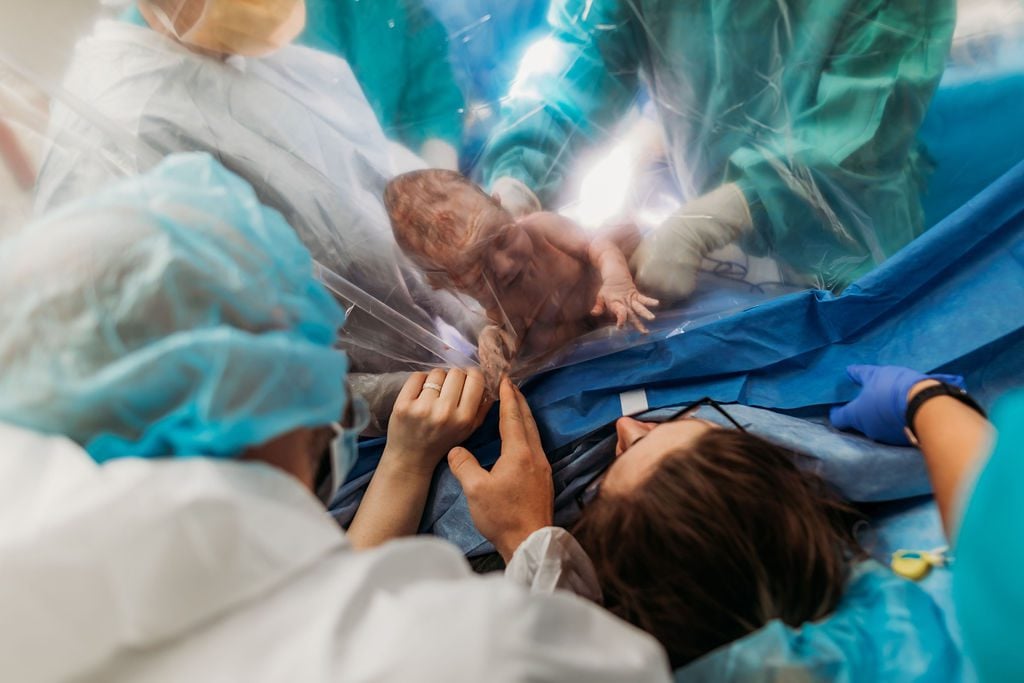
6. Healing a C-Section Shelf with Core Exercises
For those with a c-section shelf, recovery involves addressing scar tissue and rebuilding the lower abdominal connection.
Steps to Heal a C-Section Shelf:
- Scar Mobilization:
- After the incision has healed (consult with your provider), use gentle massage techniques to reduce adhesions and improve mobility.
- Gradually increase pressure as tolerated.
- Lower Ab Activation:
- Focus on exercises like TA breathing and pelvic tilts to re-engage the deep lower core.
- Cross-Body Movements:
- Incorporate diagonal exercises like cable chops or resistance band twists to strengthen the obliques and connect the upper and lower body.

Instructor
CASEY
Learn mobilization techniques to enhance your healing postpartum with Casey Backus, physical therapist and 2x c-section mom.
- 2h+ of Video
- Support Group
- Webinar
Final Thoughts
Core training during pregnancy and postpartum is not only safe but essential for stability, strength, and recovery. By focusing on the deep core and managing pressure effectively, you can prepare for labor, support postpartum recovery, and heal common issues like diastasis recti or a c-section shelf.
Ready to take the guesswork out of core training? Join our prenatal and postpartum fitness programs and feel confident in your fitness journey at every stage of motherhood.