



Welcome to the MamasteFit Podcast! In this episode, Gina (perinatal fitness trainer and doula) and Roxanne (certified nurse midwife) interview Destiny about her two births. Her first ending with an unplanned C-section in 2024 after laboring to 10 cm, pushing 1.5 hours, spiking a fever with concern for infection, and baby’s sustained high heart rate. Her second, a much faster VBAC just three weeks ago! For baby #2, Destiny had planned a repeat C-section because he was breech for weeks—until a last-minute ultrasound showed he’d flipped head-down, leading to a TOLAC with Pitocin, lots of movement (wireless monitors!), sudden transition, and a 15-minute unmedicated push. She shares postpartum comparisons, the importance of understanding why a C-section happened, limiting room “spectators,” and that unmedicated stitches plus a 45-minute intern tutorial is not the vibe.
Read Episode Transcript
Gina: Welcome to The MamasteFit Podcast. In this episode, we have someone coming on the podcast to share their birth story. In her first birth, she had a C-section, which was unplanned, so she labored, made it all the way to 10 centimeters, and then had to have a C-section because she was starting to get sick, and her baby’s heart rate was very elevated. She spent a lot of time processing that birth, and then was preparing for a VBAC for her second birth, but then baby was breech her entire pregnancy; and then the day of her C-section, baby was head down. And so in this episode, Destiny is going to be sharing her C-section, birth story and her VBAC birth story.
Welcome to The MamasteFit Podcast. We have Destiny here who’s going to be sharing her two birth stories. Her first birth was a C-section, and then her second was a VBAC. So thanks so much for being here, Destiny.
Destiny: Thank you for having me.
Gina: So let’s start with your first birth. How did you prepare for that birth?
Destiny: I would say the extent of my preparation was working out. I like, did the best that I could as far as maintaining my exercise regimen. I was really into strength training at the time. I attempted to continue running, but I found it really difficult with just pelvic floor issues. It just became really uncomfortable, probably 20 weeks up. But that was probably the extent. I watched a lot of birth videos. I think I just went into it like a little ignorant thinking like, “oh I’m fit, I’m healthy. Like, this will just be fine. It’ll just work out.” And it did not, so. Well, it did not go as planned, at least.
Gina: Yeah. I think that’s pretty standard for, I think for most of us, for our first. You just, you don’t know what you don’t know when you’re going into it.
So let’s get into your birth story then. So you went through your pregnancy, fairly active, you were listening and watching other birth stories. What was the end of your pregnancy like? And then we’ll get into your birth story.
Destiny: Yeah. I would say with my first pregnancy, the end was, just like it is for everyone, it just gets uncomfortable. That being said, I worked out until the day I went into labor. So like I certainly had some privilege in that and having the availability to do so, and then also mobility. But yeah, I mean I just felt really uncomfortable. I had it in my head that, you know what, oh, I’ll try to go on medicated for as long as possible, but did no preparation. Which is really funny, ’cause I watched all these birth stories that said you should prepare for it, and I was just like, “No, I’m fine. I work out. We’re good.” And obviously that did not pan out, but, as we’ll get into. Yeah, so that was the end. I had a pretty run of the mill pregnancy, like no major complications. I failed my first glucose test, which like really messed with my head initially, but then I passed the three hour and it was fine. I gained the recommended amount of weight, like it was just a pretty standard, I think many people probably call it “easy” pregnancy.
Gina: So then let’s get into the birth. So smooth pregnancy, nothing really cued you in that your birth may not go quite as smoothly, so let’s get into it.
Destiny: Yeah. Okay, so I originally wanted to go in for induction. And I hit 39 weeks, I was going to go in for an induction, because my husband, we’re, my husband’s in the military and he had like some training that was coming up very shortly after. So I was like, “We have a deadline here. We need to have this baby.”
And so we had scheduled this induction and it just kept, it kept getting pushed. It didn’t end up being needed, I went into labor naturally, I think 39 weeks exactly, or maybe 39 plus one. And labor contractions started at 8:00 PM on a Friday. And they were not painful, just I felt like tightening, and I hadn’t had any Braxton Hicks or anything like that before that, so I figured this was labor because it was fairly regular tightening of the abdomen, but not uncomfortable. And then, let’s see, I took notes of the timeline. Around like 2:00 AM is when I started to feel some discomfort. And for some additional context here, I was being seen at a military hospital that had somewhat limited, I don’t know if you’d call it like, L&D space. And I, when I called around like 3:00 AM, called triaged to just be like, “Hey, should I come in?” And they were like, “Oh, you can mosey your way over here.” And, I, because the induction had gotten pushed, because they just kept on having people were actually going into labor and so they were running out of space, I felt this like pressure to rush to the hospital and claim my space. Because they were like, “oh, if you come and we don’t have space, we’re going to divert you to like any of the other local hospitals.” And we were in the DC area, and so it was like, that could be literally anywhere, and that really freaked me out and I wanted to be seen at that hospital. If I could go back in time, I would change that…
But, so we got there- let’s see, I think we went in around 4:00, 4:30 AM. So when I started to feel like, okay, contractions were pretty regular, I had one of those like little apps and the app just kept saying, “You should go to the hospital,” because my contractions were fairly close together, although they were like still manageable. We get to triage, they’re like, “Yep, you’re in labor.” I’m four centimeters, contractions were fairly regular, and they were like, “Do you want to go home or do you want to stay?” And this is where if I could go back in time, I would’ve just went home, and I’ve come to realize now that honestly, the hospital probably didn’t matter, at the end of the day. But, I decided to stay so that I could, like I said, claim my space, ’cause they had room. They said this, too, they were like, “You can go home, but there might not be space in a few hours.” And so I was like, “Okay, I should just go ahead and be admitted.”
What I didn’t know is that when I got admitted, they were also going to require me to have continuous fetal monitoring, which I found to be very uncomfortable. I didn’t have any like wireless monitoring or anything like that, and so I felt like pretty, tethered to the bed, like I really could not move around. And so I had it in my head that like I was going to- I had heard all these stories online, movement gets things going, and then also it’s like how you cope with some of the pain. And, I felt very tethered to the bed, could not really move because they had me, I had IV drip, I had this, these monitors with like short wires. And so I was like, “You know what? Screw it. I should just get the epidural.” And and around, what was it? I think I put: 10:00 AM contractions got very painful. And I had heard all these stories that contractions were like waves, and you get a break, and I felt like I had no break. My contractions were like back to back. it felt like as soon as it came down it was coming back up. And so I was just like, “This is unbearable, I can’t move. I’m like in a lot of pain. Let’s just get the epidural.”
And after that I did get the epidural, around 10:00 AM, and I was six centimeters. I felt like after that it really slowed down. I don’t know, maybe this doesn’t happen for everyone, I heard from some people that like the epidural actually sped things up for them ’cause they were able to relax- it was not the case for me. Things got really slow after that. I felt like I was progressing like 8:00 PM to 10:00 AM I was already at six centimeters, I felt like that was fairly quick for a first time mom, and after that I did not progress for a while. I think, let’s see, I put: I didn’t reach eight centimeters until around 3:00 or 4:00 PM. So like from 10:00 AM to almost dinner time, I only progressed two centimeters. And then they were like, “Let’s try Pitocin.” And they gave me about 20 minutes of Pitocin, but my contractions were so regular already that it just made them even closer together, and they were like freaked out about that. So I did 20 minutes of Pitocin and they quit that.
And then, let’s see, I think we did AROM, we ruptured membranes somewhere in the afternoon. But things just, it just took a while- a lot longer than I expected. But I, I got to rest. I got to take my nap. I ate my popsicles. And then, we, let’s see, I got to 10 centimeters around like 11:00 PM ish- this is two years ago, there’s definitely some fogginess as far as timing goes, but- around 11:00 PM I get to 10 centimeters and then they’re like, “the doctor’s in a c-section right now, so let’s just wait until the doctor finishes.” So we wait a little while, doctor comes in, and I don’t love this physician. It’s, I know you guys are like military as well, so I’m sure you’re familiar with I didn’t have an assigned doctor; it was like a rotating door of doctors that I saw, and I didn’t know this person. Didn’t love her bedside manner. She was kinda, she was just stern. But, so she comes in, and she’s trying to coach me, some of the nurses are trying to coach me through pushing. I felt like I could still feel my contractions, so I was able to time my pushes myself, but I don’t know that my pushes were very efficient with the epidural and they implied that as well. They were like, “You’re going to have to push harder,” and one of the doctors, one of the nurses or doctors were like, “You need to get angry! Like, you need to push harder!” And I, like started to feel almost, I don’t know, bad. Like I wasn’t good at this. Thankfully, my husband’s super supportive and he helped a lot. I ended up relying on him and one of the nurses. I ended up kicking, or, asking everyone to leave, so that one of the nurses I liked and my husband could help me, and she did all kinds of different tug of war and like grabbing different things to help me push more efficiently.
But, basically in my, in the pushing stage, I ended up spiking a fever and a, really low grade fever, but they were worried about, I’m going to butcher the pronunciation of (Chorioamnionitis).
Gina: Yeah.
Destiny: That infection. So they’re worried about that. And then my daughter also, she had sustained a pretty high, pretty high heart rate the entire time during the pushing, and the doctor started to get a little alarmed about that. And then she also never got past station zero.
So I pushed for about an hour and a half, and the doctor started being like, “We might need to consider a C-section because of this list of issues.” And that was really hard for me because I really had it in my head that, I don’t know, I’m healthy, I’m fit, I feel like I did all the “right” things and it just wasn’t working out. And I also felt very confused, like maybe there wasn’t a great explanation for the C-section. Thankfully, my physicians on the other side with my son, actually clarified some of that and helped. But they ended up saying that, like in my record, they called it “Arrest of Dissent,” which I don’t, maybe you guys could touch more on this, but I don’t… I’ve had a doctor tell me that makes sense because my daughter never passed, never got past station zero pushing for an hour and a half; and I’ve had another doctor say, “You should push for four hours before they said ‘arrested descent.'”
Gina: Yeah. Yeah, I would say like with an epidural, it can take an hour or two just to figure it out. Like it’s a new sensation, you have to kinda reconnect like your mind body connection with not feeling the lower half of your body. So it could take somebody just an hour to two just to even figure out what is going on. It sounds, based on what you’ve told me, more that you were starting to get sick and your baby was starting to show signs that they were also maybe starting to get sick, and that’s why they may have recommended a C-section, and, yeah. I don’t know if it was necessarily because like your baby was not moving down because it could just take time to figure it out also, it doesn’t sound like you had enough time to really explore that, with an epidural.
Destiny: Yeah, and them putting that in my file really bothered me because if you tell any physician and you want to be a VBAC that you had arrest of dissent, that’s like this kind of sign in their calculator that the VBAC is going to be, you know, lower chance of success. So that kind of bothered me. We’ll get into it, but fortunately with my second labor, I had very supportive physicians that were like eager, like gung-ho, “Yes, you should TOLAC.”
But basically, somewhere in there they recommended the C-section. And, at first my husband pushed, my husband was a medical student at the time, and he pushed back against it and was like, “Oh no, give her some more time to push.” But then with, really what convinced him, and then by proxy convinced me, was my daughter’s heart rate issues. So we did the C-section and I found it to be truly an awful experience. I don’t know if a planned C-section is maybe a little better, but having gone through the whole labor process and then a C-section, like I was vomiting, I was very emotional about the C-section and like what I perceive to be the failed labor. And it was just, yeah, really did not enjoy it, and did not want to repeat it. I was like telling my husband during the C-section, “If I have to do this again, we should do general anesthesia, ’cause this is so bad. Like, I hate it.”
But all things considered, I had a very good recovery from what I’ve heard from like other C-section moms and compared. I was up and moving very quickly, I was back to working out very quickly, breastfeeding was no issue, so all things considered the postpartum side of things were pretty good. I had pretty bad postpartum anxiety, which I think maybe has to do with the fact that the birth went so unplanned. But that was, yeah, so that was the story with my daughter, and that was back in 2024.
Gina: So then how did your first pregnancy and birth impact your preparation for your second one? Because you just had another baby very recently.
Destiny: Yes, just, almost three weeks ago. I, with my son, I really wanted to TOLAC. That being said, it also gave me a lot of anxiety ’cause it felt like this unknown. And there was a part of me that was like, “Can I push a baby out? Am I built for birth,” like a lot of people say. And so there was a lot of anxiety about it, but it eventually, the anxiety of it was taken out of my control because my son was breech for, probably from 25 weeks until the day I went in for my C-section.
I, around like 36 weeks, my doctor offered an ECV. At 37 weeks I went in for the ECV and there was like this freak accident that day at the hospital that resulted in the OR being closed. So my ECV needed to be rescheduled, but with childcare and stuff like that, was just not feasible. So I was like, “All right, I guess that didn’t work out.” Part of me was like taking it almost as like a sign from the universe that I just need to like, let go of this VBAC dream.
I did try like some Spinning Babies stuff and some of the stuff that you guys had posted about breech, like the inversions and stuff like that. I didn’t go see a chiropractor or anything more intense, but was doing a bunch of movements to try to get him to flip. And I got really discouraged because every appointment I went to, they would do an ultrasound and he was just, and I could feel him too, like I could feel his head right here. He was not budging. He was very comfortable.
So when we went for my C-section at 6:30 AM, my doctor was like, “Oh, let’s do, let’s just do an ultrasound and check,” I was just like, “Oh, he’s still breech. There’s no point.” And she was like, “Let’s just check.” And he’s head down. I was like… I don’t know, the only word that comes to mind is flabbergasted. I’m just like, what? That makes no sense. He has been breeched this entire time and no movement. He was breeched the week prior, at my 38 week appointment. So I was very shocked.
And, sorry, to answer your question about preparation- not much! Once again because he was breech and I was like, “I’m just trying to get this kid to flip.” And so I was like, didn’t have really much hope that I was going to get to have a vaginal delivery in the first place. I was much less active this time, trying to chase a toddler, and my husband is a resident, and so his schedule’s really busy. And so it was just like working out didn’t really happen much. Yeah, that, that answer, sorry, that’s a longwinded answer to your question, but I didn’t really prepare, again.
Gina: No, it’s totally fine! So, baby’s breech and you’re, you’ve surrendered to the birth that you believe that you’re going to have, and now he’s head down.
Destiny: Yeah.
Gina: So what next? What happens next?
Destiny: Yeah, so my doctor is, she doesn’t even ask, she’s like, “All right, so TOLAC.” And I was like, “Okay, yeah, I guess I could, I guess I could do that…” Like I’m, just like, taking it all in, digesting, like, “Oh!” And then also digesting the fact that I did not do anything to prepare for this, like this whole time I thought I was having to like mentally and emotionally prepare for this horrible C-section experience again. That’s what I’d had in my head was like, okay, I gotta like focus on just getting through this C-section. And, no.
So doctor’s like, “Oh yeah, so do you want to just go ahead and do an induction?”- ’cause he is head down, and at this point we’re considered “unstable lie,” like he could flip again, I guess. So do you want to just go ahead and induce? And I was like, “Yeah, let’s just do it. I’m here, I have childcare in town for my daughter, let’s just do it.” And then, come to find out, I’m already in labor. They were like, “Oh, you’re having contractions right now.” I don’t feel them, and I’m three centimeters dilated already. And so they were like, it was just like this wild, I don’t know, I didn’t expect any of it. I thought that maybe because he was breech, I wouldn’t dilate like I did with my daughter. ‘Cause with my daughter I was three centimeters from 37 weeks on. So I was just, it was just a very surprising morning.
But by 9:30 AM they started Pitocin. And quickly realized with my daughter the same thing, like I’m very responsive to Pitocin, so I was never able to go over, I guess it’s like dose three or what, I don’t know what like the measurements are. But like level three, they could never put me over that. They were constantly having to lower it because my contractions were so close together and they were concerned about uterine rupture, or what is it? Uterine dehiscence or something like that. They were just concerned with me also being a VBAC person. Like they didn’t want to stress, put too much stress on baby or the uterus.
Sorry, I was just leaping straight into the birth story. Did you have any questions?
Gina: No! Just go into it.
Destiny: Okay.
Gina: Just go into it.
Destiny: Yeah. That morning, yeah, we start Pitocin at 9:30, and then the doctor wants to do cervical checks like every four to five hours- which I was fine with, they don’t really bother me, it’s more like I actually want the update to know how things are going. What was kind of, it was also a training hospital and so there were like more people involved than maybe I would’ve liked. We did eventually, I think by the second check, we were like, okay, “No,” ’cause I was having two people check me each time.
Gina: Oh!
Destiny: And so it was just like, I did that twice and then I was like, okay, we’re not doing that anymore. And thankfully my nurse and my husband were also just, “No, this is too much. We don’t need to have two people checking her every single time.” Not that it wasn’t super necessary ’cause I only had one more check before I had the baby, but.
Gina: Yeah. But still that’s a lot. Oh, no, thank you.
Destiny: Yeah. No, it was. It was a lot.
So let’s see, we started the Pitocin at 9:30, and literally 30 minutes later the nurse came and was like, “we have to lower your Pitocin because your contractions are so close together.” I couldn’t feel them at all at this point. she was like, “Do you have high pain tolerance?” and I was like, “No, not really. I am probably pretty normal here, but I just can’t feel it.” Then they come check me again at like noon, and I progressed one centimeter, a little bit of effacement, no change to station, I was still at like station negative two or something like that, so I was getting a little discouraged in my head. I was just like, if we make it past station zero, I will feel like this has like a chance- ’cause it’s just, I was comparing it to my daughter, like I just have to make it past station zero and I will feel like we’re good.
But the whole time I was doing all of these movements, so I was like watching you guys’ videos on the hip opening stuff. ‘Cause I was like, really had it in my head like, okay, I’m doing this, I need to make sure it works, ’cause it didn’t work with my daughter. Like she would not come out, whether it was because of insufficient pushing, or like poor positioning, or something like that. That was the other thing, with me having the epidural so early in the labor process, I was thinking maybe my daughter was in a bad position, ’cause she also came out with bruising along her forehead. And so I was thinking maybe just her head wasn’t tucked or something. So I was watching all these, videos you guys had about hip opening and how to open the inlet versus the outlet. And it was very interesting for me to hear what is station negative two, versus zero, versus plus two and what you need to be doing at those different stages. And so that’s what I was doing. So that’s the other reason why I liked the actual cervical checks is ’cause I was like, “Okay, I need to know what movements need to be doing.”
Gina: Yeah.
Destiny: But because I couldn’t really feel my contractions, I was moving the whole time. And this being my second birth, my husband being like, he’s an actual physician now, and so like we had, I feel like both of us had a lot more confidence asking questions and being a little bit more pushy this time. I think maybe pushy is the wrong word, but it’s just the word that comes to mind. But I like asked for wireless monitors this time and really pushed for them if they had them available, and they did, so I was able to like really walk around. Anytime something was uncomfortable, like we spoke up and had it changed, and so things were just so much better. Plus, honestly, the nurses at this hospital and my physicians were really incredible and super supportive. I had nurses come in and be like, “Oh, I see that you’re doing all these movements, but do you want to try something that we recommend?” And I was like, “Yes, please!” One of the nurses put me in, I think you guys have talked about it, one of your videos, the flying cowgirl or something like that. So, put me into that, which was not super comfortable, for 20 minutes on each side and we were just doing all kinds of movements.
And so anyway, let’s see, my next check was around like 5:30, and I progressed to station zero. I had still only progressed to five centimeters, but 80% effacement, so we were making progress. It was slower than I wanted, but we were making progress. And at 5:30 I could feel my contractions, but they were still not super uncomfortable, they, I could just feel them. And I kept telling my husband, I was like, “I feel like pain is gain here, and so I’m probably just not, I’m not moving very fast ’cause I can’t feel this.” Like I, I almost was like wanting it to get painful, ’cause it would feel like I was making progress. And so I was like, “Man, what’s up?” I was like telling them, I was telling the nurse, I was like, “We can up the Pitocin! Like, we’re good. I’m fine.” And she was like, “We actually can’t.” I mean, like I said, we never went over level three. I was like bouncing between one and two the whole time, ’cause they were just like, “Your contractions are so close together.” And the, I told you it was like a whole team of doctors, ’cause it’s a teaching hospital, and they’re like, “You sure you don’t have a high pain tolerance? Like, you really don’t feel it?” But man, was I in for a rude awakening, ’cause an hour later things shifted very quickly.
So, got checked at 5:30 and then around 6:30 I was like, “Okay, things are painful.” Like, I need to like… I’m definitely thinking about the contractions a bit more, and like with my daughter, my contractions were pretty close together- partly, I’m sure, also ’cause I was on Pitocin, but. Oh yeah, and at that 5:30 PM cervical check, the doctor brought up artificial ruptured membranes, and both my husband and I were just like, “No, let’s just not mess with this process. Things are progressing, albeit feels slow, but things are progressing,” and we were just trying to keep it as low intervention as possible. And the doctor was like super supportive of that. She was like, “Yeah, things are going well. We don’t want to put a 24 hour clock on this, so let’s, just keep on keeping on.” Which was really nice, ’cause I thought with my daughter, it really did feel like when someone came in with a question, it was more like a statement. It was like, oh, this is what you should do, versus like it being a question or like a collaborative decision. So we didn’t do that.
And then, let’s see, around 7:00 PM contractions are getting pretty uncomfortable. And I remember telling myself like, okay, let’s just make it to eight and then we’ll evaluate the epidural. And I also had this conversation with my husband, I was like, “Okay, probably. Probably get the epidural eventually,” partly ’cause my doctors, yes they were super supportive of TOLAC, but they were pretty nervous about me going fully unmedicated just in case if there was like a medical emergency where I needed a C-section. So they didn’t, no one ever pushed it, but they just did say, “We would prefer it if you got an epidural at some point.” But after that first conversation, they never brought it up again. So they weren’t pushy, they just expressed like their preference and then left it, which was nice. Around 7:00 PM I’m talking to my husband, I’m like, “Okay, I’ll make it to eight and then let’s talk about the epidural,” and he was like, “I think you’re good!” He was like, you know what, “You should just keep walking like you’re doing well. You, I don’t know if you need the epidural.” And part of this is he’s like joking with me, and the other part of it was like him, actually, we both felt like the epidural just really slowed things down last time and things were moving, so we were just like, let’s avoid it if we can.
And then 8:00 PM comes around, and I’m assuming this is when I go into transition because I am in excruciating pain. Like just suddenly, it was like I had two, like two more contractions where it felt like, okay, I can manage this, but it hurts. And then it was like, oh my gosh, I’m like laying on the bed, writhing in pain, begging for the epidural, telling my husband, I can’t do this. I told him, I was like, I don’t want a baby anymore, like, all, this stuff. He was like, “I think it’s a little late for that!” I was like, I’m in a lot of pain. And then, this is where things get really foggy for me, but just to give you a little bit of foreshadowing, my baby was born 30 minutes later. My water breaks, very suddenly, while I’m in that telling my husband I can’t do this. At some point I did ask the nurse for the epidural and she left to go get the anesthesiologist, but by the time the next nurse came in, my water had broken and I was pushing, like it was just there. It was totally involuntary.
So a nurse comes in, she’s like, “Hey, we’re going to get the anesthesiologist,” and I was like, “My water broke. I’m pushing!” And I’m like, I’m yelling at this point, I’ve lost total control of anything that comes out of my mouth- no, no sense of decorum, nothing, it’s just like crazy. And so she rushes out and then suddenly, it’s a teaching hospital, I think what happened was like my doctors were like maybe somewhere else in, I don’t know what it’s called the ward, or something like that, and so they were further away. So she just grabbed like the first OBGYN that she saw, and so then it was like a flood of people came, in ’cause they were like, “Oh my gosh, this like TOLAC, second time mom is like pushing!” So then there’s like just a bunch of people rushed in, and my nurse finally comes in- ’cause that was also like a random nurse my husband had grabbed and told her. They rush in, and then it gets, it was very overwhelming at that point. I, if this is where I would change things, I would have said up front that I wanted less people in the room- granted, after I got ahold of things, I didn’t even realize there were many people in the room ’cause like my eyes were closed and I was just like so focused on pushing. But at first it was very overwhelming because I, one, like just wasn’t expecting this, it just happened all very quickly. And I’m pushing, it’s obviously very painful, and there’s a million people in the room. And I don’t think like some of the doctors maybe realized that I was unmedicated when they, or I guess not, didn’t have the epidural, ’cause when they come in, they’re like introducing themselves. Like one of them was like, “Hey, I’m Dr. So-and-So!” and I remember being like, “I do not care.” Like, I’m pushing a baby out, please stop talking to me!
And yeah, it was very chaotic. And I had so many people talking to me, like one person was like, “Do you want to push on your hands and knees?” the other person’s, “Do you want to push like this?” and I think there was maybe some people that were like excited to see an unmedicated labor or something, I don’t know. ‘Cause I was laying on my side and so maybe they assumed that I didn’t want to be on my back. But at the time, that actually felt the most comfortable, so I ended up pushing like on my side with my leg up. But if I come back in time, I would have one doctor, one nurse, and my husband, because that nurse helped a lot, and it was my husband, too. It was like I just needed two people to help me coordinate my breathing- ’cause that’s the other thing, because it happened so quickly, it felt very uncoordinated at first. I felt like there was like no control over what was happening to me, so I was like, my breathing, my pushes were not happening with my contractions. I was just like very confused.
But once I got ahold of it, the nurse was telling me, but she said, “Push into the pain,” and that clicked in my brain. I don’t know, it just helped. And then my husband was telling me like, which pushes were good and which ones were not, because I was going through different, do I breathe through the pushes? Then there’s like purple pushing or, I was like pushing, like holding my breath and wanted to know which one was more efficient. But he says, he told me, I don’t know, I was like out of it at the time, but he told me it only took 15 minutes from the time that I started pushing until baby boy came out. So yeah, it was like pretty, felt like a whirlwind. And I would just remember feeling relieved when it was over. I don’t feel like I had the golden hour experience some people describe. I was just like happy that I was no longer pregnant and pushing.
Gina: Yeah. Sometimes it’s harder when you have an unexpected fast labor to like, you need a moment to recover from what just happened.
Destiny: Yeah.
Gina: As well.
Destiny: Yeah, I felt like that exactly. I was just like, what just happened?
Gina: So how was postpartum after this birth?
Destiny: Oh my God, so much better.
Gina: Or how has it been? It’s only been three weeks.
Destiny: Leagues, leagues better. And like I said, my c-section recovery was, I would say as good as it gets for a C-section- and this was really so much better. And it really set in stone for me- one of the, my driving forces for wanting a VBAC was my toddler. I wanted to be able to hug my toddler, and pick her up and interact with her, and I was really nervous ’cause I remember any use of your abs after a C-section is so painful. Picking up and putting my daughter in the bassinet after the C-section was painful, getting out of bed was painful- so I was just like really wanted that. Everyone says that vaginal delivery recovery is better, and so I really wanted that so that I could pick up my daughter and stuff like that.
And it’s true, at least in my personal experience. I had a second degree tear, nothing crazy, but it hurts, but like nothing compared to a C-section. It has been so much better. My daughter came to visit me in the hospital and I was able to pick her up right then and there. It was awesome.
Gina: Oh, that’s awesome. So what advice do you have for somebody that, let’s start with somebody who is finding themselves with an unplanned Cesarean birth- like they did all the right things, and they’re finding that their birth is not going in the direction that they hope. What advice would you give to that person that’s recovering from that unexpected birth?
Destiny: I would say the thing that helped me most was truly understanding the reason for the C-section, assuming it was warranted. I felt like so much of what affected me negatively mentally was just not understanding why; I really felt like I needed to understand why. And then once you understand the purpose, hopefully it was justified, I feel like it’s just easier to cope with that because it’s easier for you to be like, okay, it wasn’t my fault, or, it wasn’t that I’m not equipped for this or something. Especially when it’s something like heart rate issues. Like you can’t control that.
Gina: Yeah. Yeah, who did you discuss with to better understand like why your C-section happened?
Destiny: Honestly, my OB GYN with my son, like my pregnancy with my son.
Gina: Okay.
Destiny: Because, so in discussing like the want for a VBAC, there was discussion of what caused the C-section originally.
Gina: Okay, that’ll be helpful for folks that are listening.
What advice do you have for somebody that was maybe planning a VBAC and then realized that they were going to have a planned C-section instead? ‘Cause you went through that process as well of accepting that. What would you, what advice would you give to that person?
Destiny: Oh man. I don’t know if I have great words of wisdom because I don’t feel like I ever… I cried on the way to my C-section, so I don’t know if I ever really truly accepted it.
I just, the best advice is just having a good support system. Like I just really hope that person has a really good partner that can talk them through their, like, anxieties and fears around the C-section, assuming that, that was my reason for not wanting a C-section. I was, I just really, truly found it to be a inherently traumatic experience. And so going into that again was like really scary, and it was helpful for me to have my husband talk me through it and reassure me that he was going to be there, you know, there with me through the whole process and would advocate for me if there were things that were making me uncomfortable, that were changeable.
That’s pretty much the extent of that. I’m a therapist, so I’ll always also push therapy. If it is accessible to you, getting a good therapist.
Gina: Absolutely. And I don’t think there needs to be this like deep acceptance, I think sometimes even just validating that this is also a hard experience is helpful for our listeners as well.
And then the final advice, what would you tell somebody who just had a really fast unexpected labor? As they’re processing, what happened, do you have any tips?
Destiny: So I would say on the front end, I would say pretty much everyone should probably look at like how to endure unmedicated labor, just in case. Because I’ve heard this, it’s not an uncommon story where people think they’re going to get the epidural, and things move really quickly, and they don’t get it, or the epidural doesn’t work, or something like that. So just looking at like some things you can do, whether that’s movements or just like practicing coordinating your breaths with pushes and stuff like that, I don’t know.
So on the front end, I would say just, baseline, do some at least preliminary research on how do you endure unmedicated labor. And then, honestly, like the biggest thing that I would change from my entire experience is limiting the amount of people in the room, especially when it’s already very overwhelming. So maybe discussing with your support person, ahead of time, like, “If that were to happen, these are the people I want in the room because I’m already going to be overwhelmed, we can assume that. So I need you to kick all these people out.” Because that was really the overwhelming part for me was like trying, I’m like freaking out, and also having all these questions directed at me.
Gina: Yeah, that was something during my first birth, I gave birth in a hospital, and there was like 15 people in the room, and at one point I looked at my nurse and I was like, “Who are all these people?” and she was pointing to each one. And then in Roxanne’s third birth, there was like a, there was change of shifts, so they had day shift and night shift, and a bunch of people. And she was like, “In hindsight, it was a little overwhelming with the number of people staring at my butt hole.” And I was like, “Yeah, it does.” Like you don’t always notice it, ’cause sometimes your eyes are closed, but when you do realize it, it can be really, overwhelming. So that’s really great advice, to advocate for less people, I think that would be super helpful. And to know who somebody would want in the room so that they can be very specific on who they request, yeah.
Destiny: Yeah. I think one other thing I would probably say, ’cause I wasn’t expecting this at all, is getting sutures after unmedicated labor is really painful, even with local anesthesia- at least it was for me. And I, once again, like my husband’s a physician, so like I generally like to be supportive of the learning setting, I’m generally okay with being the guinea pig. This was not the time to be the guinea pig. There was an intern being trained and my sutures took 45 minutes.
Gina: Oh, God!
Destiny: It was really awful. if I go back in time, I would’ve said no to that and would’ve requested of fully board certified OB GYN to just come in and knock that out really quick.
Gina: Oh my God. Yeah. No, thank you. Oh my gosh, no. Oh, that sounds awful. I’m so sorry.
Destiny: It was pretty terrible. I don’t want to make the guy feel bad, hopefully he doesn’t watch this! But yeah. it was not…
Gina: but I think it’s a little bit of an awareness thing, too. There’s other patients on the floor who I’m sure had epidurals that could have been a better candidate for a learning experience, like if they wanted to be that, versus somebody who was unmedicated. That’s a lot, yeah. Oh gosh.
Destiny: Yeah.
Gina: Oh gosh.
Destiny: Because I didn’t realize that like every time they even just touch you down there after you push a baby out, hurts.
Gina: Yes.
Destiny: Like not even just with the needle, not just even with their hands, it hurts.
Gina: Whew. Oh my goodness. thank you so much for sharing your birth stories.
Do you have any other advice that you want to share with our listeners that are preparing for their births, maybe navigating their postpartums as well?
Destiny: No, I think we pretty much covered it all.
Gina: All right. Thank you so much, Destiny for coming on the podcast and sharing your birth stories. We really appreciate your time.
Destiny: Yeah, thanks for having me. I was excited to share this, what felt like super crazy story!
Danielle: My name is Danielle and I’m grateful for the MamasteFit postnatal programming because it helped me heal my body and mind after both of my pregnancies. I was able to come back stronger than ever before, and I really love how they build up from the basic building blocks all the way up to personal records.
Gina: Thank you so much for listening to Destiny’s birth story. If you want more support from us throughout your pregnancy, check out our online prenatal fitness programs. We offer them in two different formats. We have a self-paced version, which is going to be a list of exercise with demo videos, where this is going to be more our strength training program. And then we also have a video-based program where it’s videos that you work out with and follow along with at the same time. So depending on your workout preference, we have two different options for you.
We also have our childbirth education course, which is going to help you to understand what all of your options are for birth. There’s no one best way to do anything during pregnancy, birth, or even into motherhood, and we want to help you understand what your options are so you can choose what works best for you and your family.
And then in the postpartum, we do have our postpartum fitness courses as well to help you feel strong again in motherhood, both with a self-paced version and a video based option as well. You can check out all of our courses and fitness programs on our website at mamastefit.com and use code STORY10 to get 10% off any of our online offerings.
Prenatal Support Courses
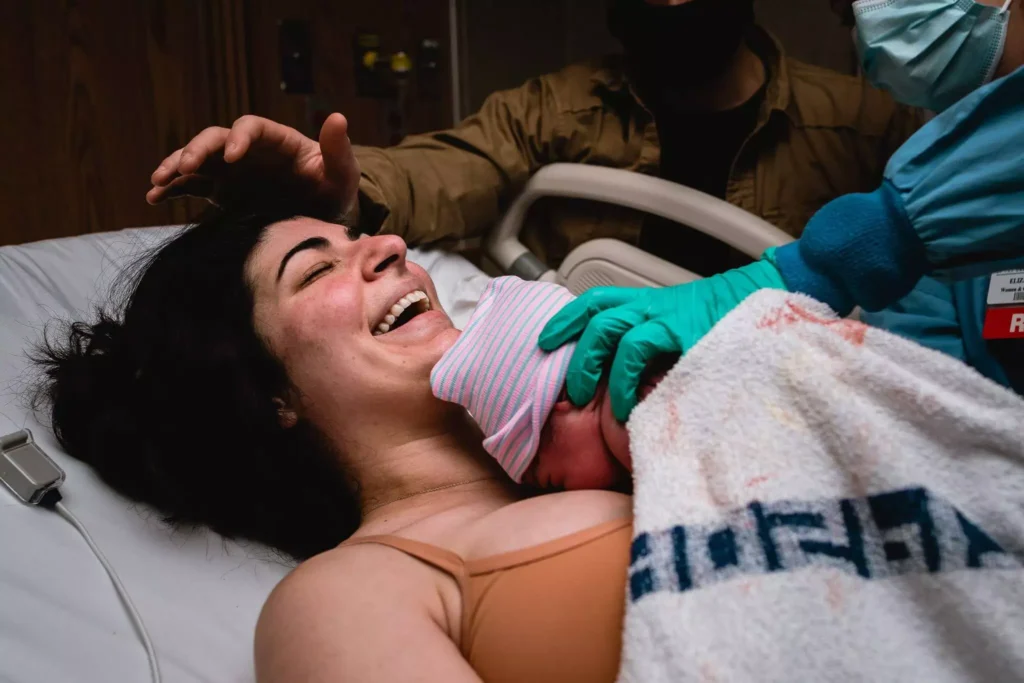

Learn the science of pregnancy and birth to take the mystery of labor away! Understand why you are feeling what you feel, and learn strategies to confidently move through pregnancy and birth!
- 9h+ of Video
- Support Group
- Close Captioning
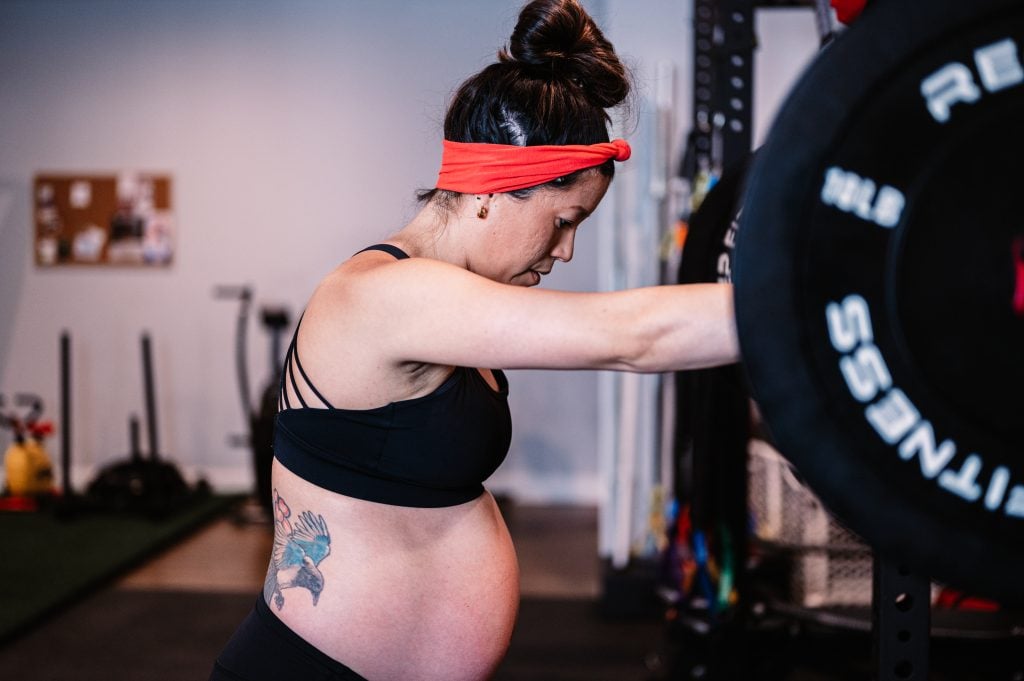

- 5 Workouts/Week
- Gym Workouts
- Self-Paced

Instructor
GINA
Workout on-demand with our prenatal fitness workout videos! Each workout is 30-40 minutes to follow along as you exercise at the same time!
- Birth Prep
- All Trimesters
- Mobility Work

Instructor
GINA
Find comfort and relief from pelvic girdle pain throughout your pregnancy and postpartum period! This program incorporates myofascial sling focused exercises to stabilize across the pelvic girdle joints.
- 3 Weeks
- On Demand Workout Videos to Follow