



Welcome to the MamasteFit Podcast! In this episode, Gina and Roxanne welcome Dr. Nicole Rankins, a board-certified OB/GYN. Dr. Rankins shares her insights on how to have an empowering experience during pregnancy, labor, and the postpartum period. From choosing the right provider to understanding the importance of mindset and childbirth education, this episode provides valuable tips for expecting parents. Dr. Rankins also emphasizes the significance of preparing for postpartum recovery and gives advice on how partners can support during labor. The conversation delves into key strategies for managing pain, considering birth preferences, and navigating emergent situations, aiming to help parents feel confident and empowered throughout their pregnancy journey.
Read Episode Transcript
[00:00:00] Gina: Welcome to the podcast. In this episode, we have Dr. Nicole Rankins, who is a board certified OB/GYN who’s going to be talking all about how you can have an empowering experience during your pregnancy, during your birth, and then also just a tiny bit on how you can also prepare for the postpartum.
[00:01:18] Nicole: Thank you so much for having me! I am so excited to be here!
[00:01:21] Gina: Can you introduce yourselves to our listeners who may not have had the luxury of meeting you yet?
[00:01:27] Nicole: Yeah, so I am Dr. Nicole Calloway Rankins, I’m a practicing board certified OB/GYN. I have been doing this for over 20 years, had the privilege of helping bring nearly 2,000 babies into this world. And I’m a mom of two, I have two teenage girls, and I host a podcast called All About Pregnancy and Birth. It’s been downloaded over two and a half million times. And I teach about pregnancy and birth and helping people have an empowering birth experience.
[00:01:56] Gina: So let’s talk about what your tips are for somebody when they’re approaching their pregnancy and their birth to have an empowering experience, because there’s more to this experience than just coming out alive, than just surviving it. Yes, of course we all want a healthy mom, healthy baby, but that feels like the bare minimum. There is room for a happy mom, for a happy baby, and for an empowering experience. So from your perspective, what are like the top things that somebody can do during their pregnancy, during their labor to have this empowering experience? And we can start with pregnancy.
[00:02:34] Nicole: Yeah, so, first, I want to just take a minute and just co-sign that like the least we can do is help people make it out alive during pregnancy and birth, and the fact that’s something that’s held up as, “Oh, you should just be happy to have a healthy baby,” just annoys the… am I allowed to use “adult language”, as my children call it?
[00:02:52] Gina: Yes, absolutely.
[00:02:53] Roxanne: Yeah, go for it!
[00:02:54] Nicole: It just annoys of shit out of me that we’re saying like, “Just be happy that you have a healthy baby!” You all should expect more and everyone deserves more. So this is an incredibly special time in your life, it’s not going to happen that many times, so you deserve to make it out more than alive. We need to look at more than just physical safety. There’s mental health, psychological safety, all of those things. So yes, to all of that’s really important that you need to internalize that you deserve those things. Because I think that helps you to start then to know how to create that situation for yourself.
[00:03:28] Nicole: So during pregnancy, I would say it’s important to find a doctor or midwife who aligns with the values and things that are important to you. So often you see that people, and feel free to cut me off, y’all, because I will get to talking, so just be like, “You’re just yapping,” as my children would say!
[00:03:50] Nicole: During pregnancy, you want to get someone who aligns with things that are important to you. So many people will like, they’ve been going to their OBGYN for like regular gynecology checkups and then they’re like, “Oh, I’m pregnant, so I’m just gonna keep seeing the same person,” and that person could have a completely different approach to pregnancy and birth. And although you may not always know in the beginning what you want for your pregnancy- do I want unmedicated? Do I want, an epidural? What are the things that I want?- you can start to get a feel for how they’re making you feel when you ask questions. Are they dismissive of anything when you bring up things? Are they like, “Why are you bringing up a birth plan?” Things like that. So you just want to know that you have someone who is supportive of what you want for your birth experience. It can be hard because sometimes you’ll see different people during the pregnancy, but make sure you’re in an environment where you feel supported.
[00:04:43] Gina: I definitely find that someone’s provider plays the biggest role in how their pregnancy goes, in regards to how they feel about it and also how they feel about their labor as well. For me personally, my first birth experience was not a positive experience. I can look directly at the provider that I had as the person that caused a lot of my trauma, which is like really unfortunate because I want to be able to trust my provider. And we made it out alive….
[00:05:14] Roxanne: The bare minimum.
[00:05:15] Gina: We were alive at the end, but I did not feel good about the experience and a lot of it was how I was treated as a patient. And I was treated like I was a patient in a hospital, as opposed to a person that was giving birth. And so I definitely firmly believe that who someone chooses to support them during their pregnancy plays a really big role in how they’re probably going to feel about their birth. And choosing a provider that they trust to help navigate hard situations in their labor is going to be incredibly beneficial as well.
[00:05:49] Gina: I’m not a huge fan of… I’m a fan of people researching and being informed, but I am not a huge fan of somebody feeling like they have to have all of the answers when it comes to their birth and not choosing a provider that they can trust to help guide them through situations that they don’t have all the information on. Like, I’m not going to be an expert on how to perform my own C section, but I want to choose a provider that’s going to help guide me to know that this is the best route for me and for my baby, that I can feel confident it’s not trying to coerce me into a specific direction.
[00:06:23] Nicole: I always say that I’m an expert in pregnancy and birth, I have been doing this for quite a long time. I went to medical school for four years, trained as an OBGYN for four years, I did a research fellowship for two years, so I understand the research also. But what I am not an expert in is you, the person who is sitting in front of me. You are the expert on you. You bring your expertise about what you know about yourself and your body and the things that are important to you. I bring my expertise, and we work together to help come up with the best options and plans and things for you. So always know that, yes, you can do your research, but you’re not going to know everything that I know, you’re not supposed to. But you do know everything about you, and that’s really, really important.
[00:07:09] Gina: Absolutely. I think it’s really important to have that balance with your provider and for your provider to also have that balance as well of, they know a lot when it comes to pregnancy and birth, but like you said, they don’t know you, they should eventually have a relationship with you, but they don’t know all of the intricacies of your personality and your values. And they should look at you as you’re the expert in this specific birth experience, and I’m going to give you my expertise on birth and pregnancy as a whole.
[00:07:41] Roxanne: Yeah, no, I agree. And I think it is, like you said, it’s a lot of people will choose, the provider that they saw outside of pregnancy who does their annual pap smears and all of their annual exams, and they’re like, “I have this relationship. I’ll just continue seeing them,” because we have this sense of loyalty. It’s hard for us to be like, no, I’m going to find someone new. We will get calls to the birth center and be like, “I think I want to switch providers, but do I have to ask for my records? I don’t want to. I don’t want them to know that I’m switching. I don’t want to be the one that tells them that I’m switching. Can you do that for me? Because I feel bad,” and I’m like, “Yes, we will do that for you.” But you shouldn’t have to feel bad like that you’re “making them mad” because you’re switching providers. Like, they will find someone else.
[00:08:30] Nicole: Yeah, let me let you in on a little secret. We don’t know that when that happens. I feel like some people, you’re seeing like 20, 25 patients a day sometimes, y’all, nobody knows when you switched. You may think about it later, “Oh, Such-and-Such, I haven’t seen them in a couple visits,” but it is okay! Don’t be afraid to hurt anyone’s feelings. At the end of the day, it’s your pregnancy and your birth. Your doctor, whoever it was, is gonna go home and keep going on about their lives. And I’m not trying to be dismissive about it, I just want women to know to claim their own power, that it’s okay to make choices and decisions that are best for you in the moment.
[00:09:11] Nicole: Sometimes I think we, we’re not more sensitive, but maybe, like we’re sensitive to other people’s emotions and how people feel. We don’t want to rock the boat or anything like that. And it’s not even rocking the boat, but even if it is rocking the boat, that’s still okay if it’s the best thing for you in that moment. And that’s a life lesson, actually.
[00:09:31] Roxanne: Yeah, it starts now.
[00:09:33] Gina: So what is your advice for someone to figure out, is this provider a good fit for me? Because I think someone’s provider does play a huge role in your experience, but how do you know? Like, when you’re in labor, it’s too late, or maybe it’s not too late to have a different provider. What’s your advice for someone to figure out, is this a good fit for me?
[00:09:56] Nicole: Yeah, so, the two biggest factors that will influence your birth are your provider and the hospital. So you have to ask questions during your pregnancy to get a sense for how they approach practice.
[00:10:07] Nicole: So some questions that I suggest you ask are… Well, one, you have to do like the logistic things, because sometimes people even overlook the logistic things. Does my doctor work at the hospital where I want to give birth? So make sure that it’s fine. Or does my midwife work at the hospital where I’m going to give birth? Insurance. Make sure your insurance is covered, cause I seen that happen a few times where, you find out towards the end, “Oh, wait, my insurance doesn’t cover….” get those logistic pieces out of the way. Then the next thing I would say is do a gut check, your own sort of internal, how do I feel when this person is talking to me, when I’m interacting with this person? Because the way you feel gives you a big clue as to, is something going on here? Do I not feel good? Do I feel good? So that’s important. And then some questions that you can ask are things like, “How many of your first time patients, how many of your patients having their first baby have a C section?” You want to know, what is their C section rate? And you don’t want to say things like, “Do a lot of your patients have a C section? Because I don’t want to have a C section.” Of course nobody’s going to say, “Yes, I do a lot of C sections.” But I’ve been astounded! I had a patient who asked their, or, not a patient, someone from my birth class, who asked their doctor, “How many of your first time patients have a C section?” And the doctor said, “70%.”
[00:11:26] Roxanne: (Gasp)
[00:11:27] Nicole: How are you going to have a vaginal birth when this doctor says it’s 70%?! That’s not gonna… he’s cutting everybody, right? And I was like, “What?!”
[00:11:37] Roxanne: 70%?! Did he mean 17? Did he misspeak?
[00:11:40] Nicole: Listen, Roxanne, girl, I was like, “Did you say 7-0? Because that can’t quite… you can’t….” she was like, “No, it was 70.” And I was like, “Okay, so you have to find somebody else.” And you won’t know these things if you don’t ask.
[00:11:54] Roxanne: Oh my Lord!
[00:11:56] Nicole: Yeah. How do they feel about labor induction? There’s nothing wrong with labor induction. Sometimes it’s the right thing to do, depending on the circumstances. But our pendulum has swung hard towards, “Yes, 39 weeks, everybody has to be induced,” that kind of thing.
[00:12:10] Nicole: So you just want to get a feel for how they practice. Another question you can ask is, what are their thoughts on doulas? Whether you intend to have a doula or not, because we know that doulas provide, based on data, science, evidence shows that having someone like a doula can shorten your labor, decrease your need for pain medication, increase your chances for having a vaginal birth. We should all be supportive of doulas. So if you get that feedback that, “Why? I don’t understand why you need to have a doula,” or you know, “Doulas aren’t necessary,” then they’re not on the same page probably as things that are important to you. So those are three pretty quick easy questions that you can ask. And again, that’s even if you don’t plan to have a doula, you’re just trying to get a sense or a feel for how they practice and approach medicine.
[00:12:56] Gina: I do find that the provider, so I’m a doula, I find that the providers that I have a really good relationship with, like, where I, as a doula, feel good at the birth, tend to also provide very compassionate care. While the ones who are a little bit more, “Ugh, gosh…” tend to also have a little bit of a God complex where they want to be in charge, they want to tell their patients what they do, like, “Why would you question my authority?” kind of vibe, where it’s just not… Obviously there’s probably exceptions, but in general I find that providers who are all about the team, and they acknowledge that the team is here to… we all have the same mission, we’re here to support.
[00:13:40] Roxanne: We all have a different expertise.
[00:13:42] Gina: Like, I’m sitting in the room the whole time, you don’t have time to sit in the room the whole time, you got 10 other patients to focus on. But the providers that are like, “We’re all a team, we’re all working together to support the patient, support this person that is giving birth,” I find that the patient tends to have a better experience, too, because there’s no like conflict, there’s no underlying conflict that’s happening between different members of the birth team as well.
[00:14:09] Gina: And I would also say if someone is hiring a doula, if a doula is similar to that provider who is like anti-doula, where they’re anti-doctor, that would also be not a good fit for me personally, because they’re going to bring a lot of conflict with them as well.
[00:14:26] Gina: So yeah, but yeah. I think that’s a really good question to ask.
[00:14:29] Nicole: Birth shouldn’t be a… it’s not a fight. You don’t want that fighting energy around your birth, where you go into it like it’s a confrontation. The body works best in labor and births easiest when you feel calm, when you feel safe, when you feel supported. So sometimes, unfortunately, you do have to go into the environment where you’re having to fight for yourself and the things that you need, but ideally you don’t want to. So you don’t want to have that confrontation, you want to have an environment and an energy of trust and cooperation surrounding your birth.
[00:15:04] Gina: Absolutely.
[00:15:04] Roxanne: Yeah!
[00:15:05] Gina: So one thing that when I look back on my first birth and trying to navigate that relationship with that provider, when my husband and I reflect on it, he didn’t know what to do or what to ask that would not interfere with my care. And so he can see that I was not having a good time, but he didn’t know how to advocate for me because he was also unfamiliar with what was going on, and he didn’t want to say, “Hey, can we pause and talk about what’s happening real quick?” and then have that cause issues for me because it interfered with my provider’s ability to give me care.
[00:15:41] Gina: Do you have any advice for partners when they’re supporting a pregnancy, they’re supporting labor, on how they can advocate for their partner that is giving birth? Because I think it is something that they want to do, but it’s unfamiliar and they’re always confused on…
[00:15:58] Roxanne: How to just include them in the care, too!
[00:15:59] Gina: …how can I support you?
[00:16:02] Nicole: Yeah, partners should do childbirth education. Everybody should do childbirth education. So, childbirth education so you know what to expect. That is a hill I will die on. Will everybody please do childbirth education and some quality childbirth education. Definitely do childbirth education. So you have an idea of what to expect. So that’s number one.
[00:16:23] Nicole: And then number two, actually, sometimes some partners aren’t the right person to be an advocate. So it’s okay. I want to give people permission to say, “Maybe I’m not the right person to be an advocate and I don’t feel comfortable, like, speaking up.” So maybe in that case, maybe you enlist your sister, or a cousin, or a mom, or a friend who does feel more comfortable being an advocate- or a doula who does feel more comfortable being an advocate. So it’s also okay. You don’t have to, if that’s not something that you feel comfortable with. Somebody there has to be ready to advocate, but if your partner doesn’t want to, then that’s okay.
[00:17:01] Nicole: And then the things I would say is just, it’s okay to ask questions and you’ll have an idea of questions to ask cause the childbirth education will help you with that. But you want to start from a place of connecting on a human level. So in the example that you gave, for example, you can say, “Hey, I can see that my wife is hurting. My wife told me that she wanted to have these things for her birth. How can we get back to that? How can we make sure that she gets that? That she’s able to get in the shower? How can we make sure that she’s getting to move? Because I can see that she’s really uncomfortable and she’s really in pain and I want to do things, or, what can we do to help her not be in pain?” So try to, for lack of a better word, make the doctor, make the nurses see that person as a human being. I know that sounds crazy, but sometimes so often, it’s like, “It’s room five.” “It’s room seven.” Make them see the person in front of you. This is a human, who has emotions, who has feelings. “I’m feeling scared, I’m feeling nervous because my wife is having…” or, “My partner is feeling these things,” and just humanize it. And that can help start a conversation. We are humans on the other side, and sometimes we get burnt out, and we get beat down, and we need to be reminded of that, so that’s what I would say for that.
[00:18:27] Gina: Yeah, it sounds like it’s pretty similar to choosing a provider, is not everyone’s going to be a good fit for you. But, we don’t have to know all the information if we could just focus on, “How do I feel? How do I feel with this provider?” And then for our partners, “How am I feeling, but also how is my partner that’s giving birth feeling, and how can we improve that?” Because I usually tell partners, you don’t have to know every little detail of supporting a birth, you can just focus on how does your partner feel? Like she looks like she doesn’t feel great, how can I make her feel better? She looks like she’s very anxious or nervous, how can I improve that? Can be like a really good starting point for our partners, as opposed to, I need my 85 checklists of, how is Pitocin administered, like if the provider is doing this, I need to ask these questions, and that can become very overwhelming. But I absolutely love that you gave them permission to not be the advocate, to have somebody else there who can maybe do a better job. Because I also think there’s a lot of pressure on our partners to be all of these things for us when they are also equally unfamiliar with the experience as well.
[00:19:41] Roxanne: Yeah, exactly.
[00:19:44] Nicole: Yeah, definitely.
[00:19:45] Gina: What other advice do you have for somebody that is navigating their pregnancy, and then we can get into labor, to have an empowering experience?
[00:19:54] Nicole: Yeah, so I think this will be a nice transition into to labor and birth, but one of the most important things, and you need to start working on it during your pregnancy that will help you during your birth, is mindset.
[00:20:07] Nicole: So how you think and what your mind space is going into birth is so important. This is something that athletes do, performers do, before they do anything big- birth is a huge event and you want to get your mindset together as best you can going into your birth. And it doesn’t have to be complicated. Some small things that I suggest are affirmations that you can say to yourself every day, or listen to, or you can post them on a sticky note on your mirror. I put affirmations, usually monthly affirmations on my Instagram so people can have something that they can look at and make it the background on your phone. So affirmations are great. Meditation is a great way to help your mindset get in a good space. There’s like Headspace, Calm, all the apps, YouTube, Peloton, whatever, meditation is a great way to help your mindset get in a good space. Moving your body is great. So exercise actually helps strengthen your mental health as well. And then gratitude, that’s the other thing that I say is great, just having a regular gratitude practice. All of those things, just a little bit every day, will help get you in a better mindset during your pregnancy and then going into your birth.
[00:21:22] Gina: That’s awesome.
[00:21:23] Roxanne: I do find that mindset is like a huge one that a lot of people think about preparing for like physical pregnancy and labor and birth of, “Oh, like, I need to prepare my body for birth,” but sometimes the mindset is forgotten. And so they’re like, “I did all the squats, like someone told me to do 300 squats, so I did 300 squats. I got all the baby things, I got the diapers, like my nursery’s put together.” And then I’m like, “But how are you feeling?” And they’re like, “I’m super anxious and stressed out,” and I was like, “Yeah, maybe let’s take a second to take some deep breaths, take a bath, or take a nice long shower, take some deep breaths, focus on just like you and baby.” And I think that makes a really big difference. And there’s studies that support like central nervous system type pain relief is actually just as effective as the physical pain relief, and actually has been shown to decrease, if you don’t want an epidural, decrease that risk of getting an epidural or the risk of you deciding, “I can’t do this anymore,” and getting that epidural. But having that mindset prepared during pregnancy has been shown to be so helpful if you’re wanting an unmedicated birth. And even if you’re not wanting an unmedicated birth, just being able to cope with this huge transition in your life. So I love that you mentioned mindset because it is sometimes the forgotten piece of labor prep that even I will forget it in my own pregnancies, because I’m like, “I just got to make sure I like do all the things.”
[00:22:49] Gina: Yeah, but it doesn’t have to be this like hour long practice.
[00:22:56] Nicole: It doesn’t have to be anything complicated, actually, to have really lasting and important impact.
[00:24:20] Gina: So let’s get into labor and birth, like whether or not somebody goes into labor. How can they still have an empowering experience for a spontaneous labor, for an induction, for a vaginal birth, for a C section? Obviously those are a lot of different physical experiences, but we can still have the same Empowerment during them all.
[00:24:45] Nicole: Yeah, so again, this is another plug for childbirth education, whether it’s my course, your course, somebody’s course, please do childbirth education so you know what’s happening during the process of birth. Because, back in the day, I’ll say way back when, hundreds of years ago, people gave birth at home, you would see your mom give birth, and you had a sense for what birth looked like. But these days, we don’t have that. So you have to understand like what is happening during labor and birth, especially when it’s your first time. It’s not like on TV where you have three contractions and then you run to the hospital! Like, sometimes it can be like a ramp up for hours, even days, sometimes. So you need to know that those things are possible. So first thing is know childbirth education. Second thing I would say is everybody, I don’t care what you plan to do eventually for pain management, but you have to know some strategies for managing pain without medication because you can’t… I had somebody call one time and she was like, “Can y’all have my epidural ready when I get to the hospital?” It’s like, “No, it doesn’t work like that.”
[00:25:56] Gina: There’s a few steps that need to come before.
[00:25:58] Roxanne: Like they can be ready, but like they still need other things to get done before you can get it.
[00:26:03] Nicole: So there’s going to be some pain. One of the things I say to that is, if you can, and it’s safe to do so, stay at home as long as you can. So your labor is really like nice and going by the time you get to the hospital, because the first intervention is going to the hospital. It’s like we can’t help ourselves when you get there, we’re gonna start doing stuff, or offering stuff! So, you want to be in good labor, so if you can stay home as long as you can, that’s great- which means you’re going to need to know some strategies for managing pain without medication. Whether that’s shower, whether that’s movement, whether that’s birth ball, whether that’s sitting on the toilet backwards, whether that’s sitting on a chair backwards, or somebody rubbing your back. So know some strategies for managing pain without medication.
[00:26:45] Nicole: And then, know your hospital’s policies and procedures for things like monitoring. Do they have wireless- and this is, again, you want to know this ahead of time- do they have wireless monitoring options so you can get up and move around? How do they feel about IVs? Do they have showers? Do they have tubs? So know what some of those options are before you get to the hospital.
[00:27:09] Gina: Absolutely.
[00:27:10] Roxanne: Because if you don’t know your options, you have no options.
[00:27:13] Gina: Yeah, or you realize that you are getting induced and you really wanted to use a shower, but your hospital has only wired monitors and you’re stuck by the bed.
[00:27:22] Roxanne: Yeah.
[00:27:22] Gina: And you’re like, “Well, thatwas my comfort technique. Now it’s gone.”
[00:27:26] Roxanne: Now I have none.
[00:27:28] Nicole: Exactly, exactly.
[00:27:29] Gina: That seems to happen to all of my doula clients. We have one hospital near us that only has wired monitors. And all of them live five minutes from the hospital, so it’s very convenient, and they’re like, “I’m just gonna labor at home as long as possible,” and then for whatever reason, like, all of them need to get induced, and it’s like now you’re zero minutes from the hospital, but we don’t have wireless monitors, darn it! So I definitely think knowing what is available in your hospital and considering different routes that your birth may take can also be very beneficial.
[00:28:02] Gina: One of the things that really stressed me out my very first labor was, one, Hollywood makes it seem like this huge, traumatic event.
[00:28:10] Roxanne: I know, Knocked Up, man, that scene of birth.
[00:28:12] Gina: To where I remember at one point thinking like we should have a case of water ready for us to throw in the car when my contractions began. And Roxanne fortunately was like, “You do not need that.”
[00:28:24] Nicole: You don’t, yeah, you don’t.
[00:28:25] Roxanne: “Why do you need water?”
[00:28:27] Nicole: Like, what are you gonna do with the water?!
[00:28:28] Gina: I don’t know why that was my like, that’s my packing list.
[00:28:34] Roxanne: But it’s so funny because my husband and I, we went to the mountains when I was 37 weeks pregnant to take maternity photos and he’s like, “What if you go into labor?! We’re going to be four hours from the hospital!” I was like, “It’s my first baby. We’re not going to go into labor. Like no one in my family has ever given birth before their due date. Like it would be odd, but also they have a hospital there, so it’ll be fine.” And he’s like putting blankets in the car, towels, and then he also put 3 gallons of water in the trunk, and I was like, “What is the water for?!”
[00:29:04] Gina: I don’t know, they don’t have water at the hospital.
[00:29:07] Roxanne: Are we going to give the baby a bath on the side of the road?
[00:29:10] Gina: I need to bring my own supply.
[00:29:11] Roxanne: Like WHAT is the water for? But that’s the thing that people think, I need water.
[00:29:16] Gina: But the other thing that really impacted my mental state going into my labor, and something that we really harp on the opposite of is, I was very anxious about induction and Pitocin, and was made to believe that it was, like, evil, that my doctor was just trying to make money off of me- even though we were at a military hospital, they get paid the same regardless of what interventions I get- but it was like, I was like receiving all of this propaganda that Pitocin was evil, the epidurals were going to harm my baby. And so I went in very anxious….
[00:29:53] Roxanne: “If you get it, you’ll have a C section!”
[00:29:54] Gina: …into my labor. And I ended up getting Pitocin, I ended up getting an Epidural, and I just felt so guilty the whole time, and I felt like when I went and saw people afterwards who were like, “You didn’t get an Epidural right?” I had to justify why I changed my mind during my labor, and that made me feel like shit.
[00:30:14] Gina: And so, what I found to be much more beneficial is to understand that these different interventions and these different options are just tools available to us that we may or may not need. Pitocin is not evil. There’s no morality to it. You may need some Pitocin. You may not need, you most likely will not need any Pitocin. Like you may need an epidural, you may not need an epidural. It’s all about navigating that situation and understanding that there’s no morality to different birth options. Like a C section is not evil or bad, like you don’t somehow fail because you needed a different route for your baby to be born. You don’t have to justify why you got induced or why you got an epidural or why you got this or that.
[00:30:57] Gina: And so being able to find someone that gives that balance of, “Yes, we have options that are tools available to us,” versus, “No one should ever get this. This is horrible, this is horrible,” or the opposite end of it was, “Everyone should get induced at 39 weeks because the ARRIVE trial said that this is what we should do.” So finding that person in the middle and understanding that these options, they’re not evil, I think would have been really beneficial to me during my first pregnancy and labor.
[00:31:30] Nicole: Yeah, both extremes are bad. So the extreme of the doctor who’s like, “Everybody needs Pitocin. I break everybody’s water. Everybody needs to be induced,” that is not ideal. The other extreme is also bad. “Pitocin is terrible. No one should ever be induced, it’s a horrible idea. Epidurals are gonna make your baby have long term problems until they’re 85 years old,” or whatever, that extreme is also bad. So yes, the middle is really, important.
[00:31:57] Nicole: The problem is that in our health system, so often in the I’ll say US based health system, we didn’t make it a collaborative thing. It was like, “This is what you’re going to do, and this is what you have to do, and don’t question me.” So that made people, especially when information started to be more readily available, it used to be that people didn’t have the books, people didn’t have the information, but now we all carry computers around in our hand, so information is more readily available, but we haven’t caught up to the fact that we’re not just purveyors of information, we have to help people synthesize that information in a way that’s unbiased. And we’re, I think we’re getting better, but people, I’m saying all that to say that people’s skepticism about things wasn’t just out of thin air, it was because we weren’t explaining things, I think, in a way that we should have.
[00:32:46] Nicole: You’re right, Pitocin is not evil. It’s not terrible, there’s a time and place for everything. I had to learn some of these lessons myself during my practice. Like one thing I had to come around to was people wanting to have an elective C section, like I just was always like, “Why would you want to put yourself through a surgery?!” and I had to step back and say, “It’s not about me. I just have to provide the information, and if this is the choice that someone wants to make, then we should be able to support the choices.” So it’s having the things out there, giving people reliable information, and helping them make the best decision for themselves.
[00:33:23] Gina: Absolutely.
[00:33:24] Roxanne: And I definitely think that like you said, like someone choosing elective C section, like for you, you’re like, “What?! Why would somebody choose that?” but I think understanding that we are, like, human beings, we are able to make choices ourselves, understanding what the risks and benefits of different interventions are. And Gina and I chose two different things for our own pregnancies. Gina gave birth at home, I gave birth at a hospital. We both know the same information, but we are two different human beings and we both chose different things for our pregnancies. And there’s a story that I learned in NRP of a mom was in labor and her baby was not handling the contractions well, and so they kept recommending a C section and she kept declining the C section. And it was based off of her own experience and her own values of her culture and everyone was just like, “Oh she’s such a terrible mom declining the C section!” and no one asked further questions of like, “Why? Tell me what you’re feeling, why are you choosing this? Teach me how you’re feeling, share your values with us so that we can understand you better, and be able to give you the right information, or support you in whatever choice you’re making.” Because I think that we get so focused on the evidence of, “Oh, this is best,” but, we also need to take into account how people are feeling. Had I a been in a better space, I would have been able to sit down and be like, “Gina, why are you so fearful of Pitocin? Tell me why you’re feeling these things and let’s figure out what is causing this anxiety so that I can better help you.” But in the moment, I was just like, “Everyone gets Pitocin, like, an induction is no big deal! Just get the induction, Gina, like, why are you being so silly?” But I mean, I was a labor nurse for two years, and I still look back and I’m just like, “Oh my God, Roxanne, you’re so dumb. You could have helped her so much.” And so like even Gina’s birth, I hold regret for like how I was, but it helped me become a better nurse and hopefully a better provider. Because understanding that we are all individuals and how we feel about different things are important, but our job is to help them feel confident in whatever choice they want by providing the evidence, but also providing like, “If you want to do this, how can we support you in this choice?”
[00:35:49] Nicole: Definitely. That is so important that we as physicians, as labor nurses, that question is so key sometimes of like, “Why are you making this decision?” Or, “What are your concerns about the…” thing, whatever it is, and you’ll get so much information and it can help guide the conversation. And it helps build trust so that when it comes to the point in time where it’s like, “You know what, I think C section is the right thing, potentially,” then it doesn’t feel, the person has felt involved in the decision making process, they don’t feel like it was thrust upon them.
[00:36:27] Nicole: I find that the vast majority of people, when they regret things that happened with their birth, it’s not necessarily because it turned out a particular way, it’s because they weren’t involved. One, they didn’t know that it might not turn out the way that they wanted- because the only predictable thing about birth is that it’s unpredictable, and so people sometimes don’t understand that. You can’t actually plan birth, the baby decides how they’re going to come, and they don’t tell us how they want to do that. So that’s one thing, but also the people aren’t happy about their birth because they felt like they weren’t involved in the decision making process. And when you feel like you’re involved and you were talked to and you were asked about how you felt, then you feel so much better when you decide, “Yes, maybe it is time for me to break my water to help move labor along,” or whatever the thing is.
[00:37:18] Gina: I think it’s still understanding that they are the primary decision maker in the experience and that it’s okay if they choose something different than like the support people may choose. So if they choose something different than maybe what their provider is recommending or what their doula is recommending, it’s okay because they’re the ones that get to make the final decision.
[00:37:40] Gina: And so usually when we’ll go through like informed decision making in our childbirth education course and one of the things that we discuss when it comes to, what are the benefits, the risks, what are your other options you have? But, how do you FEEL about this? What is your gut telling you? Do you feel comfortable? Do you have enough information to feel confident in a decision, even if it’s not a decision that you like? You may have been wanting to have a no intervention, unmedicated birth, and your provider’s recommending induction because you developed a complication. And you are given all the information, and you feel confident that choosing an induction is the best option for you, even if it’s not something that you like, like you may not have been planning that for yourself, but you feel good that this is the right decision. And I’m like, that’s a big thing because you’re not going to know every little thing, like we talked about before, you are not going to be the expert in pregnancy and birth. You are going to be the expert in YOUR pregnancy and birth, in YOUR experience, and in YOU, and so if you don’t feel comfortable in the moment making a decision, that’s a big clue to me that we need to ask more questions.
[00:38:52] Gina: And then obviously there are situations where we don’t have a half an hour to sit down and talk, and I feel like when you already have that trust with your provider and things are maybe getting more emergent, which fortunately is not very frequent, at least my understanding is that it’s a more rare occurrence that there are like true, like immediately responding type emergencies. But there’s usually that opportunity to have a conversation and to kind of address coming back to, how do you feel? Do you feel comfortable with this decision? Because you are the decision maker, like you get to decide what happens. And I find the same thing happens with my doula clients that when we’re reflecting on birth, the ones who don’t have as positive of a viewpoint on their birth, it was because they expressed something that they wanted and their provider was like, “No, this is not how we do it. We do it in this way,” type of thing, and they felt like their power got taken from them.
[00:39:48] Gina: And that was how I felt during my first birth too, where I felt like my power got taken from me. And I just, I was inconveniencing the staff by existing and being there, which was not a good feeling to have when you’re trying to bring your baby into the world.
[00:40:03] Nicole: Yeah, definitely. And, I want to piggyback on your point that it actually is rarely a true emergency. You almost always have time to say, “Can I have a moment to think about this?” “Can you step out for a moment so I can think about this?” We don’t always remember to offer that space to people to give people a minute to think about it, but you can always ask, “Can I have a minute to think about it?” That’s really important. You hear a lot of people say they had an emergency C section, but what they really had is an urgent C section, or it was done within- anything that’s done within 20 or 30 minutes- 30 minutes is not an emergency, okay? So you have time to think about it. A true emergency C section is, we are ripping cords out of the wall, we’re talking to you on the way down the hallway, someone might be on the bed with you because there’s cord hanging out your vagina, you know, like, from being on L& D, a true emergency is like, it is no joke, the way we move so fast. So there’s always time to pause and ask some questions.
[00:41:15] Roxanne: Yeah, and I think that is, like, the number of people who have said, “Oh, I had an emergency C section,” and then I just ask, “Okay, so what happened?” and they’re like, “Baby was doing this, so they consented me, and then 30 minutes later we went to the OR,” and I was like, “Okay.” But I also don’t want to be dismissive of someone’s experience because they perceive it as that’s an emergency for them. But true emergency C sections, yeah, they are, like, you are being consented as you’re being taken to the OR, baby is born within five to ten minutes of them, deciding, “Okay, this is not happening, we need to go now!” But then it almost instills this fear of childbirth that, like, all these people have emergency C sections! The C section rate is 30%, and if you have had an unplanned C section, I think a lot of the people say they had an emergency C section, so then you’re thinking you have a 30% chance of having an emergency C section if you’re pregnant! And so then this creates this underlying fear of birth, which then obviously can just snowball into fear of just childbirth and pregnancy in general. I think it’s important to know that 99% of pregnancy and birth, especially in labor, if you have a low risk pregnancy, you have a very low chance of needing an emergency C section.
[00:42:38] Gina: Yeah, this is something that I’ll tell my clients who are feeling more anxious about an emergency during their labor is, talk to your provider. Ask them how many true emergencies do you support a year? What, kind of circumstances are surrounding those emergencies? And so one of my clients was a VBAC, uterine rupture kept getting brought up to her, and I was like, “Just ask them, how often are you supporting a true emergent C section, to where there is no time to give you any sort of pain relief, just ask them.” And he was like, “Ah, maybe one a year. Maybe one or two a year,” like where it’s truly, “This person’s gonna die if we don’t do this right now,” kinda thing. And he was like, “So I guess not that often. So if you don’t want to get an epidural because you’re gonna VBAC, that’s probably fine.” And that brought her a lot of relief where she was like, “Oh, I was under the impression that every other patient was like, being rushed down the hall, like everyone’s uteruses are rupturing.”
[00:43:41] Nicole: We’re all just, we’re just running.
[00:43:44] Gina: Yeah, it’s like you guys are track stars in the hospital.
[00:43:46] Roxanne: It’s like Oprah, “YOUR uterus ruptures! YOUR uterus ruptures!”
[00:43:50] Gina: But when she asked that question to him and he was like, “Oh, maybe one a year.” She was like, “Oh, out of the hundreds that you support?” and he’s like, “Yeah, maybe like one.” And then for him, it brought perspective to where he was like, “Yeah, I guess we don’t have to force you to get an epidural just because you’re a VBAC. The likelihood of you having an emergency C section is very low. Yeah, I guess if you don’t want to get one, that makes sense.” so it just helped bring it to perspective for both of them.
[00:44:21] Gina: So, to finish up, because we talked about how birth is unpredictable, like you can’t plan for birth, but we should still have a birth plan. We should still have preferences on what we want, and we should still prepare for birth.
[00:44:34] Nicole: One thousand percent!.
[00:44:35] Roxanne: I usually think “birth plan,” it makes it sound like, oh, I can just plan for birth, but I think “birth preferences”, or “birth wish” or “dream” is almost a little bit more realistic. Because, this is what I would love, like, plan A, ideal, but what are the other options? And how do I feel about these other options if I need them? Because again, if we don’t know all of our options, then we really don’t have any options, so I think it is important.
[00:45:04] Gina: So what is your opinion on birth plans as an OB? Because I’ve heard some various things that are not so positive from medical providers and nurses that are like, “If you have a birth plan, it’s your ticket to the O. R.”
[00:45:16] Nicole: Yeah.
[00:45:16] Gina: Or, “If you have a birth plan, we’re just gonna all roll our eyes at you.” And I’m like, are you posting this online? Publicly? This is a public opinion of yours.
[00:45:26] Roxanne: Yeah.
[00:45:26] Gina: Oh my goodness.
[00:45:27] Roxanne: No. Give me your birth plan.
[00:45:28] Gina: I know that you have the opposite opinion of that.
[00:45:31] Nicole: I’m ashamed, in ways. In the beginning of my career, I definitely was, like, rolling my eyes at birth plans. I would read them, and I’ve always felt like I’ve been respectful to people’s wishes, but yeah, in the back room, we’re like, “Oh, here we go with the birth plan thing again,” because we have a culture problem in medicine where we don’t center the person and their needs giving birth. And it’s like, they ask for things that they want, and we’re like, “Oh my God,” like, why are we being this way? Like, why are we doing this? This is terrible.
[00:46:02] Nicole: So I think a birth plan is great. The thing that I want to say about a birth plan is that ideally you won’t need one because we’re already supporting the things that are most important to you in our conversations and our discussions. So that’s my ideal dream world, is that people don’t need birth plans. But if you do have one, please do not make the time you show up in labor the first time anyone has seen, heard, or even have talked about what are your birth wishes! Because you may be in for a rude awakening if you just think that you want to move around, you don’t want to have an IV, you want to do these things, and they’re like, “We don’t do none of that,” and now you’re stuck because you’re in labor.
[00:46:49] Nicole: So you definitely want to review it in your prenatal visit. Hey, let’s talk through this.” And some doctors do actually do that, they give you a template to say, hey, let’s start. These are the things to think about. So you can have that discussion, and this is just like the final seal or the final last piece once you bring it to the hospital. So please don’t wait until you just bring it to the hospital because you may be disappointed in that instance.
[00:47:14] Nicole: The second thing I will say is that, don’t do it with demanding, “I will not do this. I will this,” because that doesn’t set a good tone. Like birth happens best in an environment of cooperation and trust, and coming in and being like demanding- think of somebody comes to you like that, it doesn’t set a good tone. So start from a kind place. Now, if people aren’t listening, then you got to, take it up, but start from you want to connect. So I think birth plans can be great.
[00:47:44] Nicole: The other thing, they can’t be more than a page. Nobody’s gonna read it. Like I’ve seen some people come in with 10 page notarized forms, and not understanding- and I get it, it comes from a place of fear that’s founded on our system and the way we treat people. But like notarizing anything, it just means that somebody witnessed that you signed it, it doesn’t mean anything in terms of it’s more likely to get implemented or anything like that.
[00:48:17] Nicole: You can make a great birth plan that confidently expresses your wishes and in a page, I promise.
[00:48:24] Gina: Absolutely. I usually, I’ll tell my doula clients as well, “Let’s start thinking about what kind of options we want and then ask questions like throughout your pregnancy.” Hey, if I have to be induced, what could I expect with your clinic, with my birth location? What, if I have to have a C section, what could I expect? So that you can start getting an idea of what options are available to you, and which of those options you want to utilize first, and prioritize them as well, because, yeah, when I show up at the hospital, the first thing I want is not necessarily Pitocin, but at some point during my labor, if I need it, I want to have an understanding of what it is, when I would want it, when I don’t want it, and already have had that conversation with my provider on when they would recommend it or when they would say there’s other things that we can do.
[00:49:15] Gina: It starts to build that trust with our medical team as well. Because again, I don’t want to show up with a textbook birth plan of, in these eight circumstances, I want Pitocin, but in these 10, I don’t. I want to have a preference of what it is that I want during my labor, what my priorities are, but I also want to be able to trust that I’ve had enough conversation with my medical team that they understand what my values are and what I’m looking for in my birth.
[00:49:43] Gina: And so I was at a birth recently where the nurse was like, “Hey, do they have a birth plan?” And I was like, “Actually, I don’t think they, they don’t have anything written out.” And she was just like, “Okay, what do you guys, what are you guys like wanting from this birth? Are you wanting like fairly low intervention? Are you open to things? Just so like I, as a nurse know how to advocate for you, so that you get the experience that you’re wanting.” I thought that was really great too, that she was like, “Oh, you don’t have a birth plan. That’s fine. How can I support the birth that you want so that I, when I’m out there at the nurse’s station, I know how to advocate for you based on what I know your priorities are.”
[00:50:25] Roxanne: Which I think is great. That also just shows that hospital is definitely a little bit more patient centered and supporting there.
[00:50:33] Gina: Yeah, they have a birth plan template.
[00:50:35] Roxanne: Yeah, they also had a birth plan template, which is really nice.
[00:50:38] Roxanne: But I think that us as nurses and providers, we can really make or break a lot of people’s experiences with birth plans because if they come in with a 20 page birth plans with references, cited, with evidence of like, why they don’t want this, they’re trying to… they have some sort of experience- either themselves or somebody that they know- where they went to give birth and they were completely rolled over, steamed over, and weren’t listened to, and weren’t involved, so they feel like they had to come in and fight. So whenever anybody comes in with, a more than a one page birth plan, even with the one page, I always try to go over all of it and get why they want to experience this. Oh, you said absolutely no pacifiers whatsoever, so why do you feel like this? We do not give pacifiers out routinely in this hospital, but like, why did you put this in your birth plan? Why did you put no pitocin whatsoever, don’t even bring it up? Because I want to be able to understand like what you’re wanting and why you feel this way so that I can better advocate for you to the providers. Because like at some point maybe they might need Pitocin, but like they had said absolutely not in their birth plan so like they don’t want you to bring it up, but if I understand a little bit more of the why, which kind of goes back to what we talked about earlier, like understanding the why in a birth plan, and if you discussed it, hopefully in a prenatal visit, like other people understand the why, like we can better support people during their birth and make it something that they can look back on fondly and not have a lot of trauma and regret about.
[00:52:17] Nicole: Yeah, definitely. I usually sit down with people and read through it and just say, “Oh yeah, we do delayed cord clamping, we do skin to skin,” and then often people can breathe, “Oh, they’re already like doing a lot of the things that I’m asking for,” and it helps them to feel better.
[00:52:33] Nicole: So I tell people like when you bring your birth plan, get people to read it, in a way. So ask, “What concerns do you have about the things that are in my birth plan?” or, “Can we sit down and read through it and talk about it?” Because, you know, sometimes it gets just put in the chart, nobody actually looks at it, and those kinds of things. So you want to actually go through it and look at it together. Ideally,
[00:52:59] Gina: I think it’s a good way to research your options and understand what they are as well. And then again, facilitate communication to build trust with your provider to, where like you were saying, you don’t have to show up with the birth plan because all the things that you’re wanting either are already done, standard of care at your birth location, or you just fully trust that your provider is going to have conversations with you to help you continue to make decisions during your birth, like that would be obviously the ideal world.
[00:53:28] Nicole: That is the dream, yes!
[00:53:29] Gina: Thank you so much for coming on the podcast and sharing your advice on how to have an empowering experience. Do you have any last advice for our listeners? And then where can they find you?
[00:53:39] Nicole: Yeah! So my last thing I will say is, please start preparing for postpartum while you’re still pregnant. So please line up a lactation consultant. Also, please have some mental health resources ready for you just in case. Also, please find a pelvic physical therapist just in case you need those people, because we disregard our postpartum recovery and it’s really, important. Birth is just the beginning.
[00:54:01] Roxanne: Yes!
[00:54:02] Gina: It really is.
[00:54:03] Roxanne: Love it.
[00:54:03] Gina: So where can our listeners find you?
[00:54:05] Nicole: You did ask me that, yes! I’m on Instagram @DrNicolRankins, my website is drnicolerankins.com. I’m everywhere, whatever platform, at drnicolerankins.
[00:54:14] Roxanne: Awesome.
[00:54:15] Gina: Perfect. And we’ll link that all down in our show notes below. But thank you so much, again, for coming on the podcast and sharing your expertise with our listeners.
[00:54:22] Nicole: Thank you so much for having me!
[00:54:24] Nicole: Thank you for listening to this episode. If you want more support during your pregnancy, check out our online prenatal fitness program and online childbirth education course. Like this episode discussed, childbirth education is incredibly important to helping you have an empowering birth and pregnancy experience because it’s going to help educate you on what your options are and which of those options is your preference.
[00:54:44] Nicole: We tend to be more afraid of things that we don’t understand, and so a childbirth education course that teaches you the science of birth and what to expect can help to build your confidence that you can have that empowering experience. You can check out our online courses, both our prenatal fitness and our childbirth education on our website at mamastefit.com and use code STORY10 to get 10 percent off any of our online offerings- and they can be bundled together to save an additional 15 percent off.
[00:55:08] Roxanne: And just like Dr. Nicole Rankins talks about preparing for the postpartum, we also have a postpartum preparation course to prepare for what to expect in the postpartum, for both you and baby, and different things that you can prepare beforehand to make that transition a little bit easier.
Additional Resources
Dr. Nicole Calloway Rankins is a board-certified, practicing OB/GYN and mom of 2 who empowers moms to feel calm, confident, and empowered for pregnancy and birth. In her over 20 year career she’s helped nearly 2,000 babies into this world and has demystified pregnancy and childbirth for thousands more women through her popular podcast All About Pregnancy & Birth, which has been downloaded over 2.5 million times. She regularly shares holistic, evidence-based pregnancy and birth info with her community of 25K+ on Instagram (@drnicolerankins), and has served thousands of moms-to-be through her online birth plan class, Make A Birth Plan The RIGHT Way, and comprehensive online childbirth education class, The Birth Preparation Course.
Find Dr. Rankins Here!
Website: https://drnicolerankins.com/
Prenatal Support Courses
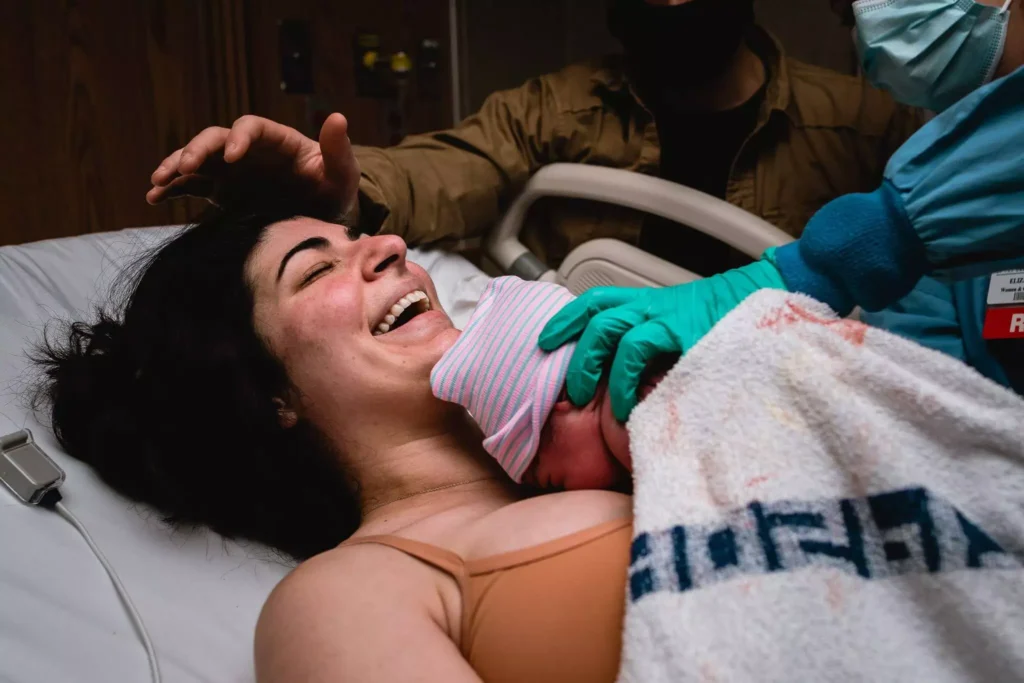

Learn the science of pregnancy and birth to take the mystery of labor away! Understand why you are feeling what you feel, and learn strategies to confidently move through pregnancy and birth!
- 9h+ of Video
- Support Group
- Close Captioning
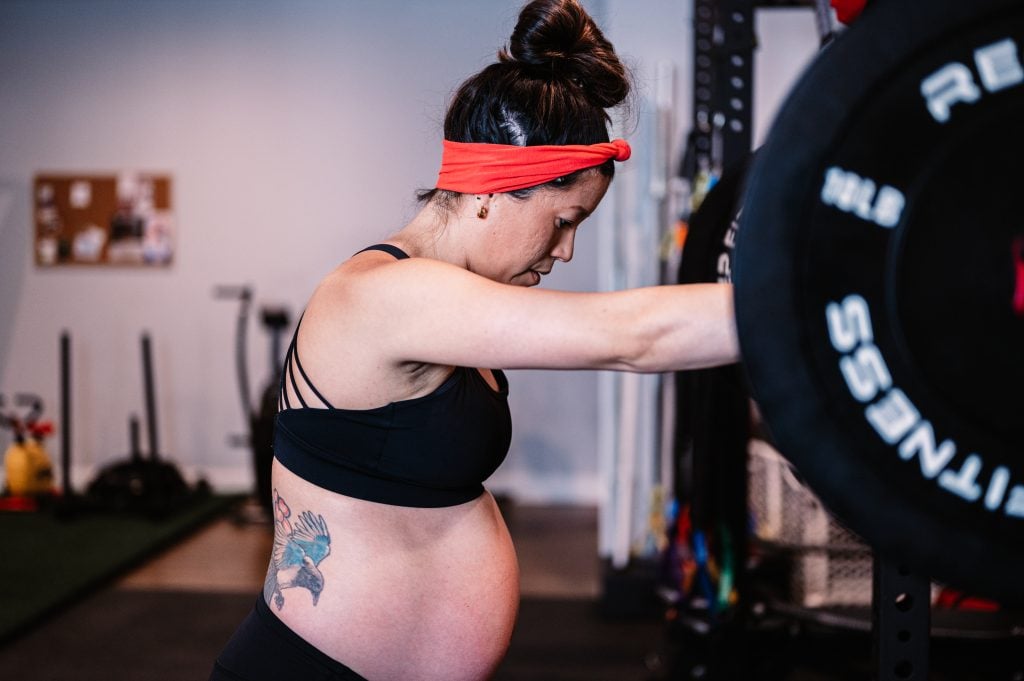

- 5 Workouts/Week
- Gym Workouts
- Self-Paced

Instructor
GINA
Workout on-demand with our prenatal fitness workout videos! Each workout is 30-40 minutes to follow along as you exercise at the same time!
- Birth Prep
- All Trimesters
- Mobility Work

Instructor
GINA
Find comfort and relief from pelvic girdle pain throughout your pregnancy and postpartum period! This program incorporates myofascial sling focused exercises to stabilize across the pelvic girdle joints.
- 3 Weeks
- On Demand Workout Videos to Follow