



Welcome to the MamasteFit Podcast Birth Story Fridays! In this episode, Erin shares her detailed birth story. Originally planning for an unmedicated birth, Erin faced several challenges including the need for her waters to be broken, Pitocin induction, an epidural, and navigating a shoulder dystocia. She recounts her preparation for pregnancy dealing with PCOS, her labor experience, and the emotional aftermath. Roxanne and Erin also discuss the importance of being active during pregnancy, the benefits of having a doula, and the significance of adequate postpartum rest.
Read Episode Transcript
[00:00:00] Gina: Welcome to the MamasteFit podcast, Birth Story Friday. In this episode, Erin is going to be sharing her birth story where she was planning to have an unmedicated birth in a hospital setting with a birth doula; however, ended up needing to have her waters broken, pitocin ended up getting in an epidural and she was group B positive. Her labor also had a shoulder dystocia. So she’s going to be sharing all about the challenges that she was navigating throughout her labor and how she felt about her birth afterwards.
[00:01:14] Roxanne: Welcome to the Mama’s Snap It podcast, Birth Story Fridays. On this episode, we have Erin here to share her shoulder dystocia hospital birth, and we’re so excited for her to be here. Well, thank you, Erin, for sharing your story with us.
[00:01:24] Erin: Great. Thank you so much. I’m excited to talk about it! Thanks.
[00:01:26] Roxanne: Alright, well, let’s just get started. How did you prepare for pregnancy and birth, whether before pregnancy or during pregnancy?
[00:01:35] Erin: Yeah. So, I actually have PCOS, so before pregnancy, I was not sure how that journey would look for me. I had irregular cycles for pretty much my whole life, since I was having cycles, and was on birth control for a while. And then when my husband and I decided we wanted to start a family, I got off birth control probably about a year and a half or so before I ended up getting pregnant. And I honestly took a lot of that time after I got off birth control to really focus on my health and my lifestyle to regulate my cycles.
[00:02:07] Erin: I focused a lot on nutrition, met with the dietician. And obviously everybody’s journey is different for PCOS, but for me, using diet and lifestyle exercise to really control that was very effective for me. I did not have to get on any medication for a PCOS to get pregnant. So I was able to regulate my cycles just kind of through weight loss, lifestyle, watching carbs, that kind of thing. And it worked, it worked very well. And then last summer, my husband and I decided we want to start trying, and then in September- so relatively quick from when we kind of decided, “Let’s actually try,”- I got pregnant in September of 2023. And yeah, so some kind of background before I was pregnant, just getting my PCOS under control was helpful, and I did use a dietician and my OBGYN support through that time.
[00:03:00] Erin: And then once I was pregnant, you know, I’m someone that has wanted to be a mom my whole life. I knew I was very excited for it. And, I’m also a personality type that I love to prepare and research. So, I had actually followed you guys, the MamasteFit account on Instagram before I was pregnant, I think it had just popped up somewhere, but I knew that that was in my future and I had been kind of newly somewhat passionate about health and exercise because of my PCOS journey. So I followed you guys and when I was probably, not right away when I found out I was pregnant, but maybe around 10 weeks or so, I think I bought the mini workout program. I was thinking about the full, but, honestly I have a Peloton also, and I’m a huge Peloton cult member also, and I knew that I wanted to keep incorporating those workouts and I just didn’t have the time to do the full workout strength plus my Peloton workout. So I ended up doing the mini, which was great. I loved it. We did the mini workout program, which was like, for me, I kind of take my time, maybe 30 or so minutes a day for me with that and then I’d usually do like sometimes Peloton strength or ride or that kind of thing, in addition to that.
[00:04:16] Erin: So I did that fitness throughout my whole pregnancy. I mean, I was working out until I went into labor at 39 weeks, and it was great. Yeah. I had a really, really great pregnancy, I think, because of the workouts. I felt really good the whole time. I had a really relatively easy pregnancy. Obviously it comes with aches and pains, but I felt very capable the whole time.
[00:04:38] Roxanne: Awesome!
[00:04:39] Erin: Yeah!
[00:04:39] Roxanne: I mean, we are also huge fans of Peloton as well. So like totally, if Peloton wants to sponsor us at any moment, we are here, like I’ll accept a Peloton Tred. We love our bikes.
[00:04:51] Erin: Yeah!
[00:04:51] Roxanne: So I totally support. I think I did a bunch of Robin’s rides when she was pregnant, ’cause I was pregnant at the same time. So Peloton is also a really great option that that’s out there.
[00:05:01] Roxanne: So let’s get into your birth story then. So you already like, gave a little sneak peek. You went into labor at 39 weeks.
[00:05:08] Erin: I did.
[00:05:08] Roxanne: So let’s get into it.
[00:05:09] Erin: Yeah. So I, the whole time, so my due date was May 28th and I kept saying, “She’s gonna be in June.” I was convinced she was going to go late. I’m like, you know, you always think first time moms are not going to be early. There’s no way. And, one thing I forgot to mention about pregnancy, we did hire a doula, her name was Amy, she was great. So, you know, Amy was like, had me kind of tempering my expectations. She’s like, “You know, obviously it could happen any time, but most first time moms happen between 40, 41 weeks.”
[00:05:39] Roxanne: Yeah.
[00:05:40] Erin: We kind of talked through, I really would prefer not to be induced. So I talked to, you know, my midwife team about that. I was going to a practice that had both midwives and OBs on staff. So, I mostly saw midwives through my delivery, there was a few of them that I kind of rotated through- or midwives through my pregnancy, I should say. And between my doula and the midwives they were like, “You know, it probably will be probably after 40 weeks,” I was like, “Okay.”
[00:06:06] Erin: And I remember on the day I turned 39 weeks, it was a Tuesday, I was laying on the couch after dinner, you know, horizontal as everyone prefers to be at 39 weeks pregnant.
[00:06:17] Roxanne: Yeah.
[00:06:17] Erin: And I was just complaining to him, “I’m gonna be pregnant for like two more weeks at least, like I’m gonna be pregnant forever!” I was so uncomfortable at that point. I could finally like eat more because baby was kind of dropping, but I was, you know, sleeping is uncomfortable, eating is uncomfortable, breathing is uncomfortable. I was just, I was done.
[00:06:33] Erin: I was laying there on the couch saying, “Oh my gosh, I have at least two more weeks of this. This is nuts.” And then I stood up and I felt some fluid. And I was like, “Oh my gosh, what the… what is this?” And, what it was is a point of contention between my team and us. My doula and I maintain that we think it may have been my fluid, just like a high leak or a very small leak.
[00:06:55] Roxanne: Yeah.
[00:06:56] Erin: Because after that, I did have some contractions starting.
[00:06:59] Roxanne: Okay!
[00:07:00] Erin: They’re pretty, pretty mild at first, you know. I was just seeing them like seeing my stomach kind of tightening, not really painful much at first.
[00:07:07] Roxanne: Yeah.
[00:07:09] Erin: And I was kind of like, you know, “Is this my fluid? That wasn’t much,” and then I wasn’t getting much at the time. And I called my doula and she’s like, “Well, basically lie down for a little while and then stand up. And if you stand up and more comes out, then it’s probably your water.” A little bit more came out, but then like, I was still not having much. My midwife team, thankfully, was kind of supportive of me staying at home for a few hours because I wasn’t, you know, progressing super quickly or anything. I was group B strep positive. So they didn’t want me to wait too long to get checked and see if it was my water.
[00:07:44] Roxanne: Yeah.
[00:07:45] Erin: This happened probably about 7 or 8 pm on that Tuesday. And when I called my providers, they said, “Unless your contractions really pick up, you’re okay to labor at home for a while.” but they kind of wanted me to come get checked by around, like, midnight, just to make sure, if it was my water, I could get, you know, the antibiotics in my system pretty quickly.
[00:08:09] Erin: So at that point, I was at home for a while, seeing a little bit of progress, not a ton, you know, it was very mild contractions. We made our way into the hospital right around midnight, probably about 11:30. They checked me and they said, “We can see a bulging bag of water. We don’t think your water broke.” And I’m like, “Okay, but I’m telling you, some fluid came out and it was clear and it didn’t smell like anything. But it wasn’t a lot.” And they’re like, “Nope, we tested it. They said it was not amniotic fluid. They can see a bulging bag of water.” I’m like, “All right.” And I was only at one centimeter.
[00:08:40] Erin: So they sent me home. And then all through that night, or early morning, really, I labored at home. Contractions were getting more and more intense. I did not sleep at all. I was just having contractions all night, all early morning. And then probably at about 6 or 7 am- so this was almost 12 hours after kind of that initial fluid, about six or seven hours after we got back from the hospital- they were getting much more painful and I was really timing them at that point. They weren’t quite where I was going to go in yet, but they were very painful.
[00:09:19] Erin: I was like, “Okay, this is the real thing.” I got in the shower, woke my husband up like, “Okay, I think this is happening soon.” After the shower, we were timing them and they were getting to about a minute long, about four minutes apart, about 45 minutes to an hour. I called my doula. At that point, honestly, I was getting pretty anxious. I thought I would want to labor at home longer, but I think I have this group B strep lingering in the back of my head and I was just worried about if it was my fluid last night, I really just wanted to get there. Get there and get the antibiotics. So yeah, I really just wanted to make sure that I could get the antibiotics in my system for this group B strep and wouldn’t be stressed about it.
[00:09:55] Erin: We went into the hospital probably about 8am or so on that Wednesday. And they checked me and I was at three centimeters, and then they checked me like 45 minutes later and I was at four centimeters. So they admitted me. I was like, “Okay, great. This is progressing so quick.” I’m thinking, “I’m going to have such a fast labor! It’s going to be great!” And I had been hoping kind of at that point for potentially unmedicated, or at least minimal intervention was sort of my goal.
[00:10:24] Roxanne: Mmhmm.
[00:10:25] Erin: I was not extremely anti epidural or anything, but I kind of thought, “If I can do it without that…” My big thing was I really wanted to be able to move. I didn’t want to feel like I was too bed bound, and I wanted to be able to move around, help things progress. So, I was hoping to try to avoid an epidural, and the hospital I delivered at has three labor rooms that have tubs, so I was like, “I want a tub room. I’m going to try and make it to the tub.”
[00:10:51] Erin: So I got one of the tub rooms. I was very excited. Hospital had kind of a guidance rule that they didn’t want you getting in the tub until six centimeters because they thought that it would slow things down. I don’t know, some people maybe may not agree with that policy, but that was sort of what they said. So I was like, “Okay, I’m going to try to get to six to make it to my tub.”
[00:11:08] Roxanne: Okay.
[00:11:09] Erin: When they, like I said, when they admitted me, I was at four. So I was like, “Okay, great. Like I went from three to four in like 45 minutes. I’m going to be in this tub in no time!”
[00:11:16] Erin: And so I was admitted around like, I think it was like 9 or 10am on that Wednesday at 4 centimeters, and I labored. My doula got there as soon as we got admitted. I was laboring all day. My doula had us doing all kinds of moves, the Mile Circuit, she was putting me in all kinds of different positions to try to progress things. Contractions were getting more painful. She’s telling me that she thinks I’m having signs of cervical change, all these things are positive. And then they checked me in the afternoon and I was, they said, still at a four, maybe we can stretch it to a five. Well, it’s been a while, but we’ll keep going. I’m walking, we’re doing all those things again, have the peanut ball, all the things that we’re thinking to do to move things along.
[00:12:02] Erin: And, at that point, you know, I hadn’t slept in probably 36 hours so I, at that point, decided to get the epidural because I just felt like I really needed to sleep. I talked to my doula about it. She’s like, “You’re just really tired.” Obviously I was really tired, I was really struggling a lot more- not even so much with the pain, it was just the effort. So I got an epidural and I honestly do not have regrets. I have extreme props to moms who deliver without the epidural. For me, I really needed sleep so badly.
[00:12:30] Roxanne: Valid.,
[00:12:32] Erin: I was like, “I have to nap.” So I got my epidural, slept for a couple hours.
[00:12:37] Erin: And in my head, I’m thinking, “You know, I just need some rest. Like, I’m going to be able to progress easily once I’m sleeping, it’ll help my body relax.” I got my epidural, sleep for a few hours, and then at like probably 10 or 11pm they checked me again, and I still had not progressed. I was still at a four, stretched to a five. And my doula still had me doing, you know, like the peanut ball between my legs, kind of trying to move around as much as I could with the epidural.
[00:13:00] Roxanne: Yeah.
[00:13:01] Erin: Then at that point, the hospital I was at was very, the nurses were very supportive of our choices because they had been asking I mean, since earlier in the day, if I wanted to have my water broken, if I want a Pitocin. We just kept saying, “No, we want to wait. We want to let my body kind of do its thing.”
[00:13:18] Roxanne: Mmhmm.
[00:13:18] Erin: At that point, I had been, obviously, getting the antibiotics all through this time. I was like, okay, I’ve kind of thought my water maybe had already been somewhat broken anyway, so I consented to have them break my water. I guess who knows if it was the first break, or the only break, or if there had been potentially a leak. The hospital said they thought when I came in the night before it was my mucus plug and not my water. But yeah, my doula and I are convinced that it was water. So, I consented to have them kind of break that at night, like I said, 9, 10pm, something like that at that point on that Wednesday, so a little over 24 hours after my fluid gush, whatever it was. And then they checked again after that and I still had not progressed. And so at that point it was like 11pm, or midnight, and I was like, okay, like I’m fine to just move this along.
[00:14:16] Roxanne: Yeah.
[00:14:16] Erin: So yeah, I really wanted to start slow with the Pitocin, and they were fine with that. I started with kind of the lowest dose, I don’t know, I think they said it was like two? I’m not a medical person, two or something. And I was like, okay, not much progress there. They upped me to like four or whatever. And then I was progressing with that. So I went from, you know, almost 5 to 10cm in just a couple hours, on the Pitocin.
[00:14:43] Erin: At about 1, 1:30am on then Thursday, they said, okay, I was complete, I was at 10cm, they’re ready for me to push. So I did, and I pushed for about two hours, which I think felt like an eternity. I know that’s not an unheard of amount of time.
[00:15:02] Roxanne: Two hours is a long time.
[00:15:05] Erin: Yeah, it was. It was a while, which I think now in hindsight, we are thinking it was due to, you know, her positioning and the shoulder dystocia. So while I was pushing, I will say, I did not know that she had a shoulder dystocia until she was out.
[00:15:19] Erin: But, I was pushing, and they kept saying to me near the end, “She’s almost out. We can see her head,” and they would say, “Her head’s coming out.” And then she would kind of go back in, which I learned later is the, I think “turtle sign” is what it’s called, which is indicative of a shoulder dystocia. And, like I said, I didn’t realize that at the time. The midwife who did my delivery was excellent at keeping me very calm and not panicking me. She just kind of, you know, it was really coaching me on pushing and trying to get her out.
[00:15:51] Roxanne: Yeah.
[00:15:51] Erin: At the end, I do remember that- I don’t know exactly how long this was right before she came out, not super long before, but- at one point, you know, when she was almost born, my nurse, my delivery nurse, I think that when they realized it was a shoulder dystocia, pushed this emergency button on the wall a whole huge team of people came in.
[00:16:12] Roxanne: Oh, yeah. Oh, yeah.
[00:16:13] Erin: I don’t even know how many people, a ton, it felt like. They like shoved my husband out of the way and my doula out of the way. They had me like pull my knees really far back and lowered the end of the bed. They had a nurse pushing kind of on my stomach from the outside to try to get her out. And then the midwife ultimately, I think, used her fingers basically to kind of maneuver my daughter’s shoulders out.
[00:16:38] Roxanne: Okay.
[00:16:39] Erin: And, she had a dystocia for 40 seconds, which I was told is not the worst, which was good. And then yeah, she was born at 3:19am on Thursday, that Thursday morning, May 23rd.
[00:16:56] Erin: So she thankfully did not have any complications from the dystocia, long term. She did have the cord wrapped around her neck twice. So that was a little scary for us. We were hoping to have delayed cord cramping and for my husband to do that. It was not as delayed as I would have wanted. I think they delayed it for like maybe 30 seconds or so, and then they took her off, just to get examined and warmed up a little bit to make sure she was doing okay, but then they brought her back to me after maybe a minute or so. And we got to do our golden hour after that.
[00:17:34] Erin: So after that, my midwife kind of explained to me everything that happened. Truly in the moment, I did not realize I think hardly what was going on. I was just thinking, “Let me just get this baby out of here! There’s a whole team of people here. Something is going on. I don’t know what it is.” They were just saying, “You have to get this baby out now,” basically, like, “Push, push really hard and, you know, keep pushing.” And that, you know, I was obviously very exhausted after two hours pushing, so…
[00:17:58] Roxanne: Yeah!
[00:17:58] Erin: Very, very thankful that she made it out. And the team that did the delivery was amazing. All the nurses at the hospital, the midwife who did my delivery, they were all great, and kept me calm. I think if I had realized… I had heard of shoulder dystocia, I know they can be quite serious. I think if she had told me that’s what it was, I would have really started panicking.
[00:18:18] Roxanne: Yeah.
[00:18:18] Erin: So. I think it was maybe for the best that I didn’t know that that’s what it was until after she was already out.
[00:18:24] Roxanne: So you had a bit of a shoulder dystocia, a little bit of an emergency, and then you were able to still get like your golden hour with baby, like skin to skin bonding time. And also, it sounded like your midwife was amazing at like debriefing you on what exactly happened and like why all these people like ran into your bedroom, or not bedroom, your labor room.
[00:18:44] Erin: Yeah.
[00:18:45] Roxanne: But how was that then going into postpartum? Like did you feel like because she was able to debrief you, you didn’t really have any like questions of like, why it kind of got a little crazy at the end and like you were able to kind of enter into postpartum a little bit easier? Or do you feel like even with that debrief you felt like a little bit not traumatized but like overwhelmed entering into postpartum? Or traumatized, maybe.
[00:19:13] Erin: Yeah, I think I did definitely feel… I think honestly, sort of the trauma maybe didn’t even hit me until a couple days later.
[00:19:20] Roxanne: Yeah.
[00:19:21] Erin: In that first, you know, 24 hours or so that we were in the hospital, I don’t think I was like processing that so much. I was just so focused on her, trying to… just like in survival mode, kind of. Like we had some difficulty with nursing at the beginning.
[00:19:36] Roxanne: Yeah.
[00:19:37] Erin: So that was a little stressful for me. I ended up like having to, I was hand expressing colostrum and then feeding it to her in a syringe because she was like really struggling to latch.
[00:19:46] Roxanne: Yeah.
[00:19:47] Erin: She was like, she had like some low blood sugar and stuff at the hospital. So we were really focused on trying to make sure she was eating enough. And they thought, the lactation counselor at the hospital thought that her struggle to latch may have been related to the shoulder dystocia, that she was having some just discomfort with that. So we were thinking of it, but I think I was just like, “It’s fine. She’s here. It’s fine.” And then I think it was really a couple days later when I was at home that I was like, “Oh my gosh, that really could have been really bad.”
[00:20:14] Erin: I had, you know, some questions, lingering questions that I ended up just asking in my postpartum visit. Like, “What even… How did this happen?” I think I was sort of blaming myself for it. I’m like, you know, “If I hadn’t gotten an epidural, or if I had just done different prep or positions or things,” but like, I was talking to my doula afterward. I mean, yes, I got the epidural, but I have really no risk factors for shoulder dystocia. She was only 7 pounds, 12 ounces, which isn’t tiny, but it’s not oversized. I did not have gestational diabetes, like her head wasn’t extremely big, like there was nothing, I didn’t have an excessive weight gain, there was really nothing, risk-wise, that would indicate that I would have one. I mean, I’m not, like, a super tiny statured person or anything like that. I did all kinds of, you know, prenatal exercise. I was following your program. I also bought the, third trimester yoga program that you guys have, and I was doing that basically most of my third trimester. I mean, the day I went into labor, I did prenatal yoga and was walking and anything you could do to get your baby in a good position, I felt like I was doing.
[00:21:23] Erin: So, sometimes like, what my doula said, sometimes it could just happen. You know, you can’t predict how baby’s going to move through your pelvis. And so yeah, I think it was tough at the beginning. I was like, I was sort of blaming myself, but then after sort of debriefing with my doula and midwife, they really kind of made me feel better about the fact that sometimes they can just happen, and yeah, it’s not my fault or her fault or anything. It just…
[00:21:50] Roxanne: It just happens.
[00:21:50] Erin: Yeah. And thankfully it was not more serious. She did not have to have a break, or, you know, she didn’t lose oxygen or anything like that, which I know can happen, in some cases. So it was scary. I learned a lot about shoulder dystocia between my doula, and my provider, and my postpartum visit. She did, like you said, my midwife in Labor and Delivery did a great job at debriefing me and kind of keeping me calm, but I think it’s sort of hard to process those things when you’ve just delivered a baby.
[00:22:19] Roxanne: Yeah, that’s totally valid! Which is why I wish we had more postpartum visits than we do. Like you probably had to wait like four to six weeks for that postpartum visit. I wish we had one, like, I mean, you see your pediatrician two days after you leave the hospital. I wish, like, you also saw your provider at that point, and they checked in on how you were doing. And then, like, you had another visit at, like, two weeks with your provider, just to check again, like, how are you doing? But it’s just unfortunate we can’t do that in today’s healthcare system. But that would have been like a great time for you to be like, “I’ve calmed down from the adrenaline of birth, as well as like the postpartum immediate of like, ‘let me take care of my baby and like also figure out what the freak just happened,’…
[00:23:09] Erin: Yeah, exactly.
[00:23:10] Roxanne: “And now I can kind of process it, and I have lots of questions coming up.”
[00:23:13] Erin: Yep. Absolutely.
[00:23:15] Roxanne: Especially like transitioning into that postpartum and having difficulties with feeding. Like feeding is, breastfeeding is difficult. Like very, very few people have like zero issues, just like latching their baby on and like having a like picturesque, movie type breastfeeding experience. Most of us will struggle in some sort of way, whether it’s with some nipple damage or with low blood sugars, and it takes a while to like figure that out and like it almost consumes you. And then once that fog lifts, then you’re like, “Wait, I have more questions about other things now.”
[00:23:51] Roxanne: So I’m glad that you did have a debrief though, and you had the chance to kind of discuss with your midwife what happened and they were able to kind of like talk you through it because shoulder dystocia is like the one OB emergency…. like there are risk factors, but it can happen to anyone out of nowhere and it is the scariest OB emergency because it’s like minutes, seconds matter, for that baby. So I’m glad yours was relatively short for you and your baby, and they were able to respond really quickly and resolve it, and you were able to somewhat process it immediately, but then had some more processing afterwards.
[00:24:35] Erin: Yes.
[00:24:35] Roxanne: If there was any advice that you could give someone who is either preparing for pregnancy with PCOS, or potentially navigating the recovery after having a shoulder dystocia, is there any sort of advice that you would like to give anybody, to our listeners?
[00:24:49] Erin: Yeah, a few things. One, I would say definitely stay active in pregnancy. I know it’s sometimes random, and I was very lucky, but I had such a great pregnancy. I loved being pregnant. I was relatively pain free. I think a lot of that was just due to how active I was the whole time. I was lifting, I was doing yoga, I was walking. I rode my Peloton up until about 36 weeks, until the belly really started getting in the way. But yeah, I mean, staying active kept me sane. You know, I deal with some anxiety, it really helps me with that. So highly recommend activity- I know on this platform, that’s probably a popular opinion, but yeah, that’s like one of top ones. I tell anybody I’m like, “Just do whatever you can, even if it’s just walking, like, just stay active. It really helps.”
[00:25:33] Roxanne: Yeah!
[00:25:34] Erin: It really helps. Also get a doula if you can and are, you know, financially able to. Our doula was really, really helpful. I had kind of gone back and forth as to whether I would want to get one or not. I listened to a lot of your guys’ podcasts and a lot of your stuff, and from hearing so many people’s birth stories that I’ve gotten into a lot, I’m thinking, I’ve never heard someone who would get a doula and then regret it.
[00:25:56] Roxanne: Oh, yeah.
[00:25:57] Erin: But maybe I’ve heard of a lot of people who haven’t gotten one and wish they did. So, I am so glad we had our doula, Amy. She was so helpful, really helpful in preparation. I mean, she asked so many questions and thought of things to prepare, and kind of put together our birth preferences, she called them. Things I would have never thought of, and so that was really great. During the labor, I mean, she was there as soon as we got admitted through a couple hours postpartum and then she did follow up with me postpartum much more than, you know, a midwife or doctor would be able to, especially with, you know, the shoulder and the feeding and things, she was really, really helpful. Also like in the golden hour, she was so helpful getting us attempting to latch.
[00:26:46] Roxanne: Yeah!
[00:26:47] Erin: So just so many things that was great to have the doula for.
[00:26:50] Erin: And then for postpartum, one thing I did not do, but I should have- I did not take it as easy as I should have, I think. You know, I had significant tearing with the dystocia. My mom did come and stay and help us, like stayed at my house and helped us, which we would have not made it through without my mom, but I think I still was too eager to get up and do things because I was just used to that.
[00:27:14] Roxanne: Yeah. Classic.
[00:27:15] Erin: Yeah. So I should have stayed in bed more, or at least just laid on the couch and watched TV and just cuddle with the baby instead of, “I need a water. I’m just gonna go refill my own water.” No, I should have had someone else get that for me. Like things that. I just was up and about way too much. And I’m fine, but you know, I just felt like crap about a week postpartum. From like four to like seven days postpartum, it was catching up with me that I was not lying down enough and resting enough. And I just felt like absolute crap.
[00:27:44] Roxanne: Yeah.
[00:27:44] Erin: It was really painful. A lot of bleeding. Just was really, really tough. So, I wish I had rested more postpartum.
[00:27:54] Roxanne: It’s hard though.
[00:27:54] Erin: Yeah, it is. Yeah.
[00:27:57] Roxanne: Yeah. I feel you. It’s hard to rest and you don’t know what you don’t know. So, like, you know, people tell you to rest more during postpartum, but it’s like that first baby like, sometimes that adrenaline lasts more than that first 24 hours and you’re like, “I am a superhero.” Like, “I don’t need to rest.” Like, “Let me go on a 14… let me go on a 20 minute walk, four days postpartum. That sounds like a great idea!” No. But also I did it too, so. And I’m in birth work! I know better! I do know better. And I still didn’t listen. So that is amazing advice that we don’t share enough. Rest in the postpartum.
[00:28:31] Erin: Seriously, like, I tell anyone I know who had delivered after me, I’m like, “The first, like, at least, like, two weeks of your baby’s life, do not change a single diaper. Have someone else do that for you, whether it’s your partner, your mom, your sister, whoever’s there. If baby needs a diaper change, don’t stand up and do it. Get someone to do that for you.”
[00:28:49] Roxanne: Yeah. Yeah!
[00:28:50] Erin: You got to change your own diapers in that time, so just focus on that!
[00:28:52] Roxanne: Yeah. You’re already changing diapers. You don’t need to change two people’s diapers.
[00:28:56] Erin: Right. Exactly.
[00:28:56] Roxanne: Exactly. I love it. Well, thank you, Erin, so much for coming on the podcast and sharing your story as well as your little tidbits of advice for pregnancy and postpartum. I know our listeners will really love this story and your advice.
[00:29:11] Erin: Awesome. Thank you so much! Glad to be here!
[00:30:28] Gina: Thank you for listening to the MamasteFit podcast. If you want more support throughout your pregnancy, check out our online prenatal fitness programs and online childbirth education course.
[00:30:36] Gina: Our online prenatal fitness programs help you to move confidently throughout your pregnancy so that you can stay strong and pain free as you prepare for birth. In addition, prenatal fitness can help to support you in the postpartum by increasing your level of conditioning so that not only are we preparing and training for birth, but we are also preparing for motherhood and meeting the demands after birth.
[00:30:56] Gina: Our online childbirth education course is going to teach you the science of birth so that you can understand what to expect, how to move your body during labor, different comfort measures that you can utilize during your labor, and there’s an entire section on birth options so that you can understand what Artificial Rupture of Membranes is, or having your water broken. You can understand what Pitocin is, the risks and benefits of utilizing Pitocin. And then understand what happens to your labor if you get an epidural and how you can continue to navigate your birth after you get an epidural.
[00:31:25] Gina: You can check out all of our online courses on our website at mamastefit.com and use code STORY10 to get 10 percent off and any of our online offerings. And you can bundle prenatal fitness and childbirth education together to save an additional 15 percent off!
Additional Resources
Prenatal Support Courses
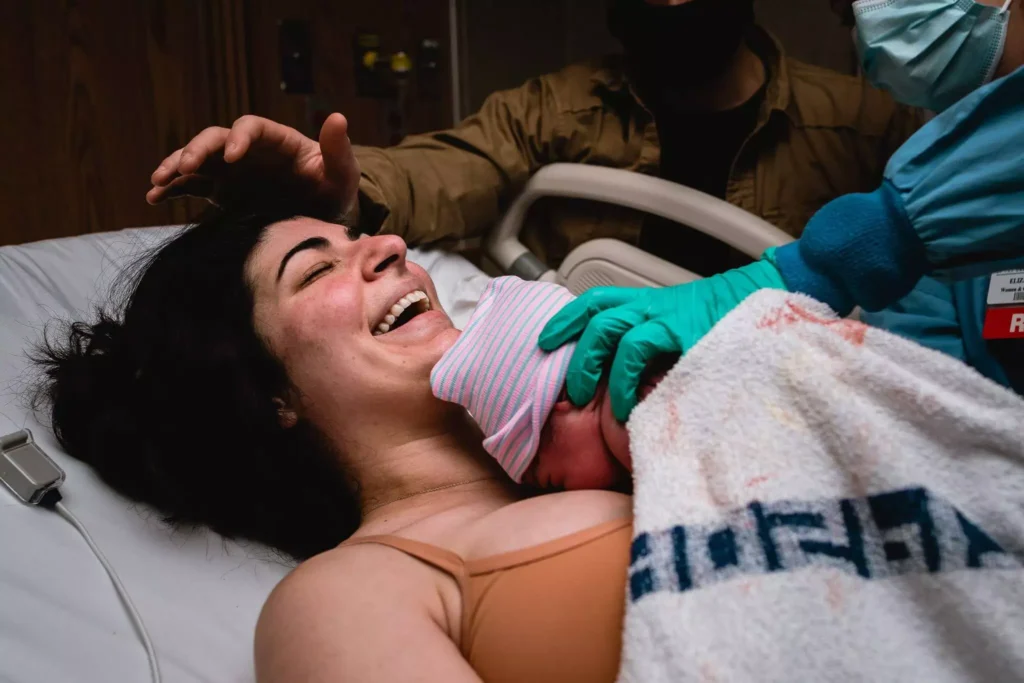

Learn the science of pregnancy and birth to take the mystery of labor away! Understand why you are feeling what you feel, and learn strategies to confidently move through pregnancy and birth!
- 9h+ of Video
- Support Group
- Close Captioning
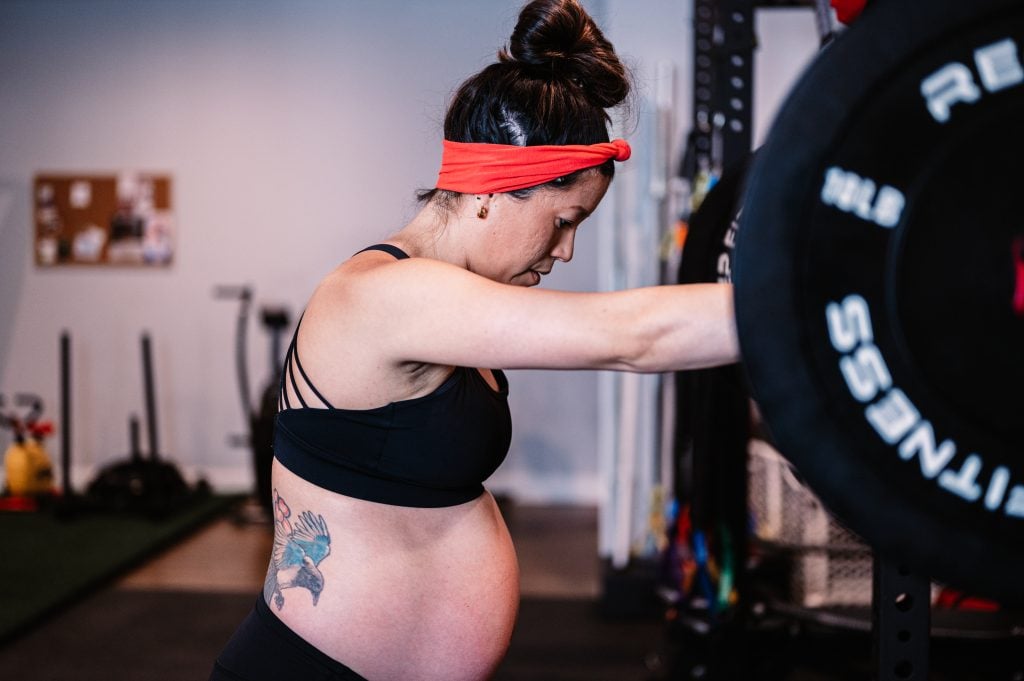

- 5 Workouts/Week
- Gym Workouts
- Self-Paced

Instructor
GINA
Workout on-demand with our prenatal fitness workout videos! Each workout is 30-40 minutes to follow along as you exercise at the same time!
- Birth Prep
- All Trimesters
- Mobility Work

Instructor
GINA
Find comfort and relief from pelvic girdle pain throughout your pregnancy and postpartum period! This program incorporates myofascial sling focused exercises to stabilize across the pelvic girdle joints.
- 3 Weeks
- On Demand Workout Videos to Follow