
Table of Contents
Welcome to the MamasteFit Blog! As you prepare for your upcoming labor induction, building mobility and creating space in your pelvis can have a significant impact on your labor progress. In this detailed exercise blog, we break down a 15-minute workout designed to help improve your Bishop Score—a crucial measure of cervical readiness for labor—and support a smooth vaginal birth. This routine utilizes movements that have actual research backing to increase your chances of a successful induction.
Read on to learn about each exercise, the proper setup, and how the movements benefit your body during pregnancy and labor induction.
Subscribe to our YouTube Channel for more weekly workouts and educational videos! We publish one new workout video and 2-3 educational videos a week on our channel.
What is the Bishop Score and Why Does It Matter?
Before diving into the movements, it’s helpful to know what the Bishop Score is and why it matters. The Bishop Score assesses cervical readiness at the onset of labor induction. It evaluates:
Dilation: How open your cervix is.
Effacement: How thin the cervix has become.
Consistency: Whether the cervix is soft or firm.
Position: The orientation of your cervix (forward, backward, or mid-position).
Fetal Positioning: The position of your baby in relation to your pelvis.
Research suggests that a higher Bishop Score increases the likelihood of vaginal birth during induction. The exercises in this workout are designed to create space within the pelvis, enhance cervical positioning, and encourage beneficial hormonal responses like the release of prostaglandins and oxytocin, both of which can aid labor progress.
Equipment and Setup
Before you begin, gather the essential equipment:
Birth Ball: Provides support and helps encourage proper hip movement and positioning.
Yoga Block: Offers additional stability, especially in positions that require a smaller support surface.
These tools not only assist in maintaining balance and proper form but also support movements that can help optimize the effects of your workout.
The 15-Minute Induction Prep Routine
This workout is composed of a series of moves that target pelvic mobility, side body stretching, hip openings, and overall space creation. Below is a step-by-step breakdown of each exercise segment, along with insights into the benefits and technique involved.
1. Kneeling and Rounding with the Birth Ball
Setup:
Begin in a kneeling position behind your birth ball. Position your knees slightly apart with your ankles touching.
If kneeling is uncomfortable, consider sitting on a supportive pillow or adjusting your position to a forward-leaning stance.
Movement:
Sit back toward your heels. Round your back gently or remain in a more extended position depending on what feels best.
Inhale deeply, allowing the breath to expand your shoulder blades and loosen your back.
As you exhale, engage your abdominal muscles by pulling “baby to your spine”—this movement helps round out your back.
Repeat this breathing and engagement cycle for about 60 seconds.
Benefits:
This maneuver helps increase the flexibility of your back, potentially relieving tension that could impact pelvic space.
Research highlights that regular use of the birth ball during labor can improve cervical ripening, contributing positively to your Bishop Score.


2. Lateral Stretches for Back and Lat Release
Setup:
Shift to a side position with your legs perpendicular to the birth ball.
Place both hands on the ball for support.
Movement:
Push the ball out slightly to stretch your side body and lats.
Gently rock back and forth or side to side to enhance the stretch.
Benefits:
Many pregnant individuals experience tension in the lat muscles. Releasing this tension supports proper pelvic positioning.
The stretch in your side helps create more space in the pelvis for your baby’s descent.

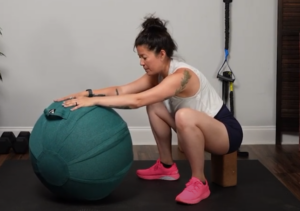
3. Deep Squat with Support
Setup:
Position the birth ball in front of you for additional support.
If maintaining ankle mobility proves challenging, use a yoga block as an alternative seat.
Movement:
Sit back into a deep squat, allowing the birth ball (or yoga block) to support your weight.
Focus on deep breathing, directing your exhale down toward your pelvic floor (perineum).
Benefits:
Deep squatting enhances the opening of your pelvis and supports the descent of the baby into the pelvic cavity.
This position mirrors movements used during labor to promote engagement of the baby’s head against the cervix.

4. Half Lunge Hip Opener
Setup:
Assume a half lunge stance with one leg extended out perpendicular to the ball and the other leg positioned behind.
Movement:
Rock into your hip on the extended side to maximize the groin and inner thigh stretch.
Focus on maintaining a strong, flat-footed base while allowing the hip to open.
Repeat on the other side to ensure balanced tension release.
Benefits:
By targeting the hip flexors and groin, this movement opens the upper mid pelvis.
An open, rotated pelvis can facilitate better positioning of your baby for a more effective labor.

5. Hip Flexor Release
Setup:
From the half lunge position, keep the birth ball handy for support.
Movement:
Tuck your hips under and push them forward, simultaneously reaching the opposite arm overhead.
Lean slightly away to maximize the stretch through your front thigh and side body.
Repeat on both sides.
Benefits:
This exercise counteracts the natural tendency to over-arch the back during pregnancy.
Releasing tightness in the hip flexors is crucial for achieving a rounded pelvis, thereby creating the optimal shape for labor progression.

6. All Fours Hip Shift with the Yoga Block
Setup:
Transition to an all-fours position, placing one knee on the yoga block.
Movement:
Shift your weight primarily over the leg on the block to enhance a stretch in the elevated glute.
Use your arms or the birth ball for added support.
Alternate between arching in the back and dropping the belly towards the floor.
Benefits:
This movement promotes balance and symmetry in weight distribution.
Pelvic tilts in this position stretch the lower back and posterior pelvic floor, areas which can restrict space if left tense.


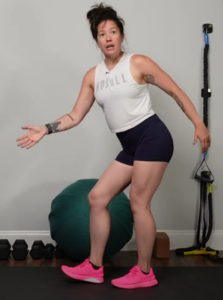
7. Standing Hip Shifts
Setup:
Stand upright with legs parallel and transfer your weight mainly into one leg.
Movement:
Focus on shifting your hips: from keeping one leg fixed, gradually bring the opposite hip forward and then back.
Maintain core engagement and ensure your fixed leg remains stable, supporting the movement.
Benefits:
This dynamic position mimics natural shifts in weight during walking.
It reinforces how upright positions not only aid proper labor mechanics but also contribute to hormonal releases—such as increased prostaglandins and oxytocin—that can help soften the cervix.


8. Moving Hip Shifts
Building on the static standing hip shifts, moving hip shifts introduce dynamic movement into your routine. This variation helps to further integrate hip mobility into your everyday movement patterns, which can be very useful during the progression of labor.
Setup:
Begin in the standing hip shift position with most of your weight on one leg.
Ensure your core is engaged and maintain an upright, balanced posture.
Movement:
Start by stepping forward with the free leg while shifting your weight gradually onto that leg.
As you move, allow your hip on the new weight-bearing side to move forward, initiating a gentle hip shift.
Transition smoothly by stepping forward with the opposite foot, creating a continuous, rhythmic movement.
You can also experiment with stepping slightly backwards to find the position that feels best for your pelvis and groin.
Benefits:
Dynamic Engagement: Moving hip shifts actively work your pelvic muscles while reinforcing the natural rhythm of walking.
Enhanced Flexibility: This motion promotes flexibility in the hips and pelvic region, encouraging further space creation.
Practical Application: Incorporating these shifts during a 20-40 minute walk can replicate the benefits of the static exercises while keeping you active and preparing your body for labor.
Hormonal Support: Like the static version, the upright positioning helps increase the pressure of the baby’s head against the cervix, potentially boosting the release of hormones that support cervical dilation.
9. Integrating Movement into Daily Activity
Walking:
Incorporate both static and moving hip shifts into your daily walks. Aim for 30-to-40-minute walks at a moderate pace, three to four times a week. This consistent activity not only improves your Bishop Score but also prepares your body for the dynamic movements of labor.Benefits:
Regular upright movement supports overall pelvic mobility.
When in motion, your body naturally adopts positions that encourage your baby’s engagement and descent into the pelvis.
Both static and moving hip shifts contribute to balanced weight distribution and muscular release, essential factors for a smoother induction process.
Final Thoughts
The exercises outlined above are not only beneficial during labor but can also be incorporated prenatally to prepare your body for birth. By improving pelvic flexibility and space, these movements help encourage the natural rotation and engagement of your baby while promoting cervical readiness—a key factor in a successful induction.
If you found this routine helpful, consider exploring our online education resources and fitness programs. From detailed workout programs during pregnancy to postpartum exercises that ease you back into fitness, our offerings are designed to support you every step of the way. Use the code YOUTUBE10 on the MamasteFit website for discounts on our online programs.
Remember, every pregnancy is unique. Before beginning any new exercise program, especially during pregnancy, consult with your healthcare provider to ensure the movements are right for you.
Stay active, stay empowered, and best wishes on your journey to a safe and smooth birth!
Additional Resources
Prenatal Support Courses


Learn the science of pregnancy and birth to take the mystery of labor away! Understand why you are feeling what you feel, and learn strategies to confidently move through pregnancy and birth!
- 9h+ of Video
- Support Group
- Close Captioning

- 5 Workouts/Week
- Gym Workouts
- Self-Paced

Instructor
GINA
Workout on-demand with our prenatal fitness workout videos! Each workout is 30-40 minutes to follow along as you exercise at the same time!
- Birth Prep
- All Trimesters
- Mobility Work

Instructor
GINA
Find comfort and relief from pelvic girdle pain throughout your pregnancy and postpartum period! This program incorporates myofascial sling focused exercises to stabilize across the pelvic girdle joints.
- 3 Weeks
- On Demand Workout Videos to Follow