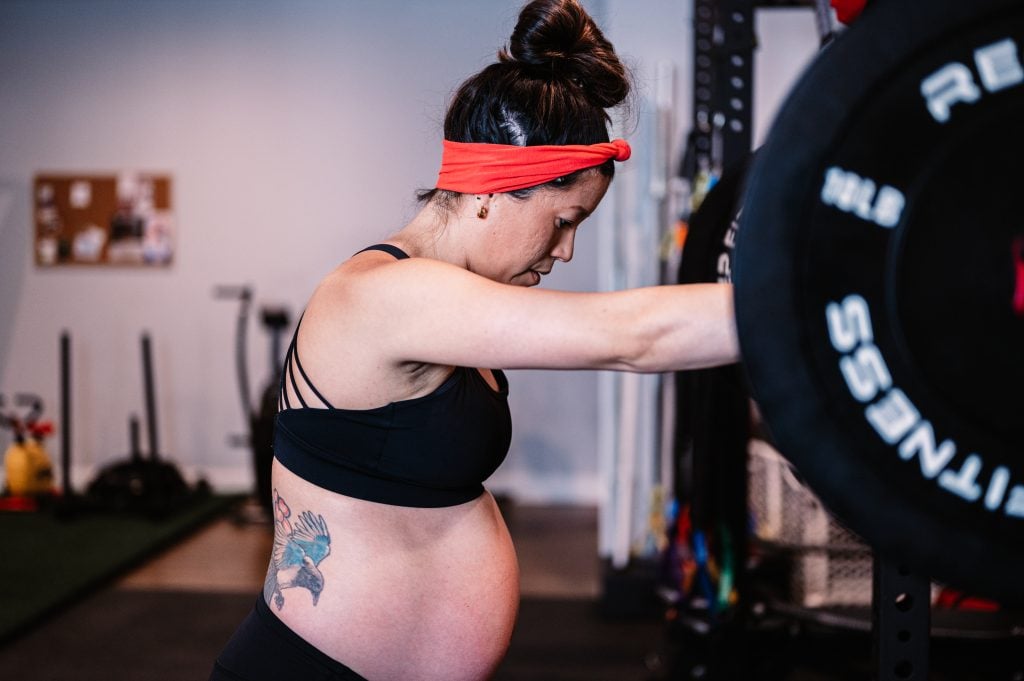
The pelvic inlet is the first point of entry for your baby into the pelvis. As your labor progresses, the goal is to facilitate the baby’s descent and engagement. Creating space in the pelvic inlet is crucial, and two key movements can help: external hip rotation and pelvic tilting. If you’re looking to help your baby engage into the pelvis, whether during pregnancy or labor, you’re in the right place! In this post, we’ll break down some effective exercises to create more space in the top of the pelvis, enabling your baby to navigate more easily through the birth canal.
The Mechanics of Pelvic Movement
External Hip Rotation: This movement involves widening the knees, which allows the pelvis to open up, making it easier for the baby to enter.
Pelvic Tilting:
- Anterior Pelvic Tilt: Arching your back helps change the angle of the pubic bone, facilitating easier external rotation.
- Posterior Pelvic Tilt: Tucking your pelvis under creates space from front to back, particularly in the posterior part of the inlet, helping the baby move into position.
During pregnancy, it’s common for posture to become more arched, which can make it challenging to achieve that posterior position. This arched posture tightens the hip flexors and can push the baby forward, hindering their alignment and engagement.
Exercises to Create Space in the Pelvis
Here are some exercises you can do both during pregnancy and labor to create more space at the top of your pelvis:
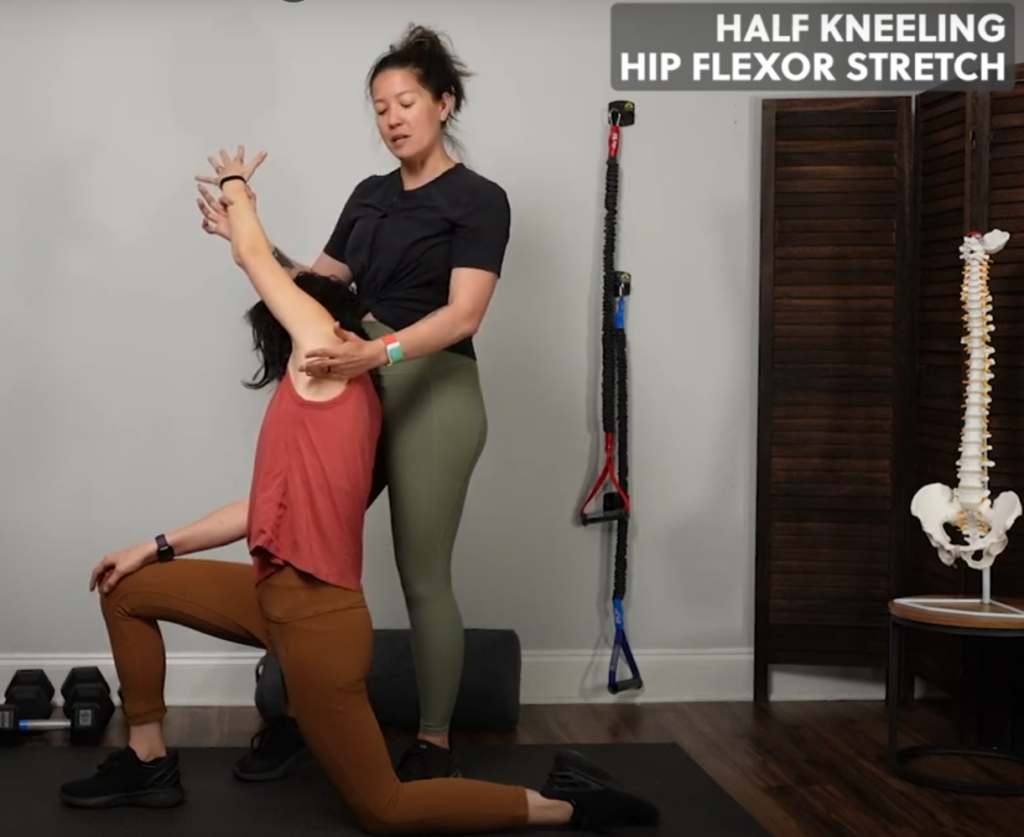
1. Half Kneeling Hip Flexor Stretch
This exercise stretches the hip flexors and the lats, promoting a better pelvic position.
- How to Do It:
- Start in a half-kneeling position.
- Tuck your pelvis under and push your hips forward.
- Reach overhead with the same-side arm, creating a side bend to deepen the stretch.
- Your partner can help by stabilizing you and pulling slightly on your arm to enhance the stretch.
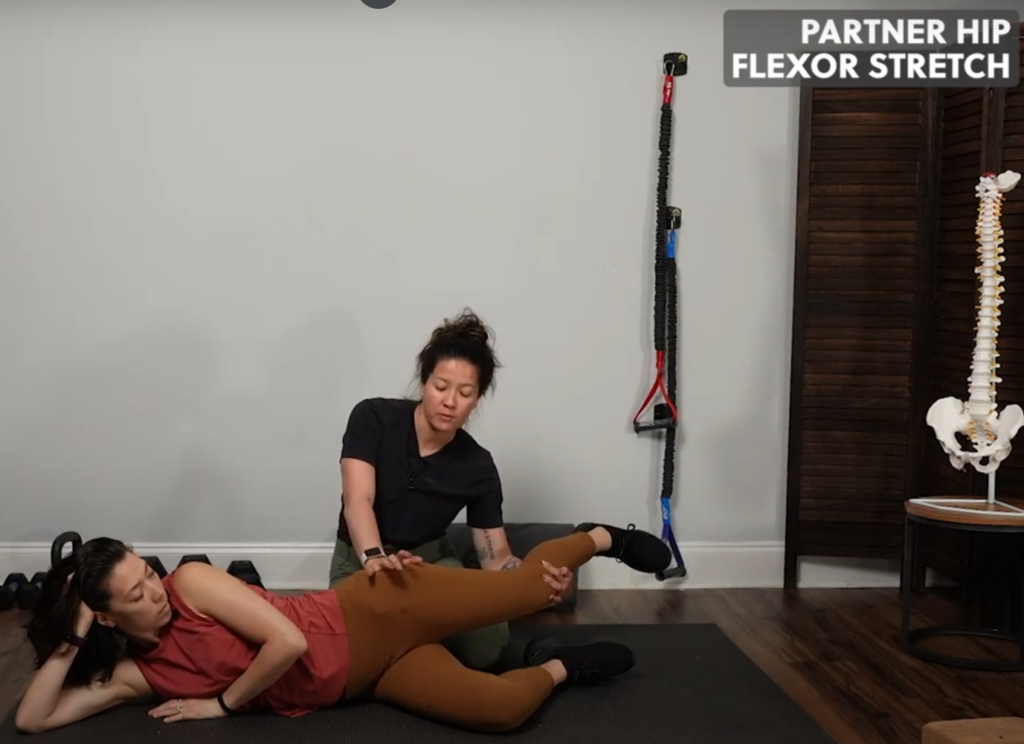
2. Side Lying Partner Supported Hip Flexor Release
Ideal for labor, especially if you’re feeling fatigued or have an epidural.
- How to Do It:
- Lie on your side with your partner supporting your knee.
- Bring your knees closer together and push your hips forward while your partner assists with gentle pressure.
- Hold the stretch for 30 seconds to a minute before switching sides.
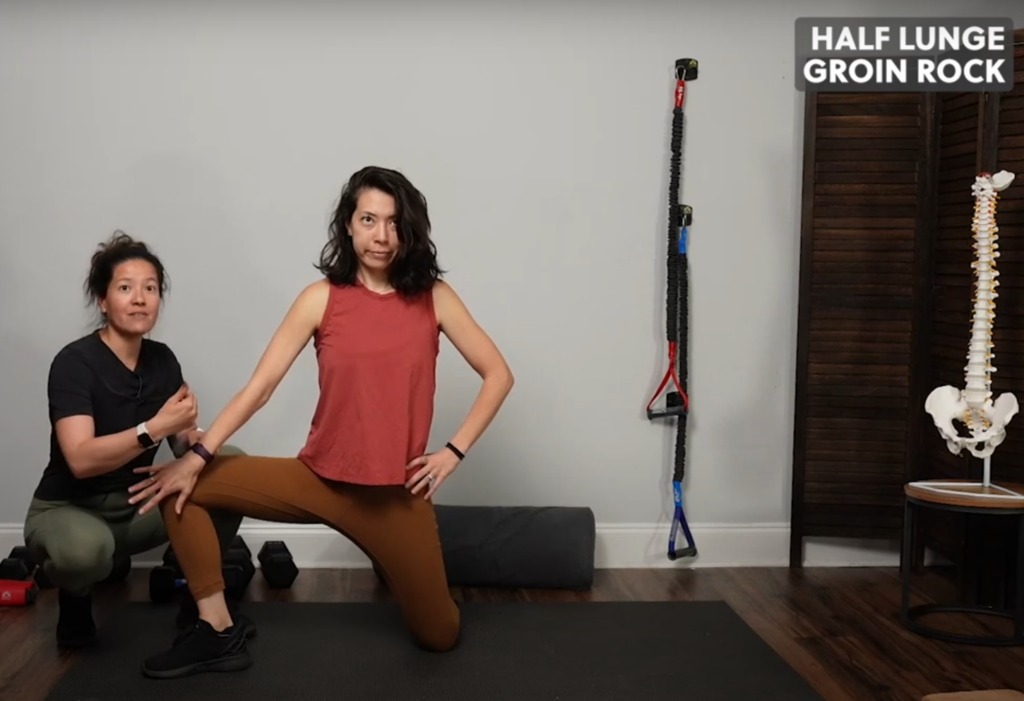
3. Half Lunge Position
This movement helps release the back half of the pelvic floor, allowing the baby to align better.
- How to Do It:
- Get into a half-kneeling lunge position with your right leg forward.
- Press the inside of your knee outwards while putting weight into your big toe to maintain contact with the ground.
- You can rock in and out of this position for a gentle stretch in the upper groin area.
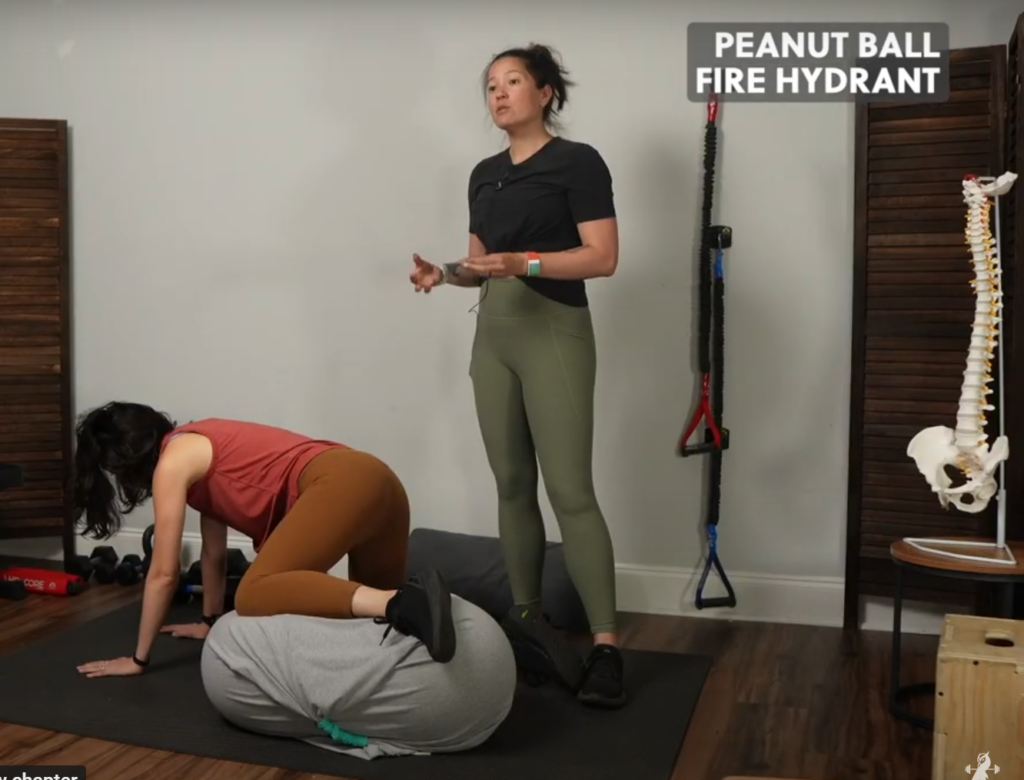
4. Peanut Ball Fire Hydrant
Great for stretching the inner thighs and reducing pelvic floor tension.
- How to Do It:
- If you are able to get into a comfortable upright position on all fours, raise your leg out to the side.
- Use a peanut ball to assist in maintaining an open hip position.
- Your partner can gently support your knee to help deepen the stretch.
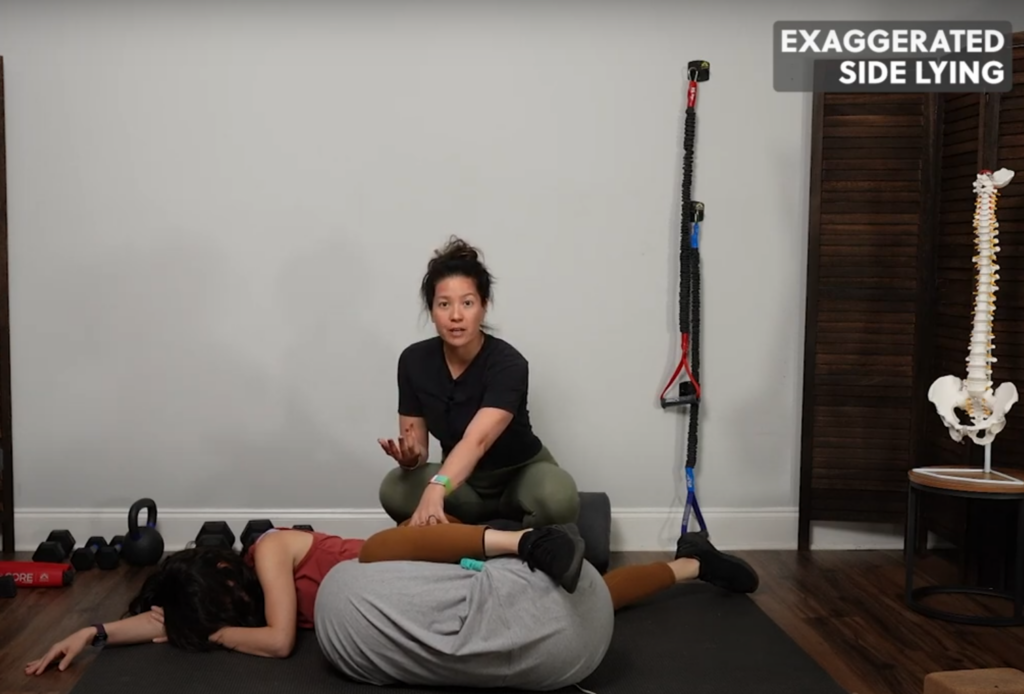
5. Exaggerated Side Lying Position
Perfect for laboring mothers, especially those with epidurals.
- How to Do It:
- Lie on your side with your leg extended outward.
- Use a peanut ball for support, allowing your partner to pull your leg gently to create a deeper stretch in the groin.
- Hold this position for 20 to 30 minutes or until you feel a shift.
The Importance of Pelvic Mobility
Improving pelvic mobility is beneficial not only for facilitating your baby’s engagement but also for enhancing your overall comfort during pregnancy and labor. Some stalls in labor can be attributed to restricted pelvic mobility, which is why incorporating these exercises into your routine can help prepare your body for birth.
Regular movement and understanding the mechanics of your body are essential as you approach your due date. Engaging in these exercises can help you stay strong, alleviate discomfort, and create the necessary space for your baby to engage in the pelvis.
Want More Support?
If you’re interested in exploring more exercises or gaining deeper knowledge about childbirth, consider checking out our online prenatal fitness programs. These include comprehensive workouts designed to enhance mobility and strength during pregnancy. Use code YOUTUBE10 for a 10% discount on any of our offerings.
For a thorough understanding of the birth process, our online childbirth education course delves into the science of labor, offering insights into what you can expect. Bundling this course with prenatal fitness can provide additional savings.
Prenatal Support Courses
Learn the science of pregnancy and birth to take the mystery of labor away! Understand why you are feeling what you feel, and learn strategies to confidently move through pregnancy and birth!
- 9h+ of Video
- Support Group
- Close Captioning
- 5 Workouts/Week
- Gym Workouts
- Self-Paced
Instructor
GINA
Workout on-demand with our prenatal fitness workout videos! Each workout is 30-40 minutes to follow along as you exercise at the same time!
- Birth Prep
- All Trimesters
- Mobility Work
Instructor
GINA
Find comfort and relief from pelvic girdle pain throughout your pregnancy and postpartum period! This program incorporates myofascial sling focused exercises to stabilize across the pelvic girdle joints.
- 3 Weeks
- On Demand Workout Videos to Follow