



In this episode of the MamasteFit Podcast, hosts Gina and Roxanne are joined by Dr. Courtney Johnson, a pelvic floor physical therapist known as the Female Athlete Doc on the internet. Dr. Johnson discusses navigating exercise with pelvic organ prolapse during pregnancy and postpartum, addressing common fears and misconceptions. The conversation covers topics like defining prolapse, appropriate exercises, the use of pessaries, and the importance of mindset and symptom tracking in managing prolapse. Dr. Johnson also shares tips for returning to fitness and the impact of stress and lifestyle on prolapse symptoms. This comprehensive discussion aims to empower listeners to stay active and manage prolapse symptoms effectively and without fear.
Read Episode Transcript
Gina: Welcome to the MamasteFit Podcast. In this episode, we have Dr. Courtney Johnson, who is a pelvic floor physical therapist, going to be talking all about exercising with prolapse, both in the postpartum and during pregnancy. Because this is something that we get a lot of questions and there’s a lot of fear involved with exercising if you have prolapse. Can you even exercise? What movements can you do? But most importantly, how can we progress to a point where we don’t have symptoms and we can be very active in motherhood.
[00:01:18] Gina: Welcome to the MamasteFit Podcast. In this episode, we have Dr. Courtney Johnson here, who is a pelvic floor physical therapist, and you may know her as the Female Athlete Doc on Instagram. And so we’re really
excited to have her here to talk all about exercising with prolapse, both during pregnancy and in the postpartum.
[00:01:35] Gina: So thanks so much for being here, Courtney.
[00:01:37] Courtney: I am so excited to be here. I love talking about this stuff. So I’m excited.
[00:01:42] Gina: Can you just introduce yourselves to our listeners who may or may not be familiar with you?
[00:01:46] Courtney: Yes, absolutely. So I am Dr. Courtney. That’s what I go by, or also just Courtney is cool too.
[00:01:54] Courtney: I am a pelvic floor physical therapist specialist. Been in the field for a little over four years now, I would say, doing both orthopedic and pelvic health kind of, you know, specialties, related injuries, things like that. So, you know, everything ortho is just as much of a specialty as it is pelvic health.
[00:02:16] Courtney: So in terms of what I do now, I’m mostly online. I’m a hundred percent virtual now, I do everything in terms of like kind of coaching aspects, working with people one on one virtually anywhere in the world. And I work with all types of kind of injuries. So pregnancy and postpartum is obviously like a specialty being kind of in the pelvic health world, but I mostly work with athletes. And to me, anybody’s an athlete if they like to stay active, so, that, that’s a very broad category. It can be anybody who’s a powerlifter, crossfitter, runner, orange theorier, or someone who just likes to do yoga and pilates or works out from home, doesn’t matter. I like to treat somebody who is active, or wants to be active, but is limited by their pelvic floor symptoms.
[00:03:04] Courtney: So I love being an educator in this space more, more than anything, because there’s just so much, as you guys probably know as well, being in the birth space, there’s so much lack of knowledge out there, and resources given to women postpartum, especially in terms of returning to exercise. So there’s a lot of fear out there, and I like to try to debunk those things and give people the positive aspects of it all and help them get back into the things that they love doing, you know, symptom free.
[00:03:30] Courtney: So that’s a little bit about me. And then I live in Phoenix, Arizona, very, very sunny and hot here right now. And I have a boyfriend who’s also a physical therapist and we have three dogs. No kids yet.
[00:03:42] Gina: Not yet. Not yet. So can we start by defining what prolapse is in case any of our listeners are not familiar? I feel if people know what prolapse is, they are terrified of what that means. And so let’s start with what is prolapse?
[00:04:00] Courtney: So pelvic organ prolapse is a broad term, just meaning that obviously within the pelvic cavity, you have your reproductive organs as well as the bladder and the bowels. So pelvic organ prolapse refers to that, they’re referring to those organs inside the pelvis. And there’s a lot of risk factors for developing pelvic organ prolapse. But a lot of them, you know, do center around birth and pregnancy and postpartum experiences. And so what happens is when those tissues essentially lose support, whether it’s from the native connective tissue or it’s losing support from their pelvic floor musculature, those organs start to drop in the pelvic cavity towards the entrance of the vagina or the rectum.
[00:04:46] Courtney: And there’s varying degrees or stages of pelvic organ prolapse, and that just depends on kind of your risk factor profile, right? So how many babies have you had? How many vaginal births you had? Do you have a higher BMI, right? What is your lifestyle like? So, there’s different types of, you know, reasons, or whatever you want to call it, how you can develop pelvic organ prolapse. And it’s, it sounds a lot scarier than it is, because when I say “Oh, it can approach the entrance of the vagina or the rectum,” people are like, “Oh my gosh, so these organs can fall out of your body?” And yes, they can fall out of your body, but that is a very, very rare, extreme case. And so basically all it means is those organs shift inside of the pelvic cavity and you might feel it and you might not feel it.
[00:05:33] Courtney: So that’s kind of the most basic definition of pelvic organ prolapse.
[00:05:39] Gina: One of the ways that I will define pelvic organ prolapse, because we get a lot of folks that will DM us, and I’m sure you probably do too, that are like, absolutely terrified that they got told at their like, postpartum appointment, “You have prolapse,” or during their pregnancy, maybe they’ve got told, “Oh, your organs are sitting a little bit different,” and then it creates a lot of fear with whether or not they should exercise, should they have a C section instead? And so we get a lot of questions like, that are really afraid of pelvic organ prolapse. And so the one way that I will usually describe it to somebody is, think about it like looser skin postpartum. Like our bodies are different after we give birth. Like there’s, there’s no like argument about that, but it doesn’t mean that our bodies are less functional or less capable.
[00:06:24] Gina: And so just like how having looser skin may be different than pre pregnancy, it doesn’t mean that it lost its functional capacity and, it’s still skin. It just looks different. And it’s similar with our pelvic organs. Sometimes they just sit a little bit different postpartum and it doesn’t necessarily equate to a functional issue, or symptoms, or problems.
[00:06:45] Gina: But I think a high percentage of us will have some sort of degree of pelvic organ prolapse just because we gave birth and this could also apply both to a vaginal birth and a C section. Like a C section doesn’t quote unquote “save your pelvic floor” because we’ll get some folks that will ask like, “I have a prolapse. Should I get a C section this time so it doesn’t get worse?” And it’s like well, not necessarily. Like a C section is still going to impact your pelvic floor, even though it doesn’t seem like it directly influences it because it’s still a part of the system.
[00:07:17] Courtney: Yes.
[00:07:17] Gina: And so that’s usually how I’ll describe it to folks to really help take away some of the fear, is it doesn’t mean it’s a functional issue, it’s just our bodies are a little bit different after birth. Sometimes our pelvic organs just sit a little bit lower and it doesn’t mean that you’re going to experience all these symptoms that are going to impact your life.
[00:07:34] Gina: So if somebody found out that they had pelvic organ prolapse- which is prolapse, we’ll just call it for simplicity’s sake, just to save me from saying eight words at a time- if someone found out that they had prolapse in their early postpartum, like they went to their six week visit and their provider told them, “Oh, you have a little bit of a prolapse,” what would you say to that person to start? If they came to you and they’re like, “Oh my God, someone just told me I had prolapse. Am I dying?”
[00:08:06] Roxanne: “My organs are falling out of me.”
[00:08:08] Gina: Cause that’s kind of what it feels like. “Oh my God, it’s all over. My athletic career….”
[00:08:15] Roxanne: Yeah. Downward spiral.
[00:08:17] Courtney: You’re not far off from your reaction because most people do immediately feel like that, or assume that their life is over. Because honestly, I think it comes back to the narrative, you know, how they were told, right?
[00:08:30] Courtney: So it depends on who told them, how they were told that, and what was the solution, right? Was it, “Okay, well you should go to pelvic floor PT,” or, “You should go to a, you know, a surgery consult,” or, you know, “You can never lift again.” So it really kind of just depends on what that doctor told them.
[00:08:46] Courtney: And so if they’re coming to me or they’re just somebody, you know, in the street, and I’m like talking to them about it, and they get diagnosed at six weeks, I always just start with a reassurance of: okay, it’s just a blanket diagnosis right now, like six weeks postpartum is still so early. Things are still shifting, things are still moving, things are still kind of going back into a normal space or shape or whatever, and inflammation is high, and if you’re breastfeeding…
[00:09:13] Gina: You mean six weeks isn’t all clear and we’re good?
[00:09:17] Courtney: Exactly!
[00:09:18] Gina: We’re not totally healed at six weeks?
[00:09:20] Courtney: Exactly!
[00:09:21] Roxanne: No. It’s actually eight weeks.
[00:09:23] Courtney: Yeah!
[00:09:24] Roxanne: It takes eight weeks for your uterus to return back to a non pregnant state.
[00:09:29] Courtney: Yep, they’ve found that. Yep. Eight weeks and two days.
[00:09:32] Roxanne: Where did four to six weeks even come from?
[00:09:33] Gina: Oh man.
[00:09:35] Courtney: And 12 hours, exactly. Exactly.
[00:09:38] Courtney: So, six weeks, I’m usually like, “You know what, don’t even worry. Don’t even worry about that right now.” Because, you might have a grade one or grade two diagnosis from what they, if the doctor physically
examines you at that point, but that doesn’t mean it’s the end all, be all. Because, like I said, there’s so many influences, right? Are we looking at lifestyle?
[00:10:01] Courtney: Are you sitting and standing and shushing and bouncing your baby 24/7 your first six weeks, right? To get the baby to calm down, or whatever. Or are you not sleeping? Are you having a really hugely inflammatory diet, right? There’s so many things that go into like your measures of recovery that typically in my response is don’t even worry.
[00:10:22] Courtney: And then I like basically just asked them, “Okay, like just because you’re diagnosed like physically, tell me like internally, what do you feel? Like what symptoms are you having?” And so typically I’ll have them either spill the beans on their symptoms or sometimes they’re like, “Well, I don’t really feel anything I don’t really have any leakage. I don’t have any pressure,” and I’m like, “Then don’t worry! Like I know it can be scary, but let’s just kind of reassess in another six weeks. Let’s try to do some gentle core. Let’s learn to breathe better. Let’s learn to manage intra abdominal pressure. Let’s learn these different strategies And then we can reassess in six weeks and see, kind of where you’re at.”
[00:10:59] Courtney: That’s typically how I kind of trudge those waters. It’s, it’s very muddy initially when you’re first starting out.
[00:11:04] Gina: You gotta get them away from the edge of the cliff.
[00:11:07] Courtney: Exactly. Exactly.
[00:11:08] Roxanne: I mean, it’s even for someone who knows about prolapse, I’ve learned about it in school, like “that a lot of people get it and, just because you have it doesn’t mean, your life is altered.”
[00:11:21] Courtney: Yes.
[00:11:21] Roxanne: When I got told, “Hey, yeah, you have a grade 2 rectocele and your uterus is sitting lower,” I cried for a week. Just in the bathroom. Boo hoo. Boo hoo.
[00:11:31] Roxanne: You still have to go through this like grieving process of what you expected your, one, your body to be in the postpartum, but like your postpartum experience and like dealing with symptomatic prolapse and the postpartum when you’re already like emotionally unstable just from having a baby and being in postpartum. It’s going through this grieving process and also
knowing that it’s okay to cry about it and be upset about it. Because I feel like sometimes people are like, “Oh, just because you have symptoms, you’re only six weeks postpartum. You have so much time to heal and things are going to be better.” But, sometimes you just need someone to be like, “Yeah, this kind of sucks.”
[00:12:08] Courtney: Yeah.
[00:12:08] Roxanne: And, it’s okay to be upset about it, and it’s okay to cry about it, but, this will get better with time and with, the proper therapy.
[00:12:23] Courtney: Oh, absolutely.
[00:12:24] Gina: There’s so many professional resources out there to help. And some simple things, like just taking gravity off the pelvic floor, shifting your posture when you’re standing? How are we like breathing? Like these really simple things that you can do at home can also help to relieve a lot of the tension that you may have, like during pregnancy or during postpartum, if it is related to a prolapse.
[00:12:48] Gina: And so for me, like after my first baby, I was like, “I’m not going to go see a pelvic floor PT because I don’t want them to tell me I have a prolapse because if I have a prolapse, it de-legitimizes me. Like, how could somebody in this space who’s training people during their pregnancy and postpartum have a prolapse?” And it was just because I was inexperienced and I was still learning. And so then I went and I actually didn’t even know, it wasn’t until a few years later that I was looking at my medical records that she had written in there that I had a grade one cystocele. And I was like, what do you mean? Like, why didn’t she tell me that? Here I was thinking like I was great. But it was unsymptomatic. Like I didn’t have any issues with it. And it still stays like a grade one for me, even now on baby number four. And there’ll be moments where I’ll have more symptoms if like, my posture is really off, or like I’m breathing kind of weird, but in general, like I don’t have a ton of symptoms. But I totally understand why people are afraid of it, because I was scared of it. I was like, “If I have it, my world is over. What am I supposed to do?”
[00:13:57] Roxanne: Downward spiral. Organ’s are gonna fall out of you at any given moment, Gina!
[00:14:02] Gina: So what are some things that you do with folks to help them kind of reconnect with their pelvic floor to relieve symptoms that they may be feeling? Let’s say they have been feeling symptoms in that first six weeks time
frame. Or like they’re feeling more symptomatic when they’re returning to their workouts. What are some like simpler things that you could explain verbally? Obviously there’s a lot to it. Like pressure management is, it can be a whole podcast episode. But what are some things that like you would usually recommend to somebody who’s like, “I’m experiencing more heaviness,” or, I’m, I’m feeling like an organ’s falling out,” kind of thing.
[00:14:36] Courtney: Yeah, so, I mean, right away, like you said, obviously pressure management. It can be a lot of that, but the biggest thing that I focus on right away is breathing. Just breath mechanics, so just making sure, especially if it’s a first time mom or a mom with toddlers, there’s not always an easy thing to just be like, “Just sit down and rest, like just relieve pressure.”
[00:14:56] Courtney: Like it’s, you know, you can put them in anti gravity positions. So I recommend that like obviously anti gravity positions and taking rest breaks as much as they can. So if they are somebody who has like maybe first time baby, they might have a little bit more free time, but if you have toddlers running around, it’s not going to be that easy.
[00:15:14] Courtney: So the biggest thing is, breathing. So making sure that as they’re lifting, as they’re doing household chores, moving things around, doing whatever they need to do throughout their day is just making sure that they’re maintaining those breath mechanics, making sure they’re exhaling, not bearing down, not breath holding as much as they can.
[00:15:33] Courtney: There’s like physical garments as well, right? There’s supportive underwear that you can wear to kind of give you that support as you need it. Especially if you are a mom who has, you know, multiple kids running around and you can’t always just sit and rest and take it, take a time for yourself. So, I would recommend that if you have to go back to work early and things like that as well.
[00:15:54] Courtney: And then obviously just teaching regular body mechanics. So making sure we have good ribs over hips alignment, making sure you can at least activate those deeper core muscles or glute stabilizers when you are standing or walking. And then obviously low, gentle, great exercise. So just getting them to lay on the mat and try some deep breathing with some core activation and some glute activation, just trying to get support from the other pelvic girdle muscles, to help feed into support for those pelvic floor muscles that are still healing or are kind of just uncoordinated, right?
[00:16:28] Courtney: I mean, obviously the biggest thing is just the breath, making sure that they can get good range of motion to the pelvic floor, good coordination. Cause you can do kegels and you can do core activation all day long, but if that pelvic floor is not even moving because it’s either tight or uncoordinated, then you’re not going to be doing anything.
[00:16:44] Courtney: So I think those are the first couple of things that I would recommend everybody. And I even, I even recommend people start that kind of stuff, that like gentle activation movement mechanics just in the first week laying in bed. Breath, getting some pelvic floor activation, gentle core engagement. Those are easy things to start, like even week one, as you’re kind of feeling, you know, better and the recovery is not as complicated, you know, obviously depends on the vaginal versus the C section. But those are the, probably the biggest things. And then as they kind of get those small things underway, then you can kind of start really educating what pressure management is so that way they know, you know, if they go back to exercise, if they want to do tedious things around the house, then they’re able to activate the right muscles and make sure that they know that they’re not gonna be bearing down and putting excess pressure.
[00:17:41] Courtney: And then obviously I try to do like a symptom diary too. So have them keep track in their phone in like a notes app and just, you know, on Monday and like end of day, like, “I felt really heavy today.” And then usually I have them do a symptom diary because it brings perspective, and then they can reflect on their day and be like, “Well, I felt symptoms today because I was really active, you know, I moved, I moved out of my house, or I took the kids to the park and I walked three miles, and I haven’t been walking three miles yet, postpartum.”
[00:18:13] Courtney: So I try to like, really do that for more of a perspective thing, and then they’re like, “Oh, okay, I was really active today, that’s why I’m really symptomatic.” And it kind of brings them back down to earth a little bit, instead of having them like, “Oh my gosh, everything I do…” or, “I did nothing today and I was really symptomatic!” So it really helps in that aspect as well to kind of give them ideas and patterns and triggers that can make their symptoms worse that they can maybe avoid or not do as much the next day to kind of get them back into a recovery.
[00:18:42] Gina: Let’s take a break from this week’s episode to talk about our podcast sponsor, Needed.
[00:18:46] Gina: Needed is a nutrition company that specializes in optimizing nourishment for the perinatal time frame. So they’re here to support you from conception, to during your pregnancy, and the postpartum, and their brand that Roxanne and I have utilized during all phases of motherhood. And one of my favorite products from them is collagen.
[00:19:02] Roxanne: Our protein needs increase during not just pregnancy but also postpartum as well, as we’re recovering not just from pregnancy and childbirth, but also breastfeeding a baby. And getting proteins in with just like whole foods can be really hard.
[00:19:16] Roxanne: So that’s why we really like adding in the collagen protein, because it’s an easy way to get additional proteins that’s in an optimal form that our bodies can readily absorb pretty easily. I love that it doesn’t add flavor to whatever drink I’m adding it to, so I can have just my coffee with some protein in it in the morning and it dissolves pretty easily. So it doesn’t leave like clumps within my coffee, which I’ve had other collagens do that and it’s not great.
[00:19:42] Gina: The collagen is also included in their lactation bundle which includes hydration and stress support because one of the things that could be contributing towards some of the symptoms that we experience postpartum is stress.
[00:19:53] Gina: And so the stress support can also be something that could help you as you’re healing postpartum as well.
[00:19:58] Roxanne: So if you want to try out Needed’s collagen protein or grab their lactation support bundle, go to thisisneeded.com and use code MAMASTEPOD to get 20 percent off your first order, or the first month of your subscription.
[00:20:08] Gina: So when it comes to pelvic floor physical therapy, or just physical therapy in general, I think some folks get stuck, and I think some PTs keep folks stuck, on the mat with passive treatments, where they’re, like, I can’t remember what it’s called, but they’re like massaging or they’re doing like the biofeedback and they’re doing clamshells and glute bridges. And then after eight weeks, somebody’s like, “I still have the same prolapse,” or, “I feel great during my PT sessions, but then I go to the gym and I try to squat and I’m like super symptomatic, but I’ve been doing PT for eight weeks, like what gives?” I think I saw a post of yours recently where you’re like, “Sometimes you need to find a new PT.”
[00:20:48] Gina: And so what would, what are some of the things that you would be looking for if you were going to a physical therapist to know that that program is going to help you progress from rehab back to fitness? Because there is like this bridge that needs to be crossed where we’re going beyond like glute bridges and like deep core connection to functional movement again, cause not every PT clinic has a squat rack within their facility. But what are some things that you’re looking for as a PT to know this PT is going to actually help you progress? Cause not every professional is made the same. And I don’t want to say, “Oh, you need to watch out for those PTs that are going to waste your time.” But again, you don’t want to, it’s, it’s expensive, like it takes up time. You don’t want to invest in this like thing that’s supposed to help you get back just to be disappointed. Cause we’ll also have a lot of folks that’ll message us and be like, “I’ve been in PT for six months and I’m still peeing myself” or, “I’m still having the same issues,” and I’m like “Have you gotten off the table?” and they’re like, “No.” I’m like, “There’s your problem.”
[00:21:53] Courtney: Yeah.
[00:21:54] Gina: So, what are you, what are you looking for in a PT?
[00:21:58] Courtney: So typically, what I recommend before anybody ever even gets started, because I obviously get a lot of these questions too, “Do you recommend a PT in my area or know anybody?” And I’m like, I don’t have a huge network of PTs in the world, so I usually just say, “Hey, these are the questions that you should ask, or before you even schedule that initial evaluation, make sure you check, you know, are they present? Not everybody needs to be present on social media, but, a lot of people who are advocates for fitness and health, they’re talking about it. They’re about it, right? It’s either they’re exemplifying it as a person, as a provider. That’s the lifestyle that they live, so they’re going to exemplify that as a, you know, a good example.
[00:22:39] Courtney: But also their clinic and their business. And so I usually always check it out. Make sure that they are, it’s in a facility that, you know, reflects your goals. If you’re a runner, do they have a treadmill in their clinic? If you’re somebody who’s a CrossFitter or a power lifter, make sure that that clinic also has a barbell, for example. I always have them like scout it out. I would recommend like going there, looking, looking on their website, whatever. And then even if you can get on the phone to a receptionist or talk to the physical therapist on your first day or before your first appointment, you know, “What kind of things do you guys do? How can you help me get back into lifting? How can you help me get back into running?” And even if you can’t ask those questions before, then at least your first visit be asking those questions.
[00:23:28] Courtney: And if your PT and your provider is not even asking you what your goals are, you know, “What do you want to do in six months? What do you want to do in four months, two months?” whatever, like red flag, immediate red flag. And, and sometimes it’s okay. Like you might not even have ideas or your goals in mind. Maybe you’re six weeks postpartum and now you’re diagnosed with prolapse and you’re like, “I, I don’t know, can I even do those things anymore?” so your goals might shift, but at least have an idea in your mind of who you are as a whole, what brings you joy and what do you want to at least be able to get back to, even if it looks a little bit different.
[00:24:01] Courtney: So at least having somebody to be able to ask you your goals and then walk the walk, right? Like I already mentioned, make sure that provider, like if your provider is not doing those things, then they’re probably not going to have you do those things. So I usually just like kind of put those in front of them and you know, “Hey, like these are the things that you should look for.” Because probably before physical therapy works, you know. There’s a time and a place for table exercises and mat exercises, but you should progress off of that very, very quickly depending on how symptomatic you are, because life is not meant to be laying down. And so if you can’t get off the mat, at least in your first week or second week and maybe do some standing exercises, then that’s usually when I’m like, all right, yellow flags, red flags, let’s pivot. Let’s move to another provider because you need to find a provider that works for you and like the goals that you have and can get you back into those things. Otherwise, you’re going to be spinning your wheels, like you mentioned, like in it for eight weeks, in it for six months, and not seeing any progress.
[00:25:03] Gina: And that’s like a lot of time and money, too. Physical therapy is not necessarily free. Even if you have it covered by insurance, there’s usually like a co pay or something that you’re still paying, and then the time commitment to actually go. Or if you’re seeing a cash based PT…
[00:25:18] Roxanne: Which I think a lot more PTs are going towards cash based and then you submit for reimbursement, because like it’s just so much easier for them, I’m sure. But that’s just like extra steps that you have to take as like the patient, so definitely finding a PT that gives you the most bang for your buck is beneficial.
[00:25:38] Roxanne: What about like someone who like, maybe their prolapse is to the point or like they can’t just figure out the engagement with their PT and maybe a pessary is beneficial for them to be able to return back to fitness a little bit more at the level that they’re wanting. What are things that they should look for that would be a sign like maybe a pessary is a great step for them to not be
able to like use, like maybe they can get to the point where they don’t even need to use it anymore, but like I know for myself, I saw PT for three or four months with no progress, like I couldn’t move off the table because I would be like instantly symptomatic when I would do like a squat with any sort of weight. Once I added weight, it was like instant symptoms. So she was like, “You should get a pessary because we can’t advance these steps without you feeling symptomatic,” and the pessary was, like, a great thing, and I ended up not even needing it for, after six months, I was like, I don’t even need to wear it anymore.
[00:26:40] Roxanne: So, what are signs that you would look for as a PT to be like, “Hey, maybe, a pessary would be a great tool for you to be able to get back to the level of fitness that you’re wanting?”
[00:26:49] Gina: Can you explain what a pessary is?
[00:26:51] Roxanne: Oh, yeah.
[00:26:52] Courtney: In general, pessary is just, a little silicone kind of, what’s the word I’m looking for, device, I guess, that you can place inside the vaginal canal to support the pelvic organs depending on what type of organ is prolapsed. If it’s the anterior wall, posterior wall, or like the uterine, the uterus, then you might need a different type or shape of pessary that can provide that support.
[00:27:18] Courtney: So it’s almost like you want to think of it like almost like a tampon, but some pessaries are removable, where you can take them in and out daily, and some pessaries you get put in by an OBGYN and then they stay in and then you go and get them in and out as needed and cleaned.
[00:27:35] Courtney: So great question because I see this a lot. A lot of times I recommend them. I don’t, I’m not anti pessary at all. I think that they have a very nice time and place and for your situation specifically, if you are unable to progress to gravity positions without feeling symptoms, or even anti gravity positions without being symptomatic, then it might be an option for you.
[00:28:02] Courtney: However, I always recommend when you start using one with exercise, it’s almost like obviously a last resort kind of thing. You want to try to do everything you possibly can to try and co contract or do whatever you need to do to feel pelvic support and not feel as many symptoms. But in terms of wanting to get back to CrossFit, for example, or Orange Theory, like those very dynamic fitness classes, I recommend them. If that’s your goal and you’re 30 years old and surgery is not even on the table for you right now, let’s wear it
for sure. But I always try and have them rehab without it as much as they can, unless it’s like a fitness class or something.
[00:28:44] Courtney: But then again, if someone’s really symptomatic, and that’s why I like to do coaching now is because I can make them their rehab fitness plan and they can just do that instead of going to a fitness class because then they can get their exercise in a way that’s kind of like programmed for them. And so I always recommend obviously a specific program so that way you can work on certain areas of your body but also still feel that athletic piece in your mind. And so, let’s try to do that without a pessary, and if you feel symptomatic- this is also where the symptom diary comes into play too, because then you can know what actually causes a lot of your symptoms, you know, are you not recovering the day before? Did you sleep poorly? All those metrics. And then, you know, if a day you’re having a lot of symptoms because two days ago, or maybe you had a busy weekend or something, then put the pessary in and go to your workout class. Right? So I think they have a time and a place, especially for women who have more severe grades who are not candidates for surgery, being that they’re young, maybe they have young kids, and maybe they just don’t want it. So I’m, I think it’s a great option, but I really think it needs to be very specific. It needs to fit you, it needs to be, you know, supportive, and it shouldn’t be one that’s going to make the prolapse worse, for example.
[00:29:59] Courtney: You know, there’s a lot of pros and cons to having certain types. And so, you know, I think it’s a great thing to have, but I don’t think it’s, you know, somebody should be reliant on it either. So, kind of up and down on when to use it, I guess.
[00:30:13] Gina: Sounds like it’s a good tool to help someone not be symptomatic so they can build the strength around to where they don’t need it anymore.
[00:30:20] Gina: Because sometimes that’s the problem, it’s not that you don’t have the coordination or you don’t have the capability, it’s just that the muscles surrounding are just not strong enough yet and we just need that little bit extra support.
[00:30:33] Gina: And so one of the other things that I hear a lot in regards to strengthening is you should never lift weights when you have a prolapse?
[00:30:41] Roxanne: You can’t lift anymore.
[00:30:41] Gina: You can’t lift weights. Your active lifestyle, gone.
[00:30:43] Roxanne: Lifting is what’s causing your prolapse.
[00:30:45] Gina: However, I do think there’s research that supports like lifting weights and increasing the demand on the body- and this applies to diastasis and other kind of postpartum related, like for lack of a better word, issues that people are concerned about.
[00:30:59] Roxanne: Dysfunctions.
[00:31:00] Gina: Like when you start lifting weights and increasing the demand, your tissues get denser and stronger and oh, surprise, your diastasis begins to heal, your prolapse becomes better because the muscles are finally strong enough.
[00:31:14] Gina: How would someone approach, obviously this can be a whole podcast episode too, but how would someone approach like beginning to lift again postpartum if they’re concerned about their prolapse?
[00:31:25] Gina: Let’s say they have a symptomatic or they don’t have a symptomatic one, which I know there’s would be two different situations, but how would you generally approach reintroducing lifting to somebody? Because I am a firm believer that you can still have a very active lifestyle with a prolapse.
[00:31:42] Roxanne: I mean, obviously we are.
[00:31:43] Gina: Yeah.
[00:31:44] Courtney: You know, progression of anti gravity to gravity. So doing those types of exercises from the mat and then, you know, making some type of modification or advancement of that exercise to standing. And then, you know, adding, as you progress, you want to be able to add weight. So I always recommend, very rarely am I starting somebody who’s acutely prolapsed diagnosis without any resistance. It’s very rare. I’m usually trying to have some type of ball squeeze, some type of band, even if it’s a very light resistance band, maybe it’s 2 pounds, it’s 5 pounds. I try to get resistance in their hands as soon as possible because we know, like you just mentioned, as tissues get denser, as they get stronger, you obviously need to progressively overload those muscles, we know that that helps. Symptoms do get better.
[00:32:40] Courtney: And so I try to, at least if they’re laying down, I’m like, okay, let’s try to put a resistance band around the knees or something. Let’s try
to engage those glutes a little bit more. Try to engage the core a little bit more. If they’re very, very, very symptomatic. Like I still try to get as much activation as possible, because we know that muscular activation can help. If we’re just constantly stretching, mobilizing, things aren’t actually going to get better.
[00:33:03] Courtney: And so typically I usually go like resistance bands to dumbbells, kettlebells to the barbell. Like I’ll never put somebody under a barbell if they can’t even do anything upright with their body weight, too.
[00:33:15] Courtney: And I also want to mention, I feel like time under tension is one of those, like body weight time under tension is one of those concepts that’s like often overlooked too. People are like, “Oh, we just got to rush to the barbell, rush to the dumbbell,” or whatever. But muscles, don’t know load, they don’t know anything, but time under tension. And so if you can do like a five second tempo squat, you know, that can be equivalent to holding a 20, 30 pound dumbbell and going fast up and down.
[00:33:47] Courtney: So I think that there’s a time and place to add like barbells and dumbbells and things. But I also can, you can also manipulate the muscles in a really good way by just doing time under tension and tempo and things like, and body weight. Because a lot of times too, people can’t even do their body weight before you even add a barbell.
[00:34:06] Courtney: So, my recommendation is always try to get resistance in their hands as much as you can, with the symptom diary. And always tread that, you know, with caution, but don’t be afraid to load because we do know that load is okay and If you have symptoms the next day, that doesn’t also mean that you made it worse. You could also just be experiencing pelvic floor muscle DOMs, right? Pelvic floor muscle fatigue and that kind of thing, because we do know that muscles get sore when we work them. And so, not all symptoms are bad symptoms, as long as the symptom diary shows that we are having less and less over time, or your recovery is shorter in between each session, like we can’t be afraid of symptoms.
[00:34:57] Courtney: And I think there’s just a narrative out there that like, if you squat and you feel heaviness, like you’re done, like you can’t do anything. And it’s that’s also fear mongering. And I don’t think that’s okay either. So like today I posted a reel that was like, “You’re still an athlete, even if you have a little bit of leakage when you run, it’s okay. We can’t expect everyone to be a hundred percent symptom free.” And so that’s the biggest thing that I recommend is like the symptom diary, making sure that we change the narrative of “Hey, you might feel a little bit of heaviness,” or it’s like deadlifting and you
have back pain the next day, and it’s, “Oh shoot, I hurt my back.” And it’s like, “No, you just worked those muscles.” So I feel like you got to tread it lightly, but don’t be afraid to load when it’s appropriate to still load. So that’s my soapbox on that though.
[00:35:42] Gina: Yeah, absolutely. I think that’s, that’s a really good point about the pelvic floor DOMs, too.
[00:35:48] Gina: Because even for me, so I have a little bit more, SI joint pain during my pregnancies, shortly after I’m done with the workout, I’ll usually feel a little bit of tweakiness, and there’ll be a moment where I’m like, “I’ve ruined everything. I am broken.”
[00:36:02] Roxanne: “I messed up!”
[00:36:03] Gina: “My workout made it worse!” And then I’m like, “No, my workout didn’t make it worse. I’m just tired right now because I just finished an hour long workout. My body is I’m a little fatigued.” Because that’s normally when I have more symptoms, is when I’m fatigued. And then the next day, or later in the day when I’ve rested, I’m like, “Oh, I feel great. It’s okay, never mind. Forget everything I said, guys. I’m good. I’m good.”
[00:36:26] Roxanne: Well, even that, I would go see my pelvic floor PT, and we would discuss this in my postpartum. But, like, when I started adding more weights to my deadlifts and my squats, I would have back soreness where like my whole core was sore, but like my abs in the front, I didn’t feel it as much as I would in like my actual back muscles. And so she would always be like, “So is your back hurting? Or did it feel sore?” And I was like, “Oh yeah, it did go away after a little bit. It’s probably just because my back muscles haven’t done this in a while.” That’s why I had that like tweakiness. She’s like, “Yeah, you’re just strengthening the muscles.”
[00:37:08] Gina: You’re just tired.
[00:37:09] Roxanne: And so like my pelvic floor heaviness I would never feel during the back squats or during the deadlifts, but it’d be like at the end of the day, I’d be like, yeah, I had a little heaviness at the end of the day. And that makes so much sense because like my pelvic floor was like, “Wow, we lifted a lot today. I’m really tired, can you sit down?”
[00:37:28] Gina: It’s like, “I’m a little sore.”
[00:37:29] Courtney: “What is this? Come on, you just worked me!”
[00:37:31] Roxanne: “Let’s relax now, guys.”
[00:37:32] Gina: But it is really easy to get scared of symptoms.
[00:37:37] Courtney: Especially because if your heaviness that you feel after a workout is similar to the heaviness that you feel like when you first started, if it’s the similar feeling, then I feel like people are like, “Oh, no, it just made it worse. Now I just need to stop.” And it’s like, well, if you stop, then you’re moving in the opposite direction. You’re moving the needle opposite. You’re deconditioning your pelvic floor even worse. So it’s like if you don’t do anything, not good. If you do too much, might also not be good, but it’s also okay. Tread it lightly, symptom diary and, and move on. So it’s so important that PTs, trainers, coaches, whoever’s working with the pregnant, postpartum women, or none, you know, nulliparous, like it’s okay. Just make sure that you can still do these things. Like just make sure that you’re being educated on it. And it helps you. Gives you confidence.
[00:38:29] Roxanne: That just makes me think of the Parks and Recs quote where it’s like, “Undercook, overcook, straight to jail.” You can do both.
[00:38:39] Gina: So let’s finish up talking about pregnancy with prolapse because we get a lot of folks that are really anxious about they found out that they had a prolapse and then they found out they were pregnant and they’re like, “Oh no!”
[00:38:52] Roxanne: “What am I gonna do?”
[00:38:53] Gina: Which, it feels like that’s kind of like the theme of prolapse is, “My life is over.”
[00:38:58] Roxanne: Yeah. I swear, as soon as I got pregnant. I think I was like finally asymptomatic for one or two months, I didn’t need my pessary, I could run, and I could lift without any issues, and then, one or two months later, I was pregnant, and I was like, “Oh, shoot.”
[00:39:15] Gina: Throw her in the trash!
[00:39:16] Roxanne: I googled so hard. I was like, “Can you have a vaginal birth with prolapse?” I was like, “Or will prolapse cause labor dystocia?” I think that was literally my Google Scholar search, which was like, “will prolapse,
could prolapse cause labor dystocia?” Verbatim. And zero, zero evidence to support it.
[00:39:38] Roxanne: But I was just, I was like, it’s going to get in the way. My prolapse is going to get in the way of the baby from coming out.
[00:39:45] Gina: So what are some of your like top tips for somebody that is pregnant and has a prolapse and is terrified of everything?
[00:39:53] Roxanne: Roxanne, 2020.
[00:39:55] Courtney: Yeah, don’t do what she did. Don’t Google everything.
[00:40:00] Courtney: And I even have women like question if prolapse will cause infertility. And I’m like, no, no, no, no, no, no, no, no, no, there’s nothing about that either. And they’ll start Googling that. Or they’re worried that the next time they’re pregnant, like you’re mentioning.
[00:40:16] Courtney: So a lot of it comes down to just being aware, making sure that the narrative that they’re telling themselves is correct. So you know, there’s not a lot to worry about at this moment. These are the things you need to focus on. Pressure management strategies, right? Are we connecting with the breath? Is the pelvic floor moving? Do we know how to activate the deep core? If we can manage everything as much as possible, you can try and manage your symptoms as much as possible. But being fearful of getting pregnant again because you have a prolapsed diagnosis? Listen, I have this, she’s a past client, she has seven babies. She’s on her eighth baby, and she had her pelvic floor completely collapsed. No surgery. Treated her after her seventh baby, for, I think we were together for four months, and completely asymptomatic. She went from having like severe pelvic heaviness, everything was very symptomatic for her, and then she was like, “I don’t want to get pregnant again, but I want an eighth baby,” and I was like, “Eight babies, that’s a lot of babies!”
[00:41:22] Courtney: But, she did it. And she’s pregnant now, and she’s due in October. And she just is so mindful of her symptoms that she’s like, “My biggest trigger is stress. I only feel my heaviness when I’m stressed and my kids are yelling at each other and yadda yadda yadda.” She’s like, “I do my stretches, I do my exercises daily if I can.” She’s got like a little 15 minute routine. So I usually tell people that, I’m like, let’s find, if you’re symptomatic during or going into pregnancy, or if you’re like, yourself where like your symptoms got better and then you got pregnant and then they came back, I would kind of
recommend like a little 15 minute daily routine, if you can get it in, to try and keep your symptoms at bay.
[00:42:07] Courtney: And then also just be mindful of your triggers, like a symptom diary, again. So what makes your symptoms come back? Is it stress? Do you hold tension in that pelvic floor? Is that when you start to feel that heaviness? And obviously during pregnancy, like kind of, anything can kind of make you feel stressed, especially as baby’s approaching or you have three other babies, seven other babies running around there’s a lot of things that can influence your lifestyle which can influence your symptoms.
[00:42:32] Courtney: So in terms of delivery process like leading up to that I would say the biggest thing you’d want to focus on would be pelvic floor relaxation. Making sure we can open up the pelvis to let the baby descend into the cavity, right? Doing as much as you can within your control to be able to prepare, but try to also work on your mindset.
[00:42:52] Courtney: Because if you fear that you’re going to make your, or your delivery process is going to be impaired because of the prolapse, or you’re going to make the prolapse worse, like you’re probably going to make the prolapse worse by thinking about it, making it worse. Like the more and more you believe something, the more and more it’ll happen, right? So there’s a lot of mindset kind of things that I usually also recommend women working on and helping them kind of see and feel and notice the physical sensations of their body like will always be up and down through pregnancy, but if you can learn to manage it and control what you can control, then I think that there’s no fear around it. I mean my client, like eighth baby and a pelvic floor like collapse? If she can do it, I think anybody can do it and she’s hoping for an eighth vaginal birth. So it’s possible
[00:43:41] Gina: That’s amazing. Eight babies is a lot, but still very impressive, still very impressive.
[00:43:47] Gina: But I think the mindset aspect when it comes to rehab is so huge, and I think something that’s like usually overlooked is we’re always very focused on what exercises can I do, what physical thing can I do, but also the mindset approach to it is so benefical. When I’m more stressed, I’m definitely more clenched and that’s going to increase symptoms for me as well because a tight pelvic floor is symptomatic as well. So, yeah, the mindset thing I think is huge.
[00:44:15] Gina: The symptom diary, I think, is really beneficial as well just to bring so much awareness to, “Okay, what type of activities am I doing that is contributing towards more symptoms for me? Is there a way that I can modify those so that I’m not symptomatic? But also I had a more active day, I’m gonna probably have a little bit more symptoms because of it, because I’m fatigued, I’m sore, I’m tired.”
[00:44:38] Courtney: Perspective, yes.
[00:44:39] Gina: Heaviness or soreness, doesn’t equal loss of function. It could just be like when your legs are a little bit more sore and you’re having a hard time sitting down on the toilet, you don’t go, “Oh my God, my legs are never gonna work again!” You’re just like hanging on to it as you try to sit down.
[00:44:59] Gina: But yeah, so thank you so much Courtney, for coming on the podcast and talking all about prolapse. I know that we can have a very long conversation.
[00:45:06] Roxanne: Just keep talking about it.
[00:45:07] Gina: About each of these individual topics.
[00:45:09] Courtney: I know, I could talk all day.
[00:45:09] Gina: Where can our listeners find you and learn more from you?
[00:45:16] Courtney: Instagram is probably my biggest platform. I would say it’s where I post the most amount of content. So Instagram, my handle is @thefemaleathletedoc, DOC. And then same thing for my website. I have a TikTok and a YouTube and that’s the same handle across all social platforms. I’m just not as prevalent on those other platforms. I try to be, but. Balance. Life is balance. So that’s probably the biggest thing.
[00:45:42] Gina: We really just kind of repost stuff to other platforms too, so I feel ya.
[00:45:46] Roxanne: TikTok’s hard.
[00:45:47] Gina: It is.
[00:45:48] Courtney: And I just actually started, if you guys are familiar with Skool, I just started a pelvic wellness academy, which is an educational platform, kind of like courses and a group coaching platform, where they can come and learn, take different courses about leakage and pelvic floor tension.
[00:46:06] Courtney: I have a prolapse course that is being made like right now. So it’ll launch in a couple of months. So it’s more of an educational kind of thing where if you’re not getting the educational resources, whether it’s from Instagram or Google or your doctors, like they can come and learn and take a course on how to, you know, get back into things or treat their leakage from home. And so that’s another thing that I launched a couple months ago that I’m super excited about.
[00:46:31] Roxanne: That’s awesome.
[00:46:31] Gina: Oh, that’s really awesome. I think like a big aspect to a lot of this recovery postpartum and managing a lot of this during pregnancy is the education aspect. And when you can understand how certain movements are beneficial for you and how they can help you, it’s so much easier to apply it. Because I think people are smart and they’re like resilient and able to kind of figure that stuff out. But it’s much easier when someone presents it to you and then you can then apply it to your individual situation. So that’s really awesome that you have an online platform for people to learn more from. And they can also do one on one virtual consults and support with you as well as a PT.
[00:47:07] Courtney: Yep!
[00:47:07] Gina: Alright. Awesome. Well, we’ll be sure to link your website and your social media platforms down in the show notes below. So for those of you that are listening, and you’re like, “I want to learn more from Courtney,” definitely check that out.
[00:47:19] Gina: Thank you so much for joining us on the podcast. We really appreciate your time and your expertise and everyone be sure to go follow her on Instagram because she’s got a lot of really great content there as well.
[00:47:28] Gina: So thank you so much, Courtney.
[00:47:29] Roxanne: Thank you.
[00:47:30] Courtney: Thank you guys. This was amazing. Thank you for having me.
[00:47:36] Renee: Hey guys, so my name is Renee. I’m a certified nurse midwife and I wanted to go ahead and tell you guys about some of my friends that work over at MamasteFit. They are an amazing company. They are amazing at focusing on everything from the perinatal area, so that’s from before you get pregnant, trying to conceive, that’s while you’re pregnant, that’s postpartum.
[00:47:53] Renee: They are amazing in helping you with fitness, pelvic floor balance, pelvic floor therapy, good exercises. How do we balance your pelvis to get you ready and more acclimated for a safe and healthy labor? They have birth bundles, they have classes, they have so many different things and so many resources that you can use if they’re not local to you. And you can actually print them off and give them to your birthing team so that we can help take better care of you.
[00:48:17] Renee: So I just wanted to let you guys know that I highly endorsed them. And I am so honored that they allowed my humble opinion to be a part of educating you and I hope that you understand how amazing that they are.
[00:48:28] Renee: So thank you guys so much at MamasteFit. I absolutely love and adore you guys. Thank you for helping me help birthing people come in, deliver beautiful, healthy babies, and truly enjoy a great balanced, amazing birth story. I really appreciate you guys.
[00:48:50] Gina: Thanks so much for listening to this episode. If you want more support during your pregnancy and in your postpartum, cause we get this question a lot- “Do you have a prolapse friendly program for me?” Join our online prenatal and postpartum fitness programs. With our fitness programs it includes an education course on how to approach exercise in both phases of life, because it’s not just what exercises you do, but how you do them that could really impact the symptoms that you may be feeling, and help you to recover and move confidently throughout pregnancy and the postpartum.
[00:49:19] Gina: You can check out all of our online fitness programs on our website at mamastefit.com and use code STORY10 to get 10 percent off any of our online programs, and you can bundle them with childbirth education or with our postpartum education course to save an additional 15 percent off.
[00:49:34] Roxanne: This podcast is sponsored by Needed, a nutrition company focused on the perinatal time frame that both Gina and I have utilized during our pregnancies, postpartum, still to this day, and we really love the company. And if you want to try them out, you can head to thisisneeded.com
and use code MAMASTEPOD to get 20 percent off your first order or the first month of your subscription.
Additional Resources
Find Courtney here:
Website: www.thefemaleathletedpt.com
Instagram: @thefemaleathletedoc
Online Education Platform: The Pelvic Wellness Academy (skool.com)
Prenatal Support Courses
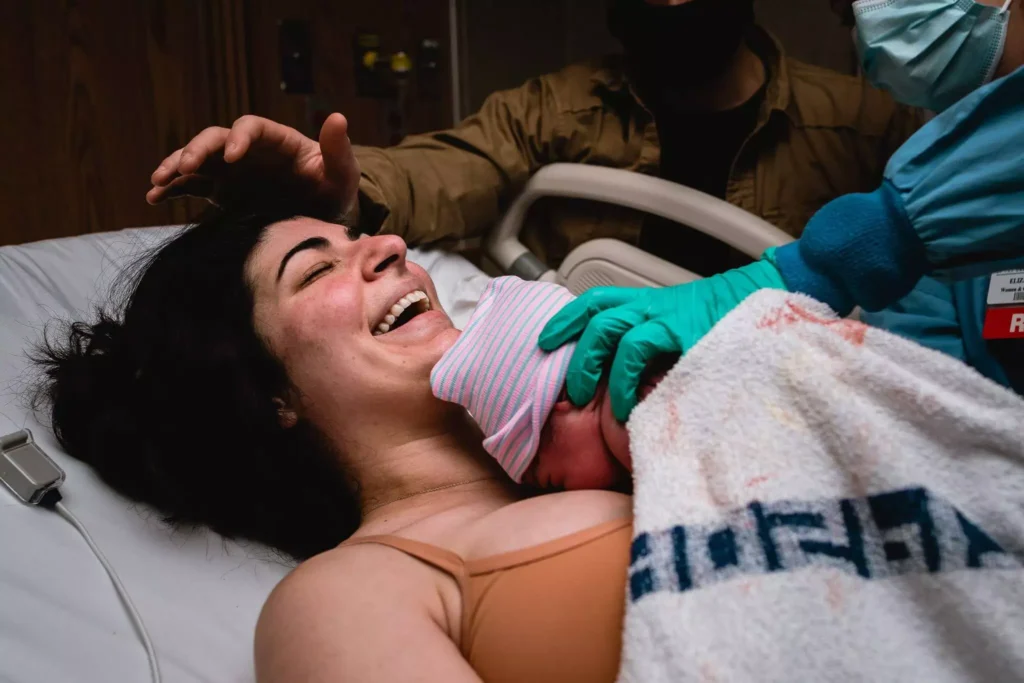

Learn the science of pregnancy and birth to take the mystery of labor away! Understand why you are feeling what you feel, and learn strategies to confidently move through pregnancy and birth!
- 9h+ of Video
- Support Group
- Close Captioning
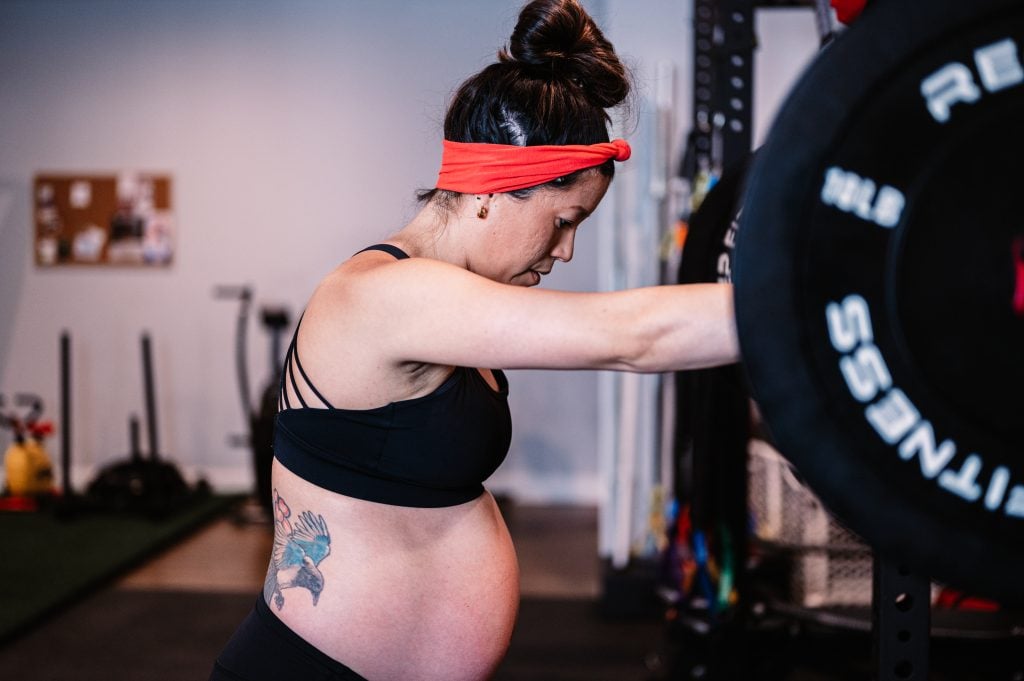

- 5 Workouts/Week
- Gym Workouts
- Self-Paced

Instructor
GINA
Workout on-demand with our prenatal fitness workout videos! Each workout is 30-40 minutes to follow along as you exercise at the same time!
- Birth Prep
- All Trimesters
- Mobility Work

Instructor
GINA
Find comfort and relief from pelvic girdle pain throughout your pregnancy and postpartum period! This program incorporates myofascial sling focused exercises to stabilize across the pelvic girdle joints.
- 3 Weeks
- On Demand Workout Videos to Follow