



Welcome to the MamasteFit Podcast! In this episode, Gina and Roxanne welcome Faith to share her comprehensive journey into motherhood. Faith recounts her unique conception process using a known sperm donor due to her partner’s genetic condition, leading to pregnancy after multiple attempts. She details her active pregnancy, preparatory measures for a home birth, and the intense yet empowering birth experience that saw her son born on HER birthday! Faith also highlights her challenging postpartum journey, dealing with mastitis, breastfeeding difficulties, and a prolapse diagnosis while emphasizing the crucial support from her family and healthcare providers. The episode underscores the importance of trusted support systems, preparation, and open-mindedness in navigating the perinatal period.
Read Episode Transcript
Roxanne : Welcome to the MamasteFit Podcast. On this episode, faith is here to share her birth story, but not just her birth story where she had her baby at home, but also her conception was a little bit different with using a known donor sperm, as well as her postpartum journey, struggling with mastitis as well as a prolapse diagnosis.
Roxanne : Welcome to The MamasteFit Podcast. On this episode, we have Faith here to share her birth story and her preconception journey. Thank you so much for being here, Faith!
Faith: Thank you so much for having me. I’m excited to be here.
Gina: Of course. We’re so excited to hear. So let’s just jump right in.
Start from the beginning of, like, how did you like start wanting to become pregnant, and how was that entire kind of journey for you?
Faith: We had an interesting conception story. My partner has a genetic disorder- he’s a carrier for something called Alpha-1 Antitrypsin Deficiency, which is a genetic lung liver condition. So when we were first start talking about having kids, he just immediately was like, I’m not sure if I wanna have genetic kids, because his mother and a cousin actually both died in their thirties.
Roxanne : Oh no.
Faith: Of complications related to the Alpha-1 Antitrypsin Deficiency. He was already on the fence about having genetic kids. And then, we got me tested, just to make sure that I didn’t happen to be a carrier. And of course, I was a carrier.
Roxanne : Yeah, of course.
Faith: So at that point, we decided that we wanted to move forward with having kids, we were both still really excited about the idea of being parents, but we decided to use a sperm donor, so that we could not have a kid with an incurable genetic disorder.
Roxanne : Yeah.
Faith: So like when we first started off with wanting to use a sperm donor, we started off going more traditional route, where we were talking to a sperm bank up in Seattle. And we were just gonna, do frozen donor sperm. And like the way that works there is that, you… essentially, like the kid can reach out and try to contact the donor when they’re 18, but you really don’t know that much before then. Before then, it’s like you have a little like donor bio about what their favorite color is, but you don’t really know that much about them.
So we did three attempts with frozen sperm and I didn’t get pregnant. And during that process we were also reading a little bit more about the experience of donor conceived adults, and one thing that was really consistent was people wanted to have the opportunity to get to know their donor and get to know their genetic family from a younger age, rather than like having to discover that when they were a teenager or in their early twenties.
So we moved down to California at the end, or like in June of 2022, and we decided at that point that we were gonna move towards trying to find a known donor because the laws in California are much better at protecting people who kind of use donors outside of the like formal fertility clinic world.
Roxanne : Yeah.
Faith: In California, you basically just need a basic little, like one page, like, “You’re a donor. That’s the expectation of the relationship.” So after we moved down, I actually posted on my social media- which was like, honestly the scariest thing I have ever posted on social media- but I talked about like our experiences, and like why we were looking for someone who was willing to, both donate sperm to us, and also have an ongoing relationship where we could like spend some holidays together and be a real like person, like an extended family for this baby. And an old friend of mine reached out and said that they were interested. And, this was actually someone where I knew their partner better than them. And so we had some discussions about what that would look like and decided to move forward with it, which was like crazy and wild.
And then even after we started trying, I mean it was, a big logistical deal! ‘Cause like they were like two and a half hours away from us, so I’m trying to like time ovulation and taking time off from work, and driving, driving to a different town to try to, to try to get pregnant. And it still ended up taking like an extra year, past when we started trying with them. So it was like…
Roxanne : Oh, okay.
Gina: So I think we did a total of 13 cycles before we got pregnant.
Roxanne : Oh wow.
Faith: Which, was a lot.
Roxanne : Is that usual for like donor sperm?
Faith: It shouldn’t really make any difference if you’re working with, if you’re trying doing the DIY, trying with fresh sperm that… I will say the, research around donor conception and donor sperm is not very good. But overall it really shouldn’t make any difference. It does seem to make a pretty significant difference if you’re using frozen sperm because it’s just not viable for very long.
Roxanne : Yeah.
Faith: So people using frozen sperm have to really get their timing exactly right, ’cause it just…
Roxanne : That’s true.
Faith: You have more like a, depending on the research study, like a 6 to 12 hour window where the sperm is viable, versus the three days that fresh sperm is good for, so.
Roxanne : Yeah.
Faith: But I think even though it was extremely hard having all those unsuccessful attempts, it also had a silver lining of, we had this extra year to really get to know them better.
Like I would, we would come down and there was one visit where I like took their kids and babysat their kids so they could go out and go on a date night and, so yeah. I think that was a silver lining, but it was really hard in the process.
Gina: Mentally.
Faith: And we had met with a fertility clinic, but if you’re using a known donor, there’s a lot of additional expenses if you want to go through a fertility clinic, like it adds an extra like $5,000 to $10,000 to the process.
Roxanne : Wow.
Faith: So if we, like we, we thought about doing IVF, but it was like IVF was like, I think our quote for one round, like one retrieval cycle and one transfer was like $38,000.
Roxanne : Not covered by insurance.
Faith: Not covered by insurance. And and in my age range, like the success rate for one cycle of IVF is like 30%.
Roxanne : Oh gosh.
Faith: So it also, yeah, that didn’t feel like a real viable path for us.
Roxanne : Yeah.
Faith: And then… one cycle, it just worked!
Roxanne : Stuck! Yeah! The baby stuck.
So you originally went the frozen donor sperm route, ’cause you lived outside of California. And then when you moved to California, you went the known donor route. It took 13 months once you found someone- who you previously knew, so you had somewhat of a relationship with them. But then now you were able to build an even stronger relationship with them during this process. And then after 13 months, we have a baby.
Faith: Yes, we have a baby.
Roxanne : All right. So now let’s get into- ’cause that, I’m sure, during the process, were you also in the mindset of preparing for birth and childbirth and all of those things? Or were you mostly focused on conception?
Faith: I would say that I had been in the wanting to get pregnant stage long enough that I had read the, like trying to get pregnant books, the pregnancy books, and then moved on to the toddler books by the time I actually got pregnant. So I was actually going back and like rereading, like I reread Expecting Better and I reread, the book by Rebecca Dekker: Babies Are Not Pizzas. They’re Born, not Delivered.
Roxanne : Yeah. Oh, love that.
Faith: Yeah. That was the book that really solidified to me that I wanted to do a home birth. I was, my brother and I were both born at home.
Roxanne : Oh, I love that.
Faith: But I’m a, I’m a western medicine trained, medical provider. I’m a physical therapist. I work in a hospital. And so initially I think I was, oh yeah, I’ll just do a hospital birth, was where my mind was at. And so I really appreciated Rebecca Dekker’s story because, she was coming from a similar like, evidence-based practice background. And then looking at there are, there are elements like, at least in a straightforward birth, like an easy, straightforward birth with no complications. there are elements of evidence-based care that are easier to get at home, in terms of not having, like I really didn’t wanna be in a position where I was like in active labor and also having to like really heavily advocate for myself around like interventions that I didn’t want.
Roxanne : Yeah.
Faith: I wanted that to be, I wanted the, evidence-based things, like being able to move around, being able to eat and drink, I wanted that to be like standard care, and that’s not really the case even in the Bay Area. That was what initially led me to thinking about doing a home birth.
Roxanne : And were you pregnant at the time that you decided on the home birth or was this like still on the journey?
Faith: I had definitely decided that I was gonna do a home birth in advance.
Roxanne : Yeah.
Faith: And I also I, my sister-in-law, and my brother had a baby back in 2001 or 20, sorry, 2021, and, she had frustrations with sort of her experiences with the OBs.
Roxanne : Yeah.
Faith: And things like, “Oh, we’re going to induce at 39 weeks,” like just, it didn’t feel like a conversation. So she actually ended up switching, and doing a home birth, and had a very positive home birth experience, so.
Roxanne : I love that. And I love that you were, you, you were born at home and then you had a baby at home- spoiler alert, she had a home birth. So it’s like second generation home birth. Which is so adorable and I love!
But okay, so let’s get back into, so now you’re pregnant and you are preparing for your home birth. So did you like already know the, like midwife or the provider that you wanted to support, or did this is when the interviews began?
Faith: So one of my friends actually used to be a home birth midwife of the Bay Area, and she had moved away, but she gave me kind of her short list of which midwives she would recommend that I interview. So I interviewed three different midwives- that’s one thing I really love about the home birth midwife process, at least in places like the Bay Area where there are a lot of home birth midwives.
Roxanne : Oh yeah, there’s so many.
Faith: Is it means that you get to, you get to interview people and ask them like about their, their, how they operate and what, like, what point in labor do they wanna show up? Like how much birth support do they wanna give? Do they want you to hire a doula independently, or do, you know, or are they comfortable working with first time parents without a doula?
There was a lot of questions. And, we ended up hiring this midwife named Anjali, who’s originally from Florida. She was lovely! And I just like the whole midwife care, was just really lovely.
I had a really, I would say pretty straightforward pregnancy. I didn’t have a lot of symptoms. I, I didn’t have morning sickness. I was still exercising, and riding my bike to work. And so we would go into these midwife appointments that were an hour long with basically no concerns. But it just gave us a lot of time to get to know each other. And so that, I think, that really built this foundation of when we went into the actual birth, we felt really safe with her, which really makes a difference.
Roxanne: So did you have… you had no, nothing come up during your pregnancy of like aches or pains or like any symptoms? It was pretty like just straightforward?
Faith: The funny one that I wasn’t prepared for was, I know everybody talks about having to pee all the time, like especially at night. And I was like, okay, that’s like a space issue that makes sense. But what I didn’t realize is that it’s, a lot of it is hormonally driven. So that hit me at eight weeks. So I pretty much had to get up every night, at least once, from eight weeks all the way up until when I had, when I had him.
Roxanne : Yeah, that’s one of the things that people don’t expect as like very commonly they’re like, I feel like I’m like I have a UTI or something ’cause I’m peeing like all the time. And I was like, one, until baby is 12 weeks, like your bladder and your uterus are fighting for space within your pelvis. So first trimester rate is still a space issue, but it’s also your blood volume is doubling, so now your kidneys have to like work harder and the hormones are causing your kidneys to work harder to create more pee, which is just filling your bladder up more. And it’s quite rude, honestly because you’re already, it’s already harder to move at in the later portion of pregnancy, and now you’re just creating more pee more often and it’s just rude. So that was the only kind of pregnancy symptom you really had.
Faith: I had some very mild food aversions early on, like in the evening. There was like a few weeks where some of the food was just really unappealing. But, I really didn’t have significant early pregnancy symptoms.
It didn’t start getting like a little bit exciting until I got into past 30 weeks, I would say. I started getting Braxton Hicks at 28 weeks or 29 weeks. And they were, oh, this is like a little exciting, right? This is a sign, something’s…. there’s like a real baby in there. Yeah, I felt.. And and then, around 32 weeks I started getting a lot of Braxton Hicks, like all the time. And it was actually significant enough that by the time I hit 34 weeks, we were like, oh, I wonder like what, the, like the, labor timing apps- we pulled out our labor timing app and just out of curiosity, and the app was like, you should go to the hospital. You are in labor.
Roxanne : They say that for literally you’re in labor for 30 minutes. Oh, your contractions are so close, you should consider.
Faith: So I was basically, at that point I was having what, to me again, still felt like non-productive contractions. Like I didn’t really think I was in labor. Like it really did feel like Braxton Hicks, but they were like, every four to five minutes, lasting all day, every day. And it pretty much just continued like that.
Roxanne : Is it, were they painful or just like sudden tightening, sudden releasing?
Faith: So mostly they were not painful. I would have some runs of ones that were painful, but mostly it was just the, like the belly tightens, and then it would hold for 30, 40 seconds and then it would relax.
And and the other thing that we had that was going on at the same time was that he was really quite active. He was a very active baby, and he liked, so he was alternating between being like transverse with his head off to one side or being head down. And he ended up doing that all the way through to partway through week 40.
Roxanne : Oh no.
Faith: We’d get all excited. We’d be like, Woo hoo, he’s head down! And, and he’d be head down for a couple days maybe. And then, the next time we went to look, he’d be like, sideways again. I’d be like, oh no. So I, don’t have any, I couldn’t find any studies on this, but I have a suspicion that the really excessive prodromal labor and the really active baby had something to do with each other.
Roxanne : Yeah, I don’t know if there’s research, but I believe it
Faith: I honestly on both of these things, like the, like a first baby that was moving around that late and the prodromal labor, there really just isn’t really much research. The only thing that I felt really solid on was that there, there didn’t really seem to be anything I could do about it, besides just continue life as normal. I was still, I bike commuted up to 36 weeks, and I was playing, I played a walking game of Ultimate Frisbee at 39 weeks.
Roxanne : I love that for you!
Faith: I pretty much stopped running at 32 weeks- not because I couldn’t run, but because I would get a lot of round ligament pain after running that was like pretty debilitating the next day. So yeah.
But like really honestly, like I was pretty comfortable pregnant. The only thing I had like at the very end is that there was a point where he would be in some weird position where he was pushing on one of my ribs.
Roxanne : Oh.
Faith: And then that was causing a lot of back pain. So towards the end I had intermittent where like one day I would have a whole bunch of back pain and then he would like change position and I would have no back pain.
Roxanne : So it seems like all of your issues are not issues, but like discomforts, were surrounding potentially his position in your body.
Faith: Yes, totally.
Roxanne : We love that for you. Okay, so pregnancy, pretty straightforward it sounds, minus the super long prodromal labor of like your entire third trimester. So let’s get into birth.
Faith: So one of the sort of stress points when you’re planning a home birth is that there’s a window that you have to be in to do a home birth in the state of California. So you have to make it to 37 weeks, which early on there was a point where we were a little nervous about that, right?
Roxanne : Yeah!
Faith: My midwife almost sent me to the hospital one night, around 34 weeks just ’cause of how, consistent the contractions were. And I was like, “Do you feel comfortable with waiting a couple hours? Can we wait a couple hours and just see if this feels like it’s progressing?” Because I had really quite bad insurance, so it would’ve been quite expensive for me to go to the ER. And she felt okay waiting, and after a couple hours we decided I didn’t need to go in, so I never went in to get checked. But, so you have to make it to 37 weeks, and then you can’t go past 42 weeks. So you have this basically five week window that, most people will hit, but some people won’t. So I got to, and I, honestly, even I would say by the time I got to 38 weeks and was pretty solid, that the prodromal labor wasn’t real labor and it was just gonna keep poking along. I was pretty sure I was gonna go to past 40. Statistically that’s likely, like 40 plus five is average for a first birth. So I was really mentally prepared to go past 40. And I was like, okay, I’m gonna consider like 41, like really more like my due date, just, as like a mental trick to make me, not get too antsy.
And so I got in, it was 40 weeks and he was still flipping at the beginning of week 40. And then like partway through week 40, he settled down and was more head down. And then we got to 41 weeks, and then it was like, and at that point we were doing, twice weekly midwife visits.
I did do the non-stress test, where they make sure that his heart rate is very, is he’s having enough little bits of acceleration. And also they checked my amniotic fluid levels, which were fine. And then we started talking about what’s our backup plan, if I don’t go into labor by 42 weeks. So we actually had talked to the local hospital and figured out like what that would look like. And we actually had an induction scheduled for 42 weeks. I’m like, little past 41 weeks, I’m like, okay, we really need to get this baby moving.
I had read all the research on natural induction methods, and my overall conclusion was that none of it started labor, but that it was like potentially beneficial for labor once you go into it. And I will say, like having read all the research, had no impact on what I was willing to do past 40 weeks.
Roxanne : Oh yeah. Oh yeah.
Faith: So I, I was still, eating the dates and I was going for like really steep hikes with lots of stairs. At 41 plus one, or 41 plus two, I did this hike that was just like straight down this like side of this canyon and back up, and this pair of little old ladies went by me and were like, “Oh, you’re so brave being out here hiking. When are you due?” And I’m like, “Last week,” and they’re like, “Oh, okay.”
Roxanne : “Makes sense now.”
Faith: So I was really doing all the things. And, one thing I haven’t mentioned is, so he, his due date was originally the end of September, so September 30th, and my birthday is October 12th. And so when I was first calculating out, like the window that he could be born in, I was like, he could technically show up on my birthday. And then I was like…
Roxanne : Hopefully not!
Faith: But I was like, “But I don’t actually wanna be pregnant that long, so let’s just not do that.” And, but then it was, it was getting closer and closer. We were like just a couple days out for my birthday, so I was like, at this point, I may as well just, have him on my birthday- not that you have any control over that.
Roxanne : Yeah.
Faith: So like my partner was like trying to figure out, what he was gonna do for my birthday, ’cause we just assumed we’d be taking care of a newborn, so we hadn’t planned anything.
Roxanne : Yeah.
Faith: And like the last couple of days before I went into labor, I was definitely starting to have some, like slightly more serious prodromal labor. So I was having runs that were like more painful and, felt like maybe a little more progressive and they would go on for an hour or two and then they would go away. So I was like, okay, it feels like something’s gonna happen.
And then on my birthday, the morning of my birthday at one o’clock in the morning, I got up to use the bathroom, and I had the classic pop and my water broke at one o’clock. So I went back to bed to tell my partner, obviously we’re just like super excited, labor’s happening!
Roxanne : Yeah!
Faith: We’re like three days away from that induction and we’re, we’re real excited that things are maybe moving. I was strep, group strep B positive, so we needed to call her ’cause I was gonna do antibiotics at home, and you wanna do that four or five hours after your water breaks. So I called my midwife and told her that my water had broken. And like originally I was really thinking, I’d watched all these, like home birth vlogs, and they were all this like long, peaceful early laborers with people like baking sourdough bread and…
Roxanne : yes, they’re always baking! They’re always baking.
Faith: And they’re like hanging out with their toddlers, and like going for walks, and swaying peacefully in the backyard. And I was like, oh. So I’m thinking, my midwife is gonna come and she’s going to run the antibiotics and then she’s probably gonna go home, because there’s no way I am gonna be in active labor in four hours. ‘Cause at this point, like I was still just having my normal prodromal labor. I wasn’t having I, the contractions weren’t stronger than the prodromal, so I was like, oh, this just feels like normal. I wasn’t even real sure that I was like in labor or if I’d just had my water break prematurely.
But, so I called her at one, and the plan was she was gonna come at five and do antibiotics. And I’m, again, I’m still thinking she’s gonna show up and she’s gonna go home after doing the antibiotics. And so she’s, “Drink some fluids.” I had, I had some broth, we had got pho broth, as a high sodium, good thing to have before birth.
Roxanne : Yeah.
Faith: So we had pho broth and then we were gonna go back to sleep. And of course we were like, way too excited to go back to sleep. There was no sleeping happening.
Roxanne : Yeah. Checks out.
Faith: And then at three, the contraction started to pick up like around 1:30, that was, I think, when I was pretty sure that I was really in labor, not just, I didn’t just have my water break. And by 3:30 I was like, okay, this is like, this whole going back to sleep thing is not happening. Like the contractions were starting to get stronger, so we decided to get up and do any last minute prep that we needed.
We were planning to have the baby in our spare bedroom, so we already had, the birth tub was set up in the spare bedroom, so we didn’t have to run around last minute. I know a couple people that had birth pools that never made it out of their box because of like fast laborers.
Roxanne : yeah.
Faith: We were pretty much set up. So we moved into the room that we were gonna have the baby in, and at that point, I would say like I was coping with the contractions like really well. Like it felt, relatively easy. I wasn’t really doing any coping strategies besides breathing, I was changing position around. And then like right before Anjali got there, it started to really ramp up. So this was like, my water broke at 1:00 and then, by like I would say 4:30 things started to feel pretty intense, and I started being like, I think we’re gonna need the tub earlier. And, that, we had been like, oh yeah, we’re gonna use the tub like later in active labor and ’cause we didn’t wanna like stall or make everything like slow down. And, but I was still like, oh, this is early labor. That’s too early. By the time my midwife got there around 5:00 or 5:30, I was like literally crawling around on the floor, throwing up, and…
Roxanne : In active labor.
Faith: Yeah! And, but I’m still thinking it’s early labor ’cause I’m like, I’m not, I’m trying to play the mental game of not getting myself into thinking that this is like far in. So I’m still thinking she’s gonna do antibiotic and go home, and, as I’m like throwing up every contraction, like literally every contraction. So it took us probably 45 minutes to do the antibiotics, ’cause I was like running to the bathroom- of course I had diarrhea and was running to the bathroom- and then I was throwing up during the contractions. and it’s really hard to run an IV during that.
So we finally got the antibiotics on board, and at that point I was like, I need to get into the tub. I know this is too soon, but I need to get into the tub. So she’s, okay, let’s fill up the tub. So we filled up the tub and I got in, and the water definitely helped. It was just, it it took it down just like a little bit, but it’s still my brain was just like, this is early labor. This is really hard. I don’t, I, I won’t say I ever got to a point where I was like, no, I can’t do this. But I was like, this is definitely a little harder than I was expecting. yeah. I wouldn’t necessarily say, it was like, it wasn’t exactly painful, it was just like really intense, just like lots of like intense body sensation. And In my birth class, they had talked about how you would have these, like breaks in between contractions- I really didn’t have very significant breaks in between contractions. Like occasionally I would have like enough time to emerge out of birth, but for the most part I was just like totally, totally inward focused.
Yeah, and, I would say the end of what, in retrospect, I was like, okay, that was transition, right? At the end of transition was definitely the hardest part.
Roxanne : Yes.
Faith: I didn’t have, we had taken like a really long birth class and learned all of these coping strategies and when it really got into it, it was like, it was just like too intense to use most of them.
So the only thing I actually really liked during the like really intense part was like cold cloths. So my partner, so my, apparently I didn’t know this till later, but they were like running ice from my brother and sister-in-law who live upstairs and doing like ice cold cloths on my neck, and that was the thing, that and a fan, were basically the only things I really wanted. Everything else annoyed me. We tried a couple other things and I was just like, no, this is annoying, I don’t like this. The combination of the water, like there was just the supported position of really being able to relax in the water I think was what really helped.
And then right around 7:30- so this is six and a half hours, after my water broke- I had my first little, like involuntary push, like at the end of a contraction, where it was like, not me, it was my body. My body was pushing and I was like, oh no, it’s much too early for that. What are you doing?
Roxanne : What are you doing?
Faith: And I was like, oh no, there’s no way I’m ready to push. But then I heard my midwife out in the hallway calling the second midwife to come, ’cause they call a second midwife once you get into the pushing phase. Because essentially like after the birth you have two patients, you have mom and you have babies.
Roxanne : Yeah.
Faith: In California that’s just standard practice. So our second midwife, Jennifer, was on her way. So that was the point when I was like, oh, okay, maybe this is like time to push.
And I would say the pushing was a little scary at first, because like the reflexive pushing was so strong. Like it was, I was expecting it to be more like, it was like telling me to push and I was pushing, but it was like my body was pushing and I had some ability to direct it.
Roxanne : Yeah.
Faith: But it certainly wasn’t like controllable. Like it just makes me crack up, ’cause I’ve read in multiple other people’s birth stories that like somebody told them not to push at some point, to wait 30 minutes for the doctor to, get outta traffic or something like that.
Roxanne : Yeah. No, that’s not possible.
Faith: I was like, no, that there was no way. So I think I ended up pushing for like maybe 45 minutes in the tub. And then around 45 minutes in, my midwife asked me to try a different position so she had me get out and I, it’s really hard to walk at that point ’cause it’s just so much pressure.
Roxanne : Yes.
Faith: And they had me switch, and I labored in the bathroom for a little while. I didn’t actually love that position. I know everybody swears by sitting on the toilet and it just was uncomfortable.
Roxanne : It’s a lot of pressure also when your baby is that low.
Faith: Yeah, yeah. But that was the point where she like, there was one point where she want, she almost did a cervical check- like I hadn’t done any checks at this point. And then there was one point where she was like, wanting to maybe do one, and I said that was fine. But then the next contraction, she could just tell from how everything looked that it was, that he was in the right position. So I ultimately went through the whole labor with no checks.
And after laboring on the toilet for I don’t know, maybe like another 20 minutes, she wanted to try side lying, and I think somewhere in here, I think it was maybe once I switched to the bed and side lying somewhere in there, he started having, not like big decells, but like his heart rate was like dropping just a little bit. He was going down to 110. And so she wasn’t like, it wasn’t like they were super stressed out, but that was the point where I got the message that like, okay, we need to move this along.
So that’s the point when she started having me really vary my position more. So I did, I pushed side lying for a bit, and then that didn’t really fix his heart rate, so she had me switch to the other side, which also didn’t change it. So then we switched and she had me do like a runner’s lunge on the bed with the yoga ball in front. And I think that’s what got him like the last little bit of the way.
They weren’t stressing me out- it wasn’t like I had, 20 people in the room and there was like the fetal heart rate monitor. But I had gotten the message that like we needed to move things along. So I was doing like more pushes per contraction and kind of like really focusing on it at that point. And, I’d done the runner stretch and then I came back into all fours ’cause I was gonna go back into side lying, but as soon as I got onto all fours, I was like, oh no, he’s gonna be born. This is, this is it. This is it. And, Anjali told my partner, Richard, to get ready to catch the baby ’cause he was gonna catch him.
Roxanne : Oh, yay.
Faith: And at that point, I think he was definitely crowning. Like he, they were like, “Oh, there’s hair.” And, they asked if I wanted to look with a mirror, but then we couldn’t find one, of course.
Roxanne : Oh yeah. In the moment.
Faith: And, so Anjali was like, “Okay, Richard, get ready to catch him!” So Richard had his hands out and, one thing we didn’t totally realize is that only a very small portion of my waters had actually broke. So right before his head came out, it just was like a… flooded the bed totally flooded the bed.
Roxanne : Oh no. Did you have pads down?
Faith: We did. We did.
Roxanne : Oh, okay.
Faith: We had a waterproof mattress cover under the sheet. So that happened, and then Riley came out. And I think he was born in two pushes, so like partway to his head, and then the second.
And Richard caught him, and, and initially they were a little concerned about him initially because he just was really quiet. He wasn’t a, he wasn’t a crier. So they were like rubbing his back and they passed him up to me and I was holding him on my chest and they were like trying to stimulate him, but he was just looking at me like he had his head up and his eyes were open, he was just, and he was like moving his head around. I was like, he really looks okay. There’s nothing about this baby that makes me particularly worried. And at that point they backed up a step and was like, oh no, his vital sys signs are fine, he’s just not crying. But the rest of it was totally fine.
The one nice thing, one thing I really appreciated about the midwife model was we got, Richard and, me and Richard and Riley basically just hung out in the bed for an hour and we just snuggled him. And, I think somewhere in there I nursed him a little bit. And they didn’t do the newborn, like the full newborn exam and like the vitamin K shot, they did like, maybe an hour after the birth. And that was also when, around then they also helped me get up and get into the bathroom to pee and to take a shower, which was amazing.
And, impressively enough, even despite the like total flooded bed- we had thrown a bunch of towels down, but it was, pretty much a disaster. We took the top sheet off, took the mattress protector off, and the sheet underneath was totally dry. It was fine.
Roxanne : Those mattress protectors, they’re magic.
Faith: Yeah. So then Riley was born, he ultimately was born at 9:40 on my birthday.
Roxanne : So you have a birthday twin!
Faith: And, oh, this is the surprise twist. So the part I forgot to mention earlier is I was actually born on my mom’s birthday.
Roxanne : Oh!
Faith: So he’s the third generation.
Roxanne : Oh, I love it. Our dad’s birthday is October 12th, too.
Faith: Oh!
Roxanne : We, love the, we love those.
Faith: Yeah.
Roxanne : The continuity. It was, I love that. So you were born at home on your mom’s birthday, and then you had a baby at home on your birthday.
Faith: That’s correct.
Roxanne : Which, I love that. So now he has to have a baby at home on his birthday.
Faith: Clearly.
Roxanne : To continue the tradition.
Faith: We won’t hold him to it.
Roxanne : So all in all, it sounds like your birth, while it was probably quicker than you were expecting, pushing, I mean, took a little bit longer, but, very average.
Faith: It was like a, it was like two hours. And I will say once I got through the transition, like the pushing was like, it was intense, but it was like empowering. It was like, yeah. It was like, like you do like, people run marathons and climb mountains and it was like badass and, it was like hard, but in a really rewarding way.
Roxanne : Yeah.
Faith: It didn’t, it didn’t feel scary, I felt supported and safe and it was just this really hard thing that I was gonna like power through and get this really cool baby at the end.
Roxanne : Yeah.
Faith: So the whole experience was really like, the birth experience was really good.
Roxanne : Good. And that’s a very common thing for people who, like the pushing portion feels better, and it’s because they’re like, it’s like I can actually do something with the contractions rather than just live in them. Like it gave you something to do to like almost distract yourself, but also it’s like you feel so badass as you’re like pushing this baby out of your body. So I love that you also describe it that way. Because when I tell people, they’re like, okay, sounds great. And I’m like, no, I swear it’s the truth! They always stare at me in childbirth education and I’m like, I promise people say this. So thank you for supporting us with that comment.
Faith: Yeah. I think I was able to really like, embrace that because I felt really safe and supported.
Roxanne : Yeah.
Faith: And I think if I had been in a position where I was having to like do a lot of advocating for myself, like saying things like, “Hey, I don’t wanna be hooked up to those IV fluids right now,” or, I think that would’ve made it much harder. Like having like the whole team be on the same page about what the birth plan was. Really made it easy.
Roxanne : Yeah.
Faith: Because I didn’t ever have to advocate for anything the whole time.
Roxanne : Yeah. You were, you had this trust.
Faith: Yeah. I just had to be like, no, I don’t like this comfort measure that we tried. Let’s do something else. But I didn’t have to be like advocating for like big medical decisions. ‘Cause like I was not in a fit position to be trying to do that.
Roxanne : No, no one is in that state in labor to like advocate, which is like why a doula is great, ’cause they can help you advocate for the things so that you don’t have to do it in that very vulnerable state.
Faith: Oh yeah.
Roxanne : But when you have a provider that is trusting of what you’re wanting, that you trust is keeping your birth and your safety in mind, it’s really nice to not have to worry about any of that. And I love that you got that.
Faith: If I had done a hospital birth, I one hundred percent would’ve had a doula.
Roxanne : Oh yeah.
Faith: And honestly, I might’ve had a doula anyways. It’s just like the cost of private paying for a midwife, plus private paying for a doula would’ve been in California.
And the way that it works is if you do get transferred with your, out of your home birth, like if you get transferred to the hospital, my midwife would’ve gone with me and basically acted like a doula, so I still wouldn’t have ended up in the hospital unsupported.
Roxanne : Alone. That’s great. And that’s what, so like my home birth midwife says, “You are hiring me for a home birth, but you are basically hiring me as a midwife. I will be your midwife. I don’t have privileges wherever you get transferred, but you can’t get rid of me unless you fire me. So I’m coming with you to the hospital,” and I was like, “Great. I love that. And you, you can’t get rid of me either. You can’t fire me. It’s not allowed.” So I love that you’re a midwife- ’cause not all home birth midwives do offer that, like where they will go to the hospital with you- so I love that they did.
How was postpartum?
Faith: The postpartum, I think, everything up to that point had been easier than I was expecting, and the postpartum was definitely substantially harder than I was expecting. I like overall just looked okay initially, like I had one little, like first degree tear, no stitches. I wasn’t in a ton of pain. I didn’t ever take anything for pain. But I was just like unwell, I would say initially. Like I had a period of a couple weeks where essentially if I stood up, like my heart rate would go up to 1 40, 1 50. and then, and I was just like really fatigued. Like I, I really couldn’t do much of anything for the first, like four to six weeks. And like coming into it, I came into it really athletic.
Roxanne : Yeah.
Faith: And so that was like, definitely not what I was expecting. Like I would say like around like week two, I think I was like walking like a half a block like very tentatively, and like by week four I was doing like some very slow, around the block walks. But I just, I felt really unwell. Like I just, yeah, didn’t feel good.
And then the other part was I had, we had a lot of trouble with breastfeeding initially. So my little guy, Riley, was he was like really hungry baby, like he wanted to gain weight really fast, but he also wasn’t very efficient. So we had a lot of trouble with just getting him enough milk initially without… well, so I ended up with some dipple damage ’cause his latch wasn’t super good. And then there was a period where we were doing like the dread triple feeding of breastfeeding and then pumping and then feeding pump milk. And I don’t know how I would’ve made it through early postpartum without the amount of support that I had, ’cause my partner was like taking care of me, taking care of the baby, like pretty much 24/7. And then my brother and sister-in-law, who we live with, we’re doing like all the cooking and like taking the baby for a period so we could nap and yeah. But it was pretty hard. And then, yeah, like week two I got mastitis. So, I got bacterial mastitis. And I’m at home with my terrible insurance, and I’m lying in bed with a heart rate of 120. looking at like my hospital sepsis criteria being like, I technically meet sepsis criteria. I had a temperature of 104.
Roxanne : Oh gosh.
Faith: It really felt, I felt awful. so we did get a prescription for antibiotics and like they kicked in like right before my partner was gonna basically just like strong arm me into going to the hospital.
Roxanne : Oh no.
Faith: So that was hard. I think the reason I got mastitis was just ’cause of how inefficient his latch was.
Roxanne : Yeah.
Faith: I think he just, and we were bridge Lee were, I think the first pump we were using wasn’t working very well, so we switched pumps and I think we got better bulk removal after that.
Roxanne : And the nipple damage, so like bacteria could actually get in there from the nipple damage with the poor latch. So yeah, all the perfect storm.
Faith: So that was really hard. And then like around, like week six, I started, things just started feeling like a little funky. And I was like, I bet I have a prolapse. I feel like I have a prolapse. I bet I have a prolapse. I’m a PT, but I’m not a pelvic floor PT. So I went to a pelvic floor PT and I had a bladder prolapse, a grade two bladder prolapse and a urethra prolapse, which are less common. And so that was like a whole nother thing that took a really long time. Like I would say I’m still not a hundred percent, I’m eight months out, but I would say it took until like maybe five months postpartum before I felt like I could really like, walk unlimited distances, like before that, I would think about like where I was gonna park, ’cause walking two blocks versus walking one block felt significant. Then it was like around six weeks, or six months was when I went back to doing some running.
So I’m back playing, ultimate Frisbee, although I would say a little bit slower at this point.
Roxanne : Yeah.
Faith: And I wouldn’t say I’m a hundred percent, but I feel like I’m on a trajectory where I feel like, maybe by a year out I’ll feel pretty normal, so.
Roxanne : Yeah. Did you get a pessary or anything, or just like pelvic floor pt?
Faith: So the pessary was honestly the like game changer for me. I did pelvic floor pt, although honestly I was doing the MamasteFit postpartum program, like the, mini program, there was no way I could do like 45 to 65 minutes.
Roxanne : Yeah. You were not doing 45.
Faith: But I was doing the mini program. Like I remember the first day that I did it, I think I was like six weeks postpartum. And the first week day I did it, it was like three exercises and my, and none of them were very hard and like my legs were like shaking afterwards.
Roxanne : Yeah.
Faith: But like when I went to the pelvic floor pt, like most of what they would’ve given me was already in the program.
Roxanne : Awesome. We love that.
Faith: Like the exercises were very much in line with what the pelvic floor PT was recommending.
So I poked along, hoping the exercise would get me all the way back, and it wasn’t, and wasn’t. So right around, I guess it was like around five months, I did a ring pessary, and that was a huge improvement. So that basically took me from having like occasional like big, like stress incontinence, like with coughing, to like that completely got rid of it. And I was able, at that point it was like my, my physiology didn’t look that bad. Basically like the PT was like, this doesn’t look that bad. But I was still like really couldn’t run, and was having trouble with like longer walks. And with the ring pessary, I was able to go back to playing Ultimate. So my guess is I’ll probably use that at least a few more months and then maybe start phasing off of it like around a year, is my guess.
Roxanne : Yeah, which is the pessary is such a great tool for that exact reason where like you’re doing the rehab, but it’s like you can’t almost progress past a certain point because your symptoms, which that was with, I had my first baby, we had, I also had prolapse and I was also at six weeks like, oh no, something’s wrong. and also ran to a pelvic floor pt. And I think we did the exercises for six months and like just nothing was happening. So we finally got a pessary and it was like a game changer where like I could go to work and not feel like my, like, organs were falling out of my body for a 12 hour shift, which was so amazing. So I love them as a tool.
Faith: Yeah, that was, something I didn’t, one thing I didn’t really realize before- obviously, I’m a pt so I did a whole bunch of research and I’m not like a pelvic floor pt- but one thing I really didn’t realize was how much of the, like postpartum problems are more hormonally driven.
So I was like, oh, this is all like birth trauma and it’s just gonna heal and get better. But, I’m continuing to breastfeed so my, my estrogen levels are gonna continue to be low.
Roxanne : Yes.
Faith: And that is gonna cause, ongoing problems with pelvic floor because you get that vaginal wall atrophy.
Roxanne : Which I think a study just came out about it that actually supports this like fully, not just like people’s, like hypotheses, there’s like actual scientific data that now supports like, yes, your vaginas that are postpartum.
Faith: It certainly felt like that, yeah. And, yeah, my pelvic floor PT says she typically sees a pretty big improvement, like once people stop breastfeeding and once your period comes back.
Roxanne : Yeah. Yeah.
Faith: So I’m sort of like…
Roxanne : I know, you’re like, please!
Faith: I know. I’m like, do I want my period back? No. I don’t really want my period back.
Roxanne : I know it’s such a double-edged sword. Yeah. Yeah. I feel that. I feel that.
But I think thank you so much for sharing your full story, ’cause like the conception portion, the birth portion, obviously like home birth is not like super common, like it’s more common now, but it’s not super common having a home birth, and then a quicker home birth. And then your postpartum journey was like not what many people are expecting. No one prepares for postpartum, even though like we all tell them to, you always go into it, especially healthcare providers, we’re like, oh, that’s fine, we’ll be fine. I don’t need to do anything. And then it like hits you like a Mack truck. And especially, it’s terrible if you have a different postpartum recovery than just like the normal transition, with mastitis. So you had an infection which affected your energy levels, and then you had prolapse, which affected your like, long-term recovery. So like all of these things. But because you had such a good support system, like I think that also probably played a part in your recovery being still positive, even though it’s longer than…
Faith: yeah, it was definitely a harder recovery. we were already like pretty solid on that we were only having one baby, but If we hadn’t been, I feel like that postpartum recovery would’ve made me kind of question. I’m sure in a year or two I would’ve, that would’ve faded a little bit. But, we were already, we’re in, we’re really involved in my nephew’s life who lives upstairs, he’s just under, he’s about to turn four.
Roxanne : Oh.
Faith: So we already have two kids in the house.
Roxanne : Yeah.
Faith: Plus I’m 38, and it was already hard to get pregnant when we did get pregnant. And, I don’t really wanna be trying this all again in a couple years.
Roxanne : Yeah. Which is totally fine. Which is totally fine. And you can always change your mind. And that’s like the one nice thing. So you can always change your mind.
Faith: But it’s a little more complicated when you have no sperm.
Roxanne : Yeah. But there’s always a point that you can be like, okay, maybe we want to try this journey again, but it’s also okay not to.
Faith: No, I think, he’s our one and only and we’re very delighted with him.
Roxanne : He sounds amazing. So thank you so much for coming onto the podcast and sharing your full story with us, with your conception, your pregnancy, birth, and your postpartum journey. And thank you for trying our postpartum program and giving us a rave review in this podcast.
Are there any last minute, like little nuggets of advice that you would leave with our followers before we say goodbye?
Faith: I think just be ready to expect the unexpected. It felt like all of pregnancy was, it was all different than I was expecting. Like the parts that I was expecting to be really hard, where some of them were easy, and hard parts that I was expecting to not be too bad were hard.
So I think just going into pregnancy was an open mind. And, I don’t know, I felt like I had a lot of trust in my body, trust in my partner, trust in my care team. And I feel like that made a huge difference in how I look back and view my experience of pregnancy and delivery.
Roxanne : Perfect.
Faith: And also like having a baby is pretty badass. Like that you could actually grow a whole person, like that’s so cool.
Roxanne : Yeah, it is. It is a feat just by itself. Growing a human and an organ! Grew baby and a placenta, and then birth them both. So it is an amazing feat regardless of how you do it.
But thank you so much for coming onto the podcast and supporting us.
Faith: Thank you so much for having me. I really appreciate it.
Roxanne : Thank you for listening to this episode where Faith shared her journey into motherhood with her conception journey, her birth, as well as her postpartum.
One of the things that Faith really shared about in her story was that she felt supported and felt safe with her provider, where she wouldn’t have had to advocate for herself in the middle of labor, which could have potentially disrupted her birthing process. She was able to completely surrender and know that her provider had her best interest at heart.
She had a great support system in her postpartum, which really emphasized even though she had some struggles with mastitis and breastfeeding issues as well as a prolapse diagnosis, she was fully supported by her family and her extended family to be able to navigate that journey easily.
And if you’re looking for more support during your pregnancies and postpartums, check on our childbirth education courses where we break down the science of labor and birth so that you know what’s happening during labor and how to navigate it with labor, comfort techniques, birth options, and what you can do to ensure that you have a provider who’s going to support you as well as our postpartum education course to help you prepare for that postpartum. Postpartum, for many of us, is harder than birth, and because we don’t really prepare for it. So if we can know what to expect so we’re not having to Google at 2:00 AM of what to expect, it can make that navigation easier.
You can also check out any of our online fitness courses for our prenatal and postpartum to help you prepare for birth and recover after having a baby, all at mamastefit.com. And as a thank you for listening to this entire episode, you can use code STORY10 to get 10% off, as well as an additional 10% off our bundles, which are already 15% off.
Prenatal Support Courses
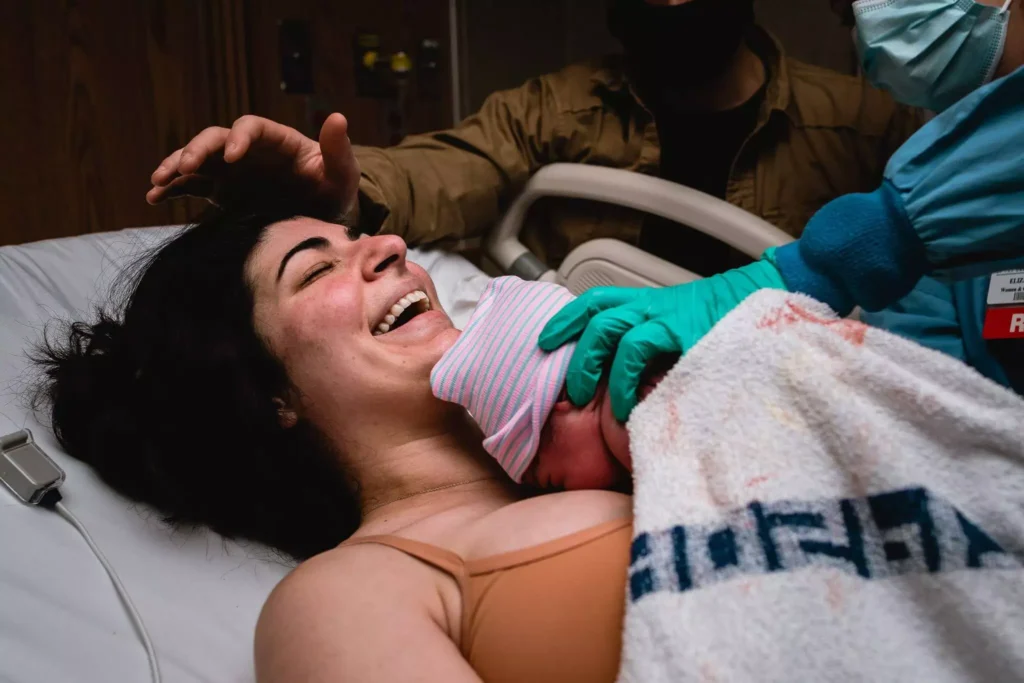

Learn the science of pregnancy and birth to take the mystery of labor away! Understand why you are feeling what you feel, and learn strategies to confidently move through pregnancy and birth!
- 9h+ of Video
- Support Group
- Close Captioning
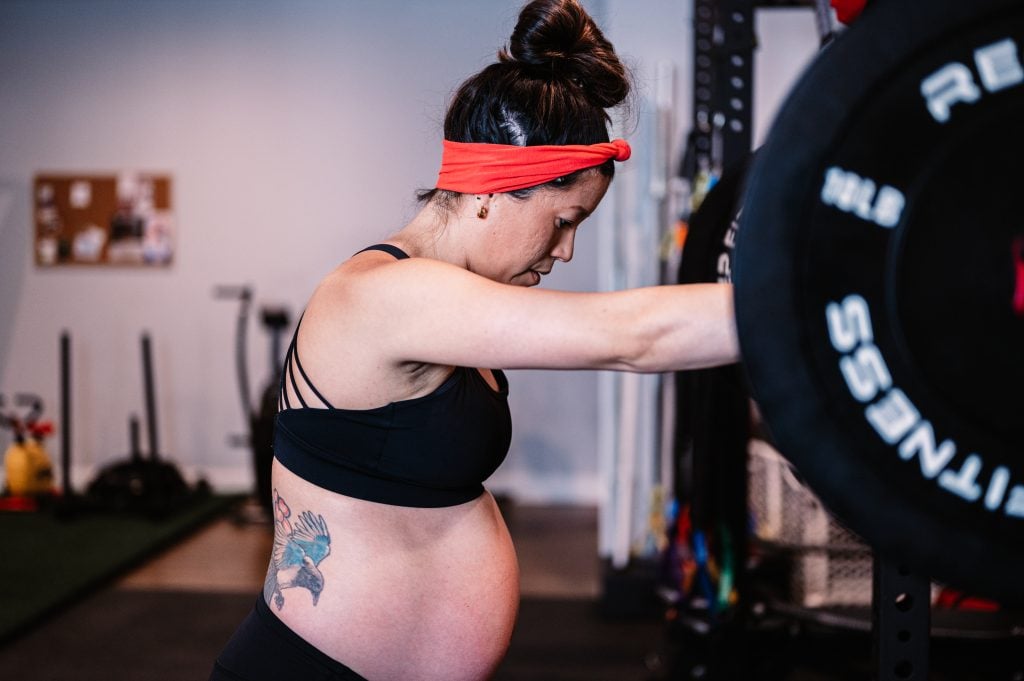

- 5 Workouts/Week
- Gym Workouts
- Self-Paced

Instructor
GINA
Workout on-demand with our prenatal fitness workout videos! Each workout is 30-40 minutes to follow along as you exercise at the same time!
- Birth Prep
- All Trimesters
- Mobility Work

Instructor
GINA
Find comfort and relief from pelvic girdle pain throughout your pregnancy and postpartum period! This program incorporates myofascial sling focused exercises to stabilize across the pelvic girdle joints.
- 3 Weeks
- On Demand Workout Videos to Follow