



Table of Contents
Welcome to the MamasteFit Podcast! In this episode, Gina and Roxanne tackle a question so many parents wrestle with: should I have another baby? They discuss their personal journeys of transitioning from having no children to four. They talk about the challenges, support systems, and mental health struggles they faced at each stage, from 0 to 1, 1 to 2, 2 to 3, and finally, 3 to 4 kids. They also share how they reached the point of knowing their families are complete. Gina discusses her journey with four kids and a supportive network, while Roxanne delves into her experience with three kids, highlighting the difficulties with postpartum mental health and seeking balance. The episode is filled with personal anecdotes and professional insights aimed at empowering listeners in their own family planning and parenting journeys.
Read Episode Transcript
Should I Have Another Baby? How We Knew Our Families Were Complete
[00:00:00] Gina: Welcome to the MamasteFit Podcast. In this episode, Rox and I are going to be sharing how it was for us transitioning from 0 to 1, 1 to 2, 2 to 3 kids, and for me, 3 to 4, and how we know that our families are complete- because this is a question that we get a lot, how was it adding another one to your family? How do you know that you’re done having kids? And so we’re going to break down our personal experience in this episode.
[00:01:12] Gina: Welcome to the MamasteFit Podcast. So my name is Gina. I have four little ones now. My youngest was born three months ago, almost four months ago now. So I am new to the four kids, so I can only talk about what it’s like adding a baby to four. I don’t know what four kids with like two toddlers is like. So we’ll do this again next year and I’ll let you know if it’s adjusted at all. But I’m going to share how it was for me to go from 0 to 1, all the way to 4 ,and then how I know, how my husband and I know, that we are complete with four kids.
[00:01:48] Roxanne: And I’m Roxanne. I have three kids and it was definitely a different journey than Gina’s from zero to three, but we also feel very…
[00:01:58] Gina: You mean that everyone doesn’t feel exactly the same when they have one to two?!
[00:02:03] Gina: So I think that’ll be really interesting.
[00:02:05] Roxanne: It’s a very interesting poll when you ask people, which was worse and harder, zero to one, one to two, or two to three, or et cetera, and everyone usually has a different answer. And then their reasoning for that answer is always usually different. It’s very interesting.
[00:02:21] Gina: Yeah, so for me I was the first one to have a baby between the two of us. So 2017 I had my first baby and zero to one for me was the hardest transition. And then it was just easier each time. We just added on another one and it was, whatever, at that point. So for me the zero to one was the hardest.
[00:02:41] Gina: I think I had the least amount of support during that postpartum as well. I also didn’t know what to expect. I was one of the first out of my friends to have a baby, so it wasn’t like I had a lot of exposure to postpartum. I also feel like you don’t know until you’re in it, and then you’re like, “Oh, I see.” I feel like it’s like this big secret. Even though I feel like I’m very open with what postpartum is like and people who are in postpartum who are mothers will share about it, I just felt like I couldn’t fully understand what it was like to become a mom until I was like in it very deeply.
[00:03:18] Gina: So for me, the zero to one was hardest. I also just transitioned from my full time career. So I was trying to figure out like who I was now. Like I, this was pre MamasteFit, so I left the Army and was going to transition to be a stay at home mom. And I was like, what do I do with all of this time that I don’t have, like with a baby? Cause it’s, very time consuming. And so I was also trying to figure out like my new identity at this point. So that was like a big struggle for me. It was one, all of a sudden I had a human that I needed to take care of that was very time consuming, more time consuming than I anticipated. We were having trouble sleeping, like breastfeeding was a little hard for the first two weeks, I did figure it out after that. Initially I had a lot of nipple damage from like a poor latch at the start, which then made it really hard to nurse cause it was really painful for me. And then eventually that, that did, I healed, and it wasn’t so bad after that. But mostly it was trying to figure out like who I was as this new person now that I had a baby. And that was I think the most challenging part for me.
[00:04:25] Gina: And then, I had this like vision during my pregnancy that I would still do all the same stuff, I would just have a baby with me. Like, “Oh I’ll still go…” I wouldn’t bring my baby to a bar, but like I’d be like, “Oh we’ll still go out and like party with our friends and my mom will watch the baby,” and I think we tried to go out one time and I was like, “I’m so tired. I don’t want to do this.” And I was like, “JK guys, we will not be partying with you.” And so that was hard because all my friends were still like in their party phase and I had a baby and I didn’t want to do that anymore. I was like, “I’m just tired and I don’t really want to go to the bar till 2am anymore, guys, because my baby still wakes up at the same time, so I know I’ll just be super tired.” And so I no longer had the same group of friends anymore. I no longer had my job. And so with this addition of this new baby, I lost a lot of stuff and was trying to figure… it’s just essentially trying to figure out like who I was, was really challenging.
[00:05:20] Gina: And you were still working, and you couldn’t have spent all this time with me. Our mom was still working. And so it was just me and this baby. Like all day. Cause my husband was working a really time intensive job at the time and so he would leave at 4 in the morning and come home at 9pm at night, and so I would just be like sitting by the window like, “Could someone please give me a break.” Like I couldn’t shower without her crying, like I had a hard time eating because if I put her down…
[00:05:47] Roxanne: She never wanted to be put down. She wanted to be held at all times.
[00:05:50] Gina: Even into toddlerhood. She was like, “Hold me,” at all times.
[00:05:55] Roxanne: She would hold the baby carrier and just cry and say, “Uppa! Uppa!” which means carry, like in Korean, just like sobbing. And we’re just like, “Oh my gosh!”
[00:06:06] Gina: Oh my goodness. And so it was really challenging to try to figure out like, what am I? Yeah, so zero to one hardest, for me by far. Lost all my friends, no longer had my job, was like completely by myself, and I was sleep deprived, and it was so hard.
[00:06:22] Roxanne: And Gina was not by herself, like, all the time.
[00:06:24] Gina: All the time.
[00:06:24] Roxanne: As she said, I was working.
[00:06:26] Gina: Roxanne completely abandoned me.
[00:06:28] Roxanne: I worked, three to four days a week. But the other two to three days, I would just go to Gina’s house. So she wasn’t alone. But, 75 percent of the time, she was alone. Because we worked, and we had to go to work, unfortunately, to pay our bills. Because MamasteFit didn’t exist yet, I needed to pay my bills.
[00:06:47] Gina: I did start MamasteFit during that time frame as well, which is probably what added more to my stress. And so I did have, as I was, like, building this business with one kid, I was also trying to figure out how I balanced that, too, which was also challenging.
[00:07:05] Gina: I felt like I was pouring so much into building this community, because we first started just only in person, we didn’t really have any online stuff. And so I felt like I was pouring so much in this community and recognizing that a lot of other women were struggling like me. They felt really alone, they didn’t know what to do with… they were struggling to figure out what was okay to do with their baby and, what worked for them. Because a lot of the stress for me with the first baby was feeling like I had to do all of the things the way that you’re supposed to. They’re supposed to sleep here. You’re supposed to feed them this. You’re supposed to put them down. There’s all these, unwritten rules- or some of them are written down- rules of what you’re supposed to do with your baby. And it was really stressful. I felt like I had to track everything. Like, “How many diaper changes are you doing?” I’m like, “I don’t know. Like, all the time.” “How often are you nursing?” And so I had an app that I was tracking all this stuff in, and that was stressful.
[00:08:03] Gina: And so I just, I felt like there was all this pressure to do things in this one specific way that I ended up realizing I didn’t need to do that way. But it took some time for me to build that confidence, to recognize, oh, I can do things that make sense for our family and the way that we live. I can just carry my baby all day in the carrier and that’s okay, I don’t have to put her down. I can put her in this swing, or I can do these things with her because it works best for us, even if it’s not like the rule. If that makes sense.
[00:08:36] Gina: And so once I started building my confidence, and this took like several months, I was like, oh, this is a little bit easier. ’cause I’m doing things that make sense for us as opposed to what I think I’m supposed to do.
[00:08:47] Roxanne: Yeah.
[00:08:48] Gina: And so when I was starting MamasteFit, we just were in person and it was like me and 10 other moms that were all new moms, our first babies, we were all like drowning together. There’s like a reel where these two dudes are on a rowboat and they’re trying to pull their third friend back into the boat and then the boat tips over. That’s what it felt like. We’re all just drowning together but trying to save each other.
[00:09:11] Gina: And I felt a lot of pressure to help everyone, too, even though I was actively drowning myself. But I felt like I was like the leader of this group of drowning people.
[00:09:26] Roxanne: It’s like when you’re on the airplane and it’s going down and like the oxygen tank, maybe not going down…. maybe not going down, that seems a bit aggressive. But it’s like the oxygen tanks fall down, and you’re over here putting it on everybody else to help them. But you gotta put it on yourself.
[00:09:38] Gina: As I’m suffocating. Yeah.
[00:09:40] Gina: So I was like setting up play dates for everybody. I was coaching at the gym, and then I would go to lunch with everybody, or we’d go get coffee to socialize together, after we just finished socializing for two hours with our workout.
[00:09:53] Roxanne: PR’ing socialization.
[00:09:53] Gina: And then I would like schedule walks for people, I would schedule play dates, and so I was scheduling all these social activities because I was like, “Everyone needs something to do.” But not everyone would go to every single event, but I was going to every single event. And so I was like, “I’m exhausted. I feel like I’m not even spending time with my baby. I’m just dragging her to these different things. This is too much.”
[00:10:17] Gina: And so there was a point for me where I was like, I cannot be everything for everyone else. Y’all need to start taking care of each other too. And so then it became, it shifted where like everyone else started, “Hey, I’m going to plan a playdate here,” and so it became more of a community effort after a certain period of time.
[00:10:37] Gina: And so I started to try to figure out okay, what is my balance with this? Cause I would drive like 30 minutes to the gym, we’d be at the gym for two hours, and then I would drive home for 30 minutes, Adeline would fall asleep in the car, so then I would just use this as my alone time and sit in the car and play on my phone. And then she’d wake up, we’d go inside, play for a little bit, and then we’d go back in the car to drive back to the gym for the evening session. And so I was just like driving all day, we were in the car, and then I’d go to this play date, or I’d go to this lunch. And so I had to figure out balance for me. So how to balance, like spending time with my baby, balancing trying to start a new job, and also build this community. And then for me, like the socialization as well, like I also wanted to talk to other adults that aren’t babies. Babies are not great conversationalists. They’re very cute.
[00:11:29] Roxanne: They hold such great conversations.
[00:11:32] Gina: And so it was like such a balance to figure out this new life while building my confidence that I can make decisions for us where I didn’t need like, permission. And so in summary, for the last 10 minutes that I’ve been talking, zero to one was my hardest transition. I needed to figure out balance. I needed to figure out who I was. I was, like, figuring out my confidence, and once I got all that, I think that’s what really made the two to three and beyond. a little easier, a little easier. So how was zero to one for you?
[00:12:07] Roxanne: So zero to one was not bad, for me personally.
[00:12:10] Roxanne: I, I had zero to one, but I lived three doors down from my mom, so she would come in, and she wasn’t working really anymore at that point, I think she was working, but only like a couple of houses- our mom was a house cleaner, so she would, she scheduled it accordingly. But she would stop in before she would go to work, when she’d come out, because it was literally on her way out of the neighborhood, she had to pass my house to leave to go anywhere, so she’d just stop in, say hello. Gina also wasn’t working except for MamasteFit, so she would just pop in, because she had the time, because she wasn’t working at a hospital for four days and 12 hour shifts a week. So that made it easier. And then my husband actually, he had just got back from a deployment before we had our baby. So he had a little bit more time for us. He had, three, I think at the time it was like three months, no, not three months. So six…
[00:13:04] Gina: At least six weeks.
[00:13:05] Roxanne: Six weeks of paternity leave. And then he was in the process of transitioning jobs at the time. So postpartum, like physically, I felt probably the worst out of all my postpartums, but like mentally it was the easiest transition.
[00:13:23] Roxanne: She was also like an angel child, slept really great. Like I would put her down on the ground and she would just fall asleep. So I slept really great.
[00:13:34] Gina: That makes a huge difference.
[00:13:35] Roxanne: It honestly was like the biggest difference, because we would literally do tummy time, and then she would roll onto her back, like when she started rolling, and fall asleep on her little play mat. And so then I would be like, “Okay, sweet, I’m going to go do some stuff.”
[00:13:50] Roxanne: But it was hard because she did have feeding issues, she had a tongue tie. So like that part was hard, like figuring it out and like navigating that. Being confident in my abilities to make the decisions that are best for her and being fine, that took me a little bit longer than maybe somebody else would, to decide what to do. She had the tongue tie, but, she was gaining weight. She was a chunky, chunky, baby. Her whole life, really. Probably until she started, not liking food anymore when she Like 18 months to two years. But she was always like rolls, like butter rolls on her arms. But I had an oversupply of milk, so just like, so much milk was like just shooting out every time she would eat. So she didn’t have to work very hard. So she was able to compensate for a while, which allowed me to be able to find a way to help her nurse, because it was like, super painful nursing her for three months. Like just a nipple damage that never healed, and then every time she would latch would just perpetuate the nipple damage. I would have to take breaks to pump.
[00:15:00] Roxanne: But like in totality, it wasn’t bad because she would still sleep for long periods of time, until about three months when she refused to nurse and like latch for a while. And then when I would pump, I’d only get one ounce of milk when I would pump, which made it a little bit harder. That portion, like at three months, that’s when I started to spiral a little bit. Because then, I went to a lactation consultant, they did a pre and post weight feed, and she was like, “So your baby has what I would call ‘content to starve.'” And I was like, “What the fuck does that mean?” And she’s like, “She’s not drinking enough milk, but she’s fine with it.” And I was like, “What? I’m starving my baby. What do you mean I’m starving my baby?”
[00:15:46] Gina: You could have picked a better phrase.
[00:15:49] Roxanne: I was like, what do you mean? She’s like, “So normally babies give you cues when they’re hungry by crying or giving you like those early hunger cues,” she’s like, “she does not give you those.” I was like, “Cool.”
[00:16:00] Roxanne: So this was the lactation consultant where I worked, or where Ia had worked before I got out of the Army, so I went to see my friends on Labor and Delivery after the appointment. And I just cried and they’re like, “Roxanne, look at your baby. She’s fine. She has more rolls than the Michelin man. Like, she’s fine! It was one weighted feed.” And they like talked me off the ledge, and it was fine.
[00:16:23] Roxanne: So we had been going to the chiropractor at this point, like once a week, and it was like an hour away, to help get her adjusted. We were doing cranial sacral massages to help her get adjusted, and that was helping her latch not be painful, but eventually we did have to do a tongue tie release. And then that is when my milk supply came back, after that. Like I pumped for a couple weeks and she would latch every once in a while, but thankfully I had that like crazy over supply so it came back quickly. And I had all this milk in the fridge and freezer, so we were able to still give her the milk that I had saved up while I got it back And then we were able to save the journey.
[00:17:03] Roxanne: But it was hard. It was like really hard for three months for the breastfeeding portion. But like her as a baby was just the most perfect angel the entire time. Like she really didn’t really cry very often, which, obviously, content to starve, but she never really cried. She went to sleep pretty easily. Like I would nurse her to sleep. We did have a Halo bassinet that she would fall asleep in the Halo bassinet. But I was like comfortable with bringing her in the bed. If I fell asleep, I had this like barrier around me that would keep her in the position if I did fall asleep, but then I was able to put her in the bassinet. And she would fall asleep in the bassinet really easily. And so like she started sleeping through the night at nine months, and we moved her to her crib, and like she would sleep through the night. It wasn’t that bad of a journey. Like it took a while to put her in the crib, but I still was well rested. I don’t remember being like super, super tired during that journey at all from zero to one.
[00:18:01] Roxanne: But I had a little bit more support than you had, and my husband was home a lot more than your husband was home. And probably the hardest part of that was the breastfeeding. And then obviously I was diagnosed with prolapse. So I couldn’t really baby wear her, but she didn’t really care that I didn’t really baby wear her very often. I did have the vision of carrying her everywhere after just like seeing you carry Adeline literally everywhere. And that just wasn’t my journey. And I just, I got over it pretty quickly, cause I was like, “Well, it doesn’t hurt my shoulders. I’ll just push her in a stroller and be fine.”
[00:18:36] Roxanne: But like my prolapse diagnosis, definitely also spiraled from that. And that was like early on, like at six weeks diagnosed with the rectocele, and I definitely cried a lot after that from just the diagnosis. Like, I had prepared for pregnancy and birth, and had what people would say is the ideal birth, didn’t push for very long and still had prolapse. Well, 45 minutes, it’s not… I didn’t push for four hours! Or even two hours. I didn’t push that long in the grand scheme of things. So I felt a little let down that I got prolapse. But like the number of people who get prolapse is a lot higher, and I had to just like work through that process of being okay with it. But it did kind of mentally adjust things.
[00:19:26] Roxanne: But again, that transition, not bad, other than those two things of breastfeeding for the first few months, and then the prolapse where I had to like work through some symptoms. But like I felt ready for motherhood. Like I didn’t really have any depression, like postpartum depression, or anxiety, or even like postpartum rage. Like I didn’t really have any of that postpartum. It was just like crying about my prolapse and my sore nipples every once in a while. But once the nipples healed and my prolapse stopped being symptomatic, like I was fine with it. And I got back to work.
[00:20:05] Roxanne: So that’s the other thing, I didn’t have a whole change in my identity. Like I still worked as a nurse. I went back at five months postpartum and was able to like work one day a week to where I felt like a freaking human that’s not just a mom, which was really nice, I think, also, at five months being able to do that. It was sad to leave your baby, but I thankfully was able to only have to do it one day a week, and my mom watched her. I didn’t have to worry about child care, and wasn’t wondering who was watching my baby and if they were okay, because if anyone can watch my baby, it’s my mom. Mama Kim is a golden babysitter. She’s a bit tired now after seven kids, but at the time there was only two, and you watched Adeline, 24/7, so she didn’t have to watch her as much.
[00:20:53] Roxanne: Let’s take a break from this episode to hear about our sponsor Needed. Needed is a nutrition company focused on the perinatal timeframe that both Gina and I have utilized during our pregnancies, postpartums, and still to this day.
[00:21:04] Roxanne: And one of their products that I particularly liked during my transition from one to two kids with Colin was their stress support. So as you know and have heard, I was very stressed during that transition, and Needed had just came out with their stress support. So they had sent it to me to try out and it was one of the things that did help me cope a little bit better with my transition and just incredible stress during that time period.
[00:21:29] Roxanne: It has different adaptogenics as well as galactagogues to help with that transition and it’s safe to take during pregnancy. So if you are feeling extra stressed, try out Needed’s stress support and you can go to thisisneeded.com and you can use our code MAMASTEPOD to get 20 percent off your own order.
[00:21:45] Gina: So for me, an easier transition, which is probably more similar to your zero to one, was the one to two.
[00:21:52] Gina: Eoghan, my son, was my second child, and he sleeps like a rock, even to this day.
[00:21:56] Roxanne: He does still to this day.
[00:21:57] Gina: You can pick him up and throw him into the bed and he’ll just be like, (snoring). And so from a baby, he slept amazing, and that made a huge difference for me, sleep wise, because I remember, there were so many things that I felt like I struggled with from the zero to one with, the breastfeeding, so many clogged ducts, from the prolapse, the nipple damage, I had more stitches from my first, and so I felt like I had all this perineal stuff, ready to go. And then, his birth, I had one tiny tear, so I had one stitch. He breastfed like a champ from the beginning, like the moment he was born, perfect latch, like no nipple damage, no pain, never got a clogged duct. It was like a dream, but I had a shit ton of postpartum anxiety and OCD, which I shouldn’t laugh about, it’s not funny, but.
[00:22:56] Gina: So I physically felt very good in my body, We were sleeping really well. We were nursing really well. He’s like just a super chill, little dude, even now, just like a really chill, sweet little guy.
[00:23:08] Roxanne: He doesn’t like to poop the potty anymore, but.
[00:23:09] Gina: He is very chill. But I had so much prenatal anxiety because we had two miscarriages in between him and my daughter. And she was also three years old, and so I think that probably helped a little bit with the transition from one to two.
[00:23:25] Gina: But, back to the anxiety. I had two miscarriages in between the two of them, and so I had a lot of prenatal anxiety. And that did get better with subsequent pregnancies. I think my confidence built with having a quote unquote, successful pregnancy. But I was, like, really anxious the entire time, and so it made sense, after he was born that I was still gonna be really anxious. And so I had a lot of postpartum anxiety, a lot of postpartum OCD, like intrusive thoughts were like really strong and causing almost like panic attacks for me.
[00:23:58] Gina: And I had one incident in an aquarium where I was like terrified that someone was going to throw him in the shark tank. I don’t know why. He was literally in the baby carrier, it would need to take a lot of effort, there would be a scene if someone tried to get him out of my arms.
[00:24:13] Roxanne: They probably would have just thrown you in.
[00:24:15] Gina: And, so I was, like, going through my head what I would do if someone threw my baby in the shark tank, and I was, like, “This is irrational.” But I was having a panic attack, I had to sit down and calm myself down, and my husband was like super confused. And I was like, “I need to see a therapist. This is not normal.”
[00:24:32] Gina: So after that I sought therapy and it was really helpful for me to have some better coping strategies. I think also the further postpartum I got, I just started to feel more confident in myself again, I didn’t have the crazy emotions or hormones going on, and I think that probably helped as well. Could I have benefited from some medication at some point? Potentially. But it did resolve itself, and that did feel better. I think around like a year postpartum it did resolve for me, which was really nice.
[00:25:07] Gina: But yeah, it was a really easy transition adding the second kid, minus the mental health aspect. I also was living with our mom at that point, so tons of support. Cause my husband had relocated to Virginia for school, and this was during COVID, so we decided to stay back while he got like a small apartment and he came home on the weekend, every weekend, and so I was like literally living in my mom’s house. And so she would come down and grab him in the morning when he started to wake up and I would sleep for another hour and then I would get up and it was really nice. It was really nice. And so that definitely Made the transition much easier as well.
[00:25:52] Gina: My daughter was also three. And so this was the largest age gap that we had. Wasn’t my intention, I was trying to have them close in age to one another, my body had different ideas. Maybe it knew that it should be three. And so she was like really good at communicating at this point, she was like super helpful she was like really excited to play with Lily. And so she had another kid to play with too, and like lots of other adults to give her attention and so I never really got like the sibling jealousy from her. And my son also he liked being carried, but he was not as big into it as she was. And so she still got to be like carried and stuff too.
[00:26:34] Gina: But tor one to two transition was surprisingly not too bad, which is probably what made me be like, “Let’s have more! This is super easy!” Because the zero to one was the hardest. One to two, tons of support, my daughter was three. And I think it would have been different if they were much closer in age, like if Sophie and Zoe were my only two- that age gap would have been really challenging. And I probably would have a different story to share about the one to two. But having lots of support with them, lots of other adults, someone else for Adeline to play with. And then, living with my mom was obviously super helpful.
[00:27:17] Gina: And then the thing I struggled with was mental health, and seeking therapy was super beneficial for that. And it did resolve like in about a year postpartum, I felt like a lot of that anxiety did decrease. I had better coping strategies and wasn’t quite as anxious. And I think it was just like my hormones regulating, which was super helpful. and so I was like, “We’re going to have more children.”
[00:27:41] Gina: How was one to two for you?
[00:27:43] Roxanne: One to two was my hardest. Just all around, everything was harder with him. So Lily was two years old when he was born. We had just moved to California, literally across the country, couldn’t go any farther. It’s on the coast, right next to the water, so could not move any farther away.
[00:28:04] Gina: I guess you could go to Alaska.
[00:28:06] Roxanne: Yeah.
[00:28:06] Gina: Or Hawaii.
[00:28:07] Roxanne: We could have gone further. But still staying in the mainland, couldn’t really go any farther.
[00:28:14] Roxanne: So moving across the country at 34 weeks pregnant, the unknown, the anxiety. He was probably my best birth, most amazing birth that I’ve had. Birth center, was in active labor- from start to finish, his entire labor was like, less than 12 hours, he was born in the middle of the day. Like I labored, I think I woke up in labor at 3 or 4am, labored for a little bit by myself. Woke everyone up at 5, 6am, went to the birth center, and then three hours later he was born. So it was like pretty quick in the grand scheme of things. Like the birth center was amazing. Water birth, loved it.
[00:28:53] Roxanne: And then it ended there, cause he did not sleep, ever. He still doesn’t sleep at three. Like it started and never, never ended. He does sleep longer periods, but he’ll go to bed at his bedtime at 8, 9pm and is in my bed by 1, 2am laying directly next to me, on top of my face, touching my entire body with his hands, and, yeah. He’s just, he needs more love and physical touch. It’s probably his love language is physical touch. We did co sleep, bed share with him, from the beginning. He hated the bassinet. He never wanted it. If I put him in the bassinet in the middle of the night, he would, wake up five minutes later screaming at me, like, “How dare you?” so his bassinet became a laundry bin and basket, for diapers after a while.
[00:29:46] Roxanne: He nursed fine, like pain wise, had zero pain. But that kid went from the 50th, 60th percentile at birth, down to the 15th by his two month appointment. And then down to the 14th at his three month appointment, and just kept dropping over time for those first three months, which made me think that he wasn’t eating enough. So then we started the whole journey of figuring out why he is so tiny, when Lily was just Michelin man. So he was so different. We got his, he had a tongue tie and lip tie, that we had revised. He saw an ENT who diagnosed him with enlarged adenoids, which was why he couldn’t breathe, like he was always a noisy breather. He breathed through his nose, but it was always like super, super noisy, which doesn’t help with sleeping. So not only was he not sleeping, but I wasn’t sleeping because even when he was asleep, it was very loud to sleep next to him. So that was hard.
[00:30:55] Roxanne: But it was also like, we moved across the country, so not only was he a harder baby- he had colic where he would just scream for three, four hours in the middle of the night. My husband was sleeping with our toddler, so he was sleeping fine. Occasionally when he would sleep in our bed, because the toddler went to bed really easily, like he would wake up and be like, “What is happening? What is happening?” I was like, “I don’t fucking know. I don’t know.” His two month shots, just cried for forever. Nothing helped. Skin to skin didn’t help. Putting him in the carrier didn’t, nothing would help him not cry. Even the pacifier, he loved his pacifier, but it only did so much. And he would refuse to nurse in those times, so just figuring out what worked for him took a really, really, long time.
[00:31:45] Roxanne: And then I was all by myself because my husband was in grad school, and he had to go to class, and write papers, and do homework. And my mom didn’t want to move across the country when I had a baby, so she was in North Carolina. Gina didn’t want to move to California, so Gina was in North Carolina. So I was just by myself, and it was really hard. But he’s so amazing, so it’s… I feel really bad, because it was so, hard. But I also wasn’t working, I went back to work pretty early with Lily, but I didn’t really need to because we had MamasteFit at the time, so it was also hard juggling taking care of two kids, like pretty much all by myself while still trying to like do stuff for the business.
[00:32:37] Roxanne: Eventually, we did find like a really amazing babysitter. So she would come for a couple hours during the day, she was like a college kid. Shout out to Tessa, she’s amazing. So she would come for a couple hours of the day and I literally would just, I had to leave and go to a coffee shop for a few hours just to do some work. But then you feel awful for leaving your kids with this person that they just met, twice. Over time, she learned, and, they were very comfortable with her. They would get very excited when she would come over to watch them. But it was, that was, like, a hard transition, because before, the only people to watch my children was my mom or my dad, and even sometimes Gina would watch them too. So it’s like only family. So that was hard, to find somebody.
[00:33:22] Roxanne: But he just, I think like my entire breastfeeding journey with him was hard cause I was always worried about his weight. Cause I never had to worry about that with Lily. Lily was like, even now she’s like still 50th percentile for weight, she’s not like 90th like she was as a baby, but we are not 90th percentile so that makes sense that it would stabilize. But he was always, like 10th to 15th percentile. And I think even still to this day, he’s like 10th, 15th percentile for weight, but it’s like he’s on his own curve, but it was really hard. So our whole breastfeeding journey, until he hits six months- and that’s like the other thing, it’s like everyone kind of tells you like, “Oh, like he’s crying all the time cause he’s hungry. Like you just need to feed him more.” But he won’t take a bottle, so it’s like I can’t even try to switch him to formula, even if I wanted to at the time.
[00:34:23] Roxanne: So it was like so hard to figure that out. And then when he hit six months, because I was so worried about him not eating, he went on purees like pretty quickly. Like he would eat two or three pouches in a day and still was breastfeeding and we were doing baby led weaning, but he still stayed at 15th percentile. I was always trying to make him gain weight for 18 months pretty much until I was finally like, “I guess this is just where we’re at and he just doesn’t eat very much still to this day.” I don’t really know how he sustains himself on just soup and mac and cheese, and chocolate milk.
[00:35:11] Roxanne: But it was, definitely looking back after the first year, definitely could have benefited from a lot of therapy. I was very angry a lot, and sad a lot. But it’s in the moment, you’re fine.
[00:35:35] Gina: You’re just trying to survive at that point.
[00:35:37] Roxanne: This is just parenthood with two kids. And this is what it’s like when you don’t have like family support. And so I was like, “It’s fine. I’ll get over it. He’ll eventually gain weight.” And that’s it was just like finding a future milestone to hang on to. And it never came.
[00:36:01] Roxanne: Eventually we did find, he started sleeping through the night when we started doing osteopathic manipulations. We took him to, I finally got him in, I think I was calling them for, six months. They were, like, moving and she wasn’t available, so it took us a while to get in. But finally, we took him, once a week for, an entire month, and he started sleeping through the night. He had his adenoids removed and he was able to breathe, and I think it was like all of those things combined together, he was a better kid. He would wake up and instantly, for 18 months, just instantly scream and cry for an hour at least, every morning. And I can be pretty patient, but I need a little bit of time to wake up in the morning.
[00:36:52] Gina: So we can’t start the day with violence, guys.
[00:36:56] Roxanne: And even now, he’ll still wake up every once in a while. So we started doing some cranial facial, not facial, we started doing cranial fascial stuff, and he has definitely benefited from that as well. But he’s just, he’s my sensitive guy. My small, tiny, sensitive guy. And I’ve just, it took a while to accept that.
[00:37:21] Roxanne: So he was definitely my hardest. It took, I mean, I still have flashbacks. I definitely could have benefited from some therapy. I did try to find a therapist, but that was COVID still, like 2020, 2021, I don’t know. COVID was still strong in California, and telehealth, I was like, how am I going to do telehealth with two kids? Like screaming in the background, literally Colin screaming in the background. And so I just… it was really hard, my husband at one point in time told me, he’s like, “Do you need to seek someone?” And I just screamed, I was like, “Who? How am I going to find somebody? Okay, thanks. Thanks for the opinion.” And he’s just like, “Whoa, okay.” And sent me some links to some telehealth therapists after that, and I was like, “Okay, I think I have a problem.” But this was like 14 months postpartum at the point when I finally just could not cope anymore. So definitely could have benefited from some Zoloft in my second postpartum.
[00:38:16] Roxanne: But, eventually we decided to have a third kid cause that postpartum was pretty brutal. And I almost felt like I needed a redemptive postpartum experience. Joan was very redemptive and healing, cause she was an angel. From the beginning I knew she had a tongue tie, but she breastfed like an angel still, gained weight was able to transfer milk. We immediately got her into a lactation consultant, my friend here is a lactation consultant so she came to the house and did body work and showed me all the things to do so our breastfeeding journey with her was magical. Still had to do the tongue tie release, but it was still like, I was never in pain except for the first day postpartum because it’s like the soreness, but that was it. Like I didn’t have nipple damage, just some general soreness. She recovered from her tongue tie really easily, has always been like, 80th percentile for weight, that girl’s a chunky machine. Slept really well, loved being in the carrier and snuggling me, but also was fine if I put her in the crib, or the bassinet, every once in a while, she was fine with it. So just very, angel-like. I still definitely think I had some postpartum like anxiety associated because I think I was, I think that it was just still underlying from Colin. And definitely a little bit of postpartum rage, but like at everybody else, like my baby was perfect, but like everyone else was very annoying.
[00:39:46] Roxanne: But otherwise perfect postpartum. My recovery was great, my butt hurt, but that was pretty much it, with her and, yeah. So two to three not bad.
[00:40:01] Gina: But you did seek therapy this time.
[00:40:03] Roxanne: I did seek therapy, but it was like I was almost a year postpartum by the time I reached out to them. And I think that’s just like anxiety. I think I just I have anxiety.
[00:40:14] Gina: It’s just you as a person.
[00:40:15] Roxanne: Yeah, like I’m just an anxious person in general. I think motherhood definitely has enhanced it, and I think Colin has just, Colin’s postpartum definitely made it more prominent. But yeah, parenthood in general is stressful, but the transition of adding her to our family was not bad.
[00:40:36] Roxanne: All of my kids also transitioned really well to having siblings. Lily, the perfect older sister. She never really regressed, I mean we didn’t really potty train her beforehand, but she didn’t really regress like when Colin was born, she loved holding him. When Joan was born, both of them loved holding her. It never felt like it was her against them. Like they felt very included in the whole process. So that part wasn’t bad. But we did so much prep with like “baby’s coming” and I think that was helpful. But it’s also like we’re in the birth world, I think that helps them understand that like babies are really cool and, adding them to the family is nice. So I never, struggled with that portion. Maybe a little bit more now that she’s a toddler, like she doesn’t want to share me with her siblings. If I hold Colin, she’ll be like, “Excuse me,” and like pushes his face out of the way, “Get away. I am holding mom.” So maybe a little bit territorial for Joan now, so if I had a fourth for some reason, things happen, if I had a fourth, I don’t know if she would transition as well, but.
[00:41:46] Gina: How do you know that you’re complete?
[00:41:48] Roxanne: How do I feel complete? So I’ve always imagined my life with three kids, like always. I mean, we have a family of three, so I just always pictured three as the perfect number.
[00:41:59] Roxanne: You fit in a car, like a traditional car. You don’t need to buy an SUV. I don’t know, three just feels, I feel very, complete. When I think about having another baby, it stresses me out actually a little bit because then it’s like you have a lot more things to think about, you need a car with a third row, and when you go places, you’re six, not five. That honestly, freaks me out a bit, but when I imagine my Thanksgiving dinner table, I think somebody said this on Instagram, I imagine five of us. And then another table for Gina’s whole family, and my mom and dad. But like with my kids, I just imagine three, three kids and me and my husband and then our dog at the time.
[00:42:45] Gina: So for me, the two to three and the three to four were very smooth transitions. Both times, my husband was not in as intensive jobs, still intensive, but not time intensive. So he got 6 weeks of paternity leave, this time he got 12 weeks of paternity leave, he only took the first 6. So he was home a lot after our 3rd was born, and then after our 4th was born, so lots of support. We live closer to my mom this time frame as well, we’re only like 5 minutes away, so lots of support from our family, less from Roxanne, because she’s a little busy with your kids, which is the reciprocation for me. I’m also a little busy with mine. I’m not as present for you. Sorry. Figure it out.
[00:43:36] Gina: But the two to three and the three to four have not been that bad, which is, I think I saw it once, it’s like a gateway drug to get to five and six kids. I’m good at four. But so Eoghan and Adeline transitioned really well to having Sophie around. Like they were really happy to play with each other, my husband was around a lot, so they were just playing with him a lot. My mom was coming over pretty often to help take care of us.
[00:44:05] Gina: You also didn’t live here when Sophie was born, and so I got all the attention.
[00:44:11] Roxanne: Yeah.
[00:44:11] Gina: So I didn’t have to share my mom with you, and so that was like really helpful. So anytime my husband went away for work…
[00:44:18] Roxanne: So just send Gina away
[00:44:20] Gina: Yes.
[00:44:21] Roxanne: Or send Roxanne away.
[00:44:24] Gina: I got all of the attention from our mom. So like when my husband would go on work trips, my mom would just sleep at my house.
[00:44:30] Roxanne: Yeah.
[00:44:31] Gina: And help me with the kids. And so it was a very smooth transition for us. It was a physically an easy recovery. We had a home birth, I had no tearing.
[00:44:43] Gina: And I always feel bad when I’m like, it was a really smooth transition to three for us. At this point, I was very confident with what things worked for us, like what things didn’t work for us, so I didn’t feel like the external pressure to do it in one specific way. I had much better established, like my balance. And each kid, I think I get better and better with figuring out the balance for stuff.
[00:45:08] Gina: Like so the older two, same with you, like the kids transition well to having another sibling. I think they’re just used to chaos with like their cousins around nearby. But mostly I think what made it easy was my husband wasn’t in an intensive job, and my mom only had- our mom- only had to focus on me, so I got all the attention and it was really easy to manage three kids because I had this extra person helping me out.
[00:45:35] Gina: I felt really good, mentally after that pregnancy, the anxiety that I had from my prior pregnancy, I didn’t have the same with this one. I just felt, more comfortable and, confident in myself in it. So I didn’t struggle with, postpartum depression or anxiety, was sleeping really well, nourishment was super, was great- my husband was cooking for me. So I, again, tons of support available and this was a really smooth postpartum.
[00:46:00] Gina: The only thing that I struggled with was trying to figure out if we were going to have a fourth because I have always wanted four kids. It just felt like a good number to me. I wanted to see how it felt each time though. And so after Sophie was born, I really struggled with that being the completion to our chapter, and I was like, I don’t feel ready to close this chapter yet. And I told my husband, I was like, “I don’t need an answer from you right now, but I want another kid, and I need the door to be open, otherwise I will mentally spiral, because I’m not ready for it to close,” and he was like, “Oh my god, please stop crying, we could have a fourth, I just don’t want to be 40, so if this is something that you want to do, I’m on board, but we gotta like, do it soon,” kind of thing. And I was like…
[00:46:46] Roxanne: He’s not even that close to 40!
[00:46:49] Gina: No, we a while to go! I think we had a good amount of time. We’re only like 36.
[00:46:55] Roxanne: He was 35 at the time.
[00:46:56] Gina: I think he was 34 at the time.
[00:46:58] Roxanne: “I don’t want to be 40.”
[00:47:00] Gina: He didn’t want it to be like a three year gap. So very early in the postpartum, we agreed that we would have a fourth. And so I was like, “Cool, I’m good now. The door is wide open. It’s available for me when I want it.” And so mentally that was really helpful for me because I was not ready to close the door.
[00:47:21] Gina: And so when it came time for our fourth, I was like, “Okay. Two year age gap. We can’t get pregnant in this month because our midwife goes on vacation in June and she has to be there.” and so there was a little bit of planning involved. I started working with my provider ahead of time to get all my blood work, make sure everything was looking good. So there’s a lot of like preconception work because now I’m like, “Now I’m so old and my eggs are withering away.” and so there was much more preparation going into the fourth pregnancy. Got pregnant pretty quickly, it was a super smooth pregnancy for us. I did have some anxiety at the beginning of the pregnancy that revolved around what if something is wrong with this one, where we have a medically complex child, or, we have a late pregnancy loss? So I started, I was a little bit more concerned about things happening this one, which I didn’t have with the previous one, because I was like, “Oh, my God, I forced this on us to have this fourth kid. I’m older now, and what happens if, we have a medically complex child that like takes up all our time and it impacts my ability to be a mother to my other kids?” Because it can be very time consuming. I don’t have personal experience with it, so I guess that’s a real big assumption on my part. But, I think like our friend’s son had cancer, like in between like my Sophie and Zoe’s birth. And so it was fresh in my mind of what it was like for her. And so I was like, “Oh my God, like what if that happens and I forced this fourth kid on us?” And obviously, she’s doing well, he’s doing really well now, but it was just like this concern of mine. Fortunately, everything’s great. Zoe is perfect. But it was like something that kind of lingered for me that I was concerned about.
[00:49:15] Gina: So gave birth to Zoe, it was super smooth. She and Sophie are the closest in age, they’re only 22 months apart, where I was like, if they were my only two, that would have been really hard. That would have been much more challenging, because Sophie is very much, “you need to hold me also, I want to have attention, pay attention to me,” but she has her siblings to play with. And so she’ll, be, like, “give me attention,” and then she’ll be, like, “Adeline,” or she calls her, “Ya-ya”, and she’ll go and, play with her. So she has people to distract her and to entertain her, and I think it would have been really different for us if it was only Sophie and Zoe. That would have been, the one, to two would have been much more challenging for me. But she’s got her older siblings to help with her. For me, I have to be really mindful that I don’t expect my oldest to be, like, a third parent for us.
[00:50:10] Roxanne: She is, basically.
[00:50:11] Gina: And so I have to be super mindful with not asking too much of her, and so that’s like my current struggle with the fourth kid.
[00:50:18] Gina: But I feel really complete with four. If we have a fifth, I would probably cry. It’ll be fine, but I would be like, “Oh no.”
[00:50:30] Roxanne: Same. We’re just gonna get pregnant again and do an entire podcast episode of just us coping with it.
[00:50:36] Gina: How do I cope? Oh, and then it’s twins. That was another thing I was concerned about. What if it’s twins?
[00:50:40] Roxanne: Because you’re over 35, your chance of twins increases because your body’s just like, “Have a baby. Have two!”
[00:50:46] Gina: These eggs are withering. Take them all.
[00:50:49] Roxanne: Yeah.
[00:50:51] Gina: During my pregnancy, I was wondering if I was going to have more sadness. Oh my God, this is my last time. But I surprisingly felt very complete, and like ready for it to be the last time, so there wasn’t a lot of sadness for me. Even during my labor I was like, I feel very satisfied with this being my last. It was also my most intense labor, so in the middle I was like, “We are good. Like I don’t feel sad about never experiencing this again.” It was still a very empowering experience, but I felt very complete during my pregnancy, so I didn’t have a lot of that sadness of oh, this is the last time I’m gonna feel my baby kick or be pregnant. I was like, I’m good with this being the end. And same with my labor, I was like, I’m good with this being the last time that I experienced this, even though it felt very like complete. And then of course postpartum came and I was like, “This is the last chapter?!” Like oh my God.
[00:51:49] Roxanne: It’s to close.
[00:51:50] Gina: It wasn’t that I wanted more kids, it was it’s more that I don’t want to close that chapter, even though I’m ready for it to be closed. Like it definitely took me like a few weeks to put my little bin of birth stuff away because I was like, I’m not ready for it to be over.
[00:52:08] Roxanne: But that also is just on trend for you because you struggled with zero to one, because it was the end of your chapter of…
[00:52:16] Gina: Yes!
[00:52:16] Roxanne: …adulthood without children, and finding that new identity as a parent. And now you’re ending another chapter of childbearing, into child raising, and that is, again, another end of a chapter and that’s harder for you to transition to.
[00:52:35] Gina: Yeah. Just to close out this episode, because we’ve been chatting a lot about our transitions, is: the thing for me that helps me feel very confident that this chapter has closed for us- like if we have more children…
[00:52:51] Roxanne: We’ll get over it.
[00:52:53] Gina: It’ll be fine.
[00:52:54] Roxanne: I’d need some processing.
[00:52:55] Gina: I’ll need some processing. I’ll probably be 40 when that happens because it’ll be an accident.
[00:53:00] Gina: The reason why I feel complete is babies are very time consuming. Right now, most of my attention goes to Zoe, and there’s a part of me that feels like I’m missing out on my oldest. And I don’t want to keep repeating this baby chapter because I don’t want to let go of it. I don’t want them to grow up, so I’ll just make another one that’ll then be a baby. I don’t want to keep repeating this cycle because I can’t let go. Because I’m gonna keep missing out on my oldest. And I want to enjoy her, too. I want to be able to spend time and enjoy her childhood, not be baby, baby baby, because I don’t want to let go.
[00:53:44] Gina: So, for me, that’s how I know that I’m complete. Because I’m like, I got the four that I’m wanting. I feel like I’m at a good point where I can give them all a good amount of attention. We can financially afford them all, to give them the opportunities that they need and they want. And it just, I just feel like this is good for us. Like I feel, I don’t really know how to explain it, but I just feel that this is our family.
[00:54:14] Roxanne: I think it’s also harder for us to decide that it’s the end though, because this is what we do for a living. We love birth. I think birth is so empowering, so amazing, what our body does, regardless of how you birth, like the fact that you grew a human and like just that whole aspect is so cool, that it is sometimes hard to think back and be like, man, I’m never going to, I’m never going to do that again, and that’s pretty cool to be able to do that.
[00:54:46] Roxanne: But I think being in the birth world, we still will be able to experience that by supporting other people going through it. I was just at a birth the other day, and on my way home, I was like, man, I’m never going to be able to do that. Cause they were so freaking cute the entire time. Like the dad was just like supporting her and was saying, “You’re amazing. You’re amazing.” And I was like, man, me and my husband are never going to do that again. But I also don’t want to be pregnant and give birth again. So I think by being able to support births, that’s how I’m going to still… I’m going to live vicariously through other people and support them through that and that’s how I have been like, I am good with three, but this is how I’m going to stay in this amazing little bubble of birth.
[00:55:36] Gina: If you are transitioning from whatever number child you have, let us know in the comments how it was for you, which one was the hardest for you. We would love to connect with you as well, because you just got to witness us both sob during this episode.
[00:55:49] Gina: And if you want more support throughout your pregnancy, check out our prenatal fitness programs, our childbirth education course. If you want more support postpartum, we have our postpartum education course and fitness programs. We’re here to support you, and live vicariously through you throughout your entire motherhood journey. And so thank you so much for choosing us to support you during this time.
[00:56:09] Roxanne: This podcast is sponsored by Needed, a nutrition company focused on the perinatal timeframe that both Gina and I have utilized. And if you want to check them out, you can go to thisisneeded.com and use code MAMASTEPOD 20 percent off your first order.
Prenatal Support Courses
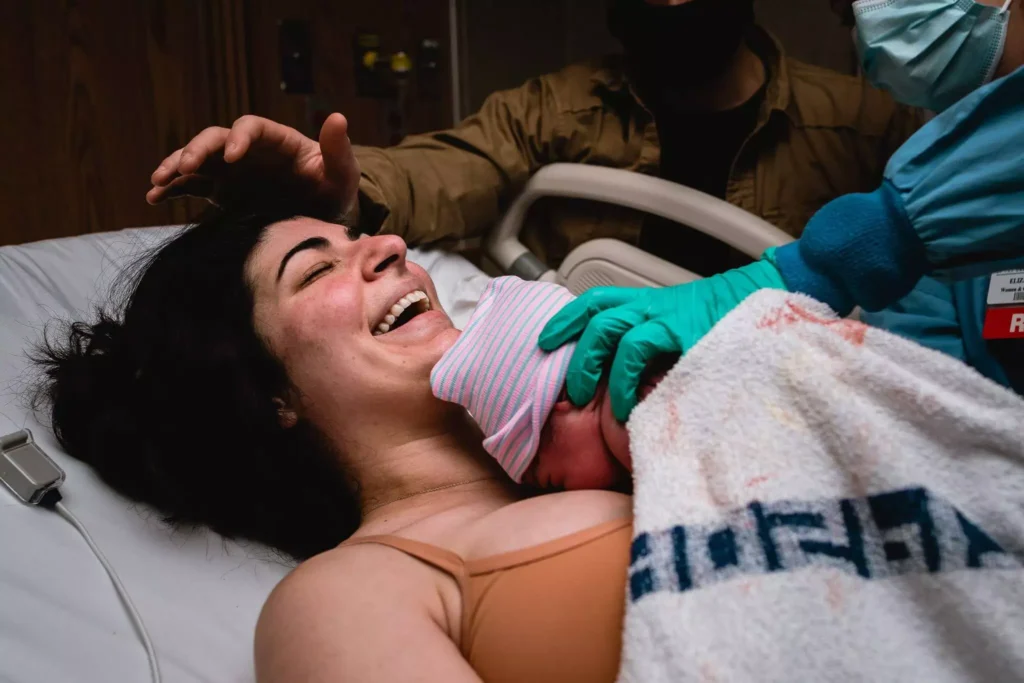

Learn the science of pregnancy and birth to take the mystery of labor away! Understand why you are feeling what you feel, and learn strategies to confidently move through pregnancy and birth!
- 9h+ of Video
- Support Group
- Close Captioning
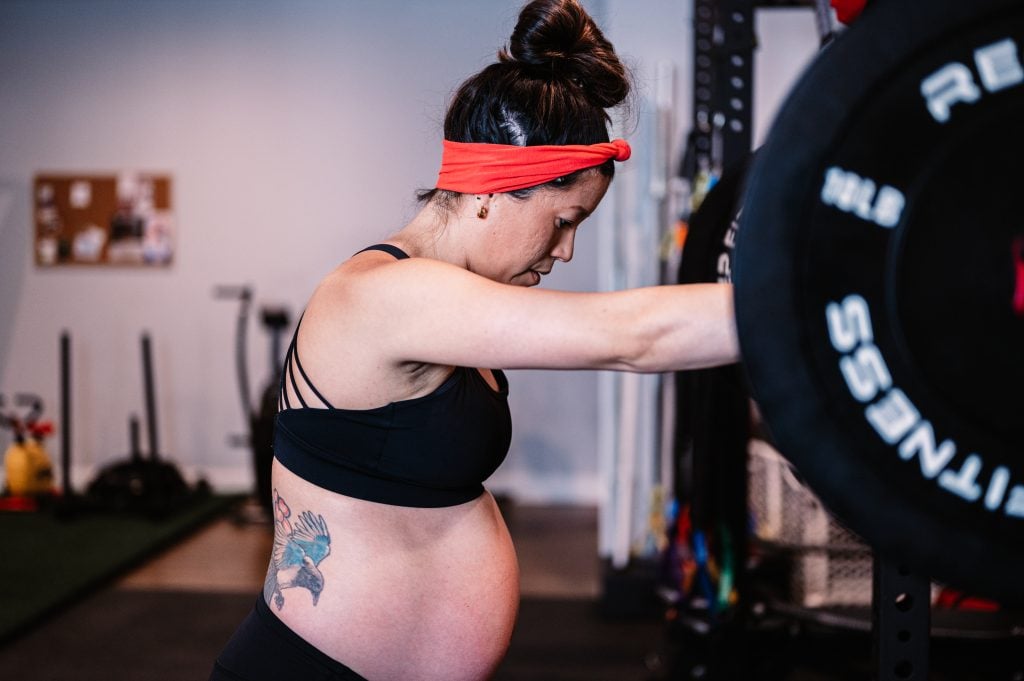

- 5 Workouts/Week
- Gym Workouts
- Self-Paced

Instructor
GINA
Workout on-demand with our prenatal fitness workout videos! Each workout is 30-40 minutes to follow along as you exercise at the same time!
- Birth Prep
- All Trimesters
- Mobility Work

Instructor
GINA
Find comfort and relief from pelvic girdle pain throughout your pregnancy and postpartum period! This program incorporates myofascial sling focused exercises to stabilize across the pelvic girdle joints.
- 3 Weeks
- On Demand Workout Videos to Follow