



Welcome to the MamasteFit Podcast Birth Story Fridays! This episode features Georgia sharing her two birth experiences. Her first pregnancy involved a breech baby that ended in a C-section after extensive efforts for a vaginal birth. The second pregnancy was a successful VBAC (Vaginal Birth After Cesarean) at home. Georgia discusses her emotional and physical journey through both pregnancies, the importance of informed decision-making, and how she prepared differently for her VBAC. The episode highlights the significance of empowerment, autonomy, and the supportive role of fitness and education in the prenatal and postpartum periods.
Read Episode Transcript
Roxanne: Welcome to the MamasteFit Podcast, Birth Story Fridays. On this episode, Georgia is here to share not one, but two of her birth stories. The first one baby was breech, and then she had attempted a vaginal birth, but still ended in a C-section. And then the second one was a VBAC at home. Thank you so much for being here, Georgia.
Georgia: It’s a pleasure! Thank you for having me.
Roxanne: Of course! So tell us, we’ll start with your first pregnancy. How was that pregnancy and what did you do to prepare for birth?
Georgia: Okay, so there’s literally as I was pregnant, but first of all, just to mention that we did nine rounds of IVF, all of which failed. And so we ended up as an IUI pregnancy, which is quite an interesting way round to do things. But we, because of that, we were automatically in a bracket for a high risk pregnancy in the UK.
The pregnancy was consultant led, and we were given lots of extra scans. And there was constant kind of anxiety I think for me about whether the pregnancy would actually last, and come to fruition- which, thankfully, it did. But I think because the actual conception and falling pregnant was so like medicalized, I think I really dreamt about this kind of home birth, all natural, no intervention experience for my birth.
And so the kind of key event that happened for me in that pregnancy is that I then, at 34 weeks, found out that baby was breech and there was barely a chance of me having that dream home birth. And it really, it really swept the rug from under my feet. I felt emotionally just thrown at the very end of my pregnancy. Just didn’t know what to do, didn’t know who to believe in terms of, I was researching all of this, like, possible breech delivery stuff, but at the same time, I was hearing the consultants tell me how small a chance I had, and how it was potentially dangerous for me and the baby. And so I was just, the last six weeks of my pregnancy I think was pretty turbulent, emotionally.
Roxanne: Yeah!
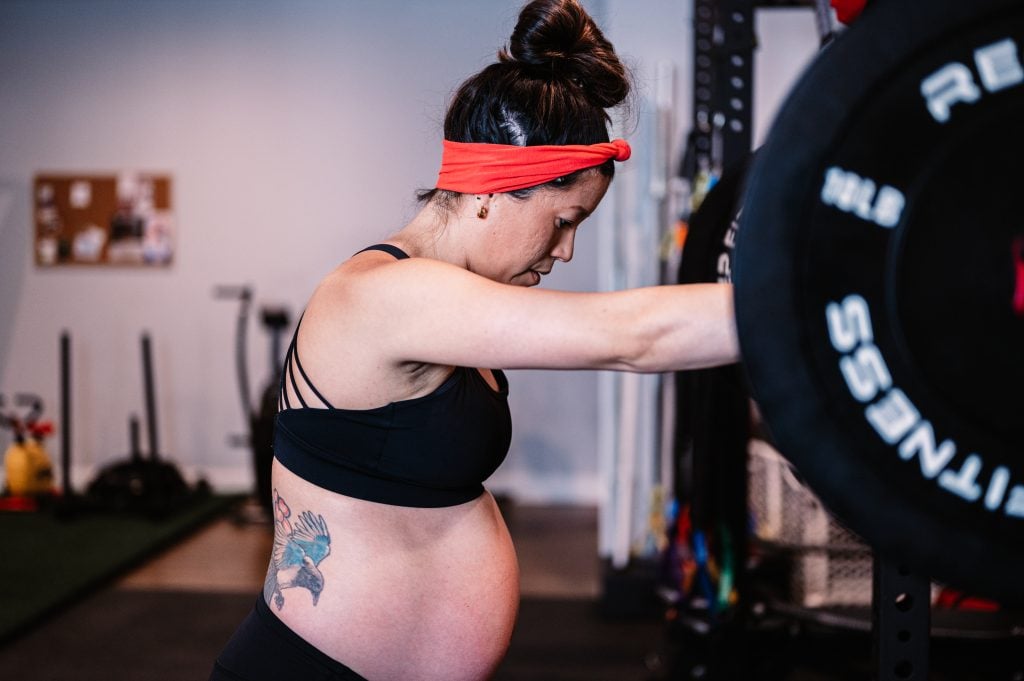
Georgia: And so the prep for me was really breech specific. It was turning the baby. Positions that you guys discuss, like the inversions, every day, probably 20 or 30 times a day. Plus just really trying to maximize room in, just in, in my body in general, because I felt because I’d worked out quite hard, like through the pregnancy I’d continued to go to the gym, I was also hearing consultants say, perhaps myths, I don’t know, but say that because I had quite tight abs, that could be the reason why my baby was breech. Which again, maybe we’ll come on to, but interesting to still find a way to blame me for doing all of the things right.
Roxanne: Yeah.
Georgia: So it was really confusing. And, what I decided in the runup, as I was being offered ECVs and nothing was working to turn the baby, I decided that because I felt like this could potentially only be my, maybe my first and last pregnancy. I felt like I was just still gonna try for a natural breech delivery, and hope that the baby would turn maybe just before labor or even during labor, or if not that maybe I’d be able to deliver breech. And so yeah, the preparation for that pregnancy, for that birth was very breech specific.
But my second pregnancy, so I think the one that we’re probably gonna focus on today, because I had that experience, much, much earlier on, like around week 15, I actually started a lot of Gina’s, like pelvis preparation workouts and movements and like lots of hip mobility. And I was doing inversions from 15, maybe even earlier, like 12 weeks or something ridiculously early. But I felt like I was just preparing myself for the same news, as if I was gonna hear that this baby was breech again, and just have to go straight for a C-section.
Roxanne: Yeah.
Georgia: But, I dunno whether I can thank you guys for it or whether it’s just happenstance, but the second baby was not breech!
So, I was able to try, for a VBAC, and with the encouragement of my midwives did it at home. So completely…
Roxanne: That’s awesome that that’s an option!
Georgia: Opposite experiences.
Roxanne: That’s amazing. So with your first, the baby was breech at 34 weeks, you tried everything to turn Baby, baby did not turn.
Georgia: No.
Roxanne: Did you still labor?
Georgia: Yeah. Yeah, so the baby, was breech I think the whole way through the pregnancy and I believe that he was pretty stuck in one position. His, he had his legs extended, and I think that it was the position of the legs that was stopping him from doing any turning, ’cause even when he came out, his legs were like fully extended and he had hip dysplasia, and there were just a few things that I was like, “Yeah, he was just stuck.”
Roxanne: Yeah.
Georgia: So we did try a manual turn. We tried an, I think it’s an ECV, could be saying that wrong. Yeah, we tried that twice. And I remember having like, at one point, like two very muscular, let’s say, quite forceful consultants, like heave-hoeing on my stomach and nothing was getting this baby to budge. So yeah, it was, probably not, in hindsight, it’s not something that I would do again. And we could talk about that more ’cause I know that a lot of women are offered ECVs and they just… you have no idea, really, whether it’s gonna work.
Roxanne: Yeah.
Georgia: I think it’s often, again, like quite a scary thing. Like you hear that there are risks and you hear that it might hurt your baby. And ultimately, I thought for me it was worth a shot, ’cause I so desperately wanted to avoid this Cesarean, as I think most people do.
But ultimately baby didn’t move. And, so as I said, I wanted to try and birth a breech baby. And I knew a lot about the risks involved in that. I’d probably over-researched, but I think ultimately I was scared. Like I think the consultants had done their work to get in my head a little bit and I had just a little bit of fear going into that labor- and it was my first labor, so I didn’t know what things should feel like.
I did 20, about 21 hours of labor and got to 10 centimeters. And ultimately I was pushing for, on paper about four hours, and nothing was really happening. So again, I can only really hypothesize from like a complete amateur’s point of view, but I feel like baby was very stuck in one position and I don’t, I don’t know why. So yeah, I was glad however, that I did try and labor naturally.
Roxanne: I mean, you got to 10 centimeters and pushing and baby just maybe just didn’t descend. Maybe like the way that they’re sitting on top of the pelvis for breech.
Georgia: Yeah.
Roxanne: Maybe wasn’t in a good position to be born breech.
Georgia: It was really interesting, like the sensation of pushing was never really there in the same way that it was in my second labor. Like the only way I can talk about it is I wanted to push with each contraction, ’cause I knew that I was 10 centimeters, but there was like no resistance. And I think because I didn’t have a head sitting on my cervix, like perhaps I just didn’t have the kind of, yeah, resistance against my cervix to push effectively or efficiently. And, so I did push for four hours, but it didn’t feel like, it didn’t feel like I was pushing. And the midwives would keep saying, “Are you getting the sensation to poo? Or do you feel like, anything pushing down, like bearing down,” and just the whole time I was like, “Hmmm… Not really, actually, I’m not feeling that.” I’m just like going through the motions.
Roxanne: Yeah, breech babies definitely can still put the same pressure, but I wonder if maybe your baby was a little higher. And so even if you’re 10 centimeters dilated, that doesn’t mean that everybody’s like ready to push at that time, baby might need to come down a little bit further. But over four hours baby did not come down any further.
Georgia: No.
Roxanne: So then after four hours, then they moved and recommended to move to a Cesarean birth, in that case.
Georgia: The consultants were pretty heavy on their recommendations of a C-section very early on in my labor, and pre-labor as well. They just wanted to go straight to a C-section and I get it. But thankfully they let me try.
And I think about, yeah, it was about 17 hours in, so before I even really reached the pushing stage, they were like hanging around outside the door, checking in to see how things were going.
Roxanne: Yeah.
Georgia: And whether I was dealing with labor okay. And, so we put things off for as long as possible, but there did come a point where I remember feeling like I recognized that my midwife, like my private midwife, I won’t call her a private midwife, I’ll just call her a birth partner because she was a friend at the labor, she wasn’t like, officially on duty. She had all these different suggestions for like different positions I could try and, different aides and different tools for like pain relief. And I remember just there was one point where I was saying to her, “Is this normal? Does it normally take this long? What’s going on? What do we do?” And there just came a point where everybody in the room was like, “I dunno. Like we’ve tried everything that we were gonna try. We can keep going, but…” And so we came to the end of the suggestions and I was in so much pain at that point. I was having like, back to back contractions with no break in between. They had me up on the bed at that point with my legs in stirrups and I was doing like a lot of guided pushing. I was exhausted. I didn’t know what was normal to feel. And then the back pain hit and it was like, “Oh shit…” I don’t know if I can swear on this, I’m sorry.
Roxanne: You’re okay.
Georgia: If you have to, bleep that out. But yeah, I was like, “Oh shit. This is the last straw. I can’t keep going.”
Roxanne: Yeah.
Georgia: If I get no relief whatsoever in between contractions and now it’s all up in my back. And I still felt like I was a really long way away from giving birth.
Yeah, I think I made the call. I think I said, “Look, I need an epidural at the very least, or, some sort of spinal, some sort of pain relief. And then I would like to attempt one last push. If it’s possible to do an episiotomy, let’s do that. I’d rather do that than a C-section. But I remember the consultant just taking one look once I was under and just going, “Nope, this baby’s not coming out vaginally,” and that was that. And then it was just prep for a C-section.
Roxanne: Yeah. But, you made the decision, so like that must have been somewhat empowering to be able to be like, “I know I did everything that I could.”
Georgia: Yeah, absolutely.
Roxanne: “To have the birth that I wanted. And then I got to make the choice to choose the Cesarean birth.” Even though, like, when you went in, that’s not what you wanted, but you knew you did everything that you possibly could have done to avoid it. And then were almost, I would never say “okay” with it, but like, you got to decide, “Okay, this is the path that we need to take.”
Georgia: Yeah. I think ultimately I felt and, this could be like a hangover from the struggle with IVF, but I felt like I was in a bit of a battle with the consultants at the end of the pregnancy. And it was almost, I think some of it was just me being a bit stubborn, and just like, “I really, really wanna try this ,and you can’t tell me what to do!” kind of thing. You know, maybe a bit bratty and maybe I was having a bit of a tantrum, but I really, really, really wanted to try and birth this baby naturally and, vaginally. Like it was really important to me, spiritually, to give it a go. And I felt like all my autonomy had been ripped away from me during the IVF treatment. And I was like, “It’s not gonna happen again! I am gonna do this! I’m strong enough to do this.”
And so there was a real triumph about actually being able to attempt a breech labor because, I don’t know many women that have even bothered, not bothered, that’s the wrong phrase, but I don’t know many women that have tried a breech delivery because it is scary and it is unknown, for a lot of institutions. So yeah, I’m glad that I tried that.
And it was beautiful at times. Feeling the contractions and knowing that my body could get to 10 centimeters on its own, there were beautiful moments. And there was a part where I was in the birth pool, and that’s something that I’d always imagined, and I just thought was like, “Yeah, okay. I’m, yeah, I’m not giving birth here, but I did get to do the things in the runup.” I did get to do my little rituals.
Roxanne: Yeah.
Georgia: And then I guess it was also really interesting, psychologically, to have a C-section and witness some of my pregnant friends or, then pregnant friends, not have a C-section and kind of the differences between the two experiences and just to know what somebody who’s had a C-section goes through, I think has now been really valuable to me in support of my other friends, and being able to prep them for what the recovery would feel like. And some of the, I think some of the mental, yeah, some of the mental health stuff is a bit different afterwards as well.
Roxanne: Yeah.
Georgia: Because, you’re dealing with a kind of a restriction that I think some people who have delivered vaginally don’t necessarily have, so there’s a different type of limitation when you’ve just had the baby. So that was interesting and I am glad that I pushed for, to try it, to attempt it.
Roxanne: Yeah. No, I think that it, with fertility treatments, IVF, IUI, all of those things, you do, like you said, lose a lot of your autonomy and it’s almost like your body is like really hoping to get pregnant and, then you’re trying all of these things. And so like in your mind you’re like, I feel let down. But then you were able to still go into labor and labor to 10 centimeters and start pushing your baby out. So like your body is strong and you are strong and you can do it. You still had a C-section, but you were able to make and like regain that like autonomy, that’s just really the best word. You took the power back for yourself for this experience, and the experience still matters. And I think that’s important.
Georgia: Yeah, absolutely.
Roxanne: A lot of people don’t get to choose to have, or even attempt a breech vaginal birth. Like you were saying, it’s not very common, and finding a provider who will even support it is really hard, even in the US. So I love that your providers still let you do it though.
Georgia: Yeah, I, don’t know if it’s slightly different in the UK ’cause we are working with the NHS, so they have a one size fits all approach, which is that ultimately we get to decide. I don’t think they can turn us down, as such, if we say we wanna try a VBAC or we wanna try a breech delivery, I don’t think they can turn us away. I, don’t know, correct me if I’m wrong, but in the US there are consultants that just won’t do it.
Roxanne: Yeah. So if your OB provider won’t do breech vaginal birth, or they don’t support VBACs, you have to find a new provider.
Georgia: Yeah. Yeah.
Roxanne: So yeah, they can choose not to take you on as a patient. So that is interesting, and almost like you have more rights in the UK.
Georgia: Well, I think we might have more rights, but they definitely did not encourage it, put it that way. It was tense. And so yeah, I was, an anomaly. And we had to have the whole- there’s so much language around it that’s so negative as well, but- I had to have an out-of-guidance plan where the head midwife had to have a very serious conversation with me and get me to sign loads of papers to say that it was my decision to do this. And, even just the, kind of, yeah, the, “out of guidance,” you feel like you’re rebelling against the…
Roxanne: Yeah.
Georgia: Against the rules. And, I don’t know, it’s, yeah, I think there are a lot of women that would have just been told C-section is the right thing here and actually just not even questioned whether it was their choice to try a breech delivery because a lot of it does come down to the nuances of the semantics of the language and what the consultant is saying, how they’re saying it, it can feel like it’s their decision. But yeah, with the NHS, I just knew that ultimately I could make the choice, so yeah.
Roxanne: That’s awesome. So, first birth, you did IVF nine times, IUI, got pregnant.
Georgia: Yeah.
Roxanne: Had a beautiful pregnancy, 34 weeks, breech baby, did all the things, labored, got to 10 centimeters, pushed for four hours, and then had a C-section, and then recovery.
How was the recovery, like, your postpartum journey?
Georgia: Oh, it was so brutal. I’m not gonna lie. There are people I know that have had beautiful C-sections and the recovery has been very straightforward. That’s not what happened with me. I felt really debilitated. I felt a lot of pain.
And I went back into the hospital a few times, like convinced there was an infection, but there, apparently there wasn’t. They did all the tests and it just felt, yeah, it felt like I’d had abdominal surgery.
Roxanne: Yeah, which you did.
Georgia: It was painful. And I was prepared to do that again, to have a second child. But my fear going into this second pregnancy was how on earth am I gonna deal with that kind of recovery and have a 21 month old running around?
Roxanne: Yes, that’s a very valid concern.
Georgia: Just have no idea. I know a vaginal birth is gonna be just as hard, if not harder in many respects, but I’ve gotta give it a go, right? Because I can’t, I just don’t know how women do it. Like hands down, like the women that have a C-section and have toddlers running around, just praise, praise those women because I dunno how it’s done. It seems so challenging.
Roxanne: Yeah. So let’s get into your second pregnancy. So we had a VBAC, but how many months postpartum were you when you got pregnant, and then how was that pregnancy and how was your prep different?
Georgia: Mmhmm. I was 13 months postpartum.
So we decided, because of our journey previously, we decided to get trying again as quickly as possible ’cause we didn’t know if it was gonna take us another, like three years or something. But it didn’t, it happened quite quickly, thankfully.
And, yeah, so I was pregnant 13 months postpartum. I was still breastfeeding, and then around the 10 week mark of being pregnant, I realized that breastfeeding just, it just wasn’t an option for me anymore. It made me feel physically sick. It was painful. Truth be known, my toddler didn’t really need it either. He was absolutely fine. Weaning him was, I think, more challenging for me than it was for him. So, yeah.
And then this pregnancy was so smooth and so beautiful, so perfect. Found out at 20 weeks that he was already cephalic and that we were just staying in that position. And I was like, “Oh my God, I’ve got a head down baby! This is great news! It’s not my body. I don’t have to blame myself. It’s, the baby’s in the right position, I can do this.” And then at 37 weeks, they told me that the baby had started measuring small.
Roxanne: Oh.
Georgia: There was, there were numerous things floated around, but the first thing that the consultant said was, “We would like to book you in for a C-section at 38 weeks.”
Roxanne: No!
Georgia: I was just devastated. Because, it just felt, it felt like a kind of, “Ugh, here we go. Of course this is gonna happen,” kind of moment. Of course I don’t get to have the vaginal birth that I want. I was just defeated, and really depressed, and I didn’t, I also didn’t really know enough about the information that they were giving me. So I had to go away and again, do some research and gather my thoughts and understand what these results were that they were talking about.
And ultimately what they had measured is that my baby’s, percentile had dropped. So we had dropped from something like 22% to a 9%. And again, I dunno what it is in the US, but in the UK, anything under a 10 is considered small.
Roxanne: Yeah.
Georgia: And because there was like, there was a real shift in the engagement of the baby, like the baby had definitely dropped from one scan to another. And it was also a different, it was a midwife scanning on one scan, and a sonographer on the other. There was like, there was a few questions about, okay, how accurate is the scan? And they gave me all the specifics about the scan maybe not showing the right size, and the ninth percentile is so close to the 10th, would we even be having this conversation about C-sections if you were like a tiny, tiny, tiny bit bigger?
But also, what was really interesting, is that because this was assisted conception again for this second baby, I knew the exact date that I was, for want of a better expression, inseminated. And the doctors had actually been measuring, or dating the baby, a week ahead the whole time. So I was like, “Oh, hang on a minute. There’s no way possible that this baby is actually, let’s say, 37 weeks. It’s actually 36 weeks because I know exactly when that sperm went in my body and there was nothing in there before.” So, I was like, “So could we just do the calculations again based on the baby being 36 weeks? Just out of interest, would this baby be measuring small?” And of course, no, baby is fine. So that gave me some kind of like inner confidence that, “I think this baby’s okay. Like I, I think. I think we’re g
And I had the blood tests for preeclampsia and I had the urine tests, everything else was coming back fine. The Doppler study was coming back fine. So there was no other indication that the baby was small or that the trajectory of growth was declining apart from this one scan. So it was to me, again, like really interesting that I was just automatically put on the pile for a C-section without that being further questioned and investigated. And again, like I just felt all these feelings come up of, “Oh God, here I go again. I’m gonna have to fight the system. I’m gonna have to fight this, this suggestion that I should have a C-section.”
And, straight away, the midwives and the consultants were very quick to rule out a home birth. And the idea was, “We can keep measuring and we can keep doing the Doppler studies, but we want you in hospital for the birth, regardless.” already I felt like my, my dream was being taken away. And it was… it sucked, honestly.
Roxanne: Yeah.
Georgia: But after three or four further Dopplers and everything was like fine, like the baby was measuring so perfectly, there was no indication that anything was happening placenta-wise. So I was just like, “You know what? I feel like I could still try a home birth. What do you guys think?” And the consultants were very against it. And then I had one really supportive midwife who was like, “Look, I’m not gonna say anything if you just stay at home and you wanna just leave it till the last minute to call the hospital, if that’s what you choose to do, then that’s what you choose to do.”
Roxanne: I love it.
Georgia: So I was like, “Okay, let me think about this.” And so I, again, I like got a lot of advice from some other midwives, and we did an out-of-guidance plan, which was essentially to say to the hospital, “Look, I do intend to have a home birth, but keep me on your books. I might transfer in.” I don’t wanna get into an emergency situation.
Roxanne: Yeah.
Georgia: So it felt, again, it felt a little bit risky. It reminded me of the first pregnancy and the first labor where I felt like I was going against the rules and I was like the odd one out that wasn’t following the guidebook. But I guess that’s just how I do birth. Maybe. I dunno.
So I also had a doula at the time who, we had a conversation about like where I would feel safest to try and labor. And honestly, at this point I didn’t know because I was scared. I was like, “I don’t know, like maybe I should be in hospital. Everybody’s telling me to be in hospital. I just want the baby to be safe. What if I do need a C-section?” And she said something about, obviously the cascade of interventions is once I’m in hospital, they might start me on some sort of induction if things aren’t moving quick enough, for example. Which likely, with me, and the risk of a uterine rupture after my first C-section it is likely gonna cascade into the recommendation for another C-section. And she said, “Look, the first intervention would be leaving your house. And if you don’t want any interventions, and you don’t want any cervical checks, and you just wanna be left alone, then you can just stay in your house for as long as possible and just know that the second you step outside, you are closer to those medicalizations.” I think when she said that, I realized that there was very little in it, in terms of, we live very close to the hospital. We could actually transfer into the hospital as quick as they could prep me in the hospital for an operation. So I would be prepped in the ambulance as much as possible. And it turned out the transfer time was very similar to just the prep time in the hospital. So there wasn’t, aside from the actual logistics of getting from my house to the hospital, there wasn’t much in it in terms of if an emergency did happen, it felt like it would still be very similar treatment.
So with that information, and a few further conversations, I just decided to go for a home birth and if I transfer in, then so be it, but let me give this a go. And so that’s what happened. Spoiler.
Roxanne: Spoiler alert! So tell us, let’s start from the beginning of your labor. Like how many weeks were you, and like how did labor start and then give us the whole story.
Georgia: Both of my boys were born on their due date, which is crazy.
Roxanne: Oh!
Georgia: Yeah, really weird!
Roxanne: That’s so crazy!
Georgia: But yeah, so I was getting a bit bummed out because I was getting to 39 weeks and six days and I was like, “Oh, everybody tells you that second pregnancies are gonna be sooner. What the hell?” And so I just thought, even though I hadn’t even reached my due date, I was like, “Oh, this is awful. I’m having to wait so long!” And then at 1:00 AM, so like an hour after the clock turned midnight, I felt my first contraction on my due date. So this boy was so punctual, it was unbelievable.
And, I had a mild contraction, yeah, at one in the morning. I had realized that in the first labor, I think I got in the zone really early on, like those early contractions where I should be trying to sleep through them, I should be trying to just relax. Maybe just ignore them, maybe just get some rest. With my first, I was so excited about it. I was like, “Oh my God, here’s a contraction! Let’s get the contraction timer out! Let’s get going! Let’s get my birth ball out. Let’s get the candles lit,” and I had no idea that 24 hours later I’d still be going.
Roxanne: yeah.
Georgia: But this time I was like, “Okay, that could have been a contraction. Let’s try and go back to sleep.” And then, at half, half an hour later, same thing. And I’m like, “Okay, now I need to get up and use the bathroom. Things are happening here, but let’s go and tidy the house.”
And at that point I realized that my partner was not in the bed. So I had woken up and I was having contractions, and I knew I was in labor, and I turned around to tell my partner and he’s not there. So I was like…
Roxanne: Oh, no!
Georgia: “Where have you gone and why have you disappeared now?” And it transpired that like our toddler had woken up, so he’d gone and fallen asleep in the toddler’s room. But it was perfect because I was just left on my own for those deep dark hours of the night, just laboring away and nobody knew. And it was, it felt very secretive, and it felt like quite animalistic and primal. And I just went into nesting, like serious nesting mode, and I just tidied our bedroom within an inch of its life, and just set every candle out, and every little detail. I had a bath, I just enjoyed our bedroom and stayed there.
And then it was time to maybe go get some food. So I had some porridge and some blueberries. And then I was just like, “This is really cool. Nobody knows I’m in labor.” Here I am eating my breakfast. It’s now five in the morning and the house is like so tidy that I just feel so content, there’s nothing stressing me out.
And that was when things were like ramping up. So I was getting contractions about every 10 minutes at this point, maybe some of them were a bit more spread out, but on average about every 10 minutes. And I was losing my mucus plug as well, like as the course of the night was going on. So I knew what was happening, but it was still really manageable. I was still talking through everything- not talking, but I, could talk if I wanted to. And then, my toddler woke up, and things stalled. Like I just, I feel like my brain just went, “Nope, not in front of the baby. You’re not gonna be in pain in front of the toddler. This is not happening while he’s in the house.” so it was so interesting ’cause I’d heard people say things like that would happen and you’re sort of skeptical that your brain is that powerful to just stop labor, but it definitely stalled. There was like two hours while he was awake where I’d gone from having contractions every 10 minutes to then having two in the space of the two hours. So nothing was happening. And I got a bit concerned that maybe it was false.
So we sent him, we sent my toddler off to the grandparents and then I went for a walk. And yeah, within like the space of half an hour, they were back, full force. It was crazy. But, I guess I just knew that it was safe to go into labor now. And I did some really beautiful things. Like I wanted to spend a lot of time outside, ’cause I was in the hospital for the last labor. I wanted to go for a walk and spend some time in the garden. And I remember just doing loops of our garden and it’s like autumn here, so the leaves are red and the sun is low and just, it was just beautiful. It was so different as an experience.
We couldn’t get hold of our midwife, so I couldn’t tell the hospital really, even if I wanted to, ’cause I wanted to go through our midwife so that she could direct me as to what the appropriate course of action should be. But she had been called to another birth, so she was unreachable, which in hindsight I think was a blessing because it delayed the hospital finding out, so it meant that I wasn’t on the clock. And by the time we got hold of her, she was like, “I’m gonna send a different midwife. I’m really sorry. Someone else is on their way. I’m not gonna make it.”
So about 12 hours after the first contraction now, so like 1:00 PM, a midwife came over and she assessed me. She did all of the blood pressure and the urine checks and everything looked fine, baby’s heart rate was good. So I was pretty confident that all of the worries that I had about the baby being small and maybe not dealing well with labor, I was, I don’t know, I was given a bit of reassurance at that point that everything’s fine, you can keep going at home. And then, yeah, and then I just continued contracting. and I was using a lot of tools that I’ve seen on your guys’ Instagram. So much of the stuff I did in labor was down to you two! It’s just, I just swear I was trying to like, remember all of the posts and I actually had a WhatsApp chat that was just saved between myself and my partner, and before I went into labor, I just sent him like three or four different posts and videos and they were all yours. They were labeled was like one thing from another person on Google and then the rest of it was all you.
Roxanne: I’m so glad we could support you!
Georgia: Yeah! And so I was like, “Okay, let’s go through some of these things.” So we did them like Gina’s, like, a partner labor, like early labor flow. We did that and I was doing like her labor, like early labor flow, workouts.
But yeah, then it got to a point where it was like, “Okay, I need to get the birth combs out, and I need the TENS machine on and I need some serious hip squeezing.” And my partner was doing all of that. And at the same time, I remember Gina said on one of her, I dunno if it was this last birth story, I think it was, she had said something about how the contractions for her, she like tried to gaslight herself out of the contraction. So like you can feel a contraction coming on for 10 seconds, but that’s not the painful part, really, in context. There’s like only really 20 seconds of like intense pain. And so I like, I remembered that and I fixated on what she’d said and I said to my partner, Ken, I was like, “I want you to count 20 seconds for me on this next one. I’ll tell you when to go and I want you to count, and I want you to count really loudly, as if you are like a drill sergeant.” And so he’s going like, “ONE! TWO! THREE!” And I’m like breathing through it. And I’m like, by the time we get to 10, I’m with him. I’m like, “TEN!” Then we go back down, it’s, “10, 9, 8!” And I remember like knowing that if I could count to 10 that I was then on the downhill. And I kid you not, we did that from 3:00 PM all the way through to when the baby was born on like every contraction!
Roxanne: Gina will love that!
Georgia: So he’s squeezing my hips, he’s squeezing my hips, and I’m going, “Count, God damnit, count!” And he’s going, “ONE!” and I’m going, “Not loud enough!” And it was really helpful for me. There’s actually a video of me doing it on our Instagram and it’s, yeah, it’s just madness to like anyone who’s not in the contraction, you’re just like, “What is the counting to 20 about?”
But, it was like really meditative for me. And it was also just, it just demystified it all, it made it all so much more manageable. I can count to 10, I know I can do this.
Roxanne: Yeah.
Georgia: And so every contraction I was counting to 10 and then back down again. And that was super helpful.
And then, then it was time to get the birth pool filled up and and we just carried on in that position. I just got in the pool and he was still squeezing my hips, and we were still doing the counting, and the midwives were there, they were just observing. There was no cervical checks happening or anything like that. And, eventually, I just remember, I just remember feeling for the first time, “Oh, this is what ‘pushy’ means! Oh, this is what the pushing sensation that everyone talks about feels like.” And just this, yeah, just this uncontrollable, I guess ejection reflex, right? So like just the feeling that this baby is coming, there’s nothing I can do to stop it. The head is there, it’s moving down, and I have this ball that I can feel I can push with now and I feel I can push against. And another thing that, that you guys have talked about is, so the breathing in labor and using the diaphragm both on the inhale and the exhale, like that sensation of oh, hold on a minute, it’s not just every time I exhale that I can push with that. It’s actually on the inhale, I can use my diaphragm to think down and bear down as well.
Roxanne: Yeah!
Georgia: And that was something that again, like from, just watching your reels, was just so helpful. I was just doing that on every contraction and every breath and I guess it just helped me focus on the breath in less of a wishy-washy way.
So I’m a singer, let me just phrase that, give, you that context first. I’m a singer, so when I think about breathing I actually think about it really anatomically and I think about what the diaphragm is doing and I think of the shape of the lungs and the shape of the belly and, where the breath is actually going. So a lot of Hypnobirthing sometimes feels a bit wishy-washy to me when they talk about using the breath and they don’t really give any context. I wanna know exactly how am I supposed to use this breath? ‘Cause there are options. Again, that was just, it’s so obvious, but so not, at the same time. Like of course you can use the inhale and the exhale, and I felt like I was 50% more efficient by doing that. So I was speeding everything up, at least in my mind, that’s how it felt. I felt great doing that.
Roxanne: Yeah, that’s awesome!
Georgia: And then, there was one point, later on, not too much later, where, I just thought, “Hang on a minute, my waters haven’t broke. This is different.” And the sack started to bulge out.
Roxanne: Ohhhh.
Georgia: So we thought, for a second, we thought the baby might be born in the sack. And for ages the sack was like bulging out and it was getting big and it was like this big balloon that was like bulging out. And it, and again, like weirdly, it felt quite nice. This is gonna sound maybe a bit too much information, but it was like rubbing up against, like back up against me. It was like quite smooth. It was almost like somebody like massaging a little bit. So it was really interesting to have this sensation of something there that was like smooth and massaging me at the same time. So I, again, like obviously wasn’t expecting that, but at times I was like, “Oh, that feels quite nice actually. That’s, this is nice. Labor is nice.”
Roxanne: Yeah, it was helping, like, stretch the area.
Georgia: Yeah. Yeah, it just felt, I dunno, it just felt good.
And so I remember at one point just like saying in the room, I was like, “This feels really good. This is good. This is not what labor felt like last time. This is, sure it’s painful, but I’m leaning into it,” and I was leaning into every contraction rather than trying to run away from it. And the first birth was all about, “No, no, no! Here comes another contraction.” And then this birth was like, “Come on, we can do this. Let’s go. Bring it on.” So that the mindset was totally different.
And then eventually, it got to the point where I was like, “I am feeling what I think is the ring of fire, and I am feeling some intense, what feels like tearing. I would like to know if this is the baby’s head coming out, so I don’t want a cervical check, but can somebody just have a look and see, are we there yet? Are we seeing the baby’s head?” And I was so scared that they were gonna say no because of my last experience. I was like, “Oh God, please just tell me, that you see the head.” And thankfully the midwife was like, “I see the head!” And it was just a, it was just an amazing feeling to know, okay, this is the point of no return. This is, really happening. Like I feel like now I’m at home, I’m in the pool, everything’s happening as it should be. I never got to this stage even close with my previous birth. There’s no going back now I’m doing this.
And then she said she could see, she thinks she’ll be able to see the eyebrows. And I had known that around the eyebrows and the ears was like potentially like the widest part of the head. So my thinking, even though this may not be correct, my thinking was if I can get those eyebrows out, then everything from there down is gonna be a little bit smoother and a little bit slimmer. And sure enough, it was on that push that the head came out.
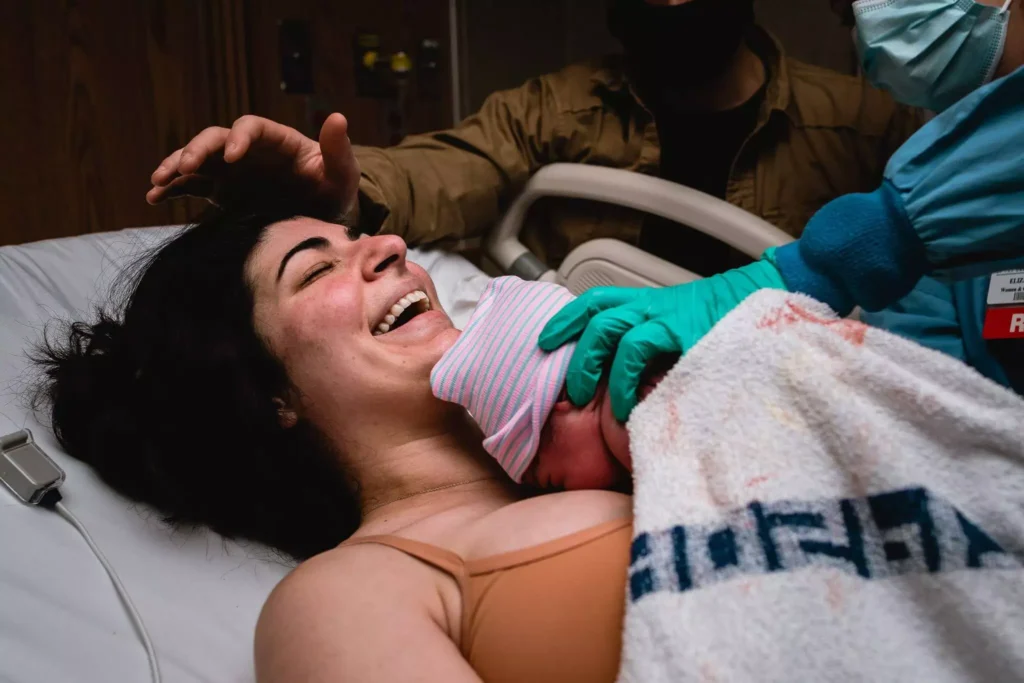
And it was… I still to this day, just can’t believe that I did that. And I think that I respect it so much more for it being a VBAC birth. Not that there’s a, obviously, every birth is incredible, but for me personally, I think even up until that last moment, I was doubting myself. I was like, “I don’t know if I’m gonna be able to do this. I really want to. I’m really gonna try to, but I wouldn’t be surprised if I lose the fight.” And so it was just this, it was just crazy. And I just kept saying to my partner, I was like, “I did it! I did it! Oh my God, I did it. I did it.” And he’s like, “You did it, Georgie. You did it.” And then on the next push, his body came out. And that was the birth! The water sack was still like half hanging out of me because it still hadn’t fully exited my body. So I remember when I got out of the birth pool, they were like, “Here, hang on to this,” and like, handed me my water sack. And like I had to walk to the bed with that and like my placenta. And that was all, it was all pretty gross. And those are the things that, that I missed first time round with a C-section.
But yeah, it was just incredible. Yeah, and just so triumphant in comparison to my first birth, I just felt like I had, yeah, I just felt like I’d achieved the end of this huge goal that I’d had, for life, really. And it just, if I never do another thing again in my life, that’s fine. I’ve achieved this. This was massive.
Roxanne: Yeah! It’s an amazing feat just giving birth and holding your baby after. You, you did it with your own body and you did it on your terms, too, which I think is also just very empowering.
Everyone was telling you just have the repeat C-section and finding all of the reasons to like, tell you to not do this at home as well, and you’re like, “No, that’s not what I wanna do. I feel comfortable. You told me the risks. I still feel comfortable.”
I think that’s also a thing that’s forgotten is like you can tell somebody the risks and the benefits of doing all of the different things, but it’s ultimately your decision and you get to make that choice. And you got to make that choice, and got to surrender to the process, and you ended up with a beautiful home birth, on your terms. And I love that.
Georgia: Yeah, it was incredible. And I don’t wanna, I don’t wanna feel like people shouldn’t listen to the risks. And, obviously it goes without saying that there’s a lot of information that I’ve skipped over that I had that allowed me to come to the decision that home birth was safe. I realize that a lot of women just, they’re not lucky enough to have that decision and, and have that power to choose for themselves. But I also think on the flip side of that, that there are hundreds of thousands, if not millions of women that are undergoing things like C-sections for reasons that maybe are quite small, and maybe, they’re unnecessary at times and it’s really difficult as the patient to understand some of the, some of the results, or some of the information that’s being given to you. So I guess it’s just about encouraging people to do their own research and like really look into the risks versus, just accepting, “Oh, consultants said I should have a C-section, so get me booked in,” kind of thing.
Because going back to the recovery…
Roxanne: Oh yeah.
Georgia: The comparison for me of the two, I was like, oh man, like a vaginal birth is so much nicer, recovery-wise, for me, on that particular one. Then the C-section, like I’m so, glad that I was able to do that.
Roxanne: That’s amazing. That was my next question. So how was postpartum and recovery? And it’s a very common thing that I’ve heard from people who have had a VBAC is that they’re like, “My first recovery,” and some of them were not as bad, where like, you were in a lot of pain after your C-section, some of them, they’re like, “I was like able to move around and it wasn’t like uncomfortable, but it definitely was a longer recovery compared to then having a VBAC,” and they’re like, “it was still a huge difference. Like I didn’t have this huge incision on my lower belly and was able to use my abs.” Like just not being able to use your abdominals is really hard for a lot of people and probably you, for someone who worked out her whole pregnancy, that’s a really big like hurdle that you have to overcome during that recovery.
Georgia: The mental health side of that as well, going from the difference between how soon can you get back into the gym after a C-section versus how soon can you get back into the gym after a vaginal birth. There’s a huge difference there, and how it feels going back to workouts. I’ve again, since I’ve been following your postnatal workouts, and honestly feeling- it’s three weeks past this vaginal delivery, feeling like, “I can do this! Come on, gimme some more! I wanna add some weights to this now!” And, that’s great, and I’m not encouraging people to rush back into the gym. But I do feel in myself, I’m ready to pick up some weights now and do some proper workouts.
And, with the C-section, oh God. It was just a, it was a totally different story. Like twisting my body in any way. I felt like, I just felt so vulnerable. I felt like I was just gonna tear myself in two all the time. And actually, it was, it made, it made the first 12 weeks having a newborn, something else as well. It was really hard to focus on… it was really hard to focus on being sympathetic to anyone else, including like the baby and my partner. I was like, “I don’t have, I don’t have a lot to give you guys right now because I myself am really in so much pain.”
Roxanne: Yeah.
Georgia: I dunno how I’m supposed to look after other people right now. And so with that taken away this time, I just feel like I can be a lot more caring, and not enjoy, enjoy is the wrong word, ’cause I did really enjoy being a mom the first time. But yeah, it’s, physically, I can run around with my toddler and I can dance around the room with my baby in the carrier and things like that. I couldn’t really move the first time round, and that just takes a lot away from you.
Roxanne: So if there was like one piece of advice that you could give someone, although I feel like you’ve given little tidbits throughout the whole episode, but like one piece of advice of someone who was either, either your past self, like going through your first pregnancy or second pregnancy, or someone who might be like, who found out their baby’s breech, or they’re trying to go for a VBAC for their second baby, what kind of advice like would you give someone?
Georgia: Oh God. Yeah. Yeah, I guess I’d love to have some advice for people that are finding out that their baby’s breech, but I obviously, I wasn’t able to turn my baby, so I can’t give any advice on what exercises to do. And I had a complete mental breakdown about it, so I’m definitely not the person to give advice on like how to stay strong through finding out you got a breech baby, ’cause I didn’t! But, I will say that, retrospectively, I think what everybody tells you is true. That it doesn’t matter how your baby is birthed, you are gonna have a beautiful experience if you can find the beauty and the positivity in it, and you’re gonna have so much to think about and so much to love after when you have the baby in your hands, and a healthy baby, that the actual birthing experience does become quite insignificant quite quickly. And I didn’t believe that at the time when people would say that to me, but it is, it’s tremendously true. It’s huge. I don’t wanna undermine birth, it’s massive, but to me it’s not as huge as the human being that’s created from that experience. So yeah, there’s some truth in that.
And then I think for VBACs in general, yeah, I think you often hear like people on podcasts and in books about VBACs say that you have to like, really want it and really believe in it to make it happen. And, my thing would be like, I didn’t. I felt like I had fears and I felt like I had doubts still in this VBAC labor and birth. And I felt all the way up until, like I say, like the head was out. I did have that feeling of, “Oh my God, but what if I can’t do it, ’cause I couldn’t do it first time round?” And like my confidence was really knocked. And I think there’s, I think there’s just like a different mental perspective and approach, which is, I think it’s just like I’m gonna give it my absolute best shot and if it happens, it happens, and if it doesn’t, then we’ll deal with that at the time.
Roxanne: So I do love those, both of those pieces of advice ’cause I do think that there is a lot of emphasis put on our birth. And I still think about my births, but it is important to know like the baby, like birth is a small portion of it. It’s still important, but it’s a small portion. The actual human that you created with your body and then now get to raise, it’s like the best kept secret. Gina and I joke like parenthood in general is like the best kept secret. Watching these little humans you grew with your body grow up into functioning adults is so amazing. Our birth, again, it’s still important to feel empowered and heard, but it is a small, it’s a small chapter within the long book of their life, and I think that’s amazing advice.
And then with VBAC like, I don’t, I think that we give that advice for like unmedicated birth is you have to really want it to get it, but I think like you can still have some doubt for VBACs. And I think it’s very common to still have some doubt. Because usually, like you did lose some confidence from your first birth, and like you don’t have that, “No, like, I know I can have this vaginal birth,” because you don’t have that like experience. So you do always have that doubt. And I think that’s a totally valid thing to still have and know that it’s okay.
Georgia: And to know that there’s like a work around. It’s okay if you don’t feel 100 percent confident. It doesn’t mean you still, you can’t have a VBAC, yeah.
Roxanne: Yeah. Doesn’t mean that you’re not gonna do it though. Like you can still do it. And I love that. Two little nuggets of advice. I love it.
But thank you so much, Georgia, for coming on and sharing not just one, but two birth stories that are so empowering. And I love that you trusted us to support you during your pregnancies and births as well, and in the postpartum!
Georgia: Thank you. Thank you, honestly. If only you guys knew how much time I’d spent on your Instagram page!
Roxanne: We love it though. We love that you, one, wanted us to support you throughout it, but also wanted to come on and share your story as well.
Georgia: Oh, thank you. Thanks for hosting.
Roxanne: I hope you enjoy Georgia’s birth stories as much as I did. I love that she was empowered throughout both of her birth stories to ask questions and take on the risks and decide which risks were worth it to her and which ones were not worth it. That is a huge part of birth work that is not talked about a lot, not just understanding the risks and benefits, but then deciding what of those risks are worth it to you, and which ones are not as important, based off of the benefits of any of those risks. Knowing that one person might choose something based off of the same risks and benefits, than somebody else, and that is okay. And that is why ultimately it is up to us to decide what happens within our birth. We are the ultimate decision maker. Our provider is there to guide us based off of the research, but we get to make the decision ultimately. And I love that in Georgia’s two birth stories, she knew the risks and was educated on the risks and the science, and she then decided based off of the risks what was worth it to her to have the birth experience that she wanted, and to feel empowered during her birth experiences.
If you are pregnant, and also looking for education and support throughout your pregnancy, birth, and postpartum that Georgia also utilized during her pregnancies, birth, and postpartum, you can check out any of our childbirth education courses or even postpartum education courses. Our childbirth education breaks down the science of labor and birth and really gives you the tools to navigate birth and pregnancy to have a pain-free pregnancy and an empowered birth. We also have postpartum education courses to help prepare you for what to expect in that postpartum period, ’cause that is often a forgotten portion of birth preparation.
We also have fitness programs for both pregnancy and postpartum. Our pregnancy programs are offered in two different formats and two different lengths. We have an on-demand format, which is a video that you follow along with and just work out with us at the same exact time. And then we have an app-based format, and both of these are synced to your trimester of pregnancy for the on demand, or week of pregnancy for the app. The app has demo videos and a list of exercises, a traditional list of exercises, and they’re in different supersets, and these are designed to help prepare your body for birth and to have a pain-free pregnancy. For the app, we have a full length version that’s 45 to 75 minutes, and then we also have a mini version that’s 15 to 20 minutes per workout. And the prenatal fitness options can actually be bundled with our childbirth education course to save an additional 15%.
Our postpartum fitness programs are designed to help you recover from pregnancy and birth and get back to the sports you normally enjoy. So we have a general fitness that is strength training, and then we also have a running, and Olympic weightlifting, and if you are in the military, we have a military return to duty that other people that are in more strenuous jobs, such as firefighters or even police officers have utilized as well to get back to duty. And that one can also be bundled with our postpartum education course. And you can go to mamastefit.com to check out any of our offers.
And as a thank you for listening to this entire episode, you can use code STORY10 to get 10% off on top of any of our bundles, which just makes it 25% off, so basically free at that point. And if you enjoyed this episode, please and subscribe to our podcast so you can be notified whenever we release new episodes. We release new educational episodes every Wednesday and birth stories every other Friday.
Additional Resources
Find Georgia Here:
Instagram @georgiatrainmusic
Check out Georgia’s song about infertility struggles on YouTube
For more info on the breech baby position and your options, check out these videos:
Breech Baby? Your Options Explained
Get Baby Head Down: Exercises to Do for Breech!
Prenatal Support Courses

Learn the science of pregnancy and birth to take the mystery of labor away! Understand why you are feeling what you feel, and learn strategies to confidently move through pregnancy and birth!
- 9h+ of Video
- Support Group
- Close Captioning

- 5 Workouts/Week
- Gym Workouts
- Self-Paced

Instructor
GINA
Workout on-demand with our prenatal fitness workout videos! Each workout is 30-40 minutes to follow along as you exercise at the same time!
- Birth Prep
- All Trimesters
- Mobility Work

Instructor
GINA
Find comfort and relief from pelvic girdle pain throughout your pregnancy and postpartum period! This program incorporates myofascial sling focused exercises to stabilize across the pelvic girdle joints.
- 3 Weeks
- On Demand Workout Videos to Follow