



I experienced gestational diabetes during my second pregnancy and was forced to learn very quickly what I needed to do to ensure a healthy pregnancy and baby. In today’s blog post, I want to share with you some of the things I wish I had known about gestational diabetes before my diagnosis and how I coped with this condition throughout my pregnancy.
Disclaimer: I am not a medical professional, therefore the information in this article is solely for informational purposes. Please consult with your medical professional for any medical advice or treatment.
What is gestational diabetes?
Gestational diabetes is a type of diabetes that develops in pregnant women who don’t already have diabetes. Interestingly, experts can’t quite pinpoint why this happens to some women, but there are a few possibilities. One reason is, the amount of hormones being produced in the body during pregnancy can cause the body’s cells to use insulin less effectively, a condition called insulin resistance. This means the body’s need for insulin increases in order to compensate. Another reason could be that the body can’t make and use all the insulin it needs for pregnancy. Without enough insulin, glucose can’t leave the blood and be changed into energy. When glucose builds up in the blood, this is known as hyperglycemia. All pregnant women have some insulin resistance during late pregnancy, but some women have insulin resistance even before they get pregnant. This means they start pregnancy already with an increased need for insulin, making it more likely to develop gestational diabetes. It is important to remember that gestational diabetes typically doesn’t have any symptoms, therefore it’s very important to discuss any conditions and risk factors with your healthcare provider.
Watch the MamasteFit Podcast on Gestational Diabetes:
Health problems related to gestational diabetes
So now we need to talk about some of the scary stuff. If you are diagnosed with gestational diabetes, odds are you will be bombarded with all of the negative things that could happen if you don’t control your blood glucose levels. Don’t get me wrong, it is important to understand all of the possible negative outcomes of gestational diabetes, but it shouldn’t be the only focus of your pregnancy going forward.
It is important to know that having gestational diabetes can increase your risk of hypertension, or high blood pressure. It can also increase your risk of having a large baby, which in turn may cause some healthcare providers to push for an induction or c-section. Some risk factors for your baby may include:
- Being very large (9 pounds or more), which can make delivery more difficult
- Being born early, which can cause breathing and other problems
- Having low blood sugar (hypoglycemia)
- Developing type 2 diabetes later in life
Your blood sugar levels will usually return to normal after your baby is born, however, about 50% of women with gestational diabetes go on to develop type 2 diabetes later in life. Prevention is the key here. A healthy diet and exercise can help you gain the upper hand, as well as conducting periodic blood sugar tests to stay on target.
Testing for gestational diabetes
Most healthcare providers will test for gestational diabetes somewhere around 24 – 28 weeks of pregnancy. My doctor actually recommended I test around 18 weeks solely based on the fact that I was overweight for this pregnancy. While I struggled with that for a few days, I gave in and tested early, which turned out to be the right decision. The first test I took was the glucose screening test, which measures your blood sugar 1 hour after drinking a liquid that contains glucose. A normal result is 140 mg/dL or lower, anything higher requires a secondary screening called the glucose tolerance test. This test requires multiple blood draws, as well as the glucose drink. A fasting blood draw is taken first, then the glucose drink is consumed, then blood is drawn at the 1 hour, 2 hour, and 3 hour mark. The result will depend on the type and size of the glucose drink, as well as how the test is performed by your particular medical staff.Your healthcare professional will explain to you what those parameters are and go over your individual results with you.
In my case, two of the four results were considered out of range, so I was officially diagnosed with gestational diabetes. I received the phone call with my results and remember immediately feeling defeated and depressed over this diagnosis. I couldn’t help but feel like it was my fault and I was scared that I had somehow done something to put my baby at risk. It is normal to have feelings such as these when something doesn’t go as expected in your pregnancy, but know that gestational diabetes is treatable and you CAN have a healthy pregnancy!
Glucose Screening Options: You Have Choices!
I have gestational diabetes…now what?
The good news is, gestational diabetes is treatable if you take action right away! But before we get too far into the details, I want you to know that you should never have to navigate this alone. Don’t be embarrassed to let trusted people in your circle know about your diagnosis so they can help you stay on track and meet your goals! Your healthcare provider should also put you in contact with a professional, such as a Registered Dietitian Nutritionist (RDN), to help you come up with a treatment plan.
The target for women testing blood glucose levels during pregnancy is generally:
- Before a meal: 95 mg/dL or less
- One hour after a meal: 140 mg/dL or less
- Two hours after a meal: 120 mg/dL or less
Keeping a log of what you eat throughout the day and monitoring your blood glucose levels after meals is integral to controlling your sugar levels. This will help you decide if you are eating the right foods in the right amounts at the right time. Carbohydrates have the biggest impact on blood sugar levels, so paying attention to this aspect of your diet in particular can really help regulate sugar levels. Here are some general nutrition guidelines I found helpful throughout my pregnancy:
- Eat 3 meals per day and up to 3 snacks per day
- Aim to eat a snack every 2-3 hours to keep blood sugar levels stable
- Eat a healthy snack before bedtime to help stabilize morning blood sugar levels
- Combine carbohydrates with protein and fat
- Track carbohydrates: how much, when, what type
- Check blood glucose levels to know how certain carbohydrates impact YOUR body
- Drink plenty of fluids
Remember, you still need carbohydrates for a healthy pregnancy and healthy baby!
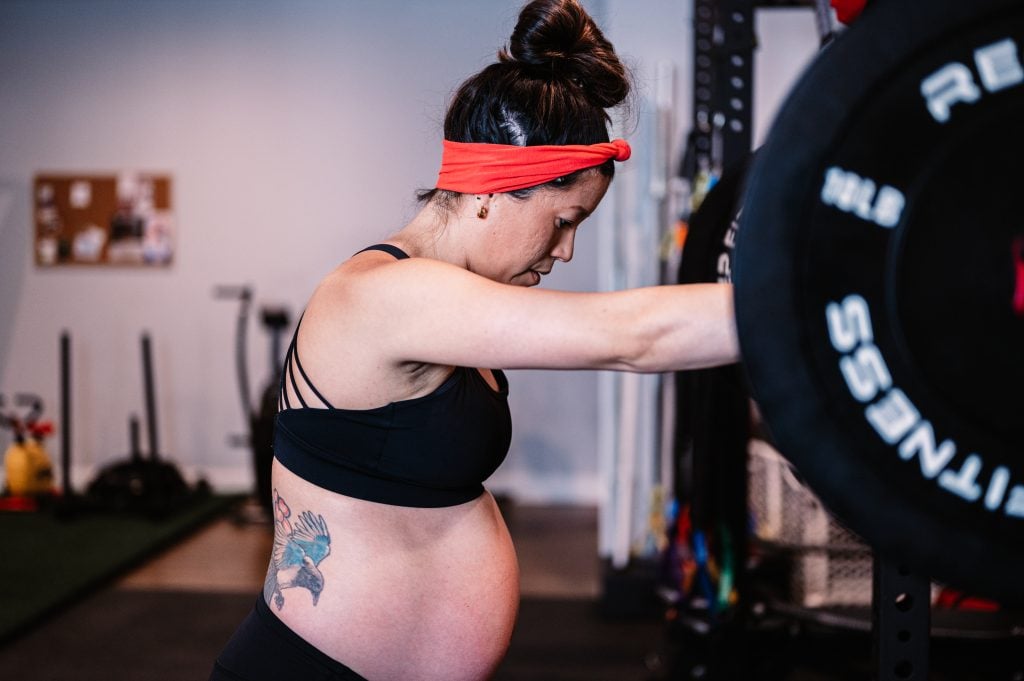
In addition to nutrition, regular exercise is your friend! Physical activity that is moderately intense lowers your blood sugar and makes you more sensitive to insulin so your body won’t need as much. I highly recommend MamasteFit’s prenatal strength training program, which is tailored to your current stage of pregnancy and includes moves that are tested and safe for pregnant women. The program guides you through modifications as your body changes and ensures you feel strong, functional and comfortable throughout your pregnancy and as you prepare for birth. I tested my blood glucose levels a number of times before and after exercise and found that my blood sugar levels were generally lower on days that I exercised than the days I did not. Make sure to check with your doctor about what kind of physical activity is best for you!
The Takeaway
I was able to control my gestational diabetes through diet modifications, regular exercise, food logging and glucose monitoring. My healthcare team also monitored my baby’s growth more closely, including two additional growth ultrasounds and nonstress tests starting around week 38. I was also given the choice to induce at 39 or 40 weeks, but I opted to wait until 40 weeks and ended up going into labor at 39+2.
During labor, my blood sugar was monitored at the hospital and I found I needed to continue eating snacks every few hours to avoid blood sugar crashes that were causing nausea. My son ended up being larger at birth than expected, but at 9lbs2oz I had an uncomplicated birth with minimal tearing.
What I was not prepared for (and what I wish I had been educated more about) were the complications my son encountered after birth. Due to hypoglycemia (low blood sugar) at birth, my son was extremely lethargic and not interested in feeding at all. The medical team tested his blood glucose levels soon after birth and found that his levels were very low. We struggled to breast feed because of this and ended up needing 24 hours in the NICU to bring his blood sugar levels up. This was extremely stressful for my husband and I because we hadn’t prepared ourselves for this possible scenario, but the hospital staff did a wonderful job treating him and getting him within a healthy range. Thankfully, my son began thriving soon after and we haven’t had issues with feeding since. Knowing what I know now though, healthy nutrition and lifestyle choices are an integral part of life for both my son and I, as our risk for Type II diabetes is now higher.
There is more to gestational diabetes than anyone can share in one article, but I hope this at least provides some foundational knowledge to help you on your journey. While you may experience some bumps along the way, know that you can control your gestational diabetes to provide the best possible outcome for you and your baby!
Additional Resources


Learn the science of pregnancy and birth to take the mystery of labor away! Understand why you are feeling what you feel, and learn strategies to confidently move through pregnancy and birth!
- 9h+ of Video
- Support Group
- Close Captioning


Instructor
GINA
Workout on-demand with our prenatal fitness workout videos! Each workout is 30-40 minutes to follow along as you exercise at the same time!
- Birth Prep
- All Trimesters
- Mobility Work
- 5 Workouts/Week
- Gym Workouts
- Self-Paced


Instructor
CASEY
Join us for on-demand yoga classes specific to each trimester! Each class is 20-30 minutes in length. All trimesters now available!
- Breathing Drills
- Lifetime Access
- Pelvic Opening