



Welcome to the MamasteFit Podcast! In this episode Gina and Roxanne discuss Gina’s personal postpartum recovery journey four weeks after giving birth. They outline the postpartum healing timeline, emphasizing the importance of rest during the first ten days to prevent overexertion. Gina shares her personal experiences, challenges, and the supportive measures she took to ensure a smooth recovery, including listening to her body’s signals to avoid pushing herself too soon. The episode also covers managing postpartum emotions, mental health guidance, and a cautious return to fitness, with practical tips and resources available. They highlight the importance of watching for signs of overexertion, such as increased bleeding or pelvic floor heaviness, and discuss the option of seeing a pelvic floor physical therapist before resuming exercise. Finally, they introduce supportive resources available through the MamasteFit platform and stress the importance of addressing postpartum mental health concerns.
Read Episode Transcript
[00:00:00] Gina: Welcome to the MamasteFit Podcast. In this episode, I’m going to be sharing my personal postpartum healing journey, because I am now four weeks postpartum. And then I also want to go over the healing timeline in the first month postpartum to help you understand when you should return to fitness and what you can be doing in the first four weeks to help support your healing journey.
[00:01:07] Gina: Welcome to the MamasteFit Podcast. I am now four weeks postpartum. Baby Zoe is growing really well. She’s currently napping on my chest. So if you hear any faint breathing, it’s her.
[00:01:19] Roxanne: It’s not me.
[00:01:20] Gina: It’s not Roxanne. She’s not pregnant breathing heavily into the mic anymore.
[00:01:25] Gina: But my healing journey has been going really well. And I think a lot of it is due to all of the support that I had in the postpartum, how my birth went, and then also how mindful I’ve been with my recovery in the past few weeks. And with how I’ve been feeling early postpartum, I totally can understand why folks may rush back to working out or doing structured exercise because I felt really good at a week postpartum, two weeks postpartum. And so it would have been really easy to be like, “Let me just go back to the gym. Let me just go for a run,” or, “let me just go do some sort of exercise,” because I was physically feeling really good. But I understood what the healing timeline looked like for me, even if externally I didn’t see a wound or something that needed to heal.
[00:02:15] Gina: And so I was, I felt really mindful with how I was approaching my healing, and I think that’s why I feel really good now here at four weeks postpartum. And I’m feeling pretty ready to go back to the gym and to return to structured exercise. Which I think if I had rushed the process at two weeks postpartum when I was like, “Oh, I’m feeling pretty good.” I probably would not feel very good right now.
[00:02:39] Gina: So first, I gave birth. Birth story was released a few weeks ago. So if you missed that, I am not pregnant anymore. After my birth, I surprisingly felt, I didn’t feel like I got hit by a really big truck this time. It was like a medium truck, a small to medium truck, I felt like I got hit by. The postpartum cramps were definitely not fun this time as well. But I didn’t have the same sore legs that I did from my previous births in the postpartum. And I think it was just because the labor was so much faster that I didn’t have time to get sore.
[00:03:17] Roxanne: You didn’t work as hard.
[00:03:18] Gina: That’s my theory. That’s my theory, at least. I’m like, it was because I just didn’t have time to get sore because my labor was faster this time.
[00:03:26] Gina: But still had all the usual postpartum cramps. And so the things that I found that really helped with that was Tylenol and a heating pad. I did have the after ease cramp bark tincture thing. I don’t really know how well it works. I only took it like a few times. I’ve definitely found Tylenol and heating pad to be pretty helpful And fortunately, the cramping only lasted for about three or four days, maybe. But I did have so many panic attacks that labor was restarting because while the cramping is really mild compared to a contraction, it still feels like it a little. It builds, and I was like, “Oh no!” And then, I was like, “Wait, it’s just, put a heating pad on, Gina. It’s okay.” And it definitely was worse whenever she was like nursing.
[00:04:14] Gina: With breastfeeding, and we’re good now, we’re good now, it wasn’t really ever bad for us, but I definitely had some nipple soreness at the beginning as she was just like, “What do I do?” And I’m like, “Let me help you.” But I wasn’t doing a good job helping her. I was a little bit lazy with helping with her latch. So I definitely had some sore nipples and maybe a little bit of nipple damage at one point, but I was using silverettes and whatever little bit of nipple damage I had went away pretty quickly and the soreness was like really eased off by them. And I would say like after, like by the time my milk came in or the mature milk came in at three to four days postpartum, her latch was definitely a lot better and I didn’t have as much soreness, but now I just had sore boobs because I was engorged. I replaced nipple soreness with whole boob soreness.
[00:05:04] Roxanne: Which is better.
[00:05:06] Gina: And so with engorgement, definitely just feeding on demand. It’s always like hard for me to answer whenever like the birth assistant or midwife and then pediatrician would ask me like, “How often is she nursing?” And I was like, “All the time. I don’t keep track. I can’t keep track. It’s all the time. Constantly.” They’re like, “How long?” “It varies. Five minutes, ten minutes, twenty minutes, who knows.” So I’m like, “I don’t know, every two hours for 10, 15 minutes, I don’t, I have no idea.”
[00:05:37] Gina: With my first, I tried to track all of that stuff because I was like, “Oh, this is really important. I have to track these things because people ask me these questions.” and I was like obsessive with trying to time how long we were feeding for and which side I was feeding on and how long her naps were that I felt like I was neglecting my baby because I was so like, “Hang on, let me put you down so I can get my app out to time this,” and obviously I wasn’t neglecting her, but it felt like I was so obsessed with trying to track that I wasn’t able to pay attention and like connect with my baby and so after about a few days of trying to track everything, I was like, “This doesn’t work for me. I’m not going to do that anymore.” That’s why I haven’t tracked anything this time because she just feeds whenever she wants. And so that was something that definitely really helped with engorgement was just like constantly feeding whenever she was showing like hunger cues or, “I am hungry, mother feed me,” just latching her.
[00:06:38] Gina: I did use like the Haakaa just to get a little bit of relief. So it wasn’t like quite as full, but I wasn’t doing like full pumping sessions. The only time that I would do like a full pumping session is if she was just like out cold and I was like trying to latch her and she’s like, the sleepy baby head where they’re just like, not, they’re not hungry. And I’m like, “But I’m so full! Please help me!” I would just, I would pump for a few minutes just to get some relief because it’s a lot. It’s a lot going on.
[00:07:08] Gina: Engorgement went away after about a week or two. Like it wasn’t, I mean I still get like pretty full if she doesn’t nurse, but it’s definitely not as bad as it was like the first like few days. And I would say like the first week postpartum was probably the most physically uncomfortable that I was. The bleeding was definitely the heaviest at that point. but I really just spent most of the time in bed, just, I had a coloring book because it got boring playing on my phone the whole time.
[00:07:38] Gina: My husband gets paternity leave, so he was home, bringing me meals to bed, tending to the older kids, entertaining them, and then I had these Play Doh kits and like different toys and stuff prepped for postpartum. So like Sophie, my youngest, or second youngest, middle little, could come into the room and play next to me. Like she definitely spent the most time like in bed with me and Zoe. And yeah, so we just, I did a lot of like prep for like toys, like independent toys that they, that my kids can play with. And then my husband being home, he was able to take them to the activities and they would go to an indoor play area and just try to get them out of the house.
[00:08:15] Gina: And then my mom who lives nearby was also over a lot, like the first few days, like cooking, like she was making her famous seaweed soup. I ate a lot of seaweed soup.
[00:08:25] Roxanne: As did I.
[00:08:26] Gina: First week or two postpartum, but it’s really good so I didn’t mind it. But I definitely was craving like lots of warm foods, like the first week.
[00:08:36] Gina: Like my husband tried to give me a salad one time and I was like, “No, I will not be eating this.”
[00:08:40] Roxanne: Get that away.
[00:08:40] Gina: I do not want this salad. So lots of the seaweed soup, oatmeals, definitely just, warm foods was something that I was super into. So I felt very fortunate that I had a lot of support in the early postpartum to where I could just lay in bed and not have to get up and do anything. I could just focus on baby and just focus on healing.
[00:09:01] Gina: And so the first, five to ten days postpartum, is the inflammation phase. And so this is when our tissues are swollen, like there’s lots of swelling, there’s lots of blood flow, and we’re trying to get all of that initial healing to happen.
[00:09:13] Gina: In addition, we have our placenta that is not there anymore. We don’t have a placenta anymore, but we do have a placenta scab. So we have that internal wound in the uterus that is healing still. And so it’s forming into that scab. And then around these like seven to 10 postpartum, that scab falls off.
[00:09:30] Gina: And so I think I was actually around five or six days postpartum where I suddenly had some increased bleeding for a few hours. And then there was like a clot, which was the scab, and then the bleeding went down. And back in, my midwife told me about this, I think my second birth, or my second postpartum, where she was like, “Yeah, like you will probably notice some increased bleeding around days like seven to ten. You’ll notice like a little bit bigger of a clot, and then it’ll go back down.” And she’s like, “And that’s pretty normal.” And I had no idea about this. I think I told you about it and you were like, “What do you mean?”
[00:10:05] Roxanne: Yeah, I mean I saw people for two days and then they left.
[00:10:08] Gina: Yeah.
[00:10:09] Roxanne: I never saw them again. I mean if they did come back like it was way past the seven days. So I’ve never, we never needed to know that. But I did learn in midwifery school. It’s called the eschar. It happens between 7 to 14 days Typically, most people experience it on day 10. And this is that scab again coming off just like you do with if you scrape your knee, the scab eventually does come off. It does bleed a little bit, but then it stops. So you might have increased bleeding for around 1 to 2 hours. It’s that bright red blood. You might see a clot, and then it should stop.
[00:10:47] Roxanne: That is the difference between like just increased bleeding postpartum where we want to investigate and this eschar because it should stop after one to two hours. So if somebody calls and they’re like, “Hey, I’ve had this increased bleeding all of a sudden. I had no red bleeding. It was like pink, if anything, and all of a sudden I’ve had an increase.” And they’re like, “Okay, let’s investigate to make sure that this is not anything abnormal.” But if it stops, you’re not having any, crazy cramping, it’s not continuing, as well as, you didn’t do anything particular to cause it to increase, maybe you didn’t just go walk a mile, oh, maybe that’s why it increased, or you’ve been laying in bed, so that’s, a good indicator that this is likely a normal thing that is happening, but let’s make sure that you feel good that it is not something abnormal and you’re just, hemorrhaging at home.
[00:11:40] Gina: No, that would be not good.
[00:11:43] Roxanne: So we do want to make sure that it’s only that one clot, you’re not saturating a pad in less than an hour for greater than those, like that little bit of a gush. And then as long as you’re not having any increased cramping, you’re able to walk around without feeling lightheaded or dizzy, then likely it is just this eschar and you can continue on, just continue monitoring it, of course, and call us if anything changes, but.
[00:12:06] Gina: Don’t call us, call your provider.
[00:12:08] Roxanne: Yeah, if I was your midwife, that’s what I would be counseling you on. Please don’t call MamasteFit! I’m not a licensed provider just yet.
[00:12:17] Roxanne: But yeah, like that would be like the counseling if someone calls triage and they’re like, “I’m hemorrhaging at home!” Let’s investigate. And it is normally just that eschar. It was actually one of the questions on my final.
[00:12:29] Gina: Oh look at that. You’re welcome. You’re welcome.
[00:12:32] Roxanne: I already took it.
[00:12:33] Gina: Nevermind. So yeah, it was around like day, like six, I think for me that I noticed it. And at this point I had just been laying in bed. So I was like, obviously it’s not from doing too much. Like I cannot do less than what I’m doing right now.
[00:12:47] Gina: And so after that, I was like, all right, the placenta scab has fallen off. I’m just going to continue to rest in bed, or mostly be off my feet, but still get up and start moving a little bit more around my house. So it’s the rule that I’ve seen is like 5-5-5, which may or may not be realistic for somebody, but it’s 5 days in the bed, 5 days on the bed, 5 days near the bed. For me, it’s 5 days mostly off your feet, like sitting, seated somewhere, like laying in bed. And then it’s five days, like mostly just in the house. And then after that, it’s five days, like starting to venture out a little bit, but not as not full activity yet. I find that to be a little bit more realistic, and it just made more sense for me postpartum. Because usually around like the 10 day mark, like I felt good enough to go outside my house for like really short walks and I’m talking like 10 or 15 minute long walks.
[00:13:41] Gina: Again, it’s important ’cause that first 5 to 10 days postpartum, that’s when your placenta scab is falling off, in addition to this is the inflammation phase of heal tissue healing timeline, and so we really want to offload the tissue as much as it can so that we can have that initial healing.
[00:13:57] Gina: Other things that I was using in that early phase to support my healing was one, that heating pad was really nice for the cramps, and then I was also wearing like compression garments, like really gentle compression garments. The intent was not to bring anything back together or heal a diastasis. It was really just to add in some gentle compression. And so once I hit like day five and I was starting to move around my house a little bit more, I started wearing like the Love Steady bloomers, which is essentially just like really thick underwear, providing some support. and that was like it for like the compression garment that I was wearing. But there’s like other brands out there, like Mama Strut, which is like shorts, like Love Steady has like thicker shorts that are a little bit more supportive as well. But there’s other… I think you said you found one at Kindred Bravely.
[00:14:45] Roxanne: Kindred Bravely has some underwear. It’s again, gentle compression, nothing crazy. But it has an option where you can get like microwaveable, I think, heat packs. I might be mistaken that they’re microwavable. But there are some ice packs. There are some ice packs that come in it. So you can use it during your period as well. Like your menstrual cycle. When you’re having bleeding, you can use it during then as well. But it comes like with a slot. So that you can put an ice pack on your perineum, which is, I thought, was a really cool, benefit, but a little bit more affordable. Not everybody can afford $68 bloomers.
[00:15:20] Gina: Yeah.
[00:15:21] Roxanne: Even though I just wear, you don’t wear one a day unless, obviously it gets dirty.
[00:15:25] Gina: I wore it for three or four days.
[00:15:26] Roxanne: You would wear it for, it’s like…
[00:15:28] Gina: Because it was on top of diapers.
[00:15:29] Roxanne: It’s on top of your underwear and diapers, so it’s not like it’s directly on your skin where you need to wash it every single day unless it gets dirty.
[00:15:36] Roxanne: So it’s like with a pair of jeans, you don’t, it’s not recommended to wash your jeans every single time you wear them if you didn’t know that, now you know, Gina.
[00:15:43] Gina: I don’t wear jeans.
[00:15:45] Roxanne: They even, I think I bought a new pair of jeans postpartum because I just wanted to feel better, and on the tag it literally said, “Do not wash every time. For longevity of your jeans, wash every three to five wears.” So similar with the bloomers, you’re not wearing it.
[00:16:00] Gina: Yeah.
[00:16:01] Roxanne: Once and done. So you don’t need to buy seven bloomers.
[00:16:05] Gina: Yeah, I only, I think I have three pairs that I just wore. Between you and I like we’ve gathered lots of bloomers.
[00:16:15] Gina: So that was what I was wearing to help with the inflammation. I only did ice for maybe like the first like few hours postpartum. I didn’t continue to do ice for several weeks, because we do want that swelling. And so if we’re using ice, it could inhibit some of that healing. but ice can also be really nice for pain relief initially. So it’s kinda like, well, I would like to, there’s a lot going on down there. I would like some relief. So ice can be really helpful, like the first like 28, or 28? 24 to 48 hours. 28 hours? And then after that, probably not super necessary. So if you’ve seen, the reels to make padsicles, probably don’t need to make, you probably don’t need to.
[00:16:56] Roxanne: Unless you’re delivering at home, or you plan to bring them to the hospital, padsicles after that first 24, 48 hour is not really beneficial. Unless you have hemorrhoids, I will say, padsicles might be nice on just your butt.
[00:17:11] Gina: Yeah, I don’t, I didn’t have any.
[00:17:13] Roxanne: Gina’s perfect.
[00:17:15] Roxanne: If you want another version of a postpartum experience, if this one is not you, listen to my postpartum experience.
[00:17:25] Gina: Roxanne definitely I had a rougher, rougher time than me from postpartum hemorrhage. Which makes a really big difference.
[00:17:32] Gina: After your postpartum experience, I had to go up to West Point to teach a class, and the whole presentation was like, “If somebody has a hemorrhage, they’re going to be, they’re going to have a really hard time. Like you need to take that in mind when you’re helping them return to fitness.” It was like the whole presentation was like, “Their birth experience has a big impact on how they heal. Like you can’t just rush back at four weeks postpartum, no matter what. It depends on, what’s going on with you.”
[00:18:00] Roxanne: Yeah, the number of times we tried to film Joan’s birth story, and every time I was like, “Nope, not happening. I almost passed out in the shower. I have a fever.”
[00:18:11] Gina: So it’s important to listen to your body.
[00:18:14] Gina: First five to ten days, inflammation phase, being off your feet can be really beneficial during this point. Or, as much as you can. Obviously not everyone’s going to have like tons of support, like paid paternity leave or maternity leave is not really a thing in our country for everybody. And so I want to acknowledge that I know that not everybody’s going to have the type of support that I had and they also have other children that you need to take care of.
[00:18:41] Gina: And so if I was like completely solo and I had to like completely take care of myself, things that I would have done for that first like week is one, I would have definitely set up lots of play stations in my bedroom for my children to play, and then probably relied pretty heavily on my oldest, who’s seven to help manage her siblings. So play stations in the bedroom, not like the video game, like work areas.
[00:19:06] Roxanne: Play stations.
[00:19:08] Gina: Work areas. Everyone has a video game system!
[00:19:11] Roxanne: You get a Playstation! You get a Playstation!
[00:19:16] Gina: We do have a Nintendo switch that they, that the older two do, were playing with a lot, so maybe a Nintendo Switch station.
[00:19:25] Gina: Definitely having meals prepped ahead of time. And either Fed and Fit has like a freezer meal plan thing that you can do to have set ahead of time, which just makes it so much easier to cook meals. We have a meal delivery service by us. So like a local caterer, does meal deliveries every week, and ordering those is like really helpful ’cause you just throw ’em in the microwave and then eat. If you DoorDash or Uber Eats, meal delivery things are really awesome. And so if you are looking for a Meal Train type option for like friends and family who maybe don’t live close to you that wanna support you, they can buy you gift cards for DoorDash or Uber Eats. Like our friends bought us gift cards to like the catering company that did the meal delivery. And Looking for options like that can be really helpful just to take the load off for that one week. Like it doesn’t have to be four weeks postpartum, it can just be okay for this one week we are gonna Door Dash, or we are gonna do these freezer meals, or people are gonna bring us meals, and we’re just gonna lay low, and we’re gonna use paper plates, and I’m not doing dishes.
[00:20:38] Gina: If you do need to get up out of bed during that first week, because you do have to tend to children, get some supportive garments, like either some gentle compression underwear, belly bands like the Mama Strut, anything that’s going to just give you a little bit of support can be super beneficial. And if you can’t lay in bed, like maybe you can sit down somewhere with baby or just trying to get off your feet as much as you can and just knowing it’s a short period of time. It’s just like that one week, really, that we want to be a little bit as mindful as we can, like as much as we can.
[00:21:13] Gina: After five ish days is when I started moving around the house a little bit more, but still primarily laying in bed, I was really like milking my whole like postpartum bubble and my support where I was like, “People are bringing me food in bed!”
[00:21:26] Roxanne: Like coffee delivery.
[00:21:28] Gina: You might as well rest here. I was doing like mobility in bed just to move my body around cause I was trying to get a little stiff. So like lots of thoracic mobility and like hip mobility stuff.
[00:21:39] Gina: We do have a free early postpartum recovery course that has a bunch of those exercises in it and mobility and breathing drills. And then it guides you through movement that first month postpar
[00:21:49] Gina: After about 10 days, my bleeding was definitely like significantly lower and I wasn’t wearing diapers anymore, but I had so many of them that I just kept wearing them because it was just more comfortable than pads for me.And so I started going for walks around 10 days postpartum and I started with just like a 10 minute, like super slow walk. Like Sophie, my middle little, was leading the way and so it was very slow. We investigated a lot of leaves and sticks and statues along the way. So very slow.
[00:22:21] Gina: And after a few days I noticed that my bleeding was not picking up at all which can be like a really good sign of whether or not you’re doing too much is if you’re bleeding increases. I noticed that it was not increasing. And so I was like, let me try two walks a day. And so I do one in the morning and then one in the evening, still both like 10 minutes long. And then after a few days of that, I think I was, I hit two weeks postpartum at this point. I was like, all right, my bleeding is not increased. I’m going to try to go for a longer walk. And I did I think double the distance, for one of the walks, and again bleeding didn’t increase, and I was like cool. We’re doing pretty good at this point.
[00:22:59] Gina: So after that initial tissue healing time of seven or five to ten days with that inflammation, we then move into the proliferation phase and so this is where the tissue is starting to regenerate and to develop again, but it’s a very weak version of it. And so you may feel pretty good after about two weeks postpartum where you’re like, the bleeding has like really slowed down. You’re no longer cramping. Like you might be like, “Wow, like I can go back to the gym. I feel really good.” But you have to remember that the tissue in that, that next, like two to three weeks is on the weaker side. And so it’s remodeling, it’s developing again, but it’s not quite that mature tissue yet. And so if you start to load it too soon, and too fast, it’s not gonna be at a good point. So hopefully that makes sense, like tissue is not super strong, it’s, we’re getting there, but if you overload it too much, it’s more prone to injury, because it’s like, it’s not quite strong enough yet.
[00:24:01] Gina: And so the next, two to three weeks postpartum, we’re starting to load the tissue, doing some light walks, doing some maybe some gentle core exercises, but still not super structured with the movement, definitely not like, trying to go for PRs in the gym at this point. Still trying to be very like slow. Cause we’re just allowing our bodies to continue to heal, but starting to load that tissue a little bit with the walks.
[00:24:26] Gina: So that’s where I’m finishing up right now, where I’m coming out of that proliferation phase and I’m getting ready to go into remodeling. And
that could happen anywhere from 21 to 28 days. So maybe I’m already in that phase. I don’t know. For me, four weeks sounds pretty good, but what I’m really looking forward to let me know that I am, like, ready to start returning to exercise or more structured fitness is when my bleeding has completely stopped, which it has pretty much at this point, which is, the earliest it has stopped for me out of all my postpartums, and I think it’s because this one I legitimately rested and was very mindful.
[00:25:04] Gina: So like my first one, I stopped bleeding around like four ish weeks as well. And that one I was mostly just at home because I had no friends and I was just there. I was just like waiting by the window for my husband to come home. But I also just had one child, so it was just like, it was easy to just lay there in bed with that child.
[00:25:25] Gina: The second, I decided that a really good idea was to go for a walk at a week postpartum and my bleeding significantly increased. And I actually didn’t stop bleeding until about six weeks with my second, even though I was, I felt like I was somewhat mindful. And then we had a birthday party at our house! And then we moved. So there’s a lot of moving pieces in the first six weeks and so it made sense that my bleeding kind of stayed for a little bit longer.
[00:25:51] Gina: For Sophie’s, it stopped around four or five weeks postpartum, but I went to the state fair like two weeks because I, it’s just once a year, I really wanted to go, and I was like, “It’ll be fine. I just won’t tell anybody.” So that one definitely might have delayed my healing just a little bit, but not too bad.
[00:26:10] Roxanne: She also went to a Renaissance fair.
[00:26:12] Gina: That was later. I was after a month postpartum at that point. The state fair was when she was like…
[00:26:18] Roxanne: It was four weeks.
[00:26:19] Gina: The state fair was when she was like two weeks and I was like, “I don’t want to miss it. I love the state fair food.” So I just threw my bloomers on and some leggings and I was like, “It’s fine!”
[00:26:29] Roxanne: I was not here to tell Gina to sit the F down.
[00:26:32] Gina: It’s fine.
[00:26:32] Roxanne: I was back in California.
[00:26:34] Gina: That’s fine. Yeah. I didn’t tell anybody. I didn’t even post it on Instagram. I was like, “I can’t let anybody know that I’m doing this shameful thing!”
[00:26:42] Gina: But this one, I legit just stayed home.
[00:26:44] Roxanne: Because the state fair is not till next month.
[00:26:46] Gina: It’s not till next month. And I think that’s why my bleeding has stopped the earliest, this time frame, was because I was really able to just rest. I also wasn’t trying to vacuum my house at a week postpartum.
[00:26:58] Roxanne: Yeah, which Gina…
[00:26:59] Gina: Which I did last time.
[00:26:59] Roxanne: Gina really likes to rage clean.
[00:27:02] Gina: I do. I just really like my house to look a certain way. So this time I just didn’t leave my room and then I didn’t know what it looked like out there.
[00:27:10] Gina: So my bleeding has pretty much stopped. And so I’m going to resume structured exercise with the MamasteFit Postpartum Fitness Program. The return to the fitness program, obviously. And it’s going to be very slow, very methodical with the return. It’s a program that we’ve had for seven years now that we’ve just continued to refine over the years. And so I’m definitely really excited to make more improvements to it and to upgrade it because I do that every postpartum where I’m like, “I’ve learned new things,” and I’m just continuing to improve the program. Like client feedback of what movements work for them, which ones maybe didn’t feel as great.
[00:27:49] Gina: And so definitely really excited to start that. And it’ll mostly be like body weights and bands at first, just trying to relearn movement patterns and learning how to move with better form, like integrate breathing and then slowly adding on more weights over the weeks. This little girl will be there hanging out with me for the first like few weeks. She might be a little potato and then she’ll be like lifting her head and then roll away. So that’ll be really fun to navigate working out again with a baby because it’s a little bit different than working out with a toddler and older kids. Can be a little bit more frustrating because they’re a little bit more demanding. They need me, apparently.
[00:28:30] Roxanne: You are their entertainment.
[00:28:32] Gina: And so that, working out with a baby and with children is not the same as pre pregnancy, but I, my goals for myself, physically, with physical, athletic performance is not the same as it was pre pregnancy either. Like I’m just training to be healthy, to be able to get up and off the floor with my kids and play with them and to live a full life without being in pain. And yeah.
[00:29:58] Roxanne: So we’re talking about a lot of Postpartum journey for Gina, but if you are listening and you’re in your postpartum journey, or you’re about to enter, things that we can be mindful of is, Gina sharing her bleeding timeline.
[00:30:09] Roxanne: So a normal bleeding timeline is around day three to five. You’re going to have that increased heavier bleeding, the bright red, and it slowly transitions to a darker red, almost brown, and it might last till day five, sometimes a little bit longer. This is just an average range. It stops between day three to five or starts to slow down. Every day it should become less. If it starts to increase, or it was dark brown, and now it is bright red, those are yellow flags that we should be mindful of and monitor for, and let our provider know if they ask. Or if it gets so heavy that we’re saturating that pad in less than one hour, or we’re passing large clots and we’re continuing to bleed after that clot, those are red flags that we need to call our provider or head into the hospital to be assessed for a potential delayed postpartum hemorrhage.
[00:30:59] Roxanne: After about that day three to five, it should slow down to where our bleeding is now in the second phase. So this is called cirrhosa. The first phase is called, rubra. Obviously, rubra is red. Cirrhosa is more like, light pink, maybe a little yellow, clear ish type bleeding. And you might see this for up to 22 days, maybe potentially a little bit longer. Everyone has like a different timeline.
[00:31:24] Roxanne: And then after that, it’s still somewhat above a bleeding. It’s more white. And this is some people mistake it for vaginal discharge. “Oh, now I’m just like, after 22 days, I’m having increased vaginal discharge, but like nothing crazy.” This is actually that last phase of healing. It’s called alba. White. And this can last for six to eight weeks. And you might notice that alba might have little pink tinge every once in a while and that’s totally normal. But bleeding can last for up to six to eight weeks for some people.
[00:31:57] Roxanne: Again, red flags are if you are in that cirrhosa phase, and all of a sudden you have bright red bleeding, and it continues, that would be a sign that potentially it could be either your eschar, so monitoring to make sure it stops, or it could be a sign that you’re doing too much.
[00:32:14] Roxanne: So next, Gina talked about mindful things that she was doing to make sure she wasn’t doing too much was monitoring her vaginal bleeding. So vaginal bleeding is one of our best indicators of when we’re doing too much too soon. And for postpartum healing, we’re wanting to look at a few things to see if we’re doing too much too soon.
[00:32:31] Roxanne: One is if your vaginal bleeding slows down and it picks back up, that could be a sign that you’re doing too much too soon. So if you go for a walk and then either that night or the next morning you notice you’re having a little bit more bright red bleeding, that would be a sign that walk was probably too much. Let’s rest for another 24 hours and then try again.
[00:32:49] Roxanne: The next thing is that you might start feeling is you might start feeling heaviness in your perineum or your vagina, where it feels like either like a tampon might be falling out or even that like first couple hours postpartum, where you just pushed a baby out, it feels a little heavy. If you start noticing that type of feeling again, that could be a sign your pelvic floor is tired, and it’s like, “Please. Sit the F down. I’m tired. That was too much.”
[00:33:13] Roxanne: And then the last one is if you start getting chills, or it feels like you’re having the flu, you have a fever, or it feels like you have the fever, this is like your body is achy, all of a sudden, out of nowhere, that is another sign that you did too much too soon.
[00:33:29] Roxanne: So look at our bleeding, feel how your pelvic floor is feeling, especially if it felt good and now you’re feeling the heaviness, so this is changes than what you’re feeling before. And then like flu like symptoms where it’s like all of a sudden you’re like, have a fever and you’re so cold or you’re like really shaky. Those would be signs that we’re doing too much too soon.
[00:33:49] Roxanne: So for me, I had all of those symptoms for a lot longer than Gina after my postpartum, where like my bleeding lasted like almost a week and a half. I definitely had flu like symptoms and someone messaged us about it that they like, they’re like, “Yeah, randomly for the past two nights, like at the end of the day, I get like super, super cold and really like shaky and I don’t, I have to put seven blankets on and doesn’t go away till I feel warm.” and I was like, “Oh, you probably are doing too much.” And she’s like, “Oh yeah, we did do a lot of things during that day. So that’s, that coincides with the symptoms that I was feeling.” And I was like, “Yeah, I took a shower one time and I felt that afterwards.” The shower was too much for me at four weeks postpartum.
[00:34:34] Roxanne: So know that just because Gina had a really different postpartum experience than maybe you have experienced, know that other people out there are experiencing something different and we have, we’re all individual people, we’re experiencing different things. So being mindful of those things in your postpartum with increased bleeding, increased perineal pressure, as well as do you all of a sudden feel achy and really shaky and chilly at the end of the day? Those are signs that we’re doing too much and we need to try to if we can the next day.
[00:35:04] Gina: I started, speaking of pelvic floor heaviness, when I started baby wearing, I did notice that I would have a little bit more heaviness feeling after that because of my posture. So I was definitely arching a little bit more, while I was baby wearing, and also it’s just extra load on my body. so the days that I was baby wearing, I definitely made sure I was spending the evening primarily sitting down, doing some more mobility and pelvic floor releases to help relieve that heaviness feeling.
[00:35:33] Gina: Because sometimes we think, the heaviness is my organs are falling out, or it’s prolapse, which it could be. The pelvic organs do sit lower, they’re not falling out, they sit lower after birth, just normally. And then over time, they begin to lift back up. So it could just be your pelvic organs, but it’s most likely pelvic floor tension. Cause when we clench, it creates that feeling of heaviness and it’s also not supporting the organs as well.
[00:35:59] Gina: And so for me, I knew, okay, I’m having more heaviness in my pelvic floor. I was baby wearing today, like, my posture was probably a little bit off, and I probably have a little bit more tension from that. Cause I was trying to stabilize and clench a little bit more. And so in the evening doing some mobility, some pelvic floor releases, and then also just focusing on resting a little bit more the next day was always like super beneficial.
[00:36:24] Gina: And during this timeframe, we can also try to connect with a pelvic floor PT as well. And so it’s, usually you don’t get your appointment until you’re like six to eight weeks postpartum. But if you can connect with one prenatally and then try to have something set up, like maybe just virtually during this timeframe to be super beneficial. We did have somebody ask, does everybody have to see a pelvic floor PT before they go back to working out? And I was like, I don’t think everybody needs to see one to resume exercise, if you’re not having issues. Like if you’re like, I don’t really feel like heaviness, like I don’t have pelvic pain. Like I’m not having issues like peeing and pooping. Like I don’t have low back.. Or if you’re not in pain and you’re not noticing any like significant issues or not even significant, like just issues, non significant issues, then I would say like you can resume your workout program slowly, but I think it’s helpful to see a pelvic floor physical therapist, if it’s available to you, to just get like a gauge on what’s going on.
[00:37:31] Roxanne: Just check it.
[00:37:31] Gina: Yeah. And so for me, I don’t have significant issues that I’m like, “Oh, like this is like interfering with my life,” kind of thing. But during my pregnancy, I was like, “I’m going to the bathroom a lot more frequently. Like I have more bladder urgency. Like I feel like I’m always having to go and it seems more than usual.” It’s not impacting my life. It wasn’t causing me pain, but I was like, this seems like something’s going on. And so I connected with our pelvic floor PT and she was like, “Yeah, your right side pelvic floor is just really active and it’s pushing your baby forward onto your bladder, which is causing this urgency for you. So if we can release that tension and we can offload that side of the pelvic floor, baby’s going to sit more back. She’s going to be in a better position and it’s going to relieve some tension on that bladder.” Which, it was super helpful, and it didn’t seem like a significant issue, but I was like, let me just check in, see if I can learn something about my body.
[00:38:25] Gina: And postpartum, it’ll be the same thing for me, where I’m like, I don’t really notice, significant issues, occasionally pelvic heaviness if I’ve been baby wearing, like maybe a little bit more constipated than usual, cause postpartum. And so these aren’t issues that are like impacting my life and I’m not going to necessarily be like, “I must see a PT before I resume my workouts,” but at some point in the next like month or so, I will go see a pelvic floor physical therapist just to get a check in and a gauge on am I missing anything? Is there something that I could do to slightly improve how I’m feeling? But again, I don’t feel like it’s like an urgent thing for me right now.
[00:39:09] Gina: And so I don’t want folks to feel like you have to see a pelvic floor physical therapist in order to start working out again, because I don’t think everybody needs to, but I think it’s good to get a gauge on where you’re at. A starting point of oh, this is like one extra thing that I can do to help improve my function.
[00:39:29] Roxanne: And in some countries, it’s like an automatic thing that somebody, that you will see a pelvic floor PT during your postpartum And it’s like just standard of care. Not in America, but in some countries, which I think is really cool. Because again, some people will have prolapse and other things going on and not even know it.
[00:39:49] Gina: Yeah, and it doesn’t mean that it’s an issue. We’ve had, we have a few episodes on like pelvic organ prolapse in case that’s something that you’re very worried about, because it is like a scary thing to think about. And just know that it’s not. The world is not ending. You probably don’t have any symptoms.
[00:40:07] Gina: Things that we do want to think about when it comes to finding a pelvic floor physical therapist, because what I don’t want to happen is people that are listening to go see their PT and then have no improvement for six months. And all they did was lay on the bed and do kegels and clamshells and get biofeedback and they’re like, “None of my symptoms are improving. I don’t know what’s going on.” So finding a PT that is going to bridge that gap between rehab and fitness is going to be really important. So you can call to ask “Hey, what does my treatment, what would my treatment plan look like?” Or at your first session, you can go over what would be my next like few months with you look like because it’s a time investment and it’s a money investment to see a PT. And so I don’t want people to be wasting their time with somebody that’s not going to bridge that gap. If you are like, “I don’t even know how to find a pelvic floor PT,” pelvicrehab.com is a directory that you can go to, to find a pelvic floor physical therapist. And then you can either call their clinic or at your first appointment, discuss treatment. “What are we going to do to go forward with this?” And if you’re like, “I don’t know if that’s very progressive,” then maybe find a different PT, it’s okay to shop around for PTs.
[00:41:21] Gina: We have a PT, or we have two PTs in our gym now that you can see if you’re local to us. And they do virtual consults as well if you’re like, “I’m not really getting relief from what I’m feeling. I don’t feel like there’s progress happening within my treatment plan.” We have PTs for you as well, and there are tons of PTs online that do virtual consults. If you see one on Instagram that you really connect with, connect with them, work with them too. It does, it’s not the only one in your area, or if you don’t have any in your area, for example. Cause I really hate it when we’re, when we say “Hey, go see a pelvic floor PT,” and then somebody messages, “I have been seeing one for six months, and I see no improvement.” I’m like, “Find a new one, please.” But, yeah.
[00:42:02] Gina: But overall, postpartum, feeling, this is probably the best I’ve felt out of the four. Which I, felt fairly good in the previous ones as well. I think my first one was probably the hardest, cause I, that was the hardest labor, I had an episiotomy, I was struggling with breastfeeding, mentally, just all over the place. So this one, I, feel very, complete with our fourth baby.
[00:42:28] Gina: So mentally, the things that I definitely struggled with on, day three, I think is when, the hormone crash happens. It was like, the world is ending, doom and gloom. And so what happens for me is it’s like, this is the beginning of a new chapter, which reminds me that all chapters end, and then it gets really dark really fast.
[00:42:50] Roxanne: You’re gonna leave for college tomorrow and never gonna visit me.
[00:42:52] Gina: And then we die. It gets really dark very fast for me, and so that becomes very overwhelming. Where you have that, ache in your chest, and, your throat is closing up, and you’re just like, “Oh my god.” And that is definitely something that I’m not, it’s not consuming me quite as much as it was like day three postpartum, like it feels like it’s less overwhelming and like all consuming now that we’re at like four weeks.
[00:43:26] Gina: And I think it was, it’s just like a good reminder that this is a finite time that we have, with them this little and with them, as children in our home. And so it’s reminding me to be more present and that, hey, we don’t have forever, so we have to really enjoy the time that we have. So it’s been a good reminder with that.
[00:43:48] Gina: I have been in Reddit forums. “How do you deal with your children growing up?” Is what I Google at night. I mean not every night, but, and there was two posts that really helped me cause that’s essentially what I’m mentally struggling with is this tiny thing gets bigger. But I want her to get bigger, because it’s really cool when they grow up, but also, don’t do that, please. Don’t leave me. And so one thing was…
[00:44:19] Roxanne: Fear of abandonment, Gina.
[00:44:21] Gina: I know. So one thing was, they’re not always going to be children forever but you get to be their parents forever. And I was like, “I’ll always be your mommy!” And for whatever reason, that was comforting for me. Cause it’s like, we want as parents to help them grow up so that they can go off into the world and do their own thing. But we’re always gonna be parents for them, we’ll always be that kind of, safe place for them. And so I was like, okay, they won’t always be children, but….
[00:44:55] Roxanne: They’ll always be your babies.
[00:44:57] Gina: I’ll always be their mom. And so that was comforting. And then the other Reddit post, and this one’s a little dark, but it was like a good…
[00:45:08] Roxanne: The other one wasn’t dark?!
[00:45:10] Gina: So the other one was, a woman that was talking about her family, like her sibling, her sister, and she and her dad, and she was like, “My dad had to bury my sister when she was 13 because she passed from cancer.” So that’s, what’s dark about it. And she’s like, “And he was like, ‘time is a gift and them growing up is a gift.'” And so I was like, “WAAAAH!” Then it, because they, need to grow up because time is such a gift.
[00:45:52] Gina: But it’s still, I would say that’s probably… physically, I feel great!
[00:45:57] Roxanne: Mentally, spiraling.
[00:45:59] Gina: Mentally, not always great, but doing better. I, the things that I have, in addition to reading those kind of like reminders, was just saying out loud, how I’m feeling has been very helpful.
[00:46:14] Gina: It just that emotional release where I’m like, “Oh, finally! Got that off my chest!”
[00:46:20] Roxanne: Onto yours!
[00:46:22] Gina: Onto the next trauma! So like whenever I’m feeling like a little, like emotionally overwhelmed, like just talking to my husband and crying has been super helpful. Like writing in a journal and like crying and just essentially the emotional release has been very helpful for me to just feel a little bit better, a little lighter.
[00:46:44] Gina: And then just trying to enjoy time with the kids when they’re this little. And then remembering that I’m 36 and my mom can’t get rid of me, so. It’s not 18 summers. I don’t think she wants, I don’t think she’s like, “Please go away,” by any means. But I’m like, I’m 36 and she can’t seem to get rid of us.
[00:47:05] Roxanne: She still comes over every day.
[00:47:08] Gina: So yeah, I would say physically, I feel great. Ready to go back to workouts. My bleeding is gone. Zoe is growing really wonderfully. We did have a scare where we thought she had spina bifida occluda because she has a sacral dimple with hair tuff on it, and so I was spiraling from that. She doesn’t. She’s good. I just got a phone call in the middle of this podcast that she was fine. So I was definitely spiraling about that for a little bit, even though it’s asymptomatic wouldn’t have really meant anything, but she’s good. She has a perfect spinal column. So I was worried about that for a little bit, but.
[00:47:47] Gina: Feeling good. Mentally, it will get easier as I move out of this phase. And if it doesn’t, I will seek therapy. I will see professional assistance, which is something that I did after Eoghan’s birth when I was really struggling with postpartum anxiety and OCD.
[00:48:04] Gina: But yeah, so that’s how I’m feeling postpartum that’s my journey.
[00:48:08] Roxanne: If you are feeling the same way as Gina, please reach out to a therapist if you need someone to talk to. There is registries for perinatal specific therapists online, and we’ll link them below for you to find somebody in your area to talk to. I see a therapist. I think they’re great. Medicine is also available if you need assistance.
[00:48:28] Roxanne: So a normal time period for us to be feeling, very overwhelmed with our emotions is usually within the first few weeks. 14 days. This is a very normal time period called Baby Blues. About 80 percent of people are going to experience that. When it persists past that time period, that’s when we want to start looking for red flags of are you feeling sadness, anxiety, and it’s affecting your daily life. That is like the biggest thing about all of these symptoms is how is it affecting your daily life? And is it like preventing you from doing certain things, where like, you’re not wanting to get out of bed? You’re not wanting to leave your house based off of different things that you’re experiencing. If you’re still having these symptoms at four weeks, postpartum, at least that would be an indicator to reach out to somebody to talk. Because it could be fine, all you need is that talk therapy, but maybe some medication could be beneficial. Because there is studies that show like if you have depression or anxiety that is untreated, there is potentially an increased incident in children having those depression and anxiety symptoms as they grow up. So getting treatment, whether talking to someone or medications, can be really beneficial.
[00:49:35] Roxanne: If you’re having intrusive thoughts, these can be normal intrusive thoughts, but what we’re doing with those intrusive thoughts is important because if we’re then not doing things that we need to do because of these intrusive thoughts, that is impairing our normal daily life, and that would be an indicator to reach out to a therapist.
[00:49:53] Roxanne: If you are having thoughts of harming yourself or others, to include your children, that is a red flag and please seek help immediately by going to a hospital. An emergency department will be able to help you in those situations. Anxiety, depression is very common in the postpartum period and there are great treatments available for people.
[00:50:12] Roxanne: So we’re going to link some directories below for you to find someone in your area or potentially even online, which is a really great resource to do online therapy so that you can get some help if you’re experiencing any symptoms.
[00:50:25] Roxanne: Mental health in the U. S., especially in that first year postpartum, is the number one maternal mortality indicator now based off of CDC’s most recent statistics. So it is super, super important that we’re educating people on mental health in the postpartum period and that we’re seeking help if we see someone that needs help or if we’re seeing it in ourselves.
[00:50:46] Gina: So thanks so much for following my pregnancy journey with Zoe, the birth, the postpartum. I’m excited to return to fitness and to get back to lifting weights and seeing her crawl and walk and start lifting weights too in the gym. That’s always been a really fun part of MamasteFit for me is having my kids get to be a part of this whole journey as well.
[00:51:11] Gina: And so if you want some support during your postpartum, we have our free early postpartum recovery course that we’ll link down below that you can join. And then we also have our postpartum fitness programs as well. And we have a bunch of different options for that.
[00:51:23] Gina: We have our self paced programs, which are sport specific. So we have our general fitness one, which is what I’ll be doing. We have a running one, Olympic weightlifting, and then a military one. And so we have different self paced options if you prefer to work it out at your own pace with an app.
[00:51:38] Gina: If you prefer to follow a video as you work out at the same time, we do have a post program on demand program that I will be refilming over the next six to eight weeks. So it will be updated, new videos, new programming, because again, I do like to update our programming every few years to make sure it’s got new exercises based on client feedback, based how it feels in my own body. Cause there’s always opportunities to learn and improve.
[00:52:00] Gina: We also have a postpartum education course and newborn care course that includes infant massage and infant CPR and choking, if that is something that you’re interested in.
[00:52:09] Gina: And so check out all of our postpartum support options on our website at mamastefit.com. And as a thank you for listening to this entire episode, you can use code STORY10 to get 10 percent off.
[00:52:18] Roxanne: And this podcast is sponsored by Needed, a nutrition company focused on the perinatal timeframe that both Gina and I have utilized during our pregnancies, postpartums, even still now and to this day. And if you want to check them out, you can head to thisisneeded.com and use code MAMASTEPOD to get 20 percent off your first order or the first month of your subscription.
Additional Resources
- Find a perinatal specialize therapist near you:
- PSI: https://www.postpartum.net/get-help/chat-with-an-expert/
- Psychology Today: https://www.psychologytoday.com/us
Prenatal Support Courses
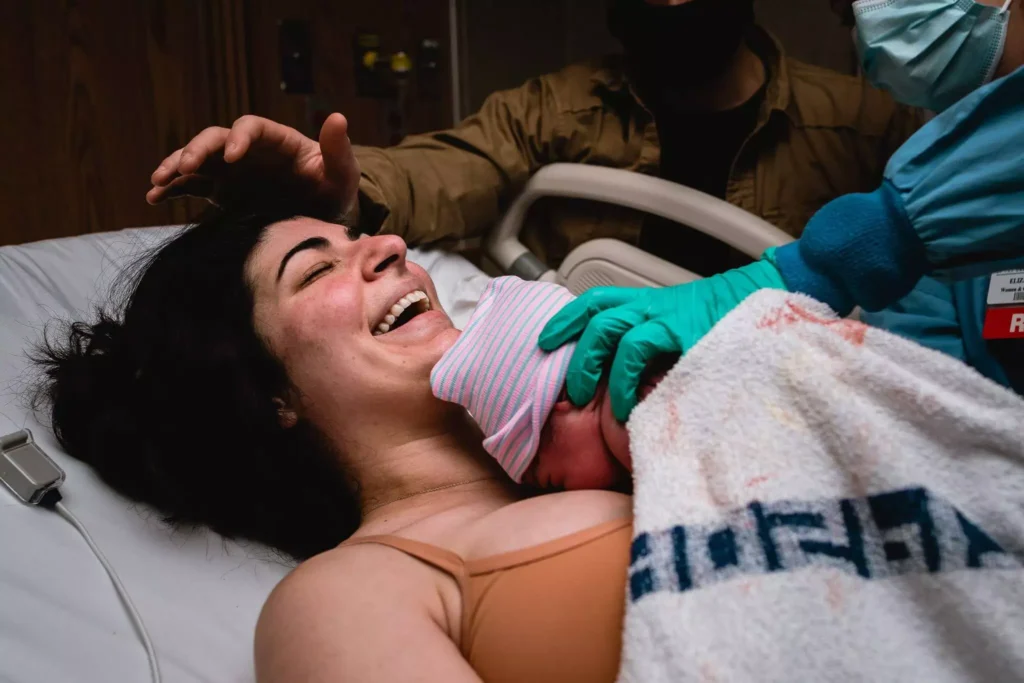

Learn the science of pregnancy and birth to take the mystery of labor away! Understand why you are feeling what you feel, and learn strategies to confidently move through pregnancy and birth!
- 9h+ of Video
- Support Group
- Close Captioning
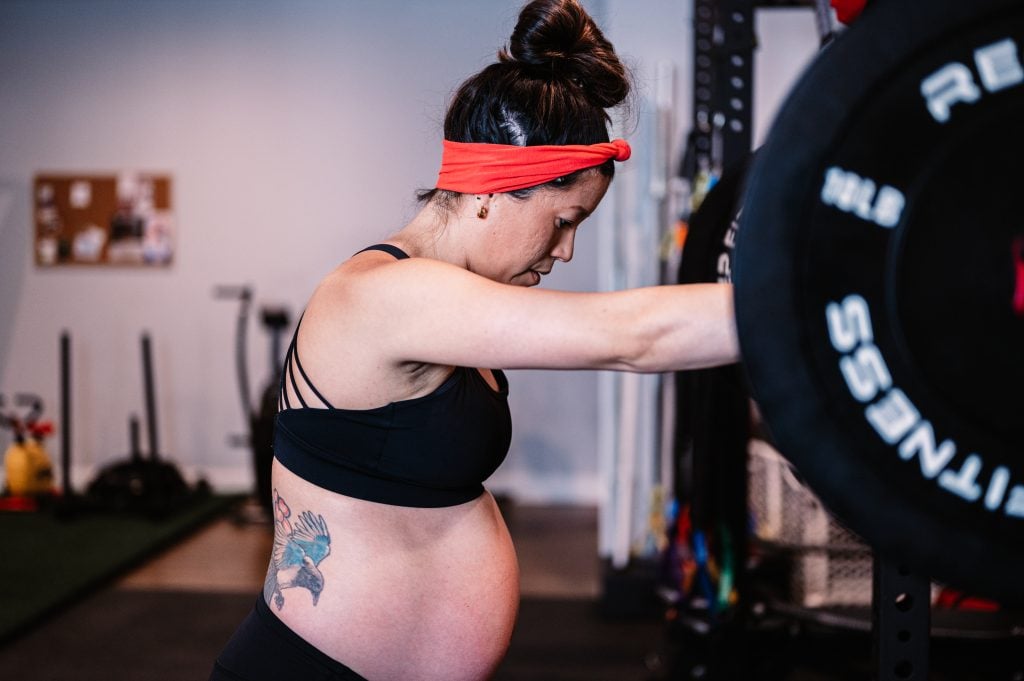

- 5 Workouts/Week
- Gym Workouts
- Self-Paced

Instructor
GINA
Workout on-demand with our prenatal fitness workout videos! Each workout is 30-40 minutes to follow along as you exercise at the same time!
- Birth Prep
- All Trimesters
- Mobility Work

Instructor
GINA
Find comfort and relief from pelvic girdle pain throughout your pregnancy and postpartum period! This program incorporates myofascial sling focused exercises to stabilize across the pelvic girdle joints.
- 3 Weeks
- On Demand Workout Videos to Follow