



Welcome to the MamasteFit Podcast. In this episode, Gina, a perinatal fitness trainer and birth doula, shares her personal journey and preparation strategies for her third unmedicated home birth. Roxanne, a labor and delivery nurse and student midwife, joins her to provide additional insights and support. Gina discusses her experiences with previous births, the mental and physical techniques she’s employing to prepare for labor, and the importance of having a supportive birth team. The episode highlights the mental game of unmedicated birth, the role of supportive affirmations, physical exercises, and key items in her labor basket.
Read Episode Transcript
[00:00:00] Gina: If you’re wanting to give birth without an epidural, I’m going to share what I am personally doing to help prepare for my third unmedicated home birth, and Roxanne is also going to share what she has done in previous births to prepare for her birth, but we’re mainly going to be talking about me and how I am preparing for my birth because I’m the pregnant one right now. So hopefully you find this episode helpful and let’s get into it.
[00:01:13] Gina: Welcome to the MamasteFit Podcast. I am currently pregnant with baby number four. I’m 34 weeks now at the time of this recording. Who knows how many weeks I’ll be when this is out?
[00:01:22] Roxanne: 41.
[00:01:23] Gina: Something, 41 and eight. I tend to stay super, super pregnant. But I want to share what I am doing during my pregnancy to help prepare for my third unmedicated home birth, because I’ve had some moments during this pregnancy where I’m like, “Have I made a mistake? The baby has to come out of my body?” Because I can recall moments where it was really intense and sometimes it scares me, even though I’ve done it two times already.
[00:01:48] Roxanne: I think it’s also, your first one was a three year age gap, so it like had been three years since you last were in labor.
[00:01:55] Gina: Yeah.
[00:01:55] Roxanne: And so you’re like, “Oh, I kind of forgot.”
[00:01:56] Gina: This is the shortest age gap.
[00:01:58] Roxanne: You forgot what it was like. But then, yeah, Eoghan and Sophie were like over two years, and this will be less than two years that you have given birth. So it’s the freshest.
[00:02:10] Gina: I know. When I was getting ready to start pushing with Sophie, like I knew that that was what was going to happen.
[00:02:15] Gina: I’m like, “As soon as I stand up, I’m going to start pushing.” I’m like, “I need a moment,” and I just had to gather myself because I remember how intense it was. After the fact. I’m like, “That was really cool.” But during has a lot.
[00:02:28] Roxanne: You’re like, “No, I don’t wanna this.”
[00:02:30] Gina: It’s a lot to go through. And so I was like, I was like almost scared in that moment, or not almost, I was scared. And I was like, “I don’t wanna stand up. I’m just gonna sit here.”
[00:02:39] Roxanne: Yeah.
[00:02:39] Gina: And I’m like, I’m just gonna stay here.
[00:02:41] Roxanne: Which just shows the power of the mind.
[00:02:43] Gina: And then eventually I was like, “All right, I need to get up and do this.” But then I had a birth that I supported like two months, two or three
months later. It was one of our OG gym clients. And it was her second unmedicated birth as well, and she was like getting ready to, she was like, she’s at that moment where she knew “I’m going to start pushing,” and she looked at me, she’s like, “I’m really scared for pushing.” And I was like, “Girl, I know! I know!” And her husband was like, “That’s not helpful.” And I’m like, “I was scared, too.” Like, it was really scary because you know how intense it is.
[00:03:16] Gina: And so after the fact, I was talking to her about it. I was like, “Was that helpful? Did I fuck up?” And she was like, “No, it was so helpful. I felt so much less alone in that moment to know that it was okay that I was scared, even though I had gone through it before.”
[00:03:28] Roxanne: Yeah. It’s like, what is worse? Like never having done it and experiencing unmedicated birth or like doing it again willingly after experiencing it?
[00:03:38] Gina: So, I don’t want our listeners to think like I was like traumatized from it or anything. Because I do, obviously, like, I liked the experience enough to do it again and again, but it’s a lot in the moment. It is very intense. Like, in the actual experience, and then looking back, “I’m like, that was pretty cool. That was awesome.” But in the moment, I’m like, “No.”
[00:04:01] Roxanne: Obviously she wants to do it again, so it’s not. I did it three times, so, also.
[00:04:05] Gina: But, I have had moments during this pregnancy where I’m like, “Oh my god, I have to do that again. I have to go through pushing again.”
[00:04:12] Gina: Fortunately, it’s been very short each time. But you just had a really long pushing phase.
[00:04:17] Roxanne: I know, but my baby was 8 and a half pounds.
[00:04:19] Gina: But I don’t want to do it for 45 minutes. So I have had some moments where I have felt a little bit more anxious about it.
[00:04:26] Roxanne: I guess, yeah, both of your pushing phases have been very short.
[00:04:29] Gina: Where I don’t remember being as anxious with my last pregnancy. Like I, I don’t remember feeling super anxious about going into labor and laboring and pushing and maybe it’s because it’s my last planned
pregnancy. I always say that. It’s my last planned one. And my husband’s like, “Can you stop saying that?”
[00:04:48] Roxanne: But maybe it’s because my birth. I pushed, like, for 44 seconds, Colin came out, and it was a serene, beautiful, calm experience. And then my last one that you just went to was not that. I pushed for 45 minutes. It was shit.
[00:05:07] Gina: Still an empowering experience.
[00:05:08] Roxanne: Still a beautiful experience.
[00:05:09] Gina: But maybe that’s the other thing, too. Like, I think I convinced myself this last birth and pregnancy, that I was gonna have that serene, calm birth. That I was gonna have that pain free birth, that like…
[00:05:20] Roxanne: It wasn’t pain free.
[00:05:21] Gina: I mean, like, but I was gonna be that like, calm birthing goddess. And it came to and I was like, “Nope, that is not me. That is not how I birth, especially pushing.”
[00:05:29] Gina: I’m just like, like there’s videos of me just like clawing onto the side of the birth pool, because it’s really intense and I’m like just I’m just along for the ride, my like spontaneous pushing urge, very strong, very overwhelming.
[00:05:45] Gina: And so I think now that I am in tune with reality and with how I give birth, I’m like, I will not be having a serene birth. I will be having an out of body experience again. And that was kind of stressful, like in the moment. And so maybe that’s what’s been stressing me out a little bit. But I’m sharing that not to like scare anybody that’s wanting an unmedicated birth, but to kind of validate anybody that’s kind of nervous where they’re like, “Well, what if, what if I ended up changing… What if I end up changing my mind. And it’s too late?” Or, “I’ve done it before, but I’m feeling kind of anxious again.” Like it’s, I think it’s normal, like when you’ve gone through it to have some anxiety about it again, because again, it’s not, it has not been a pain free experience for me. It has been a hard journey. Like contractions are not pain free for me. I wouldn’t describe them as the worst pain I’ve ever felt, but like also not something I want to do every day or for multiple days if possible. And so I just want to normalize that sometimes it’s, it’s okay to be nervous and to be a little bit anxious about it.
[00:06:59] Gina: However, I have had really positive experiences giving birth unmedicated. It’s been very, like, empowering for me, I’ve felt very, like, powerful during it. Like, the, my contractions didn’t feel as painful as, like, my first birth, where I was in this different environment, where I had people I didn’t know kind of surrounding me, and so, like, I feel confident in the choice of where I’m planning to give birth. I feel confident with the decision to give birth unmedicated, but I still feel have some anxiety for it. So what am I doing to help with this?
[00:07:35] Gina: One, denial.
[00:07:38] Roxanne: Denial is so strong. It’s… being in denial is so powerful.
[00:07:43] Gina: So aside from denial, I have been doing meditations with gentle birth that kind of reinforces that this is a normal process, that it can be very powerful, and kind of reinforcing like the mantras that I’m kind of like repeating to myself. I have these little birth affirmation cards that I have in my bathroom that I got from Seasons of Mama. For whatever reason, I feel so connected to this business and this lady I’ve never met and or interacted with very much.
[00:08:08] Roxanne: We need to go to Australia.
[00:08:09] Gina: But I am just like, I must share about her to the world. I don’t know why. I just, maybe it’s the cards.
[00:08:16] Roxanne: The cards are speaking to you.
[00:08:17] Gina: The cards are.
[00:08:18] Roxanne: I think I was sent some cards, from like, Bao Bei sent me some cards during pregnancy and I also liked them. I couldn’t put them up anywhere because I wasn’t in my home. I would like, look at them, and they were great.
[00:08:29] Gina: Yeah, I have them in my bathroom.
[00:08:31] Roxanne: Like, seeing them is… reminds you that, like, you got this.
[00:08:36] Gina: One of them, I think the one that was there today was like, “Your contractions cannot be stronger than you because they are you.” And I’m like, “Oh, that’s a good one!” So all these little mantras were things that like I have kind of like held on to when I’m laboring.
[00:08:49] Gina: Like one that I remember from Eoghan’s birth, my, my first unmedicated birth, I had listened to this podcast on The Birth Story Hour where this lady was talking about how all of these women are in labor at the same time as me, so I’m not alone in this experience, and I was like, clinging to that, I was like, “I’m not alone, there’s other people in labor at the same time as me, and they’re doing it with me too, like, we’re in this together,” and that like really resonated with me. It may not resonate with everybody. So listening to birth stories was something else that I have done in previous pregnancies. With this one, I have been listening to other people’s birth stories that come on our podcast, which have still been very empowering to me. But I’ll probably start listening to more, like, especially like home birth stories for folks to kind of remind myself how powerful the experience is, while also kind of reflecting on my own experiences.
[00:09:38] Gina: But like mantras are a huge thing for me right now, like some meditations, just things that I can kind of like repeat to myself in those hard moments to, like, encourage me to keep going.
[00:09:49] Roxanne: Let’s take a break from this episode to hear about our sponsor, Needed. Needed is a nutrition company focused on the perinatal timeframe that both Gina and I have utilized during our pregnancies, postpartums, and preconception.
[00:09:59] Gina: Needed’s supplements are something that I am utilizing during my third trimester as well.
[00:10:03] Gina: So if you didn’t know, I am borderline anemic. I might not be anymore thanks to their iron. So, during my third trimester, I am taking Needed’s iron supplements. I’m also taking their prenatal in addition to collagen and vitamin D and Omega. So that’s kind of my like little arsenal of supplements that I’m currently taking relatively daily from Needed… Relatively. I’m not perfect. We’re all not perfect. But all of those have been really helpful for me during my pregnancy to help optimize my nourishment from like conception all the way through. So even conception phase, I was taking their products. First trimester was a little bit rough. Thank goodness for their multivitamin powder instead of the capsules.
[00:10:44] Gina: But in the third trimester I’ve added in the iron and I’ve definitely upped my vitamin D dosage to help support breastfeeding as well. So my midwife gave me like a certain recommendation for how much vitamin D I should be taking. It could vary depending on your provider and what your vitamin D levels are. I’ve upped my iron intake because again, I’m borderline anemic, so I am definitely trying to increase that and taking their prenatal
vitamin with the Omega in addition to the collagen, pretty much daily, is what I’m doing during my third trimester right now.
[00:11:13] Gina: So if you want to check out Needed, I highly recommend their products. Roxanne takes them. We even have our mom taking them. She’s in menopause and she is really is benefiting from their supplements as well. So it’s not exclusive to your child bearing years, it’s kind of like all years forever.
[00:11:30] Gina: You can check them out at thisisneeded.com and use code MAMASTEPOD to get 20 percent off your first order, or the first month of your subscription. Which is also super helpful in pregnancy when you cannot remember what you need, they have these trimester bundles that is like what they typically recommend for you in each trimester because our nutrition needs vary as our pregnancy progresses. So, check them out at thisisneeded.com, and again you can use the code MAMASTEPOD for 20 percent off your order.
[00:11:56] Gina: One of the strategies that I used in a, in my previous two births that I plan to utilize again, is gaslighting myself. And so with a contraction, it’s really just the peak of the contraction that is the most intense. It’s like 10 to 15 seconds. And even when I’m like supporting births and I’m like timing contractions for my clients, I’ll notice like when they hit kind of that peak moment where they’re making like the most noise and they’re needing the most support, it’s like 10 to 15 seconds, and then it starts to come down. And so I tell myself that my contractions are 10 to 15 seconds long. So more mental tricks that I play on myself.
[00:12:35] Gina: And so when my contraction begins, I’m like, “Okay, this is just the start. This isn’t even the contraction yet.” I have my husband start squeezing my hips, we get ready, and then it peaks, and I’m like “Just relax, relax, relax, just let go of your shoulders, your back,” and I just kind of like move down my body, just like listing, “Okay, relax here,” just like progressive relaxation, and then after about 10 to 15 seconds, it starts to ease off, and I’m like, “Oh, my contraction’s done,” even though I still have like 30 seconds to go.
[00:13:02] Gina: So I essentially gaslight myself and tell myself that my contraction is not a minute, it’s only like 10 seconds long. But that like is really, has been a really helpful mental trick for me to utilize because again, it’s like that 10 to 15 seconds that requires the most focus on my part to like relax and to let go and to kind of move through it.
[00:13:26] Gina: Other things that I’ve been doing during this pregnancy to help prepare for an unmedicated birth is incorporating a lot of like birth preparation exercises. Like each pregnancy, I feel like I learn more and more on like pelvic mechanics and how to move your body to like support birth. And so this one,
I’m like, I’ve got so much more information that I know now than I did last time. So incorporating more of those movements during my pregnancy to really help support, hopefully an easier labor. And so one of the big things that I’ve been incorporating is like even more hip shifts than, than previous pregnancies. So many hip shifts, to the point now where I normally at this point I have like more pelvic pain or like, discomforts in my body, I haven’t had like really any pelvic pain. Like I’ll have like some aches here and there, but not like previous pregnancies were like, I’d have a hard time rolling around in bed and I have to go do all my exercises and then I’d feel better. I even went and saw a pelvic PT last pregnancy to help kind of figure out what was going on. And I did eventually resolve the pain, but this one, I haven’t really had any, and I think it’s because of all the extra movements that I’ve been doing this time around, which hopefully translates into this baby kind of wiggling through a little bit easier.
[00:14:42] Gina: And I think I’ve taken some pressure off of myself to have that like serene, peaceful birth, because I’ve accepted that that’s not how I birth. And that’s okay. Like not everybody is like, (choir music), like when their baby comes out. Some people are like, (grunting sounds) which is, which is more me. It’s definitely like much more primal and like, just, it’s just different. And I’m, I think I’ve come to a point where I’m okay, and I have accepted that that’s my birthing experience, and that, that’s not, there’s nothing wrong with it. And so I think I feel a little bit more confident about the reality of when my birth will probably be like. And just kind of like, letting go of my expectations. I think I had a lot of expectations for myself with my last birth, where I was like… I guess maybe it was because I was sharing so much about my pregnancy journey, like I have been this time, where I almost felt like I had to put on a performance in a way. But this time I’m kind of like, yeah, whatever, like, you get what you get. As opposed to like, “Oh, I’m going to have this amazing birth photo of like me holding my baby up when they come out” to share. It’s like, oh, you get whatever photo you get. Maybe it’s a double chin, maybe I’m, maybe I’m in the pool, maybe on the bed. Like my midwife asked me like, “How do you picture your birth?” And I was like, “A baby comes out of me, I’m either in the pool or I’m on the bed, maybe I’m standing, I’ll probably be laying down somewhere,” and I’m like, “I just want my husband to catch the baby this time.” And she’s like, “Okay, sounds good!”
[00:16:12] Gina: And I was like, I was really hanging on to having like this specific type of birth with Sophie and it just didn’t turn out that way. And it was still like a really positive and empowering experience, but letting go of that expectation, I think has been very helpful for me this time around, too. Where I’m like, “Eh, whatever happens, happens.”
[00:16:34] Gina: So now that I am 34 weeks pregnant, I’m starting to get all my stuff prepped for birth, even though I will probably go close to 41 weeks is what
I have accepted for myself, really anything sooner than that, like, cool. I will probably be startled if it’s before my due date, I’ll be like in denial. So I’ve started to get like my things ready. So I have my postpartum baskets ready with all the stuff that I need for after the baby comes. And there’s like a few things like here and there that I still need to grab. But I have my labor basket pretty much set, which has all my, like, my comfort measure items, like, the clothes I kind of want to wear, like, all of our home birth supplies have arrived. And all we really need to do now is to blow up our pool and make sure that there’s no holes in it, fix any holes that are there, clean it and make sure it’s like ready to go. We probably won’t blow it up till like I’m in labor, but we will blow it up beforehand just to like test it, because it would be really sad to be like laboring as my pool is like slowly deflating.
[00:17:33] Gina: When, as a funny story about deflating floaties, when I was, when we were living in Germany and I was like five years old, I was, like, in the pool in this, like, duck floatie, and then I bit a hole in the top.
[00:17:49] Roxanne: Gina tried to kill herself.
[00:17:51] Gina: And I couldn’t swim. I was only five. And so the air is like, seeping out of the floaty and I’m like, my little legs are like kicking in the floaty and I’ve got my mouth over the top of it, trying to keep the air from coming out as I’m sobbing.
[00:18:11] Roxanne: Our parents are like, “What is going on?”
[00:18:13] Gina: “What is happening?” So my dad comes and grabs me and he’s like, “What is going on?” And I’m like “The floaty was leaking air cause I bit a hole in it!” I don’t know why I was like, “I need to bite a hole in this…”
[00:18:30] Roxanne: I mean, you’re, you’re a child. What do all children do?
[00:18:34] Gina: Experiment.
[00:18:35] Roxanne: Put things in their mouth and bite them. The number of balloons my kids have popped with their mouth, Colin, literally yesterday. “I tried to eat it and it popped.” Why are you trying to eat it?
[00:18:49] Gina: So yeah, that’s what I’m thinking about when I think about my birth pool having a hole in it, as I’m putting my mouth over this hole and laboring, like, at the same time.
[00:19:00] Roxanne: Yeah, that’s not going to happen. Gina just won’t have a bathtub.
[00:19:03] Gina: Would like to not, not do that. So with my labor basket, the things I have within it is I have some lightweight robes because I, my temperature kind of goes all over the place during labor, which I think for a lot of people it does. So I have my big fluffy robe, but I also have my thin robe that I got from Cozy Earth, which is like a bamboo cooling fabric. It’s very nice. It’s also black, so if I do like get some blood on it, I won’t notice. It won’t stain.
[00:19:29] Roxanne: No one will know.
[00:19:29] Gina: I don’t have the clothes that I want to labor in, like, prepped yet because I still wear them, but it’ll pretty much be all my Bao Bei bralettes. I’ll have like a stack of them. I do not like to labor naked. That is just not something that I’m into. Other people, that’s fine. For me, I just need boob support at all times. I don’t like being braless. I’m not a part of that revolution.
[00:19:51] Roxanne: Oh, yeah. So I wore a bra just because I didn’t want boobs in all my photos.
[00:19:56] Gina: Yeah, and that’s like the other thing I’m like, well, someone’s gonna be there taking photos and I don’t want it to be like nipples. Yeah I mean, it’s just my personal preference.
[00:20:03] Roxanne: Free the nipple! But like it’s not Instagram appropriate.
[00:20:05] Gina: It’s just my personal preference.
[00:20:06] Roxanne: I also can’t show my birth photos if it’s just my nipples.
[00:20:08] Gina: I just do not like not wearing a bra. Like, I always wear a bra. I know people are like, that’s not good for your breast health. I’m like, I don’t care.
[00:20:14] Roxanne: I mean, that’s not proven anymore. I don’t know.
[00:20:17] Gina: So, I don’t care. I will only, I just like to be supported. These girls love to be supported. So I’ll have like a little stack of bralettes that I’ll wear even when I like go in the tub, or like the shower and I’ll just switch them out as I am laboring.
[00:20:33] Gina: I’ll have, like, a variety of, like, shorts and, like, underwear that I feel like laboring in. I was thinking about wearing the mesh panties that I’ve gotten.
[00:20:40] Roxanne: I will say I wore the mesh panties in my last birth and they’re pretty, pretty clutch, actually.
[00:20:46] Gina: I was thinking about that.
[00:20:47] Roxanne: Because they stretch around my belly, whereas I didn’t wear underwear last time with Colin’s birth because they were too constricting.
[00:20:55] Gina: Yeah.
[00:20:55] Roxanne: Because my belly was so big.
[00:20:57] Gina: My last birth, they ripped.
[00:20:59] Roxanne: Oh yeah, I remember. Well, they were, like, already ripping. Yeah.
[00:21:02] Gina: Like, they ripped off. I was like, well, that didn’t work. So I was thinking about wearing the mesh panties this time.
[00:21:06] Roxanne: You should wear the mesh panties. They were nice.
[00:21:09] Gina: Because my husband even comments about how my shorts are too small. And I’m like, “Thank you. You did this to me.” But they are a little tight.
[00:21:16] Roxanne: Yeah.
[00:21:17] Gina: And, like, restricting, like, blood flow.
[00:21:18] Roxanne: Yeah, like, they were too tight for me. I stopped wearing shorts. I would only wear dresses at this point during pregnancy.
[00:21:25] Gina: I’m gonna labor in the mesh panties. Because I, postpartum, I normally just wear my diapers and the bloomers.
[00:21:31] Roxanne: Yeah, you don’t wear them during pregnancy.
[00:21:33] Gina: I don’t really wear the mesh panties, but I’m gonna labor in them.
[00:21:35] Roxanne: I only wore them because I was like, I have these and I should use them.
[00:21:38] Gina: Yeah. So I’ll have all that clothes kind of set up like the morning of, or the night of, or whenever it is that I go into labor.
[00:21:45] Gina: I typically wake up in labor, which is, you know, fingers crossed, but no expectations. But I would really like to wake up after a full night of sleep.
[00:21:55] Gina: But in the basket that I have right now, I have the lightweight robes, I have my TENS unit with like 85 different pads. The TENS I got is from Baby Care TENS, it’s their L TENS two, but you can also grab one from Amazon, as long as it has like four leads, I would say is like a good number, and battery power.
[00:22:13] Roxanne: Four leads and different intensity levels. Because not all of them have different intensity levels, so you’ll want to make sure that it has different levels of intensity, as well as the four leads. And battery powered, for sure. You can have the option where it is chargeable, but batteries, at least as a backup.
[00:22:32] Gina: Yeah.
[00:22:32] Roxanne: Because nothing is worse than..
[00:22:34] Gina: It dying.
[00:22:34] Roxanne: Turning off. Like, Gina had one that was battery powered, but it would turn off after 30 minutes. And it turned off in the middle of me being in triage. And I was so sad. I was like, “Oh my God.”
[00:22:48] Gina: Yeah.
[00:22:48] Roxanne: Panicking.
[00:22:51] Gina: So I have the TENS, I have the rectangular pads, which just cover more surface area. And then the tiny square ones, just depending on whatever I feel like using.
[00:22:58] Gina: I also have a birth comb this time. I haven’t used one in previous births, so I’m excited to try it out. Cause I’ve seen it work really well for my clients, I’ve just never had a comb that I had available for me during my birth, so I’m excited to try it out. This one’s also from Seasons of Mama. Again, huge connection to her for whatever reason, just I’m just vibing with whomever she is.
[00:23:20] Roxanne: Yeah. I can’t, we gotta go to Australia.
[00:23:22] Gina: We do. I also have, like, a massage ball thing. So it’s like a handheld.
[00:23:28] Roxanne: Oh, yeah. The Baby Care massage ball.
[00:23:29] Gina: And it, like, is a ball. It’s almost like a marble ball that you just can massage with.
[00:23:34] Roxanne: It’s like in a holder so that you don’t have to, like, move it around, like, move your fingers or, like, move the ball around and then drop it.
[00:23:41] Gina: Because I really have, like, just, like, constant, like, massage in my glutes and hips during contractions, in addition to like the hip squeezes. So like my husband’s squeezing my hips and like Roxanne and my mom are just like jiggling my butt and like just rubbing really hard because it’s just like a really good distraction tool.
[00:24:00] Gina: So I have a massage ball this time to see if that helps. I haven’t tried like the, you know, the massage guns. Those seem like a little bit too much for me.
[00:24:10] Roxanne: You should try it.
[00:24:11] Gina: I’m going to try it.
[00:24:12] Roxanne: Throw it in the basket.
[00:24:13] Gina: Might as well. I have twinkly lights to put all over the place so that I don’t have to turn the lights on all the way just to set kind of like my birth vibe, especially like the bathroom. I find like the twinkly lights are really nice.
[00:24:27] Gina: Other things that I have in the basket is I have my birth sling, which is almost kind of, it’s got like a door anchor. And it’s like one of those like yoga sling type things where you can like kind of lean into it so you can do
like a supported squat, you can hold on to it, so it’s a really cool like tool to use. And I also have a rebozo in the basket, too, just for extra fabric for, to help with jiggling and supportive positions. So those are the two other labor support things that I have.
[00:24:57] Gina: We also have a birth ball that’s just kind of chillin that we’ll grab, like, the day of. Normally I don’t like sitting on a ball. Like, I think it just puts too much pressure down there. But I like to, to lean on it. Or lean on, like, the side of the bed is really nice. I have been thinking about getting, like, a really big yoga mat for my bedroom floor, because it’s all hardwood so that I have something softer to put my knees and stuff on if I do want to like be kneeling on the floor. I haven’t fully committed though because I can also just do it on my bed.
[00:25:28] Gina: And the thing that I’ll be kind of doing over the next few weeks is making like a list of tasks that need to be done. So compiling a note on the phone that like you and my husband have access to that’s just like, who to call. When Gina’s in labor, this is the midwife’s number. This is the birth photographer’s number. This is somebody else’s phone number. Things that need to get done. So, like, the pool needs to be blown up. The hose needs to be run from the laundry room up to the bedroom. So, just kind of like the little tasks that need to get done. Just so, like, we don’t forget anything.
[00:26:02] Roxanne: Like labor snacks.
[00:26:02] Gina: We need all these items to be by the bedside for the midwives. Like, a cookie sheet tray with, like, a bowl and trash bags. So I’ll make like a list of like to do’s for everyone so that way we all know what to do and then it’s not something that I have to think about, like while I’m in labor, I’m like, oh, it’s already, I can let go of control of that because they’ve already have their tasks that they know that they need to accomplish, and then whenever the midwife gets here, she can help kind of guide as needed.
[00:26:31] Gina: And then my husband has started doing lots of chest exercises because I love hip squeezes. And so he is prepared to support me in that way, so he’s been doing like a chest workout like every other day already because birth support is physically intensive, especially for like the birth partner, because he is the one that I want squeezing my hips and then I want like Roxanne and my mom to be like jiggling.
[00:26:55] Roxanne: I’m not a good hip squeezer for Gina.
[00:26:59] Gina: I am a very high demand laborer, I need, like four people supporting me all at one time. So yeah, that’s kind of what I’ve been doing to prepare for birth at this point. And we’re kind of just hitting the point where like we’ve got everything ready and we’re just kind of waiting.
[00:27:15] Gina: And so it’s a lot of like kind of tapering down on my workouts, tapering down and like the activity that I’m doing and like projects kind of finishing things up so that way I can just be ready for whenever this baby comes. I’ve had, I have had some moments where I like get sad because it’s like, “Oh, this will be like one of the, this is one last, one less day that is just me and my baby snuggling in bed, and there’ll be a new baby that I am taking care of. And like, how is she going to feel? Is she going to be like, fuck.” Because I don’t know if Sophie like totally understands. I think she kinda does a little bit. So I have some moments like that.
[00:27:52] Roxanne: I mean, she knows that there’s a baby.
[00:27:54] Gina: Yeah, but I had the same thing with Eoghan. I had the same thing with Adeline. Where’s like whoever the youngest was I’m like “Oh, they’re about to not have me as much,” but you kind of make it work. So like I’ll have moments like that. So we both have insomnia, Sophie and I, so we just hang out at night together and I’m like, “Oh, well, it’ll be fine. She’ll see when the baby gets here.”
[00:28:18] Gina: So yeah, that is how I have been preparing for my third home birth, my third unmedicated birth. My first birth I did have an epidural, so if you had an epidural with your first birth and you’re like, “Well, I don’t know if I can go unmedicated,” it is possible. It’s just kind of figuring out what the circumstances were like that maybe prompted you to want to get an epidural. And figure out, “Okay, what additional comfort measure can I do? Can I change my environment? Like, what can I do to support myself during this journey?” if it’s important to you, can be really beneficial. So I definitely don’t think if you got an epidural for one birth, that means you can’t go unmedicated for another birth by any means.
[00:28:56] Gina: For me, I just changed where I gave birth. I mean, it’s really hard to ask for an epidural at home. So that was, you know, that makes it really easy to go unmedicated. But I also had a little bit more control on like who was in my space. Like me and my birth team felt more confident in how to support me during the birth with like different tools that we had available. I was just more educated on like the birthing process. It was a lot less scary for me because I was like, “Oh, when I’m feeling this, this is what the contraction is doing to help my baby move down to my pelvis. When I feel this, this means that my baby is here and I’m probably gonna start pushing soon.”
[00:29:30] Roxanne: Yeah.
[00:29:32] Gina: So just being more aware of like the science of it all made it a lot less scary too, because it suddenly wasn’t this, like, super mysterious, unknown. Like, yes, I don’t know when I’m going to go into labor, I don’t know how long my labor is going to be, I don’t know how many contractions I’ll have, how long I’ll push, but I do know, like, kind of, physiology, like, like, what is actually happening. And so it makes it a lot less scary for me as well. It’s just helped build my confidence in that, so.
[00:30:00] Roxanne: But it’s also okay if like you meet yourself in labor and you’re like, I’m good.
[00:30:05] Gina: Yeah.
[00:30:05] Roxanne: I did all that prep, but I’m good. You can always change your mind and that’s totally valid too.
[00:30:09] Gina: Yep.
[00:30:10] Roxanne: You can do all the prep and still change your mind. And that’s okay.
[00:30:14] Gina: It’s just like a really long drive. So I will not be changing my mind.
[00:30:17] Roxanne: Yeah. Yeah. If Gina changes her mind, it’s too late.
[00:30:23] Gina: It’s too late. That baby’s coming.
[00:30:26] Gina: So thanks so much for listening to this episode. The things that I’m doing to help prepare for my third unmedicated birth at home, is one, I’m doing lots of mental preparation, so I got my mantras, listening to birth stories, listening to different meditations because those mantras and like little stories just kind of stay in my mind when I’m in labor, especially in the hard moments, because I’ll think about that one lady talked about how powerful she felt after her baby was born. I want to feel that too, so I’m going to keep going like those little things like really resonated with me so much, especially during my first home birth. And each time there’s just always been something that I’ve just kind of like hung on to that just made that continued to motivate me when I was having a harder time with my contractions because it is intense. It is kind of painful like it’s not the worst pain that I’ve ever felt. I obviously choose to do it again and again like it was a very powerful and empowering experience and I
am glad to have felt it. But I still get a little anxious about it sometimes, because it is really intense.
[00:31:27] Gina: Like, it’s like if you were getting ready for like a competition, not that birth is a competition, but like when we were in high school and college and we were running races, even though I had ran that same race multiple times, the race is still hard, and sometimes I get nervous. I’m like, man, I got to run that again. Like, it’s a long, it’s a long race. That’s 10k.
[00:31:46] Roxanne: It’s painful. It’s kind of painful. Sometimes your legs get a little tired.
[00:31:50] Gina: But I’m doing it again and again because I enjoy it. So just because you’re feeling anxious doesn’t necessarily mean like, something’s wrong either.
[00:31:59] Roxanne: Or it’s impossible.
[00:32:00] Gina: I also play a lot of mental tricks on myself during labor. I just gaslight myself and tell myself my contractions are short.
[00:32:06] Roxanne: Honestly, denial, like, unmedicated birth is really a mental game. Like ninety percent mental, I almost want to say. Ten percent, yes, obviously you need to, like, withstand some pain and, like, endurance, but it’s such a mental game because you could prepare for labor and, like, you can rock active labor and early labor and then transition can come and just rock your world.
[00:32:31] Gina: Which is usually what happens to me.
[00:32:32] Roxanne: Yeah.
[00:32:33] Gina: I’m just, like, sobbing.
[00:32:34] Roxanne: And, like, you, you did so great, and then transition hits you, and you’re like, “I was, I was not rockin that transition phase.” And that’s okay. Because you have the, you’ve done all the prep work mentally to overcome the stress of transition. And that is the difference between preparing for an unmedicated birth, and not preparing is that when you prepare for it mentally with all of these different tricks and like mind games or like motivational coping mechanisms, that when you reach those points that it is hard, you can pull those mental tricks or games, whether it’s gaslighting yourself into thinking that you’re fine, and it’s only a 10 second contraction, and you can
power through it, or, like just like being able to convince yourself and talk yourself off the ledge of the transitional stress. Those are the things that kind of separate you being able to have an unmedicated birth sometimes and changing your mind.
[00:33:42] Gina: Yeah, and having a support team that also knows how to pull you off the ledge is super helpful. So in addition to all the mental tricks I have my team set up. So I got Roxanne, my mom will be there, kind of, she’ll be primarily managing the kids, but then also will like kind of peep in.
[00:34:02] Roxanne: She’s the best massager.
[00:34:03] Gina: She is the best massager. I could not do it without her. And then my husband will be there to help squeeze the hips. And then we’ll have our midwife and her birth assistant, and then Brittany, who’s one of our coaches, she’s a doula as well, will be taking photos for us.
[00:34:17] Roxanne: But she’s also there.
[00:34:18] Gina: But she’s also there.
[00:34:19] Roxanne: She can’t turn off her doula hat. So she’ll also be there to help.
[00:34:21] Gina: She’ll also be there to help as well. So I have a really solid team set up that I feel very confident in supporting me, that I know is confident in me and my ability to give birth. And I think that makes a huge difference too, like who you surround yourself with during your birth.
[00:34:34] Gina: If there are people that believe that you can do it, then you believe that too. You’re like, “Yeah, I can do it.” But when you have somebody who’s like, “Okay, we’ll see you let me know when you want your epidural…” like, “LOL,” like, “Oh, people that have really long birth plans is like a ticket to the OR.” Like that stuff is not helpful. And it like, it’s going to make it much harder for you during your birth, if you don’t feel like your birth team believes in you or like, it’s like on your side during it. And so, the team that I’ve chosen, I know is like, “Hell yeah, you can do this. Let’s, let’s do it together, even though you feel it all.” This is our pregnancy.
[00:35:15] Gina: And then I also have like all my trinkets and stuff, my labor support items ready. We’ve got our home ready. And now it’s just kind of like spending the last few weeks that we have as a family of five before we become a family of six and kind of spending more time with like the kids one on one
before I’m just kind of like lounging in bed and they’re all interested in their new baby sister.
[00:35:36] Gina: But yeah, so that’s kind of how I’m preparing for birth. No like set thing, like I’m not listening to eight hours of meditations a day or anything like that. I got a little mantra card. I’ll throw in a meditation occasionally. Mostly just like talking myself off the ledge and enjoying the time that I have, so, yeah!
[00:35:57] Gina: So thanks so much for listening to this episode on how I am preparing for my fourth birth, the third unmedicated and home birth, and probably my last pregnancy, which is also like kind of sad where I’m like, “Oh, I need a savor every moment because this is the last time,” but I’m like, but I’m also excited for the next step because I know what comes next, which is like a little baby and that little baby becomes a little toddler. And then that little toddler becomes something else. And so it’s kind of. Yeah. It’s kind of hard to be like, “Oh, I need a savor every moment,” when I’m really excited for what comes next too, but also like want to savor. So it’s like this weird mixed balance that I’m trying to go through.
[00:36:35] Gina: If you want more support throughout your pregnancy, be sure to check out our online prenatal fitness programs. I am currently doing our prenatal strength program, which is our app based program, but we also have a video based program where you can follow a video and work out with at the same time. I’ve been re filming the on demand workouts during this pregnancy, so second trimester and third trimester are re filmed, and so it’s a video of me actually working out. The first trimester is still a video of me working out, but it’s a voiceover instead of like a quote unquote live workout video, and so that format will be getting updated later this year.
[00:37:07] Gina: In both programs, it’s going to sync to where you are within your pregnancy. The app based program syncs to your current week, so if you’re 34 weeks like me, you can join the program now and just pay for the months that you want. It’ll start at week 34 for you so that you know that those movements make sense for that phase of your pregnancy. The on demand programs sync to your trimester, so if you’re in the third trimester joining that program. Both programs are going to incorporate strength exercises, pelvic stability exercises to help keep you comfortable throughout your pregnancy and pain free, in addition to birth preparation exercises to help you create space within your pelvis, release tension within your pillow floor. And once you make it to the third trimester, we also incorporate birth partner workouts. So my husband and I have been doing birth partner workouts together, where we’ve been practicing laboring positions, our comfort measures, and then just bonding as a couple with only three children and soon to be four.
[00:37:59] Gina: If you want to check out our prenatal fitness programs, know that you can also bundle them with childbirth education. Cause again, it’s not too late to figure out what is going on during birth. We have our condensed course, which is going to be specific to labor and pushing, and then we have the full course, which is also going to involve birth planning, knowing your birth options, birth preparation exercises that you can do, what is the pelvic floor? So it’s going to be a lot more in depth in that course. But you can bundle the full course with prenatal fitness to save 15 percent off as well. And you can use code STORY10 to get 10 percent off any of our online programs. So, prenatal, postpartum, education, fitness, professional courses. Use code STORY10 and you can get 10 percent off.
[00:38:38] Roxanne: And this podcast is sponsored by Needed, a nutrition company focused on the perinatal timeframe that both Gina and I have utilized during our pregnancies, postpartums, and just everyday life. And our husbands even use the men’s line. And you can use code MAMASTEPOD to get 20 percent off your first order at thisisneeded.com.
Additional Resources
Prenatal Support Courses
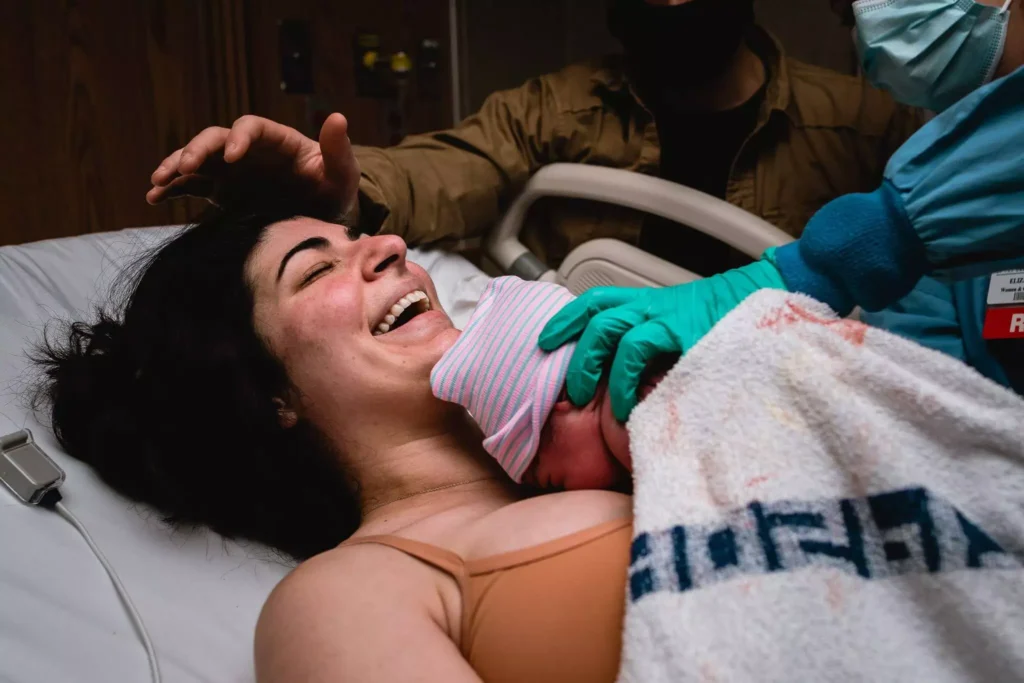

Learn the science of pregnancy and birth to take the mystery of labor away! Understand why you are feeling what you feel, and learn strategies to confidently move through pregnancy and birth!
- 9h+ of Video
- Support Group
- Close Captioning
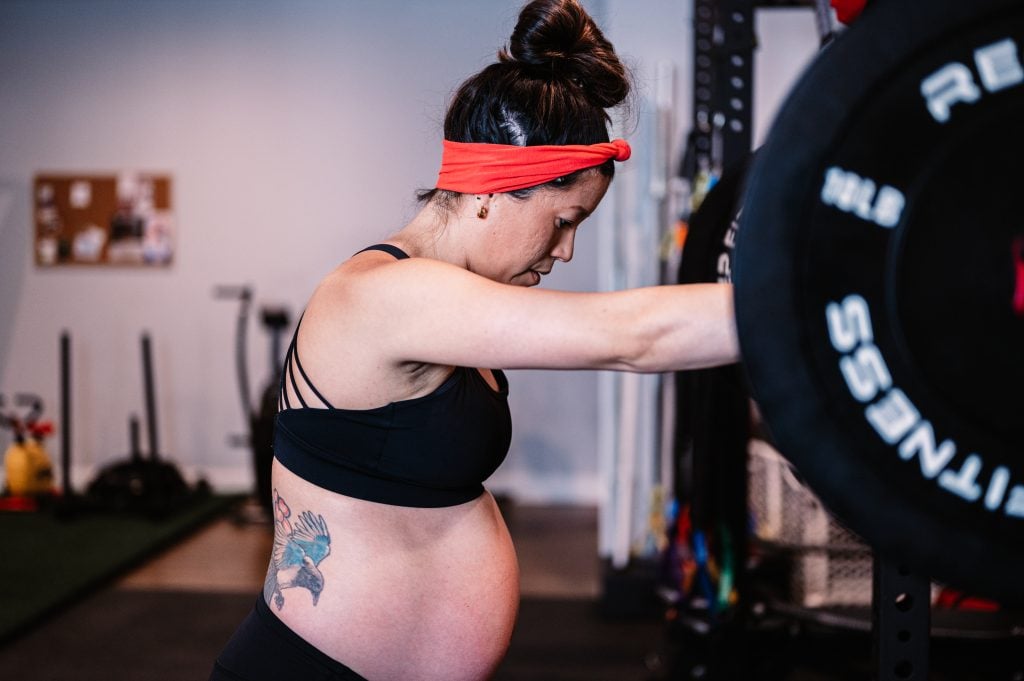

- 5 Workouts/Week
- Gym Workouts
- Self-Paced

Instructor
GINA
Workout on-demand with our prenatal fitness workout videos! Each workout is 30-40 minutes to follow along as you exercise at the same time!
- Birth Prep
- All Trimesters
- Mobility Work

Instructor
GINA
Find comfort and relief from pelvic girdle pain throughout your pregnancy and postpartum period! This program incorporates myofascial sling focused exercises to stabilize across the pelvic girdle joints.
- 3 Weeks
- On Demand Workout Videos to Follow