



Welcome to the Mamastefit Podcast. In this episode, I’m going to be sharing what I am personally doing to prepare for my fourth postpartum, because this is baby number four for me. So I have a little bit of experience of what has worked for me in the past, and what I will be preparing just in case. But we’ll also be sharing some other ways that you can prepare for the postpartum that may be a little bit different from me.
Read Episode Transcript
[00:02:10] Gina: So we’re going to be talking about how I am preparing for the postpartum with baby number four, and then also some other tips that may help you prepare for the postpartum as well.
[00:02:18] Gina: So this is baby number four. The first thing that i’m thinking about when it comes to postpartum prep is one, who is going to be there to support me, to wait on me hand and foot after this baby is born?
[00:02:33] Gina: I’ve been a big fan of having our mom at our births because she’s immediately there to help us after birth. But I know that not everybody is into that. Not everybody has the same relationship that we have with our mom, with their moms. but my mom will be at my birth in addition to Roxanne. And my husband, obviously.
[00:02:50] Roxanne: Maybe.
[00:02:51] Gina: The first thing that I’m thinking… oh, hopefully Roxanne’s there. We might be in a fight. Maybe she won’t be there and I’ll need a new sister.
[00:02:59] Roxanne: Submit applications below.
[00:03:02] Gina: New business partner and sister, but you can hang out with me all the time. So the first thing I’m thinking about is who do I want to be there to support my birth?
[00:03:11] Gina: And so the things that I’m thinking about is all the tasks that need to get done postpartum, some of which don’t need to get done, but I have somebody that can do it for me, so it can be done, is first, who, who is going to take care of me? Who’s going to feed me? Who’s going to hold the baby so I can shower and take a nap and all of the things, because it’s about me at this point,
me and this baby. And so having my mom there to cook meals is going to be super beneficial.
[00:03:38] Gina: We’ll also probably have a Meal Train kind of set up where usually our friends would just donate money to like a local catering company that does meal delivery and that makes it like super easy postpartum because then we can just order these like family size meal trays directly to our house. So those are the ways that I’m going to be focusing on feeding myself without having to actually cook anything.
[00:04:00] Gina: If you don’t have somebody who’s ready to cook for you after you give birth, because some people aren’t good chefs and/or, I don’t want to cook anything, you can also meal prep beforehand, too. I think Fed and Fit has a really awesome, like freezer meal plan that’s free on their blog.
[00:04:17] Roxanne: We’ll link them below.
[00:04:19] Gina: Which is like a really great resource. And so you can also prep meals ahead of time as well. And then you could just, your partner or you could just throw them in the crock pot, or in the oven to cook, and then you have fresh meals.
[00:04:31] Roxanne: Another option is like baby showers. Instead of having a baby shower, you have a nesting party where people come and prep different freezer meals so that you don’t have to prep the 49 different meals yourself. Other people are prepping them for you, as a group. And then they can, write down, little notes, like, when you are prepping the meal, “oh, oh, you did such a great job! Or, “oh, you’re so amazing!”
[00:04:54] Roxanne: So it’s instead of bringing oh, diapers, which are great as well, but like they’re providing something that’s gonna help you recover and nourish your body as well as baby diapers could be beneficial as well.
[00:05:06] Gina: The mental load of meal planning and prepping is so much more than buying a pair of diapers, I think.
[00:05:10] Roxanne: Yeah, please, please, send me, send me food.
[00:05:12] Gina: My brain stops functioning, as soon as I’m pregnant, so, all the help I can get with the meal planning would be very greatly appreciated.
[00:05:19] Roxanne: So that’s a really fun baby shower idea to do if you, if it’s one, either or not your first, and you don’t want to have the big full blown baby shower, having those, nesting parties is, a new thing for subsequent babies.
[00:05:33] Gina: But so, we live in a military community, and so, obviously, Roxanne lives near me, and my parents live near us, and so the only person out of our family who doesn’t live near us is our brother. We do have a brother in case you didn’t know.
[00:05:44] Roxanne: Surprise!
[00:05:46] Gina: But a lot of our friends are here by themselves, like isolated away from like extended family members because of the military.
[00:05:54] Gina: And I think that’s the norm for a lot of folks. I don’t think many folks still live in their hometowns or maybe that’s a big assumption on my part. And so if you don’t have a ton of family and friends that live in your community, because you, maybe you’ve moved away from your hometown doing like gift cards for Door Dash or Uber Eats or like meal delivery services can be really nice because people still want to support you after you give birth, but they don’t have the means to fly to you and cook you a meal, unfortunately.
[00:06:23] Gina: So that would be like, that’s something that like we’ll do for our friends that don’t live near us anymore is we’ll get them like DoorDash gift cards. Mama Meals is like a meal delivery service that’s like national in the United States, that’s meals just like heat up. They were pretty nice. Roxanne had them for her last postpartum.
[00:06:41] Roxanne: They were very, very good. They’re very focused on like nutrient dense, like warm, rich foods, like very good for like postpartum recovery, like designed specifically for the postpartum recovery period, and, they are well portioned as well. So like you get more than just like one meal out of them. You can get like multiple meals, which is cool.
[00:07:04] Gina: Yeah. And then something that our mom specifically does because she’s from South Korea and this is a big Korean tradition, is we eat gallons of seaweed soup.
[00:07:12] Roxanne: Soup for days.
[00:07:13] Gina: So many, so much. It’s so good though.
[00:07:15] Roxanne: I love it. But it’s like..
[00:07:17] Gina: By month two, you’re like, “I’m done.”
[00:07:19] Roxanne: Yeah.
[00:07:20] Gina: She’s like, “Did you drink your gallon of seaweed soup today?” I’m like, “No, I’m so tired of seaweed soup!”
[00:07:25] Roxanne: But then a month goes by and then I want it again.
[00:07:27] Gina: Yeah. And so the seaweed soup is like really rich in iron and iodine and all these like little micronutrients that you need postpartum.
[00:07:35] Gina: It’s also warm because there’s this like big belief that like warm foods are more healing than like cold foods. So like our mom won’t even let us drink like ice water after birth.
[00:07:44] Roxanne: Or eat ice cream.
[00:07:45] Gina: Ice cream.
[00:07:45] Roxanne: Or drink a smoothie. She took the smoothie away from me.
[00:07:48] Gina: Yeah, cold impacts healing in Eastern Asian culture, and so we do not eat cold things in after birth even though we desperately want them.
[00:07:56] Roxanne: I put ice in my water and she took it away.
[00:07:58] Gina: Yeah, it’s all warm food. So the warm soup with the seaweed and there’s usually some sort of protein in it. I like mussels, but you can also do beef.
[00:08:06] Roxanne: Or pork.
[00:08:07] Gina: We’ll link the video that has the recipe in it because it’s amazing. But we eat like tons of that.
[00:08:12] Roxanne: Like breakfast, lunch, and dinner.
[00:08:14] Gina: It’s, it’s pretty excessive.
[00:08:16] Roxanne: Maybe a snack in there.
[00:08:17] Gina: So the people that are there, one of their main tasks is to feed me postpartum. So we’ll have my mom, who is going to be like primarily in charge of force feeding me seaweed soup. But my husband also gets paternity leave because he’s in the military and they get 12 weeks. Which is incredible. When we had our first baby, he got 10 days off, which I know is already a lot for probably most. Of those 10 days he only got three because we were at the hospital for four of the days, and they counted it from the beginning of when I went into labor.
[00:08:50] Roxanne: And it was like a weekend.
[00:08:51] Gina: I had a long labor. So now that he gets 12 weeks is like really awesome, but I think he’s only going to be able to take 8 or 10 of those, depending on when I have a baby.
[00:09:03] Roxanne: But you can use, with the military, you can use those 12 weeks over the first year, so you don’t have to take all 12 at once. My husband took seven weeks and then he took two weeks, and then two weeks, throughout that first year of life. And this is all to help support breastfeeding and bonding and recovery of the mom.
[00:09:24] Gina: So I know not everybody’s partner gets any sort of paternity leave postpartum, but we are very thankful that he does.
[00:09:30] Gina: And so he’s also like the primary chef for our family so he will also be like helping with meals and stuff. But his like primary focus in the early postpartum will be our older children, because we do have other children that have needs and they need to be tended to. So he’ll primarily be the one that’s taking them to like school or like their classes or sports, any sort of appointments and stuff that they have, he’ll take them to. Because life still continues, even though you had a baby.
[00:09:58] Roxanne: What are you gonna do with homeschooling?
[00:10:01] Gina: So we will just do whatever we can. It’s pretty low key. Homeschooling only takes us about an hour or two a day, maybe, at most.
[00:10:08] Roxanne: And you’ll still do the homeschooling?
[00:10:11] Gina: I mean he could do it too. It’s not that bad. It’s like math and reading and, I’ll have him do field trips and stuff. So we have some stuff planned for that time frame, like that first month where I’m going to be really focused on myself and my new baby. And we have some like stuff for, for him to do with, with our oldest that’s going to be homeschooling, but she’s also in school two days a week. So if we don’t do a ton of homeschooling for a month, it’ll be okay.
[00:10:37] Gina: In regards to taking my own maternity leave from my business, which is MamasteFit, Roxanne will be carrying the load of all of this. So you’ll hear from her a lot the month of September. It will be confusing when I come back and you’re like, “Wait, there’s two people?”
[00:10:54] Roxanne: Yeah, but a lot of the things is I’ll go to Gina and record the content and then edited and post it myself. So Gina will just be the model and be focused on relaxing and I just tell her what to do. Which is what Gina did for me as well, along with writing a book, so she wasn’t there a lot, but.
[00:11:16] Gina: So definitely thankful to have family support nearby and then my husband gets paternity leave because it gives me a lot of support in the early postpartum so I can really focus on resting and bonding with the new baby. And then my mom or Roxanne can hold the new baby as I kind of like reconnect with my older children who like are feeling neglected probably for the fact that I’m not hanging out with them.
[00:11:40] Gina: And so that’ll be about like one to two weeks, usually about like 10 ish days that I’ll primarily be just like in bed and like resting. One of our friends is a massage therapist and she usually comes to the house within that timeframe to do like a cranial sacral massage. Which is just really nice. And at some point during the first two weeks I’ll probably come to the chiropractor here at the gym for me and for baby to help with recovering from that process of birth which is a lot. And I think we’ll have one pediatrician appointment maybe in the first like two weeks, but.
[00:12:12] Roxanne: Usually. I usually go at two weeks.
[00:12:14] Gina: But we’ll see because the midwife also is checking on baby when she comes to the house so we have a 24 hour visit, there’s like a 72 hour one, there’s one at two weeks, so then a six week one.
[00:12:26] Gina: So she’ll be also coming to check on baby and so our first appointment may not be for like a month or two for like our actual pediatrician
for baby. But we’ll see what’s going on if there’s anything that we think needs to be addressed. So we have our pediatrician already lined up as well as who our kids already see.
[00:12:41] Gina: The other things that I’m preparing for postpartum are my baskets. I’ve got these like baskets of trinkets to help support me around my home. One will be in the bathroom. That’s just filled with items to help me with peri care.
[00:12:54] Roxanne: Peri bottles.
[00:12:55] Gina: Peri bottles. Pads. Or actually I prefer the diapers. I just call them diapers because me and my baby like to match. Mini me, and mommy and me outfits.
[00:13:03] Roxanne: Disposable underwear.
[00:13:04] Gina: Disposable underwear, I guess is the kinder term?
[00:13:07] Roxanne: Nicer way than saying diapers.
[00:13:09] Gina: I like to say diapers, but you can call them whatever you want. I prefer the diapers because you just, if you just put them on, I don’t have to worry about this funky pad, like sliding around.
[00:13:17] Roxanne: I like the diapers for when you’re still bleeding heavily. And then once the bleeding slows down, then I like just the pad.
[00:13:24] Gina: Yeah. Or panty liners. So I have starting from the inside, furthest out. In my little bathroom basket, I have my peri bottle so that you can rinse, because you don’t want to wipe early, even if you don’t tear, there’s a lot going on down there. You don’t want to wipe.
[00:13:41] Roxanne: And toilet paper just disintegrates as soon as any moisture touches it, and it’ll stick.
[00:13:47] Gina: Yeah.
[00:13:47] Roxanne: And then you just have little pieces of toilet paper down there, which is not ideal.
[00:13:50] Gina: Yeah, no thank you.
[00:13:51] Gina: So peri bottle, the one from Bodily is like the biggest one that I have ever seen.
[00:13:56] Roxanne: It’s, it was my favorite.
[00:13:57] Gina: And so I’ll have that sitting by the toilet. And then inside the basket, I’ll also have some sort of like numbing foam available in case I do tear, which is probably not as likely with baby number four, but you never know. So I’ll have that prepped just in case, just to help with soothing that discomfort.
[00:14:16] Gina: I’ll have some sort of perineal spray for regardless if I tear or not, because it’s just very like soothing and it’s smells nice. It’s refreshing.
[00:14:22] Roxanne: It makes you feel real refreshed.
[00:14:25] Gina: After that, I have my diapers, I’ll also have some additional pads, usually panty liners is what I progress to after the diapers because by the time I’m not bleeding that much, like it’s, there’s just not, there’s not that much bleeding, but it’s enough to where it’s I don’t know, I shouldn’t just wear that, but you could do a pad too.
[00:14:43] Roxanne: I had to wear the pads.
[00:14:44] Gina: And then I have, I’ll have my Bao Bei bloomers that I’m going to put on top of that diaper for that support for my belly and for my perineum. Which will especially be helpful if I’m going to be out and about, which won’t happen very often. But when I go see the chiropractor or I go to the pediatrician, those will be times that I would want to wear something to provide some additional support. So I’ll throw those on top just for some gentle compression and for some support. And that’s it for the bathroom kit.
[00:15:13] Roxanne: With delivery at home, you might want to throw in some ice packs, or if you’re delivering at a birth center where you’re going to be home within that first 24 to 48 hours. But if you’re at a hospital, you don’t really need ice packs in this basket, but some people really like that ice pack for the first 24 to 48 hours just to help soothe it, so you might want to add that in if you’re delivering at home at our birth center, or you’re going to be home within the 24 to 48 hours. But otherwise, I don’t think Gina’s used ice packs very often, but.
[00:15:41] Gina: No, I’ve had some reusable ones, so Bao Bei has a reusable ice pack that I’ll have a few in the freezer, and then you, they just insert into the bloomers. And so it’ll be like diaper, bloomers, ice pack, and that’s something nice to do within the first 24 hours, just for soothing.
[00:15:58] Roxanne: Yeah.
[00:15:59] Gina: For like pain relief.
[00:16:00] Roxanne: But it might not get through that diaper, the ice pack may not be very cold through the diaper. So some have the pad on top of it, so then it’s cold directly, which feels a little bit nice, but again, choose what works for you.
[00:16:15] Gina: After my bathroom basket that I have set up that just sits, in my little poo closet, because our bathroom, our toilet is not…
[00:16:22] Roxanne: It’s a water closet, but we call it a poo closet.
[00:16:26] Gina: So I have that basket that just sits there, so everything is just prepped for me. And then I also will throw some, nursing bras in there in case, I want to change while I’m in there. But generally all the nursing stuff is going to be next to the bedside where me and the baby are going to be hanging out, mostly.
[00:16:42] Roxanne: Mom and baby basket.
[00:16:44] Gina: My mom and baby basket. So we have one whole basket that’s just baby, that is like diapers, wipes, baby balm. Or booty balm? Not baby balm. Or maybe it’s both?
[00:16:53] Roxanne: I think maybe it’s baby balm, too.
[00:16:55] Gina: I call it booty balm.
[00:16:56] Gina: And then extra clothes for baby like burp cloths, cause they’re figuring out how to eat. So there’s lots of spit up all over the place. So we just got all that stuff in one little basket just for baby. And it’s really just like things to put on them because they don’t play with toys yet or anything. I’ll also have a ring sling nearby because that’s usually what I use for newborns because I feel like they just sit a little bit better in them, and as they get a little bit more head control, then I move to more structured carrier, but the first month or so, it’s mostly ring slings or like the Solly Baby wrap, but the wrap is complex.
[00:17:34] Roxanne: I hate the wrap.
[00:17:35] Gina: Once you get it, it’s not too bad, but like at first it’s overwhelming.
[00:17:40] Roxanne: Just a lot of steps and then you just end up wearing the wrap everywhere because you’re like, I don’t really want to take this off and then put it back on.
[00:17:47] Gina: And then it gets loose. So I really like the ring sling for newborns because it’s much easier to get on and to adjust. So I’ll have one of those by the bedside in case I do want to get up.
[00:17:58] Gina: And then for me, next to the bedside, I also have my breastfeeding basket, which is going to have nipple balms in it. There’s usually one that I like that I will put in there. I haven’t really used it a ton the past two postpartums. My first one, I was like lathering myself up because I had a lot of nipple damage.
[00:18:17] Gina: Silverettes are also going to be in there. They’re magic for early postpartum, especially like as baby is trying to figure out what they are doing with their mouths, and so they’re just sore. Nipples are just sore postpartum.
[00:18:30] Roxanne: You also aren’t used to having someone just suck on your nipples every two to three hours.
[00:18:34] Gina: I mean, whatever you’re into is fine… But most of us do not have a small child or small baby sucking on your nipples.
[00:18:41] Roxanne: Or just a person.
[00:18:42] Gina: Or just a person in general. So having the silverettes is like very soothing. It also sometimes collects a little bit of breast milk, which can also be very nice.
[00:18:52] Roxanne: It’s antibacterial.
[00:18:53] Gina: Yeah. I’ll have some sort of like nipple pads in there as well because early postpartum it’s just about leaking. I’ll have my manual pump by the bedside as well. I’ve find that if I’m super engorged, I need to get a little bit out.
[00:19:10] Roxanne: For baby to latch.
[00:19:12] Gina: Otherwise, they’re trying to nurse a rock, which is hard to do. So I like to just pump a little bit to get some out so that my breast is soft again and then baby nurses. And then just lots of nursing bras.
[00:19:25] Gina: I really like, there’s two bras that I like for early postpartum. One is the Bao Bei Bralettes, which is what I have on underneath this shirt. it is like my go to, it’s a pull down nursing bra, which I like a lot. And I feel like it grows with me, but it’s still supportive, but it’s not compressive anywhere either, which I know is a lot of words that are conflicting with one another, but I really like the pull down bras because I feel like I can wear them outside of early postpartum as well. They’re very comfortable. There’s no compression, so I’m not really worried about clogged ducts and stuff. And then I really like the Bodily everything bra. It may be called the everyday bra, but I think it’s everything bra. It’s it’s not the most supportive bra, so I don’t wear outside of, the first few months postpartum. But it’s still nice, because I do not want anything touching my nipples. I don’t want my shirt touching it. So I need something to be on top because everything is sensitive. And so, one, the fabric is super soft.
[00:20:25] Roxanne: So soft.
[00:20:26] Gina: It’s a clasp one, and so it’s like really easy to get down. And it’s non compressive. There is nothing… it’s, it’s still on me. Like it’s not going to fall off. But I’m not going to go for a run in it.
[00:20:39] Roxanne: No, don’t recommend for a run.
[00:20:41] Gina: I wouldn’t go for a run in the bralette either but. It’s really just early postpartum for me that I really like that bra, but it’s so comfortable to be in, it’s so easy to nurse in, and so it’s something that like, I’ll have one or two of those set aside as well for when I don’t want to wear a bralette.
[00:20:57] Roxanne: I personally love snacks in my bedside basket with like little protein bars and beef sticks, any like quick snack while I waited for somebody to bring me the food because your hunger is just ravenous during
those first few weeks. So I personally like snacks in my basket. Or even I would put like hydration packs, so like LMNT in my basket so that when I was drinking water and I was tired of drinking some water, I would put in some hydration sticks in there so that it tastes better than just water, while also giving me the electrolytes that I needed to make my milk.
[00:21:32] Gina: I also have a water bottle that will be next to it, next to me, but not filled with any ice. It’ll just be lukewarm water.
[00:21:40] Roxanne: Room temperature water!
[00:21:42] Gina: Room temperature water with LMNT in it.
[00:21:43] Gina: My husband does a pretty good job of refilling my water throughout the day. But I also have an Easy Jug set aside, which is like a, it almost looks like those five gallon water jug things that you see in like coolers, but it’s, it’s like a gallon. I don’t think it’s, it’s not five gallons. But it’s massive and it has this like 10 foot straw, so like I could be laying down and like drinking water. Cause that’s the only thing that sucks about my water bottles is if I tried to drink from it laying down, I’m just going to spill water.
[00:22:13] Roxanne: I used it during my postpartum, it was pretty clutch.
[00:22:16] Gina: Yeah, so I’m really excited to have that for my hydration postpartum. I don’t pack a ton of snacks next to my bedside because I forget about them and will not remember how I eat them. They get buried. But I have just like this continual flow of food that comes to my bedside.
[00:22:31] Gina: But after about 10 days postpartum is when I’ll start getting up and going for walks and like integrating a lot more like movement in my day, like the first 10 days is mostly just like lounging in bed and like playing on my phone. And I, I’m planning to watch Bridgerton.
[00:22:46] Roxanne: She’s, got three seasons to catch up on.
[00:22:49] Gina: I’ve got, I’ve got that in the queue for postpartum.
[00:22:52] Roxanne: Which, how are you gonna watch?
[00:22:53] Gina: I’m going to put a TV in the bedroom. Or I’ll just sit on the couch and watch it, because our couch is a bed.
[00:22:59] Roxanne: Pretty much.
[00:23:00] Gina: So that’s my postpartum plan is to watch Bridgerton and catch up on it, on this craze.
[00:23:05] Roxanne: The three seasons that she’s missed. Well, I guess there’s four seasons because you have to also watch Queen Charlotte.
[00:23:11] Gina: Oh, yeah. So I’ve got a lot of things to do.
[00:23:14] Roxanne: Well, I was unfortunate. There was only Queen Charlotte that I could binge watch during my postpartum. So I watched Queen Charlotte and just tear teared.
[00:23:22] Gina: Yeah.
[00:23:22] Roxanne: For one night, because it’s six episodes.
[00:23:24] Gina: So I’ve got my postpartum TV show to binge.
[00:23:27] Roxanne: Bring some tissues.
[00:23:29] Gina: On standby. Oh, we’ll either move a TV temporarily into the bedroom or I’ll just lounge on the couch in the living room. The hard part about being on the couch in the living room is all of the kids then see me and they want to play with me. And then I feel guilty because I am trying to take care of the baby and rest. And I’m like, but I want to play with you. I get a lot of FOMO postpartum.
[00:23:52] Roxanne: Gina does.
[00:23:52] Gina: I get FOMO bad because I feel like I’m missing out on everything. Which I guess is what FOMO means… but, so then I like start sneaking out of the room to play or to vacuum.
[00:24:04] Roxanne: Gina was vacuuming at like three days postpartum because she’s like, “It’s so dirty!” Get in bed, crazy.
[00:24:10] Gina: Yeah, Roxanne’s like ripping the vacuum out of my hand. But yeah, I get FOMO postpartum. And I also, this is a part of the preparation of mental prep for the postpartum, so this isn’t about getting items set up, is I
struggle with feeling trapped postpartum because I feel like I’m trapped in bed because I have to rest because it’s important for my health and it’s important to bond with my baby. But everyone else gets to go to the grocery store and just leave whenever they want. But I can’t just leave because this newborn baby is depending on me for life.
[00:24:44] Roxanne: I mean you can just leave with the baby.
[00:24:46] Gina: Yeah, but I can’t just go to the grocery store. So I deal a lot with FOMO and then some jealousy postpartum, where I’m like, “Oh, this guy can just go to the store and he doesn’t have to plan for anything,” or, “Roxanne can just leave and go home!”
[00:25:02] Gina: So that’ll be a mental struggle that I will be preparing for postpartum is, understanding that it’s temporary and that I am not missing out on everything. Like it’s okay if I’m not at every activity for my children. I’m not at every activity, even when I’m not early postpartum, and that it’s okay that other people have less responsibilities than I do. Or different responsibilities, not less, different responsibilities. My responsibility is to rest and to take care of this baby and everyone else’s responsibility is to take care of me and the things around my home.
[00:25:36] Gina: Something else that I have to let go of in preparation for postpartum is the fact that my house will not be in the same condition that it normally is when I am constantly cleaning it and organizing it because that’s not everyone else’s priority. And I have to accept that. So that’s another part of my mental preparation.
[00:25:55] Roxanne: I’m not cleaning Gina’s house. Cause I can barely clean my own house.
[00:25:58] Gina: Is not being mad about that. Cause my, my husband just has different things that he’s focused on. Like, When it comes to, our household chores and tasks, we have separated our, or split up our tasks in a way that, fits our personalities and what we like to do. I really like cleaning the floors and organizing the toys. That’s the thing that I like to do.
[00:26:18] Roxanne: Yeah, Barron does not.
[00:26:20] Gina: He does not. He likes to wash the dishes and do the laundry. Which are good tasks. I don’t like to do those things. So, he does those, but he doesn’t do my tasks. So, when I do emerge from my cave…
[00:26:34] Roxanne: You need to organize all the toys.
[00:26:35] Gina: I have to organize everything. So, I have to like, let go and admit that it’s okay if my house is not at the same level of organization that it would normally be if I was not bleeding from my vagina.
[00:26:51] Roxanne: Let’s take a break from this episode to hear from our sponsor, Needed. Needed is a nutrition company focused on the perinatal timeframe that both Gina and I have utilized during our pregnancies and even in our postpartums to help support our recovery after having a baby.
[00:27:04] Roxanne: One of the supplements that I utilized after my second and third postpartum was their stress support. So this was a new product they had released after I had my second baby that is all about supporting our bodies after a stressful event.
[00:27:15] Roxanne: Postpartum is, as we know, a stressful event, not just physically, but also mentally. Like the brain fog and just like the effect of stress on our brain, function can be impaired. And their stress support is full of adaptogenics, which are natural herbs and roots that can help our body return back to a steady state after a stressful event, whether this is just stress in daily life or like the actual stress of physically pushing out a baby and delivering them.
[00:27:44] Roxanne: And their stress support is part of their lactation support bundle that comes with other things that you can use to support your lactation journey if you are breastfeeding. You can check out their stress support as well as their lactation bundle at ThisIsNeeded.Com and you can use code MAMASTEPOD percent off your first order or the first month of your subscription.
[00:28:02] Gina: So now, if somebody doesn’t have the same amount of person support because they don’t live near a family, maybe they don’t know anybody in the area, other things that you can do to have set up so that you have that person to, help you with things, because it’s hard to cook for yourself postpartum or, to tend to older children, or to expect them to take care of themselves, especially if you have a toddler or something, and so things that I would have on hand if everyone suddenly got super busy or my husband had to go back to work.
[00:28:32] Roxanne: Or somebody went on 47 trips while you were postpartum.
[00:28:36] Gina: I went on a lot of vacations when Roxanne was within a month postpartum because I was homeschooling.
[00:28:42] Roxanne: And took our mom with her.
[00:28:45] Gina: I’m sorry. She’s never gonna forget me. This is why we’re fighting and I have applications for a new sister. Maybe it’s coming from her end.
[00:28:54] Gina: But if you don’t have the person support because not everybody has paternity leave and their family nearby, or wants their family nearby, like my husband’s mom, would not want her near us at all, is one, if you have the finances, you can hire a postpartum doula or like a nighttime nanny or somebody that’s job is to come and help you at your house.
[00:29:18] Gina: The second thing is to do meal delivery or have the meals prepped and the things that like the big time consuming tasks that like the person support would be doing like try to take care of those ahead of time. And then three, let go of tasks. Like not everything needs to be done. Your kids don’t need to go to every single activity if you don’t have the means to get them there because you’re resting. You don’t have to have a pristine house. Gina, remember that. You don’t have to have a super clean house postpartum.
[00:29:47] Roxanne: I’m just going to record this and play it on repeat and send it to her every day. Your house does not need to be clean.
[00:29:52] Gina: So there are things that we can let go of in the early postperative.
[00:29:55] Gina: Maybe it’s you just do disposable dishes, like flat wear.
[00:29:59] Roxanne: Oh my gosh yes, sorry environment.
[00:30:00] Gina: Because you don’t have to wash dishes all the time.
[00:30:02] Roxanne: Buy the compostable ones if it makes you feel better about it.
[00:30:05] Gina: So just thinking about what things don’t need to be done. That would be an extra task that you don’t have to do. If you do have to get up, because some of us have small children that for whatever reason at two years old are still a little dependent on us, having some sort of postpartum support
garments can be super beneficial as well. Just to give you that little bit of support as you’re up and about a little bit earlier than maybe you were hoping to be. Because a two year old still needs to be tended to. And so the Bao Bei bloomers, Mama Strut is another like perianal support device.
[00:30:40] Roxanne: And Bao Bei has their new postpartum shorts as well that provides similar support to the bloomers.
[00:30:47] Gina: I think they’re a little bit more compressive and supportive. So if you’re like really up and about, the shorts can be like a really great option as well. The bloomers I find are still compressive, but…
[00:30:58] Roxanne: Gentle. Like a gentle hug.
[00:31:00] Gina: They’re more for like when you’re like resting or like really light activity. If you were like chasing a toddler then the shorts are probably going to be a little bit better, a better option. So, think about ways that you can support yourself if you do have to be up and about because you have small children that need to be tended to.
[00:31:16] Roxanne: I think it’s also important to know that a lot of people when you are postpartum, if you have friends or even close acquaintances who know that you’re pregnant and you maybe have kids in the same activities, if you reach out to be like, “Hey, like I am still recovering, like I just had my baby, would you mind like picking them up and taking them to school with you?” Or, “would you mind picking them up for the activity that they might have?” Like a lot of people are really willing to help people out in the postpartum.
[00:31:46] Roxanne: It might be scary to ask for that help because it could be an internal struggle for you. It’s really hard for me to ask for help when I need it. But knowing that you can ask someone and 99 percent of the time, if it’s reasonable for that person, they’ll be like, “Yes, I would love to be able to help you.” Cause sometimes people just need like the task of what you actually want, cause they like want to help you, but they’re like, “I don’t really know what she wants. I don’t think she wants me to like…. yeah, like I don’t think she wants me to come and fold her laundry, or ask her what she needs,” but if you are like, “Hey, could you pick my kid up from school and drop them off at home for me since I am one second postpartum?” They’d be like, “hell yes, let me do that for you. I would love to be able to help you.” And even if they’re not like your best friend, like even like acquaintances that you know, again, that are in the same activities to be like, “Hey, would you mind like you’re in dance with my
daughter, would you mind taking her and dropping her off for dance? And that would be really helpful to me.”
[00:32:46] Roxanne: And then you won’t have to worry about those missed activities, because that, I know, is hard, especially if finances are tight, but you signed your kids up for these activities, you want them to go to them, because you paid for them and makeups aren’t a thing anymore in a lot of activities. So, that could be a really, really great way for your community to involve them again. They don’t have to be your best friend. if your best friend is close, they could always help you. But even if they’re in the same activities that you have their number, you somewhat talk to them. Asking for help could be beneficial.
[00:33:18] Gina: So if you are not the person who is postpartum, you’re listening to this episode and you’re wondering, how can I support somebody who is postpartum- cause we actually had a grandma message us this week about what she can do to help support her daughter after birth- and I think people have different desires and expectations for themselves postpartum, what kind of support they may want. And so I think it’s more common now that folks are like, “When I need you, I’ll call you, and I’ll tell you to come, but we want to bond and figure it out on our own at first,” which I think is totally fine and valid. It’s not the way that I personally want to do things, because I am like…
[00:33:53] Roxanne: Gina needs all the help.
[00:33:53] Gina: I need all the help I can get.
[00:33:55] Roxanne: I try to figure it out. And then I, I’m just like…
[00:33:58] Gina: I’m like, “I already know I’m going to be drowning. Everyone come and support me.”
[00:34:01] Roxanne: I wait till I am actively drowning.
[00:34:03] Gina: Roxanne’s like, “I am actively drowning.”
[00:34:04] Roxanne: “Please come save me.”
[00:34:06] Gina: So if you are not the person who is early postpartum and you’re trying to figure out, “What can I do to help this person?” the main things are they need food. They probably need somebody to help them with their older children and entertaining those older kids. And maybe they want somebody to help them with their household chores, or just somebody to talk to.
[00:34:26] Roxanne: Oh my gosh, yeah, just having somebody to talk to.
[00:34:28] Gina: Because you get lonely, because everyone is busy, and I’m just like, again, FOMO, in my own room, nobody is, everyone’s got their own thing going on.
[00:34:35] Roxanne: I think another thing is that someone was like, they came and helped me with my older children, which was great, but they kept taking my older kid, “Oh, we’ll take them to the park, or we’ll take them to this museum,” and just like I missed my other children. I love this baby, but I also had other children that I wanted to bond with. So being like, “Hey, I’ll watch the baby while you hang out with your other kids and not have to worry about oh, the baby needs to change their diaper or, and when the baby gets hungry, I will bring the baby to you,” because obviously they, they can’t feed the baby.
[00:35:07] Roxanne: So I think that’s also important that people could offer to do all of those things, but also like just watch your baby if you feel comfortable with them so you can hang out with your other kids.
[00:35:19] Gina: Yeah.
[00:35:19] Roxanne: Who are also still there.
[00:35:21] Gina: So I think the easiest thing to do if you are wanting to support somebody postpartum is to ask them what they want.
[00:35:29] Roxanne: But also you can add in, “I am willing to watch your kids, or do the dishes, do your laundry. I’m gonna bring a meal, what day would work for you?” Rather than being like, “How can I help you?” Cause sometimes….
[00:35:44] Gina: Or, “Just let me know what you need.”
[00:35:45] Roxanne: That can be overwhelming to be like, I need everything, I can’t choose just one. Just be like, “Hey, I can come over this day, if that works for you, and let me know what you would like me to do.” Like, “When I get there I’ll bring some food, I’ll bring some breakfast if you want.” And then they can decide what you want. So that would be, that would be so easy. Just be like, “Yes, you’re coming this day. I would love this for breakfast. And my laundry is overflowing and I’m running out of clothes, personally.”
[00:36:14] Gina: “I am wearing my diaper only.”
[00:36:17] Roxanne: No bra, just diapers.
[00:36:19] Gina: Just diapers. “I’m also running out of those, for all of us.”
[00:36:22] Roxanne: If you could also bring those.
[00:36:25] Gina: So if you are wanting to support somebody postpartum, ask them what they need, but give them some options.
[00:36:31] Gina: “Hey, you, I can do this or this for you. Is there something else that you need?” And just give them the opportunities to feel like they’re not a burden. Cause I think that’s usually what prevents a lot of us from asking for help, is we feel like we’re bothering people and that we shouldn’t do that, and that they’re going to hate us forever because we’re such a burden and overbearing for them. But the other side, especially, I think this is more for like parents or the grandparents is your children will probably parent a little bit differently than you.
[00:37:02] Roxanne: I mean… maybe.
[00:37:04] Gina: But things are a little different than they were in the 80s and 90s.
[00:37:10] Roxanne: Early 2000s.
[00:37:11] Gina: Early 2000s, like, when we were babies with our parents. Did we just age ourselves?
[00:37:16] Roxanne: Yeah, probably. We are in our 30s, guys!
[00:37:20] Gina: Like they didn’t do car seats! We drove across the country from Alaska to North Carolina without a car seat, Roxanne, when you were like 18 months old.
[00:37:29] Roxanne: I was six months old. I think I had a car seat. I don’t think you had a car seat.
[00:37:33] Gina: No, we didn’t. The whole back was flat. Like, all the seats were down, and it was like a bed back there, and we got pulled over, and we had to put the seats back up, so you were not in a car seat.
[00:37:44] Roxanne: I was not in a car seat. Oh, that’s right. My mom would just nurse me in the front seat when we were babies.
[00:37:50] Gina: So things are a little different now than they were back then.
[00:37:52] Roxanne: The 90s were a wild time.
[00:37:53] Gina: And so if you are a grandparent, and I think this is where a lot of the tension may be coming from, is that we are wanting to have our parenting decisions potentially validated with our children, and to not feel like we did anything wrong, because we’re perfect parents. So obviously everything that we do is perfect. But, it’s okay if our kids choose something differently.
[00:38:16] Gina: And so something that I found really helpful with our mom, so our mom is from South Korea, like we talked about earlier, and they have different traditions that they do with child rearing in Korea than they do in America, and especially now in 2024. And so there were certain things that she was wanting to do, because that was culturally what she did, and that we were like, “We would actually like you to not do that.” And she was like, “Okay, sounds good.”
[00:38:45] Roxanne: Yeah.
[00:38:45] Gina: It was not like a conflict. It wasn’t like a, “No, this is how I’ve done it. I did this to you, you turned out fine.” She was just like, “Okay, that’s what you, you said that you don’t want that. That’s fine. I won’t do that.”
[00:38:56] Roxanne: It’s your kid.
[00:38:57] Gina: Yeah, “Sounds good.” And so because she was like never confrontational whenever we were like, “Hey, we’re actually wanting to do things this way,” it’s definitely made it a lot easier for us to…
[00:39:07] Roxanne: Both of our parents have been…
[00:39:08] Gina: Both of our parents.
[00:39:09] Roxanne: Very open minded about it.
[00:39:11] Gina: And they were good parents, there wasn’t, I don’t think there’s a lot that we have done differently, other than the car seats, definitely the car seats.
[00:39:20] Roxanne: Maybe talking about our feelings a little bit.
[00:39:21] Gina: Yeah. “How do you feel?” So being respectful that like other people make different decisions than you is going to be really helpful and that it made us really trust her to provide us support in the postpartum, knowing that it was never going to be judgmental or that, that we felt like we were going to be insulting her in any way. I thought it was like super helpful, like navigating the early postpartum, and that we didn’t do everything exactly like she does, but she does have some experience from doing this, however many years ago. And from helping us through past six postpartums. And so her like advice and her help was like always really welcomed. But I knew that she was going to respect that whatever choices that we were making as a family, like she’s “Okay, sounds good. That’s how you want it done. That’s fine.” And and obviously like I give room for her to do things her way too. She can fold my laundry however she wants. That’s a, that’s, I’m open to that. However you want to fold my laundry. You can fold it that way. Or, if you want to do my dishes and you want to have the specific soap there to wash the dishes with this certain formula, that’s fine with me.
[00:40:29] Roxanne: That’s like a huge thing with our husbands. They have their, my mom has this special soap and they’re like, “We hate this soap.” Well, you do the dishes then, sir.
[00:40:37] Gina: Yeah, it’s like, you want to wash my dishes? You can use whatever soap you want. So, there are certain things where I let her do it her way, because, the way that she likes to give the baby a bath, that’s fine. I have no, no intense feelings.
[00:40:52] Roxanne: You want to give my baby a bath? Okay.
[00:40:54] Gina: You want to change their diaper? Change it however you’d like. So there are things that I also am like, I don’t need to have complete control over this. Like, how you talk to my child? That, those are things that I have a little bit more of a passion about, and I found that our parents have been really respectful towards our desires, even though it may be a little bit different than how it was when we were growing up.
[00:41:16] Gina: So those are, like, my tips for supporting somebody postpartum that you really want to be there for, and you want to help them, but you don’t want to do it in a way that’s, overbearing or makes it harder for them postpartum.
[00:41:30] Roxanne: I think also, if you are going to visit somebody and they are in their early postpartum, knowing that, one, you will either have to plan if you want to go do an excursion, you probably will need to plan it and go alone. If that’s your plan, or bring the other children, and not expect the postpartum person to come with you. If they come, that’s their own choice. They did that on their own, but know “Hey, I’m okay going alone if I’m visiting you and I’m going to do this. You can come if you want to, if you feel up to it, but don’t feel obligated to.”
[00:42:06] Roxanne: And then try to, not, again, expect them to host. So be like, “Hey, I want to make this for dinner tonight.” Or, “This is what I would like to eat for dinner tonight. Does this sound like appetizing to you?” Cause sometimes in postpartum, like there are certain foods you don’t really want to eat. I don’t know if I’m going to eat like jalapeno popper, but, like certain foods you might not want to eat in the postpartum. So running it by them to be like, “Hey, I would love to make a baked ziti tonight. Does that sound appetizing to you?” And then that’d be like, “Oh, great. I don’t have to cook and host because they’re willing.” Fold their laundry, ask them if they want you to do a load of laundry.
[00:42:40] Roxanne: Again, ask all of these things. Don’t expect to be hosted when you visit someone. Yes, you get to see a baby. Super fun. you get to hold a baby. And that honestly is so helpful. And we, I had my sister in law come when I was about, three weeks postpartum. And she was like, “I honestly, I don’t have a baby. But I don’t know how to help you.” And I was like, “You’re holding her while I go take a shower. That’s so helpful. Like you being here and playing with like my older two and entertaining my husband as well is more than enough.” And that was super, super helpful. So if you go to visit someone, yes, it’s exciting, you get to see this baby, but don’t expect to be hosted.
[00:43:19] Gina: You’re not there on a vacation. You’re there for work.
[00:43:22] Roxanne: You are there to help in any way that they ask. Whether that is entertaining the older kids, entertaining the spouse, because again, there’s only so much that someone could talk about in the postpartum to their spouse about a baby when you are like sleeping a lot.So like you’re there to also entertain their spouse and help out around the house.
[00:43:43] Roxanne: So those are expectations, like you can still visit people and people may be willing to host, host you as give you a bed in their house, but maybe not like host you as in entertain you with activities.
[00:43:55] Gina: Yeah, you’re on your own.
[00:43:56] Roxanne: Yeah.
[00:43:57] Gina: So that is what I am preparing for this fourth postpartum. I don’t have a lot of items set up for the baby. I do have a pad to put them on the floor. So they can do some tummy time.
[00:44:07] Roxanne: Yeah. What are you preparing for baby? Just that?
[00:44:10] Gina: That’s it. I have a baby carrier, a pad to put on the floor, and some clothes.
[00:44:15] Roxanne: And then I gave you my Etta Love play mat that’s black and white on one side, so it’s like high contrast colors for baby, and then the other side is like bright colorful contrast colors for when they’re older, which I loved as like the play mat that I use to like transport around for baby to lay on rather than just…
[00:44:32] Gina: I just got the Piccolo mat that’s a little bit thicker, so it’s really soft, to put baby on too for tummy time, which I’m pretty excited about it. But yeah, that’s about it. A baby carrier, a mat, and then clothes and diapers. And that’s it. That’s all I got prepped for this baby. Because they don’t like swings. They don’t do pacifiers.
[00:44:50] Roxanne: I know. My kids, I did get pacifiers for my kids. My, the Albert family loves the pacifiers. Conley family does not like the pacifiers.
[00:44:58] Gina: They do not like the pacifiers. Even though I want them to like them. So bad.
[00:45:02] Roxanne: I know. Yeah.
[00:45:03] Gina: Not a whole ton prepped for baby. She’ll be fine though. They just don’t really need that much at all.
[00:45:09] Roxanne: You’d be surprised. They just need you.
[00:45:12] Gina: So that, yep, that’s what I am prepping for the postpartum in regards to the type of support that I’m hoping for, the tasks that I have delegated to my family members to wait on me hand and foot, the TV show that I have ready to binge when the baby is here.
[00:45:26] Roxanne: It’ll last three hours.
[00:45:28] Gina: Mostly focusing on ways to help support me to physically heal in the early postpartum so that I can just focus on resting, focus on establishing a nursing pattern with my baby and bonding with them, while also not neglecting every other task in my daily life such as my children. My other children.
[00:45:47] Gina: So I have people that are set up and ready to support. I’ve got the meals figured out. I’ve got my like postpartum items that I’m readily going to use prepped. And then we also have our free early postpartum recovery course, which is a very loose following course. It’s not like 10 reps of 20 or anything like that. It’s like some breathing drills for reconnection in early postpartum. Some mobility to help move, cause you get really stiff postpartum as well. And then starting around like the two week mark, it integrates some like short walks and then also, some gentle core exercises as well. It’s just to reconnect, but very loose program. It’s not, it’s not anything super intense by any means because those early weeks it’s really just about how can I just allow my body to physically heal from birth- because there’s a lot that happened during then- while also reconnecting with things? Because we don’t necessarily have to wait until four to ten weeks postpartum when we get the all clear to then think about rehab, like we could start thinking about early if it feels accessible or attainable for you at that point. Because sometimes it’s just overwhelming and you’re like, I’m just existing and I’m just going to survive right now and then I’ll focus on breathing later. But I’ll also be doing that in early postpartum as well to get a help with my early healing. And then, yeah, around like anywhere from four to ten weeks, we’ll slowly reemerge and resume somewhat normal life activities at a slower pace, but with four kids instead of three, which I’m sure it’ll be fine. They pretty much take care of themselves after some point. So it’s like, what’s another one?
[00:47:21] Gina: So thanks so much for listening to this episode. I hope it was helpful for you to figure out how I am preparing for the postpartum and how you may want to prepare for the postpartum, which doesn’t have to, again, be exactly the way that I do things based on what your circumstances are, but it is really helpful to start thinking about who is going to do what, what tasks do we need to do, what tasks are we going to let go of for a few weeks, how am I
going to support my early healing in addition to bonding with my baby, because we tend to focus a lot on birth preparation and pregnancy, but we sometimes forget that we have this postpartum that we need to be focusing on as well. So hopefully this episode was helping you to remember that and to think of some things to help you prepare for the postpartum.
[00:48:04] Gina: If you want more support throughout your pregnancy, we offer our prenatal fitness programs and our childbirth education course. Our prenatal fitness programs are designed to help you stay strong, pain free, and prepare you for birth, all with daily workouts, either with our app based program, which is going to be self paced workouts, or our on demand program, which are full length workout videos. I am personally doing our prenatal strength program, which is in the app, but I am refilming the on demand program so it’s in a new format and it’s just a full length video that you follow and work out with at the same time. Both those options are available on our website.
Additional Resources
Shop Gina’s Postpartum Essentials: https://amzn.to/3W2xlfT
Our Famous Seaweed Soup!: https://mamastefit.com/korean-seaweed…
Meals from Fed and Fit: https://fedandfit.com/postpartum-free…
Freezer Prep Meals form Mama Meals: https://mama-meals.com/ MAMASTEFIT for $20 off first purchase of $200+
Prenatal Support Courses
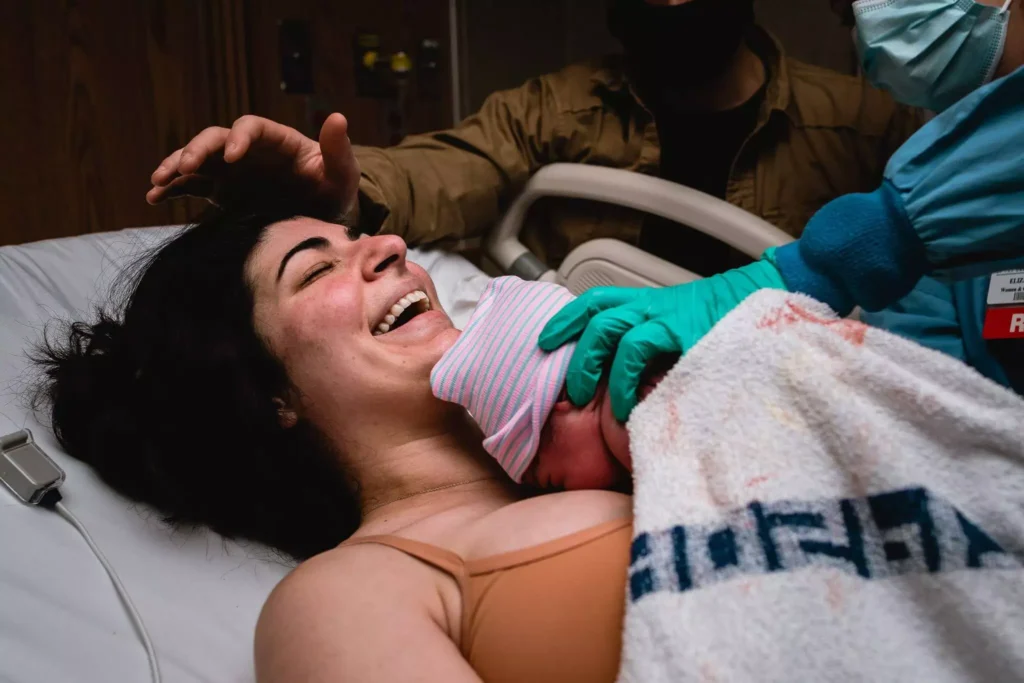

Learn the science of pregnancy and birth to take the mystery of labor away! Understand why you are feeling what you feel, and learn strategies to confidently move through pregnancy and birth!
- 9h+ of Video
- Support Group
- Close Captioning
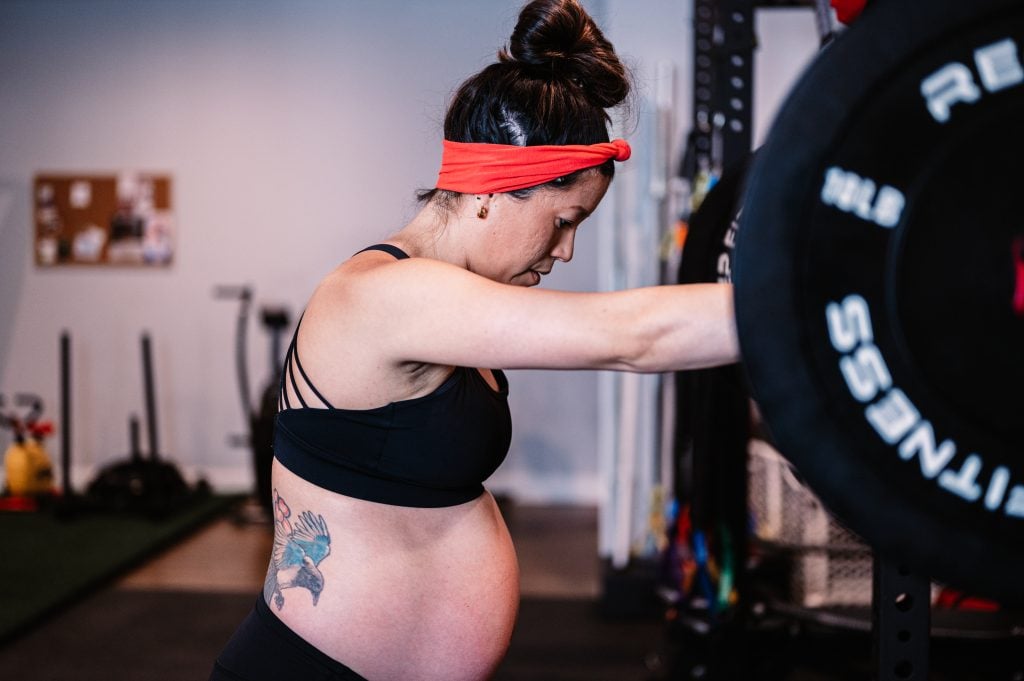

- 5 Workouts/Week
- Gym Workouts
- Self-Paced

Instructor
GINA
Workout on-demand with our prenatal fitness workout videos! Each workout is 30-40 minutes to follow along as you exercise at the same time!
- Birth Prep
- All Trimesters
- Mobility Work

Instructor
GINA
Find comfort and relief from pelvic girdle pain throughout your pregnancy and postpartum period! This program incorporates myofascial sling focused exercises to stabilize across the pelvic girdle joints.
- 3 Weeks
- On Demand Workout Videos to Follow