

Welcome to the MamasteFit Podcast Birth Story Fridays! In this episode, Grace Ann shares her experiences of having two home births, including dealing with a postpartum hemorrhage. Midwives expertly managed the situation, ensuring the safety of both mother and baby. Grace Ann highlights the importance of having midwives capable of handling emergencies and discusses her preparation, labor, and postpartum journeys. The hosts, Gina and Roxanne, perinatal fitness trainers, birth doulas, and healthcare professionals, emphasize the significance of understanding emergency plans with your care provider when opting for home births.
Read Episode Transcript
Gina: Welcome to the MamasteFit Podcast, Birth Story Friday. In this episode, Grace Ann is going to be sharing her home birth story where she had a postpartum hemorrhage. And so she’s going to be sharing how her midwives were able to handle this emergency at home for her and her baby to still be safe.
Welcome to The MamasteFit Podcast, Birth Story Friday. In this episode, we have Grace Ann here, who is going to be sharing her two home birth stories where she actually had a postpartum hemorrhage and her midwife was able to resolve it at home. So thanks so much for being here, Grace Ann.
Grace Ann: Yes, thank you for having me.
Gina: So let’s get started with how were you preparing for birth? So you’ve had two births now, how did you start preparing for birth during your first pregnancy?
Grace Ann: To be quite honest, I didn’t necessarily prepare a lot. We did get pregnant pretty fast, so it was just one of those things where it was like, “Let’s just see if it happens, we don’t know how long it’s going to take.” So there wasn’t a ton of like prep before that first pregnancy. But, I am a trainer on the side, so I work out a lot, and just continuing to do that through my pregnancy really helped, I think. Just keeping your body mobile. And, yeah, there wasn’t a ton of like prep, but there was a lot of work during pregnancy, and I learned a lot as I went.
Gina: So how did you choose to have a home birth? Like how did that process happen for you? Because I think it’s more uncommon for folks to have it for their first birth.
Grace Ann: Yeah, and so that’s a big reason why I wanted to share my story as well, because I feel like home birth is still pretty uncommon. It is growing, but a lot of times when you say, “I had a home birth,” people look at you like you’re crazy. But I actually work more full-time as like a chiropractic assistant. I didn’t know anything about home birth before working in the chiropractic field. And then a few years ago- I started in like 2020, so it’s been closer to five years now- and I was able to talk to a lot of women that were coming in, ’cause we do treat a lot of pregnant women and babies and everything. So just hearing these stories of women that had home births, it was not like birth that you normally hear about, they were talking about how it was beautiful and peaceful and I feel like the world describes it as like traumatic and scary and all these things. So that really sparked my interest into looking more into it.
I knew I had always wanted to do a natural birth, or that was the goal. I’m the youngest of four and my mom had natural births with three of them. I was a C-section ’cause I was in some weird, funky position. But she had natural birth with the first three, and so I was always like, “If she can do it, I can do it.” So just talking to these women, it made me realize that if I did want to have an unmedicated birth, the most comfortable place to do it would be at home, so that is how I decided.
Gina: How did you find a midwife? Through like the patients at the chiropractic clinic? Did your chiropractor know, like, how to find your midwife? Like how did you go about doing that?
Grace Ann: Yeah, my midwife, actually, she has been a patient for a long time coming in for like maintenance adjustments, so she actually went to the office and then multiple women recommended the same midwife. So we don’t have a ton in our area, but, she’s been doing it a long time and I think she was like highly rated so. I went straight to her.
Gina: Awesome. Yeah, our area is similar, we don’t have a ton of midwives that support home birth. So as soon as you find out that you’re pregnant, you need to contact them like right away ’cause they book up super fast ’cause the demand is a lot higher than the midwives available. I actually found my midwife through like a professional relationship as well. Like I had worked with her as a doula, but we have a Facebook group that people can find midwives in if they don’t have a personal or professional connection. So it’s interesting that it’s similar in other areas, where it’s hard to find a midwife.
Grace Ann: Yeah, so I was thankful that I had that personal connection so it was easy to like, get in contact with her. But, she, if you were to contact her and she was already booked, she would give you references as well. And, you know, I knew from the beginning that I was going to like her, but I think you do have to, kinda like a doula, like you kinda have to interview and see who’s going to be the best fit for you.
Gina: So let’s talk about the end of your pregnancy, and then we’ll just jump into your first birth story. So how was like the very end of your pregnancy, into labor beginning?
Grace Ann: So my first birth was, I mean, pregnancy, honestly, was pretty easy. I am grateful that I did not really have any sickness even in the beginning. It might be a little bit genetic, I’ve heard that, but my mom and my sister said their pregnancies were fairly easy in that sense as well, too. Just the end was just uncomfortable, like all the pelvic floor heaviness. I did go to pelvic floor PT a few times. I went more my second pregnancy and learned more, I feel like, the second time. But the first time I waited a long time to go. But nothing, crazy went on.
Towards the end, I know my blood pressure did get a little bit high the last two weeks or so, ’cause mine’s usually pretty low, so it wasn’t like…
Gina: Like hypertension or preeclampsia.
Grace Ann: Yeah, it wasn’t that high, but for me it was high. And so she was like, “That’s probably just a sign that your body needs to rest a little more,” because I worked out literally until the day I gave birth, basically. So she was like, “Just, it’s time to slow down. Like you don’t have to do super intense workouts right now.” But yeah, so nothing too drastic.
I did go late with my first, so she was born exactly 41 weeks, on the dot. The waiting part was really hard, I will say. And I remember it was, she was due, I think it was like May 5th ’cause Cinco de Mayo, like, “I’ll remember that,” and then I think Mother’s Day that year was like that following Sunday. So I was like, “As long as she’s here by Mother’s Day,” and then she wasn’t. So I was like throwing myself a pity party. But yeah, so that was the end of pregnancy, but.
Gina: So labor begins. how did your labor go? How was that first birth for you?
Grace Ann: Okay, so it was… it’s hard to say when it really started, because I do think I had a day of like maybe false labor. Like I said, I was really impatient, I was tired of waiting, and the midwife, I tried the whole like, midwives brew drink. She didn’t really want me to do that, and I don’t really know if I told her that I was going to do that.
Gina: Oh gosh!
Grace Ann: But, I really, honestly, I hated the taste. Like it was nasty, I didn’t even end up drinking all of it. But I did sip on some castor oil, which they really, that’s a last resort thing, so she didn’t want me to do that, but I was desperate. And I think that is what technically started my labor, ’cause I woke up in the middle of the night and it did make me go to the bathroom a lot- never threw up or anything, it just clears you out, and then after that, my contractions were starting. And it was, I was always afraid I wouldn’t really know when labor was starting, ’cause I think I do have a pretty high pain tolerance. But it was pretty obvious, it’s like a surge, like a wave and then it let’s go. So it was just very obvious, okay, these are actually contractions. Very manageable. But, so I was like texting them what was going on ’cause it wasn’t intense or anything, but then the next day it like stopped all throughout the day. And then, went to bed again that night, woke up again in the middle of the night and it was the same thing, but then that time it was like real labor.
The beginning of labor really was not bad. I didn’t have any back labor, it was like all in my belly. So it literally just feels like a muscle cramp and then it like releases. I did have my doula come over, and like looking back, I think I could’ve done okay by myself, but she still came over. I think I probably woke up at 1:00 AM with contractions, and then just slept on and off throughout the night, like tracking them. And then she probably came over that morning around 6:00 or 6:30, but my baby wasn’t born until, I think it was like 12:30, or 1:00 AM technically, the next morning, so, very long.
But yeah, that was the beginning. Very manageable. Like I said, it wasn’t nearly as painful as I was expecting, honestly.
Gina: So what were some key things that helped you be more comfortable in like early labor, and then when more active labor began?
Grace Ann: Yeah, so it definitely helps having a doula, especially with your first birth because you just, you don’t know what to expect. So I always say ignorance is bliss in a way, because you literally just don’t know what it’s like until you go through it yourself, but having the doula helps you find what techniques are going to work best for you. So I just, I gravitated towards leaning over something, so she had me like lean over a birth ball, and then doing like the hip squeezes, especially as like labor progresses, or even getting like that blanket wrap thing and putting it around your hips and then doing like sways side to side as they’re like pulling it against you. So those were like the main things that we did, just getting into a rhythm. They even asked me if I wanted to like, go on a walk around the block, but because I’d never been in labor before, I was like, “No, I’m scared. I don’t want to!”
Gina: So was there any point during your labor, ’cause you said it was on the longer side, did you feel like doubtful of yourself, that like this is never going to end? Were there any moments of like panic for you during your labor? Especially like towards like transition?
Grace Ann: Not really. I think I was just more frustrated because I did let her check me every few hours or so, ’cause I think the midwife, like the doula will stay with you, the midwife, like she came over in the morning and then when she saw how far, she was like, “You still got a ways to go.” So she left and came back later on. But she did check me and I knew that I was like progressing, so I knew that I was getting somewhere, it was just like very drawn out and like very slow. I was just frustrated because I was impatient, like, why is this taking so long? But they just kept reassuring me that, “You’re doing great. Everything’s going well.”
I don’t really, I will say I don’t remember feeling this distinct, switch from like early labor to more active labor. I did, we did get the birth pool set up for that first birth, and I got in, I think I was around like seven centimeters or so at that point, so that was further along. And that was amazing, I’ll say. It literally takes the pain away, like, I thought it did ’cause I was having contractions in the water and I like could hardly feel it. And I was like, “What the heck?” But, I think it stalled my labor, and she said that’s normal with a first birth, that it can, because like you’re just relaxing so much. And yeah, so it ended up like slowing things down a little bit more. And I was like just getting hot and restless, so I was like, “All right, I need. I need to change the scenery.”
And yeah, so that, and I do remember my doula actually, so she had a girl that was training to be a doula, so like an assistant, and we have a lot of mutual friends, we knew each other from college, so I wasn’t like close with her, but I knew who she was, and I was like, “Oh, you get to watch me birth a baby!” But she had just had a home birth within like the past year, so she was very encouraging to me just being like, “I know you’re frustrated. I know it’s been a long day, but like your baby’s coming, so just, yeah, keep pushing through.” So that helped me a lot, just like mentally get over that hump because I was just like, “Is this ever going to happen?” So, yeah.
Gina: So it sounds like you had some amazing support folks that were helping you move through your labor, both with physical support and with some emotional support, especially because the labor did feel super long for you.
So let’s get into how was pushing for you, and then we’ll get into the postpartum for this first labor.
Grace Ann: Yeah, so that, that is where it gets a little more crazy. So I had been like in my downstairs for the majority of the day, laboring, and then I was getting, obviously, restless and I was like, “All right, we’re going upstairs.” Like our bedroom is actually upstairs, I wasn’t planning on delivering in the bedroom, but that’s what happened, but… So we were like, let’s just have a change of scenery. Go upstairs, hang out, whatever. Actually, I kept feeling like towards the end, I feel like you feel like the urge to pee a lot, or at least I did, and I went to the bathroom and my water broke and it was so obvious. It was crazy, because I had to go pee and then I heard this like pop and the water like gushed out! Like it literally got on the wall across from me! And I was like…
Gina: Oh gosh!
Grace Ann: That was clearly like my water breaking! That was crazy. It didn’t happen until I was like nine centimeters, probably, towards the end. So after that, was kinda like the sign to the midwife like, okay, like things are picking up, you are going to start pushing soon.
So with my first, they said I pushed for two, like over two hours. And I do remember that was exhausting. So that obviously is like the hardest part of labor, and I had already been laboring for, I don’t know, 12 hours or more. So I was so tired and so defeated, that I was like, just, I didn’t want to. My body was so tired. But once you get that far dilated, it’s like the baby’s coming out, whether you like it or not.
Gina: Yeah.
Grace Ann: So she had me, I just couldn’t get the technique down. I don’t know, I just was like almost resisting the pushing, I guess. The midwife had me sit on a birth stool, just to get in that more like seated position and help. So it took a while to really get the technique down, but that’s where the midwife really stepped in I feel, and did more of like the coaching me through it, like helping me figure out like my breath, and like position-wise, all that stuff.
Once I got to like that pushing phase, like I said, it did take a while, and I tried all different types of positions just to see how it felt. And I’ll say, being on my back was by far the most painful position. So I was like, I can understand why people want an epidural if they’re in the hospital, like forced to lay on their back to deliver their baby, ’cause I’m like, that was terrible. My natural reaction was to get on like hands and knees, like I mentioned earlier, more that like leaning forward position. So she just had to coach me through it. I do remember at one point too, she, I was just frustrated with the pushing and her not coming out yet, and I was like, “How many more pushes do I have to do?” because the workout person in me, the endurance athlete is like, “If you tell me I gotta do five more reps,” I’m like, “all right, I got this.” But she was like, “I really can’t tell you ’cause it, it just depends.”
Gina: Yeah, it’s hard to say in the moment. I wish I could just tell you like 10 more and then you’re good, but we don’t know.
Grace Ann: So she, yeah. So eventually I pushed her out. But I will say it was, at least with my first birth, ’cause I told you at the beginning, my second birth was like opposite, but that first birth I was, it’s a blur at that point, because I think I was so tired. At one point during the pushing, I don’t remember this, but they told me like I laid down on the bed and like actually fell asleep for a few minutes because she was like, “Your body just needed a break.”
Yeah, I don’t really remember feeling like that ring of fire type thing. Like I said, it’s the most intense part of birth, but you’re also at the end, so you like, your baby’s coming. And you do have to remember to go slow, like they tell you, as the head’s coming out. Like you don’t just want to like force and push as hard, because you want to prevent the tearing.
So yeah, so she did come out, she had the like nucal cord wrapped. Obviously it wasn’t severe- that’s something that people, I feel like, are really afraid of, but they made it sound like it’s actually very common, and it’s not too much of a complication if it’s not affecting their heart rate. So that is another thing to point out, like with home birth, they are like, she was all up in there with that monitor, like the whole time. Especially while you’re pushing, like one of the assistants usually has the monitor on you to check the baby like the whole time. Because I think a lot of times people are fearful of home birth as, what if something’s wrong with a baby? Or like you said, like what if the cord is wrapped? And stuff like that. So there are ways, they, they know what to do, so I trusted them. But yeah, she eventually came out and I was exhausted.
Gina: So how was the postpartum? So you had a postpartum hemorrhage for this first one. Did you know it was happening? How did your midwife handle it?
Grace Ann: No, I, like I told you, I was just drained. So after I delivered her, we got the placenta out, but she did have to get her hand up in there and like help pull the placenta out ’cause I was just like trying to push, but I think I was like, donezo, like, “I’m done.” But then after that, I was just laying on the floor- so I ended up delivering like hands and knees leaning over the bed- and then I was on the floor, just laying there. So they were checking out the baby and they were cleaning up, doing whatever, and then all of a sudden I feel this like gush. But there are like pads- so they, wherever they know you’re about to deliver the baby, they do go ahead and get like the room set up- so we had those mats and pee pads everywhere because it, it is… there’s discharge coming out while you’re pushing. But yeah, I was laying there and I felt this like gush and I was like, “Did I just pee myself?” And my husband was the one that was really concerned ’cause he saw it, but I couldn’t like, see what was happening. But it was a giant gush of blood, so obviously they were concerned with that, and so they were coming to check on me.
And then I don’t remember what all happened in between, but I had two, like, big gushes essentially, so it was not a good sign. But the midwife, I never saw her like panic or anything. She calmly handled the situation. And she, so what we did was she actually gave me two shots of Pitocin in my legs, that stops the bleeding. I learned recently that different states have, different laws for midwives, so not all midwives can carry a certain amount of medicine with them, I think, but she had enough to make it stop. But I think if it hadn’t stopped then I probably would’ve had to go to the hospital. But she’s seen it before, and she was like, “I know the difference of when you need to go for like a blood transfusion and when you’re okay.” But obviously it was a little scary.
My husband was like just really worried about me, not even concerned with the baby at that point. So they made me lay on the floor for a while and I, like I said, I was like, “What’s going on?” Everybody else seemed really concerned and I’m just like, “I don’t know what’s happening.”
Gina: How was postpartum for you after a hemorrhage? I know sometimes folks feel like very weak or they like have a hard time like showering. Did you experience any of that, or did you feel like relatively good, for lack of a better word?
Grace Ann: No. Yeah, I… it, takes it out of you, for sure. My family was also really concerned with me ’cause they just saw how like pale I was.
But she also did like my blood work to check on the hemoglobin and like different levels like that, ’cause that’s also a sign of do you actually need a blood transfusion or are you okay? So I’ll say for like at least three days, it was really hard. They had me crawl to the bathroom, so like on your hands and knees, because if you like sit to stand somewhat fast, it like can tank your blood pressure, so they did that. And yeah, I just remember even walking across the room, like my heart rate would get up and I was like, “What the heck? This is so weird.” Just really weak, honestly. And then like I said, having to be careful when you were going to the bathroom. I don’t think I showered for a couple days just because of all that either, but they did say like, whenever you take a shower, have someone just be near and monitor you if you get lightheaded or faint- ’cause my blood pressure was really low right after that happened, so.
Gina: Let’s get into your second pregnancy and birth. Was it a similar pregnancy for you? Was the birth pretty similar? How did that all go? And then did you have any lingering fears from your first postpartum?
Grace Ann: Yeah, so I definitely had fears, but after birth, the midwife, we still had appointments with her for a few weeks after delivery, which I think is awesome. It’s very intentional care, and she explained to me that with your first birth, A, it’s usually long because your body’s never done it before, and B, that the hemorrhages are more common with your first birth because your body is so tired that she was like, “I think because you were in labor so long, your uterus was just like, ‘I’m tired, I don’t want to work,'” so it wasn’t like contracting like it’s supposed to after. I was a little fearful of that, but also not because she was like, “I’ve seen it happen a lot with first babies, it’s not as uncommon as you think.”
And then second pregnancy, we… he was… I had a boy second, so he was a surprise, wasn’t upset about it, but I just didn’t quite feel ready to get pregnant again. Because you’re pregnant for so long, and then I think I got pregnant, my kids are 23 months apart, so at two years, which is a good age, but when you’re postpartum, it feels really soon, so yeah.
So second pregnancy, very similar, I wasn’t really sick or anything. This pregnancy actually, I forget what the word is called, but I had bleeding, to the point where I thought like I had miscarried, ’cause I had just found out I was probably like five or six weeks, I didn’t really want to tell anybody yet, but I was at work and I like was just standing there and I had this, like, gush come out and I was like, “I need to go to the bathroom,” and it was just straight up blood. And so I was obviously like, “This is a miscarriage, like, I don’t…” So I had to tell somebody ’cause I was like, I don’t know what’s happening.
But, I didn’t have any cramping, so I had called the midwife and, explained to her. So we did blood work, and then you do blood work like the following week to see how the levels are changing. But I really only had bleeding like that one day, so I guess it’s like a what a hematoma type of thing.
Gina: It’s like a subchorionic hemorrhage, so it’s essentially just a little pool of blood that sometimes happens like near where the placenta is.
Grace Ann: Yeah. Yeah, so because it, I didn’t have any lingering blood after that day. Like maybe after it happened I was like spotting a little bit, but she did tell me that if you’re typically with a miscarriage, you’re having that, but also like pain, like cramp type feeling, like period cramps. So I wasn’t really having any of that. So we just went based off the blood work and everything looked good, and then we did it again the next week and everything had doubled. So she was like, “I think it resolved itself!” But that was scary.
And yeah, and then that pregnancy, pretty similar to my first, I thought I was going to have another girl ’cause all my symptoms were about the same, besides that. And, it was a little bit harder, like physically, I think too, because I feel like when you have your babies closer together, your body doesn’t have as much time to recover. Really from 25 weeks on, I was like, “Dude, my pelvic floor feels like it’s just going to fall out.”
Gina: It’s harder when you’re pregnant with a toddler.
Grace Ann: Yeah. And he was a lot lower, especially like third trimester, just like his head was really low, like the whole time. So that was the most uncomfortable, like third trimester, I would come home at the end of the day and sit on an ice pack because like my pelvic floor just felt heavy. That’s the best way I can describe it, just tight and heavy, ’cause all that weight that you’re carrying. But yeah, so that, it was very similar pregnancy wise.
I had a feeling I had gotten two or three different due dates, all relatively within the same two weeks-ish. They take the first one based off like your period and then the second one based or whatever your first ultrasound is, how it’s measuring. So that was the one that they technically take. So I had a feeling that he was not going to come late, I don’t know why, it was just like my gut feeling. I was like, “I don’t think this baby’s coming late.” And he did not, but he, I was almost 40 weeks, so I was like 39 and like three. But, he did not come at 41, so I was happy about that! And I have big babies apparently ’cause my daughter was like eight pounds, three ounces or something, and then he was like eight pounds, four ounces. And I don’t feel like I’m a big person, so I’m like, “I guess God thinks I can handle big babies.” But yeah, so I’m glad that he didn’t come any later ’cause he would’ve just been bigger too.
But that, the end of pregnancy then, I just, the last week I felt different. Like I could just, I could tell like I feel like it’s coming soon, like my energy levels were dropping. Just like that tightness and pressure was changing a little bit. And it’s actually funny because somebody joked about- I had posted on my Instagram story that I was like crying ’cause I just had a terrible day, I took my daughter on a walk or something, she spilled her smoothie on a stroller, I don’t know, something like that happened, and I was like, it’s just been a terrible day. I wasn’t like feeling good. And then literally like the next morning I’m like, “Oh, my baby’s here!” So she was like, “Nothing like a toddler tantrum to put you into labor.”
But yeah, the day before, maybe it was pre-labor, I just didn’t feel good. Something felt off, but I wasn’t like contracting, so I was like, whatever. But this time my water broke first, which really threw me off because they said, they told me in my first pregnancy, they were like, “Your water actually is supposed to break at the end, it’s actually less common for it to break at the beginning, unlike what the movies show you.” And they said if it, doesn’t break till the end, it’s like an extra cushion when you have contractions, so it’s preferable for it to break at the end. But I woke up in the middle of the night- it always happens in the middle of the night- but I woke up and I felt, I think he like kicked or something, but I felt like a jolt and then just like a gush of fluid came out and my obvious reaction was like, “Is that blood?!” But yeah, so I went to the bathroom and it was just like fluid and I was like, “I think my water broke.” So I was texting and calling the midwife and told them what happened and I was discouraged because I have a, close friend who- but it was also their first baby, so that could be a little different- but people that if your water breaks and you don’t go into labor, then I would’ve had to go to the hospital probably. So that was a fear of mine, what if labor doesn’t start? But my doula was like, “Just wait it out,” she was like, “this is not your first baby, just give it some time, see if the contractions start, try to get some more sleep.”
So sure enough, they started like within 30 minutes of that happening. Actually pretty intense. I feel like they were close together from the beginning but I was still able to sleep on and off through them. So from probably like 1:00 AM to 5:00 AM just kinda, sleeping, I would have a contraction, but I feel like when I was laying down, it would take the intensity away, and then every time I would get up, like when I would stand up to go to the bathroom or something, that’s when they would like, really come on. It felt way more, it felt more painful to me, I think, because it started more intense.
And then, so around 6:00 AM or so, I had been texting them throughout the night giving ’em updates, but I was like, “All right, I think I’m ready for you to come over,” and my doula lives like super close to me, so she came over pretty quick, I don’t know, 6:30 AM, or so. And my daughter, I just didn’t want her there for the birth ’cause she was still so little. I think maybe if she was a little bit older, I would’ve been okay with it, but she wasn’t even two yet. We had the grandparents come get her, so I’m like up, like trying to pack her bag and all this stuff, and I remember being in my laundry room and I’m standing there and I was like (grunts), and I just felt this like urge, and I was like, “I’m just going to roll with it, just let my body do its thing.” But it was like, and my doula, like that happened a couple of times, and my doula like saw me, and she’s like texting the midwife like, “Are you on your way? She’s, like, pushing.” So it was just wild because it was like that, what’s the reflex, like the fetal…
Gina: The fetal ejection reflex.
Grace Ann: Yeah, it was like that, like real fast. And every time, like I said, if I was standing up, my contractions would come on, like back to back. And then, so yeah, so she knew, she could tell by like my reactions that I was like getting ready to start pushing. And in my head I’m like, “Just, just go with it. Just let your body do its thing,” but yeah, it just, it was really intense. That’s the best way to put it.
And then my midwife came, she probably got there at 7:30, 7:45, ’cause she was here less than an hour before he was born. And so when she got here, they went ahead and prepped to the room, set up the pads on the floor and put the stuff on your bedsheets. And, she was like, “Do you want me to check you?” And I was like, “Yeah, I might as well.” And she was like, “Umm, you’re 10 centimeters,” ’cause I had told them I would like to do the pool, but wait until I’m, like, at the end to get in, so maybe deliver in the water, but I didn’t want to get in the water like earlier in labor, so save it for the end. And she was like, “You’re 10 centimeter, so if you feel like pushing, just go for it!” And I was like, “So we can’t set up the pool?” And she was like, “I don’t think we have time!” So yeah.
I’ve heard this happen to other people, but I literally was like in the same position, in the same room, like in our bedroom, delivered him. This time, I think because I wasn’t as exhausted and out of it, I remember so much more of the details. And I remember like you guys, like you talk a lot about like the rotation, so I was like on my knees and I’m like, “All right, push your knees together, rotate your legs out!” Like I was like thinking about that stuff. I feel like this time, I felt more of that ring of fire, just like the slow, like them coming out and I was like, “Oh my God, this hurts so bad!” But yeah, I would associate that with being not as dead tired this time around.
Gina: You’re just a little bit more aware of the sensations.
Grace Ann: Yeah. So is it painful? Yes. But I also, the second time around, I was like excited for birth because I really just wanted to meet him. I was like, after having one baby and just loving like that newborn phase, when they’re so tiny, I was like, “I just want to meet you!” So I was motivated, I was like, “All right, let’s do this thing. I got this. I know what to expect.” So I, yeah, just, it is hard, but it’s so short in the grand scheme of things.
Gina: So, how was the postpartum? Did you have a hemorrhage again this time, or was it really different for you?
Grace Ann: So I did have a smaller hemorrhage. So he came out, she got my placenta and everything, and she was like, “Your placenta, like, looks old,” she was like, “I think your body, it was time for him to come out, essentially.” And they said, the sac, like the bag of water, was all into like different pieces and all this stuff. And yeah, so it’s hard to remember exactly, once again, ’cause birth is a lot, and then all the little details like right after, but, it was a lot more smooth, delivery wise. And then I don’t remember when the hemorrhage happened, I think I was just laying in bed at that point, and like I said, it wasn’t as much blood, but it was still like a good bit. And so she did one shot of Pitocin in my leg and that solved it, but it wasn’t nearly as bad as the first one.
But I did have that sensation again of like weakness. The first time I went to the bathroom, after all that, I was sitting there on the toilet and I was like, “Oh my gosh,” like, “y’all, I don’t feel good.” I was getting tunnel vision, ’cause I was about to faint. So they had me like, get on the floor, put my head between my knees. So my blood pressure was like 90, over 60 or something. It was just a sign, again, of losing that blood and having some of the weakness.
Gina: Did you feel a little bit more energized this postpartum or did you maintain that same weakness for a few days?
Grace Ann: No, it wasn’t as bad the second time for sure. But still, it’s just that, I would say the first three days, really, is when you can feel it. And just feeling, you just get lightheaded easily, too, if you move around too much. So just being careful.
Gina: Yeah. So would you do it again? Not that, not if you planned to have any more children, but did you enjoy giving birth unmedicated? Did you love giving birth at home? Would you recommend it to other folks that are interested in it?
Grace Ann: Yeah, for sure. I would definitely do it again. Now I don’t know any different! I think that I, personally, I don’t feel like labor in itself was too painful. Now, like I said, I didn’t have back labor, I have friends who said back labor is terrible, and I think it all depends on like where your uterus sits, too, in your body, and how your baby is positioned. But overall, labor, it’s really manageable. The pushing is hard, like pushing your baby out is really hard, and that is painful, but you get to meet your baby right after it’s done. But yeah, I like highly recommend it, I think, as long as you have a good support system, too. So like when you have a home birth, you have your midwife, but she also brings assistants so you’re not just like in it alone. And then if you have a doula, your spouse, whatever family you want there, so just having all that support and encouragement. Is really uplifting during the moment. And it’s really great ’cause after birth they’re there with you, they monitor you they make sure you’re stable before you leave, and then they literally clean up everything, like you wouldn’t even know that you had a home birth, ’cause they do such a good job by cleaning everything up. So that’s awesome! And… yeah.
But, I will say now that I’ve had two births, I do, I would like, I do want to have like at least one more. My husband would be cool with four or five, but I’m like, I don’t know. But I am fearful now knowing like my history, like am I going to have a little hemorrhage every time? But knowing that there is options and the midwife is trained to correct those issues when it happens. So I don’t know why, like she was like, “Your body just likes to bleed.”
Gina: It happens. Roxanne, she ha tends to have more bleeding after birth. Like I don’t seem to have much bleeding after birth, so it really can just vary from person to person, and I don’t think it’s necessarily like anything wrong with you, but I am thankful that we have medical providers that can support our birth to help manage the things that we may be experiencing that could become more complicated if we didn’t have that support. So really thankful that you had a midwife with you, and that your midwife had the tools to be able to support you in the postpartum.
Do you have any last advice for any of our listeners who may be encouraged by your story, who may be going through similar situations?
Grace Ann: Listen to your body, ’cause this whole process has also made me realize like how intentionally our bodies were designed. It is really, cool, like, birth in itself is like beautiful and like the fact that you can grow human inside of you and then deliver it yourself, it’s just, it’s really like a beautiful experience. But yeah, also just do what you think is best for you because when I first decided to go this route, obviously our family was like, “What? But like, are you sure?” But I just, deep down I was like, this is what I want to do. And so finding that supportive group, talking to other women who have had the experience, listening to birth stories- I still listen to some now, I listened to a lot when I was pregnant, but it is really cool just to hear different people’s experiences. Like I listen to y’all’s podcasts a lot. There’s one like Happy Home Birth. So hearing birth stories can be really encouraging because I think it takes that fear away of, “oh, this is going to be traumatic and scary and a terrible experience,” whereas it doesn’t have to be. There are going to be things that are out of your control, but for the most part, it doesn’t have to be traumatic.
Gina: Absolutely. thank you so much, Grace Ann for coming on our podcast and sharing your birth story.
Grace Ann: Thank you for having me.
Testimonial: My name is Danielle and I’m grateful for the MamasteFit postnatal programming because it helped me heal my body and mind after both of my pregnancies. I was able to come back stronger than ever before, and I really love how they build up from the basic building blocks all the way up to personal records.
Gina: In Grace Ann’s birth story, it highlights that midwives do have the capability to respond to emergencies even at home, both for postpartum hemorrhage or a baby not transitioning well. And so if you are planning to give birth in a community birth setting, it can be really important to have that conversation with your provider to understand how they can respond to emergencies at home to keep you and your babies safe. It’s important that they have the training required to keep you and your baby safe, in addition to having a transfer plan established if you do need to transfer either during pregnancy, during your labor, or in the postpartum.
Understanding how your medical provider can keep you safe at home is incredibly important to establishing care outside of a hospital birth setting, and understanding that while they trust the birthing process, it’s not home birth or bust. So in the event that you do need to transfer it, we do want a medical provider that does trust the birthing process, but knows when it is time to transfer to keep you and your baby safe. We’ll link our episode about community birth down below, so if you want to learn more about giving birth at home or in a freestanding birth center, you could check that episode out.
If you want more support throughout your pregnancy, check out our online prenatal fitness programs and our online childbirth education course.
Our prenatal fitness programs are designed to help you stay strong and pain-free as you navigate your pregnancy because your prenatal comfort is important, while also helping you to prepare for birth with pelvic opening exercises, pelvic floor release exercises, in addition to movements to help support your baby’s position for birth.
Our childbirth education course is going to teach you the science of birth so that you can understand what is going on and give you tangible tools to utilize during your labor experience, from labor comfort measures, laboring positions, pushing strategies, plus all about your birth options so that you can figure out what preferences that you want for your birth experience.
You can go check out all of our courses on our website at mamastefit.com and use code STORY10 to get 10% off any of our online offerings, and you can bundle them together to save an additional 15% off.
Additional Resources
Check out our episode all about Community Birth here!:
Prenatal Support Courses
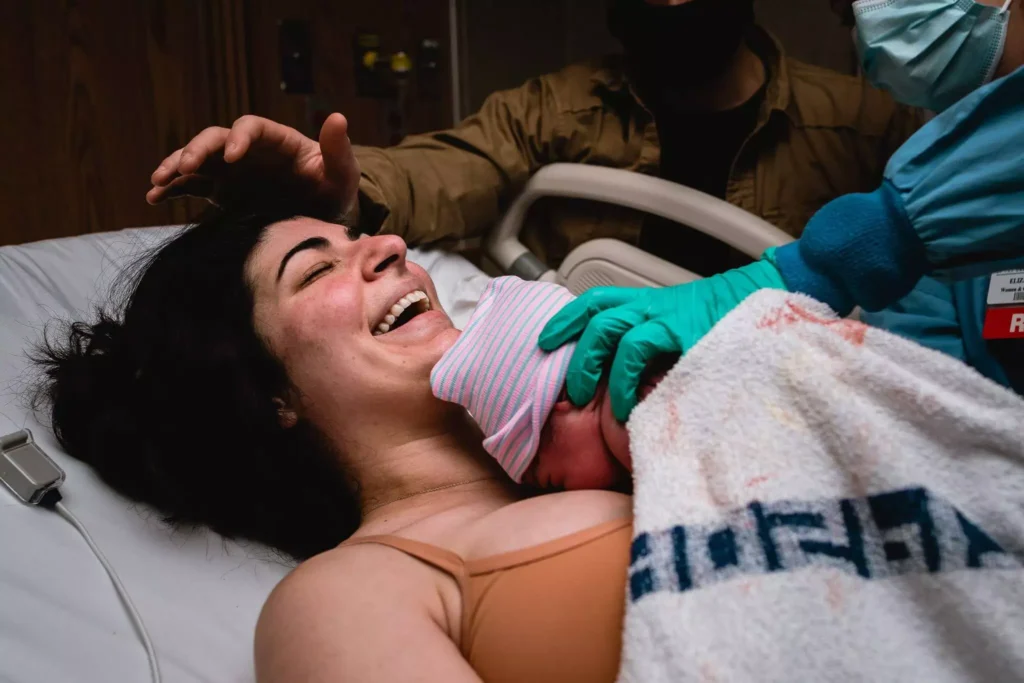

Learn the science of pregnancy and birth to take the mystery of labor away! Understand why you are feeling what you feel, and learn strategies to confidently move through pregnancy and birth!
- 9h+ of Video
- Support Group
- Close Captioning

- 5 Workouts/Week
- Gym Workouts
- Self-Paced

Instructor
GINA
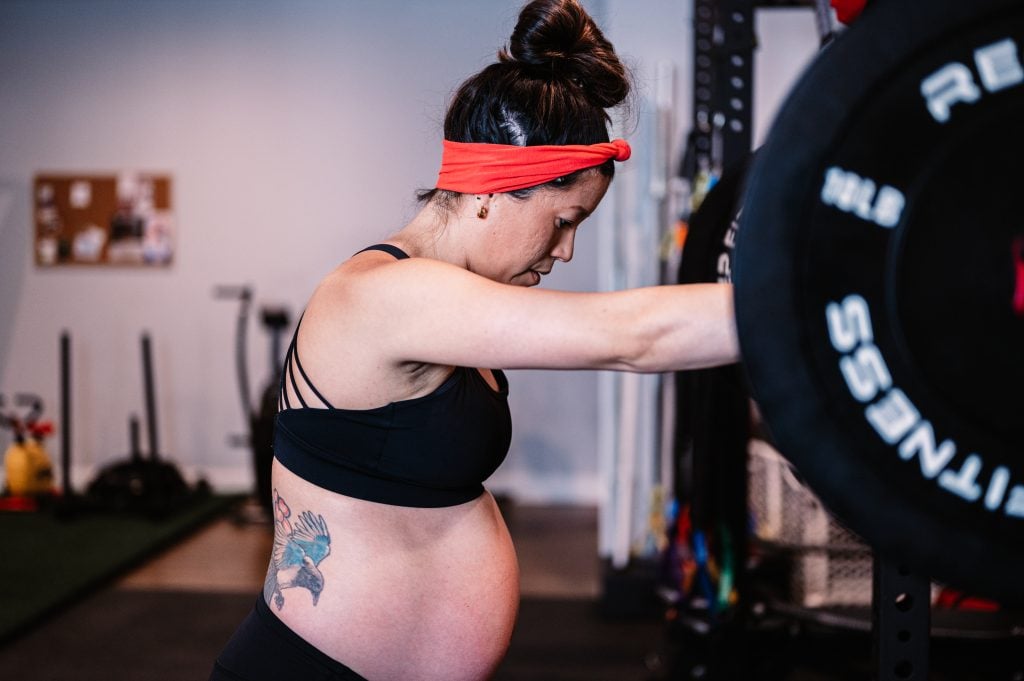
Workout on-demand with our prenatal fitness workout videos! Each workout is 30-40 minutes to follow along as you exercise at the same time!
- Birth Prep
- All Trimesters
- Mobility Work

Instructor
GINA
Find comfort and relief from pelvic girdle pain throughout your pregnancy and postpartum period! This program incorporates myofascial sling focused exercises to stabilize across the pelvic girdle joints.
- 3 Weeks
- On Demand Workout Videos to Follow